
 Riiffs Freeze in Flames: Ice and Flames Illuminate Warsaw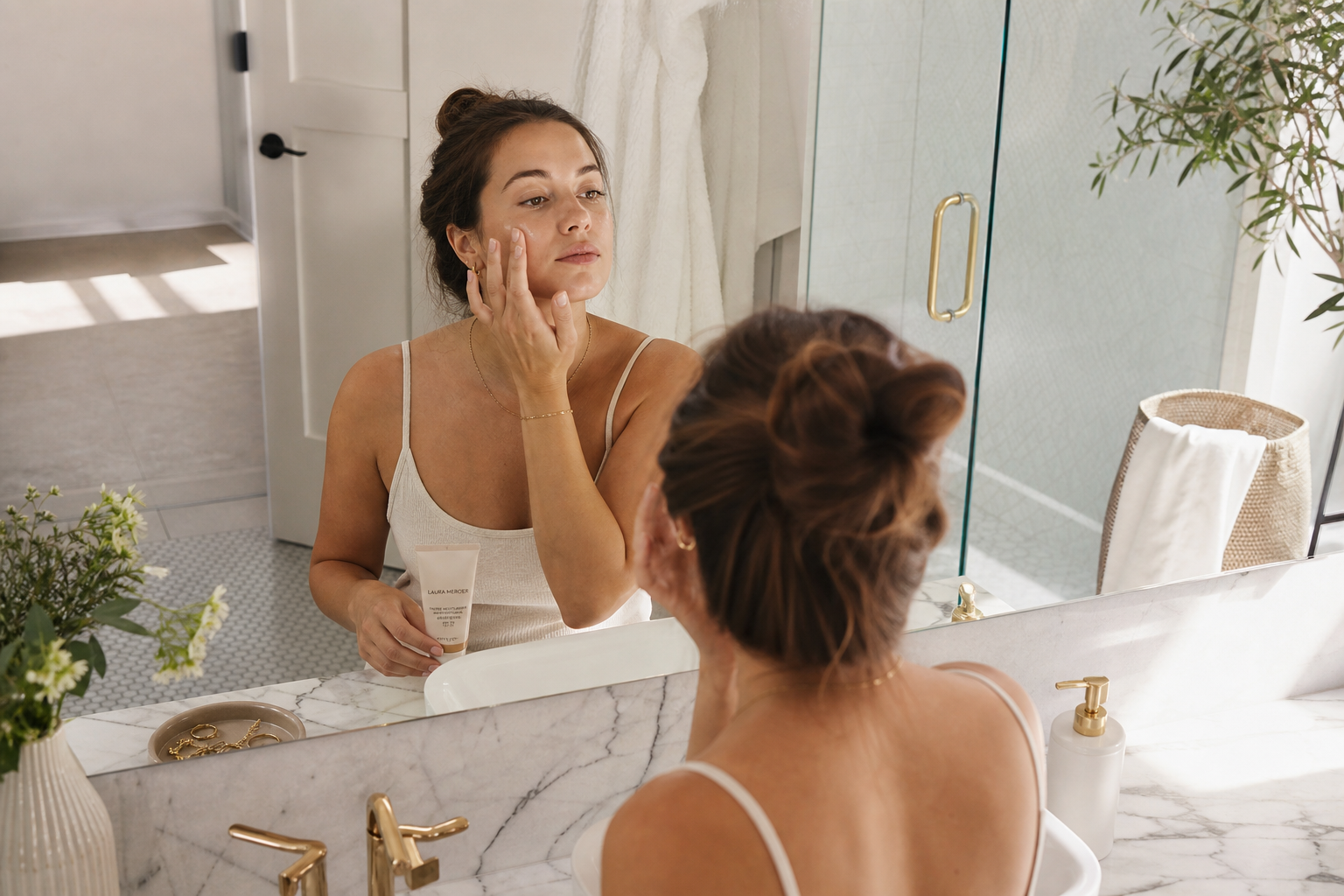
An overview for anyone looking for a specific tinted product with sun protection factor and wanting to navigate among dermocosmetic brands. We compare fluids and creams from Vichy, La Roche-Posay, CeraVe, Uriage, and Clarins based on texture, protection strength, and skin type suitability.
Why a Tinted Moisturizer with SPF Makes Sense
Whether you have just five minutes in the morning or simply want to save an extra step, a tinted moisturizer with SPF is a format worth considering. It combines light hydration, sun protection, and a subtle tint that evens out your skin tone. Instead of applying three layers, you apply one—and still keep the essentials.
The foundation is always skincare, not decorative cosmetics. A tinted moisturizer contains significantly less pigment than traditional makeup, so it won't cover imperfections in detail. Its purpose is more to soften the overall impression—reduce redness, lessen the contrast between lighter and darker areas, and give the skin a more even appearance. The result looks natural and feels light to the touch: the texture is akin to a day cream, not a foundation. If you're looking for full coverage all day, a tinted product might not satisfy you, and a classic makeup will serve you better.
The second difference becomes apparent when compared to regular facial sunscreen. Formulas with mineral filters can leave a grayish film on the skin after drying, which is especially noticeable in photos and on darker skin tones. The tinted variant addresses this shortcoming with color pigments: the protective layer remains on the skin but blends in optically. This is why tinted formulas also appear in high SPF values, where the white cast is most visible.
Who benefits most from this format:
- Those who want to streamline their morning routine into a single step—hydration, protection, and tone unification from one tube.
- Skin prone to redness, where green or peach undertones visually soften the contrast, giving a calmer appearance.
- Those dealing with pigmentation spots. Sun exposure deepens pigmentation, so daily protection is as important as coverage itself.
- People who don't usually wear makeup but want to look refreshed—without feeling like they have a layer of makeup on their face.
On the other hand, a tinted moisturizer won't replace a generous layer of sunscreen at the beach. For all-day exposure to direct sunlight, opt for classic protection and reapply; tinted care is designed for the city, office, and regular daily activities.
In the following parts of the article, we'll go through five brands worth noting in this format. We'll compare them based on four criteria:
- Texture – from watery fluids that absorb quickly to creamier emulsions for drier skin.
- Protection Strength – SPF values in tinted products range roughly from SPF 25 to SPF 50+, and you'll notice the difference mainly in summer.
- Shade – some brands rely on a single universal tone, while others offer several options from the lightest to medium-dark.
- Skin Type – whether the formula is more suited for sensitive, dry, combination, or mature skin.
None of the five brands is universally suitable for everyone. The differences lie in the details, which ultimately decide whether you'll reach for the cream every morning or leave it standing in the bathroom.
Vichy and La Roche-Posay – Dermocosmetics for Everyday Use
French dermocosmetics hold a special place in skincare: they combine a pharmaceutical approach to formulation with textures that can be worn all day. Vichy and La Roche-Posay are among the strongest names in Brasty's catalog in this category, and both brands offer products with protective factors that not only protect but also even out skin tone. The difference between them is not in quality, but in whom they are intended for.
Vichy: Capital Soleil with a Matte Finish
The most interesting representative from Vichy is the tinted fluid from the Capital Soleil range with SPF 50 and a matte finish. The consistency is truly liquid, closer to milk than cream, so it spreads quickly and doesn't leave a sticky film on the skin. The shade is universally beige and doesn't try to replace makeup – it rather evens out minor redness and softens transitions. If you are bothered by shine on your forehead and around your nose during the day, it's a logical choice because the matte effect holds even in warmer months.
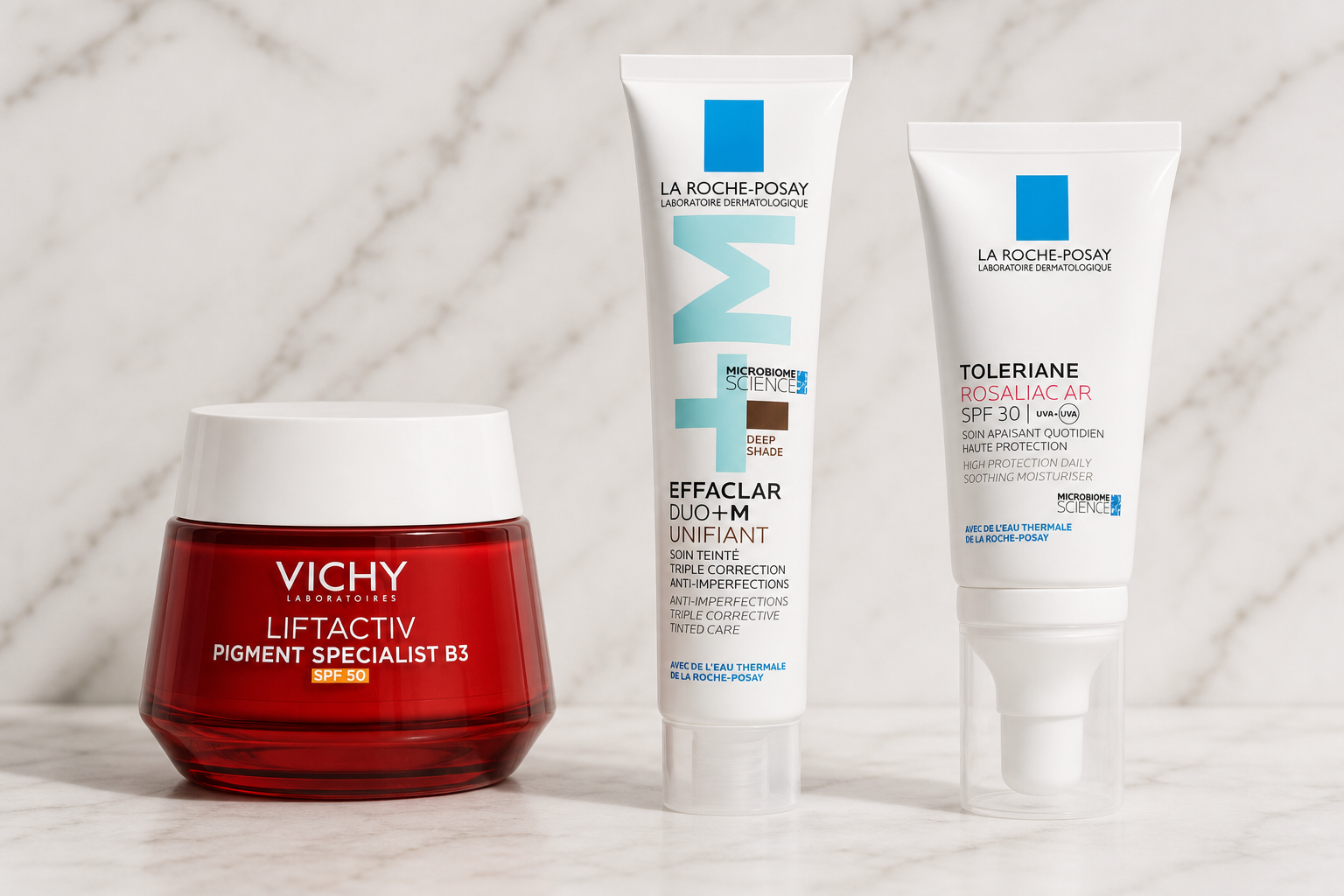
The second piece of the puzzle is the Liftactiv B3 cream with SPF 50. Vichy profiles it as daily care for skin with pigmentation spots and uneven tone, so it makes sense where you're not only addressing sun protection but also the appearance of darker spots after summer tanning. The texture is significantly richer than Capital Soleil, stays on the skin longer, and better suits drier skin types. Price-wise, it belongs to a higher tier – it's a full-fledged daily care, not just an additional protective cream.
La Roche-Posay: Anthelios and Tinted Variants for Problematic Skin
La Roche-Posay bases its sun protection on the Anthelios range, which is unusually wide: from an invisible mist with SPF 50+ that can be used over finished makeup, to moisturizing creams with SPF 50 from the UVMUNE 400 line. Anthelios primarily targets protection itself; look for the tinted effect in other lines of the brand.
Effaclar Duo (+) Unifiant is a tinted version of the well-known care for oily and problematic skin. It combines a mattifying base with pigment, so it evens out red spots from imperfections. It's practical that the range also offers a darker shade, which is not always a given with dermocosmetics. The Toleriane Rosaliac AR cream with SPF 30 goes in a different direction: it's intended for sensitive skin prone to redness, and the light tint serves to optically even out skin tone differences. The coverage is lower than Effaclar, making it more suitable for everyday wear without makeup.
How the Two Brands Differ in Practice
If you're choosing between the two brands, compare them based on three things you'll notice right upon first application:
- Spreadability: Vichy Capital Soleil spreads the easiest and dries the fastest, forgiving even a rushed morning. The creamier Liftactiv B3 and La Roche-Posay products need a few more seconds and reward you with a longer-lasting feeling of hydration.
- Matte Finish: The most pronounced matte finish is with Capital Soleil, followed closely by Effaclar Duo (+) Unifiant. Toleriane Rosaliac AR and Liftactiv B3 leave the skin with a natural, slightly satin appearance.
- Shade: Universal beige shades suit lighter to medium-dark skin; for very fair skin, it's worth applying a thinner layer, and for darker skin, opt for the darker shade variant offered by Effaclar Duo (+) Unifiant.
In short: Vichy is suitable where lightness and a matte appearance are the main focus, La Roche-Posay where the skin needs more targeted care.
Uriage and CeraVe for Sensitive and Dry Skin
Not every skin can handle a thick protective fluid that lasts all day. If dermocosmetics with a high factor leave your skin feeling tight, with slight peeling around the nose or redness on the cheeks, it might not be the brand that's the issue—it's more likely the texture that's too harsh for your skin. Uriage and CeraVe address this problem directly: both focus on simple formulas and ensuring sun protection can be worn even on skin that reacts to almost anything.
Uriage: Age Lift SPF 30 and the Bariésun Range
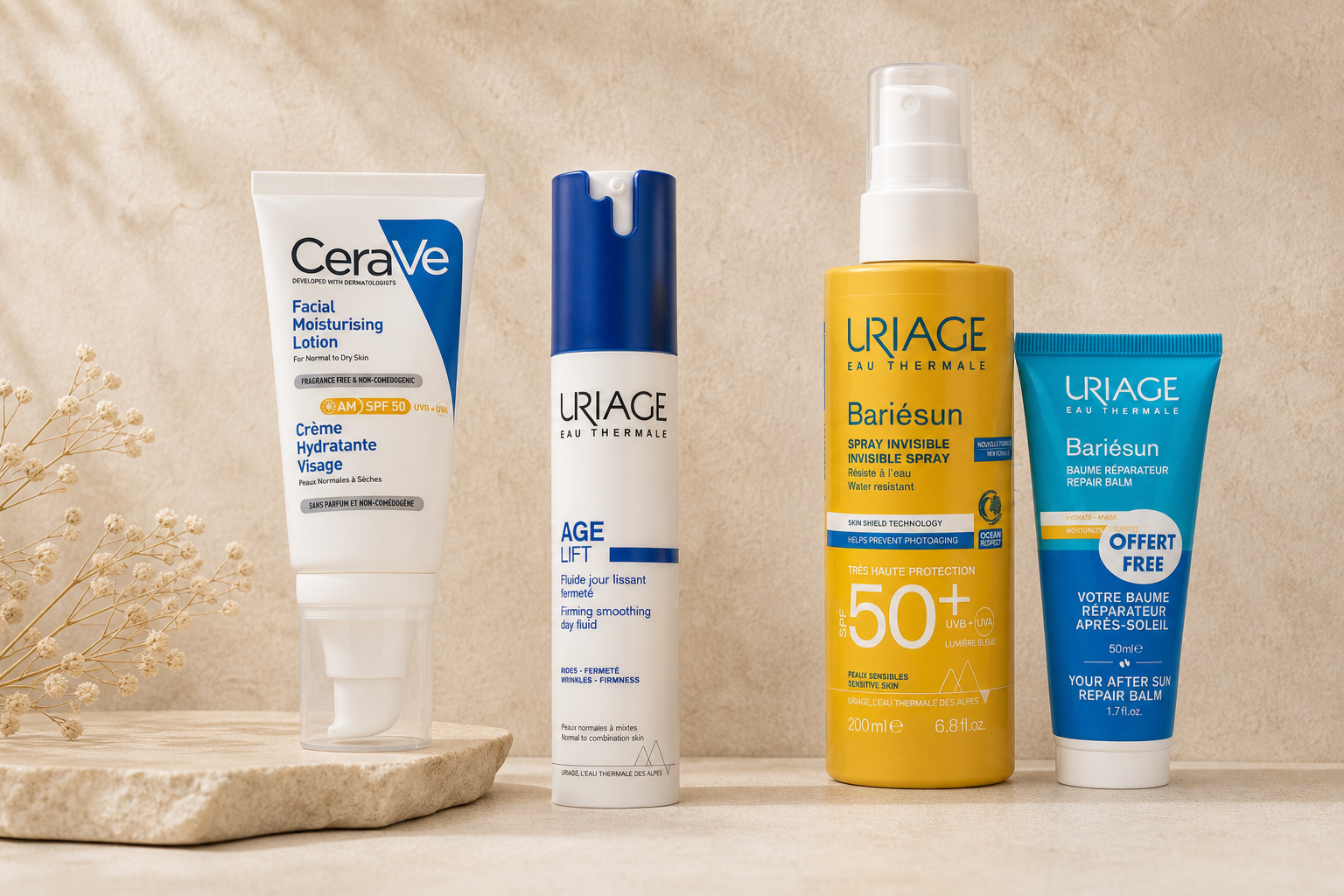
The Uriage Age Lift SPF 30 day cream is a natural entry point into the brand. In a 40 ml package, it combines regular daily hydration with SPF 30 protection and a smoothing effect targeting mature skin—perfect for when you don't want to layer three products under makeup but also don't want to skip protection.
- The texture is creamy, not mattifying—better suited for dry and normal skin rather than very oily skin.
- SPF 30 is sufficient for a regular city day, but it's underpowered for a seaside holiday.
- The smoothing component makes it a logical replacement for a day cream, not just a seasonal addition.
When you need a higher level of protection, Bariésun comes into play. This range is built around SPF 50+ and compatibility with sensitive skin, making it ideal for people who find traditional sunscreens sting their eyes or irritate after shaving. Formats vary based on your preference: a hydrating face cream, an invisible spray for quick touch-ups during the day, or packages supplemented with thermal water or after-sun balm. Bariésun isn't tinted; it's intended as pure protection—you can apply color separately if needed.
CeraVe: Light Emulsion with SPF 50 as a Makeup Base
CeraVe plays a different role in this selection. Its strength isn't in covering pigments but in its formula with ceramides and care for the skin barrier, helping the skin retain moisture. The light facial emulsion with SPF 50 in a 52 ml package is particularly interesting as a non-tinted base: apply it in the morning instead of a moisturizer, let it dry for a few minutes, and then add a tinted cream or light makeup.
- The consistency is milky and absorbs quickly, so it doesn't create patches under makeup.
- Without a strong tint—you don't have to worry about matching your skin tone.
- Suitable for dry skin that tightens with light fluids.
Tinted Option or Two Separate Layers?
The choice between a single tinted product and a duo of protection plus color isn't about quality, but about your daily routine. A tinted cream with SPF makes sense when you want to save a step in the morning, when your skin is relatively even and just needs a slight tone adjustment, and when you don't plan on reapplying protection throughout the day.
Layering separately is beneficial in three situations. First, when you need really high protection—coverage can easily be diluted if you apply a tinted product thinly for a natural look. Second, when you want to target specific areas: then a non-tinted protection with concealer on needed spots is more practical. And third, when you're topping up protection during the day—it's easier to work with a spray over finished makeup than with a covering cream.
Uriage and CeraVe complement each other in practice because each brand addresses a different aspect of the problem: Uriage offers a ready solution in one step and high protection for sensitive skin, while CeraVe provides a reliable layer that supports the rest of your routine. If you've only tried tinted fluids so far and weren't satisfied, it's worth trying the opposite approach.
Clarins and Its Tinted Moisturizing Cream
The fifth brand in this comparison takes a different approach than dermocosmetic lines. Clarins belongs to the more luxurious segment and approaches tinted SPF more from a skincare perspective with a cosmetic finish rather than as a protective product with added pigment. If you're used to light makeup and looking for a product to replace it during warmer months, this option will suit you.
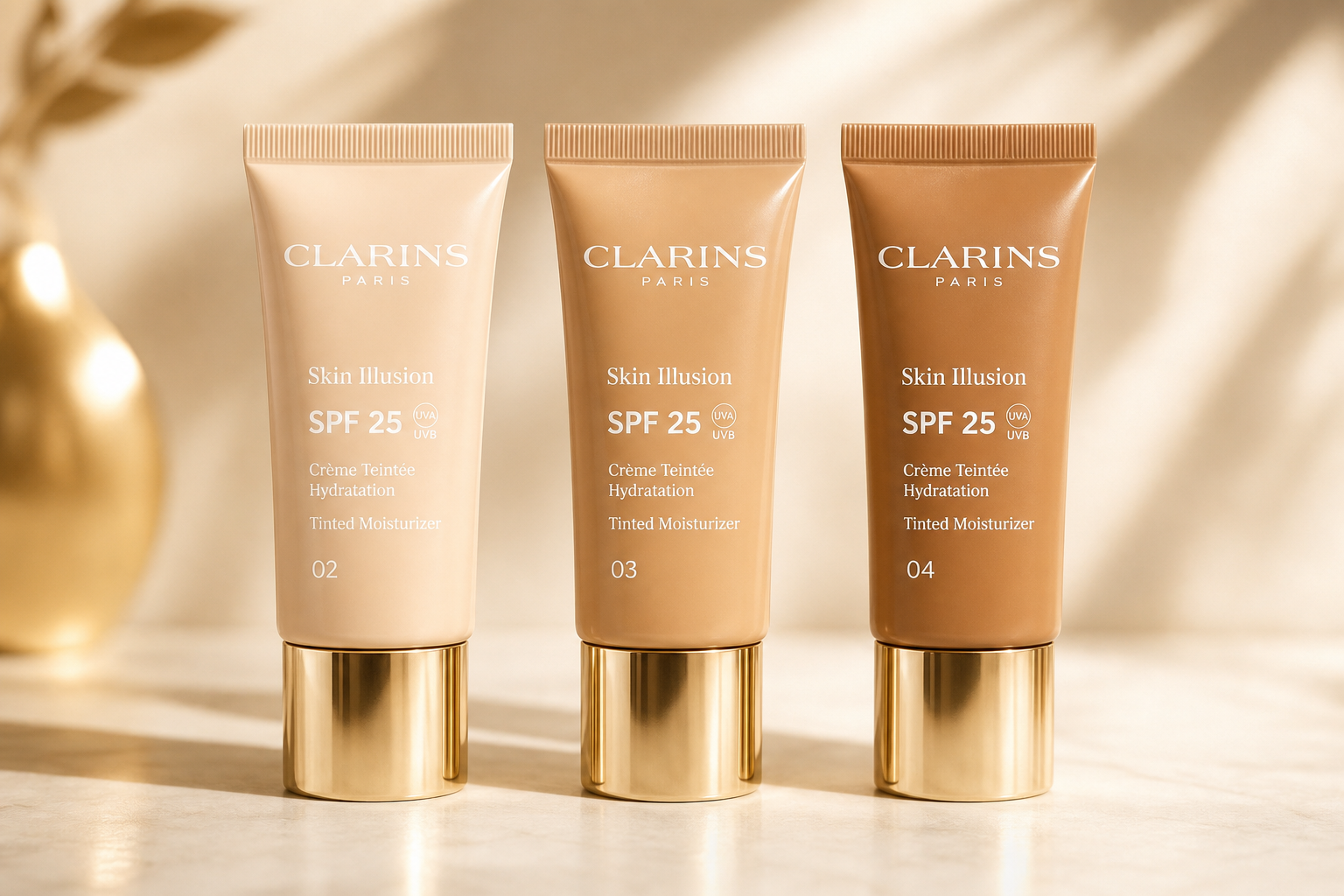
The Skin Illusion line offers a tinted moisturizing cream with SPF 25 in a 40 ml size and in several shades – including shades 03 and 04 in the catalog. The shade range is the main difference compared to universal tinted fluids: you choose based on skin tone brightness similar to decorative cosmetics, not a single universal tone. The texture is light and hydrating, the result is naturally radiant, with low to medium coverage – it evens out skin tone and reduces redness but won't cover more pronounced imperfections.
When SPF 25 is Enough and When to Opt for Higher Protection
SPF 25 is a compromise that makes sense for an ordinary city day: commuting to work, lunch outside, afternoon shopping. In autumn and winter, when sunlight is weaker, most people can use it fully. However, if you plan to spend extended time in direct sunlight, go on a beach holiday, or are trying to monitor pigmentation spots, it's wiser to choose SPF 50 from the dermocosmetic lines mentioned in this comparison and save the tinted cream for days with less exposure. Similarly, caution is advised for skin after dermatological procedures, where higher protection is usually recommended.
Another thing worth monitoring is the amount applied. The stated SPF corresponds to a laboratory layer, which few people apply in practice, and the tinted cream is spread thinly to look natural. Therefore, consider SPF 25 as a daily base, not a full-fledged replacement for sunscreen for a whole day by the water.
Five Brands Side by Side
When comparing the individual lines based on three criteria – texture, coverage ability, and price level – the division is approximately as follows:
- Vichy – light fluid textures with a matte finish and high protection, low coverage, and more unifying. Premium price level corresponding to dermocosmetic standards.
- La Roche-Posay – the broadest range of the five: from corrective products for problematic skin to products targeting redness, coverage from light to more pronounced. Also premium level.
- Uriage – gentle creamy textures focused on sensitive skin, low coverage. The most affordable of the compared brands, mid-range.
- CeraVe – untinted, purely protective base with an emphasis on the skin barrier, no coverage. A practical choice when you unify the tone with decorative cosmetics.
- Clarins – moisturizing cream with a range of shades and a brightening finish, low to medium coverage, the lowest protection factor of the five. Luxury price position.
Narrowing down the selection can be done relatively quickly. If protection is your main concern and you apply makeup separately, an untinted variant with a high factor will suffice. Conversely, if you want one product instead of two and care about the shade matching perfectly, lean towards a tinted cream with a choice of shades, typically Skin Illusion. If sensitivity or redness is your main concern, composition and tolerance matter more than finish – in such cases, it's worth sticking to dermocosmetic lines with a higher factor and keeping the tinted cream as a supplement for the cooler part of the year.
How to Choose a Tinted SPF Based on Skin Type
Comparing parameters is one thing, but daily use is another. The deciding factor is often your skin type – it determines the texture your skin can handle and the level of protection that makes sense. The following overview links five brands from this comparison with specific skin needs, so you can choose your starting point right away.
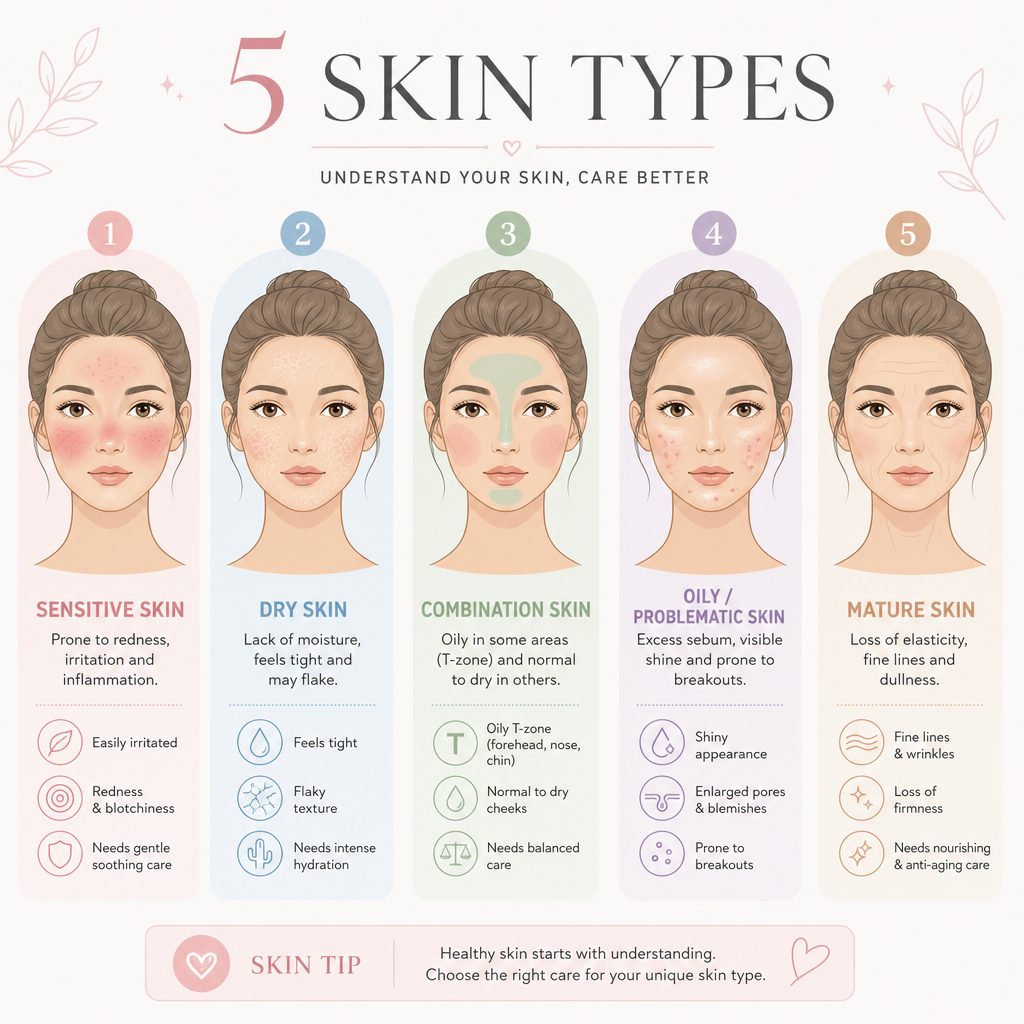
- Sensitive Skin Prone to Redness – look for a product that combines daily hydration with sun protection while also visually reducing redness. La Roche-Posay Toleriane Rosaliac AR Moisturiser SPF30 is suitable for this role. If your skin reacts irritably even to regular day creams, start with protection from the Uriage Bariésun range and add a tinted cream only when you know the basic care suits you.
- Dry Skin – you need a higher level of hydration and a richer texture, otherwise the tinted product will clump into uneven patches on your skin. Uriage Age Lift SPF30 Protective Smoothing Day Cream works well, or you might try Clarins Skin Illusion Tinted Moisturizer SPF 25, which has a light texture and leaves the skin looking fresh rather than matte.
- Combination Skin – a compromise between an oily T-zone on the forehead and nose and drier cheeks is handled well by Clarins Skin Illusion Tinted Moisturizer SPF 25. If your nose wings get shiny in warm months, simply dust them lightly with powder after application.
- Oily and Problematic Skin – choose matte and non-greasy textures. La Roche-Posay Effaclar Duo (+) Unifiant offers a tinted version specifically for skin prone to imperfections, while Vichy Capital Soleil Tinted Dry Touch Face Fluid SPF50 provides high protection in a dry, fast-drying fluid.
- Mature Skin – here it pays to combine protection with care for firmness and an even tone. Vichy Liftactiv B3 SPF 50 targets skin with pigmentation spots, while Uriage Age Lift SPF30 Protective Smoothing Day Cream focuses on smoothing the surface.
Whichever you choose, the result depends on the amount. For the face and neck, use about half a teaspoon of product, which is roughly two fingers' worth squeezed from tip to second knuckle. A smaller amount looks nicer on the skin but won't achieve the declared protection. During a regular day at the office, your morning layer will last, but for extended outdoor stays, reapply approximately every two hours and always after swimming or towel drying.
The order of your morning routine is simple: start with serum, wait a moment for it to absorb, and then apply the tinted product with sun protection as the final step. Decorative cosmetics come on top of that. For many people, a tinted cream completely replaces makeup, while for others, it serves as a base, complemented only by concealer on specific spots. The coverage of these products is inherently light, so don't expect them to perform like traditional makeup.
Good news for anyone worried about choosing a shade: tinted products with sun protection usually come in just a few broad shades, and their pigment blends better with your natural skin tone than full-coverage makeup. The risk of choosing the wrong shade is significantly lower. If you're undecided between two shades, opt for the darker one – the lighter variant tends to be more visible at the face and neck boundary.
If you want to view the five brands side by side, you'll find all the mentioned brands together in the skincare category on Brasty. It's worth filtering directly by skin type and protection factor; this saves you from clicking through and helps you quickly find out which options are currently in stock.
Category
Recommended articles
Riiffs Freeze in Flames: Ice and Flames Illuminate Warsaw "Give a girl the right shoes and she can conquer the world!" Marilyn Monroe