



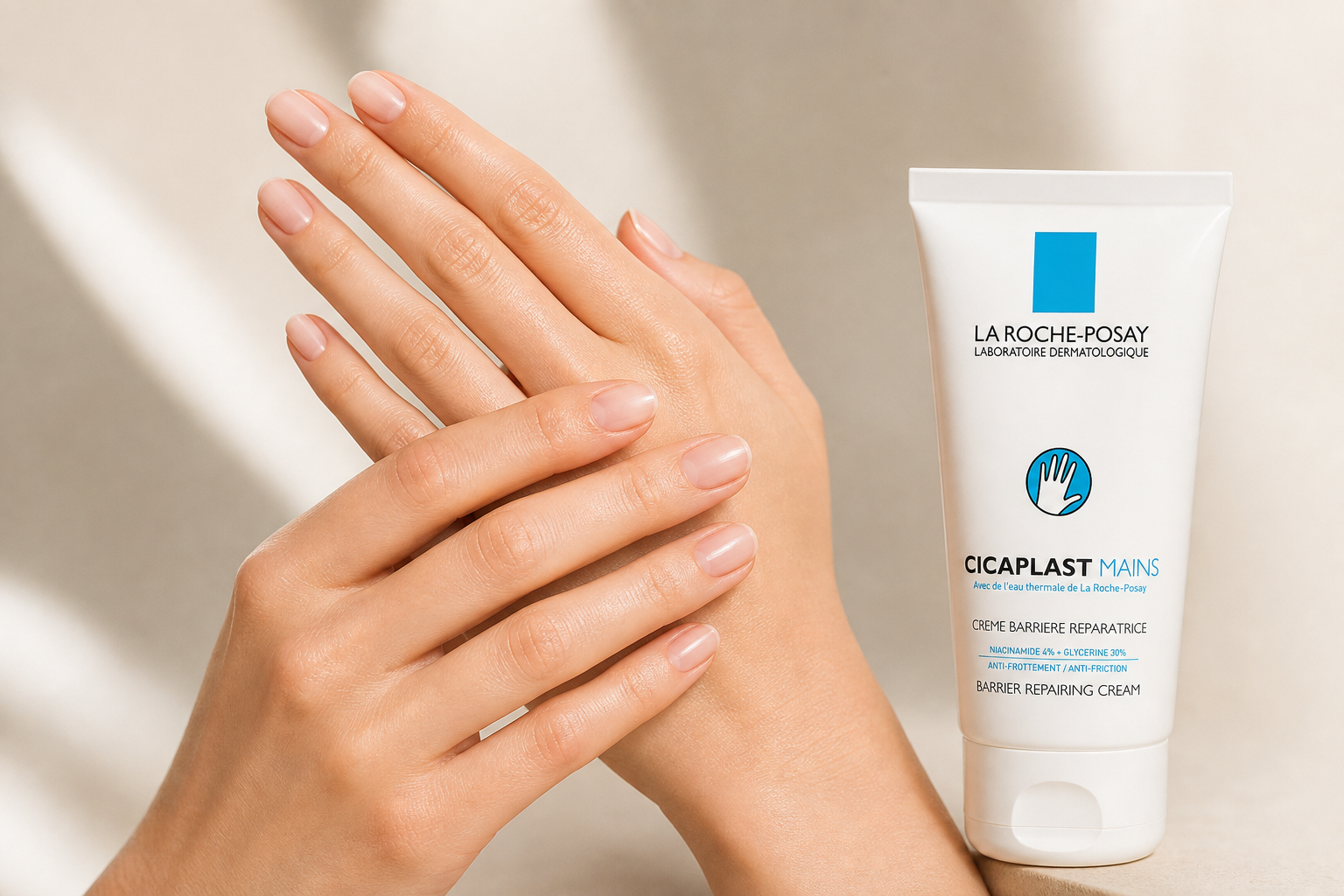
An overview of six hand creams from dermocosmetic brands we carry – from light moisturizing textures to nourishing balms for atopic skin. Find out which type suits whom and how to choose among them.
Why Hands Dry Out Faster Than the Rest of the Body
Hands are in use from morning till night – opening doors, washing dishes, typing on keyboards, and finally being exposed to frost or dry air from heating. The skin on the back of the hands is among the thinnest on the entire body and contains only a small amount of sebaceous glands. It is the skin's natural oils that, together with lipids, form the hydrolipid film that keeps water inside the skin. Where there is little of it, water evaporates faster – and hands therefore dry out quicker than the back, thighs, or stomach.
Additionally, there is the strain you cannot avoid in a typical day. Warm water and cleansing products wash away protective lipids, alcohol-based disinfectants dry the surface, rapid transitions between outdoor frost and overheated offices irritate the skin, and frequent wiping with paper towels mechanically stresses it. Hands can handle this occasionally without issues. However, when minor stress is repeated several times a day, the skin barrier's recovery cannot keep up with the rate at which it is disrupted.
Typical Signs of Dry Hands
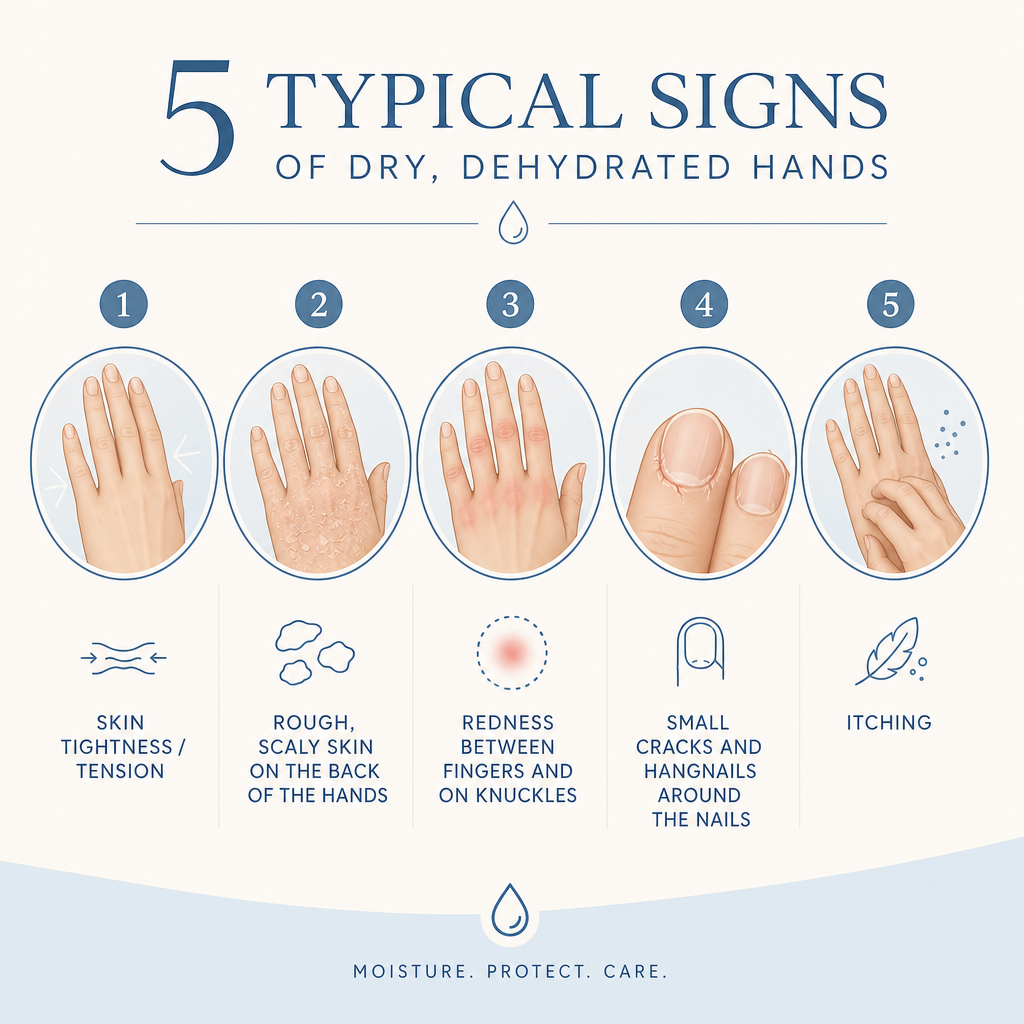
Dry skin makes itself known before cracks appear. Watch out for these signals:
- Tightness – an unpleasant feeling of tautness that comes shortly after washing hands and subsides only after applying lotion.
- Roughness – the backs of the hands feel matte and scaly to the touch, and fingers catch on fabric.
- Redness – most often where the skin is thinnest, such as between the fingers and on the knuckles.
- Cracks and hangnails around the nails – small damages that hurt with every subsequent wash.
- Itching – worsens in heated rooms and after contact with cleaning agents.
Dry and sensitive skin are not the same, even though they often occur together. Dryness is a state of the barrier: the skin lacks water and lipids, resulting in roughness and tightness. Sensitivity is a way of reacting: the skin responds with redness, stinging, or itching even to stimuli that do not bother others. On hands, both situations commonly combine, so it is worth looking for a product that both replenishes the oily component and does not irritate.
Dermocosmetics were created precisely for these conditions – care developed for dry, sensitive, and atopic skin, which usually omits fragrances and other unnecessarily irritating ingredients. In our facial and body care range, you'll find brands like Bioderma, La Roche-Posay, CeraVe, Uriage, and Vichy. Each relies on slightly different formulations, but they are united by a focus on restoring the skin barrier and being tolerable even for skin that reacts easily.
Later in the article, we will introduce you to six specific hand creams – from light hydrating textures that fit in a handbag and are suitable for multiple daily uses, to rich balms for very dry and atopic skin. For each, you'll learn who it suits and in what situation it proves effective.
How to Choose: Ingredients, Texture, Fragrance
Hand creams may look similar on the shelf, but the differences between them are significant. You can distinguish them by three things: what ingredients they contain, how thick their texture is, and how strong their scent is. Whether you're dealing with seasonal dryness or long-term sensitive skin prone to itching, these three criteria will significantly narrow down your choices.
Ingredients: Hydration, Nourishment, Barrier Repair
Read the ingredient list from the top – ingredients are listed in descending order by quantity, so the first few lines tell you the most. In hand care, several ingredients are commonly repeated, each playing a different role:
- Glycerin – a proven moisturizing ingredient that binds water in the upper layers of the skin. It is often one of the first items in the composition and works in light creams as well as in rich balms.
- Urea – hydrates the skin in lower concentrations and softens hardened and scaly areas in higher concentrations. It is quickly noticeable on calloused skin on the knuckles, but may briefly sting on cracked areas.
- Ceramides – lipids that are a natural part of the skin barrier. They make sense where frequent washing and disinfection have long-term disruptive effects.
- Panthenol – provitamin B5, used in cosmetics for its soothing effect on irritated skin.
- Shea Butter – a rich occlusive ingredient. It creates a film on the skin that slows water evaporation and is typical for night balms.
- Niacinamide – a form of vitamin B3. It is appreciated by those who, besides hydration, also seek a more even skin tone.
Dermocosmetic brands that are among the most sought-after in this category – Bioderma, La Roche-Posay, CeraVe, Uriage, or Vichy – usually work with shorter ingredient lists. The reason is practical: the fewer items a formula contains, the less likely it is that there will be something that doesn't suit your skin. Formulations for sensitive skin also undergo testing under dermatological supervision, which is often indicated on the packaging. It's not a guarantee that the product will suit you, but it's a reasonable starting point.
Texture: Light Cream or Rich Balm?
Texture determines whether you will actually use the cream. A light moisturizing cream absorbs quickly, doesn't leave a greasy film, and it's okay if you touch the keyboard after applying it. The compromise is a lower fat content, so the care fades after each hand wash.
A rich balm works the opposite way. It contains more oils and butters, absorbs slowly, and leaves a tangible layer on the skin. During the day, most people find this bothersome, but at night it's an advantage – the skin has several hours of peace and nothing washes it away. For very dry or cracked hands, a combination of both is effective: a light cream during the day, a nourishing balm in the evening. If you're buying just one product, base your choice on when your hands are at their worst.
Fragrance: When to Choose a Fragrance-Free Option
Fragrance is often a cause of irritation in hand creams. Fragrance components are common allergens, and on skin weakened by frequent washing, the problem appears sooner than elsewhere. If your hands itch, burn, or show redness after using a cream, try switching from a fragranced product to a fragrance-free option first.
The label fragrance-free doesn't mean the product has no scent at all. It simply means that no fragrance blend was added to the formula; a faint natural odor of the raw materials remains. For everyday use, this is usually an advantage – the cream doesn't clash with the perfume you wear.
In the Brasty catalog, these products fall under body care, so you'll find them alongside balms and body lotions from the same brands. If a particular line works well for your hands, check if it is also available in a version for the whole body.
Three Lightweight Moisturizers for Everyday Use
A lightweight texture is not a compromise, but a choice depending on the situation. When you're flipping through papers, typing on a keyboard, or washing your hands frequently, a thick balm can be more of a hindrance – it stays on the surface, leaves marks on documents, and a greasy film on the keys. Lighter creams and emulsions absorb in just a few seconds, quickly replenish hydration, and can be applied up to five times a day. They are equally effective in the summer months when the skin primarily lacks water, not oils.
The following three tips are described in the same structure – who they suit, how quickly they absorb, and which ingredient plays the main role. All three come from lines that have long been among the bestsellers in facial and body cosmetics in the Brasty catalog; for hands, the lighter textures are the most suitable.
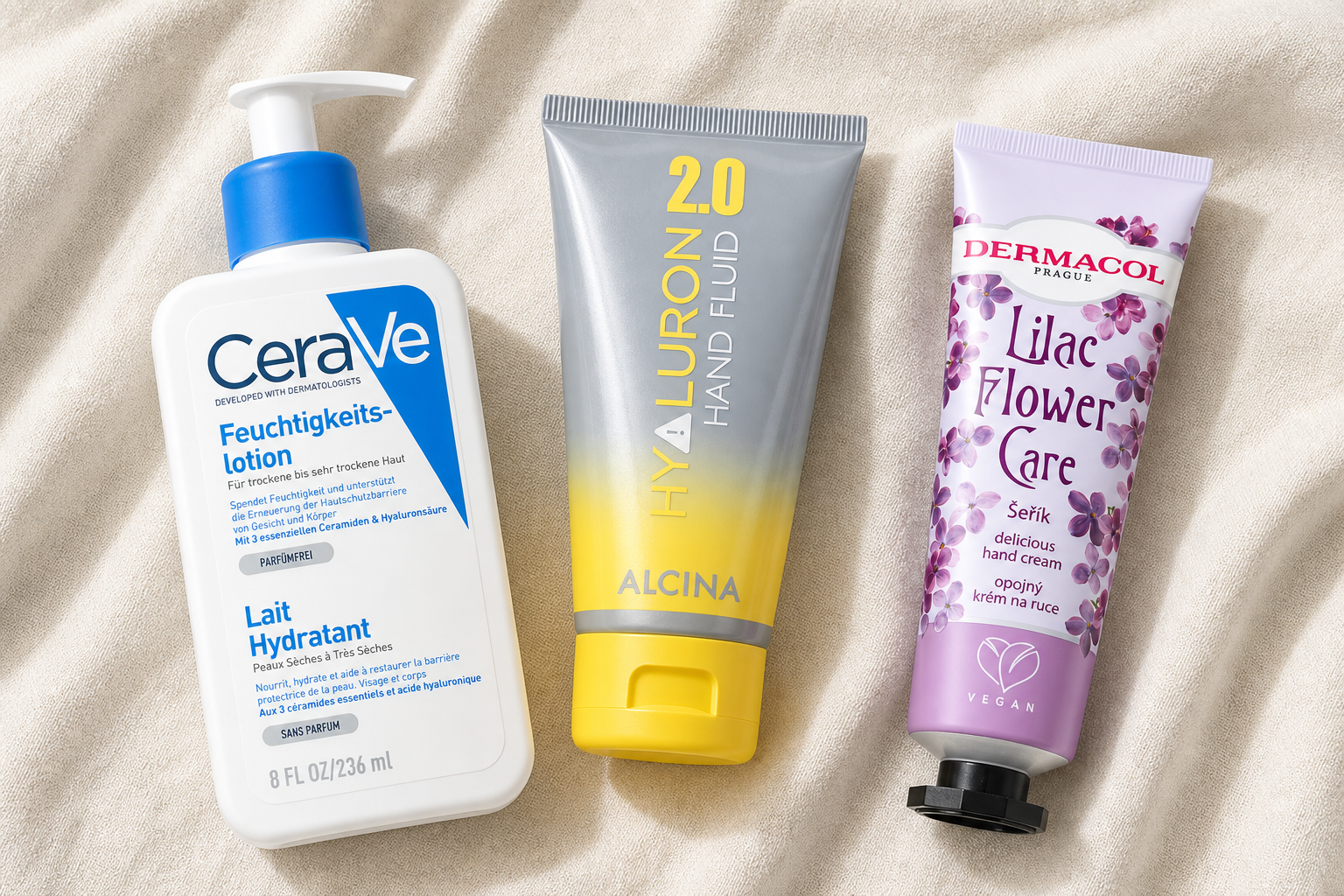
CeraVe Moisturising Lotion with Ceramides
A lightweight milky emulsion, known especially by those with long-term dry skin. You can use it on your hands just as well as on your body, and the large packaging lasts even with multiple applications per day.
- Suitable for: dry but non-irritated skin, which benefits more from regularity than intensive wraps.
- Absorption: quick, without a sticky residue – you can reach for the keyboard shortly after application.
- Main ingredient: ceramides complemented with hyaluronic acid. Ceramides are a natural part of the skin barrier and help retain water where it should be.
Vichy Minéral 89 for a Quick Hydration Boost
A gel serum with a high content of thermal water. It is one of the lightest forms of hydration available from the brand: suitable for the backs of the hands as a layer to apply under cream in the morning, or as a standalone refreshing care on a hot day.
- Suitable for: those who find traditional creams too greasy, and anyone who treats their hands even between meetings.
- Absorption: practically immediate, the texture is watery and leaves no film.
- Main ingredient: mineralized thermal water combined with hyaluronic acid, which helps retain moisture on the skin.
Bioderma Hydrabio for Sensitive Skin
The Hydrabio line is the lighter, hydrating branch in Bioderma's portfolio – compared to the nourishing products of the same brand, it focuses on replenishing water, not oils. You'll reach for it when your hand skin reacts with irritation to regular perfumed creams.
- Suitable for: sensitive and dehydrated skin that poorly tolerates strong fragrances and thick consistency.
- Absorption: very quick, you can apply the concentrate even on still damp hands after washing.
- Main ingredient: a hydrating complex, with hyaluronic acid playing the main role.
Light textures have one limitation: they reliably replenish hydration but do not protect skin that has already lost a significant portion of its protective film. If hands remain tight even after several applications, it's time to reach for more nourishing care. For regular workdays, for summer, and for hands that are frequently washed, this trio does exactly what you need – quickly and without greasy traces.
Three Nourishing Balms for Atopic Skin
When the skin on your hands stops responding to a light cream, it's usually not lacking water but fats. Very dry, cracked, or atopic skin needs a thicker texture that stays on the surface longer and helps slow down moisture evaporation. The following three balms come from lines that are top sellers in dermocosmetics and are just as suitable for hands as they are for the rest of the body.
The difference from a light cream is mainly in the ratio of fats to water. A balm has a higher oil phase content, absorbs more slowly, and leaves a gentle layer on the skin that cushions the effects of cold, wind, and frequent hand washing. You pay for this with a longer absorption time – that's why nourishing balms are most often applied in the evening or before heading out into the cold.
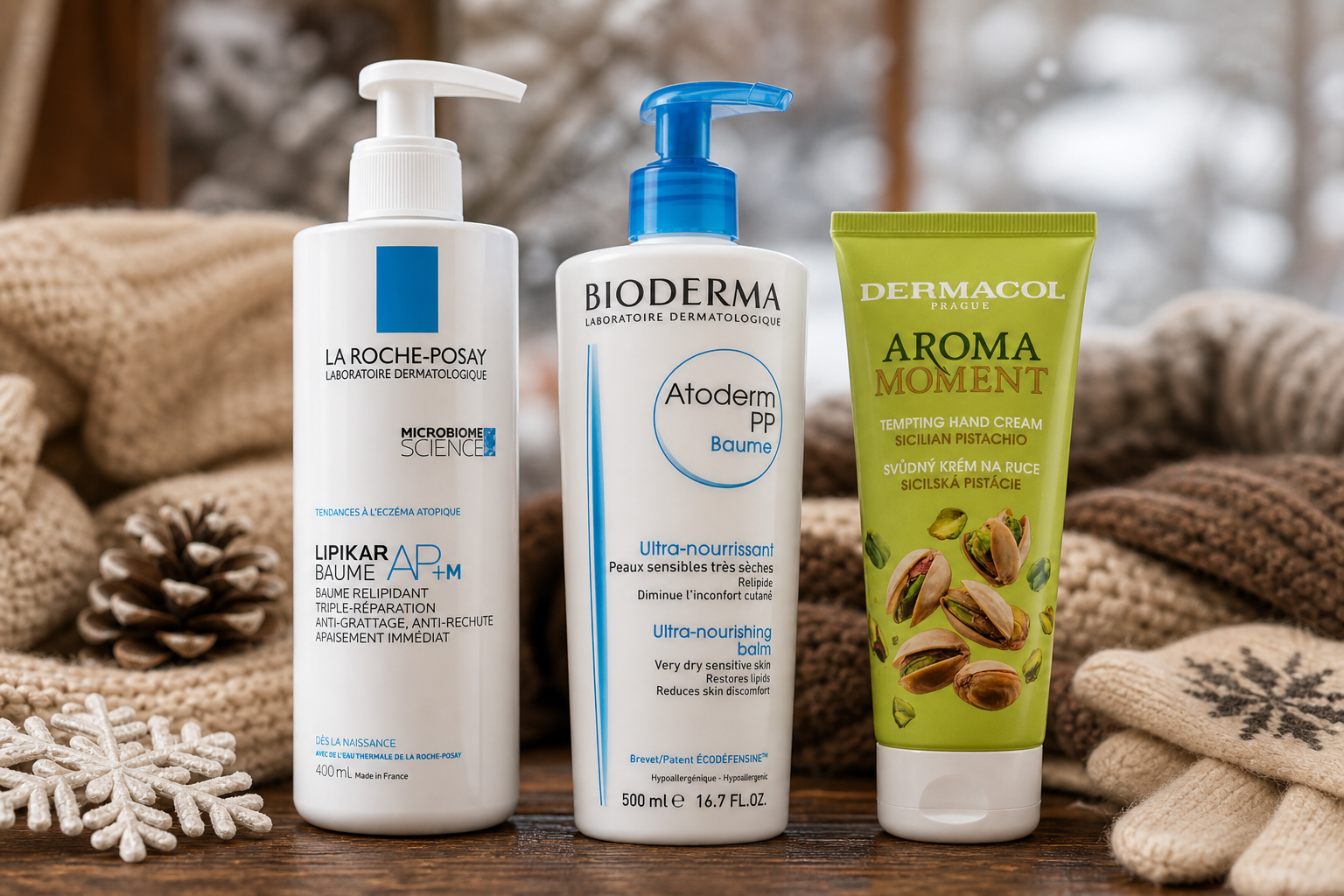
La Roche-Posay Lipikar Baume AP+ M is a lipid-replenishing body balm and has long been one of the most sought-after items in dermocosmetics. A 400 ml package may seem oversized for hands, but with daily use on both hands and body, it gets used up faster than you'd expect.
- Texture: thick, yet easily spreadable balm without a noticeably greasy film.
- Suitable for: very dry skin of adults and children, including skin prone to atopic eczema.
- When to use it: when a light hand cream only lasts until the next wash.
Bioderma Atoderm PP Baume comes from a line that is the top seller in body care. The 500 ml balm is designed for dry to very dry skin and can withstand frequent reapplication throughout the day, which is more useful for hands than anywhere else.
- Texture: nourishing, but somewhat creamier and more quickly absorbed than a classic thick balm.
- Suitable for: skin that reacts to soap, disinfectants, and hard water.
- When to use it: in winter as a base, supplemented with a lighter cream in your handbag during the day.
Uriage Xémose Anti-Itch Soothing Oil Balm is an oil balm developed for very dry skin prone to itching. Of this trio, it leaves the most noticeable protective layer on the skin, and is therefore more suitable for night use rather than a quick application between meetings.
- Texture: oil-cream, noticeably richer, absorbs the slowest.
- Suitable for: skin that feels tight and itchy after washing.
- When to use it: in the evening, ideally combined with cotton gloves overnight.
For skin prone to atopy, it's worth choosing an unscented or minimally scented option. Fragrance itself isn't the problem, but with sensitive and irritated skin, it increases the likelihood of a reaction – and since you wash your hands several times a day, you apply balm to them much more often than to the rest of your body. Follow the same logic for layering: first a thin layer on damp skin right after washing, possibly a second layer in the evening overnight.
None of these balms are medications and cosmetic care does not replace treatment. If the skin on your hands cracks, weeps, or worsens despite regular care, consult a dermatologist – the balm is a supplement in such a situation, not a solution.

Which Cream to Choose for Your Hands
The best cream is the one you have on hand exactly when your skin needs it. Whether you're dealing with seasonal dryness or long-term sensitive hands, consistency matters more than the formula: a thin layer after every hand wash, a thicker dose at night, and in winter, a protective layer a few minutes before putting on gloves. One package is usually not enough. A smaller tube for your handbag or by the sink and a larger package at home for nighttime care cover two quite different routines and are not mutually exclusive in terms of cost.
Night care deserves special attention. At night, your skin is free from washing, disinfecting, and typing, allowing a nourishing balm to work for several hours straight. If you dislike the greasy feeling, apply it about half an hour before bed to allow it to absorb. For really dry hands, cotton gloves overnight can help keep the layer in place.
Decision Guide by Skin Type
The six creams we've introduced can be narrowed down to one favorite based on what troubles your hands the most:
- Normal to slightly dry hands, all day in the office – choose a light moisturizing cream that absorbs quickly and doesn't leave a film on the keyboard or documents. Ideal for both the sink and your handbag.
- Hands after frequent washing and disinfecting – you need a lighter texture that you can apply up to eight times a day, but with panthenol or glycerin content to add something with each application.
- Hands exposed to frost and wind – opt for a more nourishing balm with a higher lipid content. A protective layer under gloves is more important in winter than quick absorption.
- Sensitive skin prone to redness – choose fragrance-free products from dermocosmetic lines, such as those from Bioderma or La Roche-Posay. Fewer ingredients usually mean fewer triggers for irritation.
- Atopic and scaly skin – look for balms specifically designed for atopic conditions, such as Bioderma Atoderm, La Roche-Posay Lipikar, or Uriage Xémose. These formulas are also available in large packages, so you don't have to skimp.
- Cracked skin around nails and joints – combine: a light cream during the day, a thicker balm at night targeted at affected areas. Spot application in a thicker layer yields better results than one universal dose.
If you're unsure, start with a lighter cream. You'll be able to maintain daily use, whereas a thick balm often ends up in a drawer because you dislike greasy fingers. Add the nourishing option in the evening once you see that daytime hydration alone isn't enough.
Extra Intensive Care
When your hands need extra attention – after gardening, skiing, or a week in dry office air – it's worth incorporating a hand mask. It works similarly to a facial mask: more concentrated and for a shorter time than a regular cream. Among the available options, the Dermacol Hydrating & Smoothing Hand Mask is worth trying, which you can use in the evening while watching TV. Once a week as a supplement to your daily cream is plenty, but it won't replace your daily cream.
All the mentioned brands can be found together in the body care category in the Brasty catalog, where you can compare package sizes and prices. We recommend starting with one cream, using it diligently for a month, and only then evaluating. Hands react slower than the face, and you usually notice a difference only after several weeks.

Category
Recommended articles

"Give a girl the right shoes and she can conquer the world!" Marilyn Monroe