

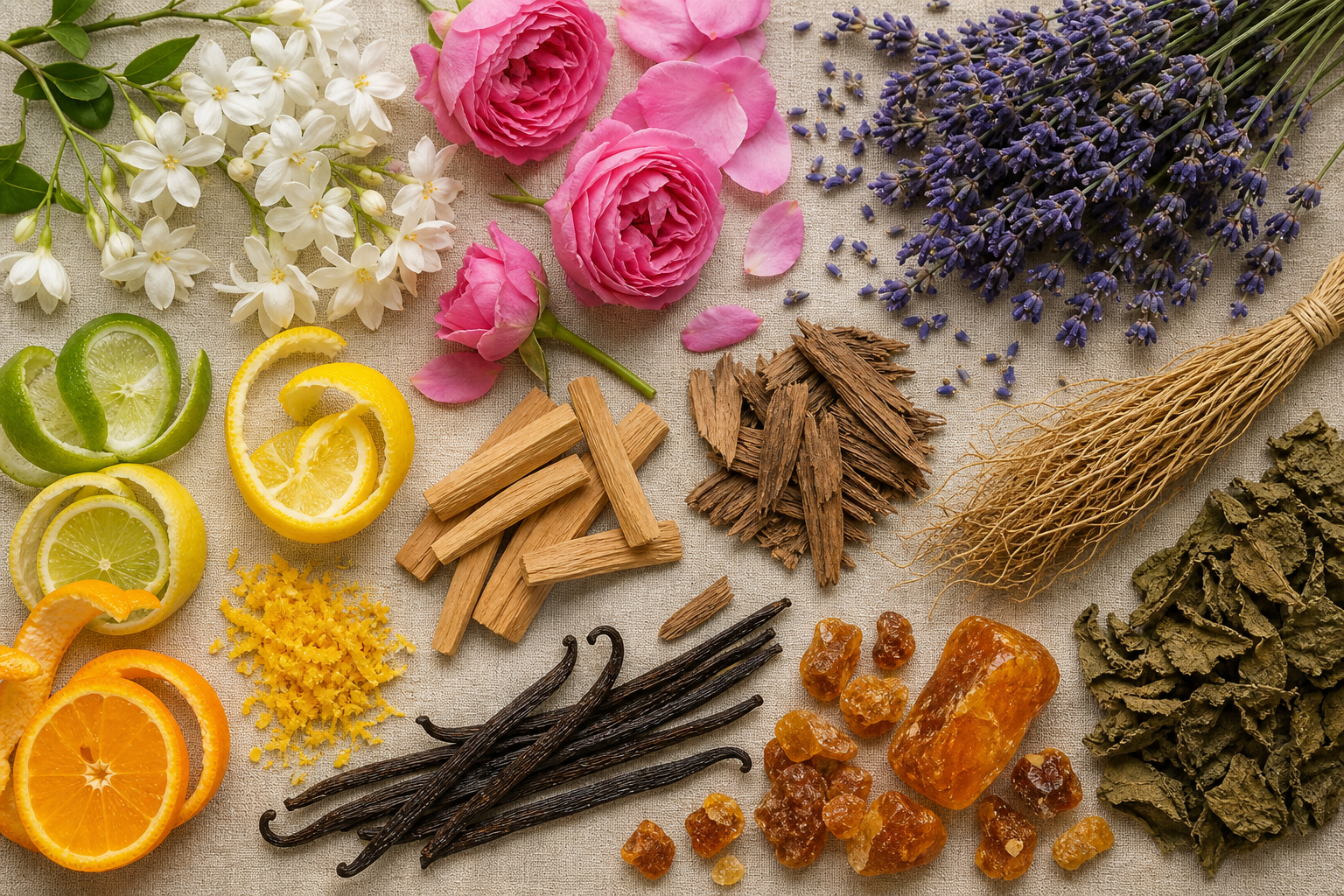
What scents are captured in a single bottle? Let's explore six ingredients that form the foundation of most perfumes – from fresh citrus to warm musk, vanilla, and amber.
Why It's Worth Knowing the Composition of a Perfume
Whether you're choosing your first perfume or have been building a collection for years, the fragrance description on the label might seem like a foreign language. Top notes, heart, base, along with a list of ingredients from bergamot to musk – without a guide, it's just a list of words. But once you understand how the composition is structured and why, choosing a perfume stops being a gamble and becomes a decision you can justify.
A fragrance doesn't behave like paint on a wall, which you see all at once. It evolves over time: what you smell in the store during the first few seconds after spraying is a different part of the composition than what others perceive from you in the evening. This shift is the reason behind most disappointments with a perfume that smelled perfect in the tester but not at home.
How the Fragrance Pyramid Works
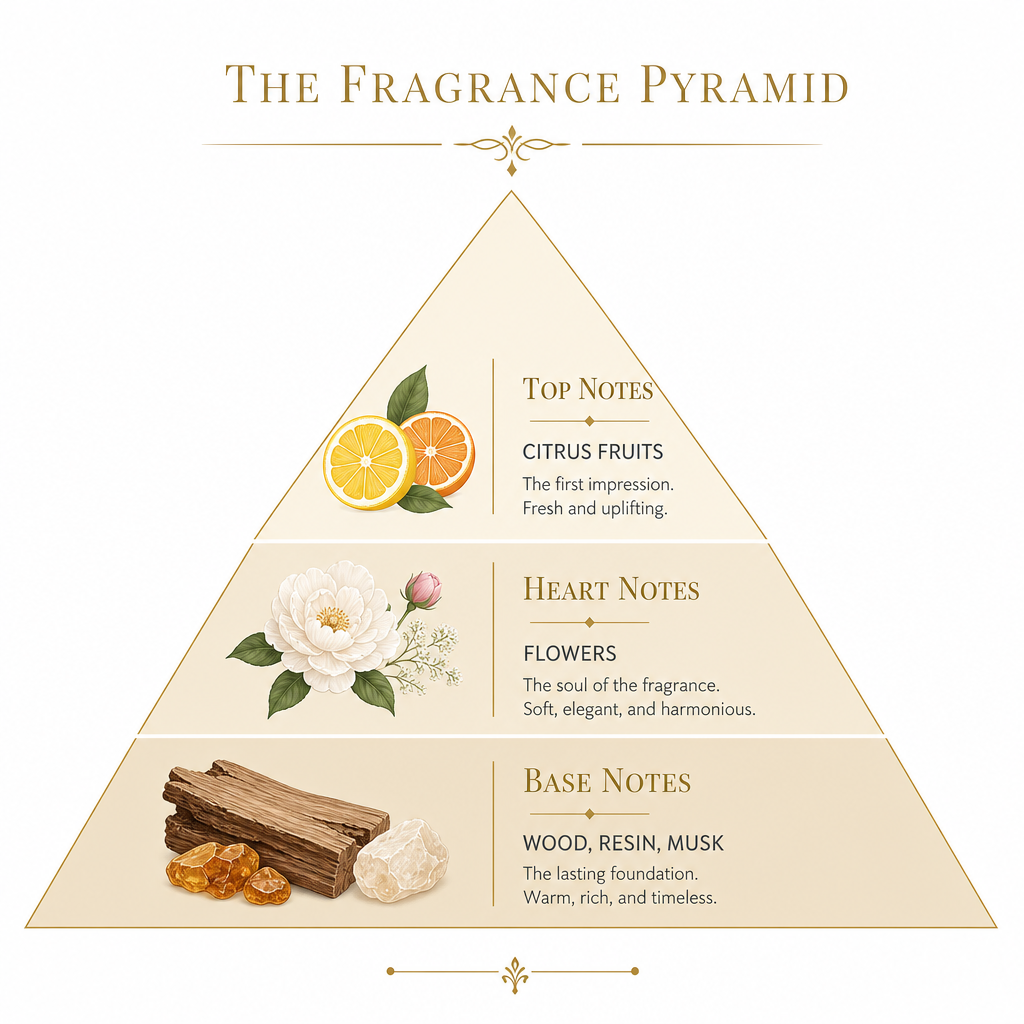
Perfumers describe the structure of a fragrance using the so-called fragrance pyramid. It has three levels, each responsible for a different phase:
- Top Notes – the most volatile ingredients, which you smell right after spraying. They usually last a few minutes to just under half an hour and are meant to open the fragrance. Typically, these include citrus and fresh aromatic notes.
- Middle Notes (Heart) – the core of the composition, which unfolds after the top notes fade and lasts several hours. Here you'll find floral essences and spices; the heart gives the perfume its character, by which you recognize it.
- Base Notes – the heaviest and least volatile ingredients. They emerge gradually, linger on the skin and clothing the longest, and determine how the fragrance fades. These include woods, resins, and warm balsamic notes.
The pyramid is not a minute-by-minute schedule, but rather a guideline. The levels overlap in practice, and much depends on the concentration: an Eau de Toilette relies more on a fresh start, while an Eau de Parfum has a richer and longer-lasting base. So when you read that a fragrance is based on top notes of bergamot and a floral heart, you know that the sparkling opening will fade quickly, and the floral core will accompany you for the rest of the day at work.
Six Ingredients That Repeat
When reading descriptions, you'll come across a surprisingly small range of ingredients that recur repeatedly. Citrus, floral essences, woody tones, musk, vanilla, and amber form the backbone of a large part of contemporary perfumery – you'll find them in affordable new releases as well as in luxurious compositions, in fragrances for women, men, and unisex compositions. The difference lies in the ratio, quality of processing, and the boldness with which the perfumer combines the ingredients.
For you, this means a practical shortcut. Just remember how these six groups behave, and you can estimate from the description whether the fragrance will be light for summer days or rich for cool evenings – and whether it will last until evening or need to be refreshed during the day. In the following sections, we'll go through each group separately: where the ingredient comes from, how it smells on its own, and what role it plays in the final composition.
Citrus – the Sparkling Start of Most Compositions
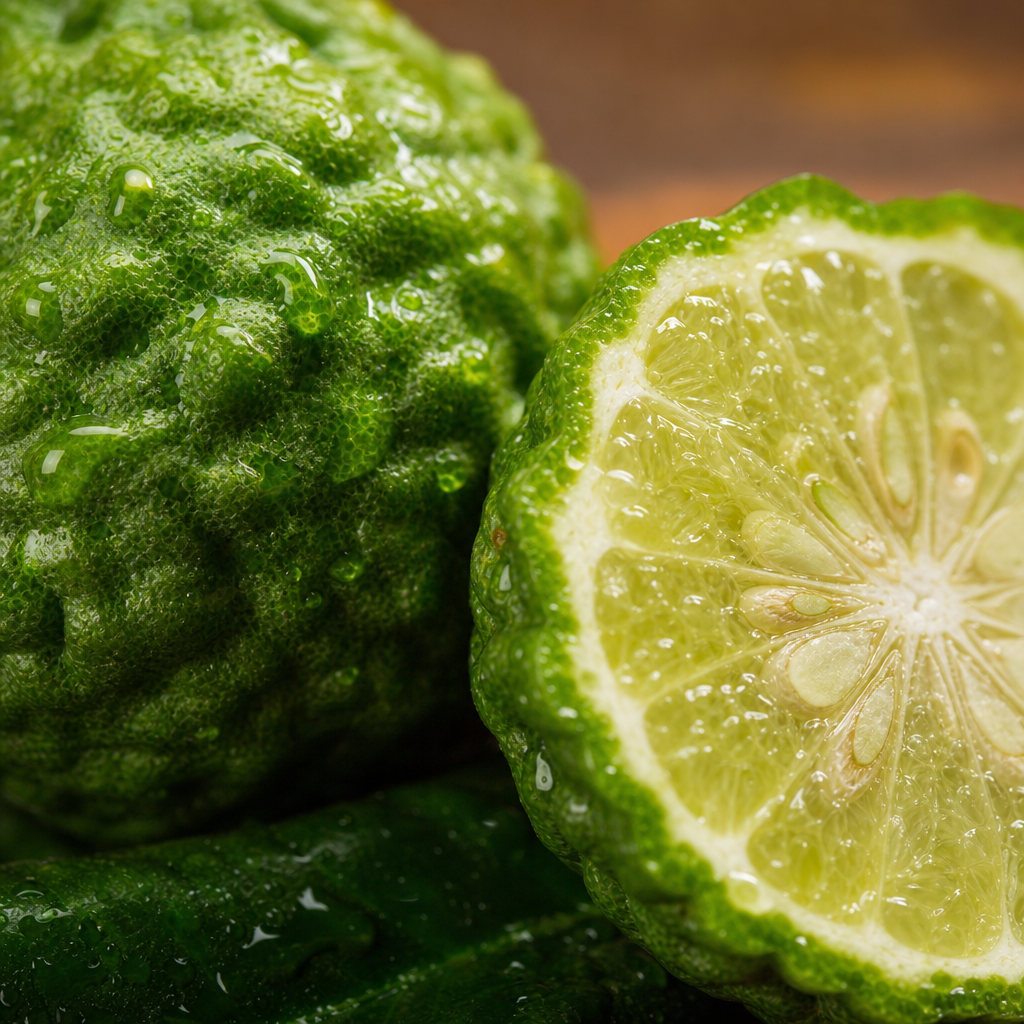
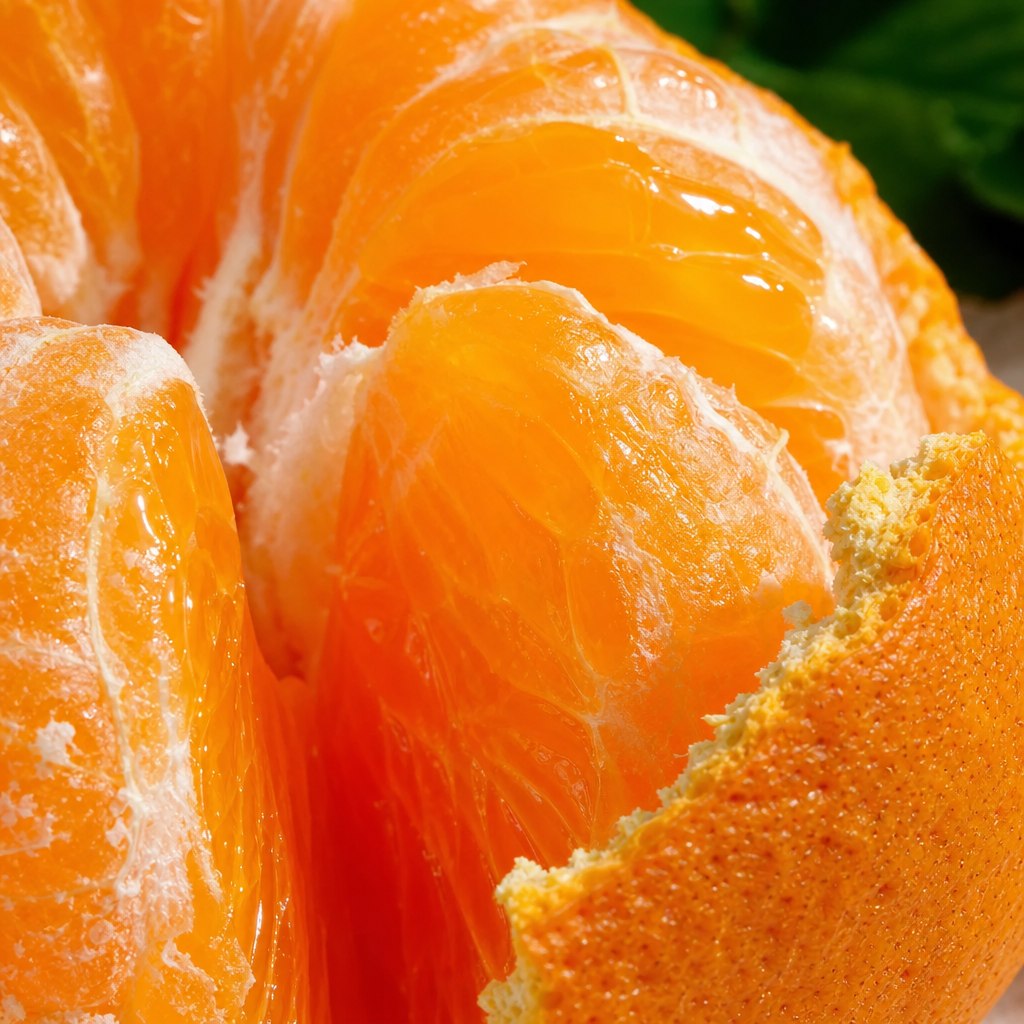
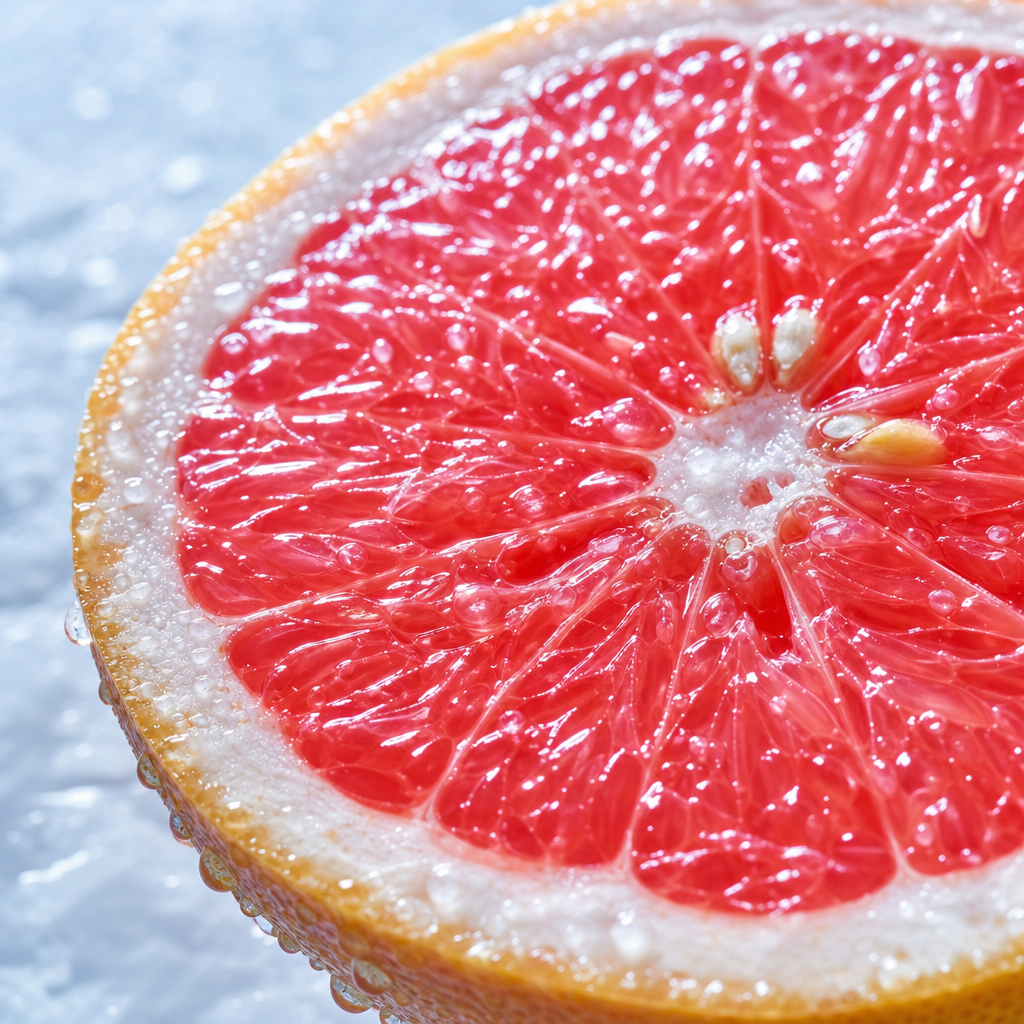
The first moments after spraying almost always belong to citrus. Bergamot, mandarin, or grapefruit are the initial notes to emerge from the skin, setting the tone for the perfume's impression when sampled in-store. That's why you'll find them in the vast majority of compositions – from light summer eau de toilettes to perfumes that might seem purely woody or oriental based on their description.
How Citrus Essence is Obtained
Citrus raw material doesn't come from the pulp or juice, but from the peel of the fruit. It is most often cold-pressed: the peel is mechanically disrupted, releasing aromatic oil sacs, which are then separated from the aqueous component. The essence obtained this way retains a juicy, almost "freshly peeled" character typical of citrus. Some raw materials are also produced by distillation – the result is usually gentler, smoother, and less sharp, making it suitable for compositions where citrus is meant to support other ingredients.
A relatively small amount of essence is produced from one fruit, so in common perfumery, natural raw materials are often combined with synthetic molecules. These provide stability to the citrus opening and help keep the fragrance balanced even after long storage, when the bottle is exposed to light and heat.
Why You Smell Citrus First
Citrus essences are among the most volatile raw materials perfumers work with. Their molecules are light and evaporate quickly from the skin, usually within the first few minutes. That's why they occupy the top notes, the part of the composition you perceive immediately after spraying. However, this also means that the citrus sparkle never lasts all day. If you've ever felt that a perfume "transformed into something else" after an hour, it was likely the departure of the citrus and the arrival of the heart of the fragrance.
Bergamot, Mandarin, and Grapefruit – Three Different Characters
Although all three materials are called citrus, each behaves differently in a composition:
- Bergamot – sweet, but with a slight bitterness and a tea undertone. It appears elegant, unobtrusive, and easily blends with anything else, making it suitable even where citrus is not meant to be the main theme.
- Mandarin – softer and sweeter than the other two materials, with hints of both juice and peel. It appears friendly and playful, often found in perfumes for women and in gentler unisex compositions.
- Grapefruit – sharper, bitter, and distinctly fresh. It adds energy to the opening and a slightly metallic sparkle, which works well in sporty and aromatic fragrances.
When Citrus Fragrances Shine
Citrus scents develop best in warmth. Higher temperatures accelerate evaporation and the light fresh note opens almost immediately, which is the main reason why citrus compositions are traditionally worn in summer and appear rather shy and brief in the cold. So if a summer perfume seems weak in winter, it may not be the fragrance itself, but the environment in which you are testing it.
Bergamot, meanwhile, has a much broader application than its fresh profile might suggest. You can find it at the beginning of leather, woody, and oriental perfumes, where it is not meant to create a citrus impression, but to brighten a dense base and make it accessible right from the first minutes. Next time you read the composition of a perfume that caught your interest, try looking for bergamot specifically – you'll likely find it there, even if you perceive the scent as purely warm.
Floral Essences – The Heart That Gives Fragrance Its Identity
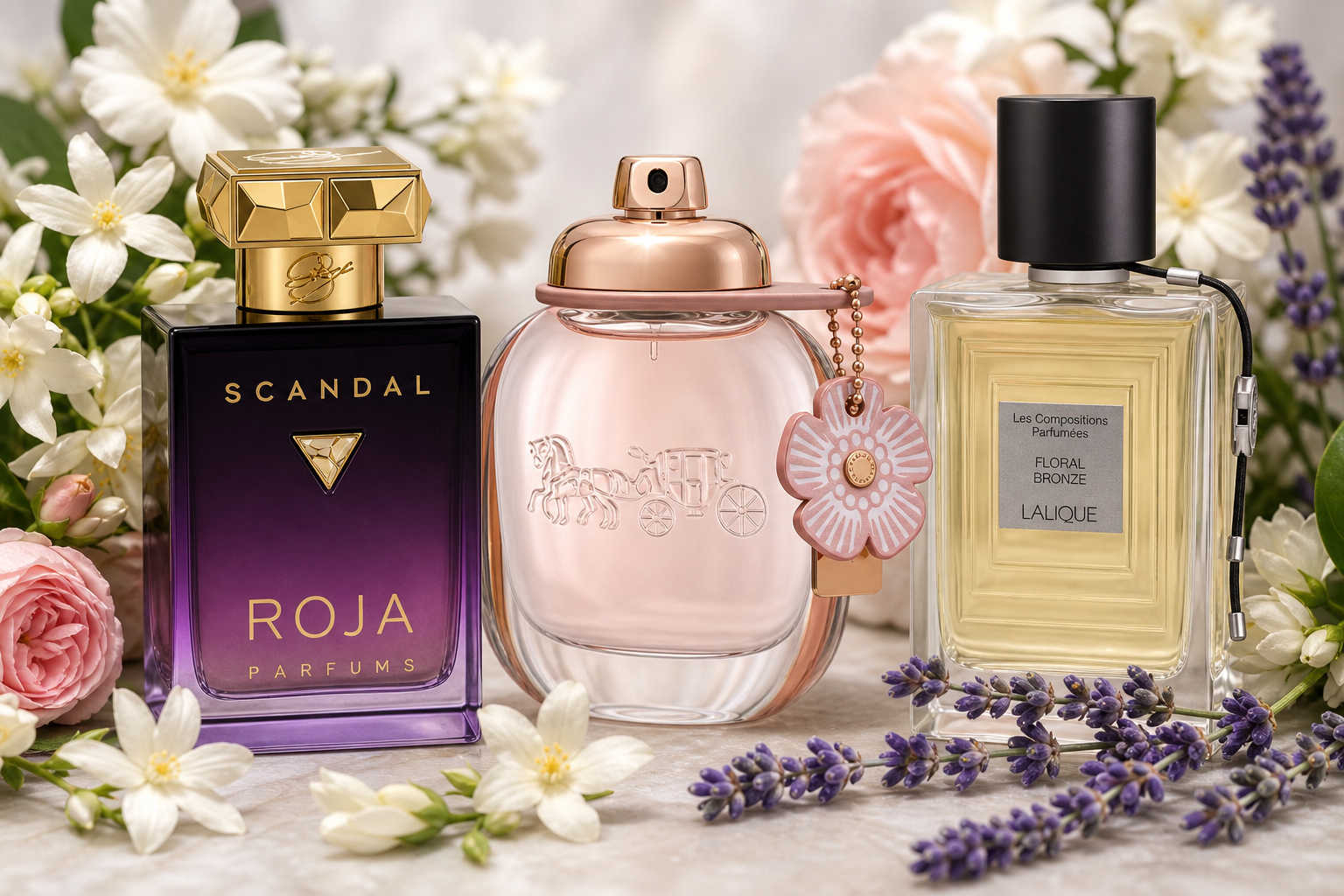
When the top notes fade, the middle layer of the composition comes into play – and this is where flowers sit in most perfumes. Floral ingredients give the fragrance its character, which is how you remember it: they determine whether it feels sensual, classically elegant, or freshly aromatic. This impression is most often created by three ingredients – jasmine, rose, and lavender.
Before we delve into individual flowers, it's worth distinguishing the three methods by which a flower ends up in a bottle. This isn't cosmetic poetry, but a description of different technologies:
- Essential oil is produced by steam distillation. It is suitable for materials that can withstand heat – typically lavender.
- Absolute essence is obtained by solvent extraction and is used where hot steam would damage delicate petals. This is how jasmine and part of the rose production are processed.
- Synthetic reproduction constructs the flower's scent from individual fragrant molecules. For many flowers, there is no other way – lily of the valley, lilac, and peony do not provide a usable natural extract, so their scent in perfume is always a reconstruction.
The presence of synthetics does not mean a worse perfume. The reproduced note tends to be more stable over time, varies less between batches, and conserves resources that are scarce in nature – hundreds of kilograms of hand-picked flowers are needed for a kilogram of jasmine absolute essence. Most modern perfumes therefore deliberately combine natural extracts with synthetic molecules.
Jasmine is among the most intense floral ingredients. It smells creamy, honeyed, with a special depth provided by naturally occurring indoles – these give jasmine a sensual, almost leathery undertone. Perfumery uses two main types: jasmine sambac, which feels fresher and tea-like, and grandiflorum jasmine, which is richer and sweeter. Only a small amount is needed in a composition, as jasmine tends to overpower surrounding notes.
Rose appears more civil and velvety compared to jasmine. The most commonly processed are damask rose and centifolia rose. Distillation produces rose oil with a sweet, slightly citrusy, and waxy facet, while extraction yields absolute essence, which is darker, denser, and more honeyed. Rose is also a note that can fundamentally change the character of the entire fragrance: with fruity notes, it sounds romantic, with patchouli and wood, it becomes serious and modern.
Lavender stands somewhat apart. It is aromatic, clean, with a herbal to slightly camphoraceous hint, and because it does not come across as sweet, it works well in men's and unisex compositions – forming the backbone of aromatic and fougère fragrances, where it meets oakmoss and coumarin. In women's perfumes, it is more of an accessory that calms the floral heart and reduces its sweetness.
Why do flowers settle in the heart? It's all about volatility. Floral molecules evaporate more slowly than citrus but faster than woods and resins, so they fully emerge on the skin about fifteen to thirty minutes in and usually last two to four hours before the base takes over. The exact duration varies depending on concentration and skin type – fragrance fades faster on dry skin than on oily, and Eau de Parfum lasts longer than Eau de Toilette. That's why it's worth not judging a perfume by the first seconds on a test strip: what you smell in the first minutes is just the prelude. The character that stays on your skin throughout the morning is determined by the floral heart – and that's the phase worth waiting for when testing.

Woody Notes – The Backbone of Fragrances
In perfumes, woody ingredients act much like the structural framework of a house. They're not the first thing you notice, but they hold the entire composition together, providing depth and longevity. Their molecules are heavy and evaporate slowly, lingering on the skin long after lighter ingredients have faded. If you find your perfume almost unrecognizable after a few hours, it's often the woody base that's responsible for this transformation.
Sandalwood
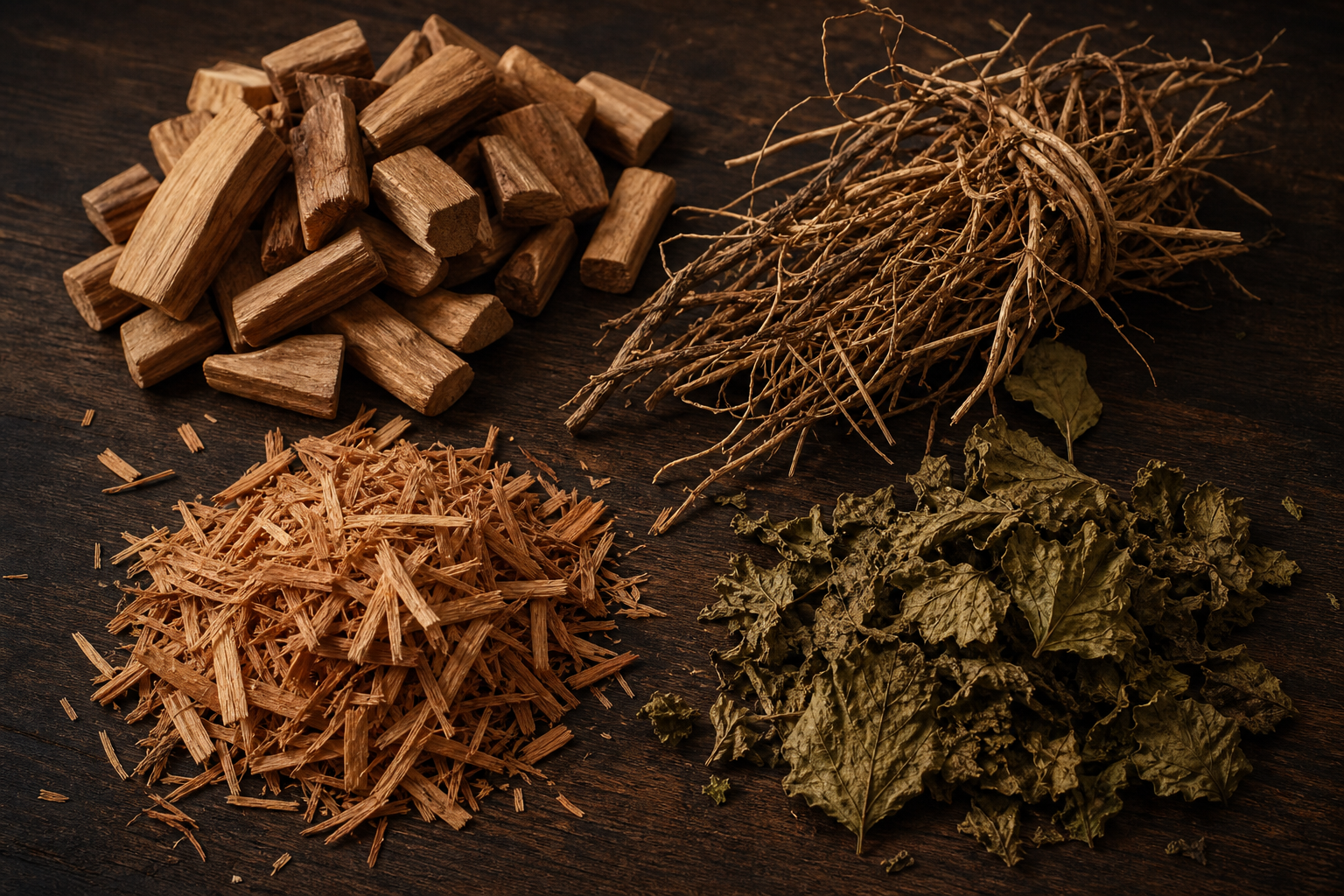
Sandalwood is one of the most prized ingredients in perfumery. Historically, Indian sandalwood from the Mysore region was the most valued, but the tree grows very slowly – it takes fifteen years or more to produce usable heartwood – and wild populations have significantly dwindled after decades of intensive harvesting. That's why sustainable sourcing is a hot topic for sandalwood today: most perfumeries use plantation-grown sandalwood from India and Australia, where trees are cultivated specifically and harvesting is regulated. Synthetic materials that mimic the character of sandalwood are also commonly used – these aren't makeshift substitutes but standard tools of modern perfumery. In fragrance, sandalwood is soft, creamy, slightly milky, and subtly nutty; it acts more like a cushion in compositions rather than a sharp edge.
Cedar
Compared to sandalwood, cedar is dry and straightforward. In perfumery, you'll most often encounter two types: Atlas cedar from Morocco's Atlas Mountains, which is resinous and slightly smoky, and the so-called Virginia cedar from North America – botanically, it's actually a juniper – which smells dry and reminds you of a freshly sharpened pencil. Perfumers favor cedar because it adds strength to the structure without overpowering other ingredients. It supports floral hearts and spicy accords well and is one of the most common bases in men's fragrances.
Vetiver
Vetiver is intriguing because it's not actually wood. It's a tropical grass whose fragrant material is obtained by distilling the roots – these must be dug up, cleaned, and dried, making vetiver a labor-intensive raw material. The most famous is Haitian vetiver, valued for its clean and slightly smoky character; other significant sources are Java and the island of Réunion. In its scent, you'll find earthiness, smoke, a hint of damp soil, and surprisingly fresh, bitter citrus notes. This makes vetiver a popular ingredient in summer compositions that aim to be fresh but not sweet.
Patchouli
Patchouli originates from Southeast Asia, with Indonesia being the largest producer today. The fragrant oil is extracted from leaves that are wilted and fermented before being distilled. Patchouli is one of those ingredients that improves with time – matured oil is gentler and rounder than fresh. In fragrance, patchouli is dark, earthy, and slightly sweet, with hints of damp earth and bitter chocolate. It forms the backbone of chypre compositions and oriental blends, and even in small amounts, it can add depth to a light floral scent.
How the Different Woods Differ
- Sandalwood – creamy, milky, soft; softens and rounds out other ingredients.
- Cedar – dry, resinous, pencil-like; adds structure and clarity.
- Vetiver – earthy and smoky with a bitter freshness; appears smooth and rather cool.
- Patchouli – dark, earthy, slightly sweet; adds richness and character.
When choosing, it's worth giving woody notes some time. On a test strip, you'll mainly notice the top notes; the woody base fully reveals itself on the skin after two to three hours. If the fragrance seems flat or fades too quickly, try opting for a composition with a more pronounced woody base next time – the difference in the scent trail is usually quite noticeable.
Musk, Vanilla, and Amber – A Warm Base and How to Choose Based on It
When the sparkling top notes and floral heart fade from your skin, what remains is what you'll spend the most time with. The base notes determine how a perfume smells in the afternoon and evening. Alongside woods, this layer is composed of three ingredients that add warmth and sensuality to the composition: musk, vanilla, and amber.
Musk – Softness You Sense Rather Than Name
Historically, musk was obtained from the glands of the musk deer, but today, perfumery exclusively uses synthetic musks. The reason is both ethical and practical: synthetic molecules are stable, and their profile can be precisely controlled. It's not just one scent but an entire family – white musks smell clean and soapy, while others have a creamy or powdery touch.
Musk rarely takes center stage. Instead, it rounds out the sharp edges of other ingredients and holds the composition together. If a perfume reminds you of freshly laundered clothes or warm skin, it's often due to a musk base.
Vanilla – Sweetness That Doesn't Have to Be Heavy
Vanilla is derived from the pods of the true vanilla plant. The harvested green pods undergo several months of fermentation and drying, during which the characteristic scent develops. The processing is lengthy, making vanilla one of the more expensive natural ingredients in perfumery.
In perfumes, you'll find both extract from the pods and synthetic vanillin, the main aromatic component of vanilla. Natural extract brings depth and a slightly smoky undertone, while the synthetic route offers purity and predictability. Vanilla is often at the heart of gourmand fragrances, but it doesn't have to be just dessert-like – with spices or woods, it feels more warm and dark than sweet.
Amber – Warmth with a Mineral Undertone
Grey amber is originally a product of the sperm whale's digestive system, which matures in seawater. Today's perfumery practically doesn't use it, opting instead for a reconstructed amber accord: a blend of natural resins, like labdanum, and synthetic molecules that faithfully mimic the amber impression. The result smells warm, balsamic, and slightly mineral, sometimes with a hint of salt and sun-warmed skin. Amber adds volume to a fragrance without weighing it down.
Why This Trio Extends Longevity
The answer is physical: the molecules of musk, vanillin, and amber materials are heavier and evaporate more slowly than citrus or light flowers. They also act as fixatives, slowing the evaporation of lighter ingredients above them, so the composition doesn't fall apart within the first hour. Concentration also plays a role – Eau de Parfum has a higher proportion of fragrance mix than Eau de Toilette, making the warm base more pronounced.
The Six in a Nutshell and What to Take Away
The entire set of six ingredients provides a simple map to read almost any perfume:
- citrus – a sparkling but short-lived start;
- floral essences – the heart that gives the fragrance character;
- woody notes – structure and a dry base;
- musk – softness and cohesion of the whole;
- vanilla – warm sweetness from dessert-like to smoky;
- amber – volume, warmth, and a longer aftertaste.
When choosing, it's worth starting from the base. If you prefer scents that last all day and feel warm, look for musk, vanilla, or amber in the description – in Brasty's range, this trio is among the most commonly represented notes. You'll find them most in oriental and gourmand compositions and in the unisex category, where the warm base works across genders. If you prefer lightness, choose fragrances where these ingredients are in the background behind citrus or flowers. And always test the perfume on your skin – the warm base develops gradually and cannot be fully judged on a paper strip.
Category
Recommended articles

"Give a girl the right shoes and she can conquer the world!" Marilyn Monroe
