
Acqua di Parma: Italian Classic Recognizable by Its Citrus Notes
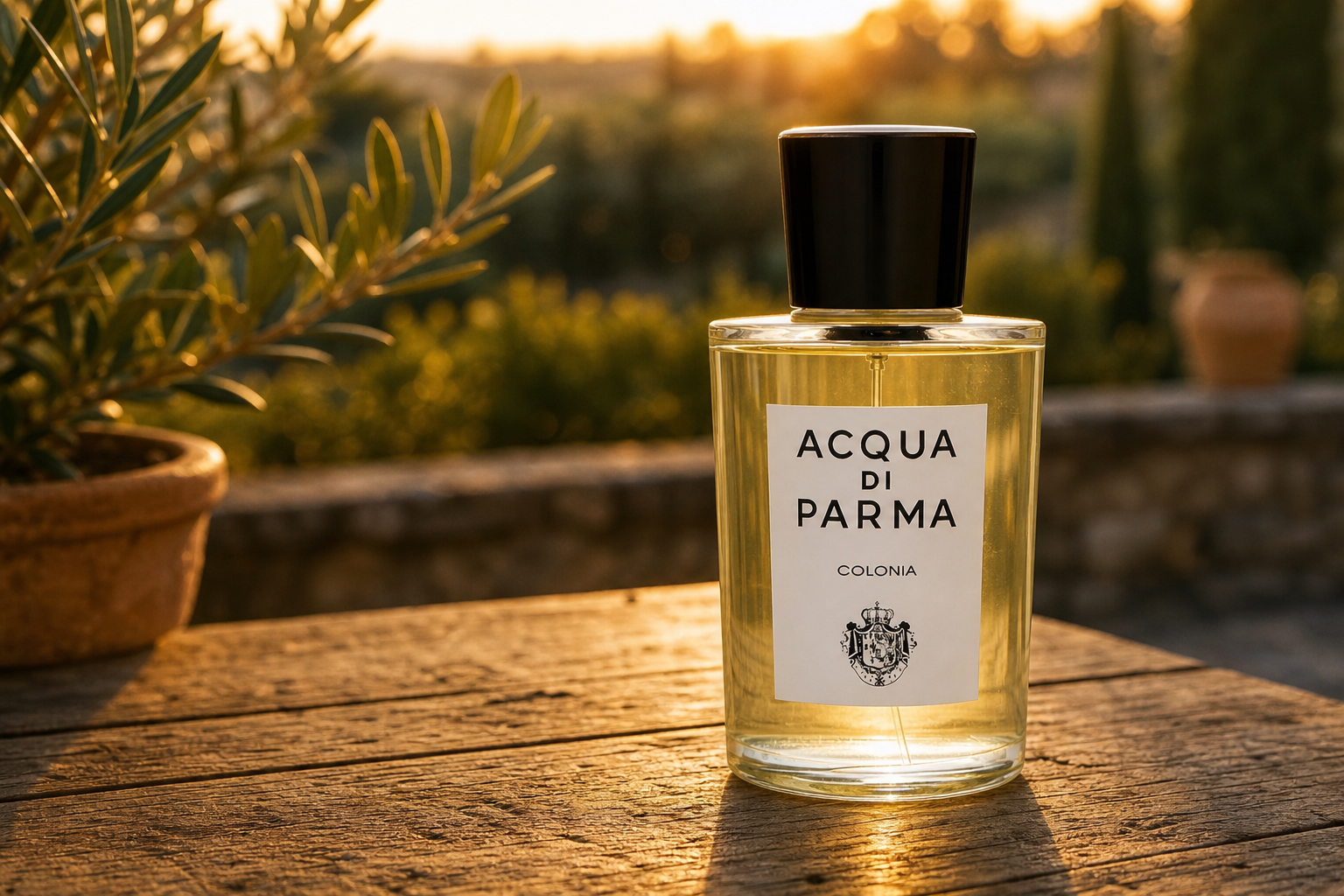
You might have spotted the name Acqua di Parma on a shelf – a round yellow box, a simple label, and no extravagant embellishments. If you're still wondering what's inside, you're in the right place. This is an Italian perfume brand rooted in Parma, maintaining its signature style since its inception: pure citrus, aromatic herbs, and a calm, understated luxury. It's often the citrus opening that people recognize before they even glance at the label.
Whether you're looking for a light everyday fragrance or a more pronounced composition for the evening, Acqua di Parma is a brand worth understanding. Its perfumes are often described as Mediterranean: opening with citrus freshness, supported by herbal and floral notes at the heart, and finishing with woody and musky undertones. It's not a perfume that announces itself from across the room – rather, it's one that catches the attention of someone standing next to you. This makes it a great starting point if you're used to sweeter, heavier compositions and are seeking something more airy.
In the following lines, we'll start with a brand profile and then look at six Acqua di Parma perfumes that are most popular at Brasty. For each, we'll mention the top, middle, and base notes, approximate longevity, and suitable occasions. If you're new to the brand, this text will guide you in making your first choice; if you already own a bottle, the descriptions will help you pick a second one that complements it without overlapping. Specific tips will be provided directly with each perfume, so you won't have to wade through theory to get to the essentials.
What Sets Acqua di Parma Apart from Other Italian Brands
Italian perfumery is not a single unified style. Major fashion houses like Dolce & Gabbana, Versace, or Armani build their perfumes on bold personalities, contrast, and instant recognizability—they want to be noticed from across the room. Acqua di Parma aims elsewhere. Its compositions tend to be more understated, clearer, and built more on freshness than on dense sweetness. When choosing among Italian brands, this is the first difference you'll notice.
The olfactory signature of the brand can be summed up in one sentence: Mediterranean citrus at the forefront, aromatic herbs in the middle, and a restrained woody-musky base at the end. If you sample several perfumes from this brand in succession, you'll find the same building blocks in most of them:
- Bergamot and citrus in the top notes – lemon, orange, mandarin, or grapefruit. The opening is juicy and cool at first sniff, without fruity sweetness.
- Aromatic heart – lavender, rosemary, and herbal accords that hold the citrusy start and prevent it from evaporating quickly.
- Woody and musky base – cedar, vetiver, or sandalwood complemented by musk. The base is warm but remains light.
- Subtle trail – the perfumes tend to be more intimate rather than expansive. They stay closer to the skin, which is an advantage in warmer temperatures and in the office.
The second difference is in the overall impression. A significant part of contemporary perfumery follows the path of sweet gourmand compositions—vanilla, amber, tonka bean, caramel, and coffee accords—and these make up a large part of today's new releases. Acqua di Parma does not follow this trend and sticks to a classic aromatic-citrus approach. It's not a perfumery that aims to surprise; it's a perfumery that wants to be wearable from morning to night. This is a crucial guideline when choosing: if you're drawn to bold sweet novelties, you won't find them here. If you're tired of them, you have a reason to look here.
The third difference is in the presentation. The brand has long relied on Italian craftsmanship and a restrained, minimalist presentation—simple cylindrical packaging without unnecessary decoration, muted colors, no prominent logo across the bottle. Luxury here is expressed more by what's missing than by what's added. For the recipient, it means a gift that doesn't come across as ostentatious, but its quality is evident. For you, it means a bottle that looks good on a bathroom shelf or a desk.
In Brasty's perfume selection, Acqua di Parma falls into the premium to luxury price range—above common mainstream brands and yet a step below the pinnacle of niche perfumery. This is reflected in how the perfume is treated: it's not a scent for one-time use but a classic that you'll have in rotation for years and won't age with the season. If you're looking for an alternative to bold oriental novelties, a subtle perfume for work, or a safe choice as a gift, this brand makes sense. If you want a composition that lasts twelve hours and is noticeable across the room, you'll look elsewhere—and that's okay because these serve two different purposes.
Citrus Classic Colonia: Three Perfumes for Every Day
The Colonia line is the backbone of the brand's entire portfolio and an easy entry point if you're just trying Acqua di Parma. All three perfumes described below share the same foundation – Italian citrus led by bergamot, an aromatic herbal heart, and a subtle woody-musky finish. They mainly differ in how loudly they speak and who they suit best.
Acqua di Parma Colonia
The brand's original cologne and a classic, recognizable by its sparkling citrus opening. The top notes feature bergamot, lemon, and orange, the heart is complemented by lavender and gentle floral nuances, and the base rests on woody notes with musk and vetiver.
The longevity is typical of a cologne – approximately three to four hours, after which the scent transitions into a quieter woody dry-down. It's a unisex choice, making it suitable for a shared bathroom and occasions where you don't want your perfume to precede you: office, meetings, hot summer days. If you're looking for one universal bottle for the whole year, start here.
Acqua di Parma Colonia C.L.U.B.
A more modern and pronounced take on the same classic, aimed primarily at men. It opens again with citrus but quickly transitions into an aromatic, slightly spicy realm with lavender and herbs; the finish is drier and woodier than the original Colonia.
Thanks to a denser base, it lasts approximately four to six hours and can withstand cooler weather. It suits a man for whom the classic Colonia is too quiet and who wants a perfume that works even after work hours – for dinner, drinks with friends, or a less formal social event.
Acqua di Parma Colonia Pura
A minimalist and transparent interpretation of the citrus line. The top notes are held together by orange, bergamot, and lemon, the heart is florally pure with neroli and jasmine, and the base consists of airy musk with light wood. The overall impression is clean, almost soapy – without sweetness and heavy notes.
The longevity is approximately three to four hours, with the intensity remaining subtle throughout. It's a unisex perfume for anyone who loves the feeling of a freshly washed T-shirt: suitable for summer, work, and for noses sensitive to strong scents.
All three variants share the same signature, so they can be alternated according to mood without feeling like you're jumping between two different worlds. With citrus compositions, it's generally worth applying perfume to damp skin and applying a smaller amount more frequently throughout the day rather than a large dose once – citrus top notes fade faster than the wood and musk in the base.
Blu Mediterraneo and Woody Tones: Three Distinctive Choices
The citrus line of Acqua di Parma finds its counterpart in compositions that emphasize herbs, nutty tones, and a woody base. These fragrances are fuller, have a calmer character, and are better suited for cooler air and more formal settings. If the light cologne style seems too subtle for you, this is where the brand's more intriguing offerings begin.
Acqua di Parma Blu Mediterraneo Mirto di Panarea is a fresh Mediterranean composition built on myrtle, herbal tones, and a citrus sparkle at the outset. The overall impression is green and aromatic, not sweet, making this eau de toilette suitable for warmer and transitional months – for work, a city stroll, or a casual dinner. It is classified as unisex and will be appreciated by those who prefer a natural, slightly herbal expression over pronounced sweetness.
Acqua di Parma Blu Mediterraneo Mandorlo di Sicilia offers a warmer take on the same line: almond and lightly nutty tones are complemented by a gentle floral sweetness and a woody base, ensuring the composition doesn't come across as dessert-like. It stands out more in the evening and during cooler months, when warmer tones have room to develop on the skin. This is also a unisex perfume – ideal for those who find pure citrus lacking but don't want to shift to heavy oriental compositions.
Acqua di Parma Note Di Colonia II presents a more aromatic and noticeably woodier interpretation of the classic Colonia: the citrus opening quickly gives way to sandalwood and vetiver, lending the fragrance a calmer, more reserved tone. This makes it suitable for formal occasions – for business meetings, social events, or autumn and winter evenings. It's a choice for those familiar with the brand's classic Colonia who are seeking a more mature version with a pronounced woody signature.
Choosing between these three compositions is more challenging than among citrus classics, as the differences lie more in mood than in ingredients. It's worth trying them directly on the skin rather than on a paper strip – woody and nutty tones develop gradually, and their final character varies slightly for each person. For such testing, a smaller bottle is often more practical than a full-sized one.
How to Choose an Acqua di Parma Perfume for Any Occasion
Selecting six perfumes from one brand is different from choosing six bottles from various perfumeries. The signature is similar, with differences in nuances, and a reader new to the brand might easily get stuck comparing details. It helps to reverse the order of questions: instead of starting with which perfume is more interesting, consider when and where you will wear it.
Most decisions can be narrowed down to three situations. This way, you can go through the entire selection without having to compare each composition with another.
- Everyday Wear and Work. Look for fresh citrus compositions with an aromatic base. They are noticeable yet unobtrusive in an open office and can handle warmer days. Keep in mind that lighter concentrations last a shorter time – classic cologne is designed to be refreshed throughout the day, not to last from morning till night.
- Evening and Social Occasions. Here, it makes sense to opt for the more intense end of the range, such as woody, fruitier, or spicier variants. They have a richer base, last longer, and work better in cooler air and enclosed spaces. You need less of them; two to three sprays usually do the job.
- Gift. When choosing a perfume for someone else, the main risk is not knowing their scent preferences. A more universal citrus line is a safer choice – it appeals to both women and men and rarely offends anyone. Save distinctive woody compositions for recipients whose taste you know better.
There's one more thing to mention about gifts: Acqua di Parma falls into the premium to luxury price range. When buying for yourself, this is a reason to consider carefully, but for a gift, it's an advantage – the bottle and packaging are impressive on their own. If you want to give more than one product, a gift set is an option, often including a shower gel, body lotion, or smaller travel size. A set also solves the issue of not being sure about the size – the recipient can try the brand without you having to buy the largest bottle right away.
A final practical note on volume: if you're not familiar with the brand yet, start with a smaller bottle. A perfume that smells great on a paper strip may behave differently on the skin, especially with citrus compositions – they react to temperature and skin type. A smaller bottle is a wiser first step than immediately opting for a 100ml version.
And if we had to recommend a single safe start from the selection, it would be the classic Colonia. It is closest to what most people imagine under the name Acqua di Parma, suitable for daily wear or as a gift, and serves well as a benchmark for evaluating other perfumes from the brand. If it suits you, you'll explore the rest of the range with a clearer idea. If not, at least you'll know that the Italian citrus signature doesn't generally suit you, saving you from further blind trials.
You can find the entire range, including gift sets, in the Acqua di Parma perfumes category on Brasty. For each perfume, check the composition description and available volumes – this helps determine whether it's a choice for every day or more of a perfume reserved for special evenings.
Category
Recommended articles
"Give a girl the right shoes and she can conquer the world!" Marilyn Monroe