



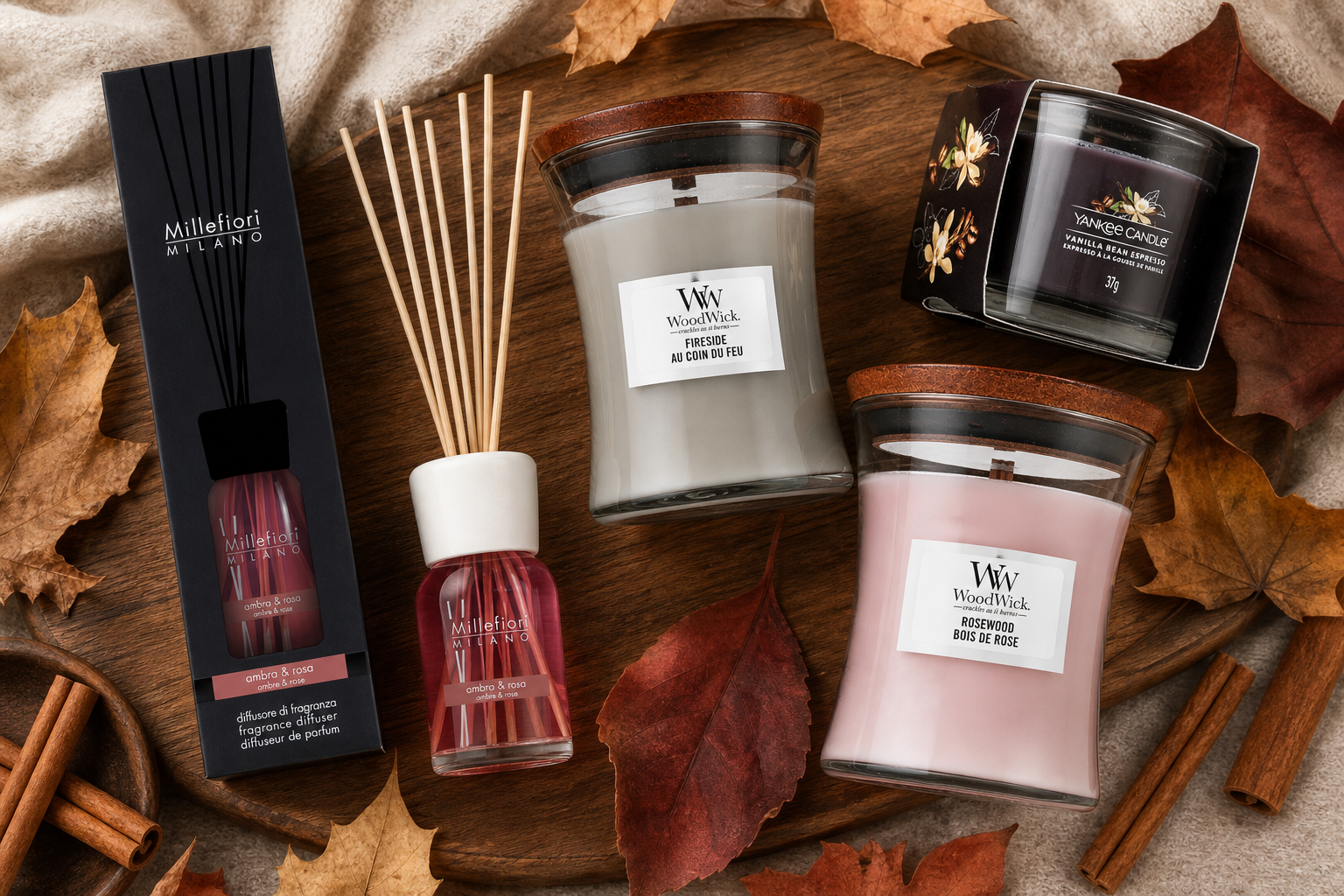

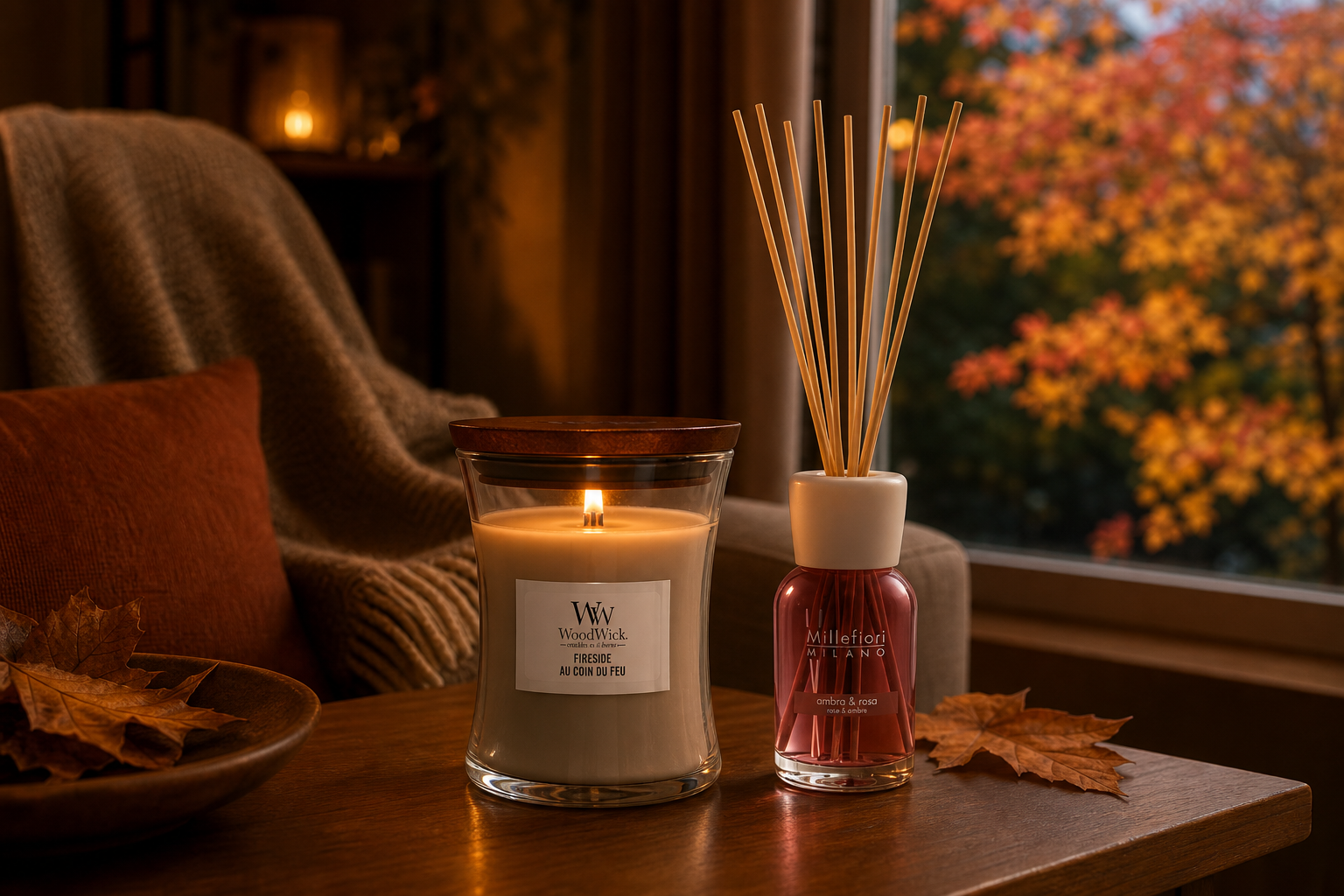
This autumn, the gourmet line of home fragrances has shifted from sweet pastries to resinous amber, bitter cocoa, and maple sweetness. We'll show you how each ingredient smells on its own and why they harmonize so well in interiors.
Why Autumn Scents Have Darkened This Year
Whether you associate autumn at home with the scent of freshly baked pie or find sweet notes tiring after a few days, this year's home fragrance season is working with both ends of the spectrum in a different balance than before. Sweetness hasn't disappeared – it's just shifted a few shades darker.
A few years ago, autumn home fragrance arrangements were primarily based on a confectionery palette: vanilla, cookies, caramel, icing. These are notes that smell bright, sweet, and instantly recognizable. This year, the focus has shifted to ingredients that are equally warm but also carry bitterness, dust, or resin. As a result, the compositions feel less dessert-like and more like materials – wood, bark, syrup, cocoa powder.
The reason is largely practical. Home fragrances differ from perfumes in that you spend the entire evening with them in the same room, not just a few hours moving around outside. A distinctly sweet composition can quickly become overwhelming in an enclosed space, and your nose may either stop noticing it or start perceiving it as heavy. Darker tones temper the sweetness and provide contrast, making it pleasant for longer.
Three ingredients that frequently appear in this year's autumn novelties deserve a brief introduction – their names may not be immediately understandable:
- Amber – a warm, balsamic, and slightly powdery accord. In modern perfumery, it is almost always a composed combination of resins, balsams, vanilla, and musky tones, rather than a single specific ingredient. In interiors, it manifests as a dense, enveloping warmth that holds the rest of the composition together.
- Cocoa – in the context of home fragrances, it's more about bitter cocoa powder than milk chocolate. It feels dry, slightly dusty, nuttily bitter, and actually mutes sweetness.
- Maple – refers to maple syrup, a sweetness with a caramelized and slightly smoky undertone. Compared to pure vanilla, it has a deeper, darker tone and is closer to baked fruit than to confectionery.
This trio is no coincidence. Each ingredient represents a path to achieving autumn warmth: through resin, bitterness, and caramel sweetness. That's why they appear together in one composition this year, where they balance each other out – amber adds volume, cocoa reduces sweetness, and maple adds an edible, homely dimension.
It's worth mentioning that this shift isn't limited to a single format. You'll find it in scented candles as well as in diffusers and room sprays, each handling the darker tones slightly differently – and it's this difference that determines whether the composition will suit your home.
In the following sections, we'll explore each ingredient individually: what exactly it brings to the fragrance, what it pairs well with, and when it might remain unreadable in a room. Finally, we'll look at how to combine them so they don't overpower each other in the same home.
The Gourmet Fragrance Family: From Vanilla to Resin
Amber, cocoa, and maple are not a random trio. All three belong to the gourmet fragrance family, a group of compositions that borrow their vocabulary from the kitchen and patisserie. It's the youngest of the established families and the one that has evolved the most over the past decade. Before we dive into the individual ingredients, it's worth clarifying where this family begins and where it transitions into its neighbors.
You'll recognize gourmet fragrances by their edible associations. They work with vanilla, caramel, honey, cocoa, roasted nuts, almonds, or maple syrup — ingredients you associate with taste, not just scent. This edible association is the dividing line against the families with which gourmet compositions are most often confused.
The oriental family is based on resins, balsams, and spices: benzoin, incense, myrrh, cinnamon, cloves. It's warm and dense like the gourmet family, but it doesn't aim to be edible — it leans more towards smoke and festive twilight. The woody family, on the other hand, is dry and structural; it's held together by cedar, sandalwood, vetiver, or patchouli, and its warmth is the warmth of wood, not sugar. The boundaries between them are not sharp, and modern compositions intentionally blur them. Resinous amber in a gourmet fragrance is precisely such a case.
Sweetness was long the main characteristic of the entire family. Early gourmet fragrances were recognizable at the first whiff: vanilla sugar, caramel, freshly baked cookies, cotton candy. They worked, but quickly became overwhelming — in a closed room, they started to feel heavy after a few hours. Newer compositions, therefore, balance the sweetness. They acknowledge the bitterness of roasted cocoa beans, the earthiness of tonka, a pinch of salt, smoke, and resinous depth. The result still reads as gourmet, but it has edges and doesn't slip into a confectionery.
The second thing that determines the final impression is the composition's structure. Fragrances are traditionally described in three layers according to how quickly the individual ingredients evaporate:
- Top notes — what you smell first and what lasts the shortest time. They are usually light and fresh: citrus, spices, apple, green leaves.
- Heart notes — the core of the composition, which unfolds after a few minutes and remains in the foreground the longest. This includes flowers, fruits, tea, or lighter spicy accords.
- Base notes — the foundation, the heaviest and slowest layer. Vanilla, amber, resin, wood, musk, cocoa. It lingers for hours and is what you ultimately remember from the fragrance.
The autumn ingredients discussed here almost exclusively sit in the base. Their molecules are heavy and evaporate slowly, so they don't manifest immediately after lighting the wick or inserting the sticks. They need time and space — that's the difference compared to a citrus fragrance, which is immediately noticeable and fades just as quickly. If an autumn fragrance seems weak after the first few minutes, it's usually not a product flaw, but a lack of patience.
And here's also the answer to why the same ingredient smells different in a scented candle and a diffuser. The temperature makes the difference. The melted wax around the wick heats up enough to release even the heavy base molecules — the fragrance thus feels fuller, sweeter, and rounder, with amber and cocoa coming to the forefront. A diffuser, on the other hand, works at room temperature: the sticks draw the mixture upwards, and evaporation is handled only by air circulation. Lighter and sharper components assert themselves best this way, while the base gradually comes into play more as a subtle backdrop. The same name on the label doesn't mean the same experience, and it's worth considering which format you have at home when making a choice.
Amber: Resinous Warmth for Long Evenings
When it gets dark outside shortly after five and the heating is on full blast, you need a fragrance that envelops the room rather than just scenting it for a few minutes. This is where amber excels: it is a dark, resinous, and subtly balsamic note that usually lasts the longest in a composition. That's why you'll often find it in autumn home fragrances – it not only holds its own but also supports lighter notes that would otherwise dissipate quickly.
It's worth knowing that amber is not a single ingredient. Historically, it referred to a marine-origin material, but in modern perfumery, it's primarily an olfactory impression – a warm, softly resinous accord composed of several components. In home fragrances, it's most often made up of resins and balsams complemented by modern amber molecules. So, when you see the word amber on a label, it describes the character of the scent, not a single ingredient in the formula.
You can recognize the differences between individual resins at home without needing perfumery training:
- Labdanum is dense, slightly leathery, and honeyed; it adds depth and an earthy undertone to the composition.
- Benzoin is a sweet, vanilla-like resin that softens the amber and makes it more approachable.
- Styrax and Opoponax lean towards a drier, smokier profile – closer to incense than dessert.
How amber ultimately comes across depends mainly on what it's paired with. Combined with vanilla or tonka, it shifts to a soft, almost powdery tone: a scent most people associate with a blanket and a book. In the company of woods, especially cedar and sandalwood, it feels drier and more serious, more like an old library than a patisserie. And when spices like cinnamon, clove, or pink pepper are added, the entire fragrance gains a festive, slightly spicy touch that suits Advent better than early September evenings.
Amber scents work best in places where you'll linger for a while and where there's space to scent. The living room is a natural spot for them: a sufficient volume of air allows them to unfold, and the evening light enhances their warm character. In the bedroom, opt for a significantly milder version, as the resinous base can linger in a closed room for hours after the lights are out. A study can handle amber in a drier, woodier version that isn't too distracting. Conversely, in a narrow hallway or kitchen, it can be unnecessarily dominant – in the first case, it concentrates in a small volume, and in the second, it clashes with food aromas.
It's wise to start with a lower intensity than you might think. In a large living room, a bigger candle with multiple wicks is suitable, while in the bedroom, a small format that burns out in one evening is better. For a diffuser, start with three sticks and add more only after two days, once you know how the scent settles in the room. Amber doesn't behave like a fresh citrus accord that quickly fades: it layers, settles into fabrics, and after a few evenings, you'll perceive it more strongly than at first. If it suddenly seems heavy, it might not be the fragrance choice that's the issue, but just the dosage.
Bitter Cocoa Next to Maple Sweetness
These two ingredients are frequently appearing in this year's autumn home fragrances and at first glance, they belong to the same category – sweet, warm, edible. However, in practice, they work almost oppositely. Cocoa tends to temper the sweetness and leans towards a woody base, while maple opens it up and carries it further into the space. Knowing which of these two characteristics suits a particular room helps you choose with much more confidence.
Cocoa: Dry Bitterness That Stays Grounded
In perfumery, cocoa has little in common with milk chocolate. It works with the impression of raw roasted beans: a dry, slightly dusty, bitter tone with a slightly earthy undertone. The sweetness in the composition remains, but more as a memory than the main theme. That's why cocoa often accompanies cedar, patchouli, or tobacco notes – it stays close to the woody base and takes on its darkness.
This also dictates its behavior in a room. A cocoa scent doesn't expand; it stays within a few steps from the source and manifests more in how the entire space feels rather than as a prominent cloud. This is an advantage in a study, bedroom, reading nook, or small hallway, where sweeter scents might become overwhelming after a few hours. It's also suitable for places where you spend a lot of time continuously: the bitter component prevents the scent from becoming cloying.
Maple: Smoky Caramel
Maple syrup sounds very different in home fragrances. Its sweetness is thick, caramelized, with a slightly smoky edge – maple sap is thickened by boiling over a fire, and perfumers borrow precisely this impression of browned sugar. It is close to notes like dried fruit, cinnamon, buttery caramel, or the warm wood of maple itself.
Maple is also much more expressive. Its sweet component spreads more willingly through the space, so a larger living room, kitchen with dining area, or open layout will fill with it in no time. This is both its strength and its pitfall: in a small room, it can become quite dominant after an hour, especially if you're cooking. We recommend giving it space and opting for a smaller size than you would with another scent.
When to Choose Which
You can simplify your decision with three questions:
- How big is the room? Cocoa suits smaller and enclosed spaces, while maple is better for larger and open areas.
- When do you use the scent? Maple makes sense in the morning and during the day when more energy and sweetness are welcome. Cocoa is more suited to the evening and winding down.
- Should the scent be a backdrop or the main impression? Cocoa will remain in the background, noticed by guests only after a while. Maple is a theme that gets talked about as soon as you walk in the door.
If you're unsure, start with cocoa – its dry profile forgives mistakes and rarely clashes with what you already have at home. Add maple when you want autumn to be noticeable at first breath.
Creating Autumn Scents at Home: Our Recommendations
Amber, cocoa, and maple are distinctive ingredients on their own. If you introduce them all at once and with the same intensity into your home, the result is not a richer atmosphere but confusion – your nose stops noticing the details and only perceives a heavy sweetness. Creating autumn scents is based on a simple principle: one fragrance leads, the others accompany it.
Give the leading role to the room where you spend the most time and where you truly perceive the scent – most often, this is the living room. This is where the scent you want to notice first belongs, and also the most prominent format you choose. The hallway, bedroom, or study then serve as quieter companions: either the same scent in a smaller package or a composition that shares a common base with the main line.
A common base is more practical for layering than seeking contrasts. Amber, cocoa, and maple meet with vanilla, wood, and warm spices, so when an amber candle burns in the living room and a diffuser with a vanilla-woody base stands in the hallway, the transition between rooms feels smooth. Two completely different gourmet compositions in adjacent rooms often clash, and neither will resonate as you would expect.
The difference between formats lies not only in price and appearance but mainly in how they work with the scent over time:
- Scented Candle works with heat – the fragrance is released from the melted layer of wax and is strongest while the candle is burning. It is a conscious evening ritual, not an all-day solution: after extinguishing, the intensity gradually decreases, and the flame also requires supervision.
- Diffuser maintains the scent steadily all day without any intervention. It's suitable for places where you want a constant background scent – in the hallway, bedroom, or study. You adjust the intensity by the number of sticks: the more you leave in the bottle, the more pronounced the result.
- Room Spray addresses a single moment – before guests arrive, after cooking, after airing out. It acts quickly and briefly, so you can fine-tune even a space where another format is already in use.
The simple rule for dosing is: it's always easier to add fragrance than to remove it. Keep small candles around forty grams for the bathroom or study, and for a spacious living room, opt for a large package or two smaller candles placed further apart. With a diffuser, start with about half of the sticks, wait two days to see how the scent settles in the room, and only then add more if necessary. Turning the sticks will temporarily intensify the scent, but keep in mind that this will speed up the consumption of the contents.
Autumn is long, and you don't have to settle for just one scent. In September and early October, drier, less sweet options are more pleasant – cocoa and spicy notes that don't feel stuffy while it's still mild outside. As the days shorten, it makes sense to switch to maple sweetness and in November to full, resinous amber, which can handle a colder and darker home. Between different scents, air out and give your nose a few hours of rest; otherwise, you'll get so used to the composition that you'll stop noticing it and tend to dose more than necessary.
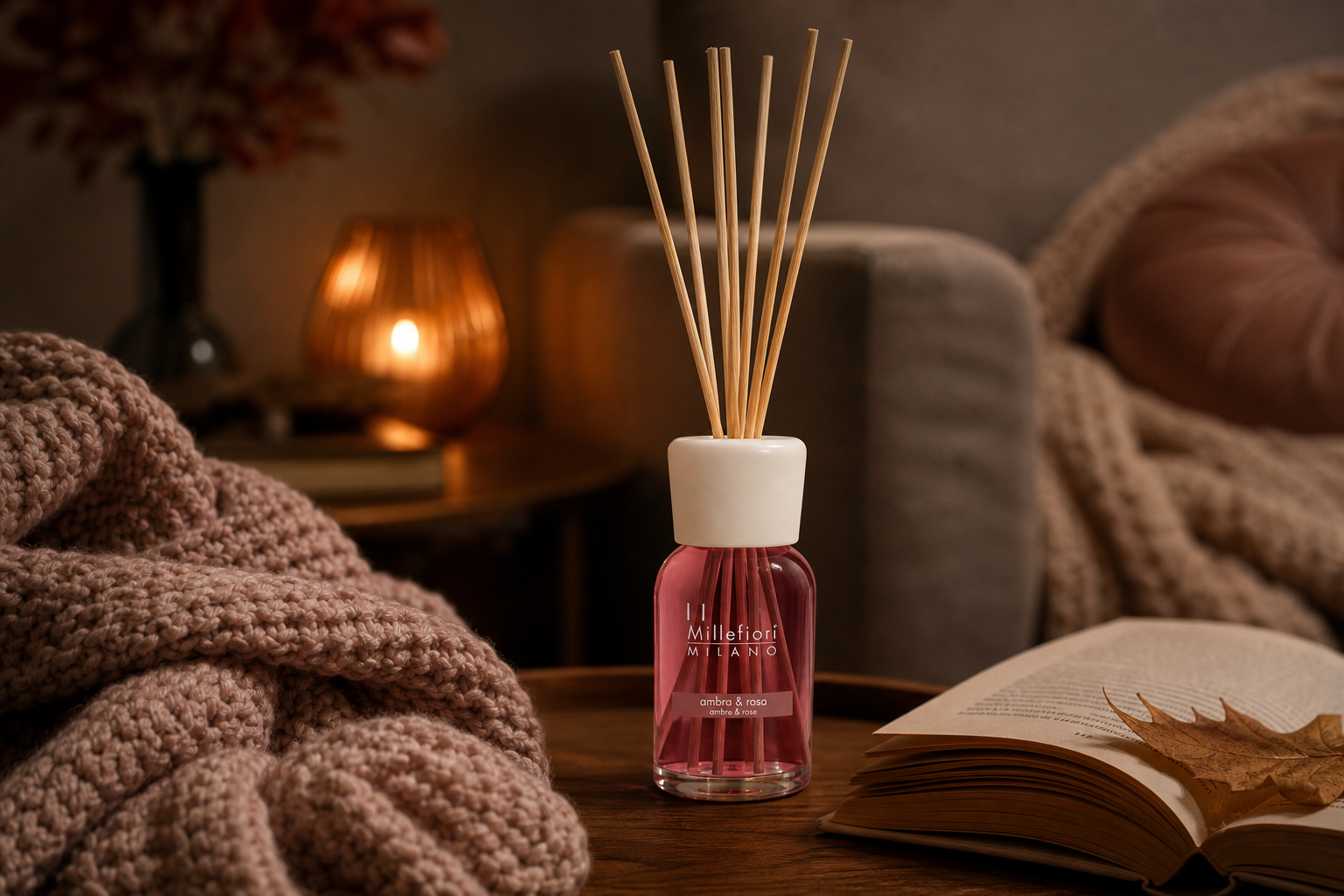
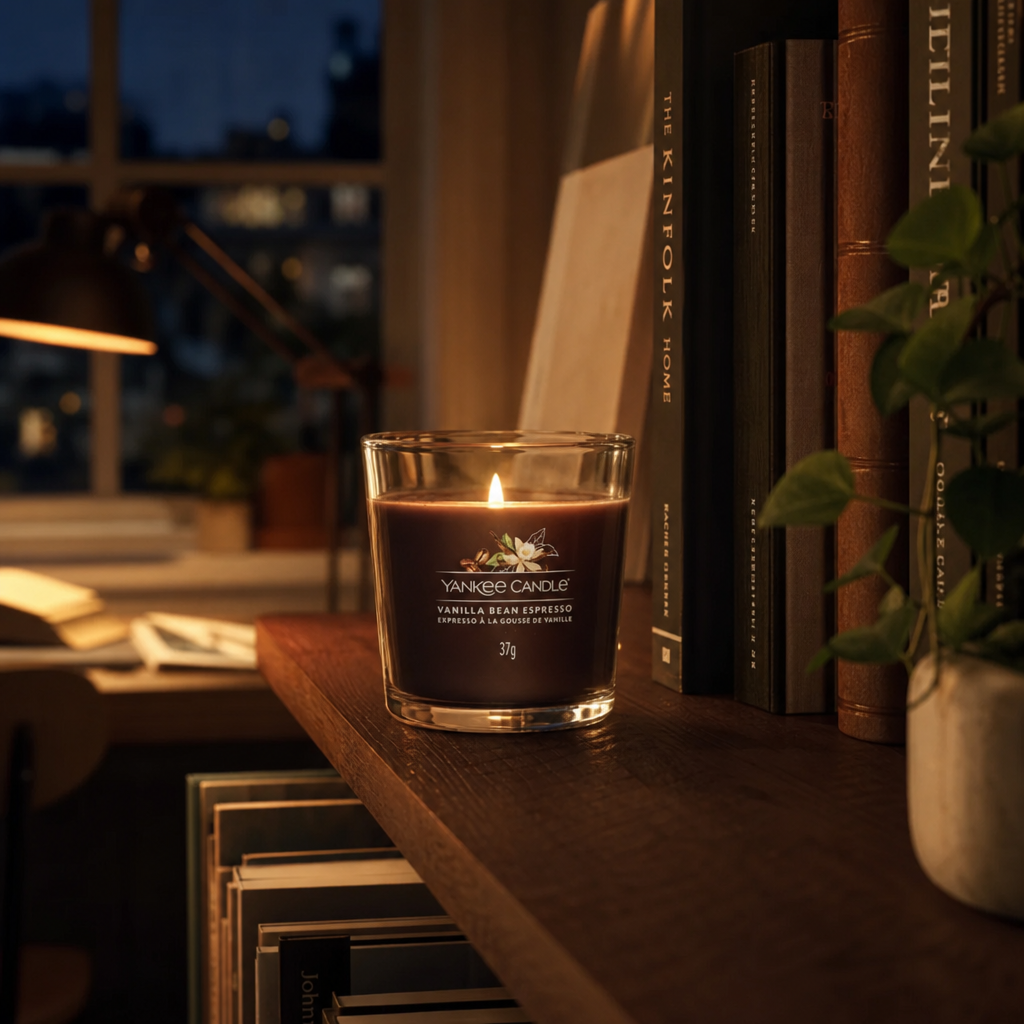
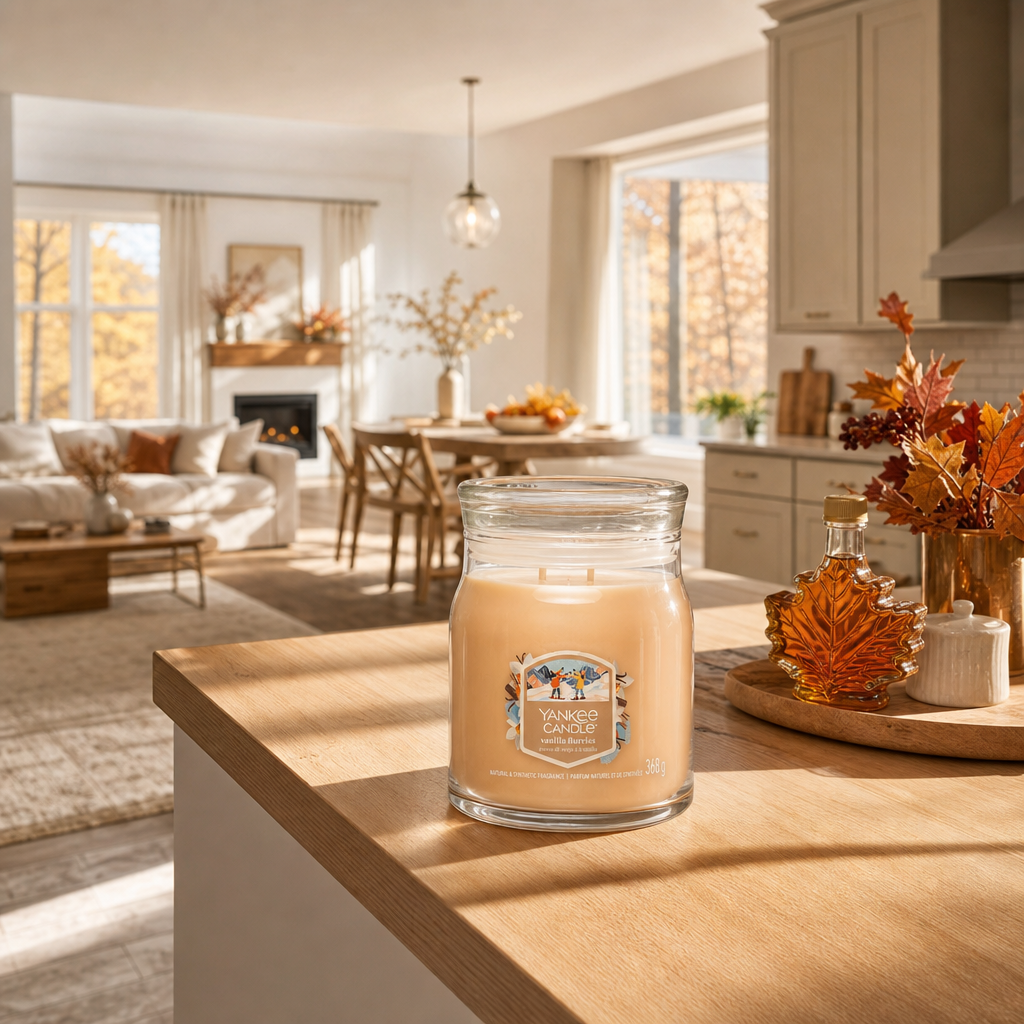
When you want to arrange this line at home, browse the home fragrance category. Autumn warm compositions are mainly represented by Millefiori Milano diffusers, which maintain a constant background scent, and Yankee Candle and Woodwick scented candles for evening moments when you want the scent to be part of a ritual. It's worth starting with one format, letting it settle in your home, and only adding another tone when it truly feels missing in the overall picture.

Category
Recommended articles

"Give a girl the right shoes and she can conquer the world!" Marilyn Monroe