
 Riiffs Freeze in Flames: Ice and Flames Illuminate Warsaw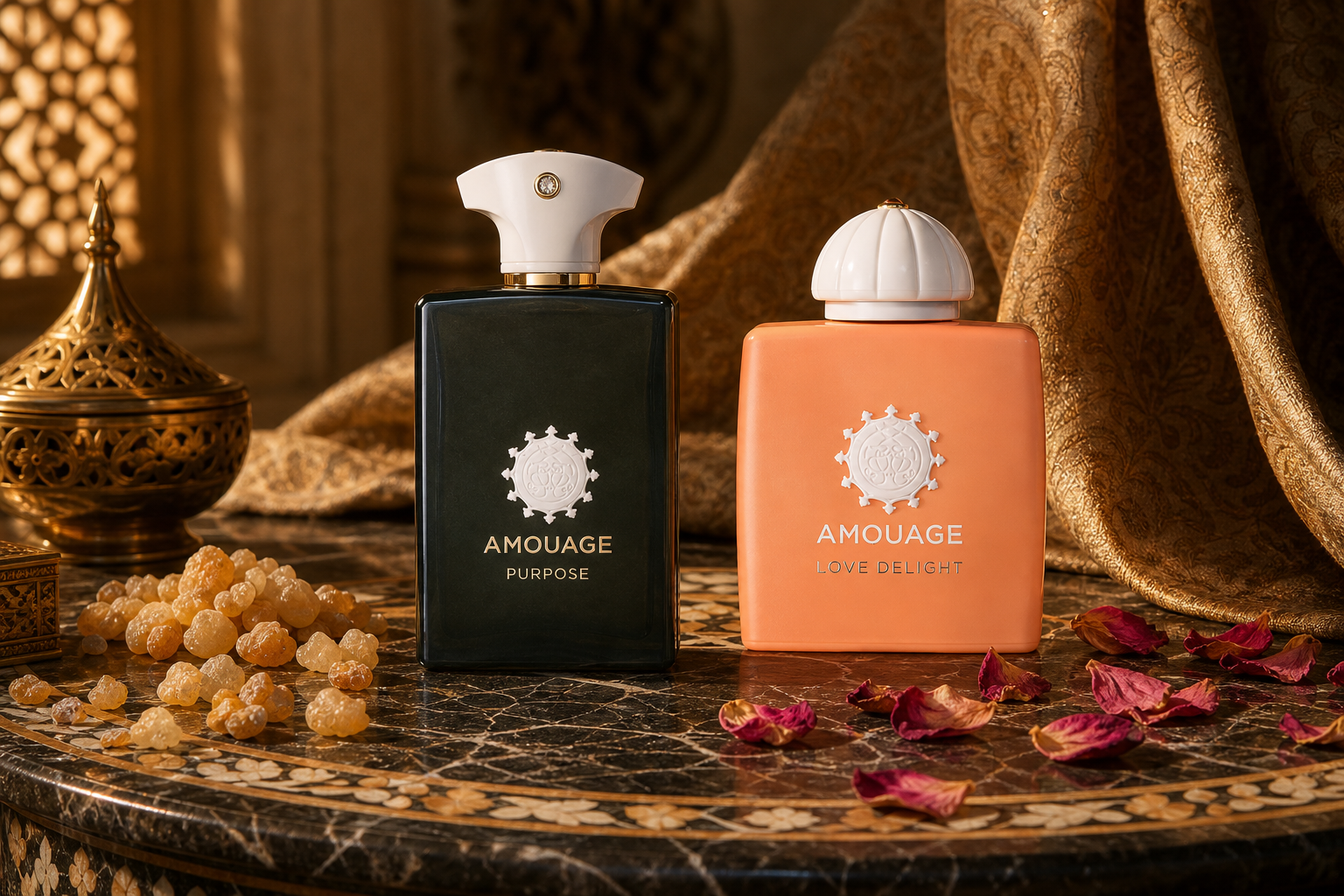
Amouage is one of the most prominent names in Omani perfumery – recognized by the ingredients that dominate its compositions. Join us as we explore the brand's story and six fragrances available at Brasty.
Amouage: Why Omani Perfumery is Recognized by Its Ingredients
Most perfume brands start with a story and add the ingredients at the end. With Amouage, it's the other way around: it all begins with the materials – incense, myrrh, rose, and rich resinous bases – and everything else is created from there. Whether you're just discovering niche perfumery or have long enjoyed smoky and balsamic notes, you'll quickly recognize where you fit in the Amouage collection by its ingredients.
Being an Omani brand is more than just an address. The Arabian Peninsula is one of the regions where incense has been traded for centuries, and local perfumery handles resins differently than European traditions: they are not just an accessory to enhance the background but the main material of the entire composition. When you smell incense in an Amouage perfume, it's not a hint in the background – it's the line around which everything else is built.
The second difference is concentration. The compositions of this brand are based on a high proportion of rare ingredients, which you notice immediately in the first few minutes: they open densely, have a clear progression from top notes to base notes, and last significantly longer on the skin than a typical mainstream perfume. This doesn't mean they are louder. Rather, they are denser. And that's why they are worn differently: where you might use three or four sprays of a light eau de toilette, here one is usually enough.
For you as a reader, this means one practical thing. Your first encounter with Amouage can't be rushed with a spray on a paper strip – resins and balsams need the warmth of the skin and time to unfold. A composition that seems sharp and dry in the first few minutes often transforms into a warm, honeyed resinous trail after half an hour. So if the opening doesn't suit you, it doesn't necessarily mean the perfume won't.
The entire collection can be explored with a single key – by the ingredient that appeals to you. Simply put, Amouage has two faces:
- Resinous – incense, myrrh, balsams, and smoky accords. A dry, serious, somewhat ceremonial tone that aligns with what most people imagine of Arabian perfumery.
- Floral Woody – rose, oud, sandalwood, cedar, and amber. A fuller and more sensual line where the flower doesn't stand alone but is supported by wood or a resinous base.
Both styles intertwine in the collection, and many perfumes sit right at their intersection. That's why it makes sense to choose by material, not by name or packaging: once you know you enjoy incense, your options narrow down much more reliably than by reading descriptions of new releases.
This key will guide you throughout the text. We won't rank them, but proceed by ingredients and discuss who they suit and on what occasion to wear them. And if you want to view the entire collection beforehand, you'll find Amouage on Brasty in a separate niche perfumery section – among brands that are kept separate from the main perfume assortment precisely because customers approach them with different expectations.
From Royal Commission to Today's Brand Identity
Amouage was not conceived as a commercial venture seeking a gap in the market. The brand was born in Oman in the early 1980s from a commission by the Omani royal family, with a mission beyond sales: to introduce the country to the world through fragrance. The initiative was led by Sayyid Hamad bin Hamoud Al Bu Said, a member of the ruling family, and the first perfume was named Gold. It was crafted by the French perfumer Guy Robert, one of the experienced creators in French perfumery at the time.
The commission had one unusual condition. The result was not to be created with regard to the cost of raw materials, but rather to their quality. This principle, which the brand still upholds today, emphasizes high concentration, generous use of precious materials, and compositions that do not aim to be easily digestible at first sniff. If Amouage perfumes seem rich and enduring to you, it's no accident or marketing stylization, but a direct result of the original commission.
The heart of the concept was Omani frankincense. The resin from the Boswellia trees, which grow in the southern province of Dhofar, has been one of the region's most valuable trade commodities for centuries and remains a cultural symbol for Oman. Amouage placed it at the center of its compositions at a time when European perfumery used it more peripherally, as an accessory rather than a main motif.
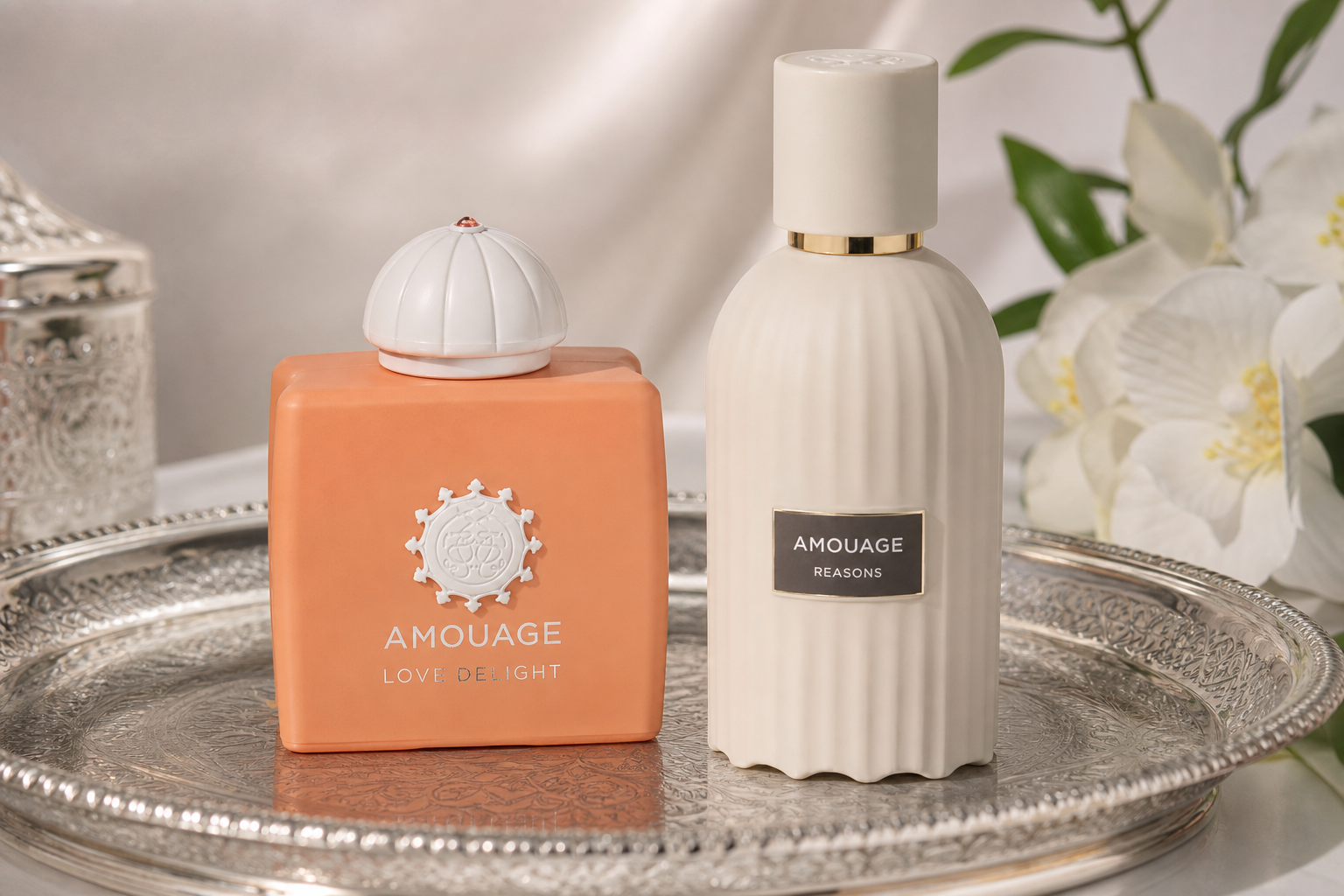
The packaging received the same attention. The brand's bottles incorporate silver, crystal, and shapes that reference Omani architecture and craftsmanship – mosque domes on women's bottles, the handle of a traditional khanjar dagger on men's. It's not just decoration: the packaging conveys the same message as the contents, that it is an item meant for gifting and representation, not ordinary shelf merchandise. You can recognize an Amouage bottle even before you open it.
Amouage has never been a closed local workshop. From the beginning, it has collaborated with European, predominantly French perfumers and raw material suppliers from around the world. This combination – Omani and Arabian materials processed by the European perfumery school – is characteristic of the brand. It also explains why the compositions feel exotic yet understandable to noses accustomed to Western perfumery.
In the second half of the first decade of this century, the brand underwent a significant shift. Christopher Chong took over the creative direction, and Amouage moved from a more formal, ceremonial expression to narrative, sharply profiled compositions. From this period come the perfumes that are still cited today as reference points in the field:
- Jubilation (2007) – a jubilee line for the brand's twenty-fifth anniversary, built on resins and spicy notes in a festive, rich presentation.
- Reflection (2007) – the counterpart to the previous line: a lighter, airy composition around iris, neroli, and a gentle woody base.
- Interlude (2012) – a smoky, resinous, and leathery composition that has become a frequently cited example of the so-called incense perfume.
We mention these three names solely as milestones in the narrative, not as purchase recommendations – they are not currently available in our assortment. However, they illustrate the journey the brand has taken over four decades: from a representative gift to perfumes with their own distinct themes.
However, the history of Amouage is not a museum showcase to merely look at today. The raw materials that defined the brand at the beginning continue to shape its character: resins, frankincense, roses, oud, and woody bases also appear in current compositions that you can order. Knowing where this signature came from makes it easier to anticipate what to expect from a particular bottle.
Frankincense and Myrrh: The Resinous Heart of Omani Perfumery
When you think of Omani perfumery, frankincense often comes to mind. This is no coincidence: the resin from the Boswellia tree has been collected for generations in southern Oman and is one of the key ingredients that gives the region its fragrant identity. The tree is cut, the sap flows out and hardens into amber drops in the air, which are then distilled or burned. Alongside frankincense is myrrh, the resin of the related Commiphora shrub with a completely different character. It is the contrast between these two materials that gives Amouage compositions their depth.
Two Resins, Two Characters
In perfumery, frankincense, often referred to as olibanum, never smells just like smoke. In the first few minutes, it reveals an unexpectedly fresh, citrus-terpene top note reminiscent of crushed orange peel or pine resin. Beneath this lies a slightly mentholated, cooling tone, followed by the dry balsamic smoke that most of us associate with frankincense. This trio – freshness, coolness, and smoke – makes frankincense a material that feels both festive and airy.
Myrrh takes the opposite direction. It is denser, darker, and more bitter, with a scent of damp earth and medicinal tincture, and a slightly anise-like undertone. On warm skin, it develops into a creamy, almost balsamic sweetness. On its own, it can seem austere, but when combined with frankincense, it acts as a counterbalance: it adds body and weight to the composition where frankincense alone would remain too ethereal.
Both resins are materials with a slow evaporation rate, which is why perfumers place them primarily in the base notes. From there, they hold the entire structure together and slow down the departure of lighter ingredients above them. This is evident in the longevity and sillage: the resinous base lingers on the skin for hours, and you can still smell it on a scarf or jacket the next day. The sillage tends to be more dense than loud, staying close to the body without filling the entire room.
Three Amouage Perfumes Built on Resins
In Amouage's stock offerings, the resinous line is most evident in three compositions. In each, the raw material makes its presence known at a different time of day.
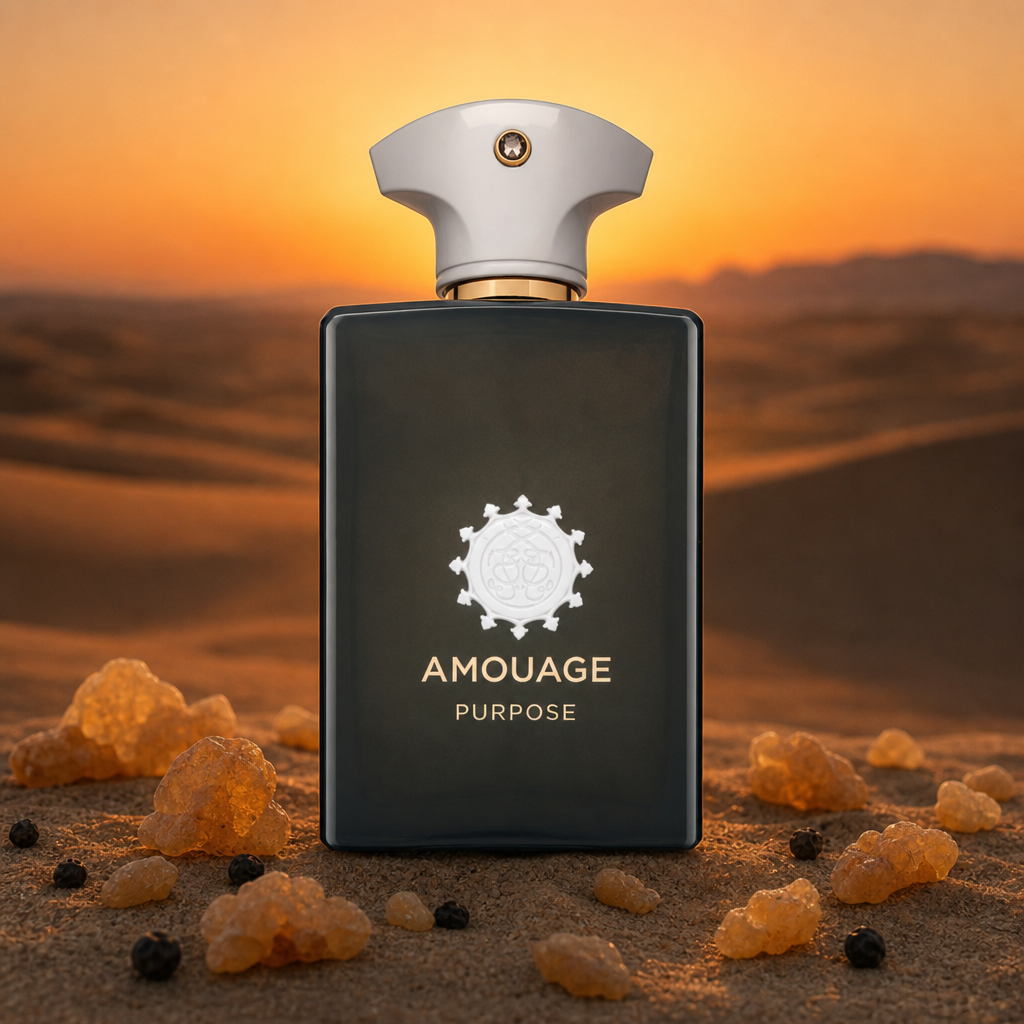
- Amouage Purpose Eau de Parfum Unisex 100 ml – Here, frankincense doesn’t wait until the end; olibanum is right in the top notes alongside black and red pepper. The first breath is therefore both smoky and spicy. As the heart unfolds with sandalwood, rose, vetiver, and papyrus, the resin steps back, leaving a dry veil that meets Akigala wood, suede, and saffron in the base.
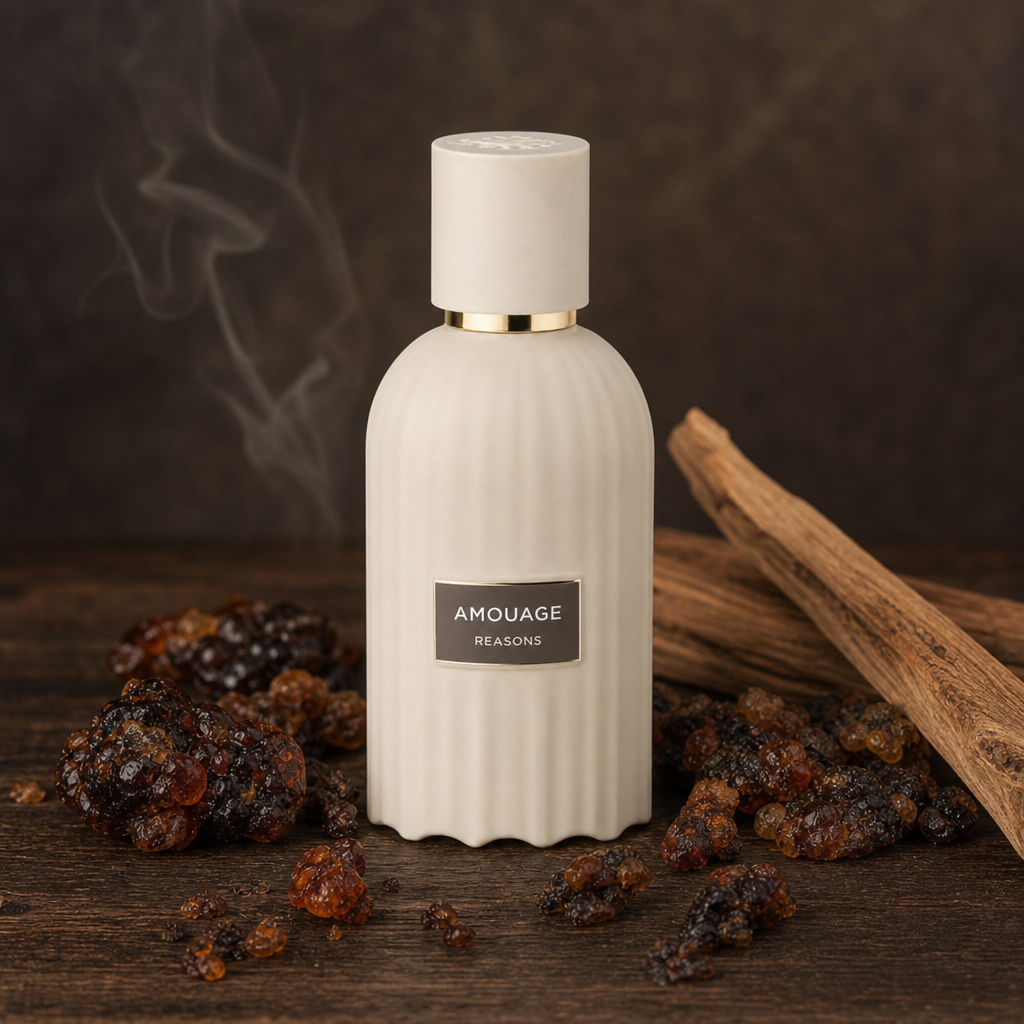
- Amouage Reasons Pure Perfume Unisex 100 ml – Myrrh is found in the base, alongside palo santo, benzoin, cedar, oakmoss, sandalwood, vetiver, musk, and labdanum. It opens quite differently: with cardamom, pink pepper, nutty accords, and cinnamon, followed by pine, cypriol oil, davana, white amber, and cashmere. The bitter earthy tone of myrrh emerges only after several hours, when the fragrance settles on the skin and darkens.
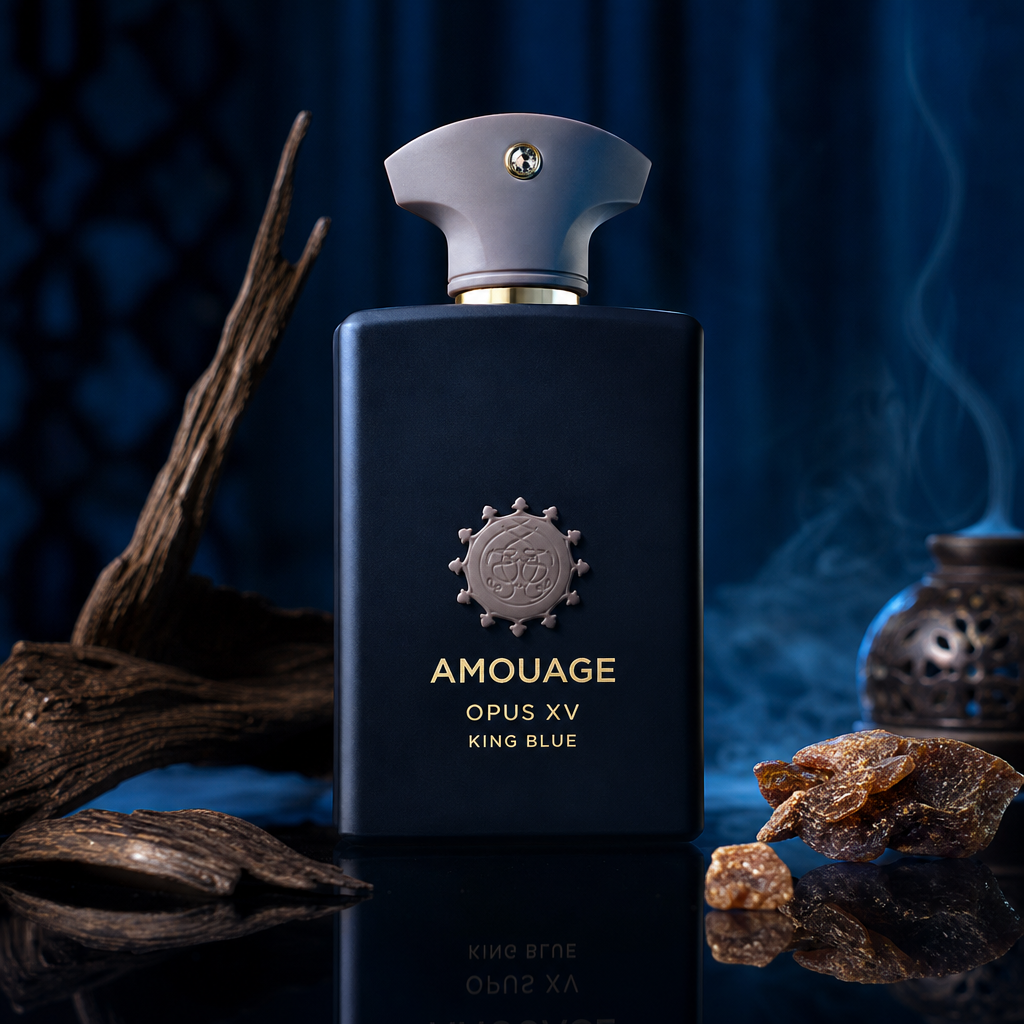
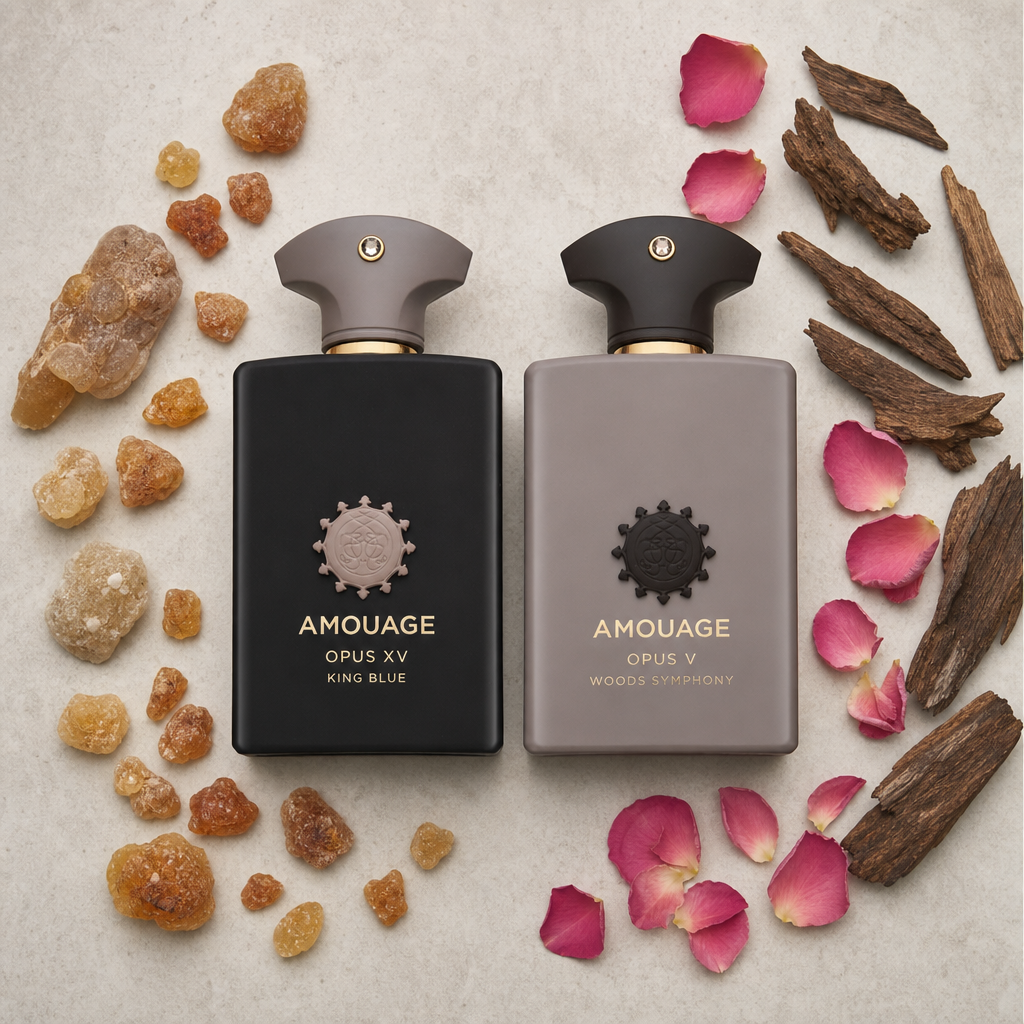
- Amouage Opus XV King Blue Eau de Parfum Unisex 100 ml – Kyara incense is placed in the heart of the fragrance along with amber, forming a bridge between the fruity start with blackcurrant, mandarin, and pink pepper, and the dark base of oud, leather, oak, sandalwood, and patchouli. Here, the smoke is not dry but rather resinously dense.
When trying any of these perfumes, remember that resins need time. A quick verdict after five minutes won't tell you much about frankincense or myrrh, as the top notes play the main role at that time. Give the composition at least an hour and assess it again. A complete description of the notes and available sizes can be found with each bottle in the catalog.
Roses, Oud, and Woody Bases as the Second Face of the Collection
Resins provide the backbone of Omani perfumery, but on their own, they would remain stark. The second face of the Amouage collection is formed by ingredients that envelop this backbone: roses in an oriental interpretation, agarwood known as oud, sandalwood, cedar, and amber accords. Whether you're drawn to a velvety floral composition or a dry woody base, this is where it is decided if the perfume will suit your skin.
In European perfumery, the rose has a reputation as a light, rather fresh flower. It is often set in a citrus or green framework, stays close to the skin, and fades after a few hours. The Omani interpretation treats it differently: the rose receives a dense, spicy, and resinous support, bringing out its darker, honeyed, and almost jam-like side. Cinnamon, ginger, or rum warm it up, while woody and amber tones add depth, making the rose the axis of the entire composition.
Woody materials form the other half of this equation. Sandalwood is creamy and soft, cedar is dry and straightforward, patchouli adds earthiness, and amber accords provide warmth that holds the fragrance together. Oud, or agarwood, stands at the imaginary peak: it is leathery, slightly animalistic, and dense, and is therefore used more as a hint. If you haven't encountered it yet, be prepared for the first few minutes to be more pronounced than the rest of the development.
From Amouage's stock offer, three perfumes fall into this line, each working with roses or woods differently.
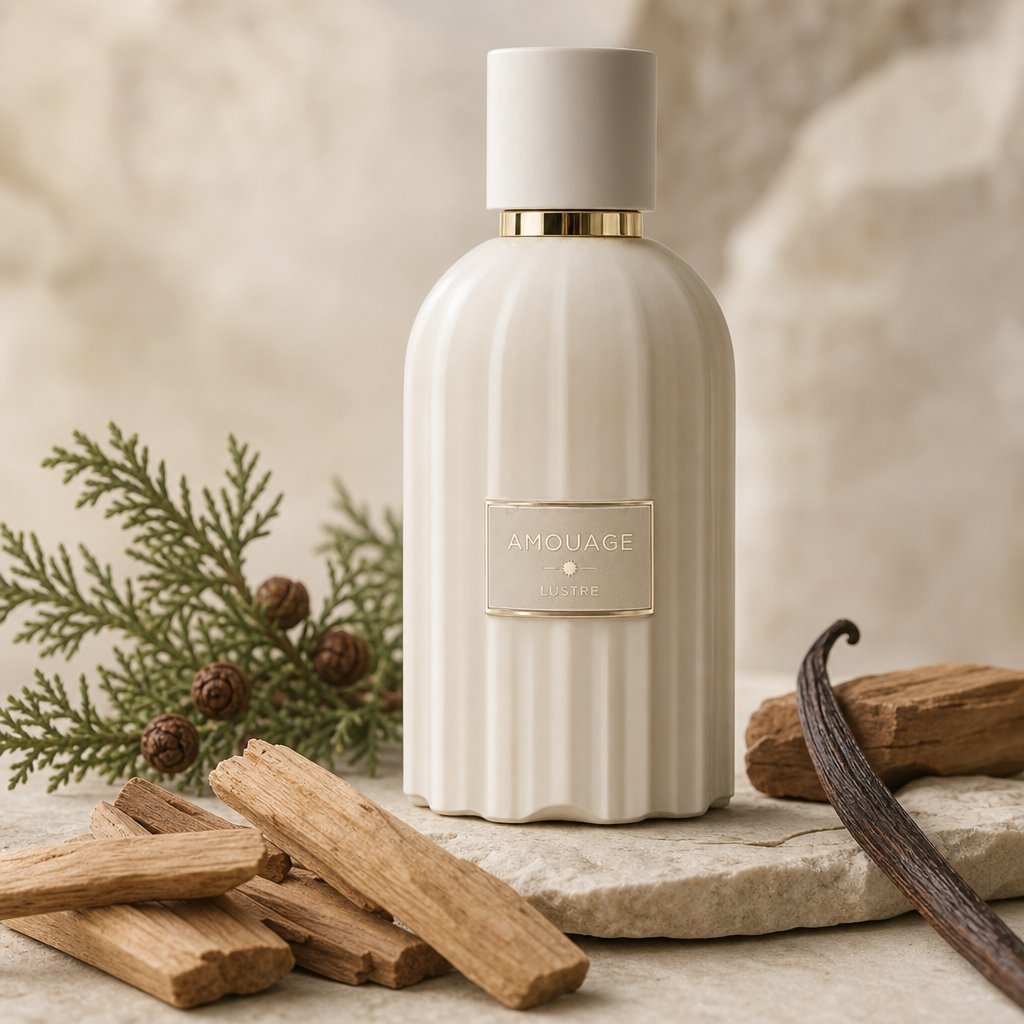
Amouage Lustre Pure Perfume Unisex 100 ml is the most woody of the trio. It opens with spicy cardamom, transitions in the heart to creamy sandalwood, dry cedar, and earthy patchouli, and in the base unfolds into a long resinous and balsamic trail.
- Top notes: cardamom, orris root
- Middle notes: sandalwood, cedar, patchouli
- Base notes: myrrh, benzoin, ambroxan, styrax, labdanum, vanilla, cypriol oil, tonka bean
It suits you if you like calm woody compositions without a sweet top and are looking for a perfume for all-day wear in the office and for regular meetings. Thanks to the pure perfume concentration, it lasts even with economical application, so you'll appreciate it more in autumn and winter.
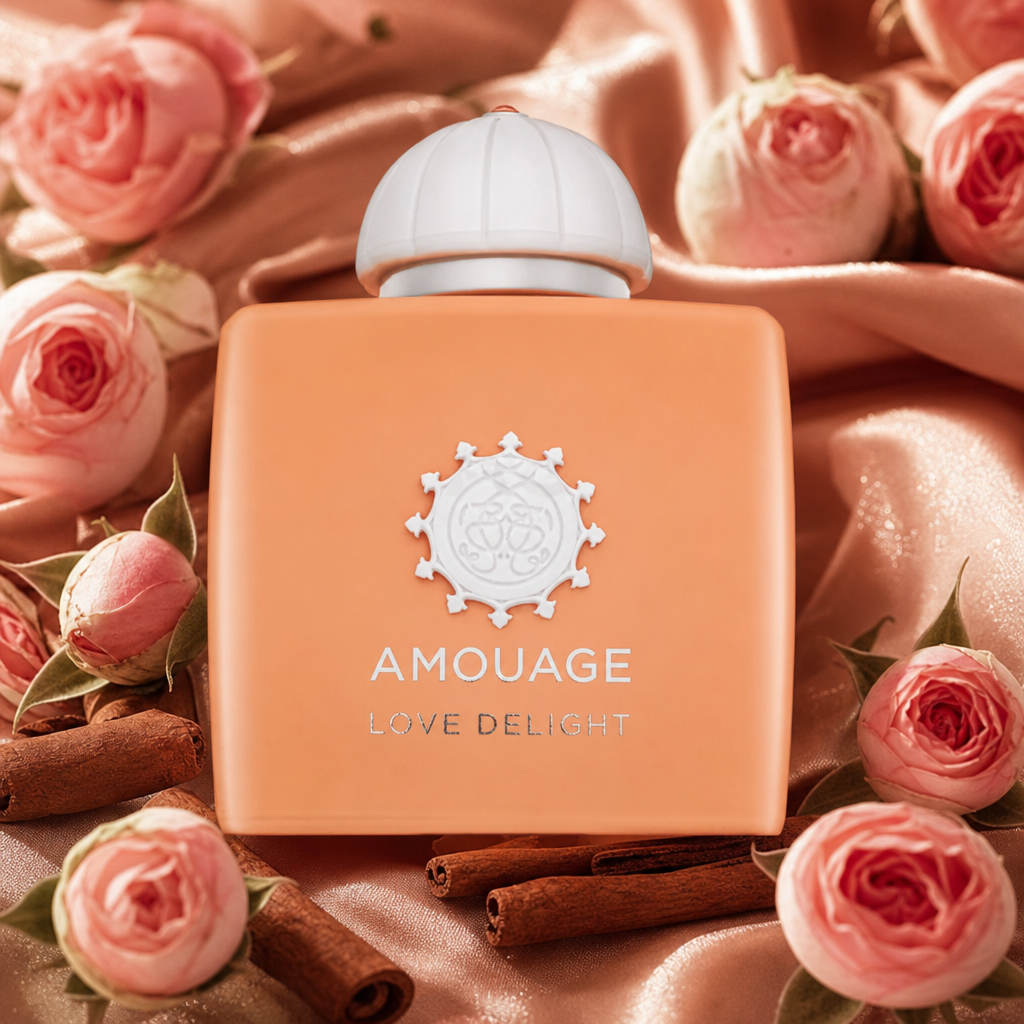
Amouage Love Delight Eau de Parfum for Women 100 ml showcases the rose exactly in that oriental reading mentioned above. Rose water appears right at the start alongside ginger, mandarin, and cinnamon, supported in the heart by heliotrope and jasmine, and the base leads it into a gourmand position.
- Top notes: ginger, mandarin, cinnamon, rose water
- Middle notes: heliotrope, jasmine, rose
- Base notes: rum, cypress oil, vanilla, cocoa
The composition is suitable for those of you who want a floral fragrance but find purely fresh renditions boring. It is best suited for the evening or a cooler day when warm spicy tones have room to unfold. You'll find it in the catalog among perfumes for women.
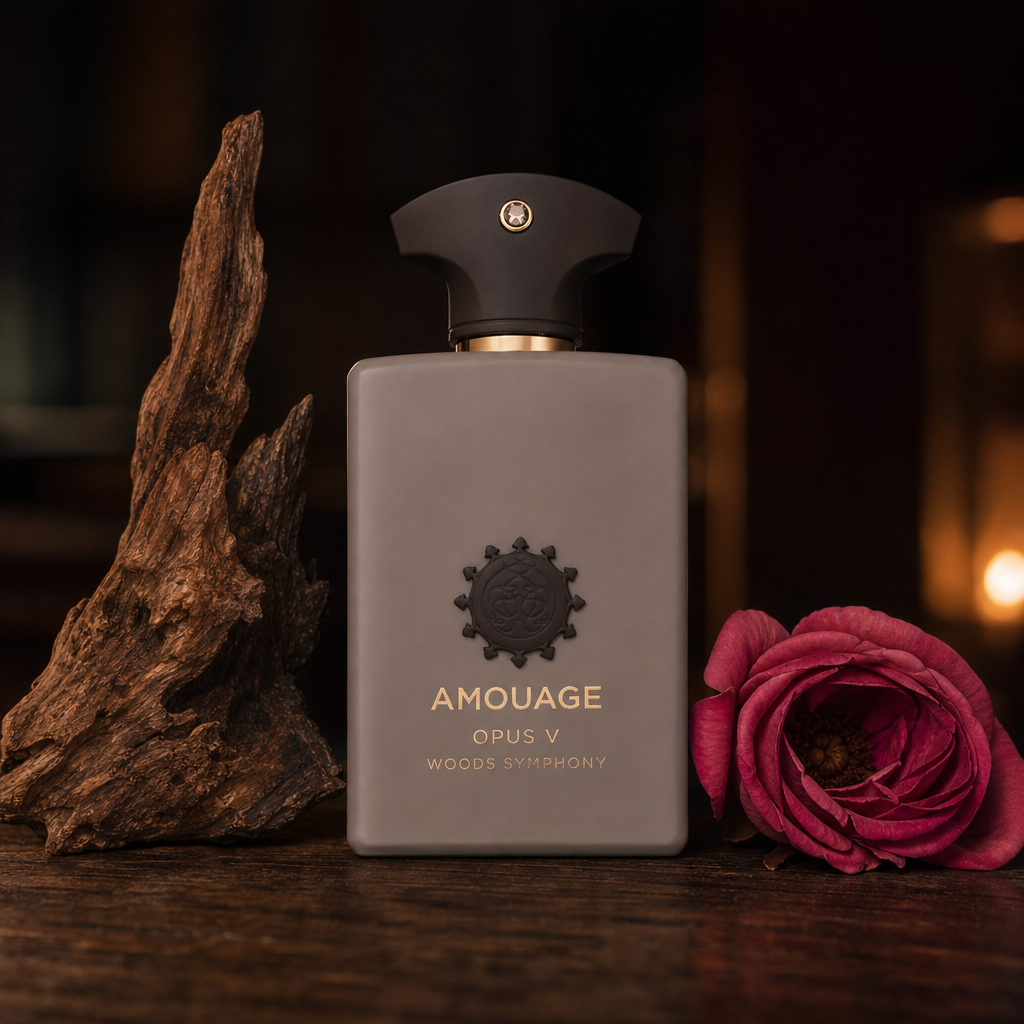
Amouage Opus V Woods Symphony Eau de Parfum Unisex 100 ml combines both lines together. It starts with Florentine iris root and rum, opens in the heart with rose and jasmine, and the base belongs to agarwood, dry woods, and civet. It is precisely this conclusion that makes the perfume the most distinctive item of the trio.
- Top notes: Florentine iris root, rum
- Middle notes: rose, jasmine, Florentine iris root
- Base notes: agarwood (oud), dry woods, civet
We recommend it to those who already have experience with oud and want to hear it in combination with rose, not on its own. It is a perfume for the evening and the cold months; in enclosed spaces, it should be applied sparingly. Thanks to its unisex designation, it's worth trying regardless of whether you usually choose from the women's or men's section.
How to Choose Your Amouage Based on Ingredients You Love
Whether you're drawn to Omani perfumery for its smoky resins, spicy roses, or deep woody bases, narrowing down your choice can be surprisingly quick. Start with an ingredient you already love – it can reliably predict how the entire composition will affect you. That's why we've prepared an overview of six Amouage perfumes available in our stock, each with its ingredient signature, composition character, and the occasion it's best suited for.
The simplified guide looks like this: if you love incense smoke and dry resins, head towards Purpose or Opus XV King Blue. If you're attracted to roses set in a spicy or sweet framework, look among Love Delight and Opus V Woods Symphony. And if you prefer wood that lingers quietly on the skin, aim for Reasons or Lustre.
- Amouage Purpose Eau de Parfum Unisex 100 ml – incense (olibanum), pepper, sandalwood, rose, and vetiver. The resinous backbone is softened by pepper with a hint of rose, while vetiver keeps the whole in a dry, non-sweet register. Suitable for all-day wear in the cooler half of the year.
- Amouage Opus XV King Blue Eau de Parfum Unisex 100 ml – kyara incense, oud, sandalwood, and patchouli. Of the entire six, it has the most pronounced smoky accent, as oud and earthy patchouli accompany the incense. Perfect for evening and festive occasions.
- Amouage Reasons Pure Perfume Unisex 100 ml – cardamom, myrrh, sandalwood, cedar, vetiver, and labdanum. A spicy start transitions into balsamic myrrh and ends in a dry woody echo. Ideal for autumn and winter and more formal settings.
- Amouage Lustre Pure Perfume Unisex 100 ml – sandalwood, cedar, patchouli, myrrh, and vanilla. The softest of the woody variants: vanilla wraps sandalwood in a creamy texture, with myrrh adding a resinous undertone. A great choice for intimate evenings.
- Amouage Love Delight Eau de Parfum for Women 100 ml – rose water, jasmine, rose, vanilla, and cocoa. The floral gourmand face of the collection, where rose blends with vanilla and cocoa tones. Perfect for social evenings or as a gift.
- Amouage Opus V Woods Symphony Eau de Parfum Unisex 100 ml – rose, jasmine, and agarwood (oud). A classic combination of rose and oud: a floral head set on a dark woody base. Choose it when you want a recognizable signature.
A practical note on dosing. Compositions based on resins and oud develop more slowly, last significantly longer, and their trail tends to expand rather than fade throughout the day. For Eau de Parfums, two sprays are usually sufficient – typically on the wrist and neck under the jaw. Pure perfumes like Reasons and Lustre have a thicker consistency and are applied in spots; one touch on each wrist and behind the ear is often enough. Do not rub your wrists together after application, and if you prefer a more subtle presence, apply the perfume to areas covered by clothing – resinous bases release more gradually from wool and cotton.
Which ingredient you choose as your starting point is a matter of taste – incense, rose, and wood form one family at Amouage, and transitioning between them makes sense. You can find the current brand offering together in the niche perfumery section on Brasty, where you can also compare it with other brands that work with similarly distinctive materials.
Category
Recommended articles
Riiffs Freeze in Flames: Ice and Flames Illuminate Warsaw "Give a girl the right shoes and she can conquer the world!" Marilyn Monroe