

Annayake is not a typical French perfume house but a Japanese-inspired brand that emphasizes purity and tranquility. Discover the brand's story, its philosophy, and what makes each fragrance unique, from An'na to Tomo.
Why Annayake Smells Different from the Rest of the Perfume World
Whether you choose a perfume based on first impressions from a tester or by names you've known for years, you've probably noticed one thing: most new releases want to make a statement. Sweet bases, bold trails, bottles designed to catch your eye right from the shelf. Annayake takes a different approach – and that's why it might be a bit confusing at first sniff.
Annayake is not your typical French perfumery house as we usually imagine it. It's a Japanese-inspired brand of luxury cosmetics and perfumes that has always worked with skincare and fragrances as two sides of the same coin. This is evident in the results. Annayake perfumes are not designed to dominate the entire room but to stay close to the skin and complement it, much like a good cream or a carefully chosen shirt.
In a blind comparison, you'd probably recognize them most easily by two characteristics: purity and calm. The compositions tend to be clear, without heavy smoky veils and without the gourmand sweetness that fills today's bestseller lists. Instead of an immediate effect, Annayake offers a smooth progression that changes only gradually throughout the day. For some, this is a relief; for others, a disappointment – and that's precisely the contradiction that makes it worth discussing the brand in more detail.
Restraint can easily be mistaken for blandness. If you're used to a perfume that speaks for itself, your first encounter with Annayake might seem like a half-hearted effort. The question we pose in this article is simple: is such restraint a weakness, or a conscious decision with its own logic and audience? You'll find the answer more in how the brand was created and the culture it draws from, rather than in its longevity on the wrist.
In the following sections of the article, we'll take you through what stands behind these understated bottles:
- how a Japanese name met French perfumery production in one brand,
- what exactly to imagine under Japanese aesthetics when translated into top, middle, and base notes,
- what perfumes Annayake truly offers – from women's Eau de Parfum to men's Eau de Toilette,
- how to choose among them based on occasion, daily routine, and how the fragrance reacts to your skin.
If you're looking for a perfume that will accompany you throughout the day without preceding you through the door, it's worth reading on. And if you love perfumes that are heard across the office, at least you'll understand why Annayake might not be for you.
The Brand's History Between Japan and France
To understand why Annayake perfumes have such a subtle presence, it's worth starting with their origins. The brand was founded in Japan at the end of the 1980s and from the beginning, it wasn't a traditional perfume house. It operated as a cosmetic house that combined two disciplines simultaneously: skincare and perfumery. This is not just a detail for collectors – it's from this connection that Annayake's approach to fragrance emerges. Perfume here is not a separate category from skincare but a continuation of it. The scent is meant to complement the skin, not overpower it.
The Japanese origin is not limited to a line in a press release. The name Annayake itself is Japanese, and the entire initial concept is Japanese: a view of beauty where the result is more about well-looking skin than a striking mask, and where care is understood as a regular, unhurried ritual. This perspective has also been transferred to the perfumes, so you'll find more subtlety in them than an effort to capture attention across the room. If you're used to sweet, intense compositions, Annayake might initially seem quiet – and that's intentional, not a flaw.
The second pillar of the story is France. Annayake perfumes intended for the European market are produced there, in a country with the longest perfumery tradition in Europe. Thus, the brand stands on two sources simultaneously:
- Japanese idea – moderation, purity, and skincare as the foundation of the entire brand, not an additional marketing frame;
- French craftsmanship – experience in composing fragrances, access to raw materials, and manufacturing facilities that the European market knows and can evaluate.
This combination of Japanese concept and French production explains why Annayake is so hard to categorize. For a reader accustomed to large European perfume houses, it is unexpectedly restrained. For someone looking for typically Japanese cosmetics, it is more perfumery than expected. The brand moves between these two positions, and from this comes its character: a form understandable to Europeans, with a Japanese minimalist content.
If you look for details about the brand, you'll discover one more thing – its history is not told as a gallery of famous names, exact dates, and awards won. Annayake speaks of its origins as modestly as it does of its fragrances: it stays with the concept and what skincare and perfume have in common. This restraint is part of the brand's nature and fits well into the Japanese idea that what matters is what remains on the skin, not how much is written about it.
From this history, take away one practical conclusion. Annayake's women's Eau de Parfum and men's Eau de Toilette are based on the same premise as its skincare: to stay close to the skin, maintain a moderate volume, and provide company all day without anyone having to ask for it. This is also reflected in how Annayake fragrances are used – with calm and consideration for the situation in which you wear them.
Japanese Aesthetics as a Fragrance Formula
Place a classic European Eau de Parfum next to a scent from the Japanese-inspired school, to which Annayake belongs, and you'll notice the difference even before you can name the individual ingredients. It's not about how many materials fit into the composition, but what ultimately remains in it. Four motifs that recur in the brand's approach—minimalism, purity, harmony with nature, and care understood as a ritual—are not just aesthetic slogans. For the perfumer, they mean quite specific decisions, and you can recognize them all on the skin.
Minimalism in perfumery doesn't mean the fragrance is boring or unfinished. It means the creator selected a few ingredients and gave them space to be heard. When you smell such a composition, you can usually describe what's in it: a citrus peel, a single flower, wood. A richly layered oriental fragrance, on the other hand, combines dozens of materials into one dense accord, which is much harder to dissect. Neither approach is better—they are two different intentions.
Purity is why these types of scents are called transparent. Transparency in perfumery is achieved by what is missing in the composition: heavy resins, sweet caramel layers, and a strong leather base cloud it immediately. Instead, citrus, green and aquatic notes, white flowers, and light musk or cedar in the background take their place. The result is often described as the feeling of freshly washed skin or starched linen. It's a fragrance you wear, not a fragrance that wears you.
Harmony with nature is reflected in the choice of motifs. Plant and seasonal references—tea, bamboo, wood, spring flower, wet stone after rain—are readable and nameable, so even someone who doesn't usually analyze perfumes can say what the scent reminds them of. The composition aims to accompany the day, much like the seasons, and therefore you rarely find tones that would seem artificial or provocative.
Care understood as a ritual is a motif that connects the fragrance with skincare. The brand builds both on the same foundation, and this is evident in how the perfume is worn. You apply it as another step in your morning routine, not as a final touch before leaving. This relates to the most notable practical feature of these fragrances: they stay close to the skin. They don't create a trail that the whole hallway can smell, but rather an aura within arm's reach—recognized by people you actually meet.
Where restraint is most evident, you'll see when you break down the composition into the usual three levels:
- Top notes are short and fresh. Instead of a loud opening meant to capture attention in the first few seconds, you get a pure breath of citrus or green leaves.
- Middle notes, the heart of the fragrance, carry the entire idea. They usually contain only a few ingredients, but they are well recognizable, and they determine how you will perceive the fragrance for most of the wear time.
- Base notes remain light. A woody and musky fading base replaces a sweet gourmand block, so the fragrance softens towards the end of the day rather than intensifying.
For you, this implies two practical things. A restrained composition is almost impossible to recognize from a paper sample—it seems understated precisely because its magic arises only in connection with your skin. And expect that you might want to refresh such a scent in the afternoon with another spritz, which is normal for fragrances of this type, not a sign of deficiency. Conversely, if you're looking for a perfume that announces you before you enter the room, you won't find it here. This aesthetic then serves well to explain how the individual fragrances of the brand differ.
Annayake Fragrance Portfolio: From An'na to Dojou
The Annayake portfolio is intentionally selective. Instead of a long list of variations on a single successful scent, you'll find a few distinct compositions, each with its own character and occasion. The women's line is based on Eau de Parfums, while the men's line focuses on Eau de Toilettes. It's worth noting the difference in concentration: Eau de Parfum is usually richer and lasts longer on the skin, whereas Eau de Toilette is lighter and easier to wear all day.
The Women's Line and Its Three Eau de Parfums
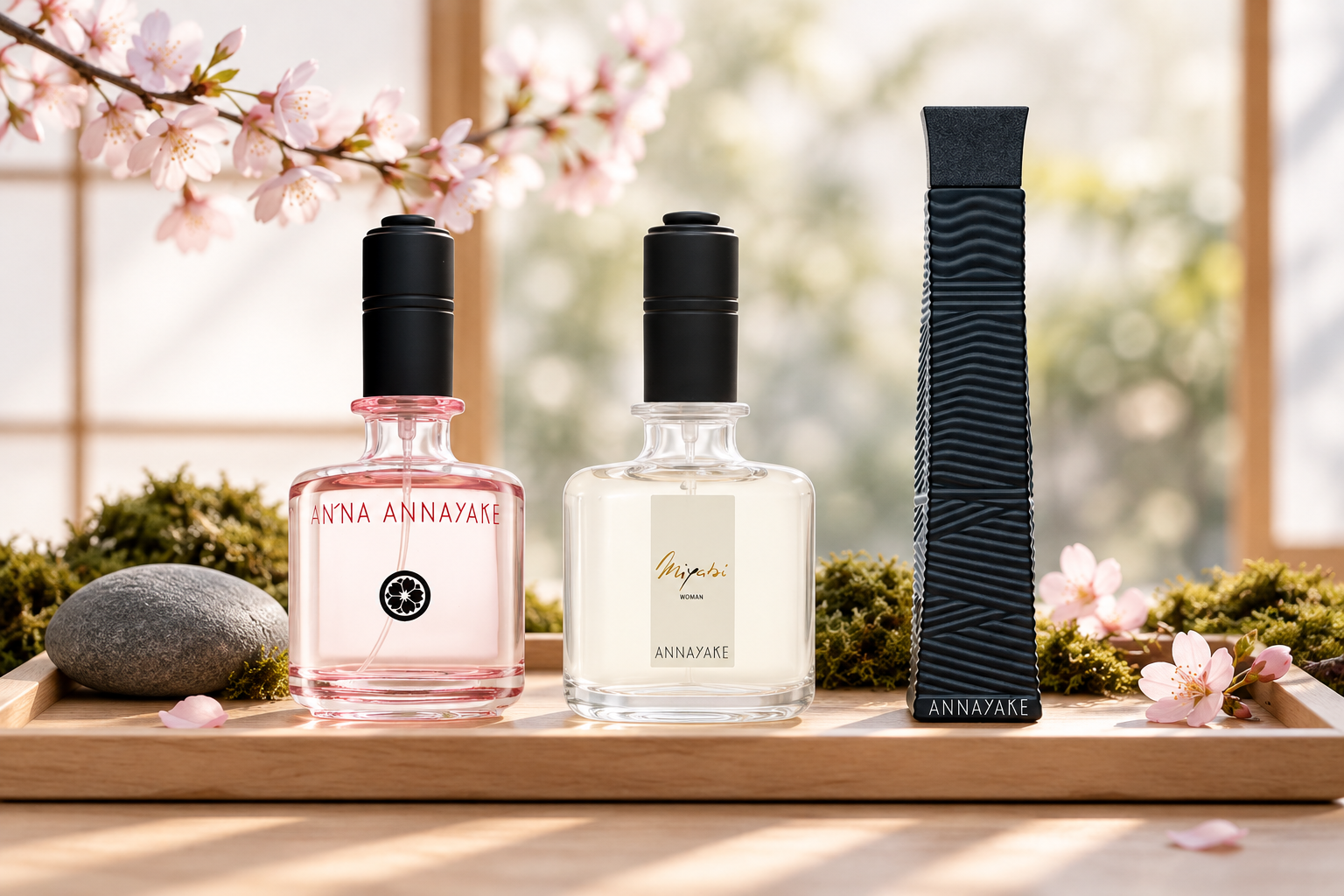
The three women's Eau de Parfums can be described as three shades of the same restraint – from youthful freshness to refined elegance.
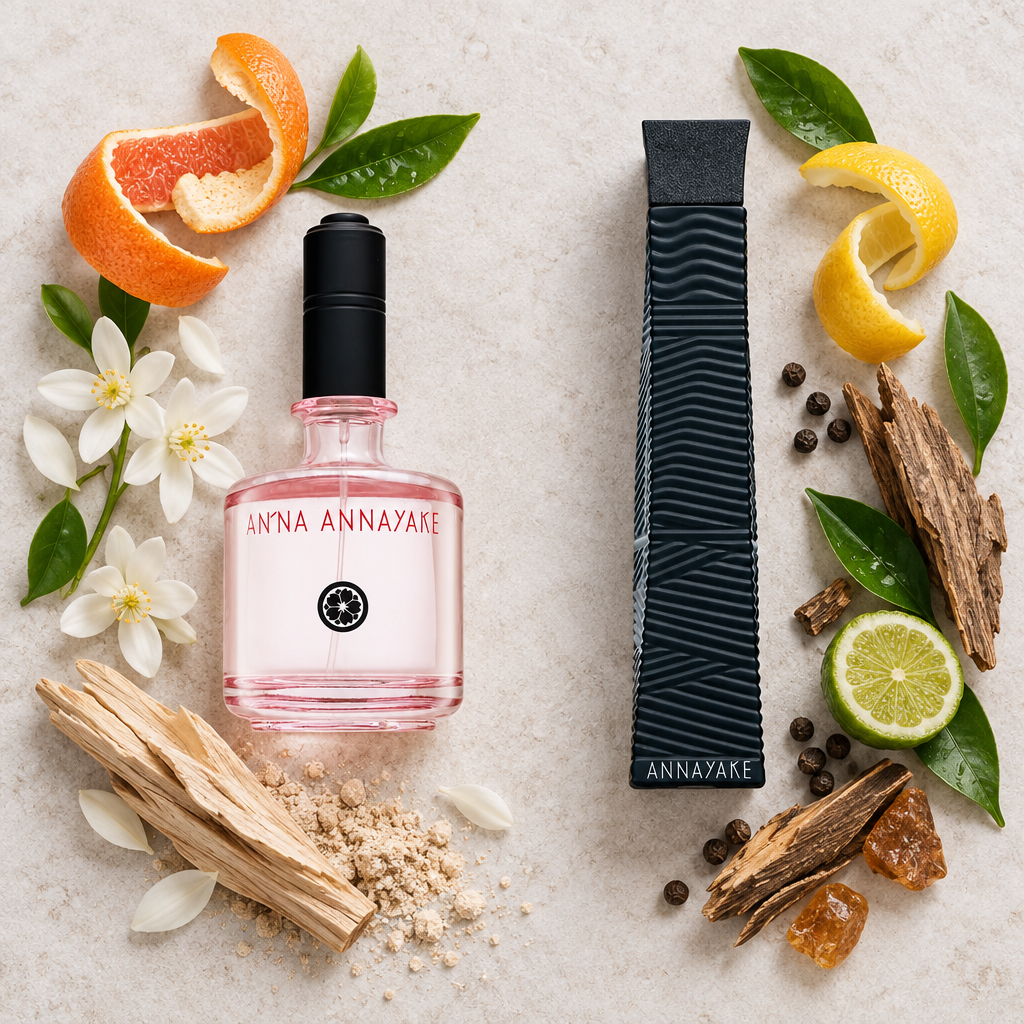
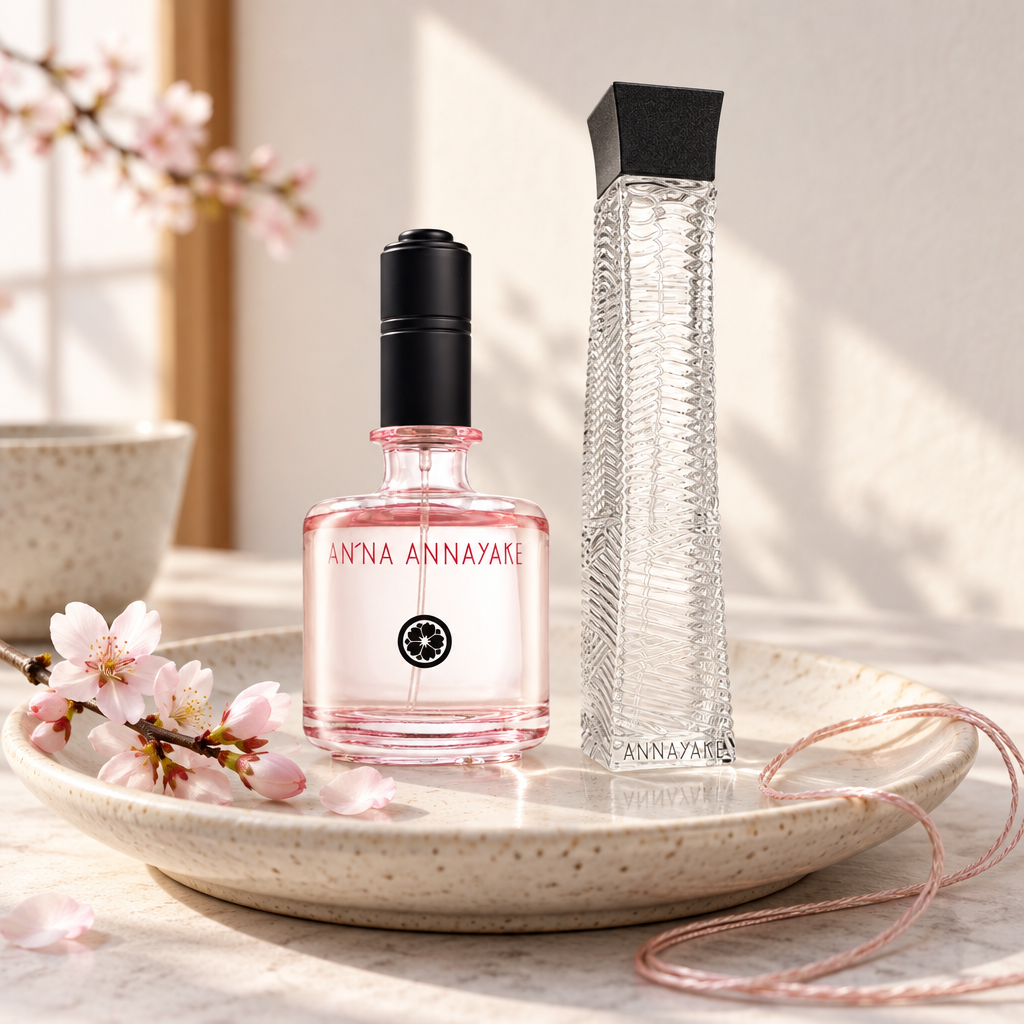
- An'na – an Eau de Parfum for women that embodies a gentle floral composition with a fruity touch. It feels light, clean, and youthful. It's the kind of perfume you spray on in the morning and don't have to worry about it being too overpowering throughout the day.
- Pour Elle – an Eau de Parfum for women that you would describe as a clear, transparent floral scent. It stays close to the skin and doesn't create a large aura, making it a reliable choice for the office or situations where a strong perfume might be intrusive.
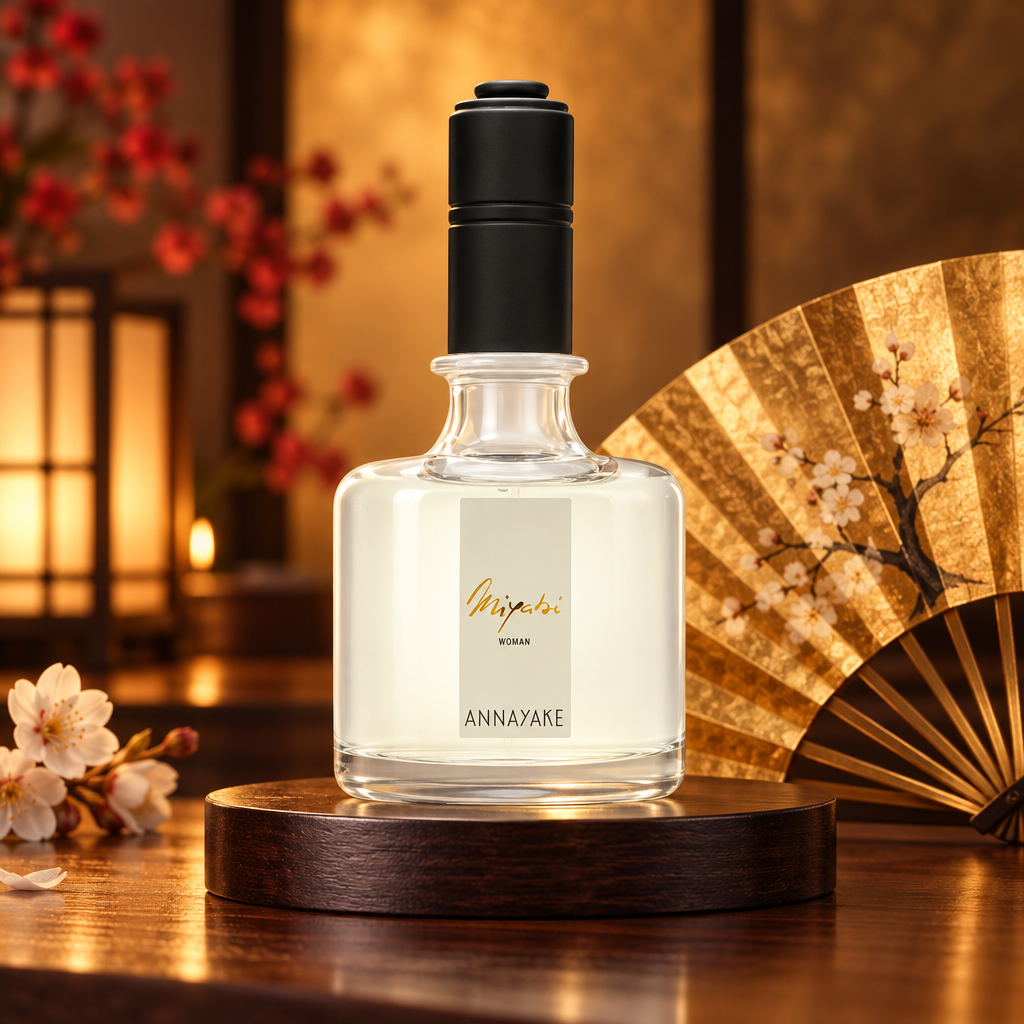
- Miyabi Woman – an Eau de Parfum for women with an elegant, floral-powdery impression. Of the women's trio, it feels the most mature and shines best in the evening or at more formal occasions. The name Miyabi is often associated with the Japanese concept of refined, understated beauty, and the fragrance adheres to this notion.
The Men's Line and Its Four Eau de Toilettes
The men's line is one name richer and covers a slightly wider range – from quiet office freshness to a spicier scent for cooler months.
- Pour Lui – an Eau de Toilette for men with a fresh woody spirit. A calm, well-groomed fragrance without sharp edges. If you're looking for a scent that won't disturb anyone in an open office, start with this one.
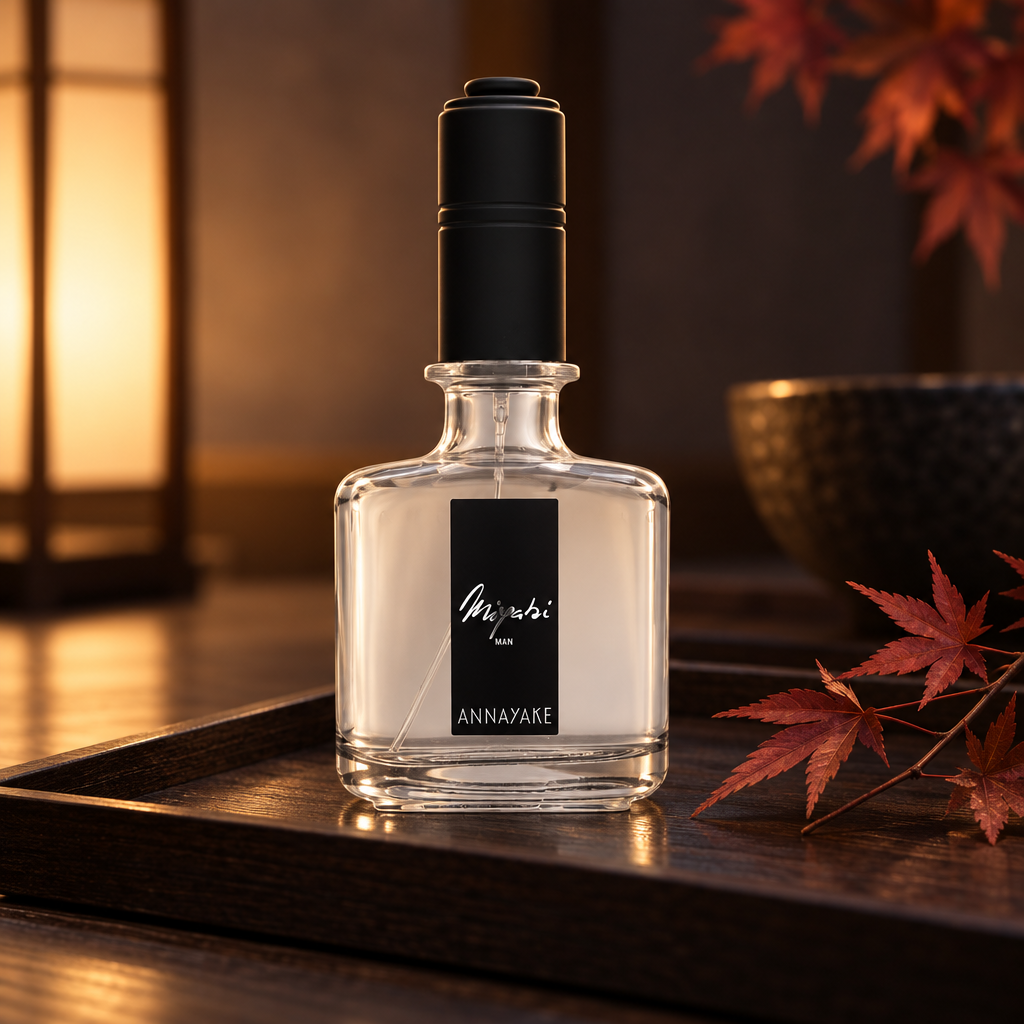
- Miyabi Man – an Eau de Toilette for men with an aromatic woody character, the male counterpart to Miyabi Woman. It feels more focused and slightly more formal, serving well for a business meeting or dinner.
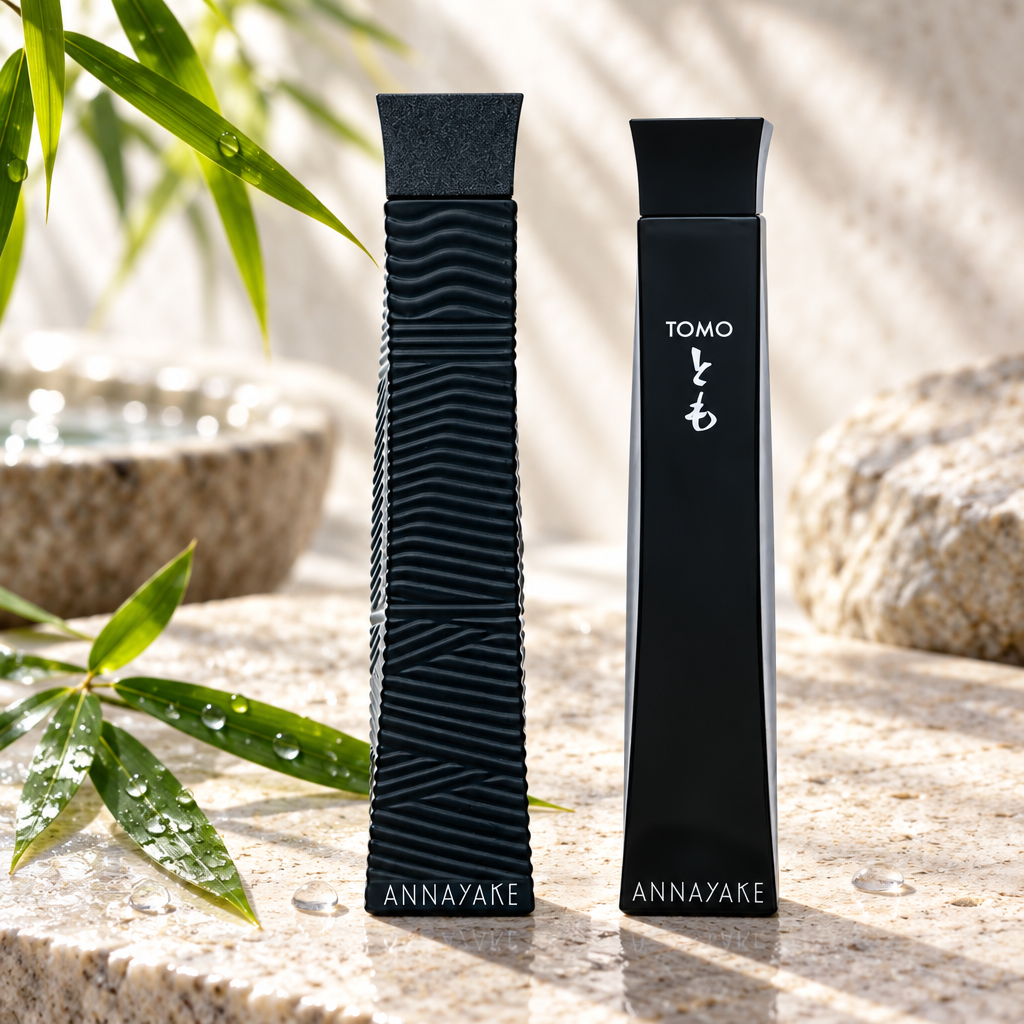
- Tomo – an Eau de Toilette for men that follows a fresh citrus-woody line. Among the men's range, it's one of the easiest to wear and works most naturally in warm months and leisure time. The Japanese word tomo means friend, which suits its effortless vibe.
- Dojou For Him – an Eau de Toilette for men with a spicy, woody resonance. Of the men's quartet, it's the most distinctive and performs best in the cooler part of the year and in the evenings. The name refers to a dōjō, a place of training and focus, and the fragrance matches this with its serious, grounded mood.
It's useful to view the portfolio as pairs and standalones. Pour Elle and Pour Lui form the most straightforward counterpart for women and men, Miyabi Woman and Miyabi Man are their more formal counterparts for both genders, while An'na, Tomo, and Dojou For Him stand alone, each with its own role – a gentle floral start to the day, carefree freshness, and a darker, spicier tone.
Whether you're drawn to the women's or men's side, one thing holds true across the entire portfolio: none of these fragrances aim to be the loudest. They open gradually, stay close to the skin, and enhance the overall impression rather than define it.
How to Choose Your Annayake
Annayake offers a portfolio that can be explored in a single visit, making the selection process easier. You won't be deciding between dozens of nearly identical options, but rather among a few distinctly different characters. Whether you're looking for a perfume for the office, a more pronounced companion for the evening, or a gift for someone who dislikes bold perfumes, it's worth starting with the occasion, not the bottle.
Two questions are helpful. First: where will you be wearing the perfume most often? Second: how far do you want it to be noticeable? With the subtle compositions that Annayake is known for, the answer to the second question is usually "within reach," not "across the room." This is intentional, not a flaw, and it fits well in environments where ostentatious perfumes are not worn.
- For the office, commuting, and everyday wear, the most restrained options the brand offers are suitable. For women's Eau de Parfums, it's An'na, and for men's Eau de Toilettes, it's Pour Lui or Tomo. One to two sprays will suffice, and you won't have to worry in advance about how the perfume will be received by colleagues in a small meeting room.
- For the evening, dinner, or occasions where you want to be a bit more noticeable, shift your choice to the Miyabi line – Miyabi Woman for women's Eau de Parfums, Miyabi Man for men's Eau de Toilettes. For men seeking a deeper and more formal impression, Dojou For Him is an alternative.
- As a gift for someone who "doesn't wear perfumes", a more subdued choice is usually safer than something flashy. Pour Elle and Tomo work well: they can be worn daily, won't overpower the environment, and won't impose a new style on the recipient.
Wherever you decide to go, don't rely on a paper tester. A strip will show the top notes and that's it. For a perfume that is meant to be close to the skin, the decision is made based on what remains after two and six hours. Therefore, spray one, at most two, and give them the whole day. The Japanese approach to care sees fragrance as part of the daily ritual, not just the final layer before leaving the house – and that's exactly how it should be tested: on yourself, in everyday life, not in three minutes at the counter.
A few little tips can also help. Perfume adheres better to well-hydrated skin than to dry skin, so if scents usually "disappear" on you sooner than expected, try applying it shortly after body lotion. Aim sprays at warmer areas of the skin – the wrists, neck, around the collarbones – and let them dry naturally. And if you're torn between two options, don't try them simultaneously on one hand; one day one, the next day the other, otherwise your impressions will blend into one.
Once you know which of the three situations you fall into, all that's left is to choose the specific bottle – you'll find Annayake perfumes in our selection of fragrances.


Category
Recommended articles

"Give a girl the right shoes and she can conquer the world!" Marilyn Monroe