

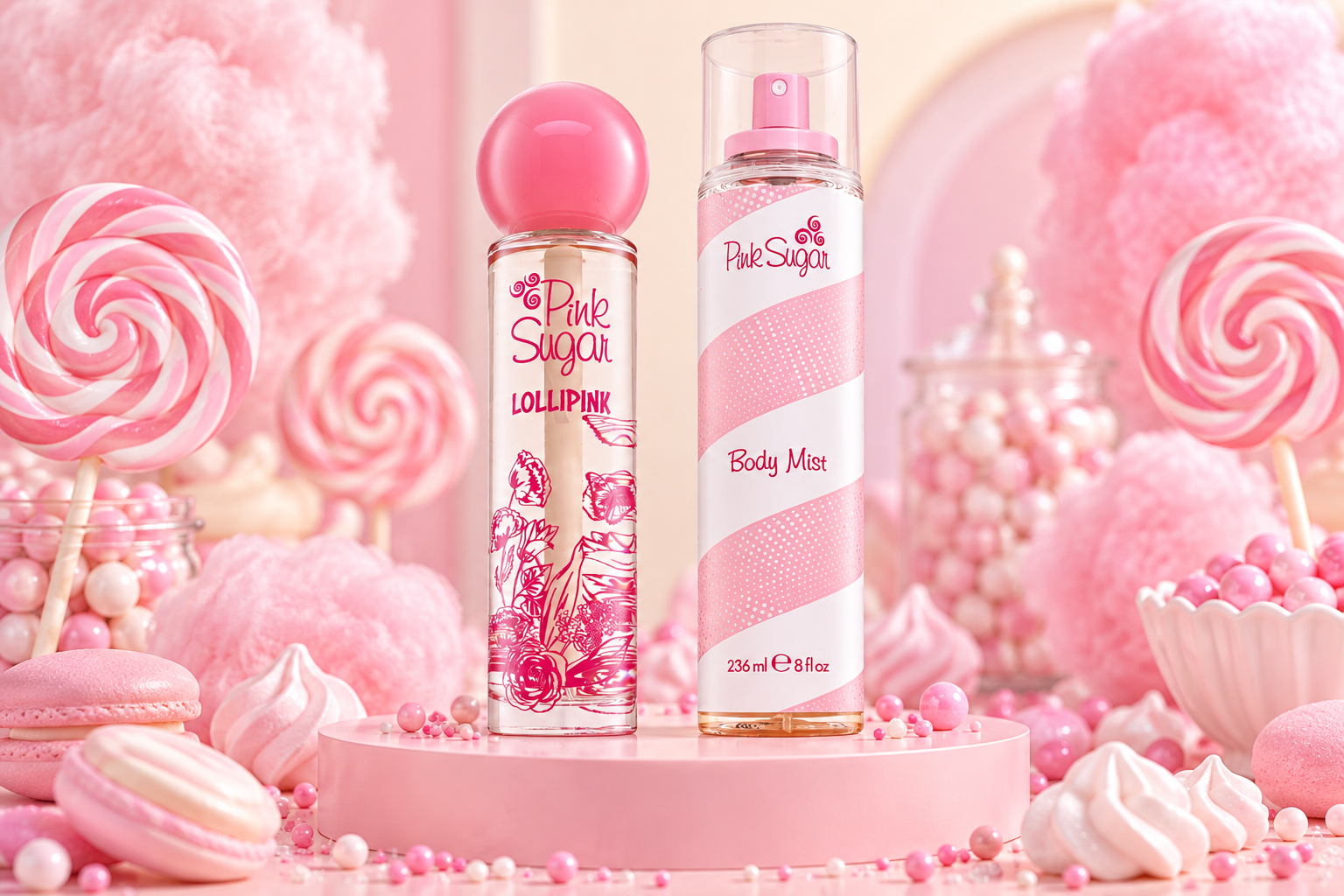
Many know the Pink Sugar fragrance before the brand behind it. Discover the Italian origins of Aquolina, how this sugary scent became a gourmet phenomenon, and the variations it offers today.
A Sweet Fragrance You'll Recognize Instantly
You might be familiar with it even before you've heard the name of the brand behind it. Just a whiff of Pink Sugar as someone walks by, and the air transforms into a fairground atmosphere – cotton candy, caramel, and a warm sweetness that's unmistakable. For many, Pink Sugar is their first experience with a perfume that doesn't just smell of flowers or citrus, but of delightful treats from a candy shop.
This playful and genuine sweetness has made it a hallmark of the gourmand style. Gourmand fragrances feature notes we typically associate with food and indulgence – vanilla, caramel, pralines, or sweet fruits. Pink Sugar is immediately recognizable in this regard: it doesn't play mysterious, it doesn't try to be serious, and it openly embraces the joy of something sweet. Some fall in love with it instantly, while others need time to get used to its bold sweetness. However, it leaves few indifferent.
Behind this sweetly named fragrance lies a story that begins far from fairground stalls – in Italy. That's where the brand Aquolina was born, with an approach to scents that was more playful and uncomplicated than ceremonial. This approach later influenced Pink Sugar and everything that followed.
In this article, we'll guide you through the entire journey: from the beginnings of the Aquolina brand, through the creation of Pink Sugar at a time when gourmand fragrances were gaining more fans, to today's family of scents that have grown around the original composition. You'll learn how the different variations differ, what formats are available, and how to use them so the sweetness is pleasant and not overwhelming. Whether you've been wearing Pink Sugar for years or have only heard about it, you'll find insights here that will help you understand why this fragrance has maintained its place over the years.
The Italian Beginnings of the Aquolina Brand
When one thinks of Italian perfumery, elegant fashion houses, massive bottles, and scents meant for grand evenings often come to mind. Aquolina took a different approach. Originating from Italy, the brand has always focused on playfulness, lightness, and the joy of fragrance, rather than grandeur. The very name sounds Italian and hints at the word acqua, meaning water – a reminder of something fresh, everyday, and uncomplicated.
There aren't many reliable details available about the brand's very beginnings. Therefore, this article won't delve into exact dates or names. What speaks volumes, however, is what remains evident about Aquolina today: its style and approach to perfumes.
A Different Path from Traditional Perfume Houses
Traditional perfume houses often view perfume as a luxury ritual. The compositions are layered, the scent's development on the skin takes hours, and the entire communication around it is steeped in nobility and tradition. Aquolina chose the opposite direction:
- Playfulness over Formality – the fragrance is not meant to be part of a social code but a small pleasure for an ordinary day.
- Clarity over Complexity – the composition is understandable immediately upon application and doesn't require you to "understand" perfumery.
- Relaxation over Seriousness – the perfume acts as a mood accessory that you can switch according to your whim, rather than a symbol of social status.
Why the Brand Appeals to a Younger Audience
This approach particularly resonated with the younger generation. For many teenagers and young women, their first perfume wasn't a matter of prestige but rather an expression of personality and good mood. They sought a scent that was pleasant, easy to wear, and not waiting for a special occasion – suitable for school, a walk with friends, or an evening gathering. Aquolina offered them just that: a perfume that doesn't take itself too seriously, yet has a clear and memorable character.
The courage to forge its own path also played a role. Instead of mimicking established luxury brands, Aquolina focused on the emotions we associate with fragrance from childhood – carefreeness, sweetness, and joy. This straightforward approach laid the groundwork for a scent that sparked conversations about the brand far beyond Italy's borders.
So if you expect a smile rather than formality from a perfume, you'll understand why Aquolina has garnered such loyal fans. Its Italian roots are expressed not in opulence, but in lightness and a desire to play with fragrance.
Pink Sugar Riding the Wave of Gourmand Fragrances
To understand why Pink Sugar has captivated so many people, it's worth taking a step back. In the early 1990s, Thierry Mugler introduced the Angel perfume, demonstrating that a scent could evoke dessert – caramel, pralines, and vanilla, underpinned by rich patchouli. This was a bold move, as sweetness in perfumery had previously appeared more as a subtle complement to floral or oriental compositions. Angel thus paved the way for an entire family we now call gourmand.
Gourmand fragrances are recognized by their inspiration from patisseries, cafes, and sweet kitchens. Typically, they feature vanilla, caramel, cocoa, coffee, honey, or roasted nuts. The goal isn't for the perfume to smell exactly like food, but to evoke a sense of warmth, comfort, and playfulness in the wearer and those around them.
Pink Sugar joined this wave about a decade later – most commonly cited as being launched in 2004. While Angel was built on the contrast of sweetness and a dark, earthy base, Aquolina chose a different path: sweetness without unnecessary seriousness, playful, slightly nostalgic, and easy to wear.
You can imagine the composition in three layers that alternate on the skin:
- Top notes – a fresh, fruity-citrus start. Juicy citrus and red fruits add sparkle to the first minutes and prevent the sweetness from feeling heavy right from the start.
- Middle notes (heart) – the scent moves towards sweet, fruity-sugary accords reminiscent of candies and berries. This is where the typical "pink" character begins to emerge.
- Base notes – cotton candy, caramel, and vanilla. This layer lingers the longest on the skin, and it's how you can recognize Pink Sugar from afar.
Why did this combination seem bold at the time of its release? Gourmand fragrances were not entirely new, but their sweetness was usually balanced by woody, spicy, or powdery notes to ensure an elegant and mature result. Pink Sugar didn't hide or mute its sweetness – instead, it made it the main theme. A fragrance that openly evokes fairs, candy shops, or childhood went against the notion that a perfume must be serious.
As a result, Pink Sugar became a hallmark of sweet fragrances for an entire generation. Many people formed their idea of what "cotton candy in a bottle" smells like based on it, and for many perfume lovers, it was their first encounter with the gourmand family. When you smell a perfume today with a prominent caramel or vanilla base, comparisons to it often come naturally – which shows how deeply it has embedded itself in our consciousness.
How Pink Sugar Expanded into a Whole Family
When a fragrance becomes a signature scent, there are two paths to take: repeat it endlessly or let it evolve. Aquolina chose the latter. Around the original Pink Sugar, a whole family of variations has gradually emerged, each retaining its sweet, playful signature while taking it in slightly different directions. This allows you to return to Pink Sugar even when you're in the mood for a change, while still staying with a scent you know well.
All four variations available with us are eau de toilettes. They share a gourmand base, giving an impression of sugar and sweetness, but differ in what they add to it. The exact composition of top, middle, and base notes varies with each edition, so it's worth checking the description of the specific product. For a rough guide, here's an overview:
- Lollipink – the name references lollipops and the pink color typical of the entire range. This variation is built on playful, candy-like sweetness and showcases Pink Sugar in its mischievous form.
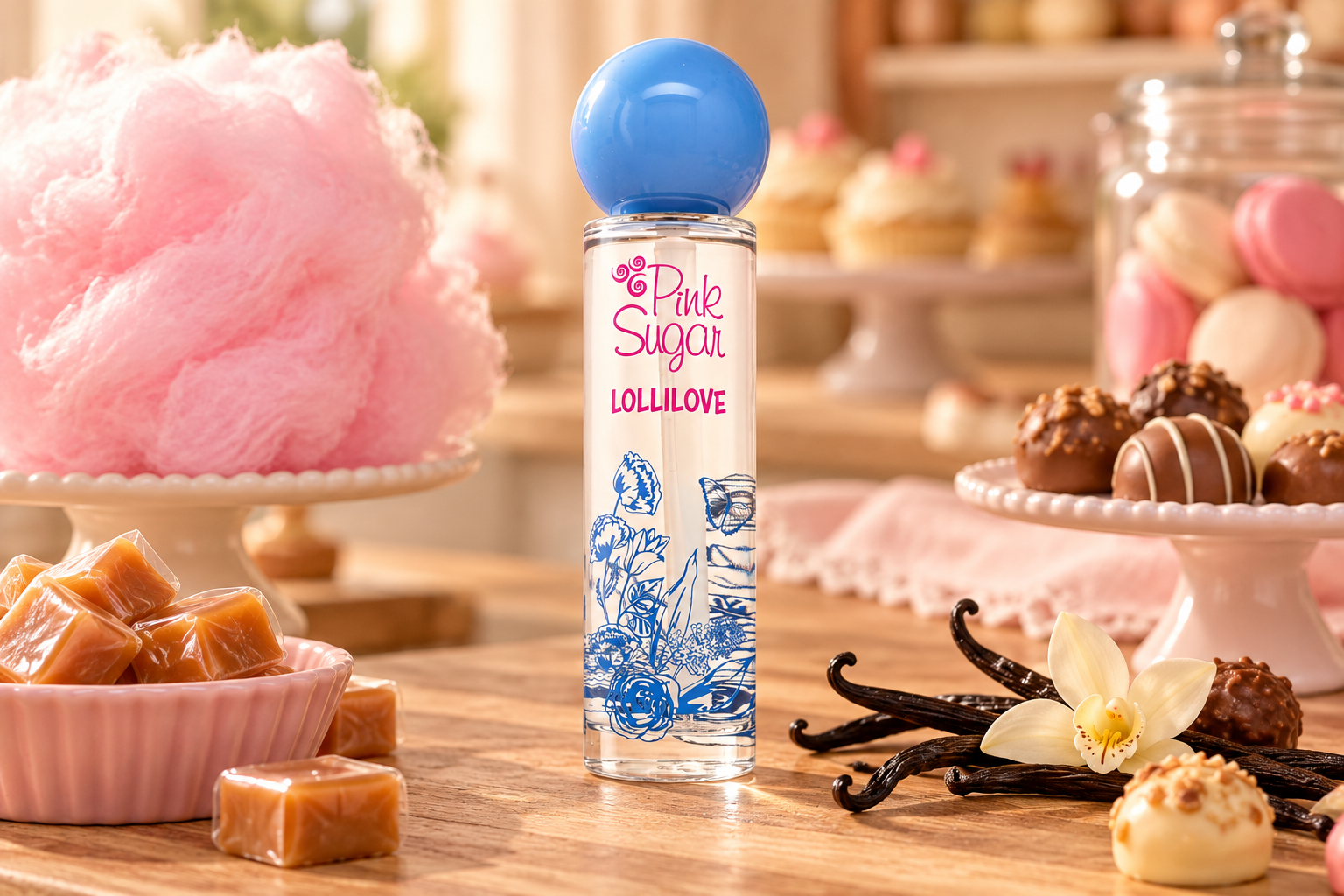
- Lollilove – another "lollipop" variation. It continues the playfulness of the original fragrance and is perfect for those who love Pink Sugar for its cheerful, candy-like character.
- Creamy Sunshine – as the name suggests, it shifts the sweet accord towards creaminess. Instead of a pronounced sugary sweetness, it offers a softer and smoother impression, which can feel calmer and warmer.
- Berry Blast – a variation where fruit takes center stage. The berry tone, as the name suggests, adds juiciness and freshness to the sweet base.
When choosing, a simple question helps: are you drawn to Pink Sugar mainly for its impressions of cotton candy and caramel, or more for its cheerful, fruity side? If the former, you'll likely prefer the creamier versions; if the latter, try the fruity variations. And if you're unsure, it's worth trying the fragrance on your skin first, as gourmand scents transform over several hours of wear and only then reveal their true character.
The Pink Sugar family doesn't stop at eau de toilettes. The brand also offers formats suitable for everyday use that can complement the eau de toilette well:
- Body sprays – a lighter form of fragrance that can be applied more freely and easily refreshed throughout the day. Ideal if you want to feel the sweet signature of Pink Sugar more subtly.
- Hair fragrances – a format designed specifically for hair, carrying the scent with every movement. It's a discreet way to enjoy your favorite accord even when you don't want to reach for the eau de toilette.
Thanks to these different formats, Pink Sugar has become a fragrance that can be layered. You can complement the eau de toilette with a body spray or hair fragrance from the same range, making the sweet accord feel more cohesive and fuller. Expanding into a family hasn't weakened Pink Sugar – the original fragrance remains a solid anchor to which all variations relate, allowing you to choose the version that suits you best.
Why People Keep Coming Back to the Aquolina Brand
Some perfumes you buy once out of curiosity, while others become a staple on your shelf. For many fans, Aquolina falls into the latter category—and there are several reasons why. It's not just a fleeting trend, but a blend of distinct style, playful approach, and accessibility that invites repeat purchases.
- A sweet signature you can rely on. Those who love the sugary notes of Pink Sugar know exactly what to expect from the brand. While individual variations may shift focus towards fruitiness or creaminess, the gourmand heart remains recognizable. For many, it's a sure thing—a new bottle won't bring any unpleasant surprises.
- Design with a twist. Colorful bottles and playful aesthetics match the mood of the fragrances themselves. Here, perfume isn't a serious status symbol, but a small joy for every day—and often a favorite gift.
- Friendly price range. Aquolina can easily be incorporated into your daily routine without much thought or tried as a first step into the world of sweet scents.
To enjoy a sweet fragrance all day without it feeling heavy, it's worth choosing the format based on the occasion.
- Eau de Toilette is suitable when you want a more pronounced and lasting scent—ideal for work, evening events, or cooler days when sweet notes feel cozy. Usually, two to three sprays on the wrists, neck, or behind the ears are enough; with gourmand fragrances, less is often more.
- Body spray is lighter and gentler. It's perfect for warm days, after sports, or as a quick refresh during the day when you don't want to overwhelm those around you. Thanks to its lower intensity, you can use it more generously, perhaps all over the body after a shower.
- Hair fragrance subtly reminds you with every head movement. Spray it from a sufficient distance onto the lengths and ends, not directly onto the scalp.
If you want to layer your fragrance, start with the lightest format. After a shower, use a body spray, add eau de toilette on pulse points, and finally, gently scent your hair. It's easiest to combine products with the same scent profile—the notes will complement each other, and the result will feel cohesive. If you want to experiment, try combining a fruity variant with a creamier one. Just remember, three sweet layers might be too much for hot weather or a small room.
If you're just getting to know Aquolina, choose based on which direction the sweetness draws you. For lovers of fruity notes, Pink Sugar Berry Blast is available, while those who prefer a softer, creamier approach can try Pink Sugar Creamy Sunshine. Lollipink and Lollilove offer more playful variations on the well-known sugary chord. Besides eau de toilettes, Brasty's Pink Sugar range also includes body sprays and hair fragrances, allowing you to create your own scent ritual—from a light refresh to a bold signature that will accompany you all day.
Category
Recommended articles

"Give a girl the right shoes and she can conquer the world!" Marilyn Monroe