
 Riiffs Freeze in Flames: Ice and Flames Illuminate Warsaw
Asdaaf is a sister brand of Lattafa, offering Arabic perfumery with a more straightforward approach. We present the brand's story and a full range of perfumes available at Brasty.
Who is Behind the Asdaaf Brand
If you are a fan of the Arabic perfumes by Lattafa, you might have come across the name Asdaaf in the range. It's not just a random neighbor on the shelf – Asdaaf belongs to the same family of brands as Lattafa and draws from the same tradition of Arabic perfumery. However, it differs in its approach: it offers a more straightforward and affordable style, suitable for everyday wear and a first introduction to the oriental style.
There is relatively little publicly known about the beginnings of the brand, so we won't weave legends around it. What can be said with certainty is that it grows from the same background as Lattafa and focuses on perfumes with a distinctive character that won't break the bank. This approach is typical for Arabic perfumery – rich and easily recognizable scents are not just a festive accessory but a part of everyday life.
For those of you who are already familiar with Lattafa, Asdaaf offers one practical advantage: you are moving in a similar world, just with a slightly different touch. If you enjoy oriental compositions, you can find a similar vibe with Asdaaf in a simpler execution. And if larger and more intense perfumes sometimes overwhelm you, the more moderate approach of this sister brand can be a pleasant alternative. It's worth taking a look next door – you don't have to leave the style you love, and yet you can discover something new.
So, what can you find in the catalog? The Asdaaf range is more diverse than you might expect from a smaller brand, covering lighter perfumes for everyday use as well as more intense oud compositions. For quick orientation, you can divide it into several groups:
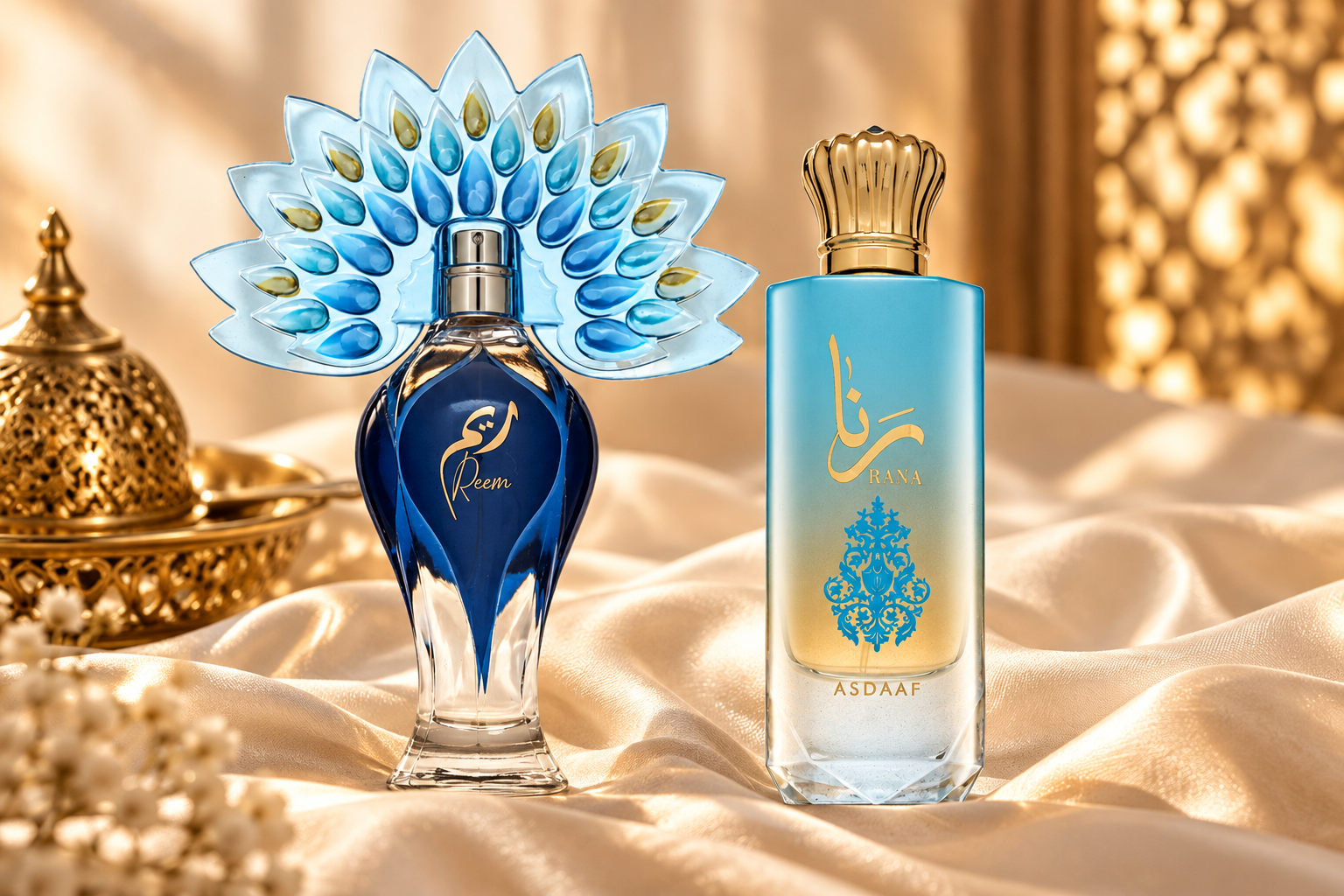
- Everyday Perfumes – Laraib, Reem, Salamah, and Rana, perfumes you can reach for at work, on a walk, or during a regular afternoon.
- Airier Names – Atlantis Coral and Pure White, whose names suggest a lighter and cleaner mood.
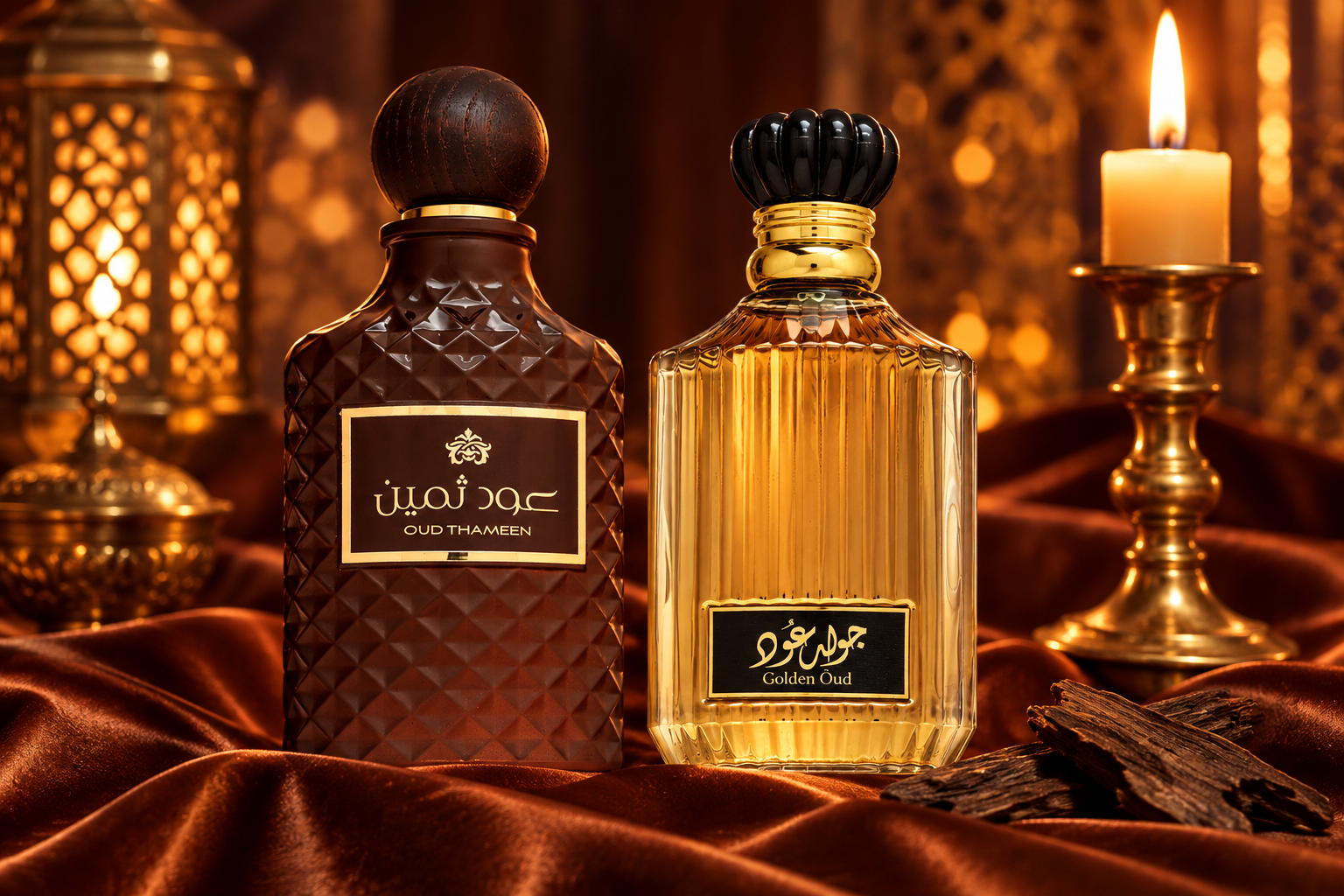
- Oud Line – Oud Thameen, Golden Oud, and Durrat Al Oud, which already carry oud in their name, one of the most typical ingredients of Arabic perfumery. They are complemented by Sa'ud and Badria.
- Hayaati Enta – a perfume we will explore in more detail when choosing the first piece from the brand.
Whether you are looking for a reliable everyday perfume or want to experience oud without a big commitment, there is plenty to choose from in the Asdaaf range. In the following sections of the article, we will guide you on how to navigate it and which perfume might be just right for you.
Asdaaf alongside Lattafa: Shared Roots, Different Styles
If you've encountered Arabic perfumery before, the name Lattafa might ring a bell. Asdaaf claims its place as a brand from the same family – both share a common background, which is why their names often appear together in stores and reviews. However, this doesn't mean they are two labels for the same perfumes. Each brand has its own collections, names, and unique way of presenting itself to customers.
Lattafa is one of the most prominent brands of Arabic perfumes offered by Brasty. Its range is extensive, and many successful perfumes have been given additional variants – alongside Khamrah, you'll find Khamrah Qahwa, next to Yara there's Yara Elixir, and the Asad line is expanding similarly. If you fall in love with a particular perfume, you can explore its variations while sticking with a name you already know.
In comparison, Asdaaf operates on a more intimate scale. The selection is narrower and more straightforward, making it easier to navigate without having to sift through a long catalog. The collection includes both everyday perfumes and a separate oud line, as suggested by names like Oud Thameen or Golden Oud.
Main Differences Between the Two Brands
- Range of Offerings: Lattafa offers significantly more perfumes and their variants in the Brasty catalog, while Asdaaf is more selective.
- Collection Approach: Lattafa builds on well-known perfumes, gradually adding more versions. Asdaaf composes its offerings from a smaller number of standalone perfumes, which differ more in character and occasion.
- Bottle Design: For both brands, the appearance of the bottle is an important part of the overall impression, but the design varies between different lines. It's worth checking out the product photos before making a choice.
Who Should Choose Lattafa, Who Should Choose Asdaaf
Lattafa makes sense if you're looking for a perfume that's widely talked about and you want to go for a trusted name. Khamrah is listed in the catalog as a unisex Eau de Parfum and is among the most sought-after Arabic perfumes in Brasty's offerings. Yara, along with the Yara Elixir variant, demonstrates how the brand develops a successful perfume into an entire line – if the basic version suits you, you have a path to follow.
Asdaaf is a better choice when you're drawn to Arabic perfumery but want to discover less familiar names, or when you prefer to decide from a smaller selection. It may also appeal to those who are already familiar with Lattafa and want to see what its sister brand has to offer. Whichever you choose, the same rule applies: first try the perfume on your skin and let it develop for a while, only then will you know if it truly suits you.
Laraib, Reem, Rana: Asdaaf for Everyday Wear
Not every perfume needs to be an evening affair. Alongside more intense compositions, Asdaaf offers perfumes you can reach for in the morning before work, for a weekend walk, or a meet-up with friends. This everyday face of the brand includes Laraib, Reem, Salamah, Rana, Atlantis Coral, and Pure White. The exact composition of the scents – top, middle, and base notes – can be found in the product block below the text. Here, we'll help you understand what each name suggests and how to choose among them.
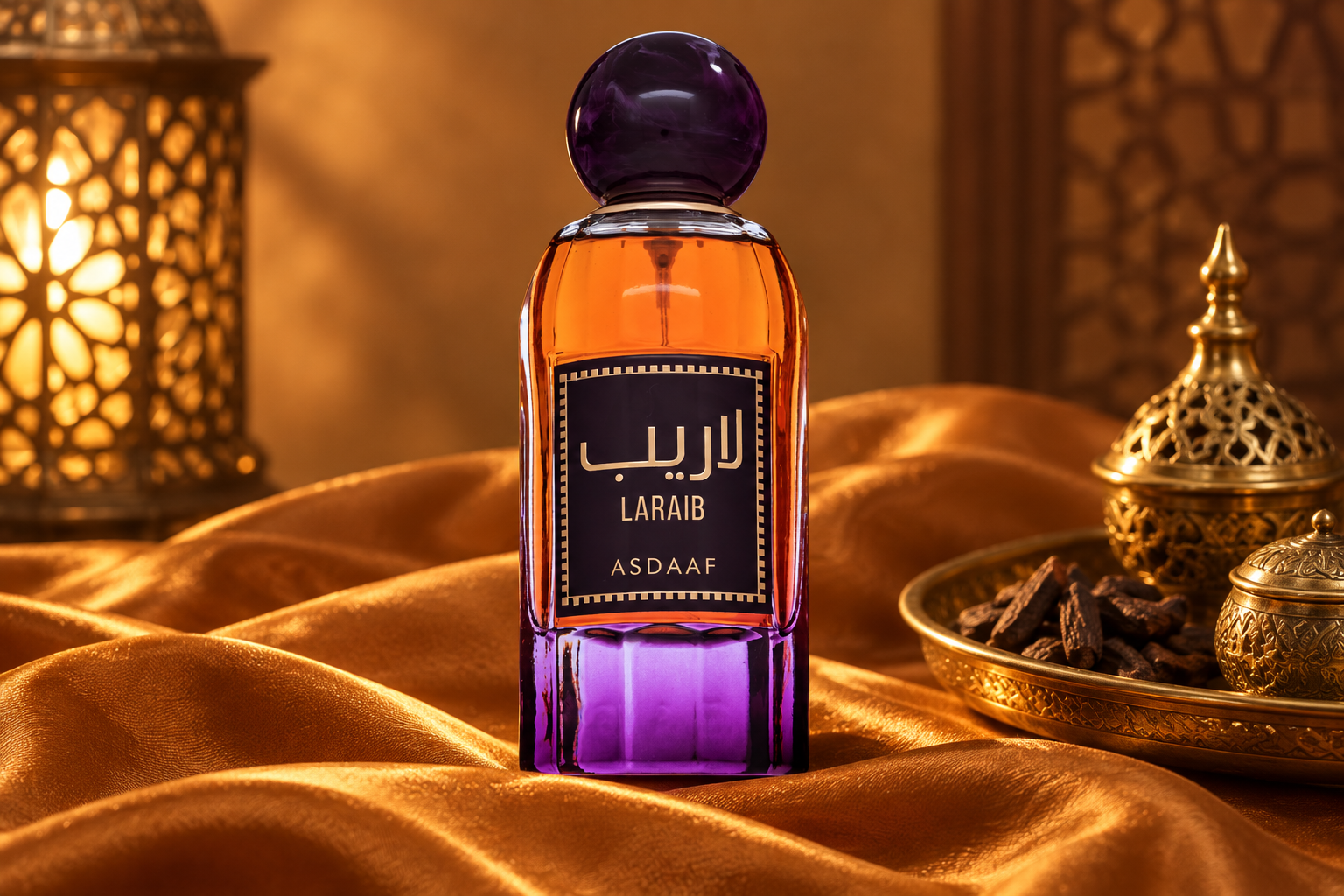
- Laraib – an Arabic word usually translated as "without a doubt." The name evokes certainty and composure, making it a perfume you can imagine wearing on days when you want to appear calm and confident.
- Reem – the name refers to a white gazelle, a symbol of grace in Arabic poetry. If you're looking for a perfume for the office or an afternoon meeting, it's worth comparing its notes in the catalog with what you like.
- Salamah – the name carries the meaning of peace and safety. It can become your reliable perfume for ordinary days if its composition, as listed with the product, suits you.
- Rana – an Arabic name associated with charm and beauty. It sounds feminine, but as you'll see below, the determination of the perfume is mainly decided by its classification in the catalog.
- Atlantis Coral – the name already conjures up the sea, coral reefs, and summer relaxation. If the idea of a breezier scent for warmer days appeals to you, stop by and check out its notes.
- Pure White – the name promises purity and simplicity. It's a good candidate for situations where you want to smell discreet and polished, like at work or while traveling.
The names of Arabic perfumes are often poetic and give a lot of insight into the mood the brand wants to evoke. However, how a perfume will smell on your skin is determined by its actual composition. Therefore, we recommend taking the name as an initial guide and basing your final choice on the notes listed in the catalog.
For Women, Men, or Unisex? For each of the mentioned perfumes, you'll find a classification in the catalog into the groups For Women, For Men, or Unisex. Arabic perfumery handles gender division more loosely than many European brands, so don't hesitate to try a perfume from the "other" group if its notes appeal to you. When making a quick comparison, consider asking yourself three things:
- When will you wear it – for work and everyday wear, lighter, less pronounced compositions are usually chosen, while for weekends and leisure time, you can afford more.
- What notes do you like – compare the composition in the catalog with perfumes you already have at home and enjoy wearing.
- Who is it for – take the classification For Women, For Men, or Unisex as a guide, not a rule.
For everyday wear, a simple rule applies: less is often more. One or two sprays on the wrist and neck are usually enough to keep the perfume with you all day without disturbing those around you in the office or public transport.
Oud Collection: Oud Thameen, Golden Oud, Durrat Al Oud
If you find lighter perfumes for everyday use too subtle, Asdaaf offers another side – compositions that feature oud right in their name. These are the types of fragrances traditionally associated with festive occasions, evenings, and cooler weather in Arabic perfumery.
Oud, also known as agarwood, is an aromatic resin that forms in the wood of certain tropical trees of the Aquilaria genus. It has a long tradition in the Arab world, appearing in perfumes, perfume oils, and even in household incense, symbolizing hospitality and special occasions. Natural oud is a rare and expensive material, so perfumes at more accessible price points often use interpretations and accords that evoke its character. It is generally associated with a deep woody impression and a distinctive trail left by the fragrance.
For a brand rooted in Arabic perfumery traditions, it's natural that part of the offering is based on oud. The following overview is based on what the names and catalog descriptions reveal about each perfume – how the scent will manifest on your skin is best discovered through personal experience.
- Oud Thameen – the Arabic word "thameen" can be loosely translated as "precious" or "valuable," reflecting the status of oud as a prized material. It's suitable for you if you're looking for a perfume with a festive character for evening occasions.
- Golden Oud – the name combines oud with the motif of gold, which in Arabic perfumery usually refers to a more opulent, warm interpretation. It's a suitable choice for cooler months when more intense perfumes feel natural.
- Durrat Al Oud – "durrat" means pearl in Arabic, so the name can be understood as "pearl of oud." It will appeal to you if you want to experience oud as the main theme of a perfume and wear it primarily in the evening.
The oud line is complemented by two perfumes that we include in this group based on their catalog descriptions: Sa'ud and Badria. We recommend checking the specific product description or trying a sample to verify their exact scent profile. They may appeal to you if you're looking for a more intense perfume but don't want to immediately opt for a composition with oud in the name.
When wearing more intense perfumes, a simple rule applies: less is more. One or two sprays on the wrist or neck are usually sufficient. They shine best in autumn and winter months, at evening gatherings or festive dinners, where lighter compositions can easily fade. In the summer heat or a small office, they might come across as too overpowering, so in such moments, it's better to choose something lighter.
Hayaati Enta: How to Choose Your First Asdaaf Perfume
We conclude the Asdaaf range with the perfume Hayaati Enta. Like most of the brand's perfumes, it carries an Arabic name, highlighting the cultural roots of Asdaaf. Details about the composition, concentration, and available volumes can be found in the product description – it's a good place to start, as the name of the perfume might not immediately reflect its character. Hayaati Enta is also a great opportunity to summarize how to choose a perfume from the range when you're getting acquainted with the brand for the first time.
Whether you're looking for a perfume for the office or a bold scent for the evening, a simple question can help you decide: what do you expect from a perfume?
- Looking for an everyday perfume? Opt for perfumes in the Asdaaf range that are suited for daily wear – such as Laraib, Reem, or Rana. If you're drawn to a clean and fresh impression, names like Atlantis Coral or Pure White might give you a hint. Always check the specific notes in the product description.
- Craving a bold oud? Oud Thameen, Golden Oud, and Durrat Al Oud feature oud prominently in their names and are among the brand's most distinctive offerings. If you're new to oud, be aware that it can be intense, so start with a modest application.
- Unsure which direction to take? Compare the fragrance families in the descriptions of several perfumes. If you already wear a favorite perfume from the Lattafa family, look for a similar fragrance family with Asdaaf – oriental, woody, or floral. Choose based on what already suits you.
Before deciding, consider a few practical things. Always evaluate a perfume on your skin and let it dry for a while – the initial impression from the top notes can differ significantly from how the perfume smells after a few hours. More intense compositions usually stand out better in cooler months and during evening occasions, while lighter options are more suitable for everyday wear at work or school. With Arabic perfumes, it's also wise to start with fewer sprays and add more as needed.
The good news is that Asdaaf is generally considered one of the more affordable Arabic brands. Your first encounter with it doesn't have to be a big expense, allowing you to try a style you might not otherwise risk – like oud, if you've only worn fresh perfumes until now.
Below, we've prepared a selection of Asdaaf perfumes for you, covering both ends of the spectrum – from everyday perfumes to the oud line. You can find the entire Asdaaf range among the Arabic perfumes at Brasty.
Category
Recommended articles
Riiffs Freeze in Flames: Ice and Flames Illuminate Warsaw "Give a girl the right shoes and she can conquer the world!" Marilyn Monroe
