
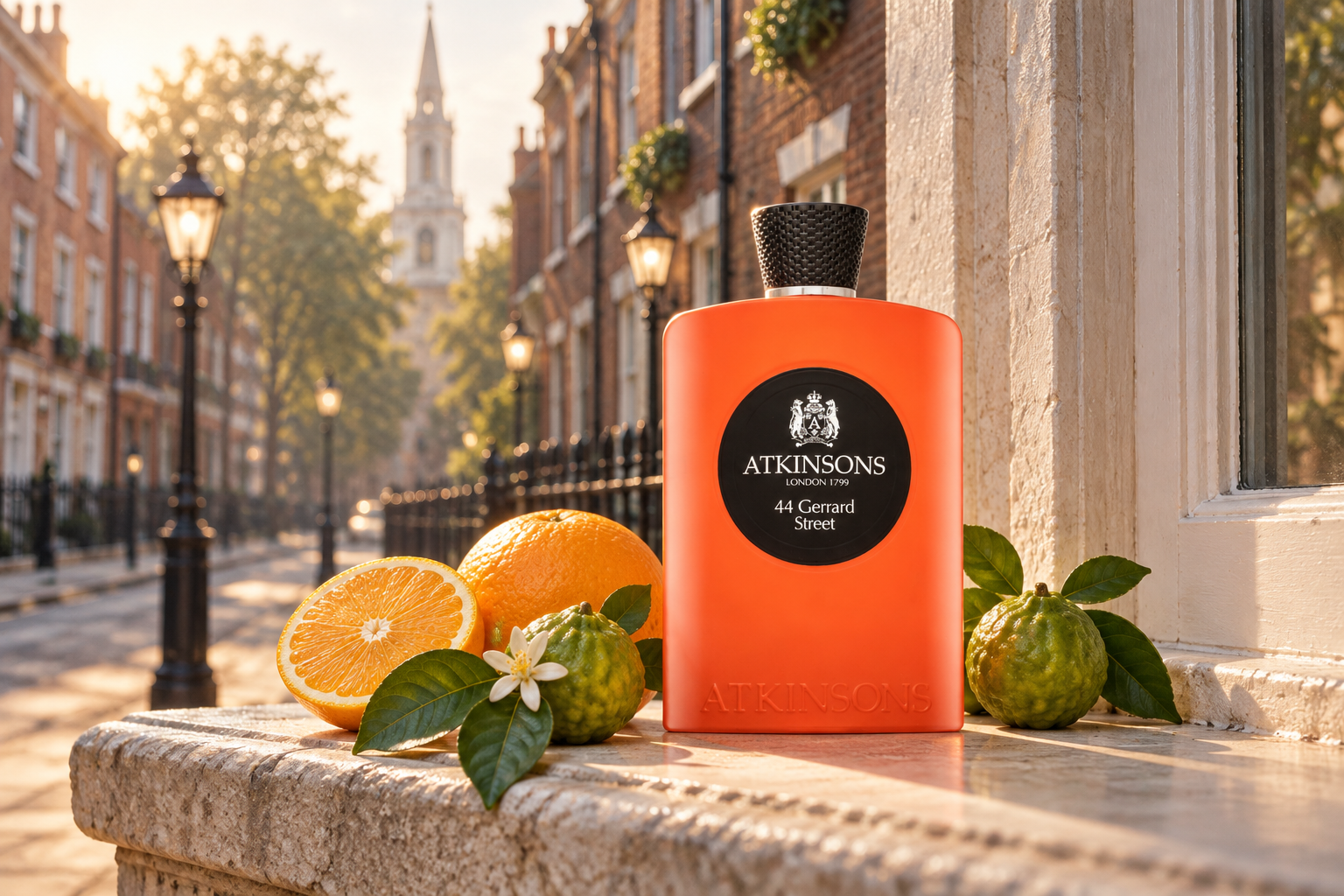
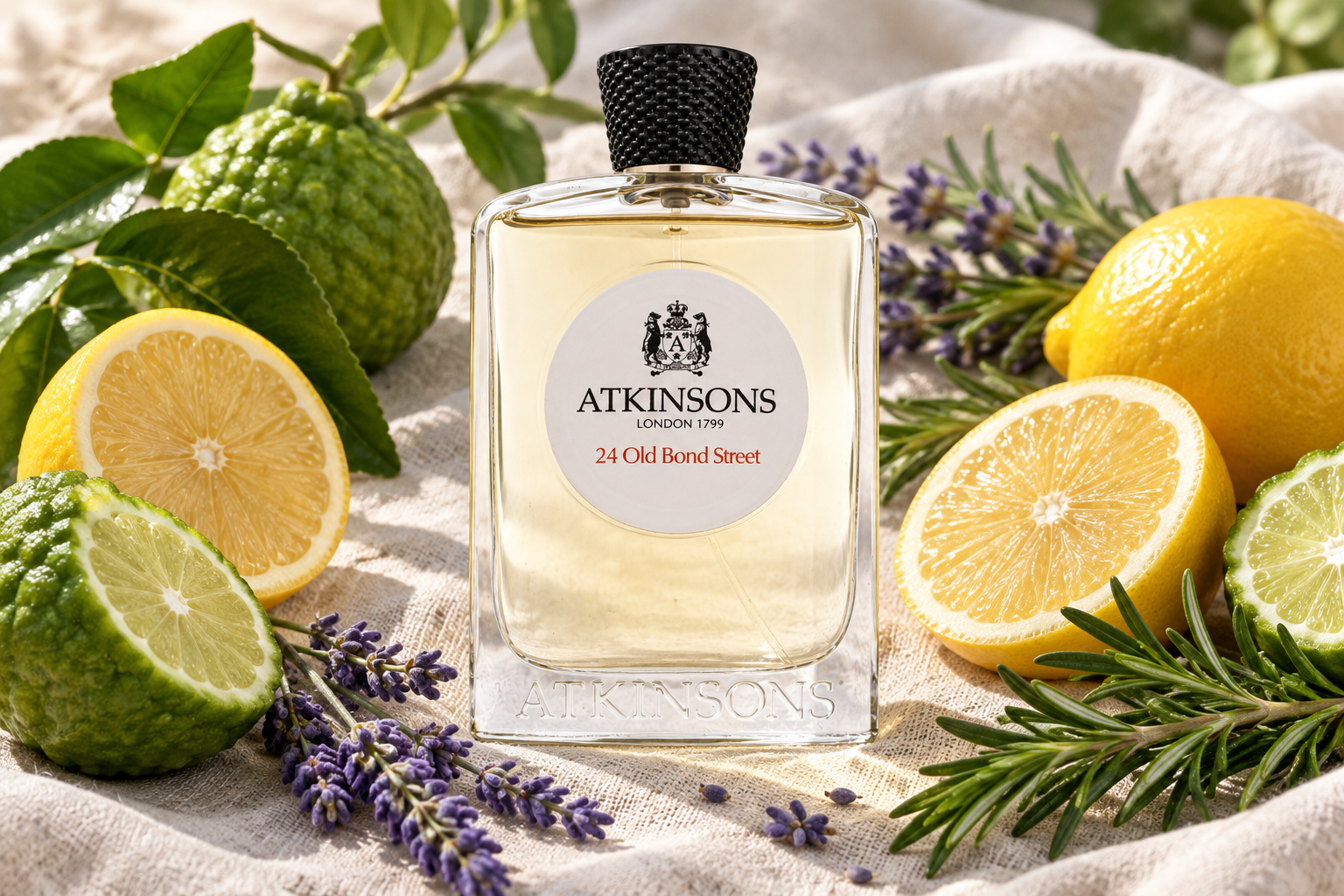
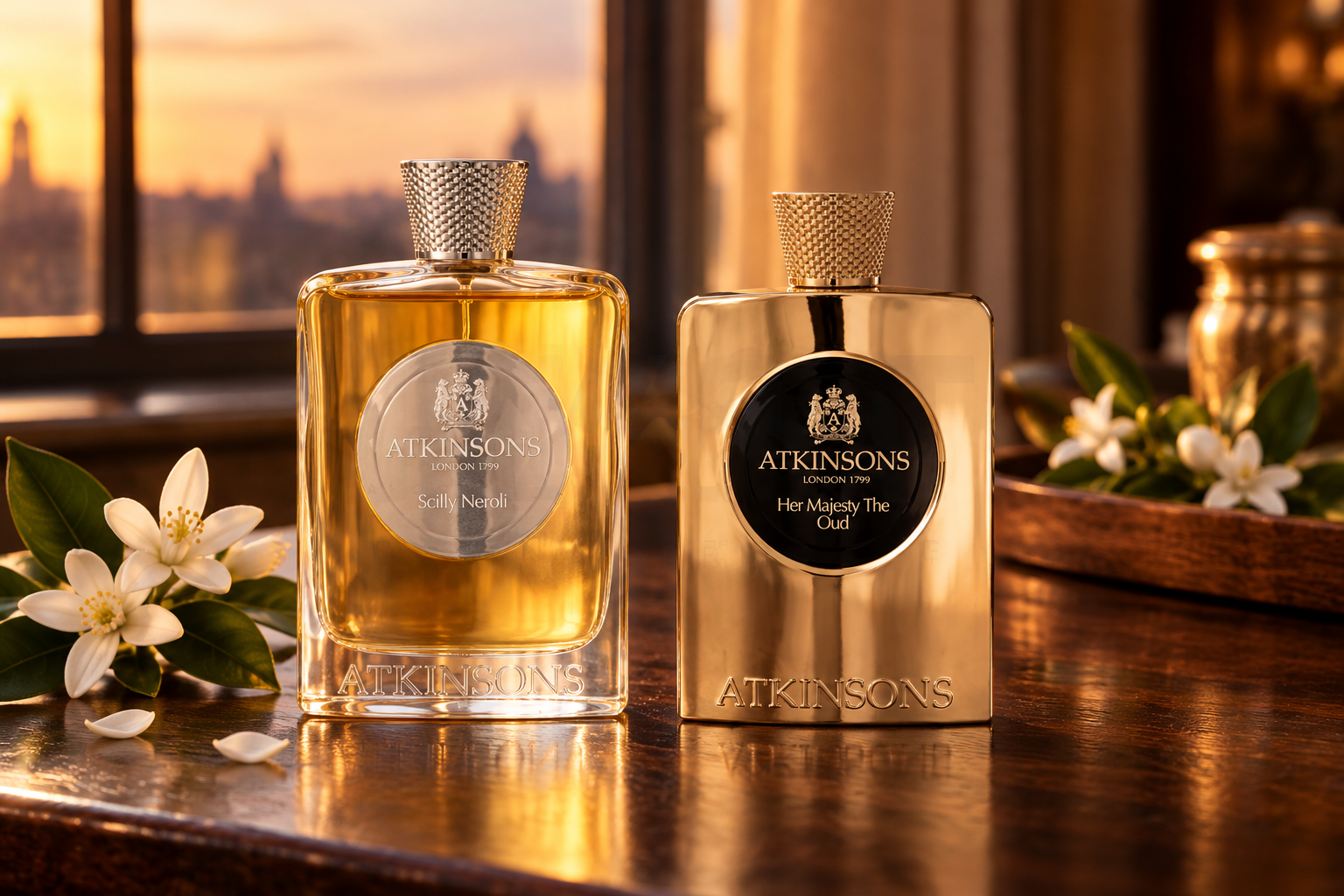

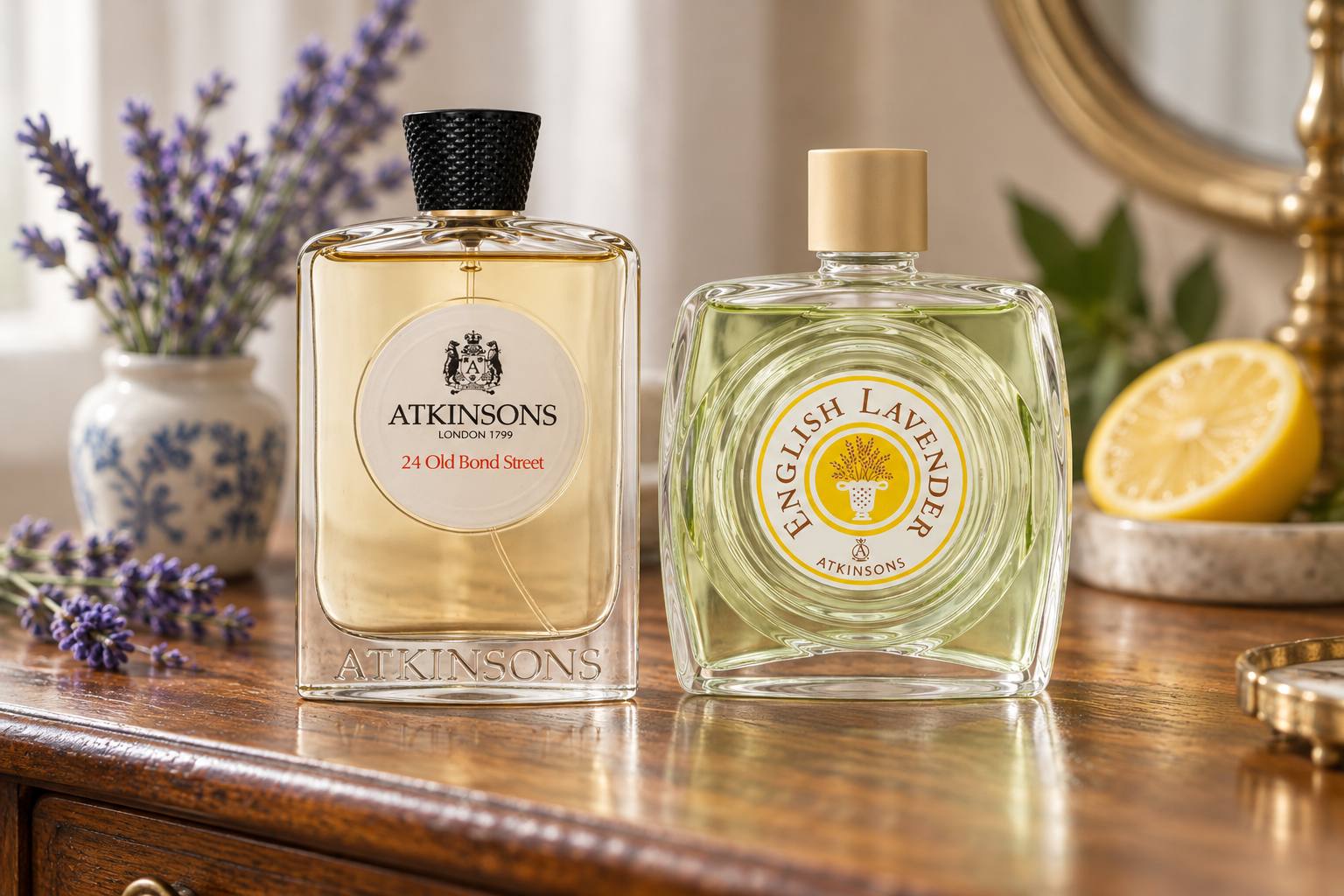
Atkinsons is a London perfumery with a long-standing tradition. We'll guide you through its story, show you what makes English cologne distinctive, and help you choose the right concentration.
Atkinsons: A London Perfumery with a Long Tradition
Some perfumes are chosen based on their immediate scent, while others are selected for the stories they tell. Whether you're looking for an everyday fragrance or a perfume with a narrative that transcends a single season, Atkinsons might catch your interest. This brand is traditionally associated with London and British perfumery culture, where a sense of restraint, elegance, and a well-groomed appearance play a crucial role.
For many fragrance enthusiasts, Atkinsons represents a way to step out of the mainstream. It's not a brand you'll encounter at every turn, which makes it appealing to those who have decided to explore the world of niche perfumery. Niche perfumes typically don't rely on loud advertising campaigns but rather on composition, ingredients, and a story that the wearer can make their own.
What you can expect from this article:
- A look back at the brand's history – where Atkinsons' roots lie and why it's spoken of in connection with London tradition.
- The transformation of English cologne – what makes this type of fragrance distinctive and why it is still associated with the idea of refinement.
- The modern face of the brand – how Atkinsons' style has evolved from fresh colognes to more layered perfumes.
- A practical guide to choosing – how to navigate concentrations and decide between cologne, eau de toilette, or eau de parfum.
What makes Atkinsons interesting is its ability to bridge two worlds. On one hand, it carries the legacy of classic British self-care, where fragrance was as much a part of the morning routine as a clean shirt. On the other hand, it embraces contemporary compositions that work more freely with this tradition and aren't afraid of bolder notes. As a result, the brand's portfolio offers something for fans of light citrus and aromatic scents as well as those who prefer a deeper woody or amber base.
If you're just starting to explore niche perfumery, consider this article a guide rather than a catalog. You don't need to know technical terms or the history of British perfumers – we'll gradually explain what lies behind the Atkinsons name and how to choose a fragrance from their collection that suits your style and the occasion you want to wear it for.
The London Beginnings of the Atkinsons Brand
To better understand why Atkinsons is spoken of as one of the traditional British perfumeries, it's worth looking back to the time when the brand was founded. According to available sources, its roots trace back to London at the turn of the 18th and 19th centuries – a period when body care and fragrances were gradually becoming part of everyday urban life, not just the privilege of a select few.
London at that time was a bustling commercial hub, receiving goods from all over the world. Citrus fruits, spices, resins, and plant essences made their way into the city, along with a growing interest in quality soaps, pomades, colognes, and other products that we now categorize as part of the vast world of cosmetics. A well-groomed appearance and a subtle fragrance became the hallmark of a gentleman or lady of good society.
It is within this environment that the establishment of the Atkinsons shop is traditionally set. Like many other historical perfumeries, its beginnings are linked to the sale of pomades and hair products, to which fragrances and colognes were gradually added. Specific details about the early years vary across sources, so consider them more as part of the brand's story rather than an exact chronicle.
There is more consensus on the gradually growing reputation. The London perfumery, according to tradition, gained favor with customers from the higher echelons of society, and the brand is often associated with ties to the British royal court. For merchants of that era, such trust meant prestige and a recommendation that spread among customers.
From these beginnings, you can take away three main things that help understand the brand's character:
- London Origin – The brand still proudly associates itself with the British environment from which it emerged, and this identity permeates its entire story.
- Continuity – Atkinsons continues a tradition that, according to available sources, spans more than two centuries, and it consciously returns to its heritage.
- Relationship to Self-Care – From the start, fragrance was not just an adornment but a part of everyday grooming and good manners.
So when you choose an Atkinsons fragrance, you're not just selecting a specific composition. To some extent, you're also acquiring a piece of the London atmosphere, where the care for fragrance was intertwined with courtesy and attention to detail.
What Makes English Cologne Distinctive
When you think of cologne, a light, refreshing scent that can be applied any time of the day often comes to mind. This is its essence. At a time when heavy, sweet, and intensely sensual compositions were prevalent, cologne represented the opposite – an airy, clean, and understated fragrance meant to refresh rather than envelop. The English tradition embraced this style, gradually refining it into a more restrained and polished form.
The typical olfactory profile of classic cologne is built on several recurring elements:
- Fresh top notes – citrus fruits like lemon, orange, or grapefruit, and especially bergamot, which adds a sparkle with a slightly bitter, almost tea-like nuance.
- Aromatic herbs – lavender, rosemary, or mint, ingredients that lend the fragrance a sense of cleanliness and the feeling of a freshly laundered shirt.
- Subtle heart – light floral accords, such as orange blossom, that round out the fragrance without overpowering its freshness.
- Discreet base – if present, it tends to be muted: soft woody or musky notes that keep the fragrance close to the skin.
The result is a composition that unfolds quickly and openly. It is most intense in the first few minutes after application, when the citrus notes shine, then gradually settles into a herbal, almost soapy impression. Due to the lower concentration of fragrant substances, traditional cologne was applied more generously and refreshed throughout the day as needed.
The English approach is traditionally associated with an emphasis on elegance without ostentation. Lavender, which is inseparably linked to the English landscape and gardens, frequently appears in aromatic scents of the British style and remains synonymous with "English" fragrance for many people.
Cologne was not just a perfume in today's sense. It was part of daily care – used after morning grooming, after shaving, to refresh the face and hands, or to wipe the neck and wrists on hot days, for both men and women. It had its place on the dressing table as naturally as a comb or soap. As a result, it became a symbol of neatness: it didn't speak of extravagance, but of being clean, meticulous, and ready for the day.
This image endures today. If you're looking for a fragrance for the office, warm days, or simply something that won't disturb you or those around you, a fresh citrus-aromatic style is a good starting point. Whether you're drawn to history or just the lightness, try how citrus and herbs manifest on your skin.
The Modern Face of Atkinsons: From Cologne to Perfumes
Cologne has long been the embodiment of English sophistication – fresh, subtle, and designed for everyday use. However, today's perfumery is evolving differently than it once did, and brands with a long history face the challenge of staying true to their roots while appealing to the modern customer. For Atkinsons, the answer is quite clear: the fresh legacy remains, but with added depth.
Fresh Start, More Pronounced Base
Classic cologne relies mainly on top notes, which are noticeable immediately after application and fade relatively quickly. Modern compositions that build on this tradition continue to work with the fresh opening but do not leave it isolated. Beneath the citrus and aromatic herbs, the middle and base notes gradually unfold, lingering longer on the skin and giving the fragrance its character.
In the current creations of the brand and in modern perfumery in general, you will more often encounter a base built on ingredients such as:
- woody notes – such as cedar or sandalwood, which add dryness and structure to the fragrance,
- amber – a warm, slightly sweet accord that rounds out the fresh start,
- musk – a soft note close to the skin, making the fragrance feel clean and personal,
- patchouli – an earthy, slightly spicy ingredient that adds depth.
The result is more layered fragrances that maintain British elegance and restraint but transform throughout the day. Where classic cologne fades into the background after a while, modern compositions are just beginning to develop. Of course, the specific composition varies with each fragrance, and their true character is best experienced on your own skin.
Why a Traditional Brand Belongs Among Niche Perfumes
At first glance, it may seem paradoxical that a brand with roots deep in the past belongs to niche perfumery, which many associate with newer, experimental houses. However, niche is not about age but approach. It involves brands that do not rely on mass distribution and loud advertising campaigns but on a distinctive signature and story.
Atkinsons naturally fits into this segment for several reasons:
- it has a recognizable identity linked to London tradition and English cologne,
- its compositions do not rely on short-term trends but on a combination of classic ingredients and contemporary interpretation,
- it appeals to customers who want to step out of the mainstream and seek a fragrance with a story.
So if you are among those who appreciate the freshness of cologne but expect more character from a perfume, the modern face of Atkinsons might be an intriguing blend of both worlds. Whether you're looking for a scent for the office or an evening gathering, it's worth paying attention to how the fresh start connects with the deeper base.


Cologne, Eau de Toilette, or Eau de Parfum? How to Choose
On the bottle of the same fragrance, you might find different labels, and it's not just a marketing distinction. Cologne, Eau de Toilette, and Eau de Parfum mainly differ in the amount of fragrance oils they contain compared to other ingredients. This affects how long the scent lasts on your skin and how prominently it surrounds you. There are no precise concentration boundaries set by a unified standard—each manufacturer sets them individually, so consider the following breakdown as a guideline rather than a rule.
How the Different Concentrations Differ
- Cologne is the lightest. It feels fresh and airy, lasts a shorter time on the skin, and stays close to the body. It's suitable for when you want a subtle scent and can refresh yourself throughout the day.
- Eau de Toilette is in the middle. It contains more fragrance oils than cologne, lasts longer, and is more pronounced, yet it doesn't feel heavy. For many people, it's a versatile choice for everyday wear.
- Eau de Parfum is more intense and usually more enduring. It highlights base notes like woods, amber, or musk better, and the fragrance develops over several hours.
The same composition can have a slightly different effect in various concentrations. Lighter versions often emphasize top, citrus notes, while more intense versions give more space to the heart and base.
When to Choose a Lighter or More Intense Fragrance
Whether you're choosing a scent for work or an evening gathering, consider the situation. Lighter concentrations are ideal for hot days, in an office where you share space with colleagues, or as a quick refresh after sports or during the day. You'll appreciate more intense concentrations in the evening, for more formal occasions, and in cooler months when the fragrance develops more slowly on the skin and you want it to accompany you for a longer time.
How to Test and Apply Fragrance
Evaluate the fragrance on your own skin, not just on a test strip. Apply it to your wrist, let it dry for a moment, and come back to it after a few hours—only then will you recognize how the heart and base notes manifest. Don't try too many fragrances at once, as your sense of smell will quickly tire.
For everyday wear, one or two sprays on warmer areas of the skin, such as the neck, behind the ears, or on the wrists, are enough. Don't rub your wrists together, as it unnecessarily disrupts the fragrance. You can apply lighter cologne more generously and refresh it during the day, while with Eau de Parfum, less is often more.
If you're intrigued by the tradition of English cologne, you can calmly compare different concentrations and fragrances from the Atkinsons brand in the perfume selection at Brasty and in the separate niche perfumery section, and choose the one that suits your day.
Category
Recommended articles

"Give a girl the right shoes and she can conquer the world!" Marilyn Monroe
