
 Riiffs Freeze in Flames: Ice and Flames Illuminate Warsaw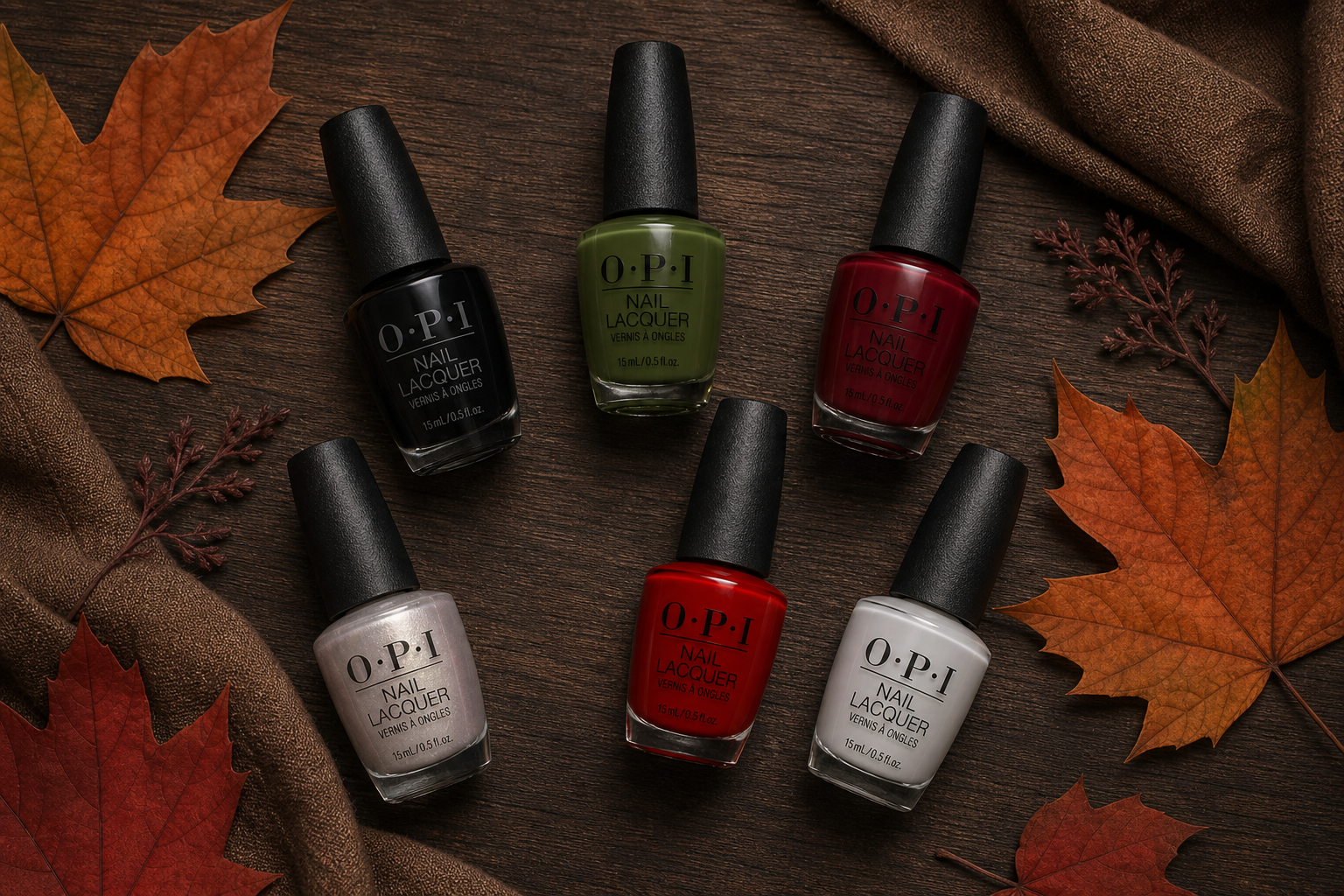
Autumn 2026 brings warm browns, burgundies, and muted cool shades of nail polish. We've selected six polishes that complement each other and will last you through the entire season.
Autumn Palette 2026: Why Nail Polish Shades Change
Whether you choose nail polish based on your mood or your wardrobe, there's usually a moment at the turn of summer and autumn when your holiday neon pink no longer feels right. It's not just the weather. Autumn shades differ from summer ones in three distinct ways: lower saturation, greater depth, and earthier undertones. Once you start choosing consciously, picking a polish becomes less of a gamble at the store.
Saturation, Depth, and Undertone
Summer polishes are all about high saturation: the color is pure, clear, and seems to have its own light. Autumn shades, on the other hand, tone down the saturation – gray, brown, or black components are added to the pigment, so the color remains vibrant but loses its sharp edge. That's why the same red feels fresh in August but somewhat out of place in October, even though it's the same bottle.
Depth is the second variable. It relates to how much light the polish absorbs: the darker the base, the more the shade on the nail appears as a material rather than just a color. This is where plum, chocolate, or bottle green tones are born, which no one misses in summer but make perfect sense in November.
The undertone determines whether a shade will complement your skin. Simply put: a warm undertone leans towards yellow, orange, and gold, while a cool undertone leans towards blue, purple, and silver. Autumn traditionally leans on the warmer half of the spectrum, but muted cool tones also fit into the season – they just require a slightly different approach.
Choose Based on Occasion and Wear Length
The color in the bottle is just one part of the decision. Before you reach for a specific polish, consider these three questions to avoid disappointment after the first two days of wear:
- How long do you want to wear the polish? Dark and saturated shades reveal regrowth faster than nude tones, so expect a shorter interval between touch-ups.
- Where are you wearing it? A more subdued version of the same shade usually works better in the office; in the evening, a polish can handle full depth and a striking shine.
- What finish do you want? A creamy finish calms the color, a high gloss deepens it, and a matte finish turns it into more of a textile detail. The same pigment can thus appear in three different ways.
It's worth noting that autumn shades tend to be forgiving even technically. Earthy brown or muted plum doesn't require as perfect an application as a bright pastel color, where every uneven edge is immediately noticeable.
What You'll Find in the Season's Catalog
Decorative cosmetics at Brasty feature brands like Dermacol, Maybelline, L'Oréal Paris, Max Factor, and Artdeco, with nail polishes forming a separate category of around 270 items. That's enough to assemble an autumn palette across price levels – from affordable lines where buying two similar shades isn't an issue, to more expensive branded polishes that become staples in your collection.
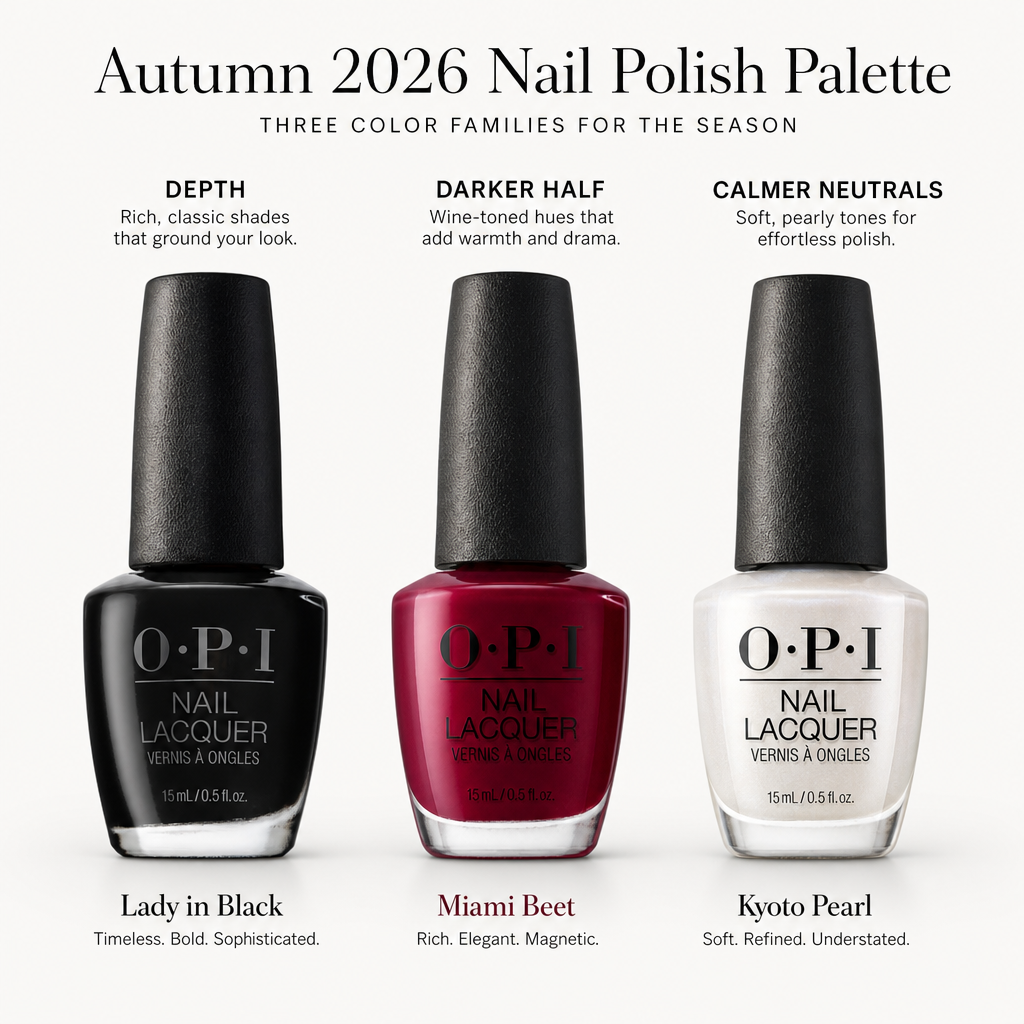
The rest of the article is based on three color families that define autumn 2026: warm brown tones, the darker burgundy and plum half of the spectrum, and muted cool colors. It concludes with a small seasonal capsule – a few polishes that will last you from September to Advent without needing to buy the entire palette.
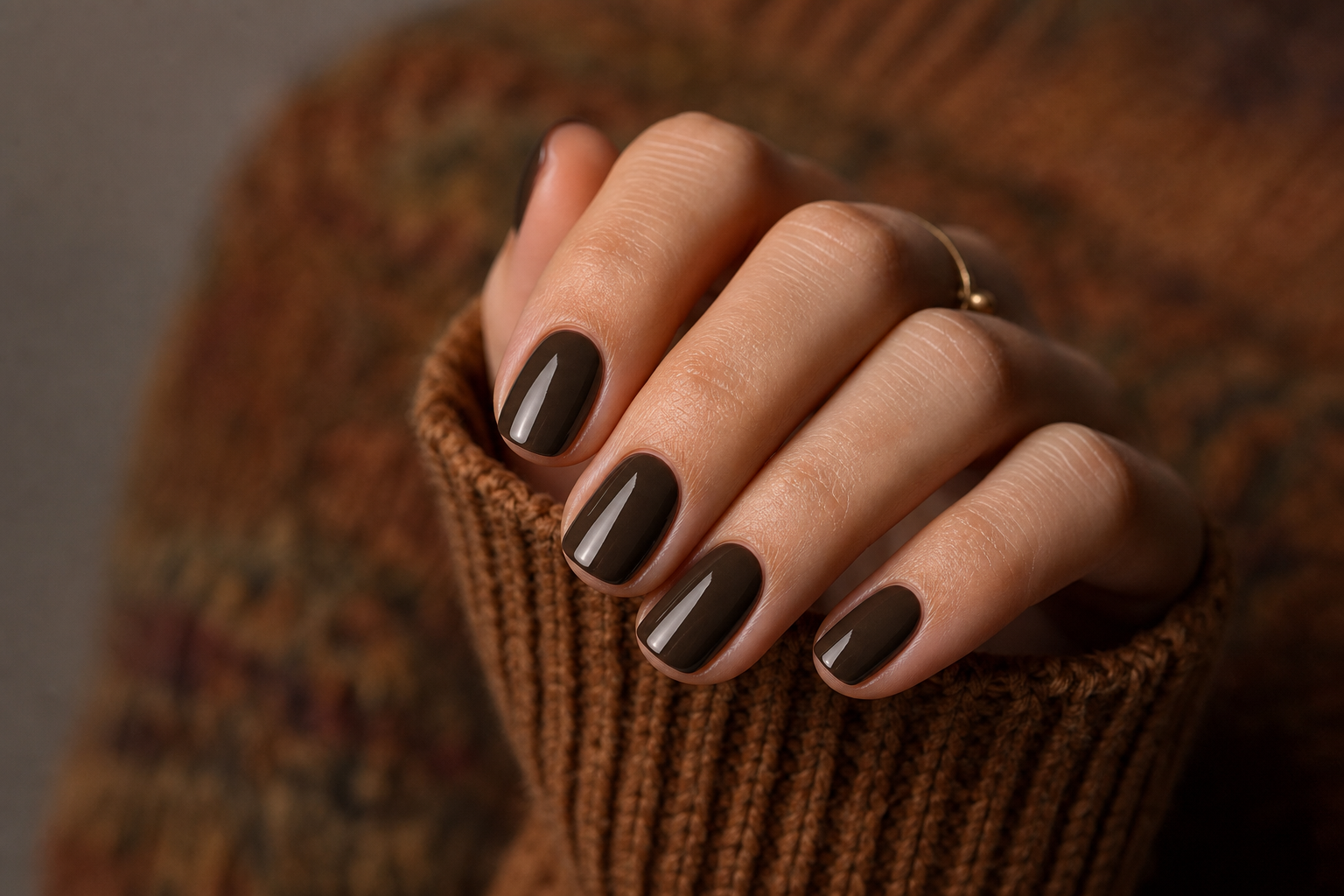
Warm Brown Shades: Caramel, Cinnamon, Chocolate
Brown is to autumn manicures what beige is to wardrobes – a quiet foundation upon which an entire season can be built. It's not just one color, but a whole family of shades differing in lightness, undertone, and coverage. The difference between light caramel and dark chocolate is so significant that each changes the overall look of your hands.
Simplified, the autumn brown palette is divided into three levels:
- Caramel – the lightest shade with a golden to honey hue. It appears soft, visually elongates short nails, and can handle slight imperfections in application. It's suitable for everyday wear and work when you want your nails to look neat but not attention-grabbing.
- Cinnamon – a medium brown with a red to rusty undertone. The most versatile member of the family: rich enough to look intentional, yet not so dark that it requires perfectly groomed cuticles.
- Chocolate – a deep dark brown that can appear almost black in low light. It makes the boldest statement but also has higher demands: it needs a clean nail shape and a straight edge. On shorter nails, it looks graphic, on longer ones, dramatic.
Which Undertone Suits Your Skin
A more reliable guide than guessing from a photo on the packaging is your skin's undertone. Look at your wrist in daylight: if your veins appear more greenish and your skin has a golden or olive hue, you have a warm undertone. Blue-purple veins and pink skin indicate a cool undertone. If it's hard to decide, it's likely a neutral type that suits practically the entire range.
Warm undertones suit caramel and cinnamon with a golden core – the color continues what the skin already offers, and the result looks natural. Cooler types usually prefer brown with a slightly plum or gray base; pure golden caramel on light pink skin can sometimes appear yellowish. Dark chocolate is forgiving in this regard: the deeper the shade, the less the undertone matters, as the color is mainly read as a dark surface.
Consider the length of your nails as well. Dark shades visually shorten, so on very short nails, it's good to leave a narrow free strip on the sides or opt for the medium cinnamon shade. Lighter caramel works on any length.
Where to Find Shades and How to Extend Their Longevity
The brown range is common in seasonal collections, so you can choose across price levels. In our nail polish selection, you'll find this group of shades from brands like Dermacol, Maybelline, or Max Factor – but specific shade numbers change between collections, so rely on the color chart and name, not last year's number.
With darker pigments, preparation is worth the effort. Rich brown and chocolate contain a lot of pigment, which can stain the nail plate and leave a yellowish tint after removal. A base coat is not an unnecessary step – it creates a layer between the pigment and the nail and also smooths the surface, so the color holds more evenly.
Apply the color itself in two thin layers instead of one thick one. A thin layer dries faster, is less likely to ripple at the edges, and the result is smoother. A top coat adds shine and protects the nail edge, where chipping usually starts first; renewing it after two or three days is the easiest way to keep your manicure fresh longer. Also, keep in mind that dark shades are harder to remove than light ones – take a moment of calm for removal.
Wine, Plum, Burgundy: The Darker Half of the Season
As the days grow shorter, light nail polishes can seem dull, prompting a reach for a darker bottle. However, under the simplified label "dark red," there are three distinct shade families, and the difference between them determines whether the manicure complements your skin tone and the real autumn wardrobe you wear.
- Wine – a warmer shade with a brown-red undertone. It appears soft on the hand and suits both warm and neutral skin tones.
- Plum – a cooler tone with a purple undertone. It stands out most on fair skin, softens on darker skin, and appears more elegant than dramatic.
- Burgundy – the darkest of the trio, a deep red sometimes with a hint of brown. In two coats, it is almost opaque; in one thin layer, it remains translucently wine-colored.
Among the decorative cosmetics brands available here, Artdeco, Pupa, Bourjois, and Clarins regularly work with the dark red palette. The selection of specific shades changes from season to season, so it's wise to sort by current availability rather than fixating on a single number.
The Finish Often Matters More Than the Shade Itself
The same wine shade looks like two different colors in a creamy and matte finish. A glossy creamy finish reflects light, making the shade appear slightly lighter and more vibrant, while minor nail imperfections are less noticeable. A matte finish absorbs light, deepens the color, and gives a velvety appearance – but it also highlights every bump and uneven layer.
- Glossy Creamy Finish – forgives application inaccuracies, ideal if you frequently change polishes.
- Matte Finish – requires a smooth base and more careful application. Hand cream oils leave more marks on it than on gloss.
- Matte Top Coat – turns one wine bottle into two variations without buying another shade.
Short and Longer Nails Need Different Approaches
Dark shades visually shorten. On short nails, apply thin layers and leave a hairline-thin strip free on the sides – this visually elongates the nail and prevents the polish from flooding the cuticles. Avoid thick layers near the cuticle, where dark color accumulates fastest.
On longer nails, dark polish holds well but reveals two things: the regrown half-moon at the base and chipped tips. Seal the free edge with a thin swipe of polish over the edge and repeat with the top coat. Expect a shorter interval between touch-ups compared to lighter shades.
Removing Dark Pigment Without Yellowing
Rich red and purple pigments can imprint on the nail plate, leaving a yellowish tint. It's not nail damage, just surface staining – and it can be prevented.
- Start with a clear base coat in two thin layers. It acts as a barrier between the pigment and the nail and is the most effective step in the process.
- Saturate a cotton pad with nail polish remover, place it on the nail, and let it sit for twenty to thirty seconds. Only then wipe from the cuticle to the tip in one stroke.
- Do not rub in circles – smeared pigment can get into the surrounding skin and sidewalls, making it harder to remove.
- Push out residues in the corners with a wooden stick wrapped in cotton, not with the other hand's nail.
- Finally, wash your hands and apply cuticle oil. Acetone-based remover removes polish faster but also dries out the nails.
If a tint still appears, leave nails polish-free for a few days and gently buff the discoloration with the finest side of a buffer – lightly and only once. A safer route is preventive: a base coat under every dark shade.
Cool Muted Tones: Green, Grey, Slate Blue
Warm shades aren't the only way to embrace autumn on your nails. A cool muted palette – bottle green, smoky grey, and slate blue – offers a more restrained approach: it appears less decorative, is less likely to become tiresome, and pairs well with the wardrobe you wear most often in the cooler months. Whether you're looking for a color for the weekend or a shade that lasts all workweek, this part of the palette is the most rewarding.
Bottle green is the most striking of the trio. In a thin layer, it can appear almost black, but with two coats, its true color emerges – a deep, slightly saturated green that shines in daylight and darkens under artificial light. It suits both short and longer nails and doesn't require any special shaping. With a matte topcoat, it looks velvety, while with a glossy one, it appears almost glass-like. If you're trying green on your nails for the first time, start with a darker shade rather than a bright emerald: a darker tone is perceived more like a neutral, while a brighter green is a distinct color accent.
Smoky grey and slate blue, on the other hand, are shades that don't demand attention. Grey with a hint of brown or purple keeps pace with the autumn palette and behaves like beige with clothing – it doesn't clash with anything. Slate blue is slightly cooler and looks best on shorter nails. It's a tone for work and days when a bold color isn't appropriate, yet it doesn't appear as stark as clear polish or a classic French manicure.
Why Coverage Matters for Cool Shades
Muted tones rely on coverage. While an uneven layer may not matter much with a light nude color, with smoky grey or dark green, every streak and translucent spot becomes immediately visible. The difference between a polish that looks expensive and one that looks unfinished rarely lies in the shade itself – it's all about the application.
- A base coat is worthwhile for dark green and blue shades: it reduces the risk of the intense pigment staining the nail plate.
- Two thin layers instead of one thick one. A thin layer dries faster and is less likely to pool at the nail bed.
- Allow about two minutes between coats. If you apply the second coat too soon, the bottom layer will smudge.
- A topcoat evens out the surface and visibly deepens the color of grey shades.
If you still see the white edge of your nail through the color after two coats, it's not your technique – it's just a polish with lower pigmentation. A third coat usually evens it out, but drying time will be longer, and the surface will be more prone to dents.
How Much You'll Pay for Such a Polish
Nail polishes are among the most affordable items in decorative cosmetics. Most offerings fall into the two lowest price ranges – roughly from twenty to about one hundred seventy crowns per bottle. Higher prices are usually for specialized lines and multi-piece sets. In practice, this means you can buy two cool shades at once and still pay less than for one mid-range mascara.
Look for cool shades from brands we feature in decorative cosmetics – among the bestsellers are Dermacol, Rimmel London, Max Factor, or Artdeco. It's also worth noting how the color is described: labels like creamy or opaque usually mean the polish covers well in two coats, while pearl and sparkly variants of the same shade require more layers.
The last practical advantage of a muted cool palette: it doesn't require matching makeup. Neither green nor grey competes with nude lips and they equally accommodate a more dramatic eye, so you won't have one more decision to make in the morning.
Seasonal Capsule: Six Nail Polishes for the Entire Autumn 2026
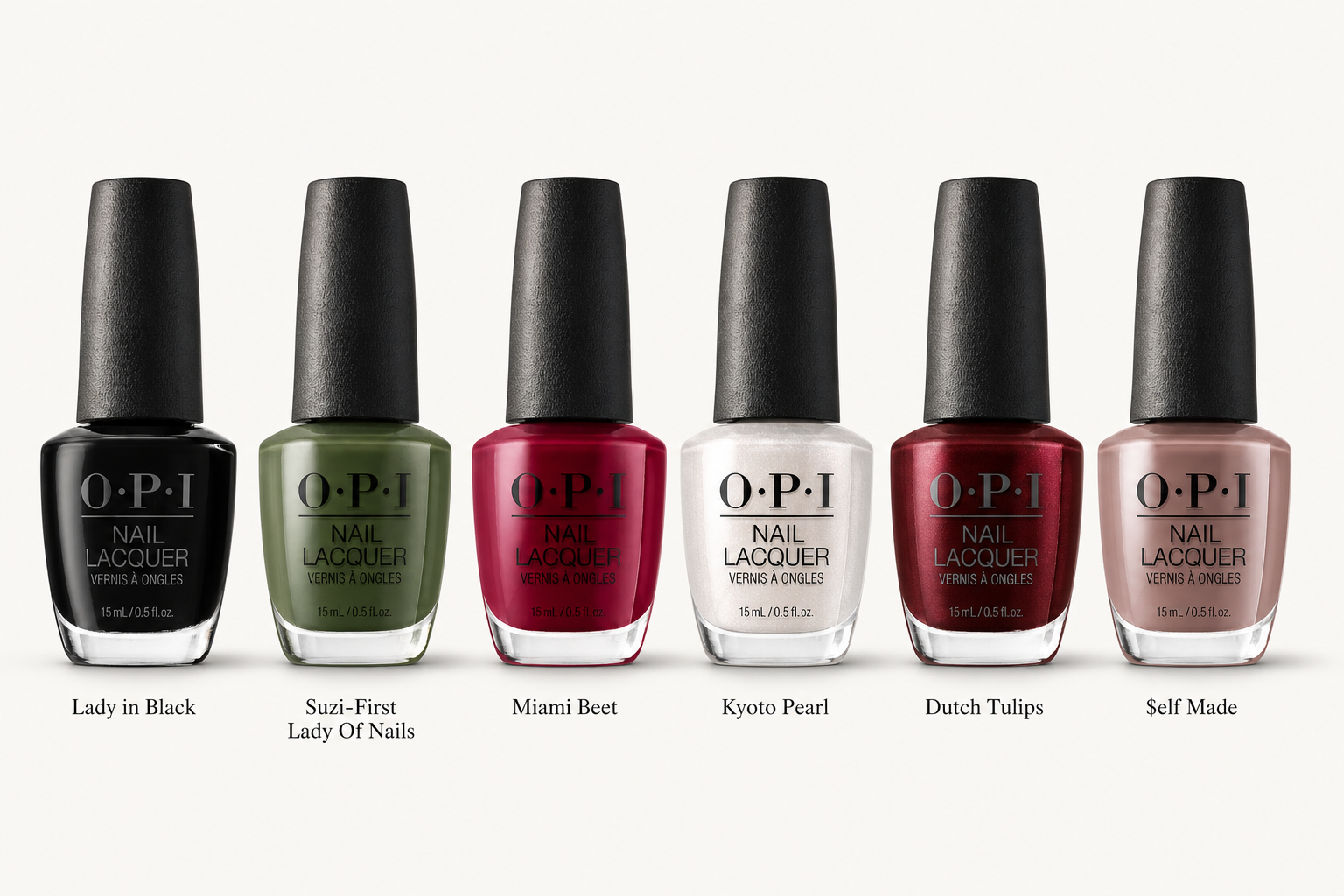
As you explore all the autumn shade families, a practical question arises sooner or later: how many bottles do you actually need to keep your manicure fresh from September to December without it looking the same all season? Our experience suggests that six shades are more than enough. This isn't a random selection – it's a capsule where each polish serves a different purpose and complements the others, allowing you to choose based on mood and occasion, not just what's left in the drawer.
Six Shades That Work Together
- Warm Caramel Brown – a versatile start to the season. It works on both short and longer nails, pairs with sweaters and shirts, and forgives minor painting errors.
- Dark Chocolate – the same warm undertone, just a few shades deeper. Use it when caramel starts feeling too light, typically with the first chilly weeks.
- Burgundy – a classic for the second half of autumn. Opt for a shade with a hint of brown rather than pure red; it holds together better with the first two polishes.
- Cool Muted Gray-Green – the only standout piece in the capsule. It prevents the set from feeling monotonous and suits days when you want something less expected.
- Milky Beige – a neutral base for a quick manicure refresh. When you don't have time for precision, beige doesn't highlight regrowth like dark polish does.
- Gray-Beige – the second neutral, a bit cooler. It serves as a bridge between the warm and cool parts of the capsule and as a base for a simple French manicure.
The timing is simple. September and the first half of October belong to caramel and neutrals, as the lightness of summer lingers. From mid-October, chocolate and burgundy take over, shades that can handle evening light. November is the time to alternate between burgundy and gray-green – the contrast keeps the season interesting. December can handle it all: dark shades for the holidays, neutrals for days when you need a ten-minute manicure refresh. A practical tip to conclude: one quality top coat will extend the life of all six shades more reliably than adding a seventh.
Lip Connection: One Line Instead of Two
The capsule is especially worthwhile if you don't limit it to just nails. Lips are another area where autumn shades work just as well, and just two products can make the whole look cohesive. For the burgundy and chocolate part of the capsule, Dermacol Diamond Lip Oil 06 Berry Bloom is suitable – a berry-toned lip oil that adds just a hint of color while keeping lips hydrated. For the cool gray-green and gray-beige, Clarins Lip Perfector 19 Intense Smoky Rose is a perfect match, a smoky pink gloss that maintains the same muted tone as the polishes.
The rule we follow is: if the nails are bold, tone down the lips, and vice versa. Dark burgundy on the nails and a light oil on the lips create a more balanced look than two bold colors at once. If you want to create your own capsule, browse the nail polish category and pair your chosen shades with a lipstick or lip gloss in the same undertone. Six polishes and two lip accessories fit into one cosmetic bag – yet they cover the entire autumn.
Category
Recommended articles
Riiffs Freeze in Flames: Ice and Flames Illuminate Warsaw "Give a girl the right shoes and she can conquer the world!" Marilyn Monroe