

The shelves of baby skincare products can be overwhelming. But for the first days, you only need three basic items: a cleanser, a face cream, and a diaper rash cream.
Less is More: Why Your Baby Only Needs a Few Products
Whether you're preparing for your baby's arrival or already have them at home, the shelves of baby cosmetics can be more overwhelming than helpful. Bottles, tubes, and jars in pastel colors each promise something different, and it can easily seem like you need dozens of products to care for your baby. The good news is, that's not the case. For the first days and weeks, a few well-chosen products are enough to cover daily needs and are easy to navigate.
A smaller selection also has practical benefits. By using just a few products, you can more easily identify what suits your baby's skin, and you'll have more space and clarity in both the bathroom and the diaper bag. Additional products can be added gradually and thoughtfully—once you know what you truly need.
You can think of the basic essentials as three pillars:
- Cleansing Gel or Cream Soap – a gentle bathing and washing product that cleanses without unnecessary drying of the skin.
- Facial Cream – moisturizing care for both face and body, keeping the skin soft and pleasant to touch.
- Diaper Rash Cream – a protective layer for the diaper area, where the skin is exposed to moisture and friction daily.
With these three products, you can manage everyday care—bathing, moisturizing, and diaper changing. Everything else is more of an add-on, which you can decide on later, once you have more experience with baby care.
In this article, we'll repeatedly refer to two brands that have long been dedicated to caring for the little ones: Mustela and Uriage Bébé. Both offer product lines specifically designed for babies, so you'll find all three pillars of the basic essentials with them. The advantage is that if you stick to one line, the products are designed to complement each other, and you won't have to compare labels from different manufacturers.
Before you start shopping, it helps to know how your baby's skin differs from an adult's and what to look for when choosing products. We'll guide you through this step by step, without unnecessary overload.
Softer Skin, Different Needs: How to Choose
A baby's skin is more delicate and sensitive than an adult's and is still getting used to new stimuli. Therefore, products you typically use yourself, even gentle shower gels or favorite body creams, are not suitable for them. The good news is that choosing the right products doesn't have to be complicated. By knowing a few guidelines, you can easily navigate both store shelves and online shops in just a few minutes.
What to Look for on the Label
- Specifically for Babies. Look for products explicitly labeled by the manufacturer as suitable for babies and young children, ideally indicating suitability from birth. Baby lines are designed with the delicate skin of the youngest in mind, whereas adult cosmetics may not consider this.
- Gentle Formulation. A shorter and more understandable list of ingredients is often easier to manage initially. If you're unsure whether a particular product will suit your baby, consult with a pediatrician or child nurse.
- Mild or No Fragrance. Fragrance in baby cosmetics is more of a bonus than a necessity. Many parents choose fragrance-free products or those with a very mild scent, so the baby smells primarily like themselves.
- Skin Type. Some baby lines differentiate between normal, dry, and sensitive skin. Choose the variant based on how your baby's skin behaves on ordinary days.
A simple rule also helps: only buy what you will actually use. Every additional product is a new stimulus for the skin and another step in your routine. If you stick to a few pieces from one line, it's easier to identify what suits your baby.
Criteria Illustrated by Two Baby Lines
How these guidelines look in practice is shown by the baby lines available in our offer. Mustela is a French brand focused on baby and child care. Its products are categorized by skin type, making it easy to choose a variant for normal, dry, or sensitive skin.
Uriage Bébé is a baby line from the French brand Uriage. It offers simple products for everyday body and face care and is suitable for parents who want to have the basic essentials in one line.
For both brands, it's worth following the same approach: read on the label from what age and for what skin type the product is intended, and choose only what truly fits into your routine. First, try a new product on a small area and observe how the skin reacts.
Bathing Without Drying: Cleansing Gel or Cream Soap?
Bath time is often the first moment you find yourself in front of the shelf, choosing a specific product. While water alone can clean your baby's skin to a large extent, it's not always enough—especially when you need to remove traces of milk, sweat, or cream. A cleansing product should clean the skin without stripping it of its natural moisture. You typically have two textures to choose from: cleansing gel and cream soap. Each is suitable for slightly different situations.
Cleansing Gel: Light Texture, Easy Dispensing
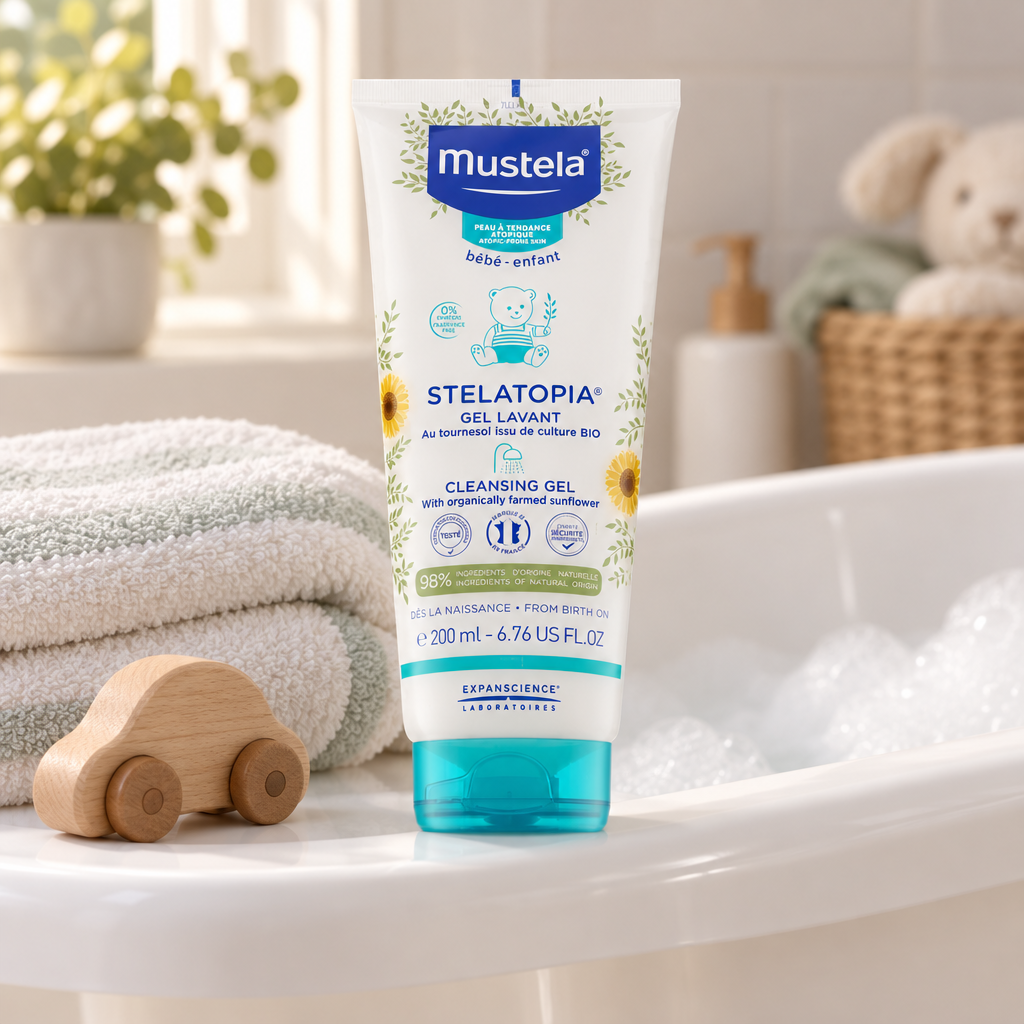
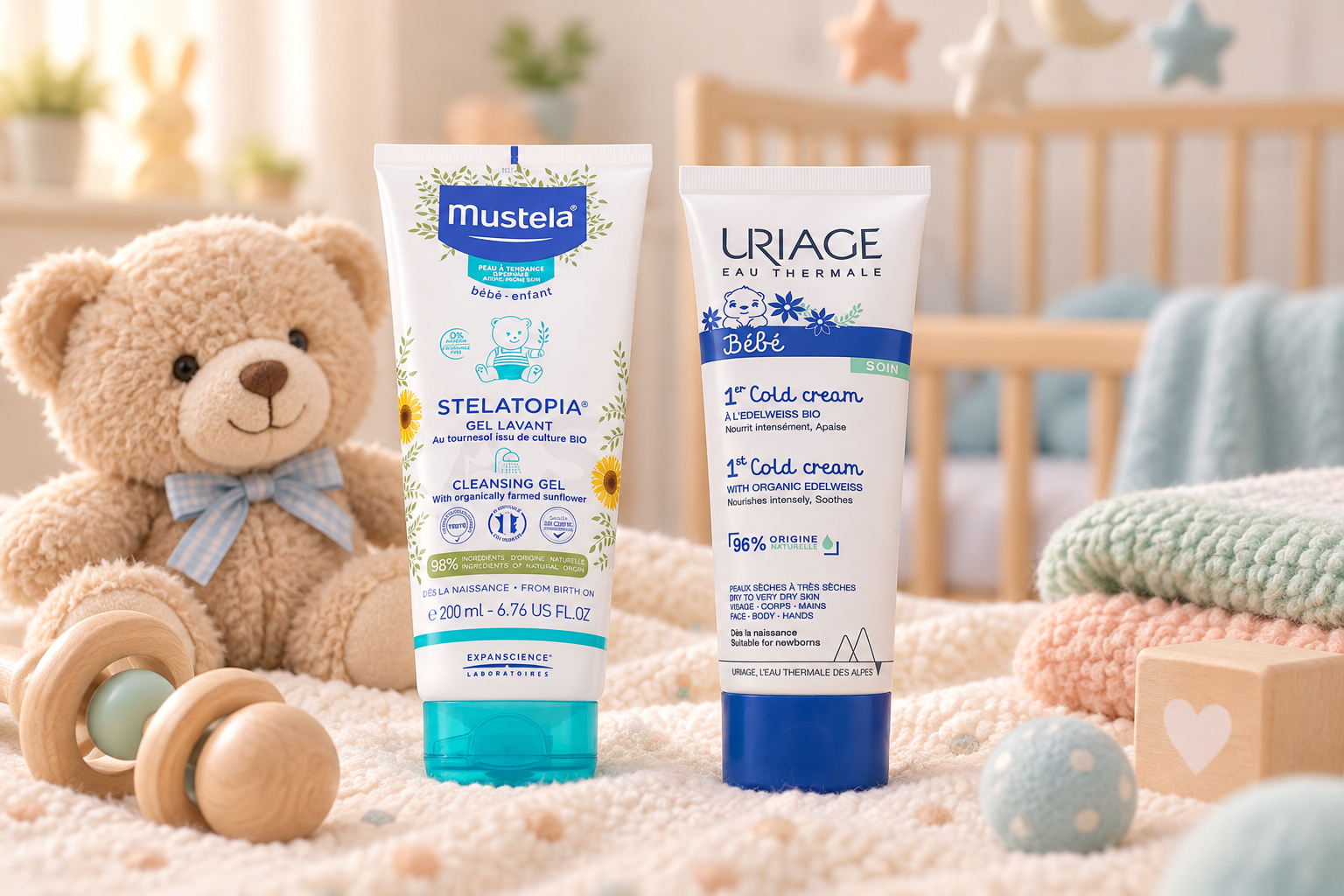
Gel has a liquid to slightly thick consistency, disperses quickly in water, and rinses off easily. It can be dispensed with one hand, which is convenient when you're holding your baby in the tub with the other hand. If your baby's skin is on the drier side, it's worth choosing a gel specifically designed for dry skin. A great choice is the Mustela Stelatopia Cleansing Gel from the Stelatopia range, developed by Mustela for very dry baby skin. It's designed not to unnecessarily dry out the skin during washing, making it ideal for a regular bath routine.
Cream Soap: Solid Form for Gentle Washing
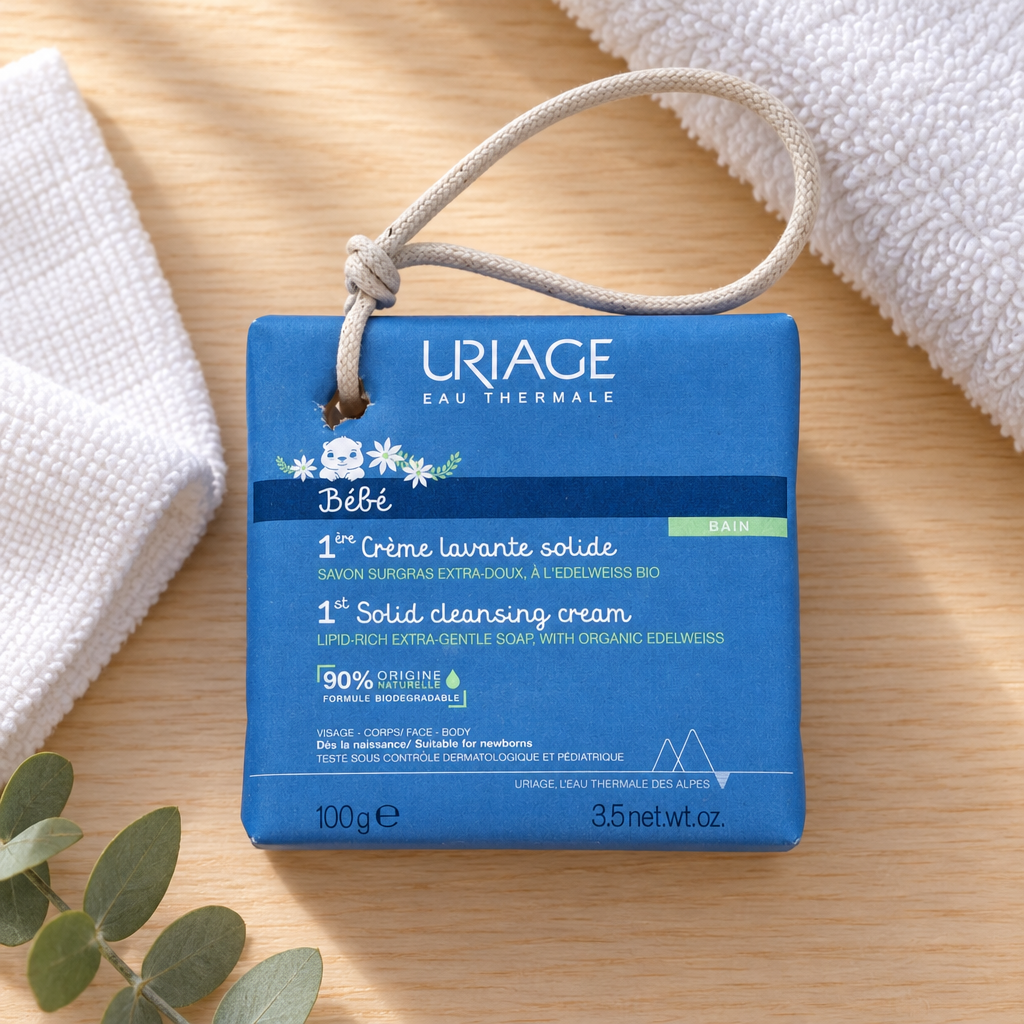
Cream soap at first glance resembles classic soap, but unlike it, it's formulated not to unnecessarily strip the skin of oils during washing. An example is the Uriage Bébé 1st Solid Cleansing Cream from the Uriage Bébé children's range. The advantage of the solid form is its practicality: it won't spill, takes up little space, and lasts a long time. You'll also appreciate it when traveling or visiting grandma, where you don't want to worry about a bottle leaking in your bag.
When to Use Which Product
- Cleansing Gel – suitable when bathing in a tub and you want the product to disperse quickly in the water or measure out a small amount precisely.
- Cream Soap – suitable when washing by hand or with a washcloth, traveling, or preferring solid cosmetics without bottles.
- Drier Skin – for both forms, focus on whether the product is intended for dry skin and observe how the skin reacts after bathing.
Less Product, Shorter Bath
For a newborn, a very small amount is sufficient—a drop of gel or one or two swipes of soap on a damp washcloth. Use the product mainly where needed, such as the neck, folds, and diaper area; the rest of the body often just needs rinsing with clean water. The bath doesn't need to last long, and the water should be pleasantly lukewarm. After bathing, gently pat the skin dry with a towel, not rub, and carefully dry the skin folds. If the skin feels tight after bathing, try reducing the amount of product or include days between baths with cleansing products when you only rinse your baby with water.


Facial Cream Plus Diaper Rash Protection
After bathing and drying, the second step in daily care is applying cream. For a baby, it's useful to have two different products at hand because the face and body need something different than the skin under the diaper. One cream takes care of hydration and comfort, while the other creates a protective layer where the skin is most exposed to moisture and friction.
Daily Moisturizing Cream has a lighter texture, spreads easily, and is applied in a thin layer on the face and body. It's especially useful when the skin feels drier after a bath or when transitioning between a heated home and a windy walk during cold months. The goal is not to "coat" the baby in a thick layer but to keep the skin supple and pleasant to the touch.
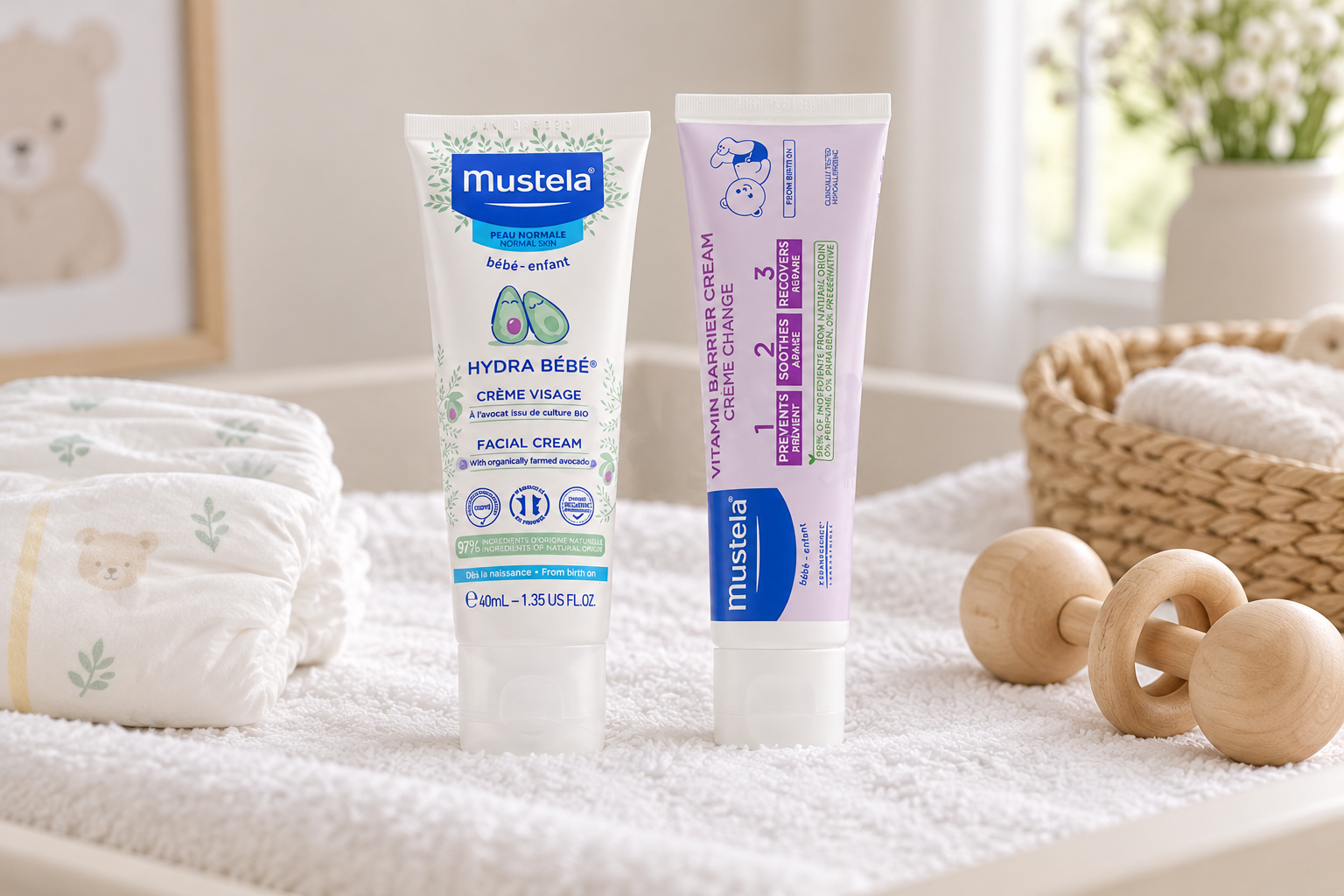
- Mustela Hydra Bébé Facial Cream – a light cream designed for a baby's face, suitable for regular use both in the morning and after an evening bath.
- Uriage Bébé Cold Cream – a more nourishing cream with a richer texture, ideal for when the cheeks or body are drier, typically before a walk in freezing weather.
Protective Cream for the Diaper Area works differently. Its main task is not to hydrate but to create a barrier on the skin that separates it from the moisture in the diaper and helps protect it from irritation. It tends to be thicker, often whitish, and is applied only to areas covered by the diaper.
- Mustela Change Cream 1 2 3 – a protective cream for diaper changes, suitable for use with every diaper change.
- Uriage Bébé 1st Change Cream – a cream for the diaper area designed for delicate baby skin, also suitable for regular use.
The two types of creams are not interchangeable. A moisturizing cream doesn't belong in the diaper area because protection is needed more than nourishment, and a thick protective cream would be unnecessarily difficult to spread on the face.
How to incorporate both products into a regular day:
- During diaper changes, gently clean the skin first and let it air dry for a moment. Only on dry skin, apply a thin layer of protective cream and fasten a clean diaper.
- After bathing, thoroughly dry the baby, especially in the folds. Massage moisturizing cream onto the face and body, and use protective cream in the diaper area.
- Less is more – a small amount is enough. A thick layer doesn't mean better protection, it just absorbs poorly and stays on clothing.
- Monitor the skin – if redness in the diaper area doesn't subside or worsens within a few days, consult a pediatrician.
Keep both creams side by side on the changing table, so they're always at hand when needed.


What to Get Now, What to Leave for Later
When preparing for a baby's arrival, the shelves of baby cosmetics can easily overwhelm. For the first few weeks, you'll only need three products – and you can gradually purchase everything else as you see what your baby's skin truly needs.
Essentials for the First Weeks
- One cleansing product – a gentle gel or creamy soap designed for babies, suitable for both the body and scalp.
- One facial cream – for cheeks and areas where the skin dries out or rubs against clothing.
- One diaper rash cream – for the diaper area, where the skin is most frequently in contact with moisture.
All three items can be sourced from a single baby line, such as Mustela or Uriage Bébé. Both brands offer cleansing products and creams in their baby lines, so you don't have to worry about what to combine with what. Fewer products also make it easier to identify what works well with your baby's skin and what doesn't.
What to Buy as Needed
Additional products only make sense when a specific situation arises. You don't need to buy them in advance.
- Cradle cap. Many babies develop greasy yellowish scales on their scalp. For such cases, there is special skincare for the scalp. If you're unsure about the skin condition, consult a pediatrician.
- Sun exposure. Once you start spending more time outdoors with your baby, children's sun care products become necessary. However, the youngest babies should primarily stay in the shade and wear light clothing that covers the skin.
- First teeth. With the first tooth comes the first toothpaste. It's a good idea to discuss the amount of toothpaste and brushing method with a dentist or pediatrician.
Brasty Catalog Selection at a Glance
- Right from the start: cleansing product, facial cream, and diaper rash cream from the Mustela or Uriage Bébé baby line.
- For cradle cap: Bioderma ABCDerm Babysquam, designed for scalp care with scales.
- For sun exposure: Uriage Bariésun Kids Lotion SPF 50+, if you prefer a lotion that spreads easily with hands, or La Roche-Posay Anthelios Dermo-Pediatrics spray, which is appreciated for quick application on larger areas.
- For first teeth: Elmex Kids or Swissdent Kids children's toothpaste.
This setup will cover the first weeks and situations that arise later, without having products at home just waiting for their moment.


Category
Recommended articles

"Give a girl the right shoes and she can conquer the world!" Marilyn Monroe
