

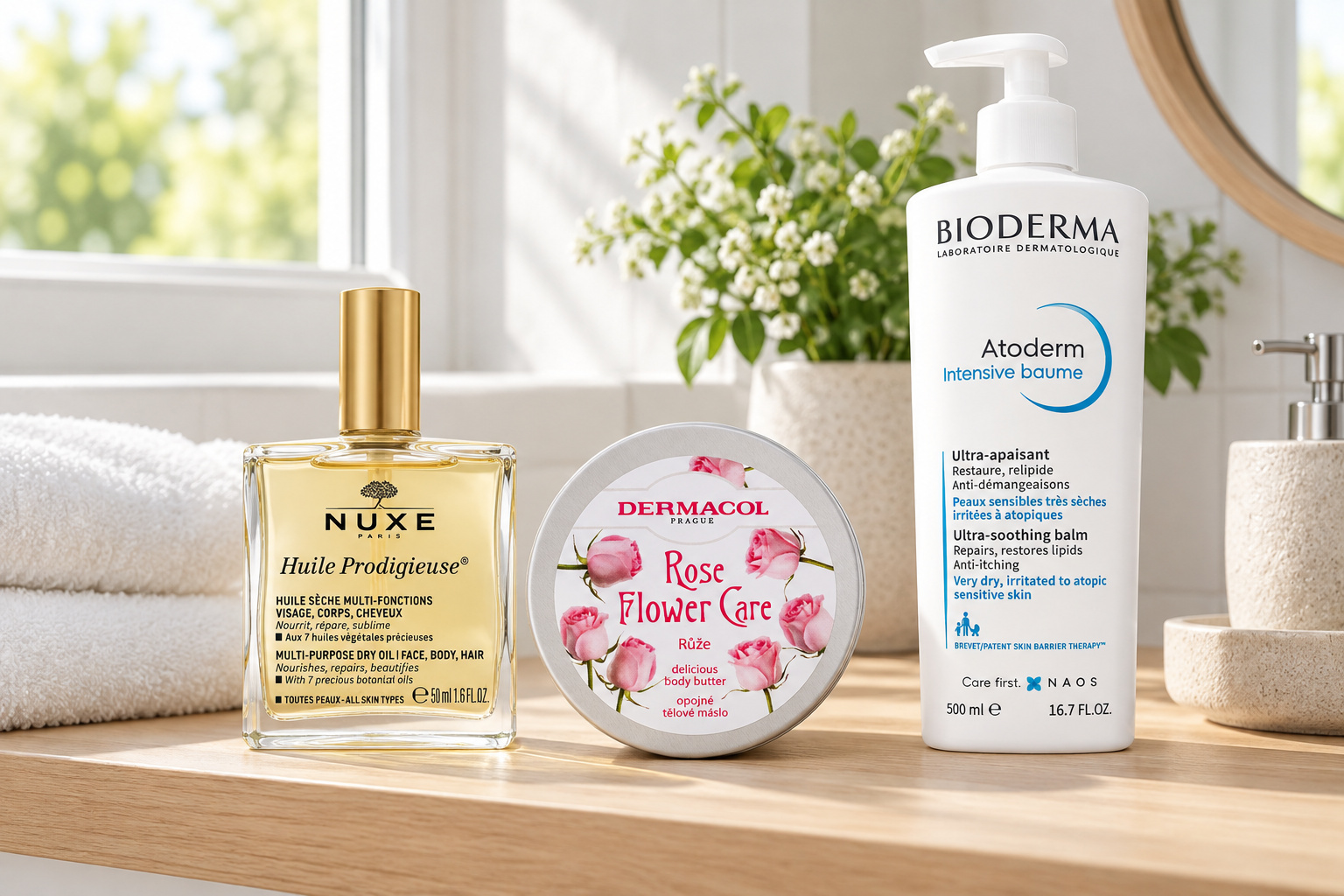
Body oil, butter, or balm differ in texture, absorption rate, and how long they protect your skin. We'll advise you on which to choose, whether your skin is dry, normal, or sensitive.
Oil, Butter, or Balm: Why Texture Matters
You might be familiar with this scenario: a body oil sits in your bathroom, next to a jar of rich body butter, and somewhere in a drawer, there's a balm you once bought for dry elbows. After a bath, you reach for whatever is closest, and the result is always a bit different – sometimes your skin stays smooth until evening, other times that uncomfortable tightness returns within an hour. It's not just a matter of chance or personal preference.
Body oils, butters, and balms differ mainly in their richness, how quickly they absorb, and how long they last on the skin. Each texture serves a slightly different purpose and suits different situations. Once you understand these differences, choosing the right one becomes less of a gamble and starts to make sense. Often, you'll find you don't need anything new, just a different way to use what you already have.
To fairly compare the different formats, we'll look at three criteria throughout the article:
- Richness – how rich the texture is, how it spreads, and the layer it leaves on the skin. The range goes from liquid oil to solid balm, which needs to be warmed in the hands first.
- Absorption – how soon you can get dressed, whether the skin remains shiny or matte, and if the care won't be a hindrance in the morning before leaving or at night before bed.
- Suitability for skin type – what dry skin appreciates, what is enough for normal skin, and what to focus on for sensitive skin, which tends to be more demanding in terms of composition and amount of products.
None of the criteria alone determines which format is "better." A richer texture isn't automatically more suitable for everyone, and a light oil doesn't mean weak care. It depends on how well the product matches your skin, the season, and how much time you want to dedicate to it after a bath.
One more clarification at the start: this article focuses exclusively on care applied after bathing or showering on dried or slightly damp skin. Cleansing products are not included, even though they are closely related to body care. We'll focus on what remains on the skin – and that's where the differences between oil, butter, and balm are most noticeable.
What's Behind Different Textures
At first glance, oil, body butter, and balm mainly differ in how they feel in your hand – one glides, another is creamy and thick, and the third resembles an ointment. However, the difference starts with their composition. Knowing what each format is made of helps you understand what to expect from them and why they can't fully replace each other.
Body oil is a water-free blend of lipids. It usually combines plant oils, emollient esters, or squalane, sometimes supplemented with vitamin E or fragrance. Because it contains no water, it doesn't need emulsifiers and typically has a relatively simple composition.
Body butter and rich body creams are emulsions – a mix of water and fats held together by emulsifiers. They differ from lighter body lotions mainly by having a higher fat content, often with shea or cocoa butter. This makes them thicker, leaving a more noticeable layer of care on the skin.
Balm is often the richest texture in a skincare range. It can be a very thick emulsion or an almost water-free product based on waxes and butters. It's generally focused on supporting the skin's protective barrier, so you'll often find ingredients like ceramides, fatty acids, or components that form a continuous protective film on the skin's surface.
To clarify what's happening in each texture, it's helpful to distinguish three groups of ingredients that body care products work with:
- Moisturizing ingredients (humectants), such as glycerin, urea, or hyaluronic acid, bind water and help retain it in the skin's surface layers. You'll find them mainly in emulsions, such as creams, butters, and many balms.
- Emollient ingredients (emollients), including oils, butters, esters, or squalane, fill in small irregularities between the cells of the stratum corneum, making the skin feel smoother and more supple.
- Protective ingredients (occlusives), such as waxes, petroleum jelly, or certain butters, create a thin layer on the surface that slows water evaporation from the skin.
This also explains a common misconception: oil does not provide water to the skin because it doesn't contain any. Its role is to soften the skin and reduce the rate at which the water it already contains evaporates. In contrast, creams or butters bring water and ingredients that bind it, and the fat component helps keep everything in place. Balms focus most on the protective layer and supporting the skin barrier.
When choosing, you'll encounter one complication: the names on the packaging are not standardized. There's no binding definition of when a product is still a cream and when it becomes butter or balm. Especially in dermocosmetic lines, rich creams are often labeled with adjectives like "ultra-nourishing" or "riche," and a balm from one brand can be lighter than a cream from another. The same goes for the word "butter" – sometimes it refers to a truly solid texture, other times it's just a name for a richer cream.
A more reliable guide is the description of the texture and the product's intended use. Pay attention to what skin type the product is designed for, how the manufacturer describes the consistency, and whether it mentions lipid replenishment or skin barrier support. Checking the composition can also help: if the list starts with water (aqua), you have an emulsion, and if oils, butters, or waxes appear right after, it's a richer care product regardless of the name.
Textures Side by Side: Density, Absorption, Skin Feel
At first glance, body oil, rich cream, and balm differ mainly in packaging, but the real difference is noticeable upon application. It depends on how easily the product spreads, how quickly it absorbs, and the feeling it leaves on the skin even after an hour. You can compare textures clearly based on these three characteristics.
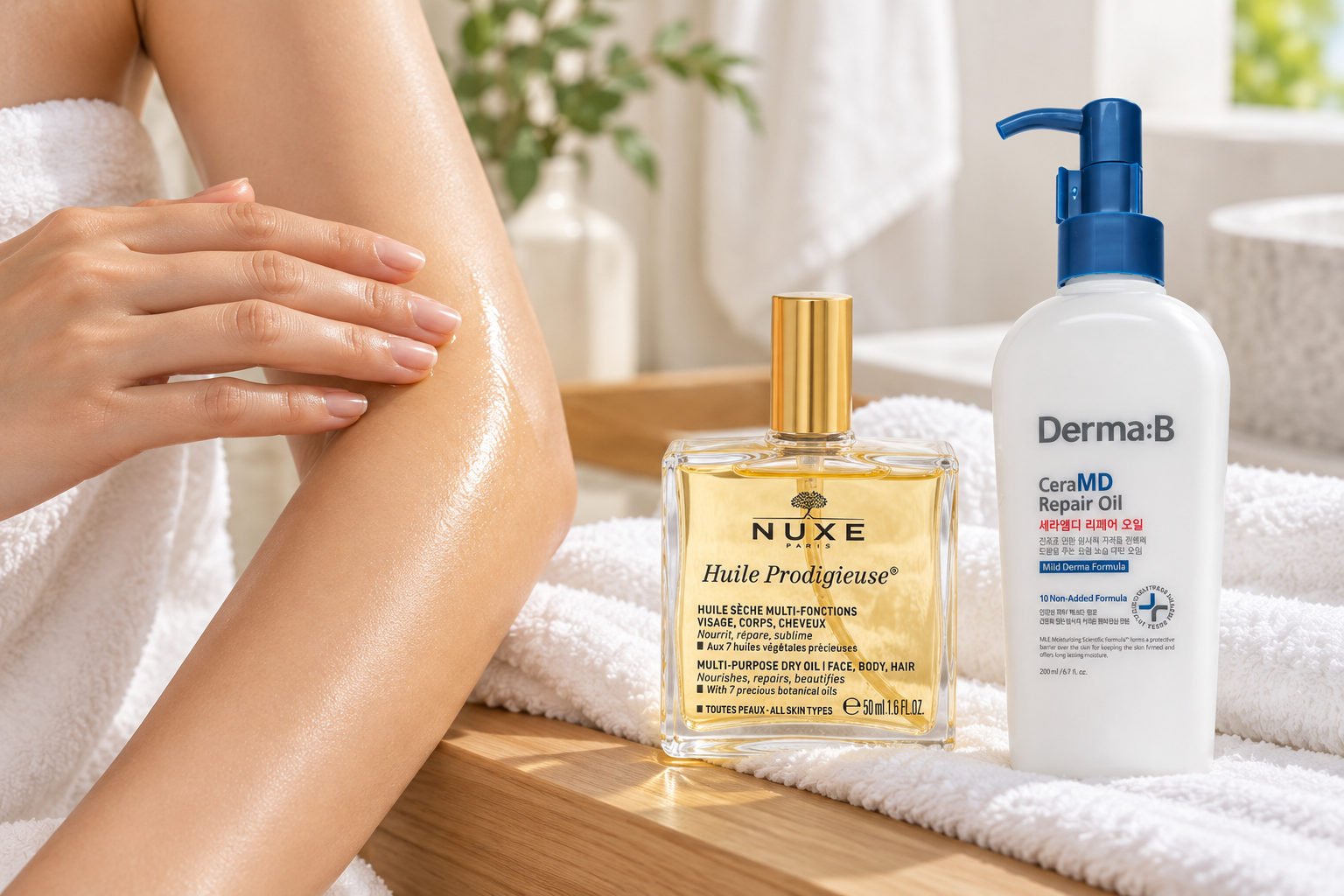
Body oil has the lightest consistency of the three formats. It glides over the skin, so a few drops are enough for a large area, and it easily reaches less accessible places. Traditional oils absorb slowly – they remain on the surface for a while, leaving the skin smooth to the touch and giving it a visible shine. If you don't like a shiny finish, try a so-called dry oil. It's usually lighter, absorbs faster than traditional oil, and leaves a more satin-like rather than greasy surface, allowing you to get dressed sooner.
Body butter and rich cream are visibly thicker. They need to be massaged into the skin for a while, and with very rich textures, it helps to warm them in your hands first. They absorb more slowly than light body milk or dry oil, but they leave a gentle protective film. The skin then feels supple, and if you use an appropriate amount, it doesn't feel sticky. For full-body care, it's a reasonable compromise between speed and nourishment.
Balm is the densest of the three textures. It spreads with the most difficulty, which is why it's usually applied in a thin layer or only on smaller areas. It stays on the skin the longest and is felt for a long time – some find this enveloping feeling pleasant, while others may find it heavy. If you apply it all over the body, expect it to take significantly longer to absorb.
In short, you can compare the textures as follows:
- Spreadability: Oil spreads the easiest, cream or butter requires a short massage, balm requires the most patience.
- Absorption speed: Dry oil absorbs the fastest, traditional oil and rich cream take a few minutes, balm takes the longest.
- Skin feel: Oil leaves shine and smoothness, cream leaves a gentle protective film, balm leaves a rich layer that you feel on the skin the longest.
In the morning, when you need to get dressed quickly, you'll appreciate textures that absorb within minutes and have a lower risk of transferring onto clothes. Dry oil or a smaller amount of lighter cream is suitable. A small trick helps too: apply your care at the start of your morning routine and get dressed at the end.
In the evening, your skin care has more time. Feel free to reach for a rich cream, balm, or traditional oil with a more pronounced shine – they can absorb calmly overnight. If you dislike the feeling of greasiness in bed, apply them at least fifteen minutes before sleeping.

Which Texture Suits Dry, Normal, or Sensitive Skin
Whether your skin feels slightly tight after a bath or itches and flakes a few minutes after drying, choosing the right texture is worth deriving from how your skin behaves on a typical day. Skin type is not set in stone – during the heating season or after a summer in the sun, even normal skin may need more nourishing care. Therefore, consider the following recommendations as a starting point, which you can adjust based on your own experience.
Normal Skin – if your skin doesn't have specific demands, it usually suffices with a body oil or a lighter nourishing cream. Oil is especially suitable if you enjoy a silky feel and don't mind waiting a bit for it to absorb. On the other hand, a light cream is practical for a quick morning application when you want to get dressed as soon as possible. Dense butter or balm for the entire body is generally unnecessary for normal skin and can feel unnecessarily heavy. It's more suitable as a seasonal boost when the skin starts to dry out in winter.
Dry Skin – skin that feels tight after bathing, appears dull, or gently flakes on the shins will appreciate richer creams with a buttery texture. A higher fat content helps reduce water evaporation from the skin's surface, so the feeling of tightness doesn't return as quickly. If the dryness is mild, oil may suffice, but for significantly dry skin, oil alone often doesn't last the whole day. For areas where the skin is visibly rough, typically elbows, knees, or heels, a balm that creates a richer protective layer on the surface is suitable.
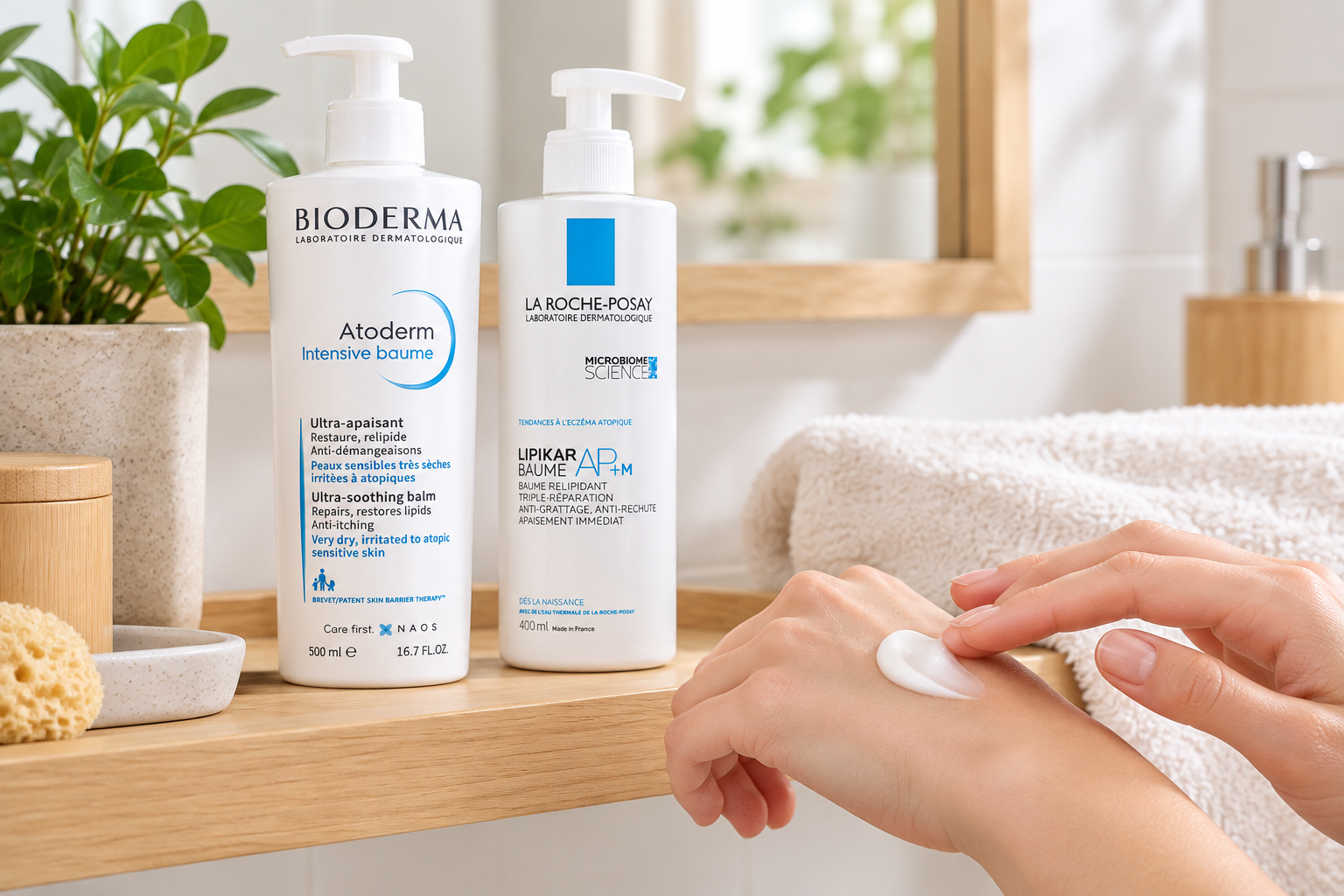
Sensitive Skin – for skin that easily reddens, burns, or itches, less is often more. For sensitive skin, including skin prone to atopy, it makes sense to opt for dermocosmetic balms and creams specifically designed for this skin type. When choosing, it's worth following a few guidelines:
- the product is fragrance-free and explicitly labeled as suitable for sensitive or atopic skin,
- the composition is short and straightforward, without a long list of fragrant ingredients and plant extracts,
- the texture is more creamy to balmy, so it lasts longer on the skin,
- try the new product on a small area first, such as the inner forearm, before using it on the entire body.
Fragranced body oils are pleasant to smell, but with sensitive skin, it's wise to approach them cautiously. Fragrant components and some plant extracts can irritate sensitive skin. If you like the oil texture, you can choose a fragrance-free option and observe how your skin reacts to it.
Cosmetics can make dry and sensitive skin more comfortable and support its natural protective barrier, but they do not replace professional care. If itching, redness, or cracking persists despite regular care, or worsens, it's advisable to consult a dermatologist. They can help determine the cause and recommend a course of action that suits your skin.
How to Create Your Own Body Care Routine
Oil, butter, and balm don't exclude each other. Each texture has its place on the body, and their thoughtful combination often works better than a single product for everything. It's not about applying as many layers as possible, but giving each area what it needs at the right time.
A proven post-bath routine can be divided into three steps that you can mix and match:
- Oil on still damp skin. After a bath, gently pat yourself dry with a towel and massage the oil into your skin while it's still slightly damp. It spreads more easily, you'll need less, and the oil helps retain moisture in the skin.
- Rich cream or butter all over. For large areas like legs, arms, or back, a cream or body butter is ideal for evenly nourishing the skin. In dry periods, you can apply it over the oil – just wait a few minutes for the oil to absorb. Otherwise, one or the other usually suffices.
- Balm targeted. Elbows, knees, shins, or heels tend to be drier and rougher than the rest of the body. Apply a small amount of balm only to these areas, preferably in the evening, when the rich texture has time to work.
If you're unsure where to start, a simple decision guide can help:
- Season. In winter and during the heating season, the skin loses moisture more quickly, so it's worth opting for richer textures – butter or rich cream all over, balm on exposed areas. In spring and summer, a lighter dry oil or light cream that absorbs quickly and doesn't cling to clothing is usually sufficient.
- Time of day. In the morning, you'll appreciate textures that absorb before you get dressed. In the evening, there's more room for butter and balm, which can stay on the skin longer.
- Skin needs. Normal skin often only needs one texture chosen according to the season. Dry skin will appreciate a combination of oil and cream, or balm for the driest areas. For sensitive skin, less is more: stick to one tried-and-true product without fragrance, and introduce new products gradually, ideally after testing on a small area.
You can also build your combination gradually. Start with one product that suits your skin and the season, and add others as you find where your care is lacking. If a texture doesn't suit you – it's sticky, absorbs too slowly, or irritates your skin – replace it with another. If problems persist, consult a dermatologist.
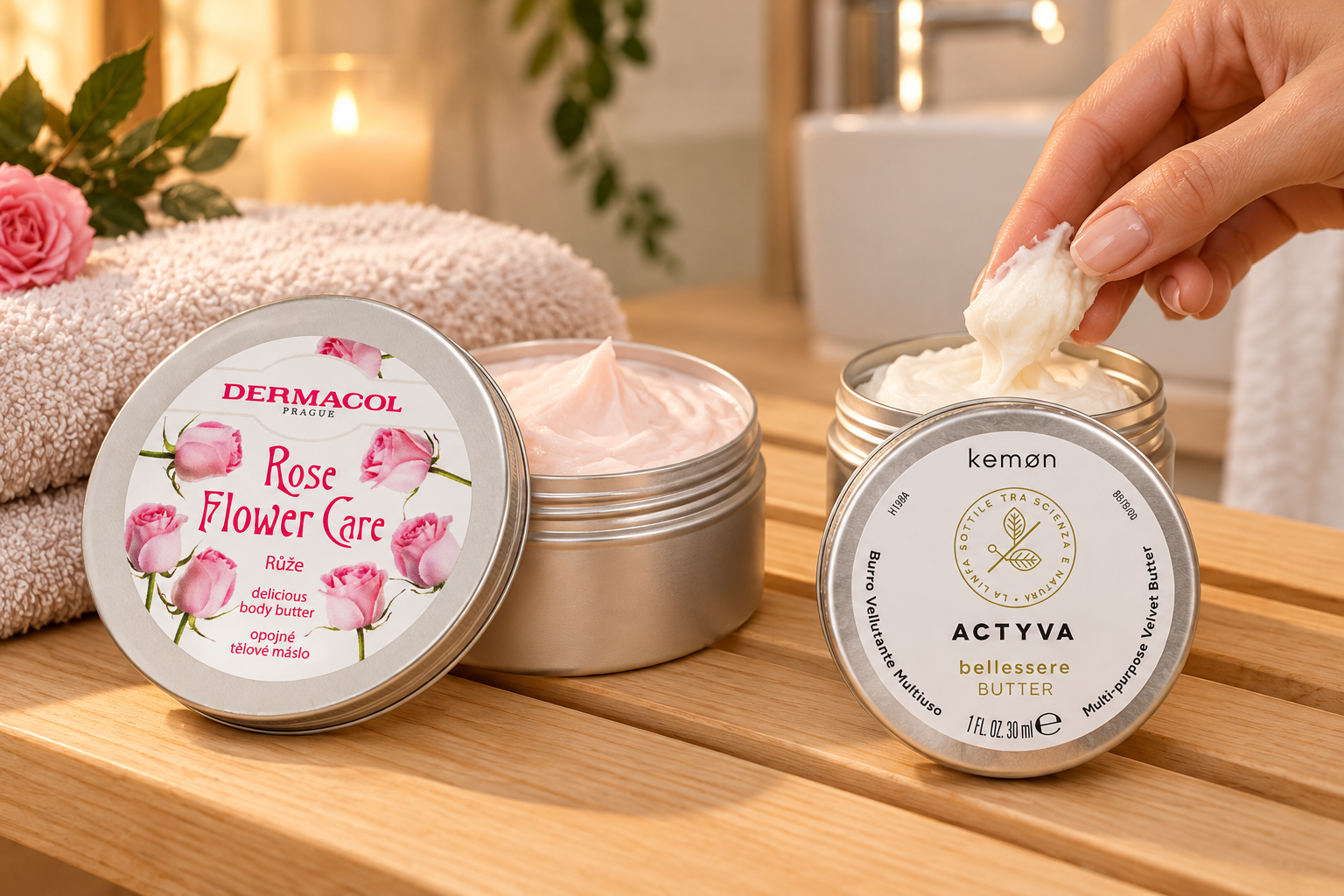
And here are our tips: below you'll find a selection of products from our range for each format – from body oils to creams and butters to rich balms for dry and sensitive skin. It's worth reading the description of the texture and purpose for each to choose what truly suits your skin for your routine.


Category
Recommended articles

"Give a girl the right shoes and she can conquer the world!" Marilyn Monroe
