
Why Hair Weakens After Coloring: The Role of Bond-Repair Care
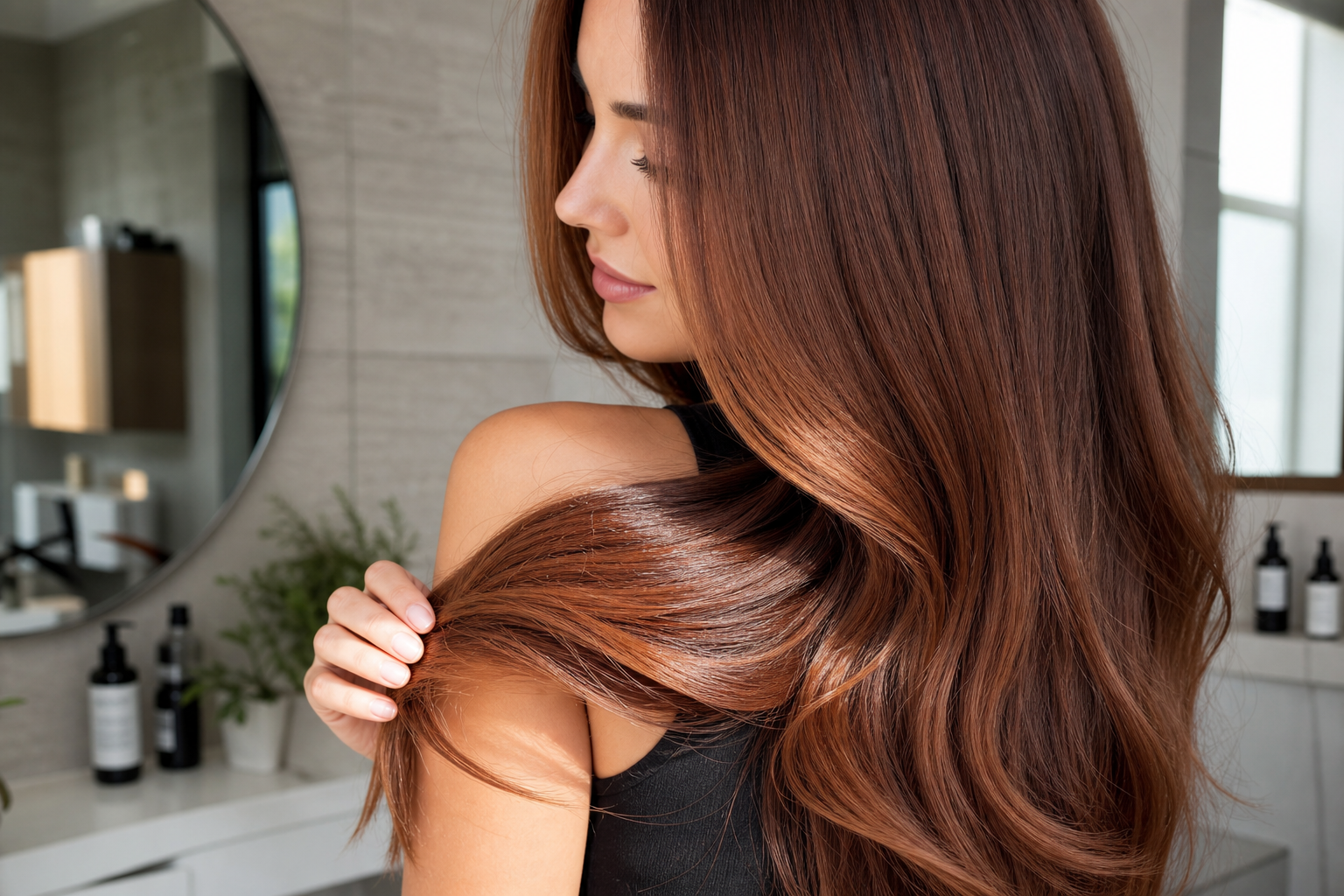
The shade turned out exactly as you envisioned, and in the mirror, the color looks just as you planned. But after a few weeks, your hair starts behaving differently than you're used to. It breaks in the lengths, the ends split, strands become harder to detangle, and styling that used to last all day falls apart within a few hours. It's not necessarily a washing technique error or a sign that your hairdresser did a poor job – coloring and bleaching simply affect the internal structure of the hair fiber, and it doesn't repair itself on its own.
You can recognize the typical signs of chemically stressed hair quite easily:
- the hair breaks more in the middle of the lengths rather than at the ends,
- after washing, it feels soaked and porous, and once dry, it becomes dry and coarse,
- it holds shape poorly, whether you want waves or a smooth blow-dry,
- the color washes out faster and loses its vibrancy,
- the hair surface doesn't reflect light evenly, making the hairstyle appear dull.
Most of us respond to these signals intuitively: we reach for richer hydration. A hydrating mask, conditioner, or oil is definitely not a bad choice and should not be excluded from your routine. However, they address a different layer of the problem. They work mainly on the hair's surface – sealing the cuticle, reducing friction between strands, and adding shine. The result is immediate and tangible, but it remains external. Once you stop using these products for a few weeks, the hair returns to its original state because its internal support remains untouched.
This difference is precisely why a separate category of bond-repair care was created in professional hair cosmetics. The name refers to the bonds within the hair fiber that the chemical processes of coloring, bleaching, and repeated heat styling disrupt. Bond-repair products don't just try to coat the hair with a protective layer – their task is to penetrate the fiber and restore some of the strength lost during chemical services. In practice, this means that hair withstands detangling and heat better and breaks less in the lengths.
Professional brands therefore have bond restoration allocated to their own lines, not scattered across regular hydrating care. Schwarzkopf Professional uses it in the Fibreplex system and the BC Bonacure line, Wella Professionals offers reconstructive care under the SP brand, and L'Oréal Professionnel addresses chemically stressed hair within the Série Expert line. The differences between them are mainly in consistency, application method, and when you incorporate the product into your routine – not that one line automatically replaces all others.
So when does it make sense to consider bond-repair care? Most often after coloring, bleaching, or highlighting, whenever the shade has shifted by several tones. But also for hair that regularly encounters a straightener or curling iron, and for longer hairstyles where the ends have several years of life and layers of chemical and heat exposure behind them. If you're unsure, a good indicator is wet hair: if it stretches unusually and breaks during detangling, it's structural damage that hydration alone can't fix.
Before we get to the specific selection of six products from our range, it's worth understanding what actually happens to hair during coloring. Without this knowledge, it's easy to get lost in the range of boosters, sealers, treatments, masks, and leave-in care, and money may end up going to a product that addresses a completely different type of issue.
Understanding Disulfide Bonds: Coloring, Bleaching, Heat
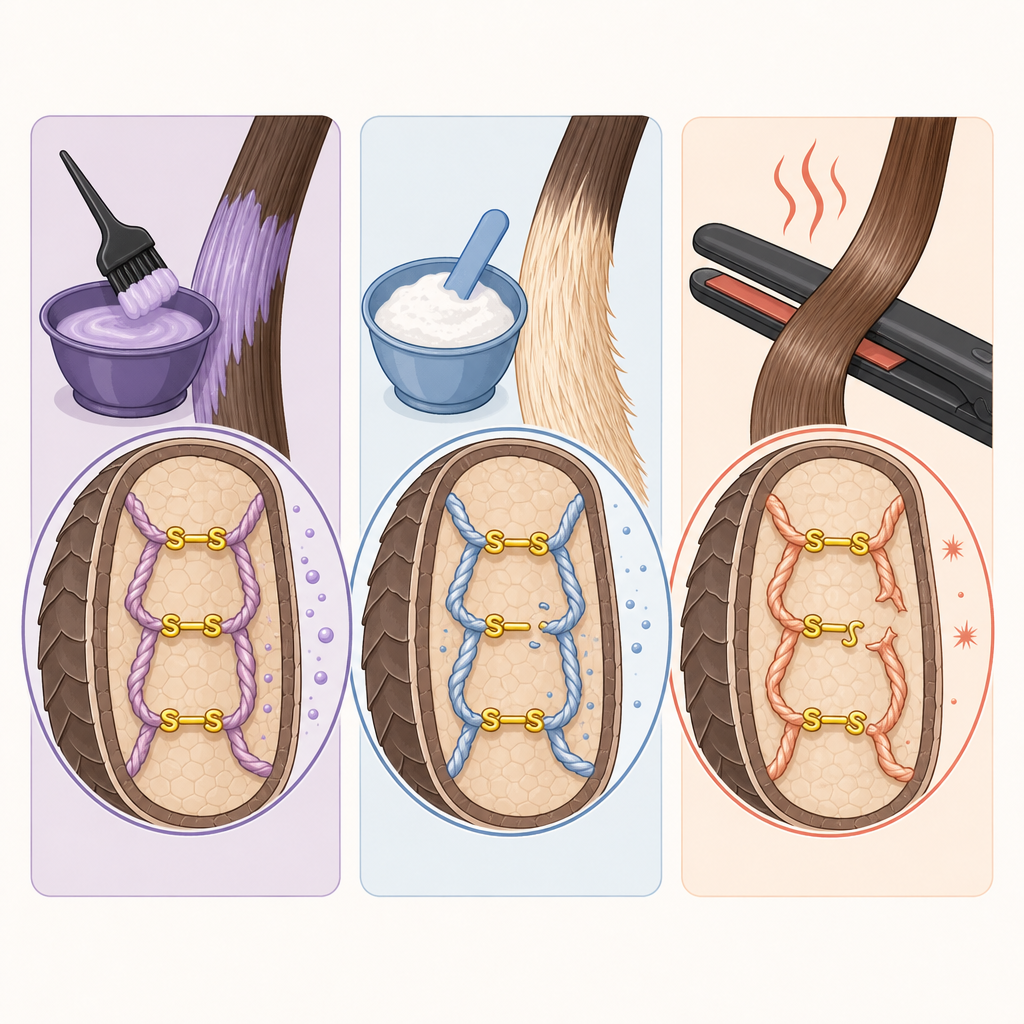
Hair may seem like a simple strand, but up close, it's a carefully arranged structure. Its main building block is keratin – a protein whose chains are held together by several types of bonds. Hydrogen and ionic bonds break and reform regularly, practically every time you wet and dry your hair into shape. Disulfide bonds, however, are a different category: they connect two sulfur atoms and give the strand strength, elasticity, and the ability to return to its original shape.
As long as the network of disulfide bonds is intact, hair can withstand a lot – stretching during combing, daily styling, and regular washing. Once some of these bonds break, the strand loses its internal support. This becomes evident gradually: hair becomes harder to comb, tangles more when drying, and the ends split and break. Simultaneously, the outer scaly layer, the cuticle, loosens, causing the surface to stop reflecting light evenly. The result is a dull, dusty appearance that even good styling can't fix on its own.
Three Situations That Most Commonly Disrupt Bonds
- Alkaline Coloring. To allow the pigment to penetrate the hair, the cuticle must be lifted – this is achieved by the alkaline environment of the dye combined with the developer. The ongoing oxidation also affects some of the disulfide bonds. This group is represented in our range by the Coloring category, which includes cream colors and developers, such as Londa Professional Londacolor 6% / Vol. 20.
- Bleaching and Lightening. Here, the process goes further: melanin breaks down more significantly than with regular coloring, and the effect lasts longer, so the strain on the internal structure is higher. Lightening products like Londa Professional Blondoran Dust-Free Lightening Powder or Fanola No Yellow Color Ultra Lightener should therefore be handled by a hairdresser who monitors the time and strength of the developer.
- Repeated Heat. Straighteners, curling irons, and hot blow dryers evaporate water from the strand and rearrange keratin at higher temperatures. Hair can handle this once, but a daily routine without protection is another story. That's why there's a separate category for Heat Protection with sprays like Sebastian Professional Trilliant Spray.
The key is that these effects add up. After one visit to the salon, hair usually looks great: the color is fresh, the blowout holds, and the lengths look vibrant. You'll notice the difference after the third or fourth coloring when hair starts to behave differently than before – it holds shape less well, dries out faster, the ends appear porous, and the color fades sooner than expected. It's not a sudden failure but a gradual loss of internal support accumulated over months.
Bond Repair Is Not the Same as Hydration
Traditional moisturizing care mainly works on the surface of the hair. Conditioners and masks replenish moisture, smooth the cuticle, and reduce friction, making hair feel softer and easier to manage. However, the effect is inherently temporary and gradually fades with the next wash.
Bond-repair care targets something else. Its ingredients focus on the internal structure of the strand and areas where original bonds are missing, so the results don't show immediately after the first use. The aim is to gradually restore hair's strength so it can better withstand further coloring and styling. Both approaches are not mutually exclusive, quite the opposite: hydration addresses how hair looks and feels today, while bond repair addresses its condition in a few months. In the following sections, we'll look at specific types of products and how to incorporate them into a routine that makes sense.
The First Step to Restoration: Boosters, Sealers, Salon Treatments
Bond-repair care typically involves two steps in professional lines, and it's important not to confuse them. A booster is a concentrate added directly to the coloring or bleaching mixture and works when the hair is chemically open. The sealer comes afterward, after rinsing out the color, and its job is to seal the results of the first step. Whether you're mixing color at home or visiting a hairdresser, the order remains the same: first accompany the hair through the process, then soothe it.
Booster is Mixed into the Color
You don't apply the booster to the finished hairstyle like a mask. It's measured in the ratio specified by the manufacturer on the packaging and mixed into the color, highlighting paste, or bleaching powder before application. That's why it's handled differently than regular care – you can't add it "by eye," and you need to consider that it slightly changes the consistency of the mixture.
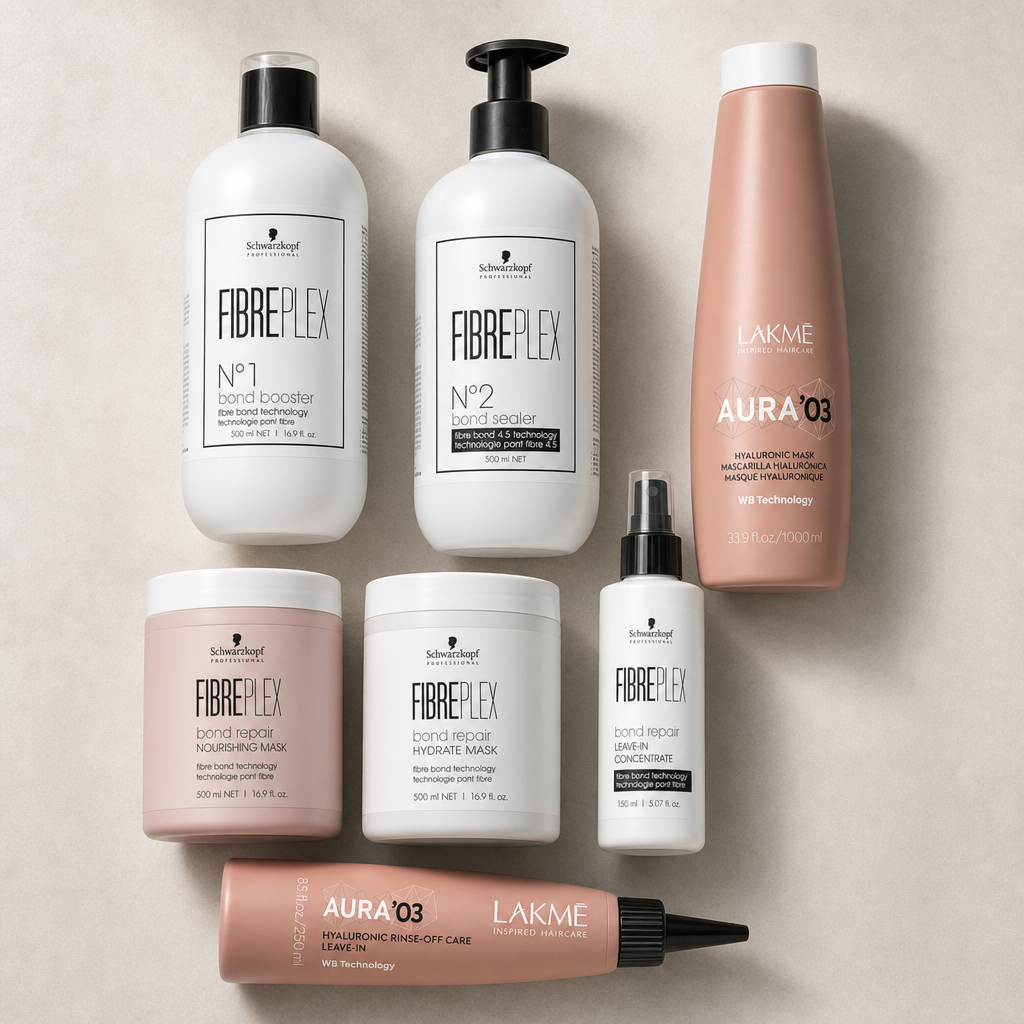
In this category, you'll find Schwarzkopf Professional Fibreplex N°1 Bond Booster 500 ml, which is listed under Coloring. It's a classic salon format: a half-liter package is enough for dozens of applications, making the cost per coloring more favorable than small consumer packages. For home use, this means one thing – you're buying a long-term supply, not a product for one afternoon.
Sealer Completes the Booster's Work
The second step is noticeably more user-friendly at home. Schwarzkopf Professional Fibreplex N°2 Bond Sealer 500 ml is applied after rinsing out the color on towel-dried hair, left to work, and then rinsed off. It doesn't mix with anything else and doesn't require precise dosing according to the mixture's volume, so there's significantly less room for error. That's why you'll find it under the Hair Treatments category, not Coloring.
The sealer makes sense even if you have your coloring done in a salon. The hairdresser will use it once as part of the service, and you can continue using it at home between visits as a standalone treatment. This scenario is the most practical for the half-liter package and explains why bond-repair products are sold in salon volumes.
Home Use vs. Salon
- Tone-on-tone coloring or root touch-up at home – both the booster and sealer have their place if you're used to measuring and following instructions.
- Lightening by several tones, highlights, balayage – here, it's wiser to leave the work to a professional. A bond-repair product won't fix a technique error or an unsuitable peroxide volume.
- Previously damaged hair – start with a standalone sealer a few weeks before exposing your hair to more chemicals.
What to expect from the two-step system: hair usually feels stronger after coloring and is easier to detangle. However, it's not a substitute for regular moisturizing care or a way to return hair to its pre-coloring state. Bond-repair is more of a safeguard during the chemical process than an additional repair after years.
Bond Repair Masks: Wella SP Luxe Oil, L'Oréal Absolut Repair
The booster kick-starts the repair from within, but the results are maintained at home – week by week, with regular washing. An intensive mask is the care step that restores nourishment and elasticity to damaged lengths, so the hair is less stressed during detangling and styling. Whether you've had a single dark dye or several seasons of bleaching, you can choose from two professional masks that differ in richness and how they suit damaged hair.
Wella Professionals SP Luxe Oil Keratin Restore Mask 400 ml
This mask is based on keratin nourishment and is suitable for hair that isn't destroyed but has lost its softness and shine. Its creamy consistency spreads well without feeling heavy, so even finer hair that tends to fall flat can handle it. Apply to towel-dried hair, from mid-lengths to ends, and leave on for about five to ten minutes. In the same range, you'll also find the Wella Professionals SP Luxe Oil Reconstructive Elixir 100 ml, which you can use to finish your post-wash care.
- Texture: medium cream, easily distributes through lengths.
- Application time: approximately 5–10 minutes, then rinse thoroughly.
- Suitable for: fine to normal hair, colored hair without extreme bleaching, split ends.
L'Oréal Professionnel Série Expert Absolut Repair Mask 500 ml
Absolut Repair targets a higher level – for lengths that have undergone repeated bleaching, highlights, or regular straightening. The mask is thicker and richer, and it's immediately noticeable on the hair that detangling is easier and the ends are no longer rough to the touch. That's why you should use it sparingly: for medium-length hair, a walnut-sized amount is sufficient, otherwise, the result can become heavy. The 500 ml pack lasts a long time, which makes sense for a thick mask used once a week.
- Texture: thick, rich cream, noticeably felt on the hair.
- Application time: about 5–10 minutes; longer application won't improve the result.
- Suitable for: thicker, coarser, or significantly damaged lengths after bleaching and heat styling.
Why a Mask Doesn't Replace Conditioner
Conditioner and mask have different roles in hair care and one cannot fully replace the other. Conditioner works primarily on the hair's surface, smoothing cuticles, making detangling easier, and is used after every wash. A mask has a thicker formulation and longer application time, making it suitable for targeted nourishment, but that's why it doesn't belong in the daily routine. If you use it instead of conditioner every time, hair can easily become weighed down, lose volume, and become greasy at the roots more quickly.
A sensible rhythm for colored and mechanically stressed hair is one to two masks a week, for fine hair, more like once. Always apply it to lengths and ends, not the scalp, and rinse thoroughly with lukewarm water – product residue is a common reason why hair seems greasy after a mask. If one pack lasts for the whole household or you have very thick hair, you might also opt for the richer Wella Professionals Fusion Intense Repair Mask 500 ml, which is designed for similar damage types as Absolut Repair.
Leave-In Care to Finish: Six Specific Tips
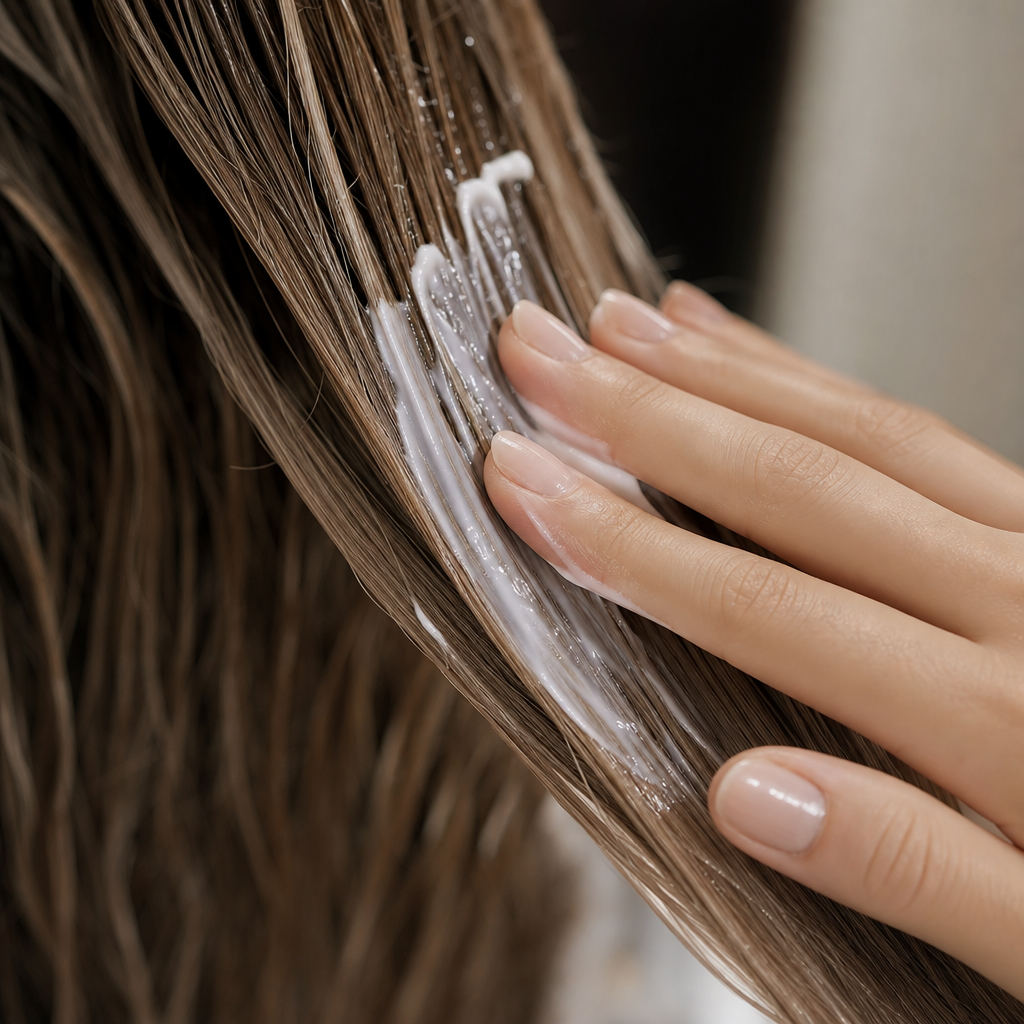
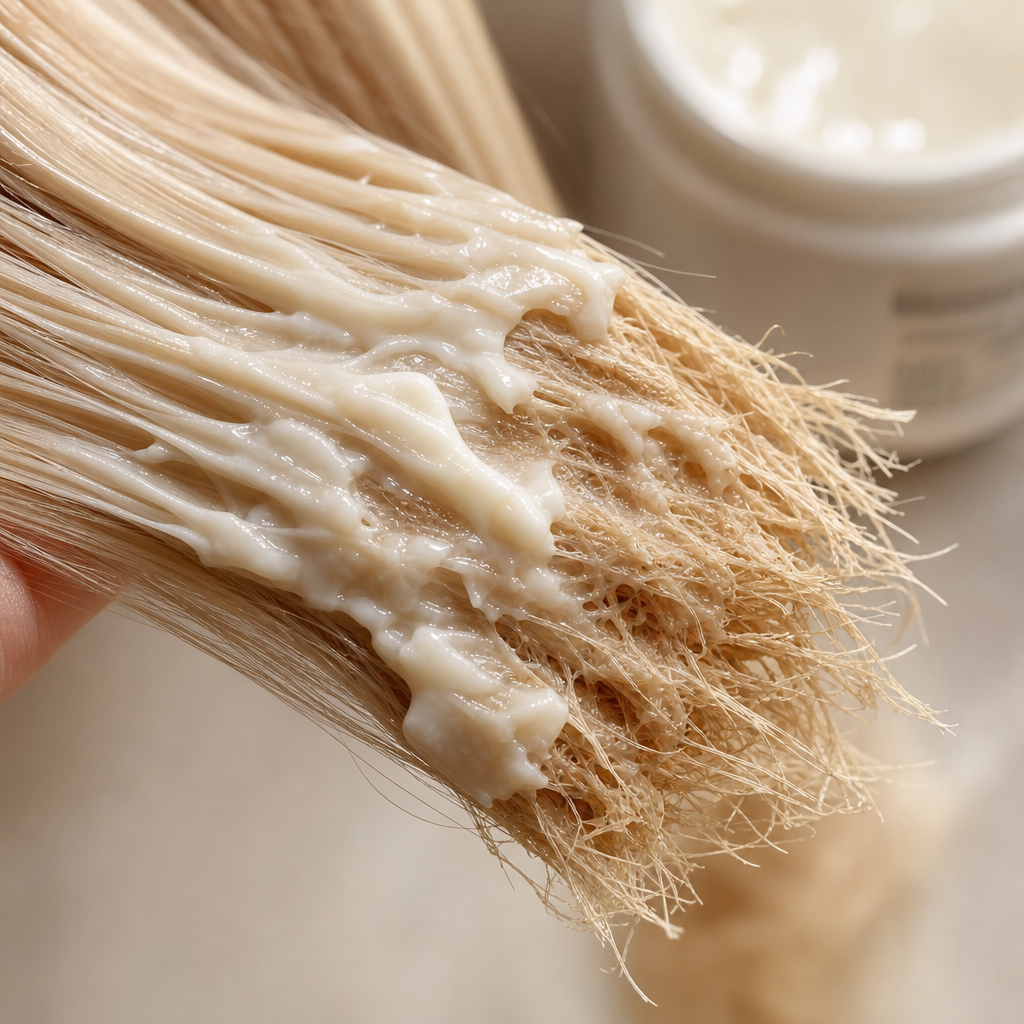
Repaired bonds need calm and minimal mechanical stress. That's why leave-in care has a firm place in the bond-repair routine: it stays in the hair even after rinsing, reduces friction during combing, and keeps the hair surface smoother between washes. Whether you're dealing with bleached hair or just long ends that split quickly, this step is worth incorporating permanently.
Lakmé K2.0 Recover Hyaluronic Treatment Damaged Hair 100 ml is a concentrated leave-in treatment designed for damaged hair. Apply it after washing to damp lengths and ends, avoiding the roots to prevent unnecessary heaviness. The hyaluronic component helps retain moisture in the hair, making it especially useful when your hair feels dry and rough to the touch after washing. The smaller packaging may seem modest at first glance, but when used in drops, it lasts for several months.
Revlon Professional Restart Bond Repair Recovery Restorative Melting Conditioner 200 ml is a lighter option for everyday use. The creamy texture literally melts into the hair, leaving no residue and not weighing it down, which is appreciated by those with finer or thicker hair that can quickly become overloaded with concentrated care. If you're unsure where to start, this type of product is often a safer choice – you can always add more care, but reducing overloaded hair requires another wash.
Six Products in a Simple Weekly Plan
The entire routine from this article can be summarized into several steps that follow each other depending on what you're doing with your hair:
- Schwarzkopf Professional Fibreplex N°1 Bond Booster 500 ml – only on days when coloring or bleaching, added directly to the coloring mixture.
- Schwarzkopf Professional Fibreplex N°2 Bond Sealer 500 ml – follows immediately after rinsing the color, still within the same treatment.
- Wella Professionals SP Luxe Oil Keratin Restore Mask 400 ml – once a week instead of conditioner, for dry and stressed lengths.
- L'Oréal Professionnel Série Expert Absolut Repair Mask 500 ml – an alternative mask for severely damaged hair, alternating with the previous one is not necessary, choose one.
- Lakmé K2.0 Recover Hyaluronic Treatment Damaged Hair 100 ml – after every wash on lengths and ends, for very damaged hair even daily.
- Revlon Professional Restart Bond Repair Recovery Restorative Melting Conditioner 200 ml – everyday light care where concentrated care overloads the hair.
In practice, this means that the first two steps are used only a few times a year, the mask is included once a week, and the leave-in care is used continuously. Most of the work lies in the simplest step – and it's the regularity of this step that makes a noticeable difference in how the hair detangles and holds a style after a few weeks.
If a particular product doesn't suit you, you're still within three categories to choose from: Hair Masks for weekly deep care, Hair Treatments for more intensive care linked to coloring, and Leave-In Care for everyday protection of lengths. In each of them, you'll find both affordable options and professional lines, so the routine can be tailored to hair type and budget.
Finally, a realistic note: bond-repair care cannot return hair to its pre-coloring state, and no product can repair what's broken. What it can do, however, is slow down further damage and keep hair in a condition that allows for normal styling. Try to stick to the routine for at least a month before evaluating it – changes in hair take longer to manifest than in skin.
Category
Recommended articles
"Give a girl the right shoes and she can conquer the world!" Marilyn Monroe