
Why Serums at the Same Price Point Differ So Much
Whether you're choosing a vitamin C serum for the first time or looking for a replacement for one that didn't suit you, you'll encounter the same obstacle. In the catalog, dozens of bottles sit side by side, with descriptions differing by only a few words. They all promise a fresher appearance and an even tone. And when you look at the price tag, there's often not even a hundred-crown difference between them. So the question isn't which serum is more expensive, but what truly lies behind a similar price.
The price of cosmetics is determined by a range of factors that only indirectly relate to the effect on your skin – the size of the packaging, the brand's market position, packaging costs, and the extent of its marketing. That's why it's common for two serums at the same price point to behave completely differently on the skin, while a cheaper and more expensive variant of a similar formula can be surprisingly close. The difference you'll really notice lies in the composition, not the price tag.
Specifically, there are four variables. Once you know how to find them in the product description, the selection narrows from dozens of options to just a few candidates:
- Form of Vitamin C – whether the formula contains pure ascorbic acid or one of its gentler derivatives. This determines how quickly the substance works and how well the skin tolerates it.
- Concentration – the percentage indicates how much active ingredient the serum contains. A higher number doesn't necessarily mean a better result, just a different balance between the expected effect and the risk of irritation.
- Carrier and Texture – watery solution, gel, light emulsion, or oil base. The texture decides how the serum absorbs and how it behaves under additional layers of care.
- Accompanying Ingredients – stabilizers, additional antioxidants, and soothing or hydrating components. These often determine whether the serum suits you, even if it has the same form and concentration as a competing product.
These four parameters influence each other. A lower concentration in a gentle carrier may be more suitable for sensitive skin than a formula twice as strong that the skin rejects after the third application. Conversely, a well-tolerated serum without soothing ingredients may not bother skin that's long accustomed to acids. Therefore, a universally suitable vitamin C serum doesn't exist – only a serum suitable for specific skin and a specific care routine.
Three Questions Worth Asking Before Choosing
Before you start comparing compositions, try answering three simple questions. They'll take a few minutes and save you from an unnecessarily opened bottle left standing in the bathroom.
- What is your skin type? Dry, normal, combination, oily, or mature skin requires different textures and accompanying ingredients. If you're unsure, observe how your skin looks about two hours after washing without any care – where shine appears first and where you feel tension.
- How easily does your skin get irritated? Does it redden after a new cream, sting after a toner with acids, react to weather changes? The tendency to irritation is a separate trait that may not align with skin type – even oily skin can get irritated.
- How many steps of care can you realistically manage daily? Be honest with yourself. If you can only manage two steps in the morning, there's no point in building a routine on five products that must be applied in a specific order and with intervals. A serum that you don't have time for can't work.
The answers to these three questions won't tell you the name of a specific product, but they will reliably eliminate most options that wouldn't make sense for you. The rest is about working with the composition, which you can navigate even without a chemistry degree – just know what to look for.
Forms of Vitamin C: From Ascorbic Acid to Derivatives
Under one name, a whole group of substances is hidden in cosmetics. Vitamin C is added to serums in several chemical forms, each behaving differently: they vary in stability, onset speed, and tolerance. Once you understand these names, the number on the label gains a specific meaning.
Ascorbic Acid as the Pure Form
Ascorbic acid is vitamin C in its unchanged form; in the ingredients list, you'll recognize it as ascorbic acid or L-ascorbic acid. The skin doesn't need to convert it, requiring no intermediate step, which is why it's known for its quick onset. However, it demands more challenging conditions. It remains effective only in an acidic environment around pH 3, a level that thinner and more reactive skin usually notices upon application – typically as a brief stinging or redness.
The second characteristic is its sensitivity to airborne oxygen. Ascorbic acid easily oxidizes, and the serum loses clarity, turning yellow to brown-orange. Darkening is a practical signal that the substance is no longer in its original form. Manufacturers therefore supplement the formulation with stabilizing ingredients, typically vitamin E or ferulic acid.
Derivatives as a Gentler Path to the Same Substance
Derivatives were created as a response to the two weaknesses of the pure form. The vitamin C molecule is chemically altered: attached sugar, alcohol group, or salt protects it from oxidation and allows the serum to be formulated at a pH closer to the skin. The trade-off is an additional step – the skin must first convert the derivative back to vitamin C, so the onset is usually slower. In practice, this means a calmer application and longer product shelf life.
- Ascorbyl Glucoside – vitamin C linked to glucose. It is among the more stable variants and is formulated at a pH close to the skin, so it often appears in serums for more reactive skin.
- Ethylated Ascorbate (3-O-ethyl ascorbic acid) – a form with an attached ethyl group. It is described as a compromise between the stability of derivatives and the straightforwardness of pure acid; however, at higher concentrations, it can sting similarly.
- Sodium or Magnesium Ascorbyl Phosphate – salt forms well soluble in water that can tolerate a more neutral pH. You can find them in light emulsions and care aimed at problematic skin.
- Tetrahexyldecyl Ascorbate – an oil-soluble form suitable for richer, oilier textures. Due to the different carrier, it cannot be compared percentage for percentage with watery serums.
Why Concentrations Are Stated in Percentages
The percentage indicates how many weight parts of the given form of vitamin C are in the product. The number is useful, but on its own, it doesn't tell you about the result – comparisons can only be made within the same form. Five percent ascorbic acid and five percent ascorbyl glucoside are not interchangeable figures, as each molecule has different weight, solubility, and proportion of the vitamin itself. With pure ascorbic acid, we commonly range between 5% and 20% in serums, while the usual ranges for derivatives vary depending on the specific substance. A higher number also demands higher tolerance, so it's not a ranking.
The Packaging Is Part of the Formula
For vitamin C, the packaging is not a cosmetic detail. Light and air accelerate oxidation, so serums are filled into dark glass, opaque bottles, or airless dispensers. A clear bottle with a dropper looks good on the shelf, but with pure ascorbic acid, it means the contents will start to change more quickly after opening. Derivatives are more tolerant, but it still holds true that the serum belongs in a cabinet, not on a windowsill.
Sensitive and Dry Skin: Lower Concentrations, Calmer Formulas
Sensitive and dry skin are not the same. Dryness is a condition where the skin lacks oils and water, while sensitivity is a tendency to react to stimuli that other skin types tolerate. In practice, however, they often overlap: a weakened skin barrier retains moisture less effectively and is more easily irritated. Vitamin C doesn't need to be excluded, but it should be approached differently than with more resilient skin.
Start at the lower end of the range. Vitamin C concentrations in serums typically range from a few percent to fifteen or even twenty. For sensitive and dry skin, it makes sense to start around five to ten percent. A lower concentration doesn't mean the serum isn't effective—it works more gradually, giving the barrier time to adjust. If it suits you, you can try a stronger version after a few months, but it's not mandatory.
Derivatives are generally more tolerable than pure ascorbic acid. Pure ascorbic acid requires an acidic environment for stability, which is often the main cause of burning and redness in sensitive skin. Derivatives like ascorbyl glucoside or ethyl ascorbate work at a pH closer to the skin and are usually better tolerated. They act more gently and slowly, which is not a disadvantage for this skin type but an intention.
What to Look for in the Ingredients
For sensitive and dry skin, the accompanying ingredients are as important as the vitamin C itself. Look for:
- panthenol – a classic soothing ingredient, also known from after-sun care;
- niacinamide – in lower percentages, it supports barrier care and is usually well tolerated;
- hyaluronic acid and glycerin – they bind water, so the serum doesn't have a drying effect;
- ceramides or plant oils – especially suitable for dry skin lacking in oils;
- dark or opaque packaging with a pump – limits contact with air and light.
On the other hand, be cautious with serums where denatured alcohol, strong fragrances, or potent essential oils are listed prominently. They are not harmful in themselves, but for skin prone to irritation, they increase the risk that something other than vitamin C will trigger a reaction.
How to Introduce the Serum
Sensible introduction is often more important for sensitive skin than choosing a specific bottle:
- First, test the serum on a small area—like the inside of your forearm—and leave it there for two days.
- For the first approximately two weeks, apply it every other day, not daily, and in small amounts.
- Apply to dry skin and let it dry briefly before adding cream.
- During the introduction period, do not start using another active product simultaneously, so you can identify what caused a reaction.
A brief tingling sensation within a minute of application is common and will subside on its own. Vitamin C is usually applied in the morning, followed by sun protection—a rule rather than an addition for sensitive skin.
How to Tell if the Serum Doesn't Suit You
The difference between getting used to it and actual irritation can be indicated by several signs:
- burning lasts longer than a few minutes or worsens with each use;
- redness persists even an hour after application, not just during the initial moments;
- itching, slight peeling, or a feeling of tight skin appears;
- the skin reacts poorly even to products it previously tolerated.
If any of these occur, stop using the serum for a few days and return to a simple routine—gentle cleansing and a moisturizing cream. Once the skin calms down, try a lower concentration, a different form of vitamin C, or a less frequent application, perhaps twice a week. And if problems persist, they should be assessed by a dermatologist, not another serum from the bathroom shelf.
Oily, Combination, and Mature Skin: Texture Matters
For oily and combination skin, the choice of serum often hinges more on texture than concentration. Two serums with the same percentage of vitamin C can behave completely differently on the skin depending on whether the active ingredient is dissolved in a water-based solution with glycerin or an oil-based emulsion.
Oily and Combination Skin: Light Water-Based Solutions
Watery and gel serums absorb quickly, leaving no film on the skin, and work well under sunscreen and makeup. For skin that tends to shine throughout the day, this is more practical than an oil-based emulsion, which may feel comfortable on dry areas but can remain noticeable in the T-zone for hours, making subsequent skincare steps harder to apply.
Therefore, pay attention to the texture described by the manufacturer:
- gel or watery texture, sometimes labeled as serum-essence – these typically absorb the fastest and are least burdensome on oilier areas,
- emulsions and oil serums – pleasant on dry cheeks, but may be unnecessarily rich in the T-zone,
- anhydrous formulations in a silicone or oil base – the most challenging texture-wise, and more difficult to work with on oily skin.
Feel free to treat different parts of your face separately. For combination skin, it makes sense to apply a lighter serum all over the face and a richer cream only on the drier areas around the cheeks and jawline in a second step.
Combining with Niacinamide and Salicylic Acid
Niacinamide and vitamin C usually coexist well in one routine. The idea that they cancel each other out comes from laboratory conditions that don't reflect typical skincare, and many ready-made formulations intentionally combine both ingredients. However, if you experience burning or redness after using them together, it's simpler to separate them into morning and evening applications rather than searching for the culprit.
With salicylic acid, which oily and combination skin often reaches for, it's more about accumulation. Both ingredients work in an acidic environment, and applying them one after the other can irritate the skin more than each would individually. It's clearer to use vitamin C in the morning and salicylic acid in the evening – and not to introduce both in the same week, so you can identify the cause if a reaction occurs.
Mature Skin: When Higher Concentrations Make Sense
For mature skin, vitamin C is most often used to even out skin tone and brighten. Higher concentrations, roughly from ten percent upwards, make sense when the skin can handle lower doses without issues and you want to target pigmentation spots more precisely. It's not a starting point, and more doesn't automatically mean better – beyond a certain threshold, the risk of irritation increases rather than the benefits.
Mature skin is also usually drier, so texture isn't as crucial as it is for oily types. You can work a light serum into still-damp skin and cover it with a more nourishing cream; the combination of a light base and a richer cream is generally more comfortable than one very oily serum.
Vitamin C is commonly combined with peptide serums without issues, even in one morning layer. Retinoids are a different case: both groups are among the more active ingredients, and applying them together increases the likelihood of stinging and peeling. The established approach is vitamin C in the morning and retinoid in the evening. Morning application also makes sense because vitamin C is used as a supplement to sunscreen, never as a replacement.
Whether you're dealing with a shiny T-zone or the first noticeable wrinkles, the same applies: a serum that you don't want to apply due to an unpleasant texture won't end up being used – and consistency is more important with vitamin C than a few extra percent.
Composition Under the Microscope: How to Incorporate Serum into Your Daily Routine
Once you've decided on the form and concentration of vitamin C, the final step is to read the ingredients and find a place for the serum in your daily routine. The ingredient list may seem overwhelming, but in reality, you only need to focus on a few key points.
What the Order of Ingredients Reveals
Ingredients are listed in descending order by quantity, so the first third of the list describes what the serum is truly made of. Water almost always comes first; what matters is how high up vitamin C appears—whether as ascorbic acid or one of its derivatives. If you find it at the end of the list next to preservatives and fragrances, its share in the formula is likely symbolic, even if its name is printed in large letters on the front of the packaging.
Also, pay attention to accompanying substances. Vitamin E (tocopherol) and ferulic acid are added to keep the formulation stable for longer. Glycerin, panthenol, or hyaluronic acid help mitigate the effects of lower pH and add hydration.
Stabilizers, Packaging, and Shelf Life After Opening
Pure vitamin C reacts to light, heat, and air, which is why it is packaged in dark glass, opaque bottles, or airless pumps. Transparent packaging with a dropper isn't inherently wrong, but it requires more careful handling: store away from direct sunlight and heat, and close immediately after use.
Look for the open jar symbol on the packaging with a 3M, 6M, or 12M indication—this is the number of months the manufacturer suggests for use after opening. For serums with pure ascorbic acid, this period is usually shorter than for derivatives. You can also tell by eye: if the contents noticeably yellow or turn orange, it's a common sign of oxidation. If you know you'll take a long time to finish a bottle, opt for a smaller size.
Where Serum Fits in Your Morning Routine
Apply products from the lightest texture to the heaviest. After cleansing and possibly toning, apply three to five drops of serum to slightly damp skin, spread with your fingertips, and let it absorb for a moment. Only then should you apply a moisturizer. Avoid the eye area unless the product specifically states it's suitable for that area.
Finish your morning routine with a product containing SPF—sun protection is essential in your daily routine regardless of the serum you use. In the evening, follow the same steps, but replace SPF with a night cream. Consistency is more important than the time of day.
Before purchasing, go through a quick checklist:
- Where vitamin C is listed in the ingredients—ideally in the first third of the list.
- Whether the formula contains stabilizing ingredients, typically vitamin E or ferulic acid.
- If the packaging protects the contents from light and air.
- The shelf life after opening and if you can use it up in time.
Guidelines for Your First Purchase
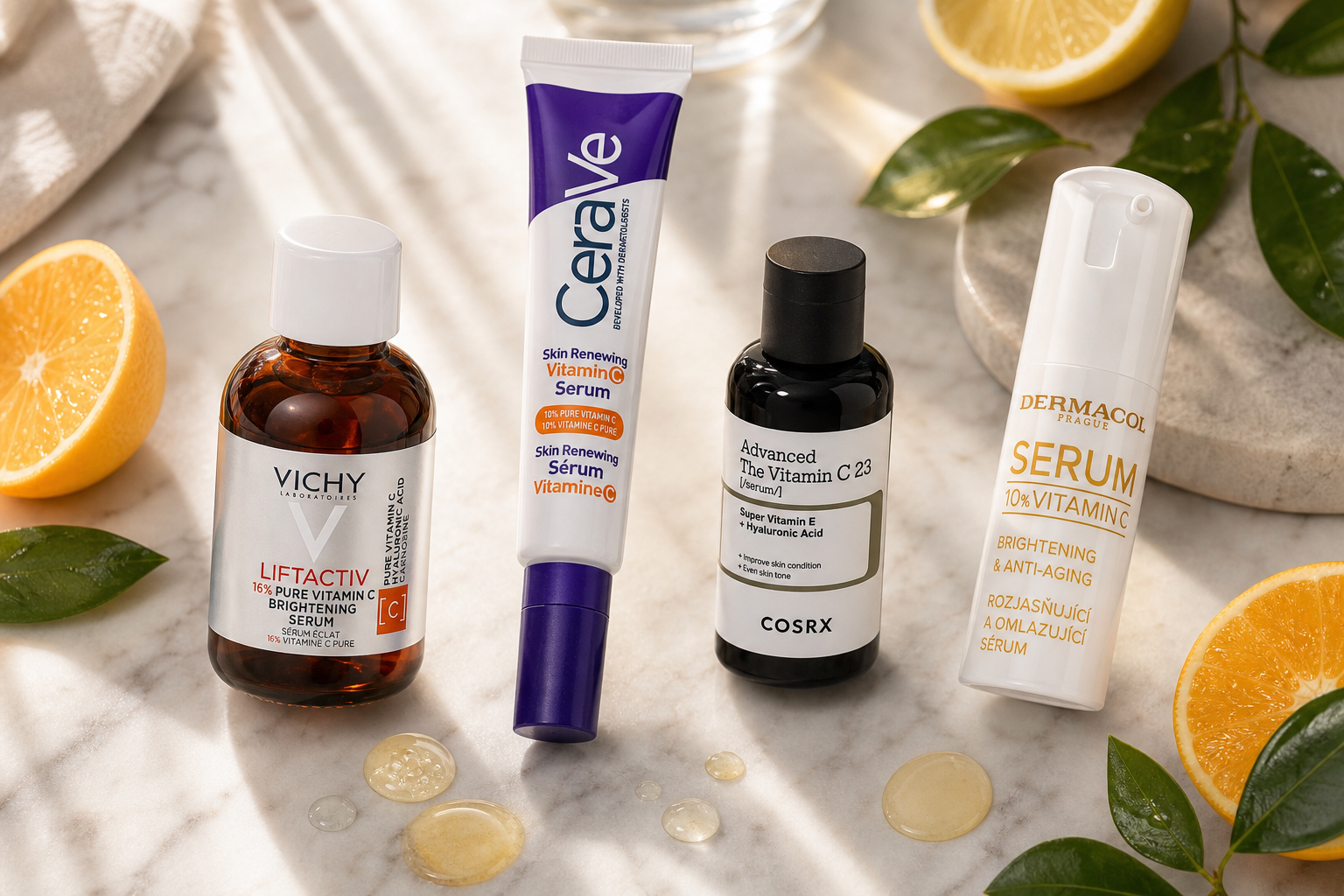
In our skincare category, you'll find both main paths. If you have sensitive, dry, or redness-prone skin, dermocosmetic brands like Bioderma, Vichy, La Roche-Posay, or CeraVe are a good starting point—they use straightforward formulations and packaging that protect the formula. For oily and combination skin, Korean cosmetics like COSRX or Beauty of Joseon are worth considering, where vitamin C meets light, watery textures and soothing extracts.
Wherever you decide to start, stick to a simple approach: one new serum, a smaller size, several weeks of regular use, and only then evaluate. Skincare works gradually, and differences can only be assessed over time.
Category
Recommended articles
"Give a girl the right shoes and she can conquer the world!" Marilyn Monroe