
Autumn Color Fading: Why Your Shade Loses Its Vibrancy
Autumn has a unique effect on dyed hair. The shade you left the salon with in August suddenly looks different – darker, warmer, shifting towards chestnut or copper tones. Cool blondes and ash shades develop a yellowish tint, while brown colors take on a rusty undertone. None of this is the fault of your hairdresser or your eyes: the color changes, and autumn light only highlights this transformation.
This is a typical scenario many women are familiar with. Freshly dyed hair looks vibrant and dimensional for about two to three weeks. Then comes the phase where the shade starts to shift into a dull, faded version of itself – the color seems to lose depth, and the hair appears more lackluster than striking. When you look in the mirror and think "this isn't the shade I wanted anymore," the pigment is only partially washed out. That's why it's worth taking action before the shade completely fades.
You can tell the color is losing vibrancy by several signs:
- the shade is most faded in the lengths and ends, while it holds at the roots,
- hair reflects light poorly and looks dull even shortly after washing,
- after washing, a faint color imprint remains on the towel or light surface,
- cool blonde shifts to yellow, brown to red or rusty.
A quick solution is tempting: book more frequent appointments with your hairdresser. However, coloring every three weeks instead of six isn't sustainable for your hair or budget. Each additional process means another impact on the hair fiber, especially in the lengths that have already been colored once or more. The result is hair that may have a fresh shade but holds it less well – the color fades faster than before, and the whole cycle accelerates.
A more sensible approach involves home care between salon visits. The goal is to retain pigment in the hair as long as possible: gentle washing, replenishing lipids, sealed cuticles, and protection from heat. Professional hair cosmetics have dedicated lines for colored hair, differing from regular drugstore products in their cleansing base composition and how they work with pH. They aren't miracle products and won't keep color in hair indefinitely, but the difference between a shade that lasts until the next salon visit and one that fades in a month often lies in your home routine.
In the following sections of the article, we'll go through six specific products from professional lines that can be used to maintain color – from shampoos and masks to leave-in treatments and toning conditioners. For each, we'll discuss who it's suitable for, how often to use it, and how it differs from others, so you can create a routine that makes sense to you.
What Causes Color to Fade Quickly and How to Prevent It
Hair color doesn't disappear overnight. The pigment fades gradually with each wash, drying, and exposure to the sun. You have more control over the speed at which this happens than you might think. By understanding what weakens the shade, you can easily identify which part of your routine needs adjusting and where it's worth investing in care.
Hot water and frequent washing. Warm water helps the cuticle, the outer scaly layer of the hair, to open, allowing the pigment to escape more quickly. Opt for lukewarm water instead of hot, finish with a cooler rinse, and extend the intervals between washes. If you wash your hair daily out of habit, try switching to every other day – with colored hair, you'll notice a difference within a few weeks.
Aggressive cleansing bases. Shampoos with strong surfactants wash away not only oil and dirt but also some of the pigment. Deep-cleansing shampoos, anti-dandruff products, or strong degreasing volumizing lines do their job well, but they're unnecessarily harsh for freshly colored hair. A fresh shade needs gentler cleansing that keeps the color in the hair longer.
Heat styling. A hairdryer on full power, straighteners, and curling irons dry the hair faster than it can regain moisture. The shade then loses its shine, appearing duller and uneven. Dry on a medium temperature, keep the dryer away from the hair, and use hot tools only with heat protection.
Lingering summer stress. Sun, salt, and chlorinated water dry out the hair and increase its porosity. Porous hair absorbs color unevenly – ends often color darker than lengths – and loses it faster. This is most noticeable with warm, copper, and red shades, which typically fade sooner than cool brown tones. That's why autumn coloring often doesn't take as well as you're used to in spring.
How to Recognize Care for Colored Hair
The label "color" or "for colored hair" on the packaging is a guide, not a guarantee. When you take a closer look at the product, there are four things to consider:
- Gentle cleansing base. Milder surfactants cleanse less aggressively, so they wash away less pigment from the hair. You can also tell by the fact that the shampoo doesn't lather as much and leaves the hair less "squeaky" clean.
- More acidic pH. Products with a lower pH leave the cuticle smoother and more aligned. The hair then reflects light better, and the color retains its vibrancy longer.
- Heat protection. If you style with heat, you need a product that creates a protective layer between the hair and the hot surface. Leave-in sprays, creams, and some oils address this.
- Lipid replenishment. Coloring strips the hair of some of its natural oils. Oils and nourishing ingredients in masks restore them, so the hair isn't coarse, and the shade appears more uniform.
Remember these four criteria – they fit into three categories that form the foundation of an autumn routine: shampoo, mask, and leave-in care. We also select specific products from professional lines based on these criteria, which we'll discuss further.
Shampoos and Masks for Color Protection: The Foundation of Your Autumn Routine
Washing is the most frequently repeated step for colored hair, and it plays a crucial role in how long the shade remains vibrant. A shampoo designed for colored hair uses a gentler cleansing base and a slightly more acidic pH, ensuring the cuticle is not opened more than necessary. A weekly mask complements this by replenishing lipids and hydration lost during coloring and summer stress. The three options below vary in price and suitability—choose based on how often you wash and the demands of your hair.
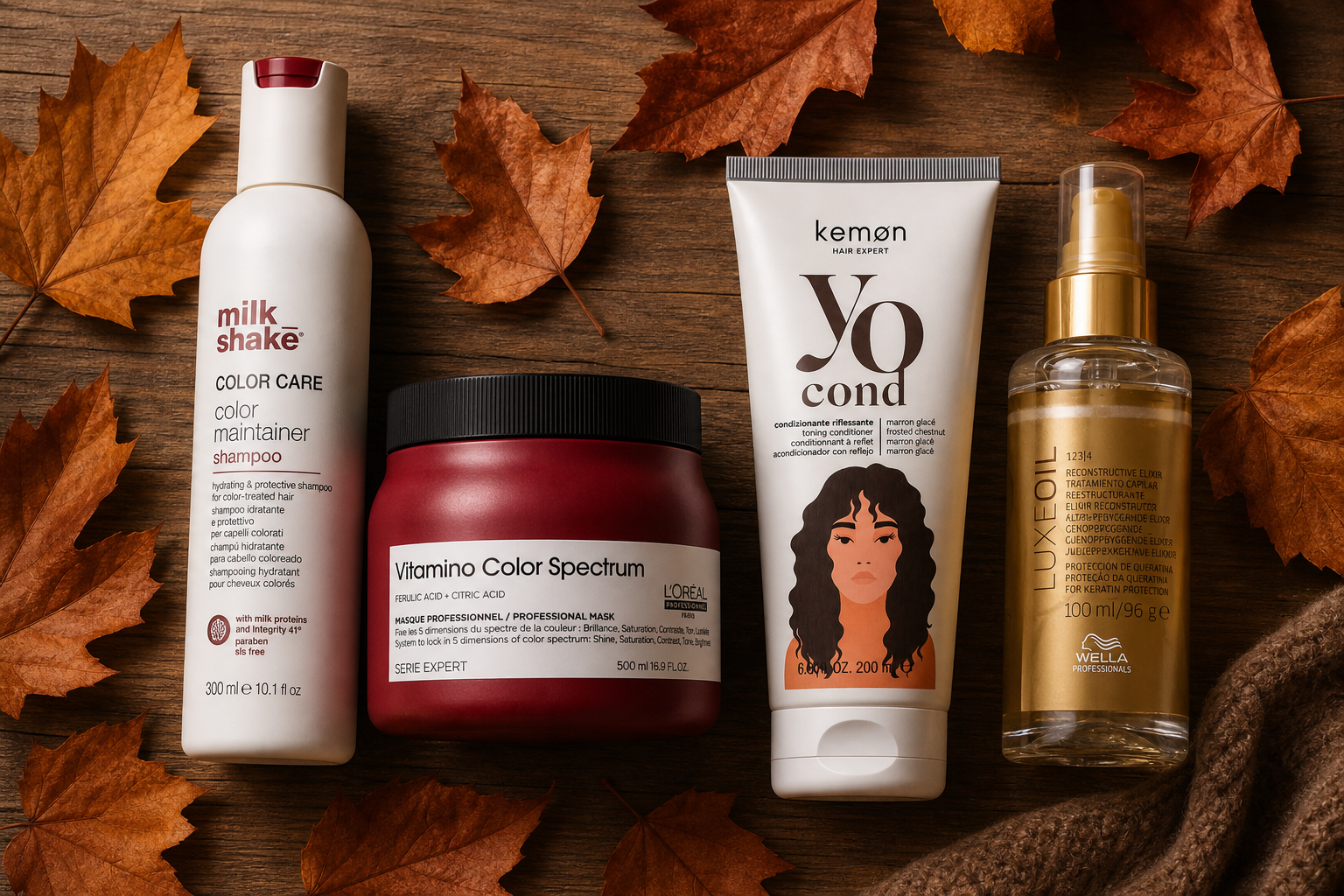
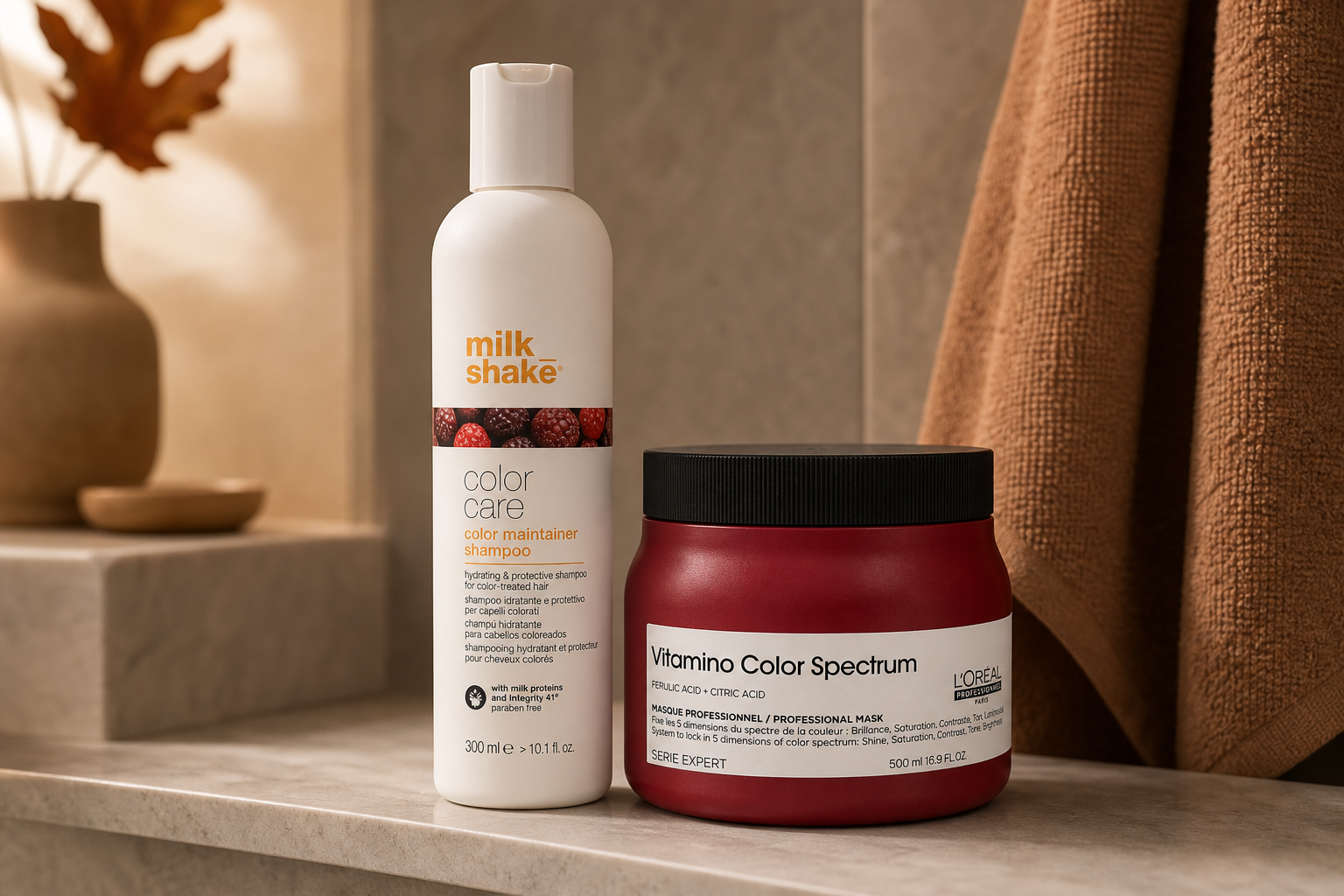
Milk_Shake Color Care Color Maintainer Shampoo 300 ml is the most affordable of the trio and makes sense as a first step if you want to switch from a regular shampoo to one for colored hair. A 300 ml bottle lasts one person several weeks of washing, allowing you to try the care without a significant initial investment. It's suitable for hair in good condition that doesn't need intensive reconstruction after coloring and mainly wants to maintain pigment. Use it every wash, ideally two to three times a week.
L'Oréal Professionnel Série Expert Vitamino Color Spectrum Professional Mask 500 ml is a new addition to the range, gaining interest in recent months, and serves as weekly hydration in your routine. Unlike shampoo, it stays on the hair for several minutes and focuses on the lengths and ends, the oldest part of the hair that holds color the least. The half-liter size is a professional format—worth it if you use the mask regularly or have longer hair and need a larger dose. Apply it once a week on towel-dried hair, avoiding the scalp, and leave it on as directed.
Kevin Murphy Everlasting.Colour Wash 1000 ml belongs to the luxury category and is for those who expect more than the basics from colored hair care. The liter size makes sense for long hair, households where more people share the product, or if you wash frequently and a smaller size doesn't last. Compared to the first option, it's a significantly higher one-time expense, but the cost per wash is often more favorable than smaller sizes. It's especially appreciated by those with shades that fade fastest—vibrant reds, coppers, and cool blonde tones.
To ensure washing and masking don't overlap, stick to a simple weekly schedule:
- Wash with shampoo for colored hair two to three days a week.
- Once a week, use a mask instead of conditioner, only on lengths and ends.
- Leave hair without washing or additional care for at least one day.
More than one intensive treatment a week is usually unnecessary. Excessive mask use weighs down lengths, causing hair to lose movement and color to appear dull rather than vibrant. If unsure, start with a combination of shampoo and mask once every seven days and adjust care based on how your hair responds.
Leave-In Care and Shine Between Salon Visits
While washing and masks address color in the shower, hair spends most of its time outside of it. It's during the intervals between washes that it is decided whether the shade appears vibrant and shiny or rather dull and flat. A closed cuticle is essential: when the scales on the hair surface lie flat, light reflects evenly, making the color look deeper. An open surface, on the other hand, scatters light and causes pigment to fade faster with each wash.
Toning or Care? Two Different Tasks
These two product groups are often confused because both promise "more vibrant color." However, they work differently and are not interchangeable.
- Toning product contains direct pigments that deposit on the hair's surface. It refreshes the shade, balances washed-out tones, and gradually fades after several washes. The duration of application directly affects the intensity of the result.
- Leave-in care product does not contain pigment. It works with the hair's surface, hydration, and lipids, so it doesn't change the shade but enhances it through shine and smoothness.
Neither replaces coloring at the salon. Toning refreshes the shade within its own tone family, doesn't shift it several levels, and doesn't address regrowth. If you're expecting a transformation, head to the salon; if you want to maintain what you have, you're on the right track.
Three Products for Your Autumn Routine
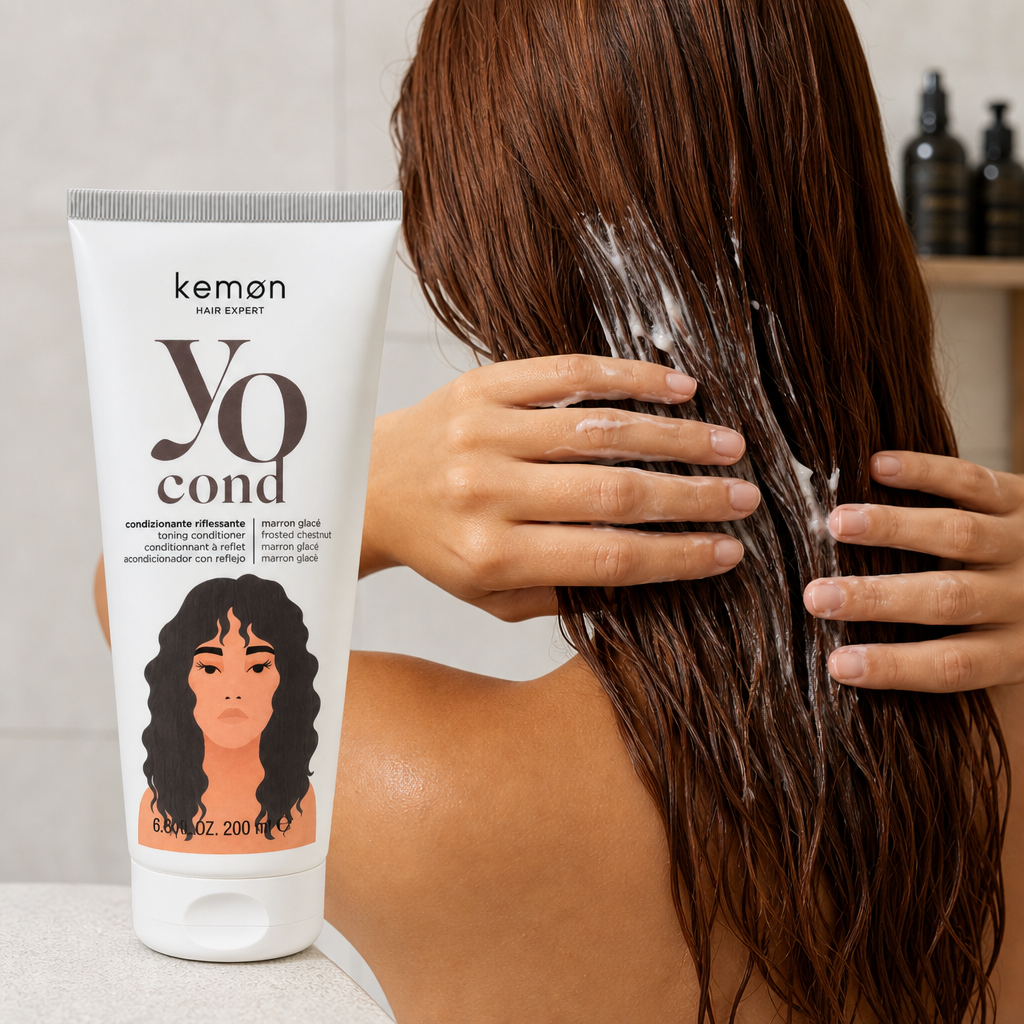
Kemon Yo Cond Color System Toning Cond Frosted Chestnut 200 ml is a toning conditioner designed for chestnut and cooler brown shades, ideal for colors that tend to turn more reddish after summer. Apply to washed, towel-dried hair, leave on as directed, and rinse thoroughly. Shorter exposure means a gentle refresh, longer exposure gives a more pronounced effect—start with a shorter time on first use. Incorporate it into your routine when the shade loses depth after a few weeks, not immediately after a salon visit.
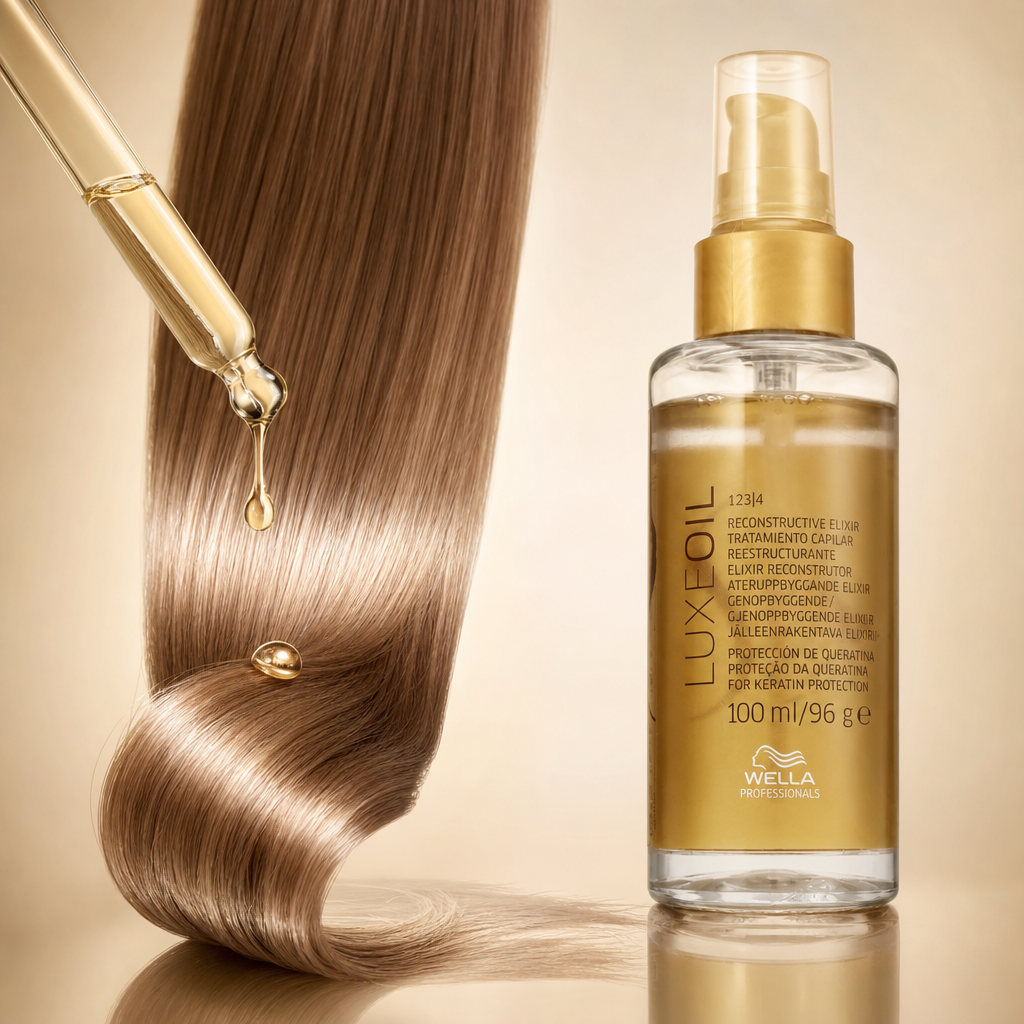
Wella Professionals SP Luxe Oil Reconstructive Elixir 100 ml is an oil for lengths and ends, perfect for daily shine enhancement. Rub a few drops between your palms and distribute from mid-lengths down; on damp hair before blow-drying, it eases detangling; on dry hair after styling, it smooths the surface and enhances color reflections.
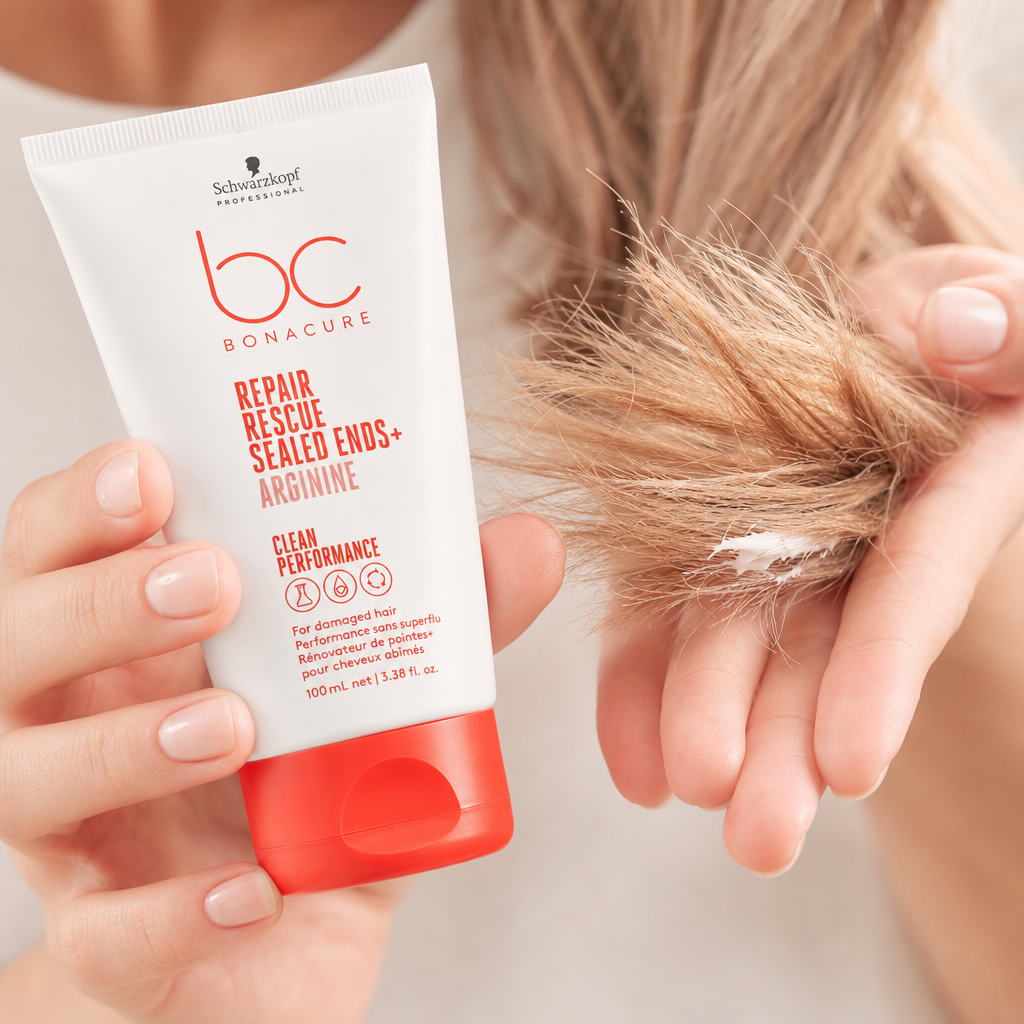
Schwarzkopf Professional BC Bonacure Sealed Ends+ Clean Performance 100 ml targets the areas where color fades first. The ends are the oldest part of the hair, with the most damaged surface, and pigment doesn't hold as well as at the roots. Apply a small amount only to the last few centimeters of length, and it's also suitable between trims when you want to delay your next salon visit.
How Much to Apply, How to Protect from Heat
- Start with less than you think you need. For fine hair, usually one to two drops of oil are enough, for thick lengths, three to four. You can always add more, but you can only remove it with another wash.
- Apply leave-in care from mid-lengths to ends, not on the scalp. The roots get unnecessarily weighed down, and the hairstyle loses volume faster.
- A leave-in product is not a substitute for heat protection. If you regularly blow-dry or straighten, choose a product that explicitly states heat protection and apply it as the first layer.
- Lower the temperature of the straightener and work with quicker strokes instead of repeatedly going over the same strand. Colored hair tolerates heat worse than uncolored hair.
- Toning conditioner and care products are not mutually exclusive. Use toning approximately every two to three washes, depending on how quickly the shade fades, and use leave-in care continuously.
How to Build Your Routine: Six Recommendations for Selection
At first glance, six products might seem like a big addition to your bathroom. However, they actually fall into just three categories that don't overlap during the week: some you use every wash, some once a week, and some only when you reach for the hairdryer or straightener. When you break it down this way, you'll find a routine that takes just a few extra minutes and doesn't require replacing your entire shelf at once.
A weekly plan might look something like this:
- Every wash: shampoo for colored hair – Milk_Shake Color Care Color Maintainer Shampoo 300 ml as a regular home choice, or Kevin Murphy Everlasting.Colour Wash 1000 ml if you wash often and want a gentler cleansing base in a large package.
- Once a week: mask instead of conditioner – L'Oréal Professionnel Série Expert Vitamino Color Spectrum Professional Mask 500 ml, which you leave on for a few minutes, focusing mainly on the lengths and ends.
- Before heat styling: a few drops of Wella Professionals SP Luxe Oil Reconstructive Elixir 100 ml, and if your ends are splitting, Schwarzkopf Professional BC Bonacure Sealed Ends+ Clean Performance 100 ml serum.
- Depending on shade condition: Kemon Yo Cond Color System Toning Cond Frosted Chestnut 200 ml – not every wash, but when the brown starts to look faded.
How the Six Differ in Price
The price differences here don't reflect how well a product performs its role – they more so reflect the packaging size and brand position. A shampoo in a 300 ml bottle and serums or oils in 100 ml are in the mid-range and can be purchased as a regular shopping addition. Liter-sized professional lines are in the highest price range, but per wash, they often come out more favorably than small packages. A half-liter mask is a one-time higher expense, but it spreads over months of use since you use it once a week.
Starting Pair When You Don't Want to Change Everything
If your current care basically suits you and you mainly want to slow down pigment washout, start with two things: shampoo for colored hair and a mask. This pair covers the essentials – gentler washing and replenishing what coloring and summer have drained from your hair. The rest, such as oil, end serum, and toning conditioner, can be added gradually based on what your hair lacks after a month. Changing the entire routine at once also has a practical disadvantage: if the result worsens or improves, you won't know what caused it.
When to Add a Toning Conditioner
A toning conditioner doesn't address regrowth or significant shade changes, that's a job for the salon. It makes sense in another situation: the color is fine, but after a few weeks, it has lost depth and the brown has become indistinct. Use it instead of a regular conditioner about every second to third wash, not every time, and shorten the application time on the first use – porous hair absorbs pigment faster than you expect. Gloves are useful, as is a towel you don't mind staining.
The length of your hair determines where to focus in your routine. With long hair, the ends are often older than a year and have undergone several colorings, so it's worth directing the mask and oil mainly to the last third of the length. With short and freshly cut hair, you can manage with a smaller amount of product and use oil sparingly to avoid weighing the hair down.
All mentioned lines belong to the hair cosmetics category on Brasty, where alongside them you can find other professional care for colored hair – from shampoos and masks to leave-in treatments and end serums.
Category
Recommended articles
"Give a girl the right shoes and she can conquer the world!" Marilyn Monroe