



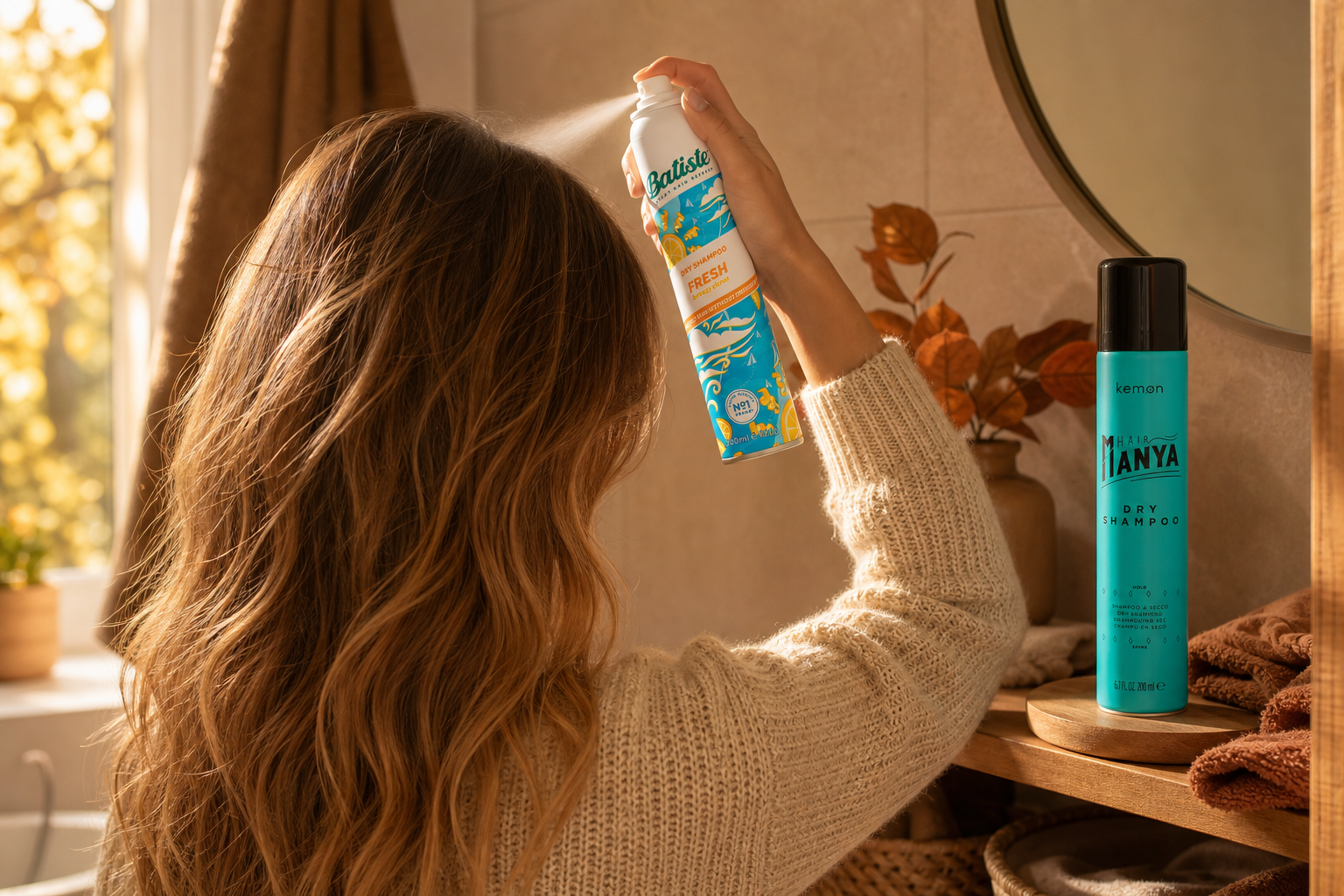
Almost everyone uses dry shampoo, but few use it correctly. We explain how starch absorbs oil, the optimal spraying distance, why you should let it sit, and how to brush it out so roots look fresh without a white residue.
When to Reach for Dry Shampoo
You know the feeling: you washed your hair last night, but by morning, the roots don't look as fresh as they did after drying. You're heading out in twenty minutes, and there's no time for washing or drying, and pulling it back into a ponytail only highlights the issue rather than hiding it. That's exactly when dry shampoo comes in handy.
There are more situations where you'll reach for it than you might initially think:
- The second or third day after washing, when the roots start to clump together and the hairstyle loses volume, even though the lengths still look good.
- Morning without time for a blow-dry – especially if you have thick or long hair that takes a good half hour to dry.
- Autumn and winter hats. Wool and fleece press hair against the head, causing the roots to sweat, and after removing the hat, the hairstyle remains flat.
- Longer trips – train, airport, a weekend away from home where you don't have a quiet bathroom or a socket for a hairdryer.
- After sports or a long day at the office, when you want to quickly refresh the top of your head before the next part of your schedule.
The common denominator is simple: you need your hair to look clean, but washing isn't convenient right now. Dry shampoo acts as an interim step – it extends the freshness of your hairstyle by about a day, for some even two. However, it's definitely not a replacement for washing, and there's no point in endlessly postponing it. Your scalp needs regular shampoo and water to get rid of oil, sweat, and styling residue; dry shampoo won't do that job, it just buys you some time until you can wash.
If dry shampoo doesn't work out, it's usually due to two disappointments. The first is a white cast in the hair: a grayish tint at the roots, which is especially noticeable on dark hair and in flash photos. The second is a stiff layer on the scalp – an unpleasant feeling where the roots feel more sticky than fresh, and by the next day, itching is added to the mix.
The good news is that neither is the fault of the product itself. In the vast majority of cases, it's about technique: too short a distance when spraying, too much product in one spot, not enough time for the product to take effect, and especially skipping the brushing out. All these steps can be fine-tuned in just one use – and that's exactly what the rest of this guide is about.
We'll proceed practically and step by step, without promising miracles. Dry shampoo won't restore hair condition, repair damaged lengths, or replace the care that hair needs long-term. But it can do one specific thing, and if used correctly, it can do it reliably: keep your hairstyle fresh and voluminous even on days when you simply can't get to the sink.
How Starch and Powder Absorb Excess Oil
The scalp naturally produces oil, technically known as sebum. It's a thin oily film that protects the hair from drying out and mechanical damage, so it's not an enemy in itself. It becomes a problem when there's more oil than the hair can handle: the oil spreads along the length, clumps the hair together, and the hairstyle loses volume at the roots. This is where dry shampoo comes in. It doesn't dissolve or wash away anything; it simply absorbs the oil that weighs the hair down.
Absorption, Not Cleaning
The active ingredient is usually plant-based starch, typically rice or corn. Its grains have a porous surface with a large area, allowing oil to soak in much like water into a sponge. Alongside starch, fine mineral powders, clay, or silica may also be present in the formula. They work on the same principle and mainly differ in particle fineness and how much they mattify. The result is the same in all cases: the oil no longer sits freely on the hair fiber but is trapped in the powder, which you then remove from the hair with a brush.
This also explains why the amount and target area of the product matter so much. There should be just enough powder to absorb the oil. Excess powder has nothing to absorb and remains on the surface as a grayish or whitish film, most noticeable on dark hair. Similarly, there's no point in targeting the lengths: the hair tends to be drier there, so the powder has nothing to bind to and only weighs it down.
Spray and Loose Powder Behave Differently
Both forms contain the same core absorbent particles but differ in how they are applied to the hair.
- Spray with Propellant disperses the particles into a fine mist, the carrier evaporates quickly, leaving a thin, even layer on the hair. It's fast and covers a larger area well, but it's easy to overdo it because more powder comes out of the nozzle than you might think.
- Loose Powder is more concentrated and is applied in pinches directly to the roots. It gives you much more control over how much ends up on your head, but it's harder to distribute, so a local buildup can easily occur in one spot.
The difference is also noticeable in the resulting texture. Spray usually feels lighter, and the hair remains more supple, while powder creates more friction at the roots, lifting the hairstyle and giving it what's known as body. Neither form is better; they just serve slightly different purposes.
What Dry Shampoo Can't Do
To avoid disappointment with the results, it's worth knowing the limitations of this method:
- Doesn't Clean the Scalp. It doesn't remove sweat, dead cells, or dirt from around the hair roots. While it absorbs oil, it leaves it on the head until brushed or washed out.
- Doesn't Dissolve Styling Products. Powder clings to hairspray, wax, or gel and forms a thicker layer that a brush can't easily remove. After heavy styling, it makes more sense to simply wash the hair.
- Residues Need Regular Washing Out. When using dry shampoo for several days in a row, the powder accumulates at the roots, making the hair feel heavy and lose its shine. Regular washing reliably removes it.
Dry shampoo is not a replacement for washing but a tool with a clearly defined role. Understanding that it works purely on an absorption basis will also make your application easier. The more precisely you place the powder and the more diligently you remove it from the hair afterward, the less you'll struggle with a white veil or a stiff hair feeling.
Spray Technique: Distance, Partings, Dosage
Most disappointments with dry shampoo aren't due to the product itself, but rather how it's applied. If you end up with a white veil on your crown or your hair clumps into a stiff layer at the roots, it's usually because the spray was held too close and applied in one long burst instead of several short ones. The good news is that you can master the correct technique in a single morning, and then it becomes second nature.
The first condition is subtle but crucial: hair must be dry. On damp roots, the absorbent ingredient mixes with water to form a grayish paste that's hard to brush out and clings to the hair like a coating once dry. If you've just come out of the shower or have been sweating during exercise, wait until your hair is completely dry. Shake the spray briefly before use to mix the contents of the bottle and ensure an even spray.
Next, divide your head into partings. Use your fingertips or a wide-tooth comb to separate a section, flip the hair to the side, and expose the scalp. The product is meant for the roots only, in a band about two to three centimeters above the scalp, not along the entire length. The lengths and ends are usually drier than the roots, and further drying won't help them – they'll just lose shine and become harder to comb.
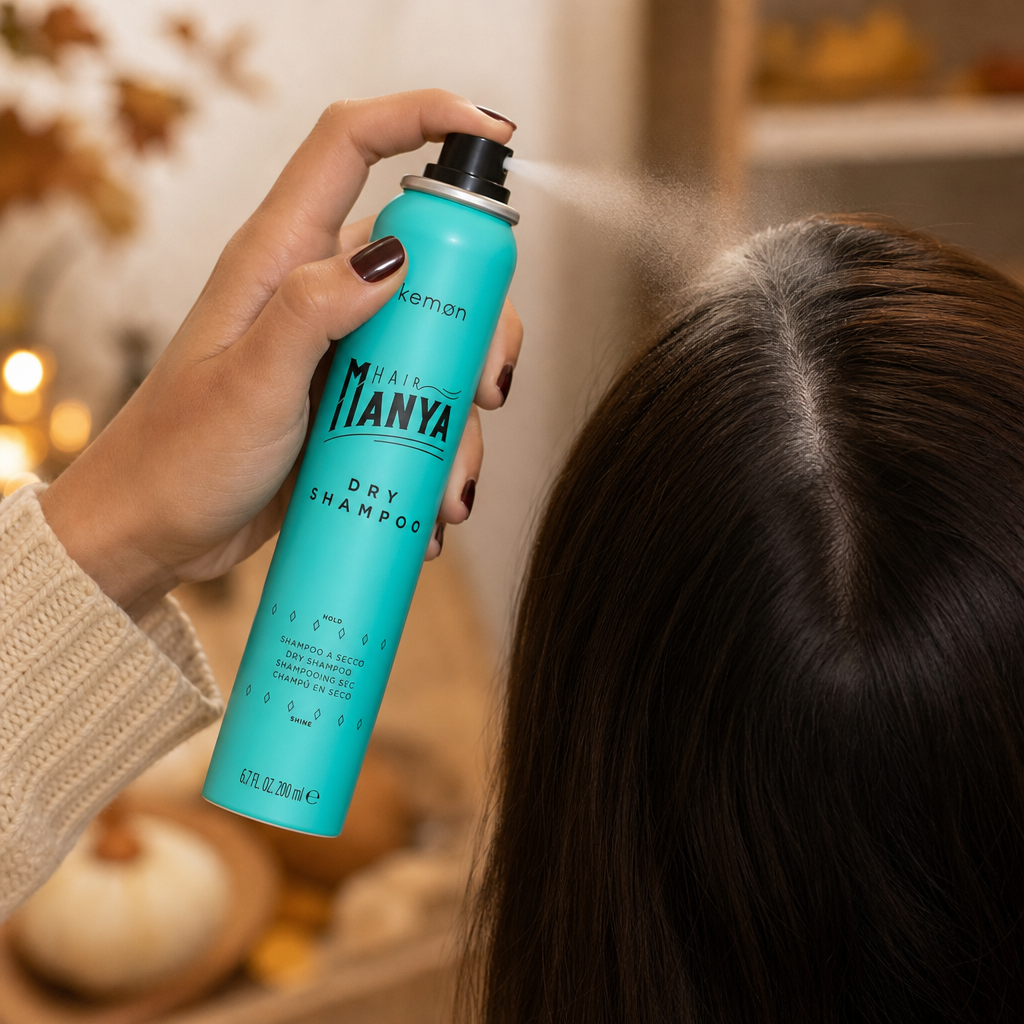
Distance is the second key to an even result. Hold the bottle about twenty to thirty centimeters from your head, roughly the length of your forearm. From this distance, the aerosol has time to disperse into a fine mist and settle in a thin layer. If you bring your hand closer, the concentrated dose hits one spot, which then appears as a white patch. It's equally important to apply in short bursts: one to two spritzes per parting, not continuous circling over one area.
Proceed systematically, section by section, to ensure you don't miss anything:
- Start at the crown – oil appears there first and most prominently.
- Continue along the parting leading to the face, where hair gets greasy from the forehead and hands.
- Move to both sides of the head and finally to the area above the nape.
- Between each parting, flip the hair over and create a new one.
Adjust the amount according to the length and thickness of your hair: a short hairstyle requires only two to three partings, while long and thick hair might need up to six. It's always better to start with less and add another dose if needed, rather than overwhelming your hair from the start. For dark hair, restraint is doubly important, as even a thin layer is more visible than on blonde shades.
The powder form follows a slightly different logic. Powder isn't sprayed but applied in pinches directly onto the exposed parting – either from a narrow-necked applicator or by sprinkling a small amount onto your fingertips and spreading it over the roots. A pinch really means a pinch: powder is more concentrated than spray and excess is harder to remove from hair. The process along the partings and the "roots only" rule remain the same.
Let it Work, Then Brush Thoroughly
The most common mistake doesn't happen during application, but right after. The product is sprayed and combed through within seconds, leaving a grayish tint at the roots, making hair look dusty rather than fresh. Neither starch nor powder works instantly: they need a moment to truly absorb excess oil. This moment is brief, but without it, the whole technique is ineffective.
How Much Time to Allow the Product
A reasonable range is about half a minute to two minutes. For fine hair that only gets slightly oily, the lower end is sufficient. If you have thicker hair, stronger roots, or are on your third day without washing, let the product sit longer. Two minutes is the maximum, after which nothing more happens, so there's no point in waiting fifteen minutes.
It's practical to fill the waiting time with something else: finish your makeup, get dressed, or prepare breakfast. Leave your hair alone during this time, don't touch it or twist it into a bun, as compressed strands prevent particles from spreading evenly.
Light Massage with Fingertips
About halfway through the waiting time, go through the roots with your fingertips. Use short circular motions across the scalp, not scrubbing with nails or combing. The massage spreads the product evenly and prevents white patches where the largest amount of product landed. This step is even more important with loose powder than with spray, as powder settles more densely.
Brushing is the Main Part of the Job
Only brushing makes dry shampoo an invisible step. Work through sections and always brush the entire length, from roots to ends, not just the top of the head. This disperses powder residue into the lengths, leaving no trace, and the white veil disappears.
- Bend your head forward and brush the lower layer of hair, which is often forgotten.
- Give more strokes to the areas around the parting and temples, as that's where the buildup is usually strongest.
- Wipe the brush between sections to prevent the collected powder from returning to the hair.
- Count on a minute of careful brushing rather than three quick strokes.
A brush with natural bristles, ideally densely packed, works best. Fine bristles get close to the scalp, capture small particles, and distribute remaining oil from the roots to the lengths, which need it. Hair then doesn't look dull or dry. A sparse brush with plastic bristles only detangles hair but doesn't remove powder, leaving a grayish result.
Air Out Hair with Cool Air
After brushing, a final touch helps: set your hairdryer to cool air and blow through your hair from the roots for a few seconds, gently ruffling it with your other hand. The cool air blows away the finest residues that the brush didn't catch and lifts the roots, adding volume to your hairstyle. Leave warm air aside at this point, as it would heat the oil and reduce the freshly gained lightness.
When the Shade Still Doesn't Match
For dark and richly colored hair, it can happen that even after thorough brushing, a slight grayish film remains at the roots. Tinted versions of dry shampoo are a safeguard, available for both light and dark hair, balancing the root shade instead of lightening it. Consider them a solution if the white tint repeatedly causes issues, not as a first choice. For gray and silver hair, the classic light variant usually doesn't cause any problems at all.
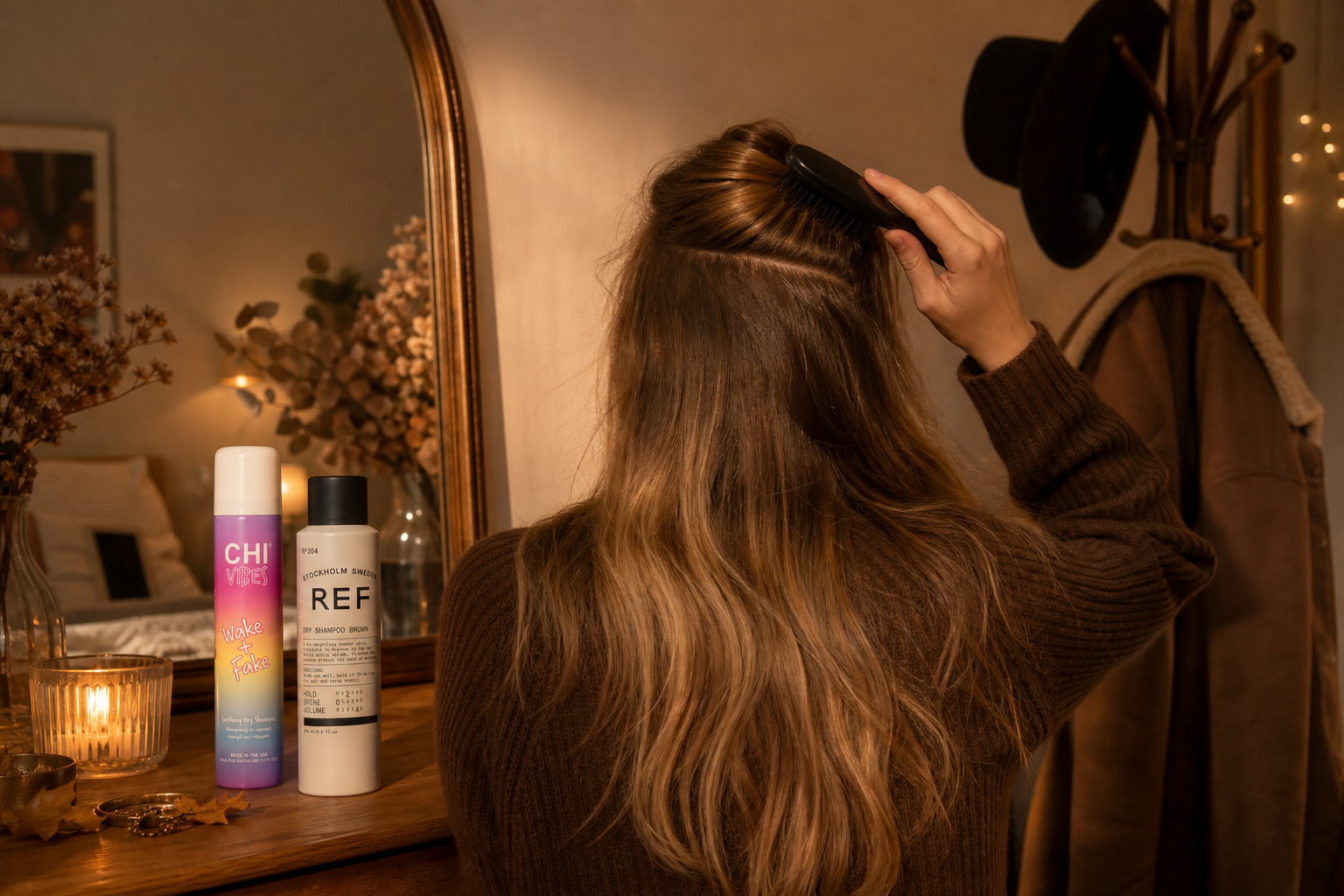
How to Choose the Right Formula for Your Hair
Dry shampoo is not a one-size-fits-all product. Different options vary in form, the fineness of the powder, and whether they consider the shade of your hair. You can narrow down your choices by answering three questions in advance: what is your hair type, how dark is your shade, and how sensitive is your scalp. Based on this, you'll decide whether to go for a spray, loose powder, tinted version, or volumizing option.
Classic Spray for Quick Refreshment
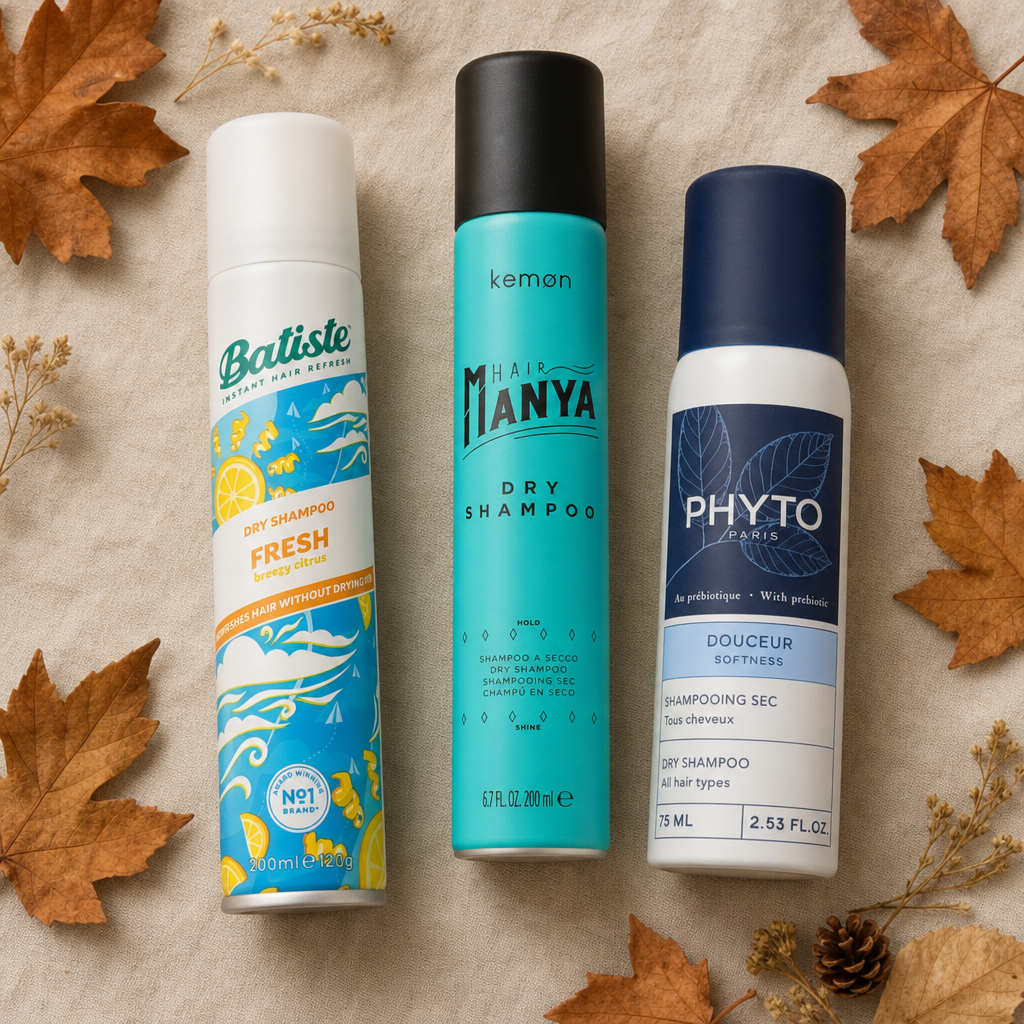
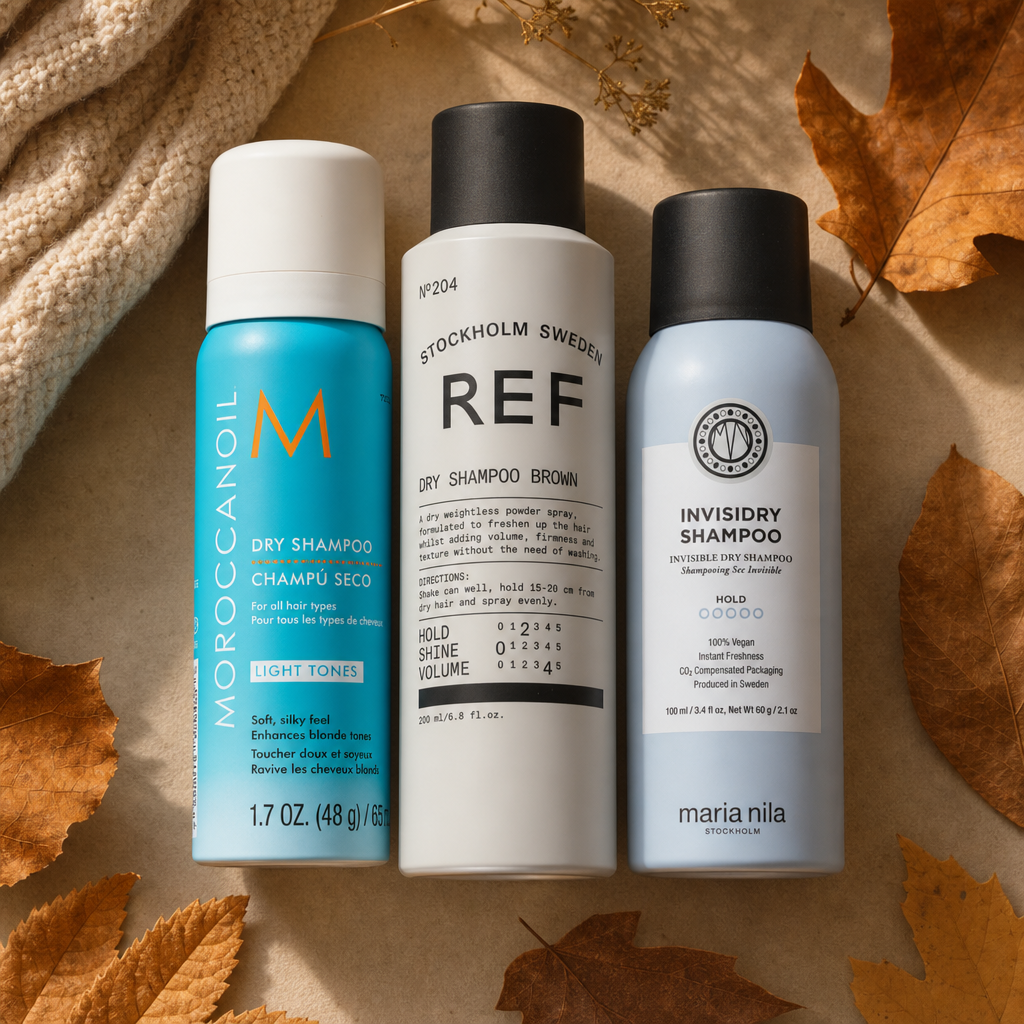
Spray is the most common form and is suitable for situations where you need to refresh your roots in a matter of minutes. It sprays evenly, is easy to apply along the partings, and fits conveniently in a handbag. It suits both regular and thicker hair and is a sensible choice if you're trying dry shampoo for the first time. Among the more accessible options, this form is represented by Batiste Dry Shampoo Fresh Breezy Citrus, while professional lines include Maria Nila Invisidry Shampoo or Morfose Dry Shampoo Biotin Collagen.
Loose Powder for Fine Hair and Texture
Loose and powder forms are applied in pinches directly to the roots, giving you more control over the amount than with a spray. They are especially appreciated by fine hair, which, besides refreshment, you want to give a bit of hold and texture – the hairstyle then holds its shape better and doesn't fall flat after just a few hours. This group includes CHI Vibes Wake+Fake Soothing Dry Shampoo, L'ANZA T.R.U.E. Clean Shampoo, or Lakmé K.Finish Fresh Dry Texture Shampoo, which specifically targets hair texture.
Tinted Option for Dark and Light Shades
Light powder is more noticeable on dark hair and can leave a grayish film if not brushed out perfectly. Tinted dry shampoos are therefore tailored to specific shades, blending much more seamlessly with the hair color. For light and blonde hair, there's Moroccanoil Dry Shampoo Light Tones, and for brown and dark shades, REF Dry Shampoo Brown N°204. Consider the tinted option as a safeguard, not a substitute for the right technique.
Volumizing Version for Limp Roots
If your hair first goes limp and only then starts to get greasy on the second day, focus on options that work with volume at the roots in addition to absorption. This includes products like Alcina Ganz Schön Lang Dry Shampoo. Volume can also be supported by subsequent hair care, such as the volumizing line Kemon Actyva Volume E Corposita, which you incorporate into regular washing. Combining volumizing care during washing and dry shampoo on the second day is often more effective than trying to solve everything with one product.
If you want to simplify your choice, follow this quick guide:
- Fine hair that gets greasy quickly – loose powder or light spray, apply sparingly and only on the partings.
- Thick and strong hair – classic spray that covers a larger area evenly and quickly.
- Dark or colored hair – tinted option in the appropriate shade.
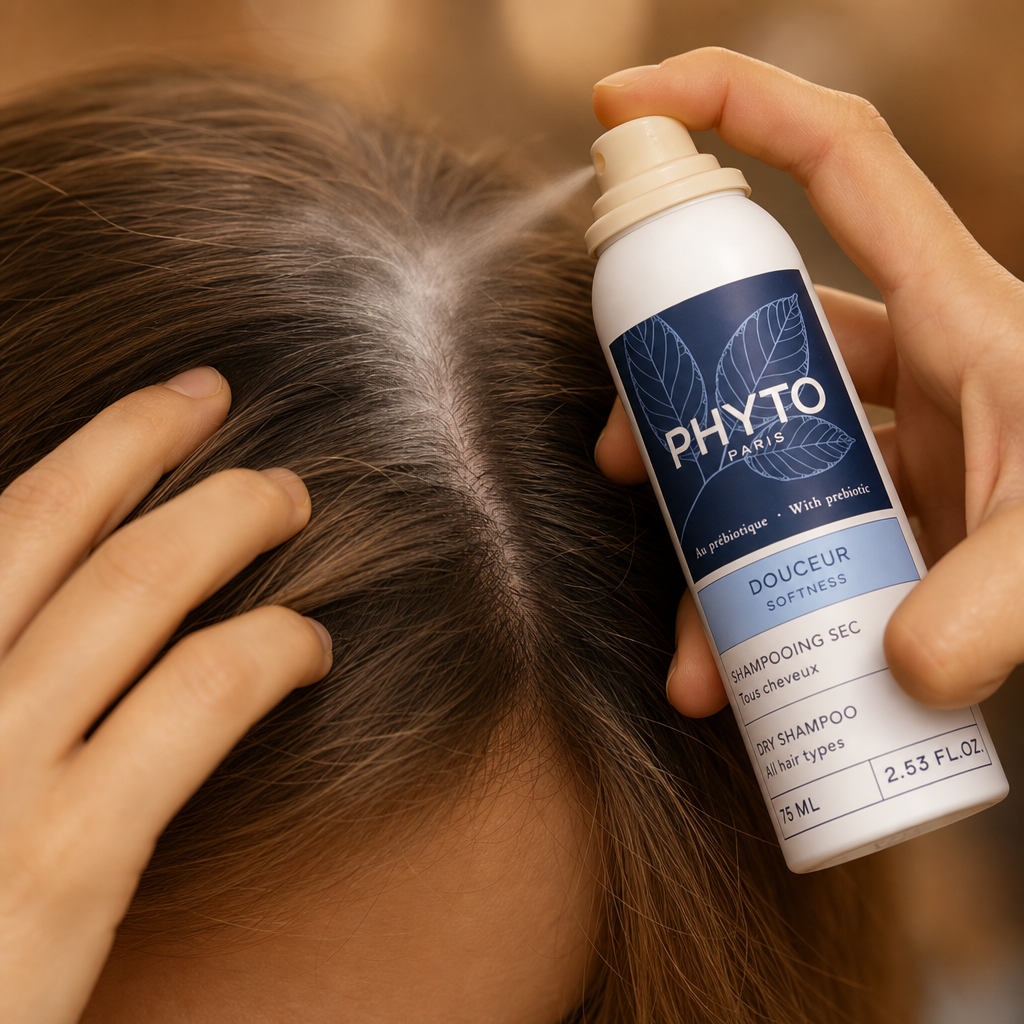
- Sensitive scalp – gentler formulations with restrained fragrance, such as Phyto Softness Dry Shampoo; discontinue use if any irritation occurs.
- Limp roots – a volumizing option complemented by volumizing care during regular washing.
Whichever form you choose, one rule remains the same: dry shampoo is for use between washes, not as part of your daily routine. Two days in a row is a reasonable limit; after that, it's time for a traditional wash with a shampoo that suits your scalp. And that's a crucial part of the equation – dry shampoo buys you time, but the condition of your hair and scalp is determined by regular care. In Brasty's hair care range, you'll find both dry shampoos in all the described forms and shampoos and conditioners to follow them up with.

Category
Recommended articles

"Give a girl the right shoes and she can conquer the world!" Marilyn Monroe