





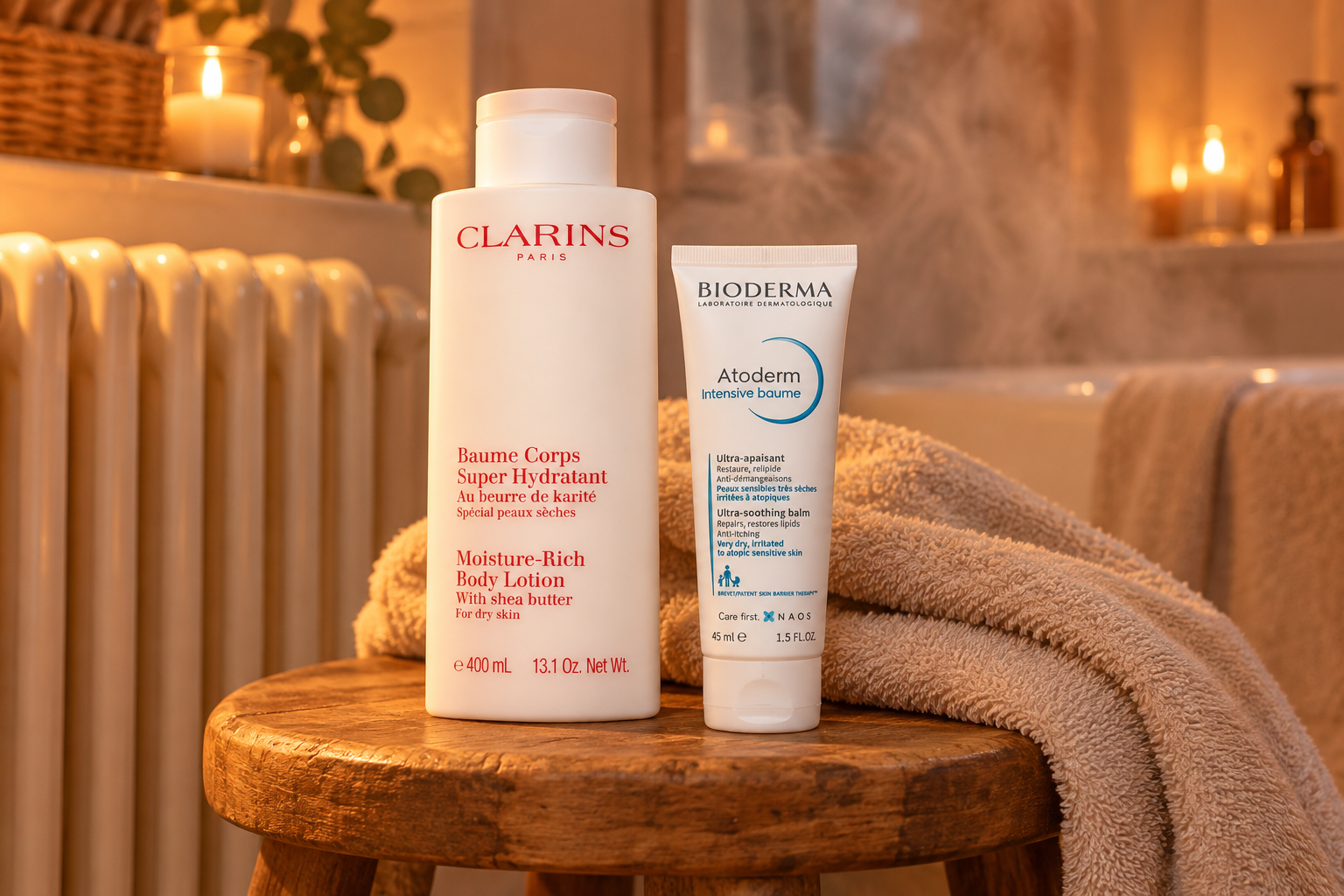
The heating season dries out the skin all over the body – it feels tight, itchy, and flaky. We'll walk you through a simple evening routine from a lukewarm shower to moisturizing still-damp skin, helping your skin retain moisture despite the dry air from heating.
Why Your Skin Feels Tight and Itchy All Over During Heating Season
A few cold weeks, the radiators are on, and your skin starts to react. After a shower, it feels uncomfortably tight, fine flakes appear on your shins, your back and sides itch in the evening, and your elbows or knees feel rough to the touch. Whether you've only occasionally experienced dry skin or it's a regular winter occurrence, you're not alone – it's a very common issue during heating season. Typically, it doesn't limit itself to one area but affects the entire body, from shoulders and arms to the stomach and thighs, down to calves and ankles.
Why does dryness flare up now? It's usually not caused by a single factor but a combination of several influences that come together during the colder months:
- Dry air from heating. Heated rooms tend to have low humidity in winter, making it easier for skin to lose moisture.
- Cold and wind outside. Frequent shifts between cold outdoor air and warm interiors stress the skin, and under layers of winter clothing, it rubs against fabrics all day.
- Longer and hotter showers. When it's cold outside, hot water tempts you to stay under longer. However, hot water, along with cleansing products, washes away the skin's natural oils that protect it.
None of these factors would trouble the skin much on their own. But together, they act day in and day out for weeks, which is why the tightness and itching often gradually intensify during winter. We'll explain in more detail what exactly happens in the skin further in the article.
The good news is, there isn't a single miracle product for dry skin during heating season – and you don't need one. A simple evening routine, which you can complete in a few minutes and follow regularly, often does much more. Gentler showers, timely moisturizing, and small adjustments to your home environment can significantly relieve your skin. We'll guide you through this routine step by step so it can easily fit into even a busy evening.
One important note to start with. Common skin dryness usually improves gradually with regular care. However, if the itching doesn't subside even with diligent care, wakes you up at night, your skin cracks, oozes, or bleeds, or if red patches or a rash appear, it's advisable to discuss the situation with a general practitioner or dermatologist. Such symptoms could be due to eczema or another skin condition that cosmetics alone can't solve and require professional attention.
Skin Barrier Under Pressure from Heated Interiors
To understand why your skin reacts this way in winter, it's worth looking beneath the surface. The outermost layer of the skin, known as the stratum corneum, is often compared to a brick wall. The bricks are flattened, keratinized cells, and the mortar is a mixture of skin lipids – primarily ceramides, cholesterol, and fatty acids. Together, they form a flexible protective layer that slows down the evaporation of water from the deeper layers of the skin and also limits the penetration of irritants from outside.
The skin loses water continuously in small amounts – this is technically known as transepidermal water loss. If the barrier is in good condition, the skin maintains its balance on its own. However, once gaps appear in the "mortar," water escapes faster than it can be replenished.
Winter air outside is cold and contains little water vapor. When heating warms it up, its relative humidity drops significantly – in a heated apartment, it commonly falls below 40%, while for the skin and respiratory tract, a comfortable range is usually around 40–60%. Dry warm air draws moisture from everything it comes into contact with, including the skin. Add to this the daily alternation between outdoor frost and indoor warmth, and you have a barrier exposed to long-term stress, under which it gradually loses its ability to retain water.
A weakened barrier doesn't just make itself known on your hands or face, but all over your body. Typical symptoms include:
- Tightness after showering – the feeling that your skin is "tight" can appear on your arms, back, abdomen, and legs.
- Rough and flaky patches – the skin loses smoothness and elasticity, fine whitish flakes appear, and the skin looks dull.
- Itching under clothing – wool sweaters, tights, or synthetic materials irritate skin that no longer has adequate protection, and the urge to scratch is strongest in the evening in warmth or in bed.
- Increased sensitivity – even a product that didn't bother you before may suddenly sting or cause redness.
These symptoms signal that your skin needs external support – and at the same time, it's worth looking at the environment where you spend most of your day and night.
Skin care doesn't start in the bathroom. A few simple home adjustments can significantly reduce the stress on the skin barrier:
- Cooler bedroom – for sleeping, 18 to 20 °C is usually sufficient. In cooler air, the skin loses less water overnight.
- Short and thorough ventilation – instead of leaving a window ajar all day, open it wide several times a day for five to ten minutes. The air will change without the walls and furniture cooling down.
- Humidifying the air – a humidifier or an evaporator on the radiator can help. It's worth occasionally checking the humidity with a simple hygrometer, as excessively humid air promotes mold growth.
- Soft layer directly on the skin – cotton or other soft underwear under a sweater is less abrasive to the skin than coarse wool.
However, the environment alone won't fix dry skin. Lipids and water that the skin loses during the day need to be regularly replenished – and that's exactly what a well-thought-out evening routine focuses on.
Gentle Showering: Lukewarm Water, Shorter Time, Mild Cleansing Products
Evening care for dry skin doesn't start with a cream or body lotion, but in the shower or bath. It's here, in just a few minutes, that it is decided how many natural lipids the skin will retain on its surface. The good news is that you don't need anything complicated for gentler washing – just adjust the water temperature, the length of your shower, and choose the right cleansing product.
Lukewarm water instead of hot. After a day in the cold and in a heated room, a long hot shower is tempting, but it's not very beneficial for dry skin. Hot water easily washes away skin oils from the surface, and the skin often feels tighter after drying than before. Lukewarm water, which is pleasant but not burning, cleans the body just as well and doesn't burden the skin's protective layer as much. If you can't imagine an evening without a warm bath, try gradually lowering the temperature and rinse with cooler water in the last few moments.
Shorter time in the shower. For a regular wash of the whole body, a few minutes is usually enough. The longer the skin is exposed to water and cleansing products, the more lipids are washed away. The same applies to baths – if you enjoy bathing, opt for a shorter bath in lukewarm water and avoid adding strongly foaming products. Repeated showering during the day doesn't help dry skin either. If you shower in the morning and evening, at least one of the washes can be shorter and with a smaller amount of cleansing product.
Soap or milder cleansing product? Traditional bar soap has an alkaline pH and thoroughly degreases, which often leads to tightness and itching in dry and sensitive skin. Gentler options are products that clean the skin but don't dry it out as much and leave some moisturizing substances on it:
- Shower oils – upon contact with water, they turn into a gentle milk or light foam, wash the whole body, and leave the skin feeling more supple after rinsing. They are suitable for very dry skin that feels tight after using regular gel.
- Creamy shower gels – have a thicker, milky texture and usually contain moisturizing ingredients. They are suitable if you like classic foam but want a milder option.
- Syndets – soap-free cleansing products based on mild synthetic surfactants with a pH close to that of the skin. They are available in both liquid and solid forms and are often specifically designed for dry, sensitive, or atopic skin.
When choosing, it's worth looking for labels for dry and sensitive skin and avoiding heavily perfumed cleansing products if your skin reacts with irritation. A small amount is sufficient – more foam doesn't mean a more thorough wash.
No scrubbing and no rough washcloths. When the skin feels tight or itchy, it's better to put aside rough washcloths, massage gloves, and body brushes. Mechanical friction further burdens already weakened skin and can worsen irritation. The same goes for exfoliation – during the heating season, it's better to do it only occasionally and in a gentle form, not several times a week. You can wash your whole body simply with your hands or a soft sponge: apply the cleansing product to your palms, spread it gently from shoulders through arms, torso, and back down to the legs, and rinse thoroughly with lukewarm water. Residues of cleansing products can promote itching, so don't rush the rinsing process.

Key Minutes After Showering: Pat Dry, Moisturize Damp Skin
Once you turn off the water, the most crucial part of your evening routine for dry skin begins. The water left on your body after a shower evaporates quickly in the dry air of a heated home, and with it, some of your skin's natural moisture can escape. So, have your towel and body care products within reach before you shower.
Pat, don't rub, with the towel. Instead of vigorously scrubbing, gently press a soft towel against your skin and gradually pat it over your entire body – shoulders, arms, chest, back, stomach, hips, and legs. After contact with water, the skin is softened and more sensitive, and rubbing can unnecessarily stress it, which can exacerbate tightness and itching in dry skin. Don't dry your body completely: it's enough if it stops dripping and only a light moisture remains on the surface. Thoroughly dry only the skin folds and spaces between your toes.
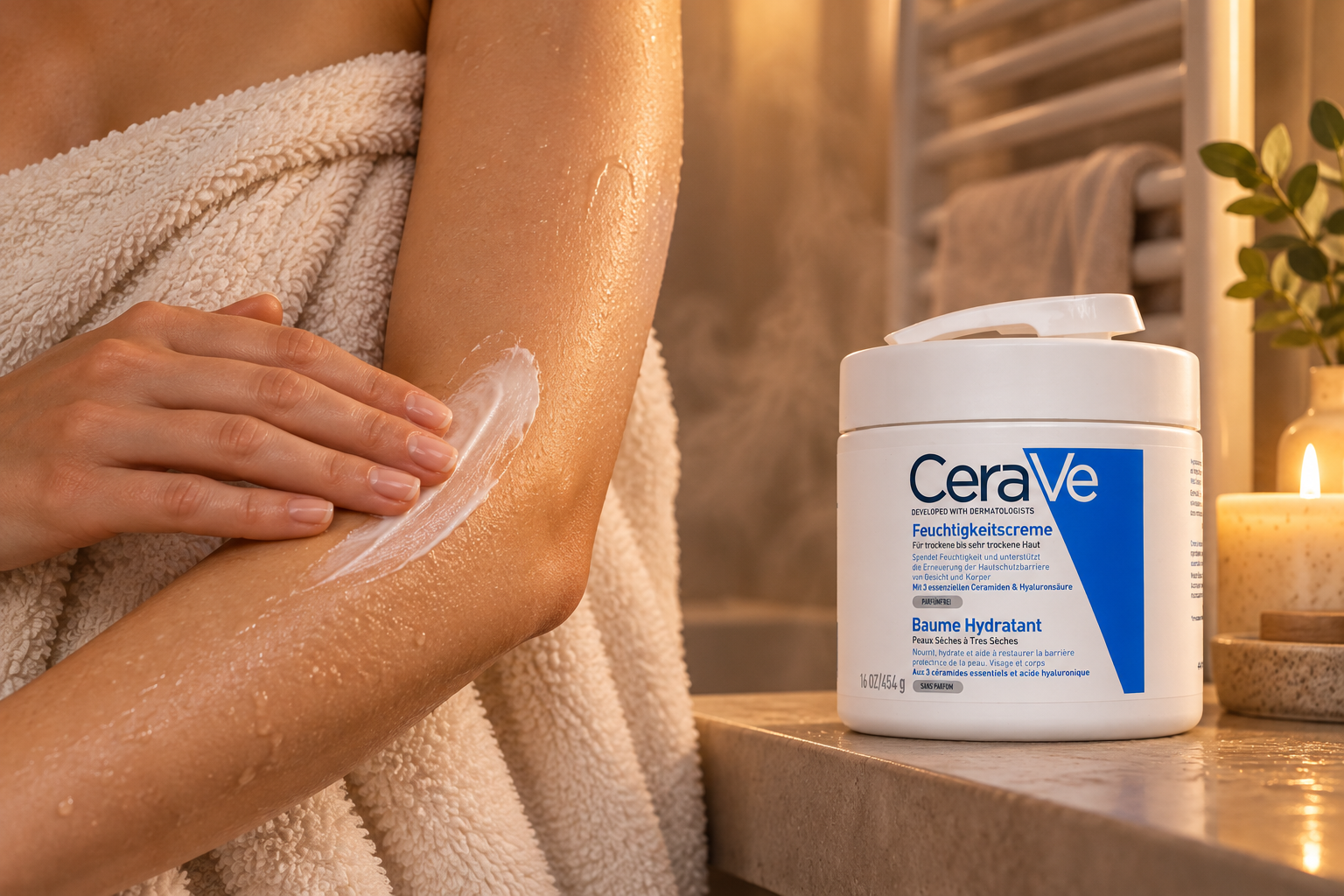
Why moisturize within minutes. Right after a shower, your skin is still saturated with water. Applying a product at this moment helps retain this water in the skin longer – moisturizing ingredients bind it, and fatty components create a thin layer on the surface that slows its evaporation. If you wait to moisturize until after dressing or postpone it until morning, your skin will lose some moisture in the meantime. Therefore, apply body lotion, cream, balm, or oil ideally within the first few minutes while your skin still feels slightly damp to the touch.
Lighter or richer texture? The choice depends on how tight your skin feels and how much time you have for absorption:
- Body Lotion – the lightest texture with a higher water content, spreads and absorbs quickly. Suitable for slightly dry skin or in the mornings.
- Body Cream – thicker and more nourishing, a reasonable compromise for most dry skin during the heating season.
- Balm and Body Butter – the richest textures, absorb more slowly. Suitable for very dry, rough, or flaky skin, typically at night.
- Body Oil – spreads easily on damp skin and leaves it supple. It doesn't add water itself, so it works best on skin still damp from the shower, or layered over lotion.
You can combine textures – richer on the driest areas, lighter on the rest of the body.
Common ingredients in dry skin care. These ingredients often appear on labels:
- Glycerin – a moisturizing ingredient that binds water in the skin's surface layer.
- Ceramides – lipids naturally present in the skin barrier; in cosmetics, they help replenish its protective layer.
- Plant Oils – such as sunflower or almond; they soften the skin and reduce water evaporation.
- Shea Butter – a rich fatty component typical for balms and body butters, gives the skin a feeling of suppleness.
Systematically, so nothing is missed. Moisturize your body in the same order every time, for example, from bottom to top, and apply small amounts repeatedly:
- feet and legs from ankles through shins and knees to thighs,
- buttocks, hips, and stomach,
- chest, décolleté, and neck,
- arms from wrists to shoulders, including elbows,
- back – where you can't reach, a close person can help.
On the driest areas, such as elbows, knees, and heels, you can add a second layer.
How much time to allow the product before dressing. Light lotion usually absorbs within a few minutes, cream takes a bit longer, and richer balm or oil up to a quarter of an hour. Then opt for loose clothing or pajamas made from breathable fabric, which won't rub off the layer of care from your skin. If your skin feels tight even after absorption, it's a sign that a richer texture might suit you better.
Evening Routine for the Whole Body in Five Steps
Caring for dry skin doesn't have to be complicated. It helps the most when it becomes a short evening habit that you can manage even on days when you don't have much time for yourself. The following five steps summarize the entire routine so you can easily remember it.
- Lukewarm water. Take a shower at a temperature that is comfortable but not burning, and shower only as long as necessary.
- Gentle cleansing. Instead of regular soap, use a shower oil or creamy gel and apply it with your hands, without a rough washcloth.
- Pat dry. Just press the towel against your skin and leave it slightly damp.
- Moisturize within minutes. Gradually spread cream, lotion, or balm over your entire body – from feet and calves through thighs, stomach, and back to arms, shoulders, and neck.
- A moment to absorb. Before getting dressed, give your skin a few minutes. Looser clothing made of cotton or other breathable materials won't irritate it unnecessarily.
The heating season lasts several months, so it's worth treating care as a regular part of the evening, not as a one-time rescue – similar to brushing your teeth. Place your body cream or balm right in the bathroom next to the shower, so it's always at hand. If moisturizing your entire body seems time-consuming, try a lighter texture that absorbs faster, and save a richer balm for the driest areas or quieter evenings. Regular care usually doesn't show results the next day, but gradually over several weeks.
On days when your skin itches more than usual, one thing applies: try not to scratch, even if it's tempting. Shorten the shower, cool the water a bit more, and skip anything that might irritate – scrubs, perfumed body products, and rough clothing directly on the skin. You can reapply moisturizer to itchy areas during the day, even several times. If the itching doesn't subside, wakes you from sleep, or is accompanied by redness, oozing, or cracks, consult a doctor.
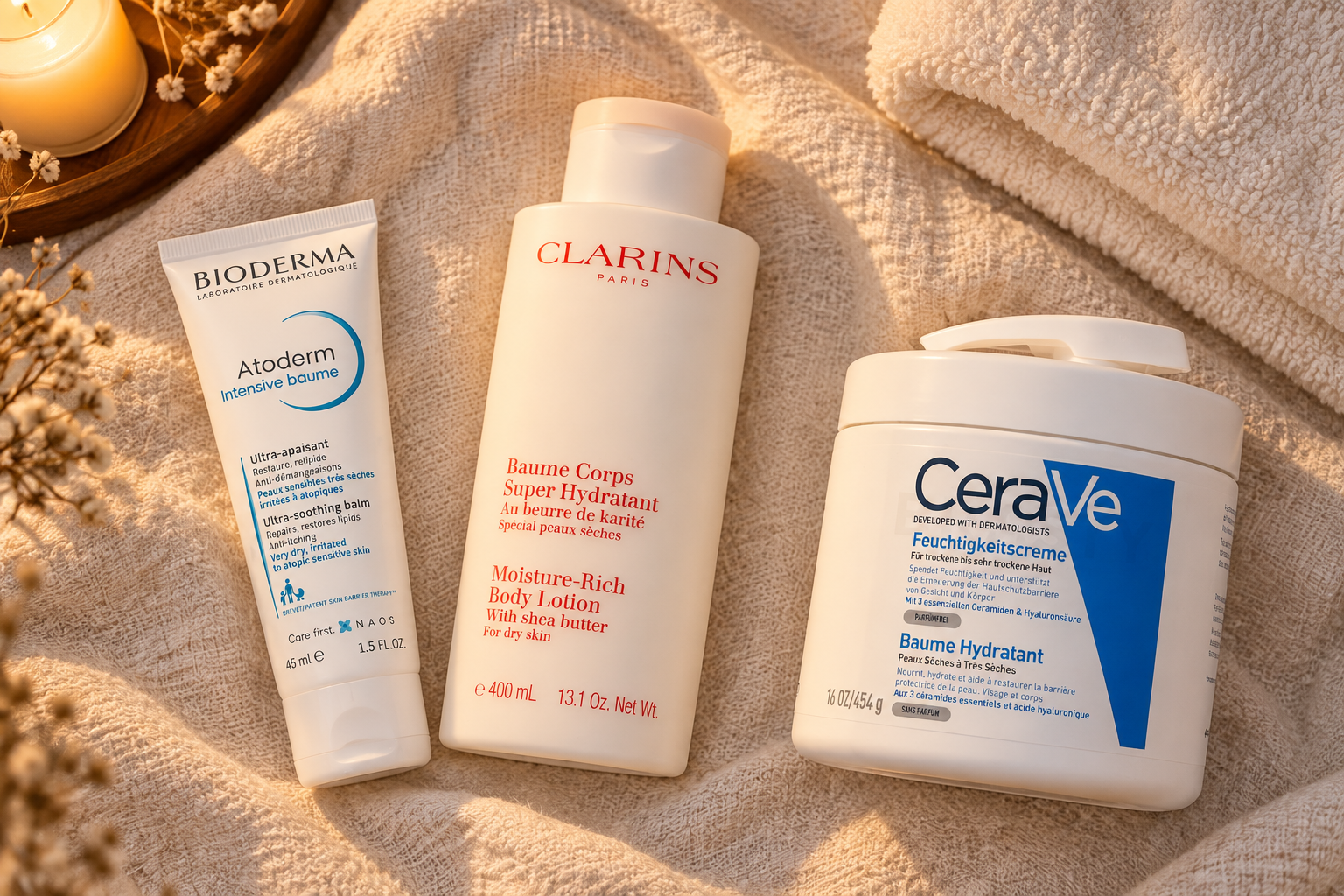
If you're looking for products that fit well into this routine, we've selected from our body care range lines designed for dry and sensitive skin:
- Bioderma Atoderm – a line for dry to very dry and sensitive skin. The shower oil with a gentle cleansing texture replaces regular soap, and the nourishing balm has a richer consistency suitable for moisturizing the entire body and the driest areas.
- Uriage Xémose – care for very dry skin prone to itching. In addition to a soothing cleansing oil, it includes balms and creams with a nourishing texture, suitable for evening moisturizing.
- CeraVe – moisturizing creams and lotions with ceramides for dry skin. The thicker cream is suitable for the driest areas, while the lighter lotion spreads easily over the entire body.
When choosing, you can follow a simple rule: the drier and more sensitive the skin, the more you should opt for a balm or cream with a richer texture, while for regular days, a lighter lotion may suffice. Specific products can be found in the overview below.


Category
Recommended articles

"Give a girl the right shoes and she can conquer the world!" Marilyn Monroe