




Balm, cream, or cleansing oil? Discover the differences and find out which emollient is suitable for your school-aged child's dry and atopic skin in winter.
Why Children's Skin Needs Regular Moisturizing in Winter
Winter is a challenging time for children's skin – and not just because of the frost. On the way to nursery or school in the morning, cold wind bites their cheeks, they spend the morning in overheated classrooms with dry air, and in the afternoon, there's often an activity, swimming, or training ending with a shower. Each change in temperature and humidity stresses the skin, and hot water with soap washes away some of the natural oils. The result is skin that feels rough to the touch, tightens, itches, or gently peels on the calves, elbows, and knees.
Whether you have a preschooler at home or a school-aged child who showers at school after PE, a simple rule applies: the more external influences, the more sense regular care makes. This is where emollients come into play.
What is an emollient. An emollient is a cosmetic product that supplies the skin with lipids and helps retain water in its outer layers. It creates a thin film on the skin's surface that limits moisture evaporation, making the skin feel softer and more supple. Emollients come in various forms – from rich balms to creams and cleansing oils that replace regular soap or shower gel. They are not a medicine but a daily care routine that helps keep the skin comfortable.
Why moisturize the whole body. With dry and atopic skin, it's not worth focusing only on areas where dryness is most visible. The skin can be dry even in places where you don't notice it at first glance, so winter care includes moisturizing the entire body, usually once or twice a day, ideally after bathing. More important than the amount is regularity: an emollient makes sense mainly when it becomes as routine as brushing your teeth.
It's easy to get lost in the dermocosmetics aisle, so this overview focuses on three lines designed for dry and atopic skin:
- Bioderma Atoderm – a wide range with balms, cream, cleansing oil, and gentle shower gels, allowing you to create a complete routine from bath to moisturizing.
- La Roche-Posay Lipikar – a line focused on replenishing lipids, offering body balm, cleansing oil, and a lighter cleansing gel.
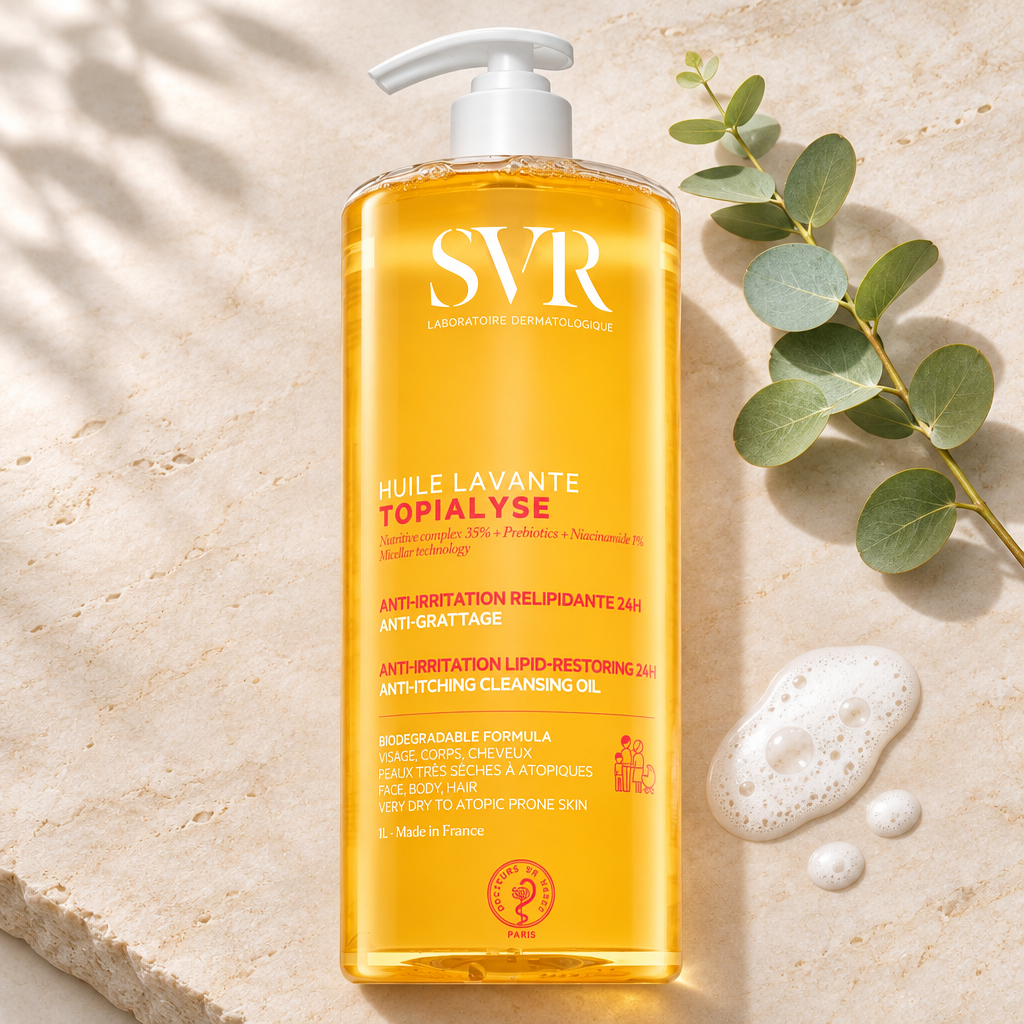
- SVR Topialyse – a French dermocosmetic line for dry skin, represented in the overview by cleansing oil.
All three lines are suitable for use by both children and adults, so often one bottle is enough for the whole family in the bathroom. Always check the specific age recommendations and usage instructions on the product packaging.
Balm, Cream, or Cleansing Oil: How Each Texture Differs
In children's skincare, you often encounter balm, cream, and cleansing oil from the same line, and at first glance, they may seem interchangeable. However, each of these textures serves a different purpose in your routine—they differ in density, absorption rate, and the feeling they leave on the skin. Knowing these differences helps you decide what to use after a bath in the evening and what is suitable for the morning when your child is getting ready for nursery or school.
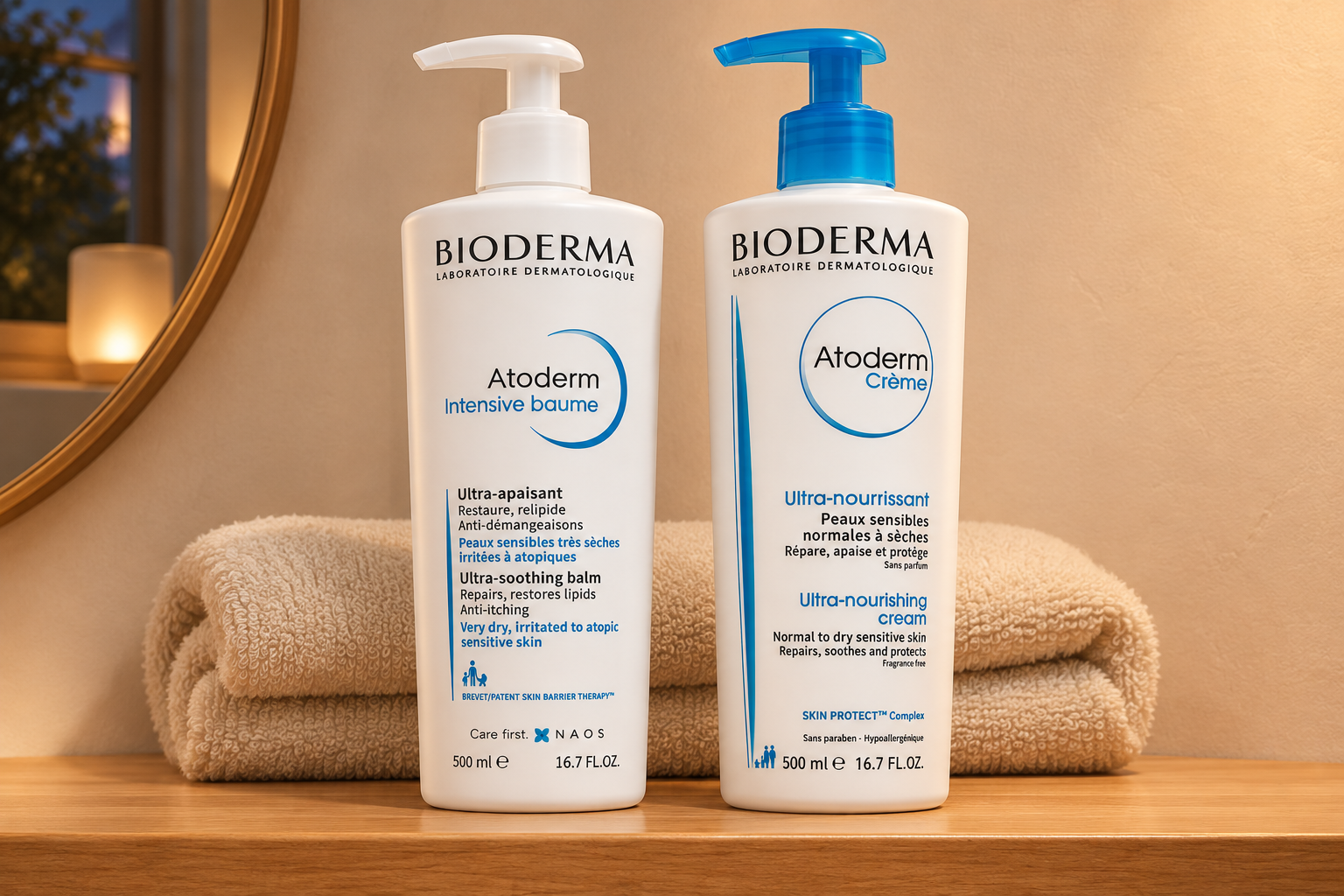
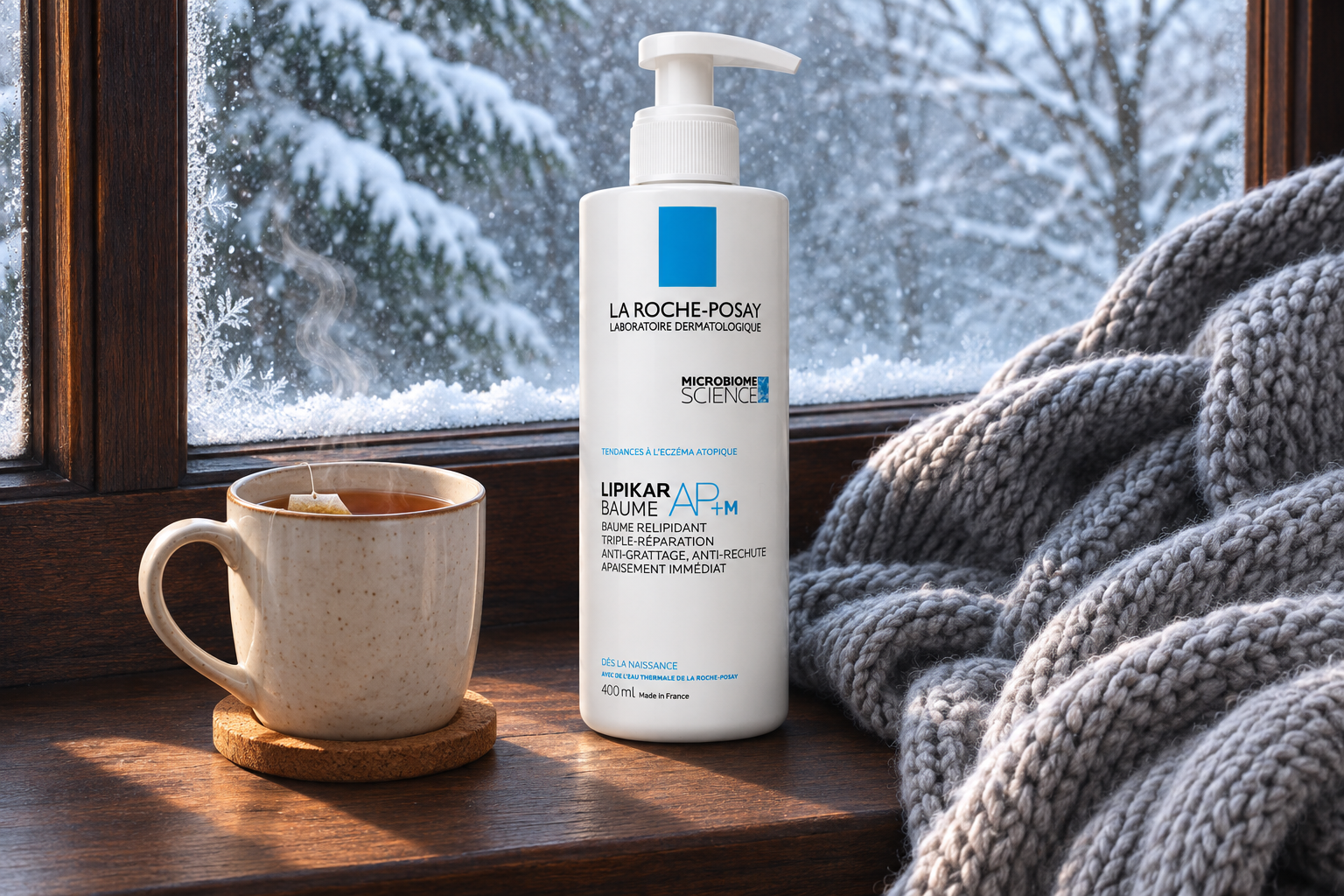
Balm is the thickest of the three textures. It contains a higher proportion of fat, so it spreads more slowly and leaves a gentle protective film on the skin for a while. This makes it ideal for the evening—after a bath, you have time to apply it, your child changes into pajamas, and the balm can work overnight. You'll especially appreciate the richer texture on areas that tend to be driest in winter, such as elbows, knees, or calves. A typical example is Bioderma Atoderm Intensive Baume, and in the Lipikar line, there's La Roche-Posay Lipikar Baume AP+M.
Cream is lighter and absorbs more quickly. It doesn't leave as much of a greasy feeling, so your child can get dressed sooner—which is handy in the morning when you're rushing out the door. Older children can often apply the lighter texture themselves, making it easier for moisturizing to become a regular part of the morning routine. In the Atoderm line, this role is filled by Bioderma Atoderm Créme Ultra-Nourishing, which is more nourishing than regular body lotion but still spreads more easily than balm.
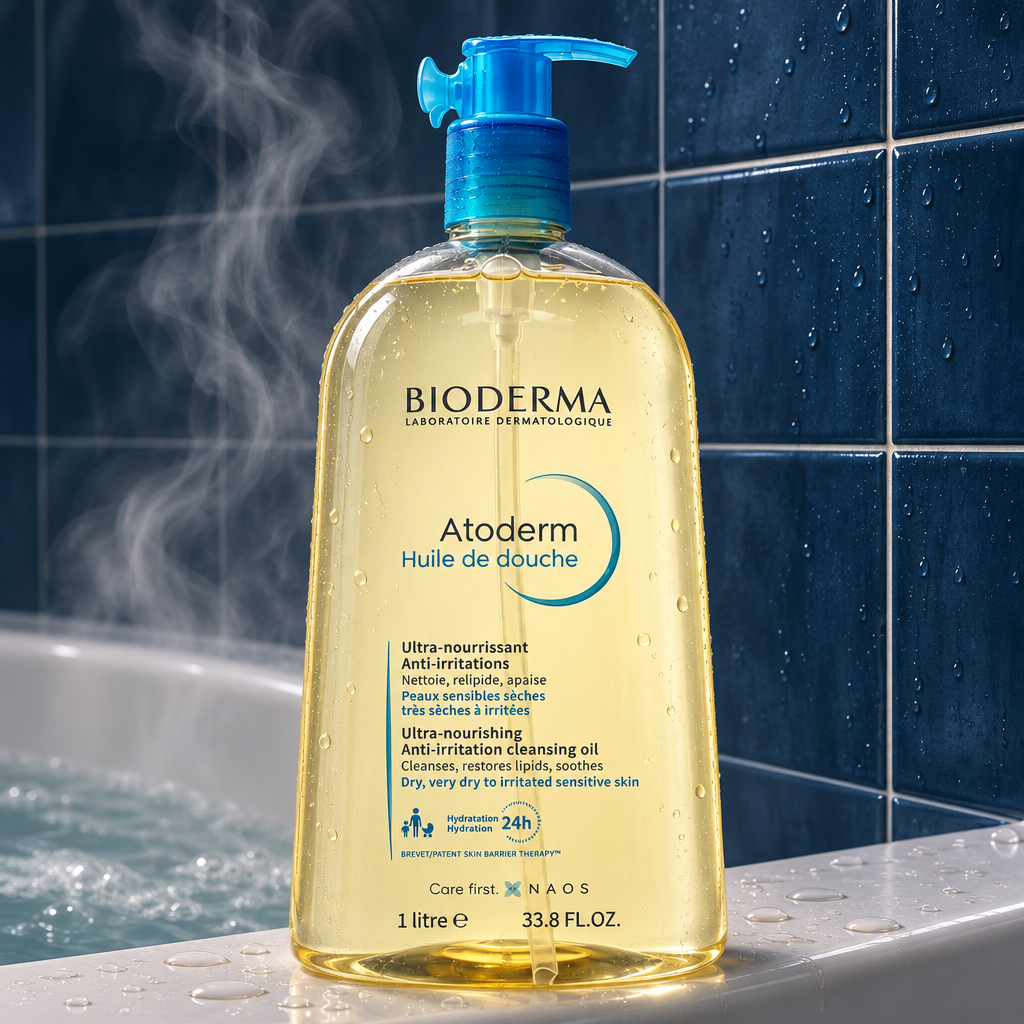
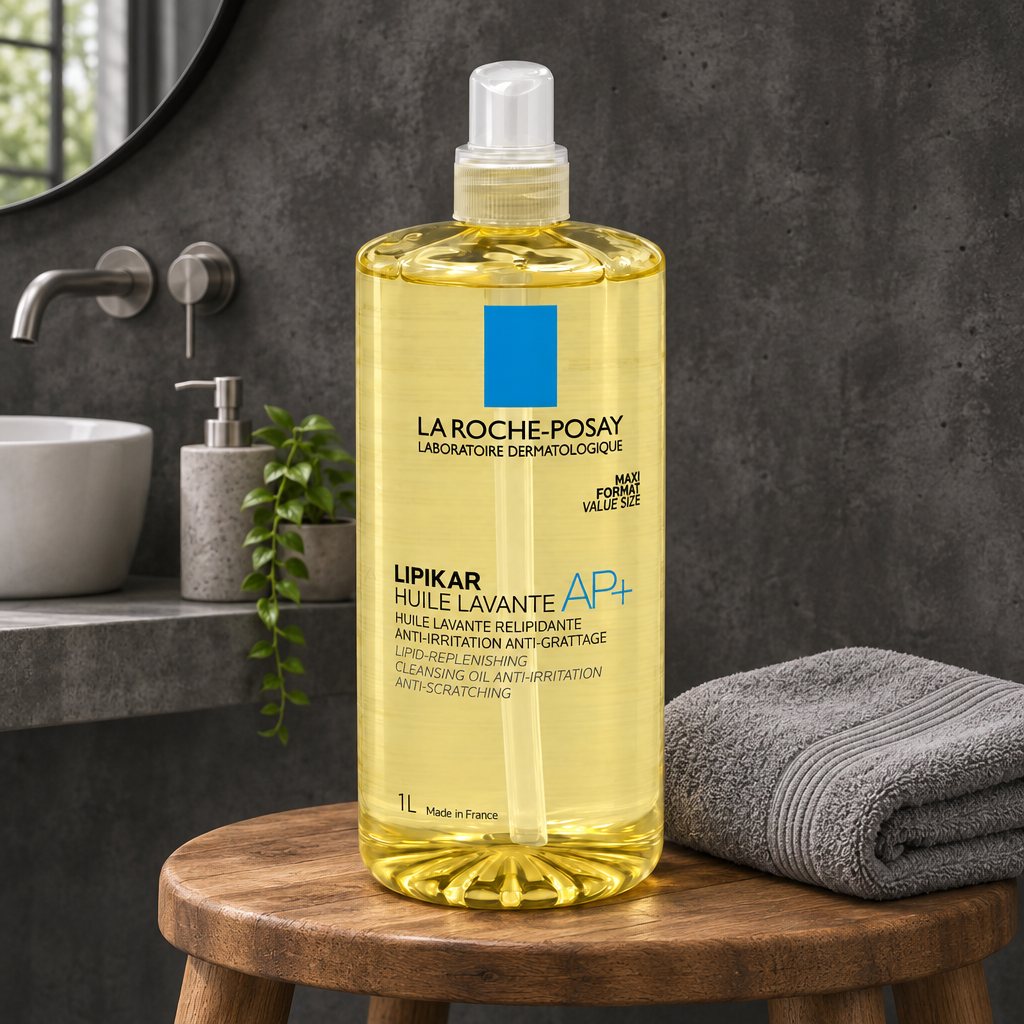
Cleansing oil is the first step in the routine—it replaces shower gel or soap. When it comes into contact with water, it usually turns into a gentle milky emulsion that cleanses the skin more gently than traditional soap and doesn't leave an unpleasant tight feeling after rinsing. For children who like to dash out of the bath right away, it's a practical choice. Cleansing oil is available in all three lines: Bioderma Atoderm Huile de Douche, La Roche-Posay Lipikar Huile Lavante AP+, and SVR Topialyse Huile Lavante. Keep in mind, though, that cleansing oil is rinsed off, so it doesn't replace post-bath moisturizing—the two textures complement each other.
For quick reference, you can summarize the differences like this:
- Balm – thickest texture, absorbs slowly, suitable for evening and driest areas.
- Cream – lighter texture, absorbs quickly, suitable for morning or the whole body when you don't want to wait.
- Cleansing oil – gentle replacement for gel or soap, belongs in the bath or shower and prepares the skin for subsequent moisturizing.
Choosing a texture depends not only on how dry your child's skin is but also on the time of day and how much time you have for care. Many families, therefore, combine a richer balm for the evening with a lighter cream for the morning and use cleansing oil at every bath.
Body Balms and Creams for Daily Application
When applying lotion to the whole body daily in winter, it's not just about what's in the product, but also how quickly you can get the job done. A preschooler eager to return to play or a schoolchild rushing out in the morning won't stay still for long. That's why it's worth knowing how different emollients spread, how long they take to absorb, and when one is more suitable than another.
- Bioderma Atoderm Intensive Baume – a nourishing balm recommended by the manufacturer for very dry skin prone to atopy in both children and adults. It has a thicker texture that still spreads well on the skin. It takes longer to absorb than a light cream, so it's best used in the evening after a bath when the child isn't in a hurry and pajamas can wait a few minutes.
- Bioderma Atoderm PP Baume – a rich balm for very dry and rough skin. It belongs to the more substantial textures, so a smaller amount is needed, which must be carefully spread. It's especially suitable for areas that suffer most in winter – elbows, knees, shins, or the backs of hands.
- Bioderma Atoderm Crème Ultra-Nourishing – a nourishing cream for normal to dry sensitive skin. It's the lightest of the mentioned four, absorbs quickly, and doesn't leave a noticeable layer on the skin, allowing the child to get dressed soon. It's great for use in the morning before school or for children who don't like applying lotion and want to be done as quickly as possible.
- La Roche-Posay Lipikar Baume AP+M – a balm for very dry skin prone to atopy, recommended by the manufacturer for the whole family. It combines the richness of a balm with a lighter texture that spreads easily even over larger areas, such as the back or legs. It's ideal for families who want one product for both morning and evening use.
For a restless child, it helps to break the application into parts rather than trying to do it all at once. Warm the balm in your hands first so it's not cold on the skin, and start with the legs, which the child can manage to lotion while sitting. Older schoolchildren often like to apply lotion to their legs and arms themselves – just show them how much product to use, and you can finish the back and shoulders. A short rhyme, a favorite song, or a regular spot for applying lotion can make it a routine part of the evening rather than an unpleasant chore.
For daily care of the whole body, large packages make sense. All four products are available in volumes of 400 to 500 ml, so one package will last longer with daily application, and you won't need to restock as often. If the package has a dispensing pump, you can operate it with one hand while holding the child with the other, and it's easier to gauge the amount needed. When choosing, consider how dry your child's skin is and how much time you have for application – a thicker balm is suitable for the evening, while a lighter cream is ideal for a quick morning application.


Cleansing Oils Instead of Soap: Atoderm, Lipikar, and Topialyse
After nursery, school, or afternoon training, it's time for a shower or bath in the evening. Washing during winter is when the skin most easily loses its comfort – especially when hot water is combined with traditional soap or a highly foaming shower gel. Cleansing oils are designed to clean the skin more gently and leave it feeling comfortable after drying, without any unpleasant tightness. For parents, this is a subtle but important first step, followed by moisturizing in the evening.
At Brasty, you'll find three cleansing oils that families reach for most often in winter. All are designed for dry and sensitive skin, but they differ in texture, amount of foam, and how the skin feels after towel drying.
- Bioderma Atoderm Huile de Douche – The oily texture transforms into a gentle milky foam upon contact with water. It foams less than a regular shower gel but enough for children to feel like they're really washing. After drying, the skin remains soft without a greasy film, making it suitable for school-aged children who dislike the "sticky" feeling.
- La Roche-Posay Lipikar Huile Lavante AP+ – A slightly richer oil that creates only a light foam on the skin. After rinsing, the skin feels supple and pleasantly softened. It's especially appreciated by children with very dry skin on their hands, elbows, or calves, which can become rough in winter.
- SVR Topialyse Huile Lavante – A gentle cleansing oil with mild foaming that spreads easily over the entire body, even in the bath. After drying, it leaves the skin feeling clean but not dried out. It's a good choice if you want to try an oil with a simple, fuss-free texture.
If your child is unfamiliar with cleansing oils, a simple trick can help: apply the oil to your palms, rub it briefly with a little water, and then show them how it turns into foam. Many children will stop seeing the oil as something "weird" and will start enjoying washing.
Lighter Gels for Calmer Days
Not every day is the skin equally demanding. On days when it is calm and untroubled, you can opt for a lighter cleansing gel. Bioderma Atoderm Gel Douche and La Roche-Posay Lipikar Gel Lavant both have a gel consistency, foam a bit more than oils, and leave a fresher feel after rinsing. They are suitable for mornings or after a quick shower post-sport, while you can reserve the oil for evenings when the skin is more sensitive from the cold and wind. The advantage is that both the gel and oil from the same range naturally complement each other.
Liter Bottles and Refills
When multiple children and adults are washing in the family, cleansing products disappear quickly. All the mentioned oils and gels are available in liter bottles, which last significantly longer than smaller bottles and take up one spot in the bathroom for the whole family. Additionally, the Atoderm Gel Douche offers a refill option, which you can easily pour into the original bottle. This saves packaging and means you don't have to buy a new bottle each time.
Winter Routine Step by Step: Which Emollient to Choose
Now that you know how different textures vary, it's time to arrange them into an evening routine that won't take longer than a bedtime story. A routine for preschoolers and school-aged children can be very simple – just three steps that can be easily repeated every day.
- Short lukewarm bath or shower. In winter, it's best to keep baths shorter and the water pleasantly lukewarm, not hot. Instead of soap, use a cleansing oil that gently cleanses the child and doesn't unnecessarily dry out the skin.
- Gentle drying. Press the towel against the body gently rather than rubbing the skin. The skin can remain slightly damp.
- Moisturizing the entire body. Immediately after drying, apply balm or cream all over the body – not just on visibly dry areas. Pay special attention to elbows, knees, calves, and hands, which often suffer from cold, wind, and dry indoor air in winter.
School-aged children who want to take care of themselves can manage moisturizing on their own. It helps if a large family-sized bottle is visible in the bathroom and becomes as routine an evening task as brushing teeth.
The simplest approach is to stick to one product line, as the cleansing product and balm are designed to complement each other. Tried and tested pairs from the catalog:
- Bioderma Atoderm: Atoderm Huile de Douche cleansing oil and rich Atoderm Intensive Baume. If the child prefers a lighter texture, you can switch the balm for Atoderm Créme Ultra-Nourishing, and for very dry areas, Atoderm PP Baume is available.
- La Roche-Posay Lipikar: Lipikar Huile Lavante AP+ cleansing oil and Lipikar Baume AP+M balm. For children who don't like the oily texture for washing, the oil can be replaced with the lighter Lipikar Gel Lavant.
- SVR Topialyse: Topialyse Huile Lavante cleansing oil, which you can pair with a balm or cream your child is already accustomed to.
When choosing, focus mainly on what your child's skin can tolerate and what feels comfortable. If they don't like a greasy feeling, opt for a cream that absorbs faster. When the skin is very dry and tight in winter, a thicker balm is often more comfortable. It's a good idea to test a new product on a small patch of skin first and observe how the skin reacts.
Emollients are skincare products, not treatments. If dryness, itching, or redness persist despite regular moisturizing, or if they worsen, consult a pediatrician or dermatologist – they will assess what your child's skin truly needs.
Finally, you'll find a selection of cleansing oils, balms, and creams from the Brasty catalog to create your own winter routine.

Category
Recommended articles

"Give a girl the right shoes and she can conquer the world!" Marilyn Monroe
