

 Riiffs Freeze in Flames: Ice and Flames Illuminate Warsaw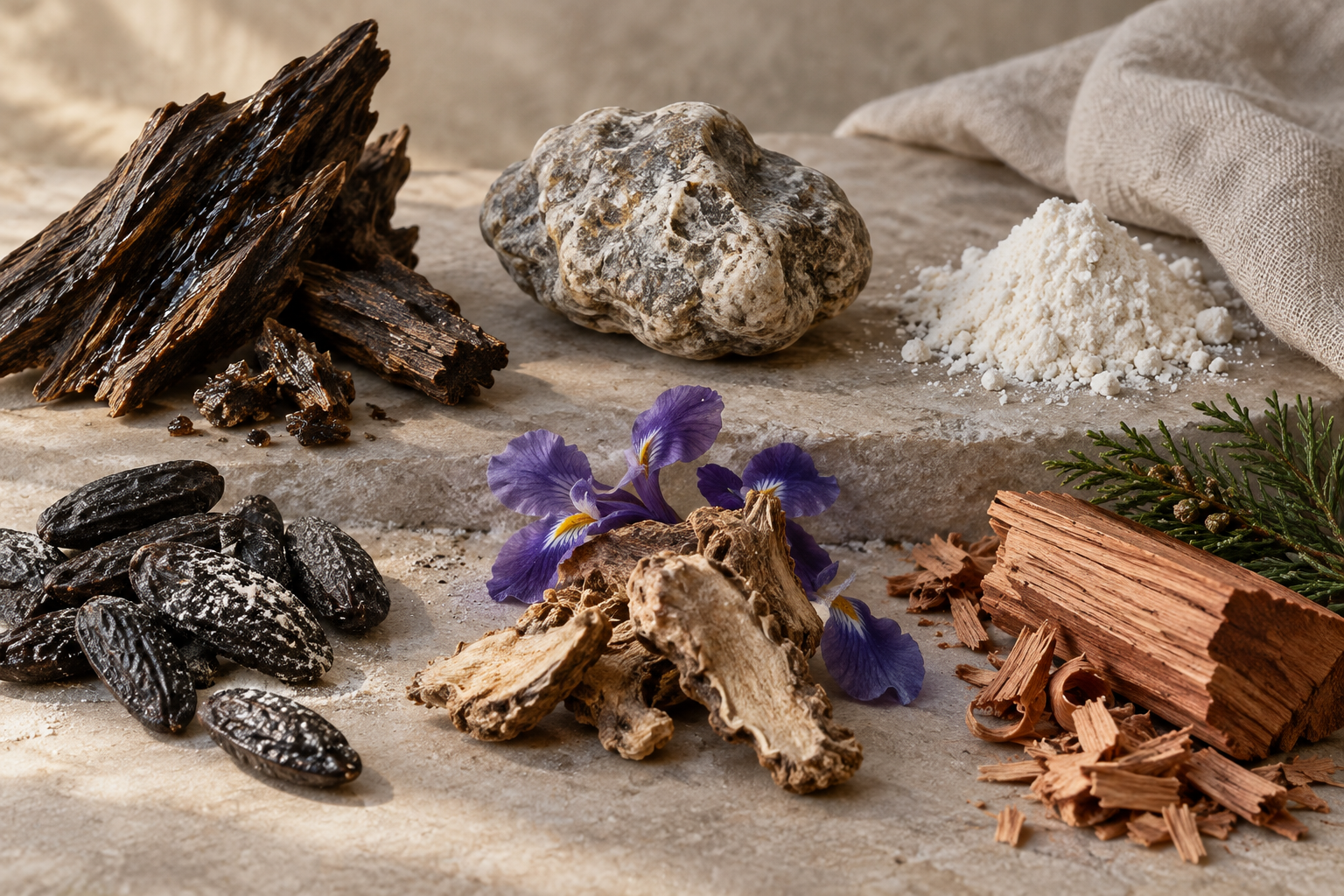
What lies behind the notes in a perfume description? In the second part of our encyclopedia of perfume ingredients, we introduce oud, amber, musk, tonka bean, iris, and cedar – where they come from, how they are obtained, and how they smell.
Oud – Liquid Gold from Agarwood
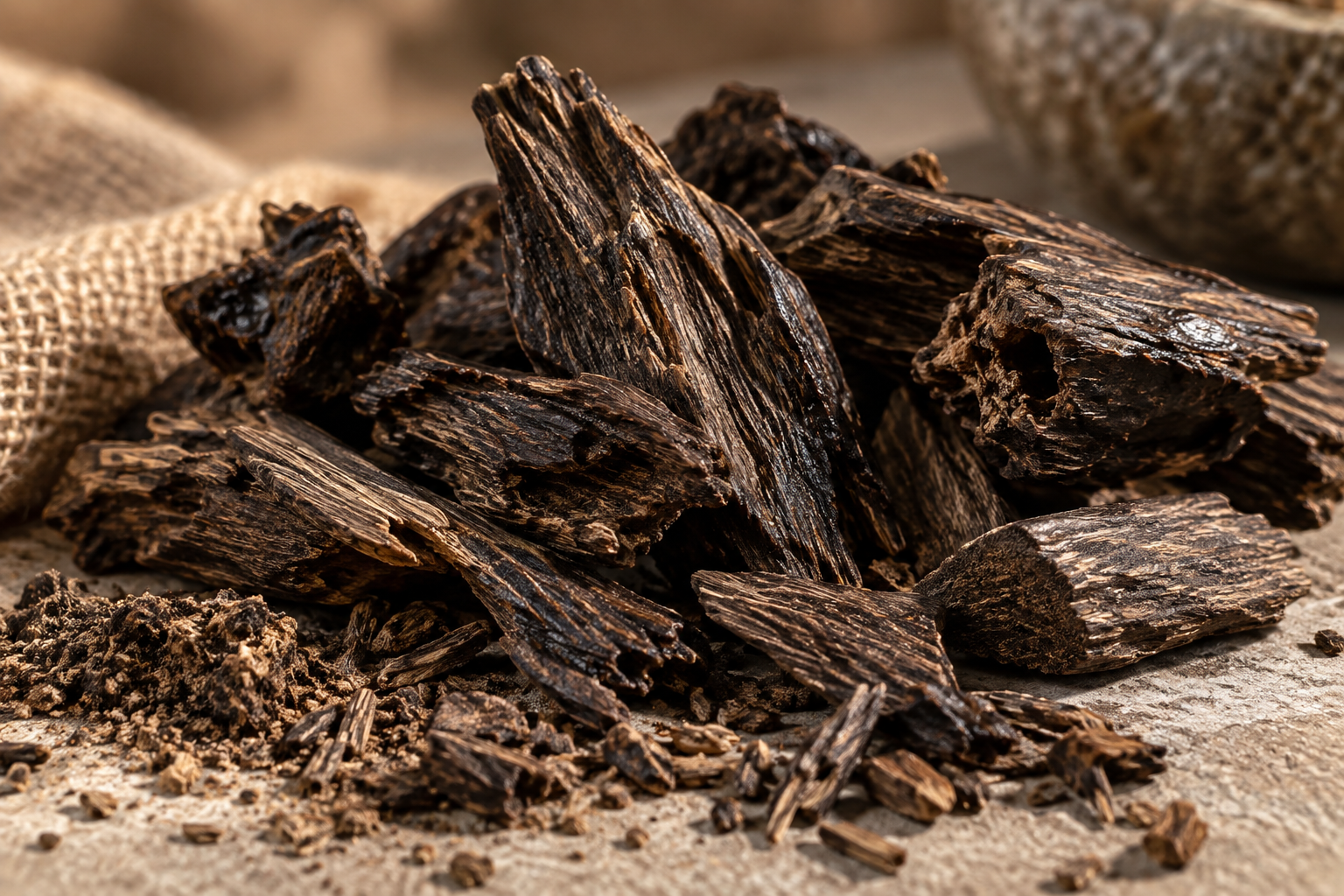
Among the raw materials known in perfumery, oud is one of the most mysterious. It is not a flower or a fruit, but a dark, resin-saturated wood mass that forms inside the trunk of tropical trees of the Aquilaria genus. These trees grow in Southeast Asia, particularly in India's Assam, Cambodia, Laos, and Borneo, with each region imparting a slightly different character to the material. In Czech, it is called agarwood, while in the Arab world, the name oud has become familiar.
What makes oud rare is one circumstance: a healthy tree has no scent. The fragrant resin begins to form in its wood only as a defensive reaction to an attack by a specific fungus. The tree gradually saturates the wounded tissue with a dark aromatic substance, which strengthens it and prevents the spread of infection. This is precisely the substance that perfumers seek. In nature, only a small part of the trees succumb to this process, which takes years, so today a large portion of agarwood is obtained from managed plantations where trees are deliberately inoculated.
The processing is equally lengthy. The saturated wood is sorted, crushed, and soaked in water for several days to weeks to release the resinous components; only then does distillation occur, separating the thick dark oil. A large amount of wood yields a tiny volume of distillate, which is the main reason why oud is nicknamed liquid gold. In commonly available perfumes, you will mostly encounter not pure natural oil, but its reconstruction from synthetic and natural components.
Olfactorily, oud is unmistakable and initially challenging for the unaccustomed nose. Its profile usually features several layers:
- a smoky, almost tar-like component reminiscent of smoldering wood,
- a leathery and slightly animalic, or animal-like undertone,
- a bitter, slightly medicinal to pharmaceutical note,
- a sweeter balsamic depth that opens up only after a longer time on the skin.
In the fragrance pyramid, oud belongs to the base notes and acts as an exceptionally persistent fixative: it slows the evaporation of lighter components, provides support to the composition, and holds it on the skin and fabric for long hours. It pairs well with rose, saffron, and sweet resins; in oriental compositions, it is often the element that makes the fragrance feel rich and festive.
Oud also has its cultural story, older than European perfumery. In the Middle East, agarwood has been burned for centuries in the form of bakhoor: chips saturated with fragrant oils placed on glowing coals in an incense burner. The smoke is infused into clothes and hair, and offering bakhoor to a guest is a fundamental gesture of hospitality. So when you smell oud in a perfume, you are not just smelling a rare material, but also the tradition that brought it into perfumery.
Ambergris – a scent washed ashore by the sea
Few perfume ingredients have a story as unlikely as that of grey ambergris. It doesn't come from a flower or wood, but from the digestive tract of the sperm whale. These deep-sea hunters primarily feed on cephalopods, and the indigestible horny beaks of squids irritate their intestinal walls. A waxy substance gradually forms around them, which the whale eventually expels into the sea. Fresh ambergris is not what perfumers are looking for: it is dark, soft, and its smell is far from something you'd want to apply to your wrist.
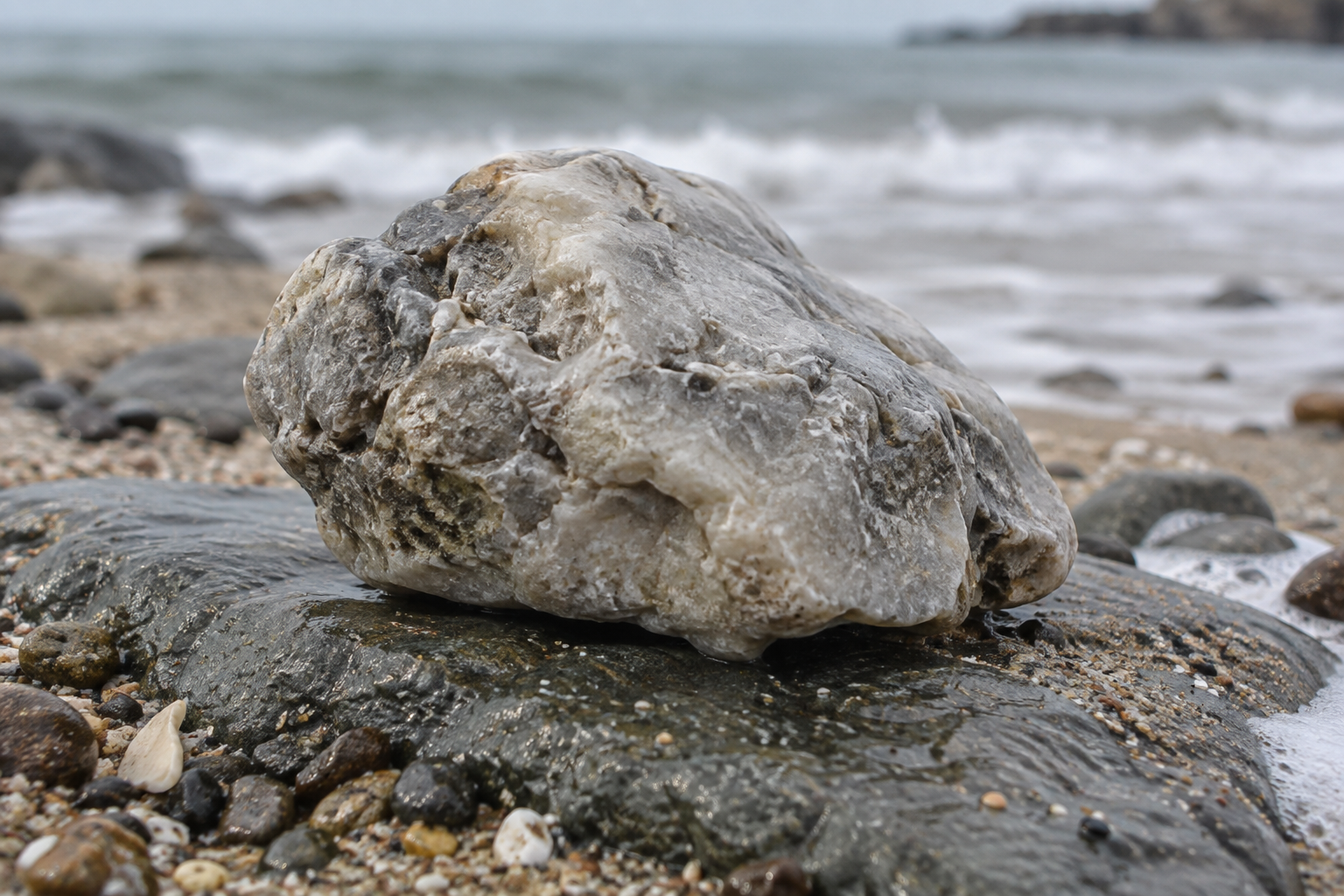
The transformation is handled by the sea itself. A lump of ambergris floats on the surface for months, sometimes years, and during this time, it is shaped by salty water, oxygen, and sunlight. The surface hardens, the color changes from almost black to grey or ash-light, and inside, a fragrant profile develops, for which the material is collected. The most valuable pieces are those that have traveled the longest. People find them washed up on the beaches of the Atlantic, Indian Ocean, or around New Zealand, often by chance.
Here, it's important to make a distinction on which modern perfumery stands. True grey ambergris is rare and is practically not used in regular production. What you read as an amber note in the composition description is almost always an amber accord, a blend of several components. Its base is usually labdanum, a thick resin from the cistus shrub, complemented by synthetic molecules with a warm woody-mineral character. The result is stable and consistent from batch to batch, which was never the case with natural material. It has nothing in common with fossilized resin, which we call amber.
So how does ambergris smell? Each piece is different, but descriptions repeat in four dimensions:
- warm, soft, and slightly sweet, without the sugary notes of gourmand scents;
- salty minerality, something between sea air and wet stone;
- dry tobacco undertone, akin to tanned leather;
- an animalic undertone, which develops slowly on the skin and deepens over time.
The strength of ambergris is not in its immediate impression, but in its longevity. In the base notes, it acts as a fixative: it slows the evaporation of other ingredients and extends the trail of the entire composition.
The history of ambergris is largely a history of its scarcity. At times, it was worth more than gold of the same weight. Medieval medicine added it to ointments, Renaissance Europe had gloves perfumed with it, and small scented balls were worn hanging from the waist. Thus, ambergris entered modern perfumery already shrouded in legend, and even in an era when it is mostly replaced by a laboratory counterpart in most bottles, its story has not faded from its name.
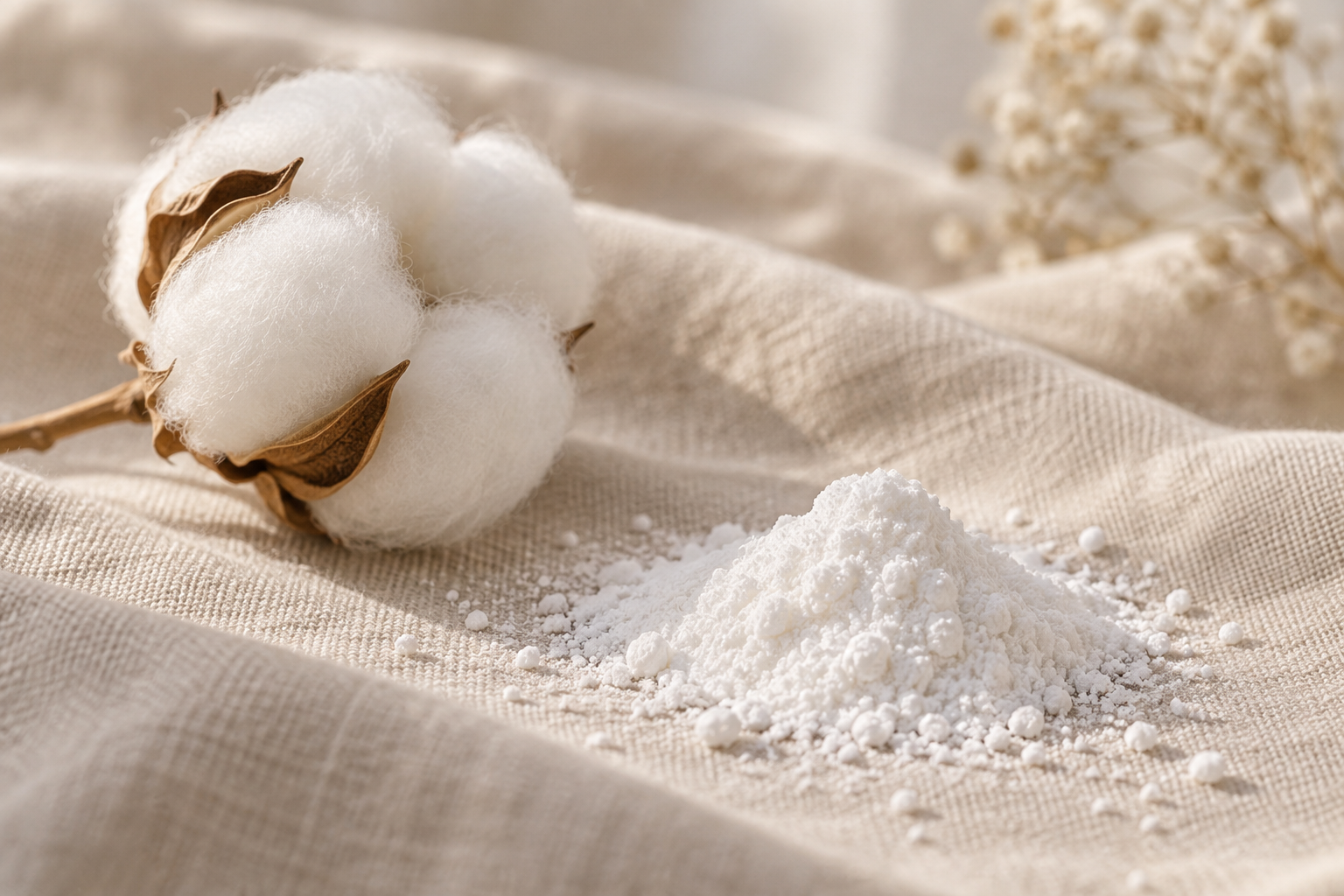
Musk – the Soft Base that Keeps Fragrance on Your Skin
Musk is one of the oldest ingredients known to perfumery. The original natural musk comes from the gland of the musk deer, a small Asian ruminant from the mountainous forests of the Himalayas and Siberia. Males have a pouch on their belly, whose secretion is used to mark territory and attract females. The dried contents of the pouch were traded for centuries, and its penetrating, warm, and animalistic character made it one of the most valuable commodities of the Silk Road – transported from Tibet to Persia and Mediterranean ports, sold by the gram.
Perfumery has moved away from natural sources. Obtaining the raw material meant the death of the animal, the musk deer population declined sharply, and the species came under international protection. Today's compositions therefore exclusively use synthetic musks. These are not a makeshift substitute: laboratory molecules are purer, more stable, and offer a range of shades that a single natural raw material could not provide.
Synthetic musks are divided into three families:
- nitro musks – historically the first group from the late 19th century, sweet and distinctly powdery; today they are used only marginally,
- polycyclic musks – a generation from the second half of the 20th century; they smell fresh and clean, with the impression of freshly laundered clothes,
- macrocyclic musks – the newest group close to molecules found in nature; soft, warm, and closest to the scent of warmed skin.
Describing musk in words is difficult because in a composition it functions more like light than color. Typically, you will sense soapy cleanliness, powdery softness, quiet warmth, and a subtle animal undertone. It is most often compared to the scent of clean skin – to what remains on a sweater after a day's wear. Sensitivity to individual musk molecules varies among people: part of the population can hardly smell some of them at all. Perfumers therefore usually combine several musks at once.
In the fragrance pyramid, musk belongs to the base notes, and its main role is fixation. It slows the evaporation of more volatile components, holds citrus and flowers together longer, and gives the composition volume, softness, and a longer trail. It also works as a binder: it rounds off sharp edges, connects the floral heart with the woody base, and smooths transitions between phases of development. Therefore, you often don't notice it at the beginning, but after hours of wear, it forms what remains of the fragrance and blends with the skin.
In recent years, musk has also returned on its own, in subtle fragrances that are not meant to overwhelm the surroundings but to stay close to the wearer. If you are looking for a perfume for the office or hot days, when the fragrance should be more of a whisper than a shout, a musk base is a natural choice.
Tonka Beans – The Coumarin Heart of Gourmet Fragrances
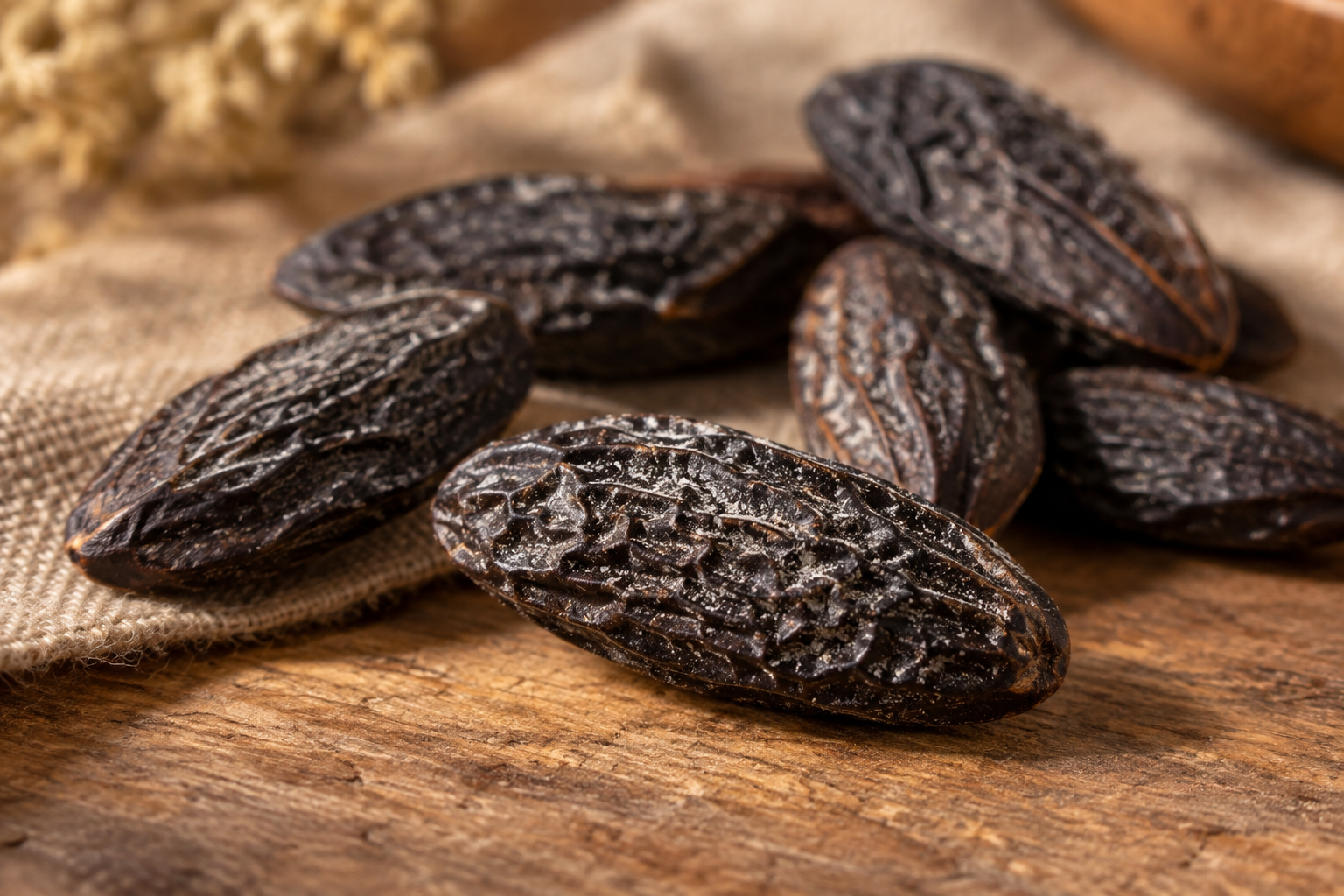
Behind the sweet almond undertone found in dozens of contemporary perfumes lies an unassuming black seed. The tonka bean comes from the Dipteryx odorata tree, a large leguminous tree that grows in the rainforests of South America, particularly in Venezuela, Brazil, and Guyana. The tree bears fleshy fruits similar to plums, and inside each is a single elongated, wrinkled seed. They are mostly harvested from wild trees, so the availability of the raw material varies from year to year.
The processing is slow and includes one unexpectedly effective step. The seeds are stripped of their pulp, dried for several weeks, then macerated in alcohol—traditionally rum—and left to dry again. During the second drying, fine white crystals of coumarin, the substance responsible for the tonka scent, precipitate on their surface; the seeds then look as if dusted with frost. Solvent extraction produces a concrete from which an absolute extract is derived, a thick dark substance of which only a small amount is needed in a composition.
The scent of tonka is hard to sum up in a single word because it is a small composition in itself. First, you smell sweet bitter almond, followed by vanilla and caramel notes, and in the background, dry fresh hay with a hint of tobacco. In a perfume pyramid, tonka occupies both the heart and the base: it connects sweet and spicy notes, smooths sharp edges, and holds the fragrance on the skin as reliably as musk bases. Without it, the gourmand family would practically not exist—but it fits just as well in oriental and woody compositions.
Tonka also played a role in the history of the field. Coumarin was isolated from it as early as the 1820s, and in 1868 it was successfully synthesized, becoming one of the first fragrant substances produced in a laboratory. Fourteen years later, a perfumer built an entire composition around it for the first time, opening the era of modern perfumery, where natural raw materials are complemented by synthetically prepared molecules. From that moment, the fougère fragrance family, still one of the pillars of men's perfumery, began to develop.
If you want to recognize tonka on your own skin, look for it where the scent warms and sweetens after a few hours without becoming sugary. It stands out best in cooler months. In the company of lavender, it forms a classic fougère accord, with vanilla it leans towards a dessert-like gourmet position, and next to smoky woods, it acts more like a tobacco lining for the entire composition.
Iris – Years of Maturation for Powdery Elegance
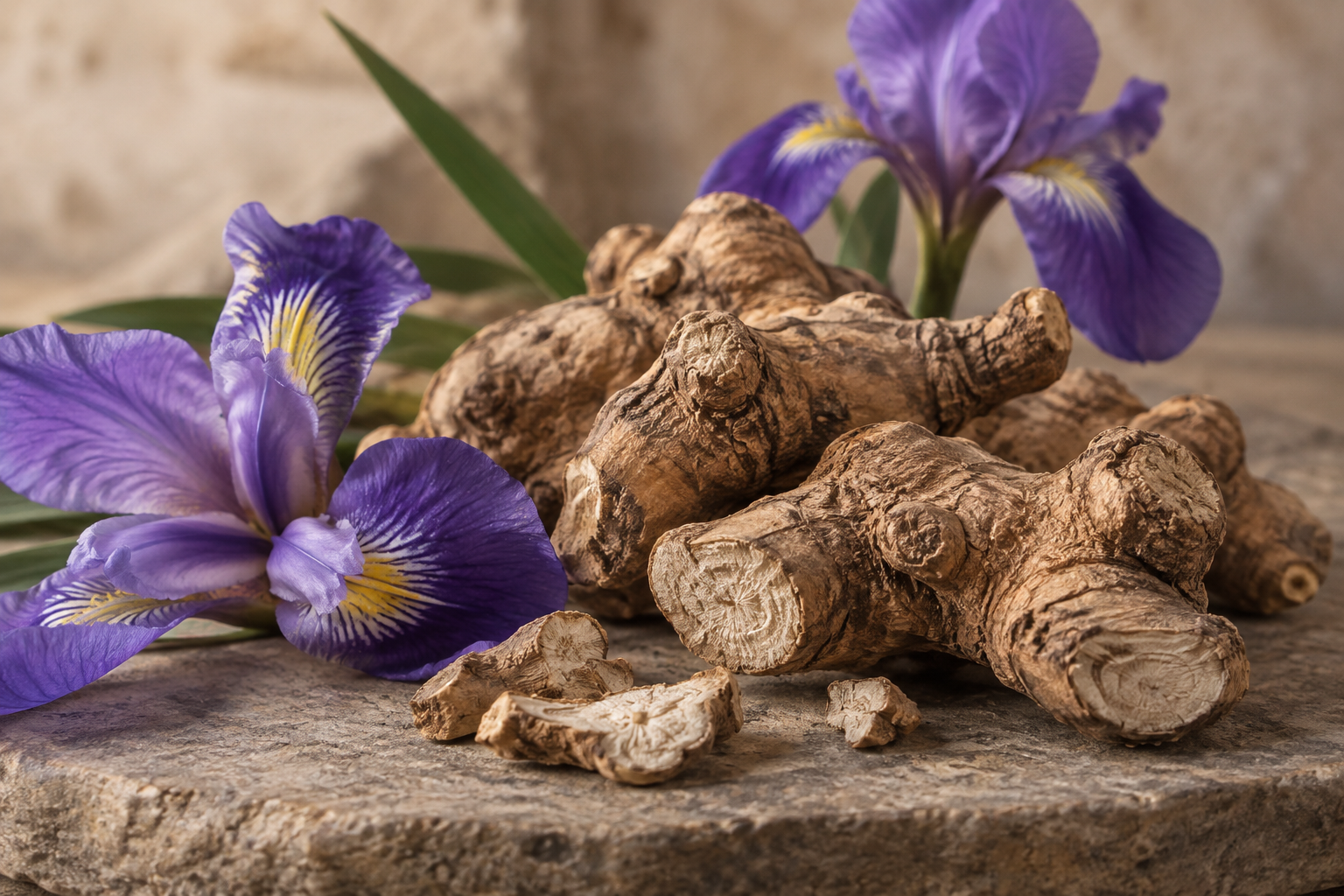
The name suggests a flower, yet the perfumery material grows underground. The fragrant material is not obtained from the striking petals, but from the rhizome – the fleshy underground stem where the iris stores its reserves. The flower itself has a subtle scent and cannot produce a usable extract. It is the rhizome that contains the substances that make iris one of the most valuable items in the perfumer's inventory.
The most renowned iris comes from Italy's Tuscany, particularly the hills around Florence; the second major growing area is Morocco. The plants are allowed to grow for about three years before the rhizomes are dug up, cleaned, and peeled. But the work is far from over – the slowest part of the entire process follows.
The dug-up rhizomes are stored and dried for another three to five years. During this time, slow oxidation produces irones, the molecules responsible for the characteristic scent; freshly harvested rhizomes have virtually no scent. Only after years of aging is the material ground and distilled. The result is not a liquid oil, but a waxy substance known as iris butter. The yield is exceptionally low – it takes tens of kilograms of dried rhizomes to produce a small amount of this substance, making iris one of the most expensive natural materials in the industry. In typical compositions, its trace is almost always complemented by synthetic ionones, which enhance and reduce the cost of the powdery impression.
The scent of iris is cool, dry, and powdery. It is often compared to violet, with which it shares some molecules, but the similarity ends there – beneath the powder lies a rooty earthiness, something between carrot, damp soil, and freshly laundered linen. This duality is what makes iris so useful: it appears both refined and raw.
In compositions, iris is most often found in the heart notes, where it acts as a connector and a source of structure. It adds nobility and tames sweetness: it cools a floral bouquet, keeps a gourmand vanilla or tonka heart in check, and prepares a smooth transition for a woody base. Perfumes with prominent iris thus feel restrained and polished.
Respect for this material goes back a long way. The stylized iris, known as the Florentine lily, adorns the emblem of Florence and reminds us of how closely the city was tied to this plant. Powder from dried and ground rhizomes, known as orris root, was stored between layers of fabric in wardrobes during the Renaissance, perfuming clothes, gloves, and hair. So when you detect a cool powdery veil in a perfume, you're dealing with a material whose journey began in a Tuscan field and took several years.
Cedar – the dry wood that holds the composition together
When a perfumer needs to give a fragrance a solid foundation, they often turn to cedar. It's a subtle yet indispensable ingredient: it doesn't shout on its own, but it holds everything around it together. In perfumery, the name cedar actually refers to three different types of wood.
- Atlas cedar grows in the Moroccan Atlas Mountains and its oil is among the most commonly used; it has a softer scent with hints of resin and warm amber.
- Himalayan cedar comes from the mountain slopes of northern India and Nepal and offers a similar, slightly sweeter and creamier profile.
- Virginia cedar is not actually a cedar at all – botanically, it's a juniper from North America. Its oil has the driest and sharpest pencil-like character of the three.
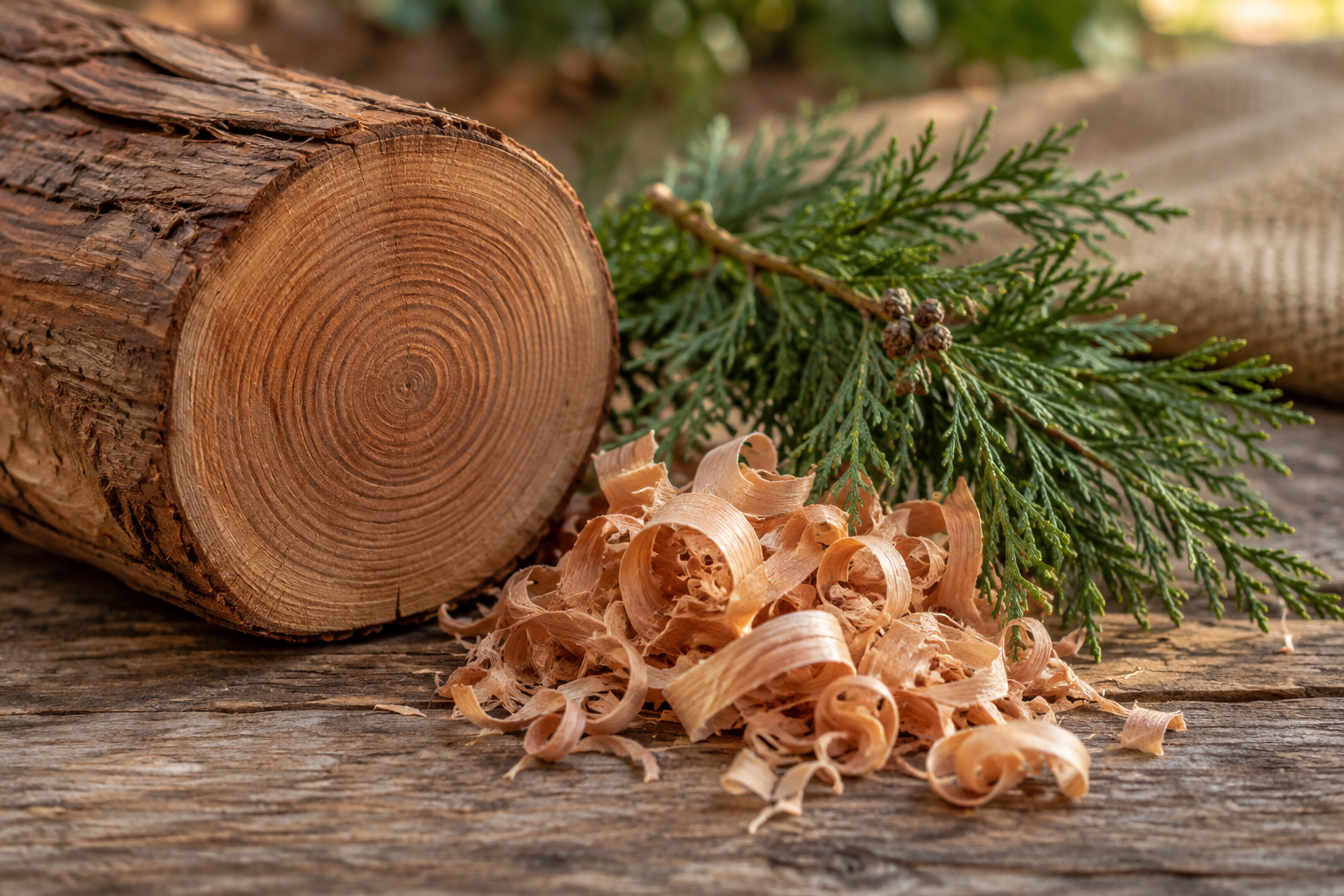
The essential oil is obtained by steam distillation of wood, sawdust, and scraps left after processing the trunks into lumber. This makes cedar a more accessible and environmentally sensible raw material compared to those that require the plant to be grown and harvested separately. In addition to the distillate, synthetic cedar molecules are also commonly used. They don't replace the natural oil but rather add stability and clearer outlines to it.
The scent of cedar is dry, resinous, and slightly smoky. You'll likely recognize it immediately: it's exactly the impression that lingers in the air after sharpening a pencil or opening an old wooden cabinet. Unlike creamy woods, there's nothing milky or sweet about it. Cedar feels austere, airy, and almost cool, with a thin trace of smoke in the background.
In compositions, you'll almost always find it in the base notes, where it serves as a support. It gives the fragrance structure, extends its trail on the skin, and at the same time tames sweetness that might otherwise become overwhelming. It is therefore a cornerstone of woody perfumes, a natural part of chypre compositions alongside oakmoss and patchouli, and a firm line that aromatic fougères with lavender follow. It pairs well with citrus, rose, and leather notes, making it appear in fragrances for both women and men.
However, cedar's story is much older than perfumery. The Lebanese cedar, a tree from the mountains above the Mediterranean, is one of the first trees we have written records about: it is mentioned in the Epic of Gilgamesh, whose hero travels to the cedar forest to meet its guardian Humbaba. The Egyptians used cedar wood and resin in embalming because they resisted insects and decay, and the Phoenicians built ships and temples from them. Today, the remnants of the original forests are protected by Lebanon as a national heritage, and the tree itself is featured on their flag.
Category
Recommended articles
Riiffs Freeze in Flames: Ice and Flames Illuminate Warsaw "Give a girl the right shoes and she can conquer the world!" Marilyn Monroe