



 Riiffs Freeze in Flames: Ice and Flames Illuminate Warsaw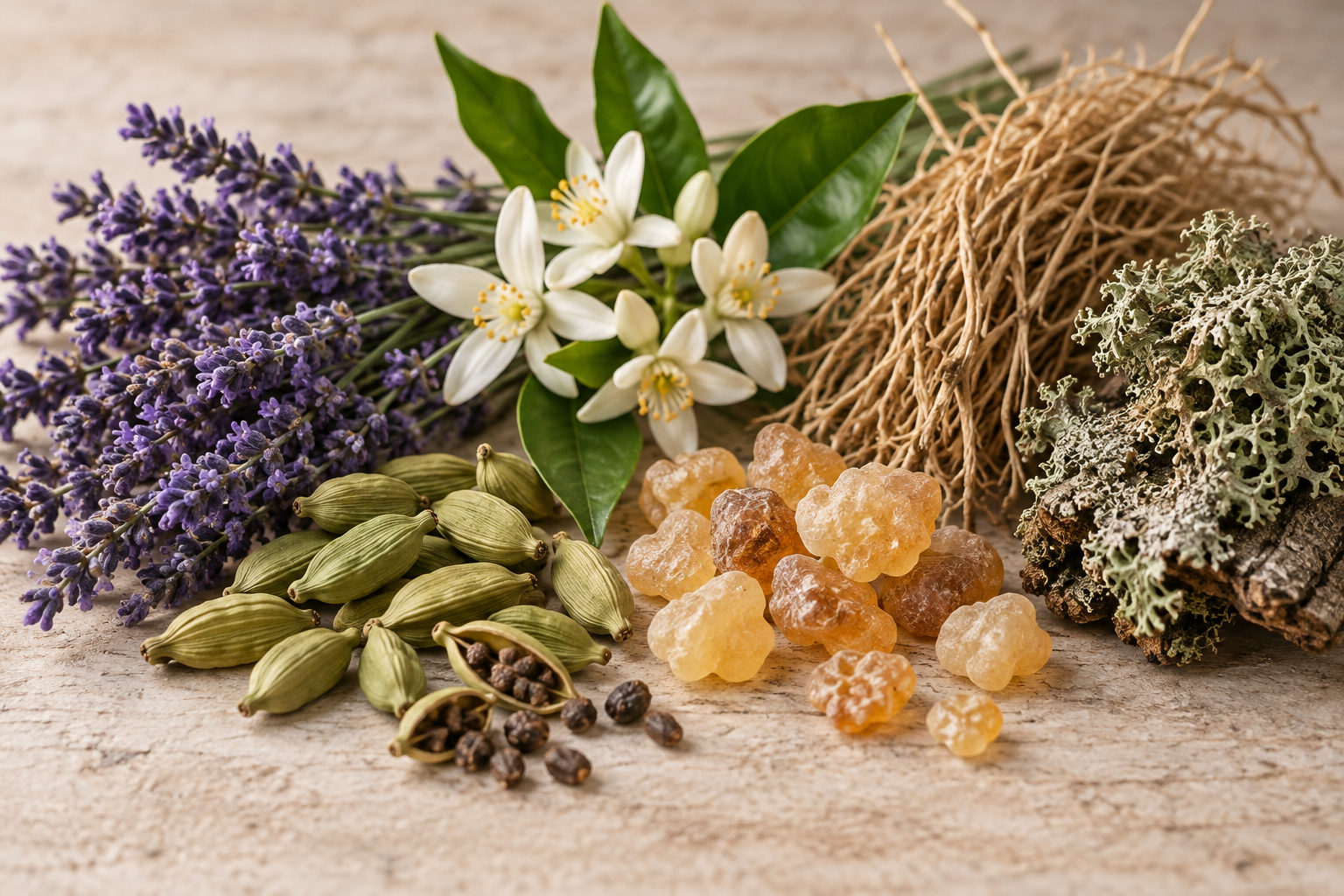
What lies behind the notes in a perfume description? In the third part of the encyclopedia of perfume ingredients, we introduce orange blossom (neroli), lavender, cardamom, frankincense, vetiver, and oakmoss – where they come from, how they are obtained, and how they smell.
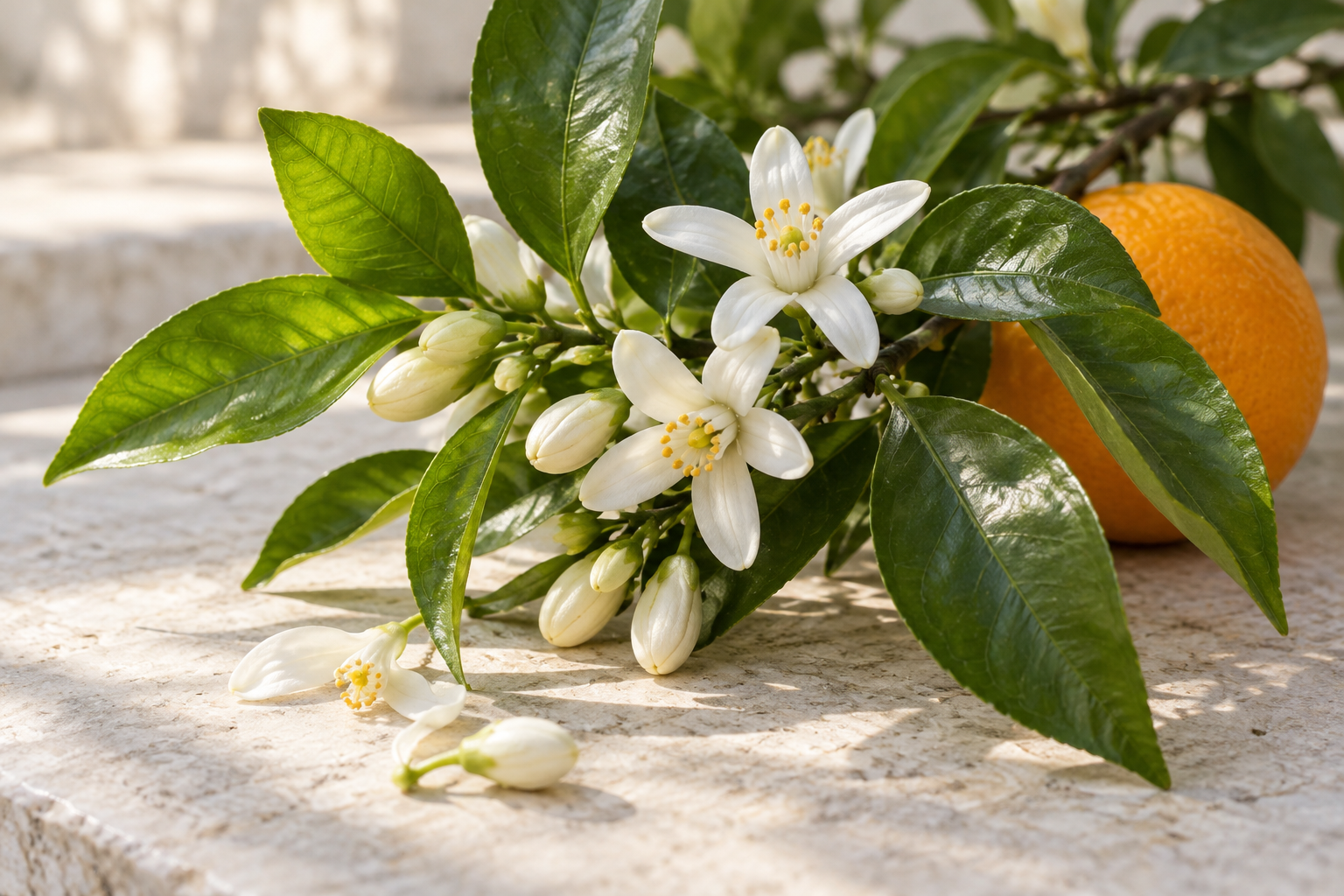
Orange Blossom (Neroli) – White Flowers of the Bitter Orange Tree
The bitter orange tree is a source of several ingredients for perfumery. Its small white flowers with waxy petals are primarily cultivated in the Mediterranean and North Africa – traditionally in Tunisia, Morocco, and Egypt, but also in Southern Europe. In spring, when the trees bloom, the flowers are hand-picked, usually early in the morning, while they are fresh and full of fragrance.
The name neroli is associated with the Italian town of Nerola. According to legend, the local princess scented her gloves with the aroma of orange blossoms, and this fashionable habit spread among European nobility. Although the exact details are uncertain today, the name has endured in perfumery.
From one tree and even from the same flower, several different ingredients can be obtained. Depending on the processing method, we distinguish:
- Neroli Oil – produced by steam distillation of fresh flowers. The yield is very low, requiring a large number of flowers for a small amount of oil, which reflects the rarity of the ingredient.
- Orange Blossom Water – a by-product of distillation, the water left after the oil is separated, infused with a delicate floral scent. It is used in cosmetics and in the cuisine of Mediterranean and Middle Eastern countries.
- Orange Blossom Absolute – obtained through solvent extraction, capturing even the heavier aromatic components. Its scent is sweeter, fuller, and more honeyed than distilled oil, more reminiscent of the blooming tree itself.
What does neroli smell like? When you smell it, you'll first notice a fresh, bright note with a slightly bitter and green aspect, reminiscent of freshly picked leaves. Soon, a honeyed, floral character emerges, with a subtle soapy, clean undertone. This duality gives neroli both a refreshing and gentle impression. The absolute enhances this floral and honeyed part and sits more in the heart of a composition, while the distilled oil is mainly used in the top notes.
From the same tree comes the related petitgrain. It is distilled from the leaves and young twigs, and thus has a greener, woodier, and more bitter scent, with less floral sweetness. When you compare the two ingredients side by side, petitgrain will remind you more of a crushed leaf, while neroli evokes a blooming branch. In perfumery, they often complement each other.
Where can you find neroli? Its classic home is in cologne, where it traditionally forms a light, fresh accord along with citrus and herbs. Neroli is also used in citrus and floral compositions – adding floral depth to citrus and freshness to white flowers. It is popular in fragrances with a clean, soapy character, reminiscent of freshly laundered linen or skin after a bath. You can find it in fragrances for women, men, and unisex compositions, and this versatility makes it a staple in perfumery.
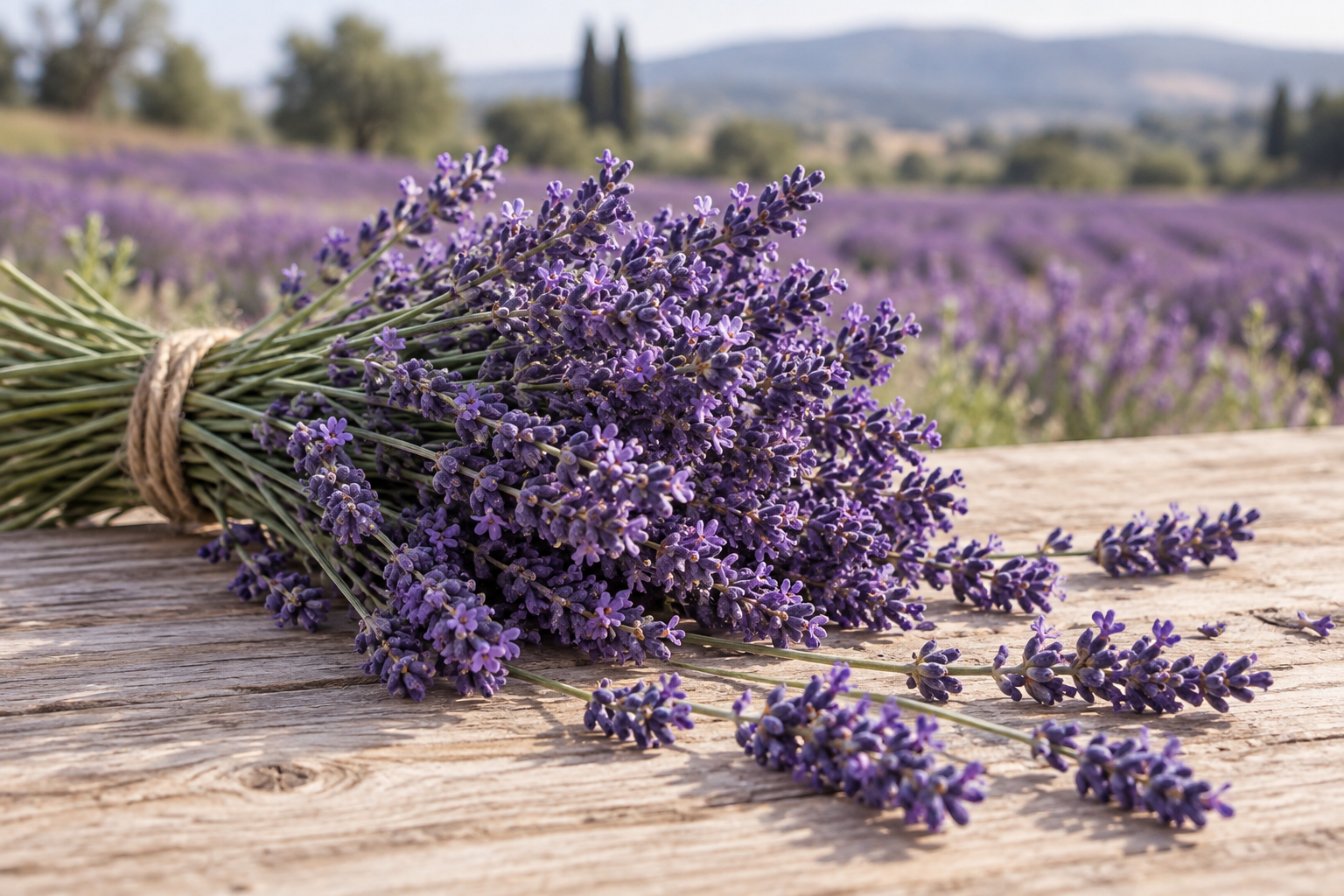
Lavender – The Herbal Soul of Provençal Fields
When you think of lavender, most of you picture purple rows stretching to the horizon. The plant actually originates from the rocky slopes of Mediterranean mountains, where it grows wild in sunny and dry places. Today, it is extensively cultivated mainly in France, particularly in Provence, and in Bulgaria, which has recently become one of the world's largest producers of lavender oil. Smaller growing areas are also found in other countries in Europe and Asia.
In perfumery, it's important to distinguish between two plants that are easily confused by the layperson:
- True Lavender – thrives at higher altitudes, yields a smaller amount of oil, and its fragrance is softer, sweeter, and rounder. It is especially valued in fine perfumery.
- Lavandin – a hybrid of true lavender and spike lavender, which also thrives in lower and warmer areas. It is more resilient and produces significantly more oil per hectare, but its scent is sharper and more camphorous. Therefore, it is often used where a strong freshness is needed in larger volumes, such as in the scenting of soaps and cleaning products.
Lavender is harvested in the summer during full bloom. The cut flowering spikes are taken for distillation soon after harvesting, sometimes after a short wilting directly in the field. In the distillation pot, steam passes through them, releasing the fragrant substances from the tiny glands, and after cooling, the oil separates from the water. Besides essential oil, lavender also produces an absolute through solvent extraction, which smells denser, sweeter, and more herbal, with a hint of hay.
Lavender oil smells herbal and fresh, with a clean, slightly camphorous note and a lightly fruity nuance. It gradually releases a gentle powdery, almost soapy after-scent. Its characteristic impression is mainly due to the compounds linalool and linalyl acetate. Many perceive this scent as calming, which is why you often encounter it in home fragrances or products intended for evening use.
Lavender holds significant importance in men's perfumery. It is the backbone of the aromatic fougère family, whose classic structure combines fresh lavender with sweet coumarin and an earthy moss base. This foundation is the basis for many traditional men's fragrances, from barber classics to elegant colognes. In these, lavender adds cleanliness and a sense of grooming.
However, modern perfumery no longer confines lavender to the men's wardrobe. Combined with vanilla, it creates soft, creamy compositions where herbal freshness balances the sweetness and adds airiness. With spices, such as cinnamon or cloves, lavender feels warmer and creates an interesting contrast in oriental fragrances. As a result, you can now find it in women's and unisex perfumes – from light daytime scents to evening gourmand compositions. If lavender reminds you more of your grandmother's closet, try it in these modern contexts.
Cardamom – The Cooling Spice of Indian Mountains
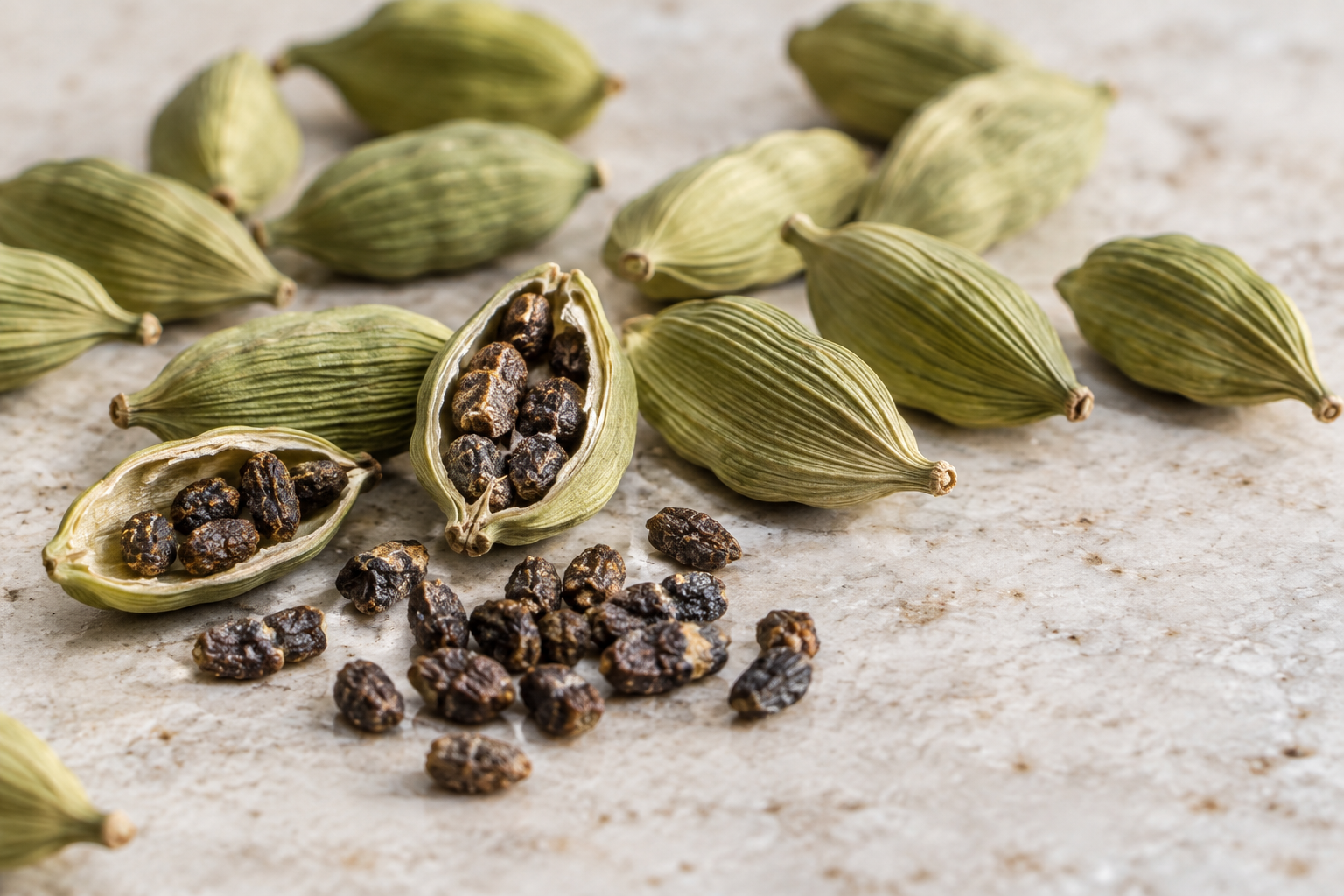
Cardamom originates from the moist mountain forests of southern India, particularly the Western Ghats, where one of the mountain ranges is even named the Cardamom Hills. The plant belongs to the ginger family and has long been dubbed the queen of spices in India, alongside pepper, which holds the title of king. It thrives in the shade of taller trees, in warmth and high humidity. Today, cardamom is also cultivated in other tropical regions and extensively in Guatemala, which has become one of its largest global producers.
In perfumery, the small dark seeds hidden in green pods are of importance. The pods ripen gradually, and thus are usually harvested by hand, before fully ripening, and then dried. The essential oil is extracted from the dried seeds, most commonly through steam distillation. The gentle extraction with carbon dioxide, which occurs at lower temperatures, is also becoming increasingly popular. The extract obtained this way is perceived as more faithful to the scent of freshly crushed seeds and better retains their fresh, lively notes. Due to the demanding cultivation and manual harvesting, cardamom is typically considered one of the more expensive spices.
The scent of cardamom is spicy, yet surprisingly cooling. Besides the warm, slightly resinous spicy undertone, you can detect a hint of citrus, a refreshing note reminiscent of eucalyptus, and a delicate, almost floral sweetness. The cooling impression is related to a compound called cineole, which you know from eucalyptus. As a result, cardamom appears significantly fresher than most spices – while cinnamon or clove warm and thicken the scent, cardamom tends to aerate and brighten it.
In perfumes, cardamom most often appears in the top notes, where it creates the first fresh and spicy impression upon application. You typically find it:
- in fresh spicy fragrances, where it combines with citrus, ginger, or pepper and adds energy to the composition,
- in oriental fragrances, whose warm, resinous, and sweet notes are refreshed and lightened at the start,
- in gourmand compositions with coffee or spiced tea, reminiscent of fragrant beverages and sweets,
- in woody scents, where it gives the wood a brighter and airier beginning.
The combination with coffee has a long tradition – in the Middle East, coffee is often flavored with cardamom, and thus this combination naturally resonates in oriental-inspired perfumery. If you're drawn to scents that are spicy but not heavy, look for cardamom in the composition. On the skin, its fresh notes are most noticeable in the first few minutes after application, then gradually fade, giving way to the middle and base notes.
Frankincense – Resin Tears of the Ancient Incense Route
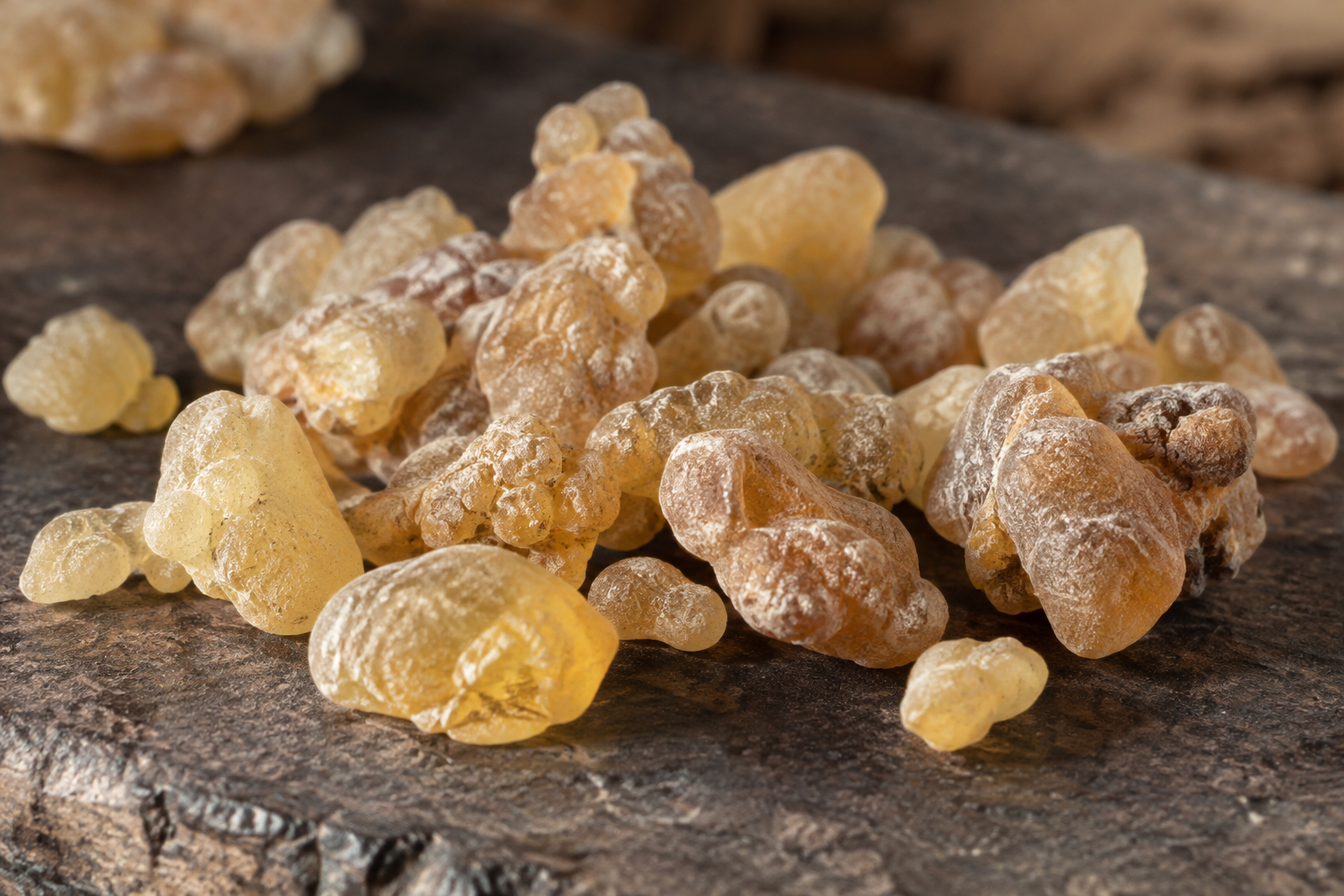
Frankincense, often referred to in perfumery by its Latin name olibanum, is the resin of trees from the Boswellia genus. These low, often twisted trees grow on dry rocky slopes and semi-desert areas of Oman, Yemen, Somalia, and Ethiopia, where they withstand heat and water scarcity. The name olibanum is usually derived from the Arabic word for milk, due to the milky sap that flows from the tree.
For centuries, frankincense was among the most valued commodities of antiquity. Caravans transported it along the so-called Incense Route from the southern Arabian Peninsula through desert oases to Mediterranean ports, from where it traveled further into the ancient world. The resin was burned in temples, during ceremonies, and in households, and the scent of its smoke is still associated with sacred places today.
Harvesting the resin is still predominantly manual work. Harvesters carefully cut the tree's bark, and from the shallow cuts, a milky, sticky sap begins to flow. It gradually hardens in the air and, over several weeks, dries into translucent drops and lumps known as tears. Their color ranges from almost white to yellowish and amber. The cutting is repeated during the season, but the trees also need a period of rest – too intensive harvesting exhausts them, which is why sustainable frankincense harvesting is increasingly discussed in recent years.
From the dried tears, two main raw materials are produced for perfumery:
- Essential oil – obtained by steam distillation, it is light and fresh, capturing primarily the airy, citrus, and resinous aspects of frankincense,
- Resinoid – produced by solvent extraction, it is thicker and darker, carrying warmer, balsamic, and longer-lasting tones.
If you smell frankincense essential oil for the first time, you might be surprised by how fresh it begins. Initially, citrus, slightly lemony, and peppery notes emerge with a green resinous sharpness reminiscent of pine needles. Gradually, the scent calms and transitions into smoky, balsamic, and woody shades with a cool, almost mineral undertone. This combination evokes associations with old stone churches, where the smoke from censers has seeped into the walls over centuries.
In a perfume composition, frankincense can act on various levels – its fresh component enlivens the top notes, while the resinous and smoky aspects are featured in the heart and base of the fragrance. You will encounter it primarily in these types of compositions:
- Oriental fragrances, where it blends with spices, balsams, and other resins, adding depth,
- Woody fragrances, to which it lends dryness and a cooler, airier character,
- Smoky compositions inspired by rituals, fire, or old interiors, where it often plays a leading role,
- Modern unisex perfumes, where in smaller amounts it functions as a mysterious accent, giving the fragrance space and unexpected depth.
Frankincense in compositions is often accompanied by related myrrh or labdanum. If you enjoy scents that feel calm, meditative, and simultaneously pure, it is worth paying attention to its resinous signature.
Vetiver – Roots with an Earthy Aroma
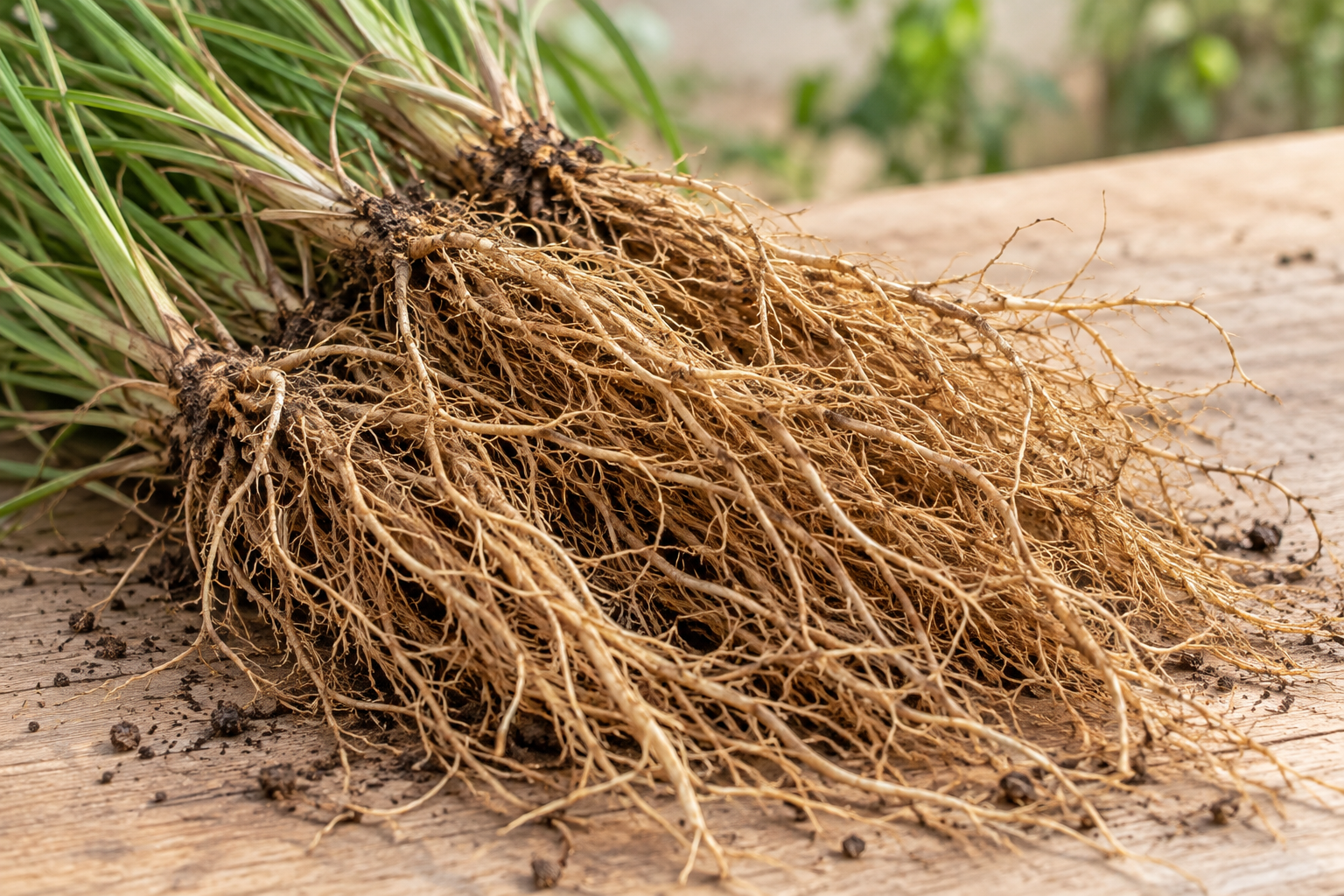
Most fragrant materials come from flowers, fruits, leaves, or bark. Vetiver is an exception: this tall tropical grass hides its richness underground. It's the dense, tangled roots that emit its scent, reaching several meters deep. The plant originates from India and is now primarily cultivated for perfumery in Haiti, on the Indonesian island of Java, and in India. Due to its extensive root system, vetiver is also planted in many countries as a natural erosion control for slopes.
In India, where vetiver is known as khus, its roots have a long-standing tradition. They are woven into mats and curtains that are sprinkled with water on hot days – the air passing through them cools down and gently scents the entire room. This earthy, calming fragrance makes vetiver such a valued perfume ingredient.
The journey from a clump of grass to fragrant oil is labor-intensive. The plants typically grow for about one to two years until the roots are strong enough. Then the clumps are dug up, the roots are separated from the above-ground parts, thoroughly washed to remove soil, and left to dry. Before processing, they are usually chopped and sometimes soaked in water. The steam distillation itself is particularly lengthy for vetiver, taking many hours – the fragrant compounds in the roots are heavy and not very volatile, so the steam releases them only gradually. The result is a thick oil of amber to dark brown color, which, according to experienced perfumers, rounds out over time.
The scent of vetiver is earthy, woody, and smoky. It resembles damp soil after rain, freshly dug roots, or dry grass, and depending on its origin, you can detect nutty tones, a slight bitterness, or a surprisingly fresh hint reminiscent of grapefruit. The different origins are noticeably distinct:
- Haitian vetiver tends to be lighter and cleaner, with a fresher, slightly citrusy and nutty character. Perfumers value it for its subtlety and elegance.
- Javanese vetiver is darker, denser, and more intensely smoky, sometimes with a hint of leather or charred wood. It is used where the fragrance needs to feel darker and more raw.
In addition, refined derivatives such as vetiveryl acetate are prepared from the oil, which retains the woody character but appears smoother and less earthy.
In perfumes, vetiver primarily serves as a base note. It anchors the composition, extends the fragrance's longevity, and adds a dry, woody depth. Therefore, it is a traditional pillar of men's woody perfumes, often paired with spices, tobacco, or other woody notes. However, it is increasingly appearing in fresh citrus and unisex fragrances: beneath the bright notes of lemon or grapefruit, it creates an earthy counterbalance, ensuring the freshness doesn't feel flat and lasts longer on the skin. If you find vetiver in the description of base notes, you can expect a dry, earthy finish that continues to develop on the skin long after the top notes have faded.
Oakmoss – The Lichen That Supports Chypre
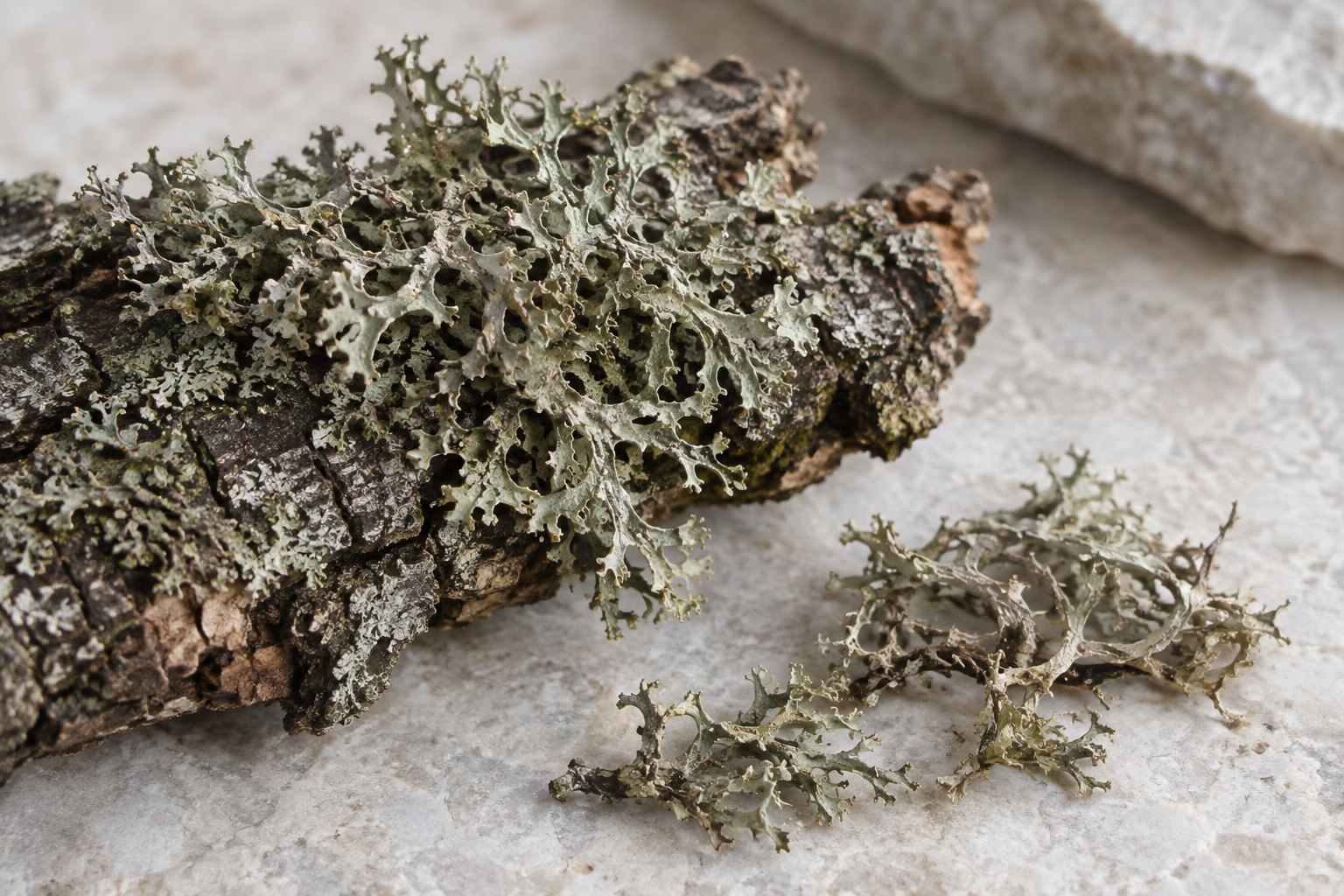
Despite its name, oakmoss is not a moss but a lichen – a symbiotic relationship between a fungus and an alga, creating gray-green, delicately branched structures. It most commonly grows on the bark of oak trees, but can also be found on other deciduous trees. For perfumery, it is traditionally harvested in the forests of the Balkans, France, and North Africa, particularly Morocco. A related lichen that grows on conifer bark is known as tree moss and has a slightly more resinous scent.
The harvesting is done by hand: gatherers carefully peel the lichen from trunks and branches and then allow it to dry thoroughly. The dried material can be stored for some time, as its fragrance tends to gain depth with aging. The processing itself takes place in two steps:
- Solvent Extraction – The dry lichen is soaked in a volatile solvent, which extracts both fragrant and waxy substances. After the solvent evaporates, a thick, waxy concentrate remains, known in perfumery as concrete.
- Alcohol Purification – The concrete is washed with alcohol, which dissolves the fragrant component while separating the waxes. After removing the alcohol, an absolute is formed – a dark, very thick, and potent material, of which only a small amount is usually needed in a composition.
Why Modified Versions Are Used Today. Natural oakmoss contains several substances that can cause allergic skin reactions in sensitive individuals; atranol and chloroatranol are most commonly mentioned. Cosmetic and perfume safety regulations significantly limit their presence in finished products, and the overall amount of oakmoss in compositions is also regulated. For this reason, perfumers work with specially modified extracts, from which problematic components are largely removed, and the natural material is often supplemented with synthetic substances of a similar character. Many classic fragrances have been reformulated over the years because of this – their essence remains similar, but some nuances may differ.
The scent of oakmoss is dense and dark. It resembles a damp forest after rain, crushed bark, soil, and undergrowth. Beneath this green, slightly bitter layer lies a lightly salty, almost marine undertone, a gentle leathery hint, and a peculiar inky dryness. In compositions, it primarily manifests in the base notes, where it lingers for a long time and acts as a solid foundation on which other ingredients can shine.
The Foundation of the Chypre Family. Chypre fragrances, named after the French word for the island of Cyprus, are built on the contrast of a fresh citrus opening, typically bergamot, and a dark earthy base, where oakmoss plays a key role, often combined with resinous labdanum and patchouli. Without it, this family would lose its characteristic green depth and elegant, somewhat reserved character. From the classic scheme, floral, fruity, and leathery variations of chypre have gradually evolved.
The Backbone of Classic Fougère. Oakmoss also has its place in aromatic fougère fragrances, where along with lavender and a sweet coumarin tone, it creates the typical "fern-like" impression. It adds earthiness and stability, ensuring that fresh herbal notes do not dissipate too quickly. Generally, even in small amounts, it can anchor a fragrance, add a green shadow, and connect the top notes with the base, which is why perfumers also use it in woody or leathery compositions.
Category
Recommended articles
Riiffs Freeze in Flames: Ice and Flames Illuminate Warsaw "Give a girl the right shoes and she can conquer the world!" Marilyn Monroe