


 Riiffs Freeze in Flames: Ice and Flames Illuminate Warsaw
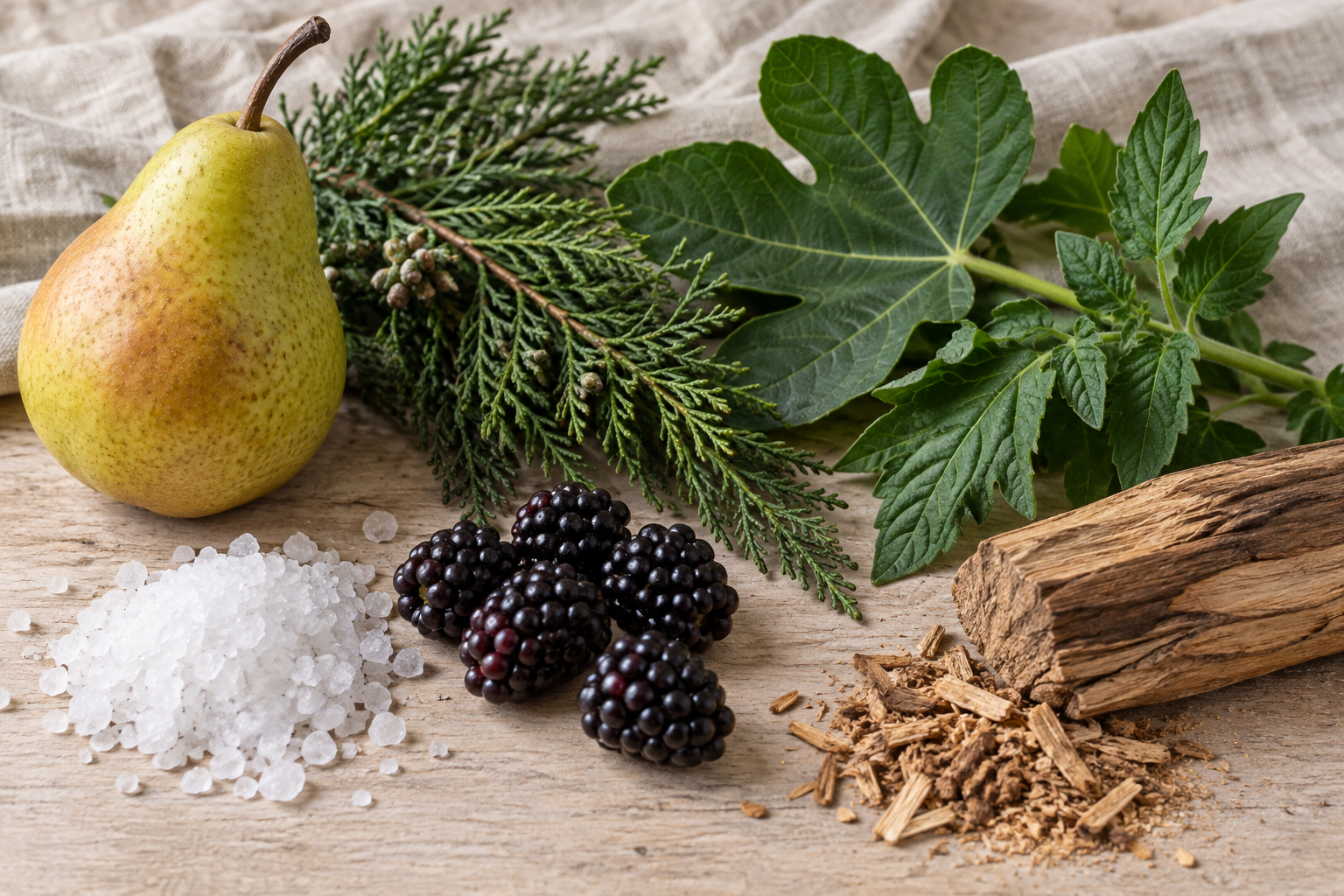
What lies behind the notes in a perfume description? In the ninth part of our encyclopedia of perfume ingredients, we introduce pear, cypress, green leaves, sea salt, blackberry, and guaiac wood.
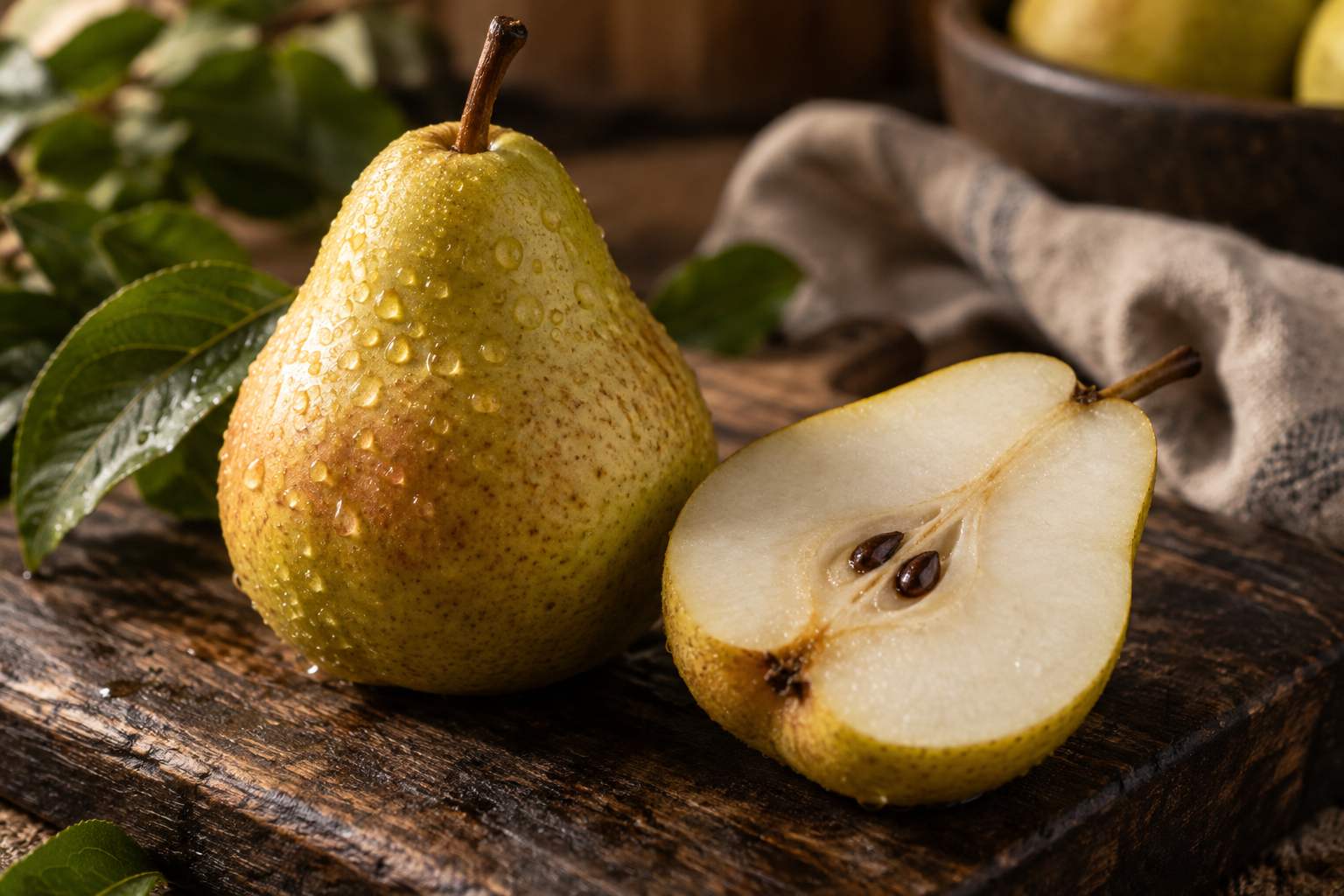
Pear – the juicy fruity freshness that nature itself doesn't yield
The common pear (Pyrus communis) from the rose family is one of the oldest cultivated fruit trees. Its wild ancestors originate from regions between the Caucasus and Central Asia, from where cultivation spread to Europe and further east. Pear trees grew in the orchards of ancient Greece and Rome, mentioned in Homer's Odyssey, and during the Middle Ages, their breeding was mainly developed by monasteries. Today, there are thousands of varieties – from small cider pears to buttery soft table pears, whose fragrance can fill an entire pantry.
However, this fragrance cannot be directly obtained by perfumers. Pear fruits cannot be distilled or extracted to produce a usable fragrant oil – the flesh is mostly water, volatile substances are present only in trace amounts, and they easily decompose when heated. The pear you smell in a perfume is therefore always a reconstruction: a chord composed of individual molecules that chemists have identified in the aroma of ripe fruit and can synthesize.
Fruit esters play a key role in this chord. The most important of these is ethyl decadienoate, known in the industry as the pear ester. Even in very low concentrations, it carries the typical tone of juicy, ripe pear with a slightly waxy hint of the peel. It is complemented by hexyl acetate with a fresh, green fruity character, reminiscent more of unripe fruit and apple peel. The perfumer then adds other esters or delicate floral molecules as needed – depending on whether the final pear should feel crisp and fresh or sweet and soft.
In compositions, pear is primarily used as a top note. It brings the first impression of juiciness and brightness and gradually gives way to the heart of the fragrance. You will mainly encounter it in these types of perfumes:
- Fruity compositions – here, pear forms the backbone of the top notes, often paired with apple, blackcurrant, or citrus.
- Floral compositions – it brightens fuller flowers, such as freesia, rose, or jasmine, adding a refreshing fruity juice.
- Gourmand compositions – in combination with vanilla, caramel, or praline, it evokes baked or caramelized pear and lightens the sweet base.
An interesting fact is the origin of the pear ester itself. In the 1960s, food chemists described it while analyzing the aroma of the Williams pear variety, known in the English-speaking world as Williams or Bartlett. This old English variety from the 18th century, valued for its strong fragrance and buttery flesh, lent its character to the molecule that today represents pear in perfumery. So, when you smell ripe pear in the top notes, it's quite possible that it's an echo of a specific orchard variety.
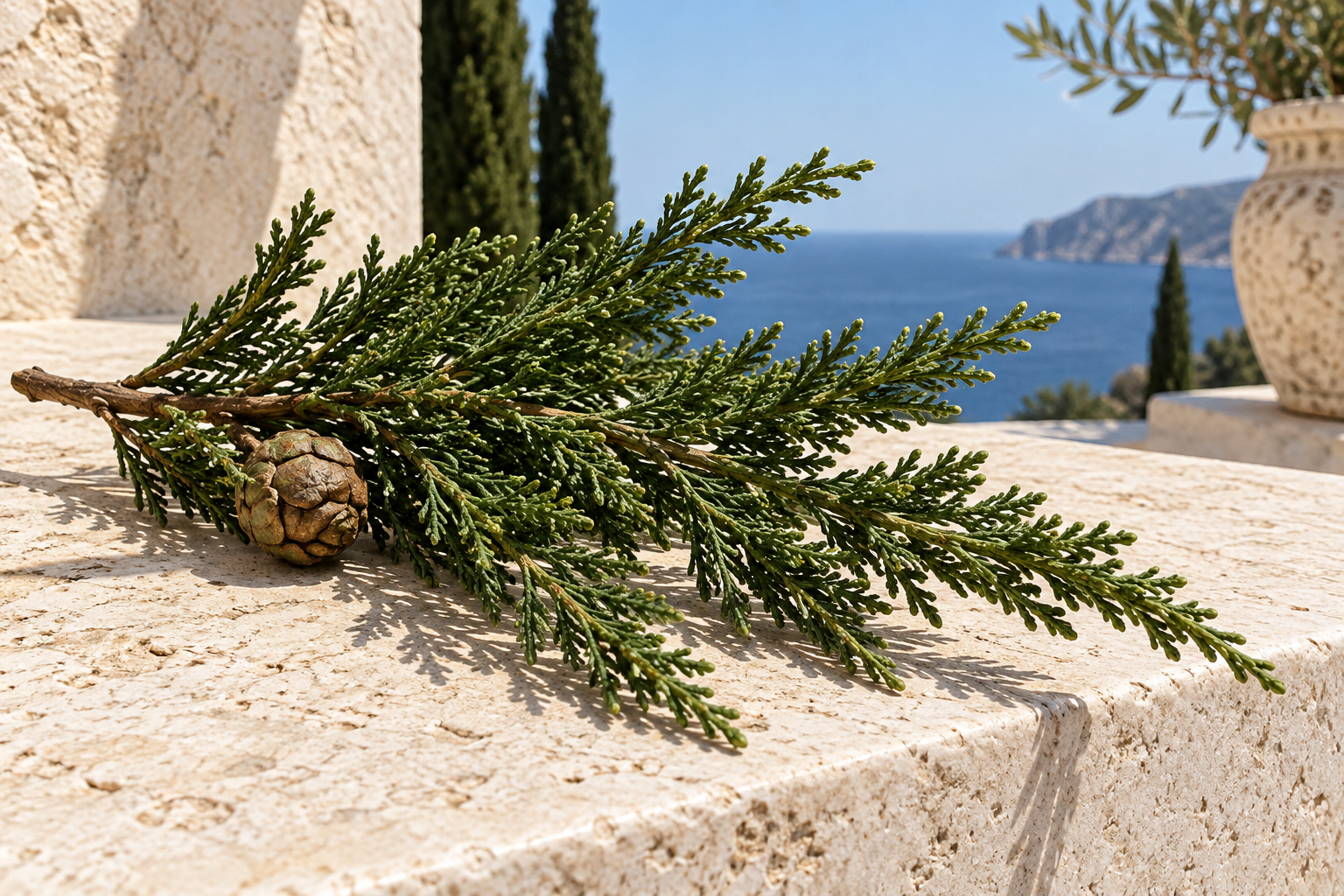
Cypress – the Resinous Green of the Mediterranean Landscape
Imagine a Tuscan road lined with slender dark trees or a Cretan hillside basking in the midday sun. The evergreen cypress (Cupressus sempervirens) belongs to this landscape as naturally as olive trees and lavender. This conifer from the cypress family originates from the Eastern Mediterranean and Western Asia, but people have spread it across the Mediterranean coast since ancient times. It lives to a great age, and its narrow, candle-like crown remains a typical silhouette of the southern landscape.
In perfumery, the essential oil is obtained by steam distillation of young twigs and needles, sometimes with the addition of cones. The result is a light, slightly yellowish oil, whose scent is dry and resinous, with a hint of fresh greenery and a touch of smoke. Its composition is dominated by monoterpenes, primarily alpha-pinene, which you also know from the scent of pines and firs. Thus, cypress evokes a walk through a coniferous forest – only drier, sunnier, and somewhat more restrained.
In a perfume composition, cypress is mainly used in the top and middle notes, where it adds an airy woodiness. You will most often find it in these fragrance families:
- Aromatic Scents – alongside lavender, rosemary, or juniper, it enhances the herbal, Mediterranean character and gives it a dry, resinous framework.
- Chypre – in combination with citrus and a mossy base, it brings green tension to the composition and helps connect the fresh beginning with the darker base.
- Fougère – in fragrances built on lavender and coumarin, it enhances the impression of cleanliness and forest freshness.
It also pairs well with woody notes like cedar or vetiver, and with spicy ingredients. If you see it in a perfume description, you can expect a more restrained, elegant character rather than sweetness – cypress calms the composition and gives it space. It often appears in men's perfumes, but due to its subtlety, it also works well in unisex and women's compositions.
There is also an ancient myth associated with the cypress. According to a story captured by the Roman poet Ovid in the Metamorphoses, a young man named Cyparissus lived on the island of Ceos, a favorite of the god Apollo. By unfortunate accident, he killed a tame sacred deer he loved with a spear, and his grief was so deep that he begged the gods to let him mourn forever. Apollo transformed him into a tree that became a symbol of sorrow. Perhaps this is why cypresses have long been planted in Mediterranean cemeteries – the evergreen needles and upward-reaching crown are traditionally interpreted as a sign of eternity and the connection between earth and heaven.
Green Leaves – The Scent of Freshly Picked Greenery
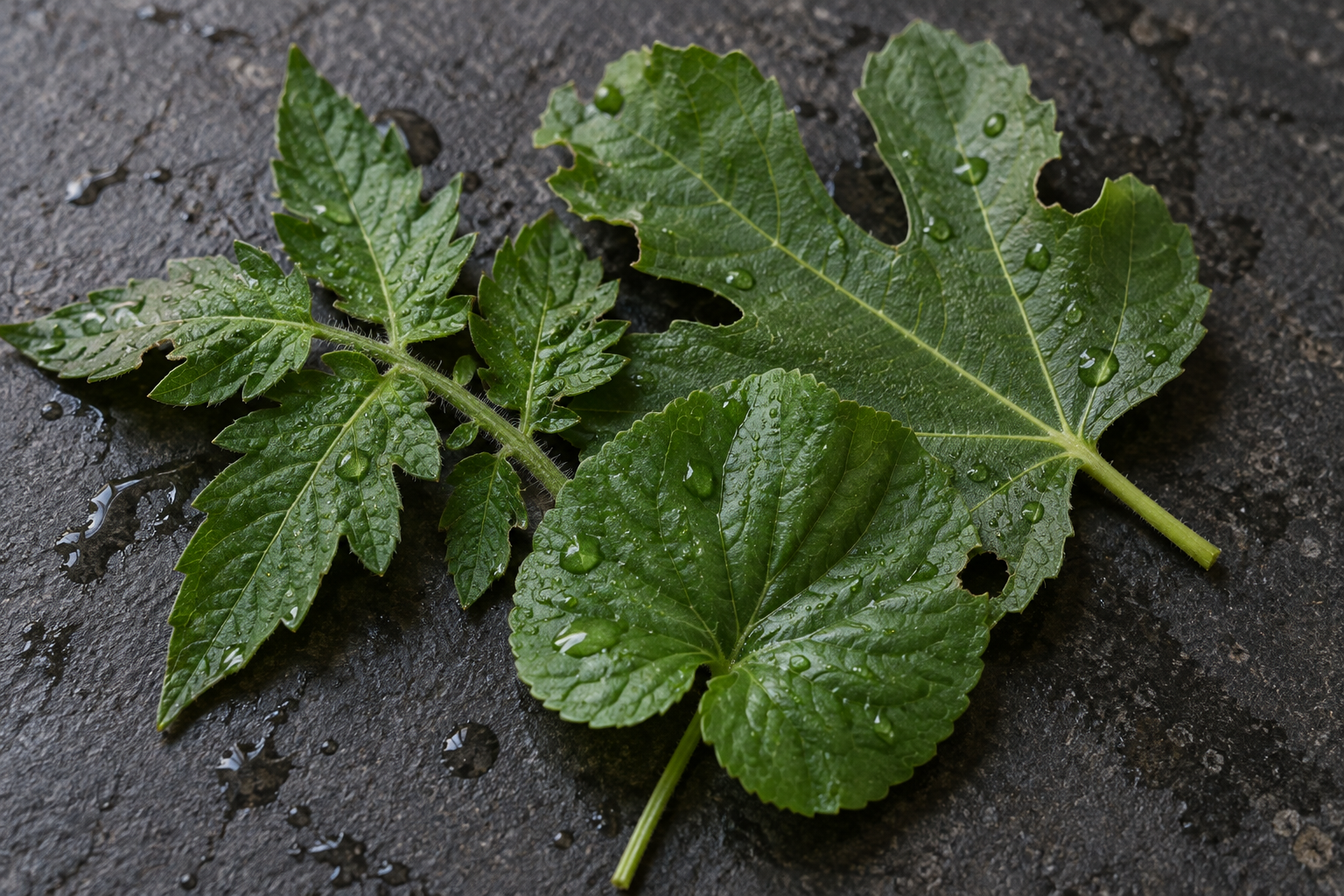
In perfumery, the term green leaves doesn't refer to a single specific plant. It encompasses a whole family of notes that evoke the scent of a freshly picked leaf, a freshly mown lawn in the morning, or a stem crushed between your fingers. Whether you've noticed this scent in a meadow or while picking tomatoes in the garden, your brain instantly associates it with something lively, juicy, and clean.
It might seem logical to gather a pile of leaves and distill fragrant oil from them. However, with most common leaves, this isn't possible – they contain only a tiny amount of volatile substances, and the true "green" scent isn't actually present until the leaf is damaged. It forms only when the leaf is torn: enzymes in the cells break down fatty acids into small fragrant molecules within seconds. Moreover, hot steam during distillation would alter this delicate impression beyond recognition. That's why perfumers don't derive the green note from a single raw material but compose it like a chord.
Its backbone is cis-3-hexenol, known as leaf alcohol for its characteristic scent. It was first described in the 1930s during the study of tea leaves. Although a natural variant exists, it is significantly more expensive, so the synthetic version with the same molecule predominates in perfumery. In its pure form, it smells sharp, almost like freshly cut grass, so it is used sparingly in compositions, often in fractions of a percent. Around it, perfumers arrange natural accents that give the chord depth and texture:
- Violet Leaf Absolute – obtained by solvent extraction from the leaves of the sweet violet, not its flowers. It smells green, slightly cucumber-like, and earthy, with a hint of moist soil.
- Galbanum – a gum resin exuded by the roots and stems of plants from the Ferula genus, mainly growing in Iran. It is intensely green, bitter, and slightly resinous; even a small amount can significantly "green up" the entire fragrance.
- Other Green Details – notes reminiscent of tomato leaf, fig leaf, or blackcurrant buds, depending on whether the greenery should feel more juicy, milky, or fruity.
In compositions, green leaves mainly belong to the top notes. They are the first impression you get after applying the perfume, and their freshness opens the way to the floral heart. Roses, lilies of the valley, or hyacinths with them seem as if they were just picked from the garden, not arranged in a vase. The green chord gives the fragrance a sense of naturalness and airiness, which is why it often appears in spring compositions and in fragrances meant to feel casual and effortless. The intensity varies – from a subtle hint to a pronounced bitter, almost vegetal line, typical of classic green perfumes from the chypre family.
An interesting fact is why grass smells so strongly after being cut. For the plant, it's not a pleasant trait but an alarm signal. The substances, which botanists call volatile green leaf compounds, are released the moment the leaf is damaged by insects, animals, or a mower. According to botanical research, they can warn surrounding plants and, in some cases, even attract natural enemies of herbivorous insects. The scent you perceive as the embodiment of freshness is actually the plant's defensive reaction – and perfumery has borrowed it to remind you of a morning in a blooming meadow.
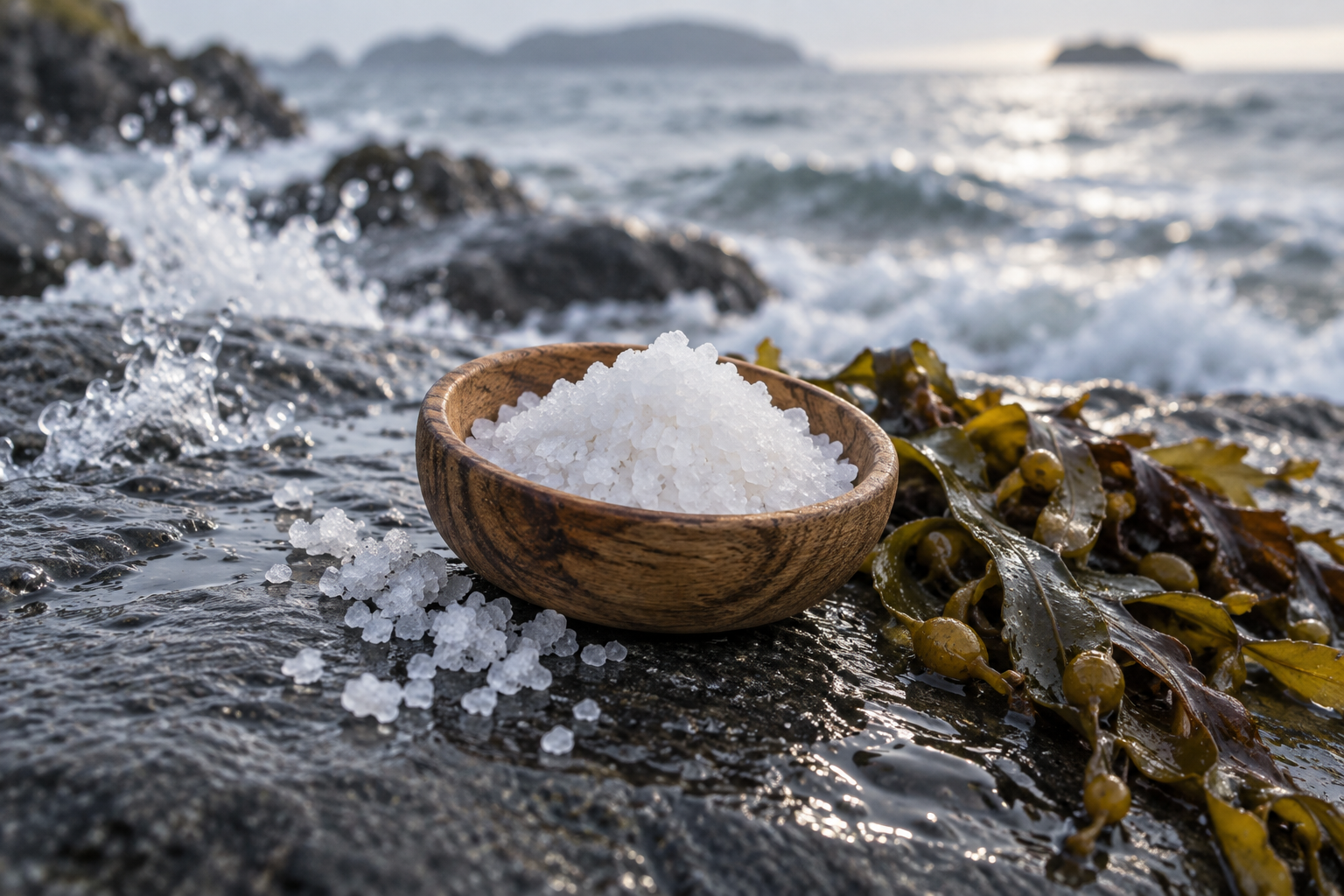
Sea Salt – The Salty Breath of the Coast That Doesn't Smell on Its Own
When you step onto the beach, the first thing that usually hits you is the salty, fresh, and slightly mineral air. That's why many are surprised to learn that sea salt itself doesn't have a scent. Sodium chloride, which makes up the majority of it, is not volatile – its crystals do not evaporate at normal temperatures, and their molecules cannot reach the olfactory receptors in the nose. Therefore, no "salt scent" can be distilled, pressed, or extracted from salt pans or seawater. The salty note in a perfume is always an illusion, crafted by the perfumer from other ingredients.
So what do you actually smell by the sea? The typical coastal air is largely due to substances released by seaweed and plankton. A significant role is played by dimethyl sulfide, which in low concentrations resembles the sea, and together with moisture, wind, and heated stones creates the impression that we associate with salt. Perfumers do not try to imitate salt literally – they compose the entire atmosphere of the coast.
The salty accord is usually built from three groups of ingredients:
- Mineral and amber molecules – synthetic substances with a dry, warm, and slightly skin-like tone give the composition the impression of salt on the skin, wet stones, and skin after a sea bath.
- Marine ozonic substances – the most well-known is calone, a molecule with a watery, airy tone that resembles a sea breeze and also a bit of melon. Even in small amounts, it significantly "aerates" the composition.
- Seaweed extract – natural absolute from brown algae has a dark, iodine-like to earthy scent. It is used only in trace amounts, as in higher concentrations it would easily overpower other components.
In a composition, the salty accord develops gradually. The ozonic substances are noticeable soon after application, but the mineral and amber components fully unfold in the middle notes and linger in the base notes on the skin for hours – often they are the ones that give the fragrance a salty echo that you can still smell in the evening. This accord's ability to balance is also valuable. It reduces the heaviness of sweet components like vanilla, caramel, or ripe fruit, much like a pinch of salt in a dessert. It also adds airiness and transparency to floral notes, such as jasmine or tuberose. The resulting fragrance then feels more natural and less sweet than the ingredient list alone might suggest.
Fun Fact: The calone molecule was developed in the 1960s by chemists at a pharmaceutical company during research aimed at a completely different use. Perfumers only fully discovered its potential later – at the turn of the 1980s and 1990s, it became the foundation of so-called marine or aquatic fragrances, which influenced the style of fresh perfumes for both women and men for a long time. You can still find it or its related molecules in many scents that aim to evoke the air by the sea.
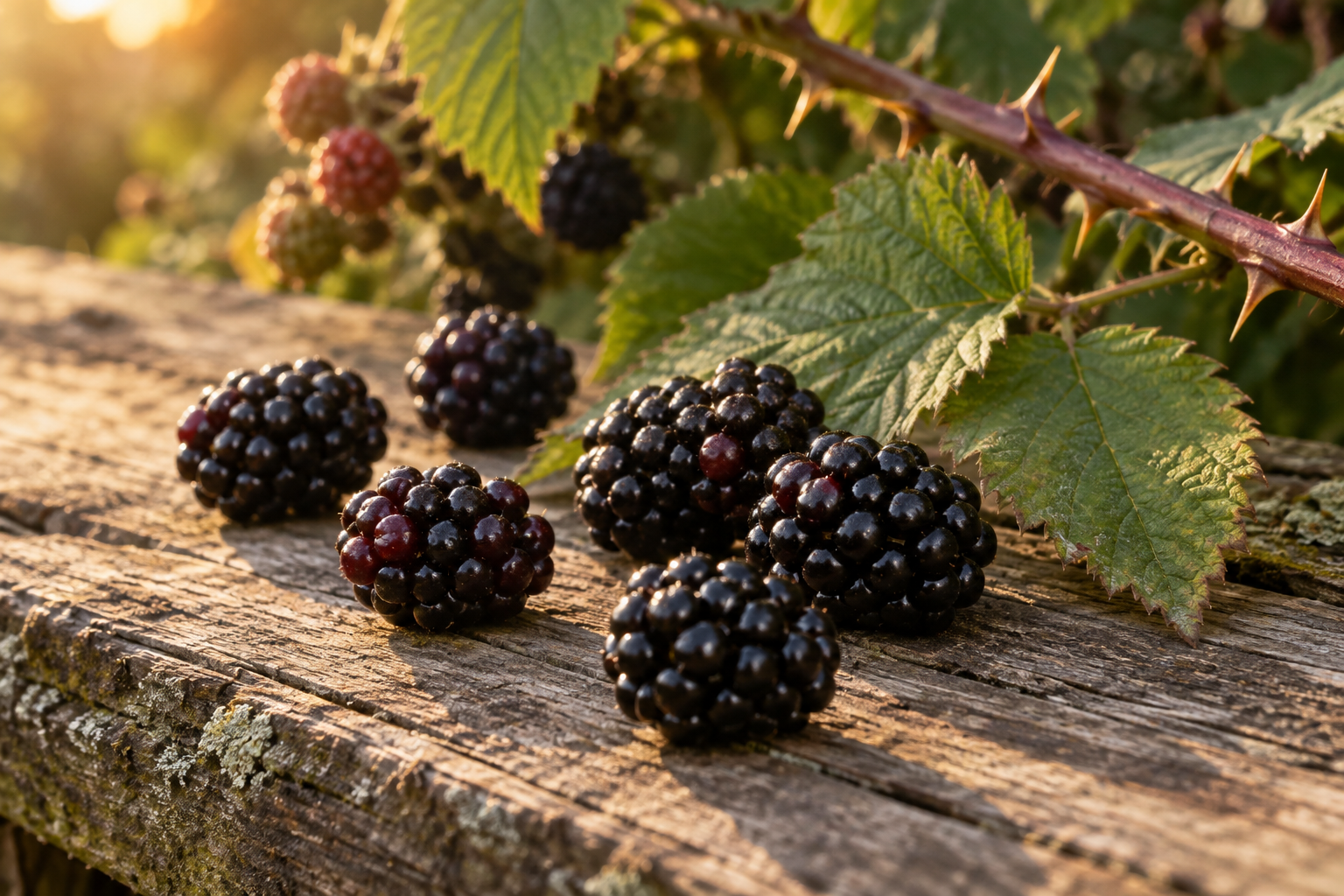
Blackberry – the dark juiciness of wild berries
The blackberry bush grows almost everywhere you look in Europe – at the edges of forests, in clearings, along paths, and in untended gardens. Botanists refer to it as Rubus fruticosus, but in reality, it is a collective species that includes hundreds of closely related and hard-to-distinguish forms. The thorny canes bloom white to pinkish, and from late summer to autumn, they bear fruit that gradually darkens from red to glossy black-purple. This ripe, almost inky color also influences how we perceive blackberry in scent: as juicy, slightly tart fruit with a jammy, dark undertone.
Blackberries themselves do not yield a usable quantity and quality of fragrant raw material – the fruits contain a lot of water, and their delicate aroma is lost during distillation or extraction. Therefore, the blackberry note in perfume is created as an accord, a composition crafted by the perfumer from multiple ingredients. The base usually consists of fruity esters that provide juiciness and sweetness, and raspberry ketone with its characteristic berry-like scent. A darker, slightly tart dimension is brought by blackcurrant notes, often supported by an absolute extract from blackcurrant buds. This has a distinctive green, sharper, and slightly animalistic trace, which ensures that the blackberry does not come across as a sweet candy but as real fruit picked from the bush.
In a perfume composition, blackberry most often appears in the top and middle notes. Initially, it adds juice and color to the scent, and in the heart, it often meets flowers – typically rose, violet, or jasmine, with which it creates a fuller, velvety impression. Its main strength lies in how it connects the fresh fruity part of the fragrance with darker bases. Combined with patchouli, woody notes, vanilla, or musk, it becomes a bridge between a light beginning and a deep, warm finish.
You can encounter blackberry in several types of compositions:
- fruity floral – where it softens and simultaneously darkens rose or violet,
- gourmand – where, in combination with vanilla and caramel notes, it resembles blackberry jam,
- chypre and woody – where, in contrast with patchouli and mossy notes, it adds depth and juiciness simultaneously.
If you want to fully enjoy the blackberry note when testing a perfume, give it time. In the first few minutes, it is the juiciest and brightest, later it usually mellows and blends with the heart of the composition, so its dark, jammy character stands out only when combined with the bases.
An interesting fact that accompanies the blackberry bush much longer than modern perfumery is its leaves. In folk tradition, they were collected, dried, and used to make herbal tea for generations, in some areas even as a homemade substitute for black tea. Young leaves were sometimes allowed to ferment slightly before drying to give the beverage a fuller and darker taste. Thus, in the European landscape, the blackberry bush was never just a plant with fruits – it was part of the domestic tradition long before its fruit became a perfume accord.
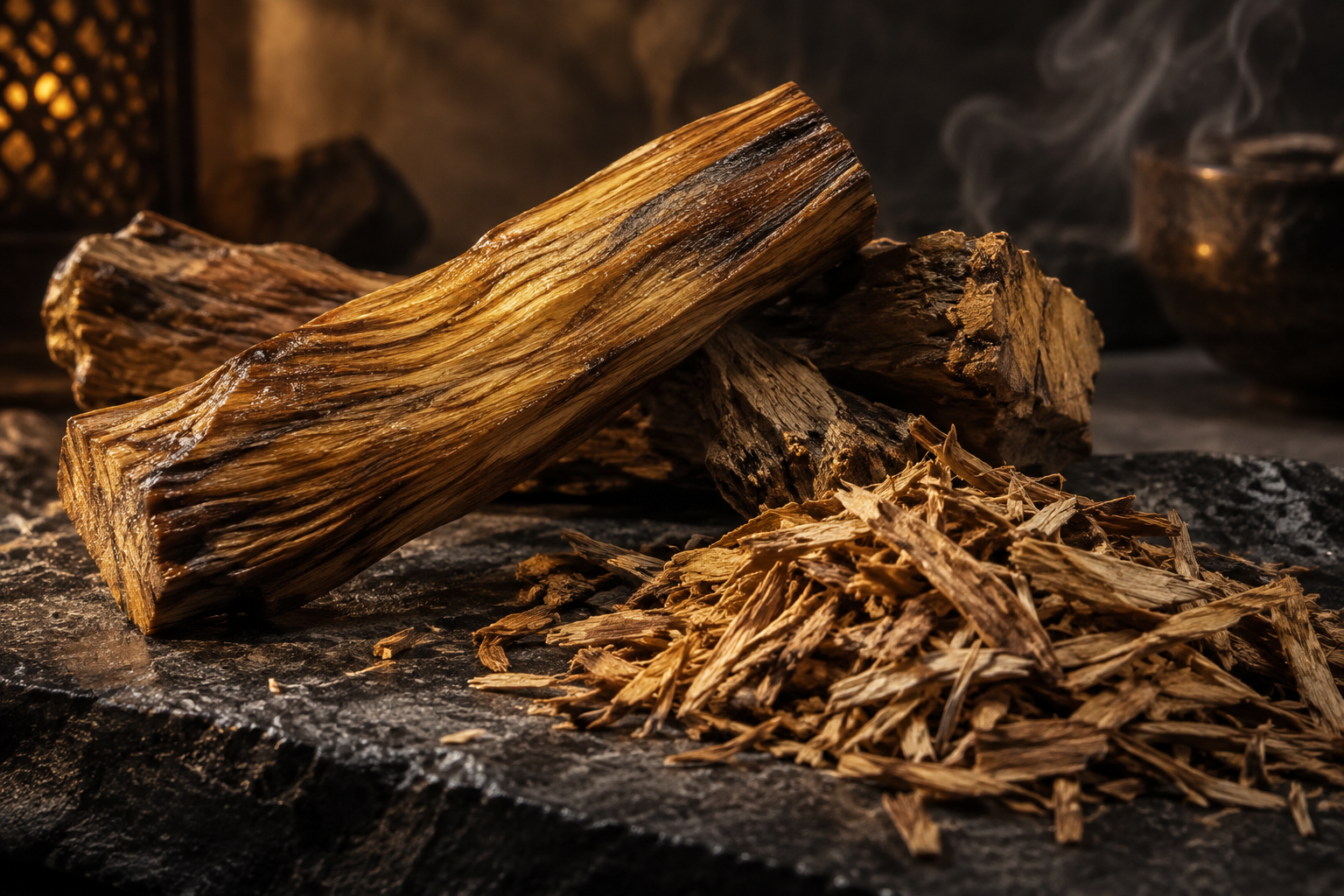
Guaiac Wood – The Smoky Base That Holds It All Together
In today's segment, we move from fresh and juicy notes to a material that works quietly yet persistently in a perfume. Guaiac wood is among the classic woody bases, providing a solid foundation on which lighter tones can shine.
Origin and Botany. Perfumery guaiac wood comes from the Bulnesia sarmientoi tree, which grows in the dry forests of the Gran Chaco region, straddling Paraguay, Argentina, and Bolivia. Locals call it palo santo, leading to another confusion – the same name is also used for another South American tree, Bursera graveolens, whose sticks are burned as incense. Be cautious not to confuse it with true guaiac (Guaiacum officinale), known as lignum vitae. This is an exceptionally hard and heavy wood historically used for ship bearings, but it plays no role in perfumery. Both trees belong to the same family, Zygophyllaceae, which is why their names are easily mixed up.
How the Oil is Obtained. The essential oil is produced by steam distillation of the wood and sawdust generated during its processing. The result is a thick, yellowish oil with an unusual property: it gradually solidifies into a soft, buttery mass at room temperature. This is due to the sesquiterpenic alcohols guaiol and bulnesol, which make up a significant portion of the oil and tend to crystallize. Perfumers often gently heat the material before use to make it easy to weigh and mix.
How it Smells. The scent of guaiac wood is soft and smoky, but not sharp like campfire smoke. It resembles strong tea dried over a fire, complemented by a gentle rose note and a balsamic finish. This combination gives it a warm and rounded feel – woody, yet not dry.
Role in Composition. In perfume, guaiac wood is primarily used in the base notes. It evaporates slowly, thus acting as a fixative – it slows the evaporation of more volatile components and prolongs the scent's impression on the skin. At the same time, it adds depth to the composition and balances notes that might otherwise seem too light:
- It anchors fruity tones, so their sweetness doesn't come across as superficial,
- provides a warm counterpoint to green and herbal notes,
- grounds salty and airy accords with substance they otherwise lack,
- creates smoky, evening compositions with rose, incense, vetiver, or tobacco.
This balancing role is also evident in today's segment: after five lighter materials – fruity, green, and salty – it serves as a solid point to which other notes can relate.
Interesting Fact: A Protected Tree. Due to extensive logging and deforestation in the Gran Chaco area, Bulnesia sarmientoi was listed in Appendix II of the Convention on International Trade in Endangered Species of Wild Fauna and Flora (CITES) in 2010. This doesn't mean a ban, but stricter control – exporting the wood and extracts made from it requires a permit to ensure that trade does not threaten the species' survival. For perfumery, this means a greater emphasis on documented sourcing and a growing interest in sustainable harvesting.
Category
Recommended articles
Riiffs Freeze in Flames: Ice and Flames Illuminate Warsaw "Give a girl the right shoes and she can conquer the world!" Marilyn Monroe
