
 Riiffs Freeze in Flames: Ice and Flames Illuminate Warsaw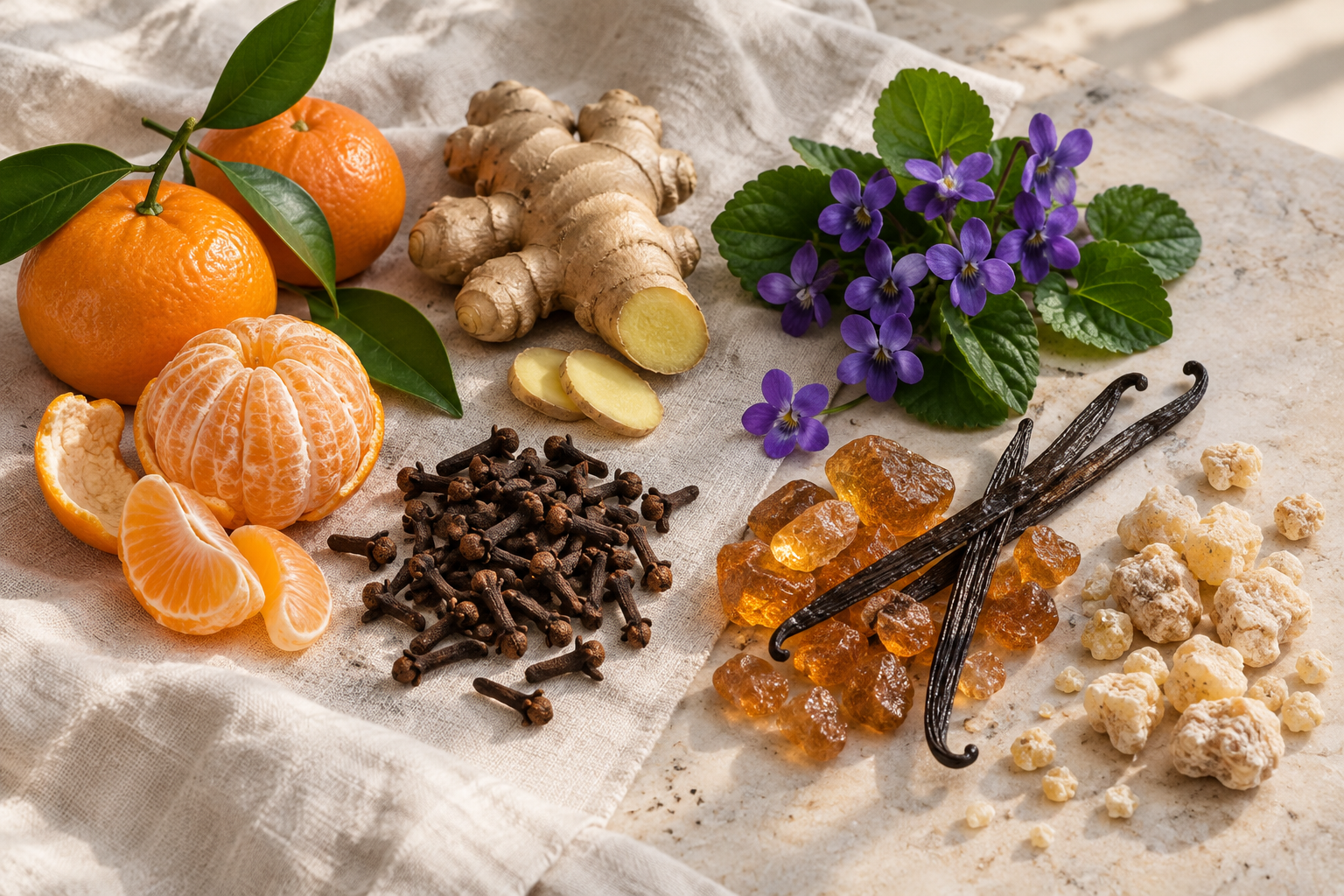
What lies behind the notes in a perfume description? In the 5th part of our encyclopedia, we introduce mandarin, ginger, clove, violet, amber, and benzoin – their origins, scents, and stories.
Mandarin
The mandarin is a citrus fruit with a very long history of cultivation. Its homeland is China and Southeast Asia, where it has been grown for centuries and held a special place in traditional culture – the small orange fruits symbolized abundance and happiness and are still given as gifts during New Year celebrations. Surprisingly, the mandarin arrived in Europe quite late, only in the 19th century. It first appeared in English greenhouses and from there spread to the Mediterranean, finding favorable conditions particularly in Italy, especially in Sicily and Calabria. Today, Italian production is one of the key sources of raw material for perfumery, alongside cultivation in Spain and Brazil.
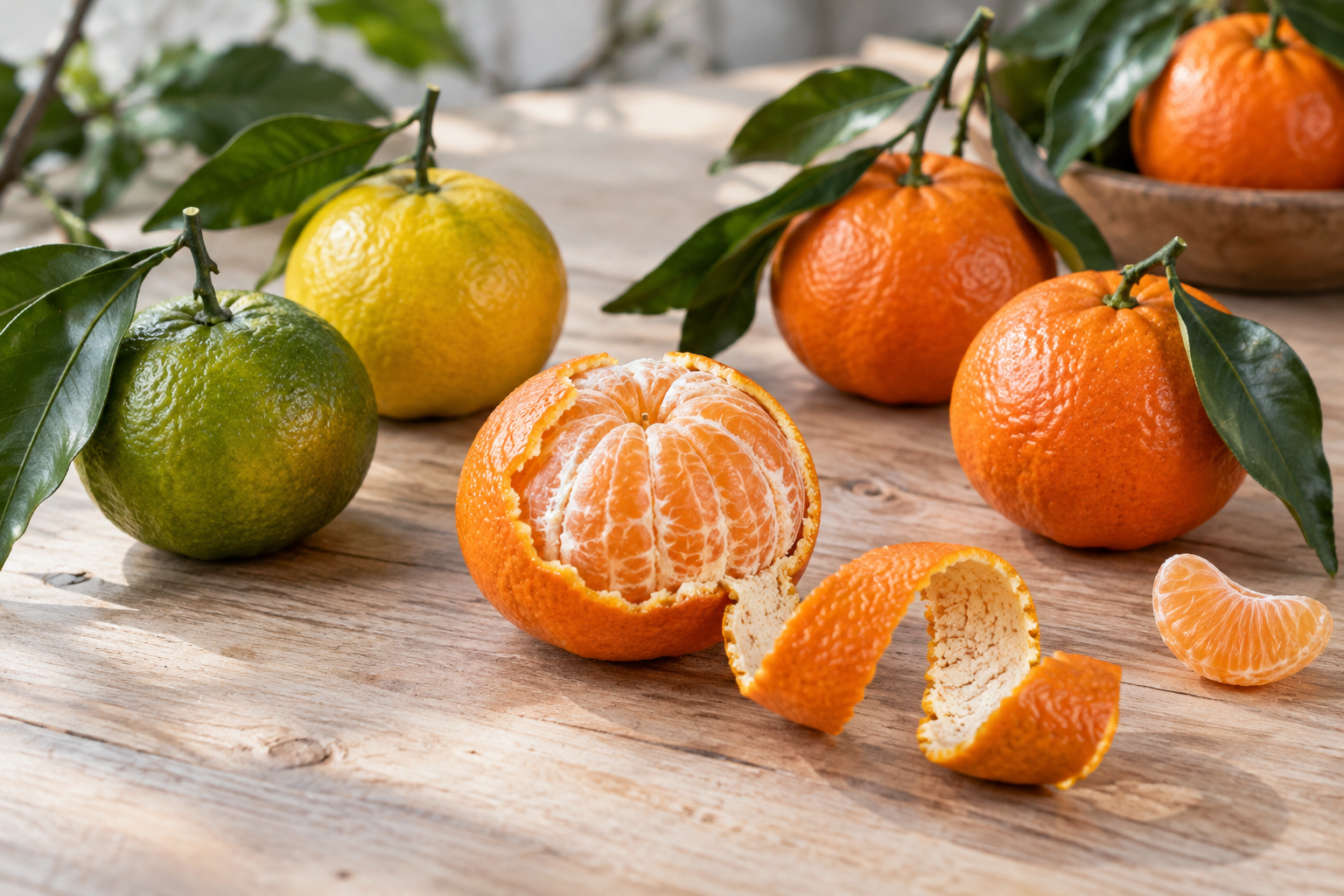
The essential oil is obtained, as with most citrus fruits, by cold pressing the peel. The aromatic substances are stored in small sacs just beneath the surface of the skin; mechanical pressure releases them, separating them from water and solid particles, resulting in a brightly colored, intensely fragrant oil. Heat is not used in this process, as it would damage the delicate fresh notes. The resulting scent significantly depends on the stage of ripeness at which the fruits are harvested:
- Green mandarin is harvested first, while still unripe. Its oil is sharper, freshly bitter, with green and slightly grassy undertones.
- Yellow mandarin represents a transitional phase – it appears balanced, fresh, and sweet at the same time.
- Red mandarin comes from fully ripe fruits and smells the sweetest, juicy and rounded, with notes reminiscent of freshly peeled fruit.
Compared to lemon or bergamot, mandarin is softer and less acidic. Lemon is sparkling and sharp, bergamot has a tea-like, slightly bitter undertone, while mandarin smells juicy, sweet, with a gentle floral hint. This makes it easy to blend with floral accords, giving it a friendly, almost playful character.
In perfumes, mandarin is primarily found in the top notes. It is the first impression you perceive after application, and like other citrus fruits, it fades relatively quickly. It is used in citrus compositions, where it adds juiciness and roundness, in colognes, complementing the classic combination of citrus and herbs, and in gourmand perfumes – where it balances the sweet notes of vanilla or caramel, providing a fresh, fruity opening. Perfumers also appreciate it for its ability to soften sharper citrus notes and smoothly connect the fresh top with the floral heart.
The origin of the name itself is also interesting. Traditionally, it is associated with mandarins, high officials of imperial China, who, according to popular interpretation, wore garments in orange tones reminiscent of the color of ripe fruits. The word mandarin itself is not Chinese – it entered European languages through Portuguese and is related to the Malay and Sanskrit terms for advisor or dignitary. Regardless of the romantic interpretation, the name mandarin still carries traces of its long journey from Asian gardens to European perfumery.
Ginger
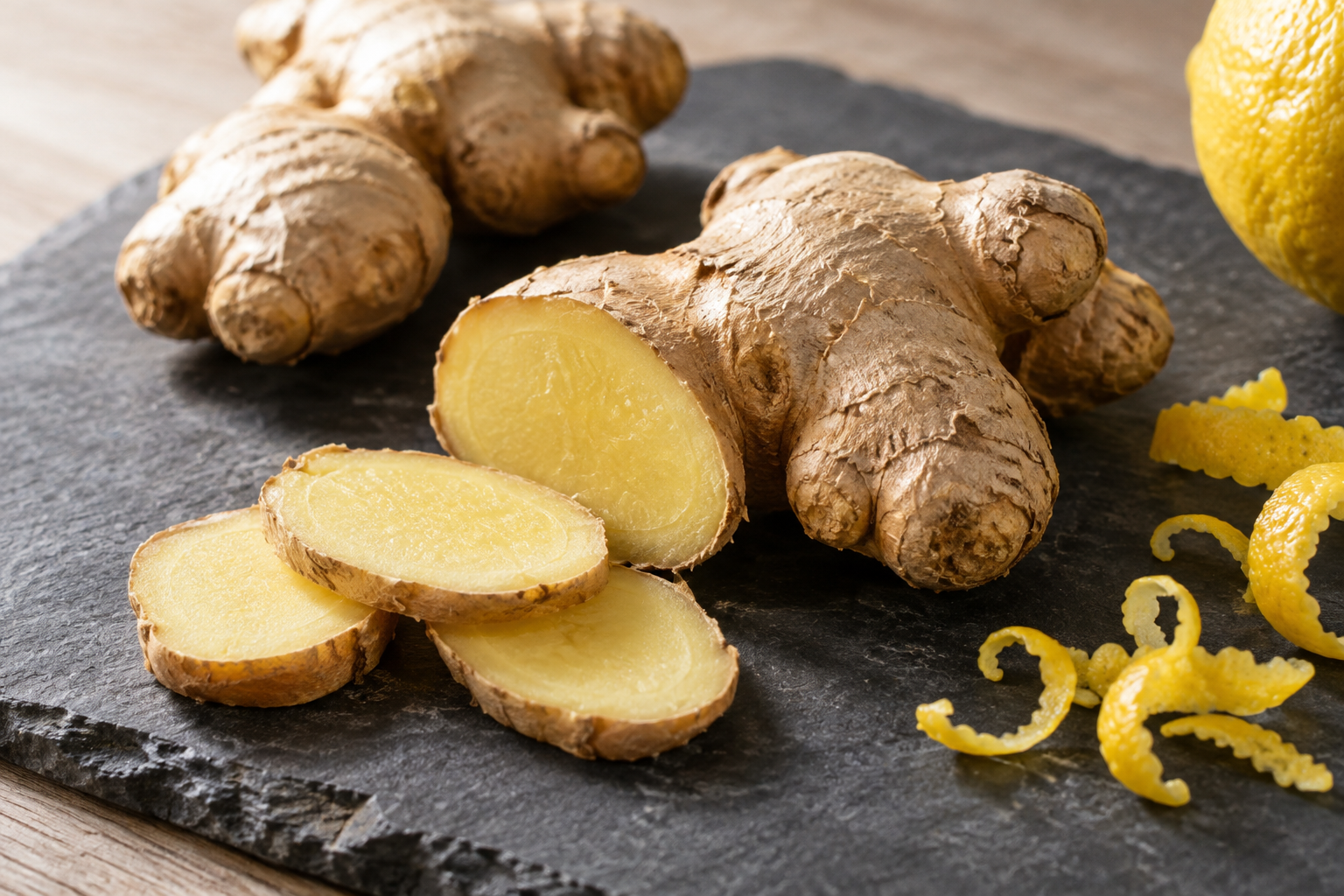
Ginger (Zingiber officinale) is a perennial tropical herb from the Zingiberaceae family, which also includes cardamom and turmeric. In both perfumery and cooking, its underground rhizome is highly valued – a segmented, branched "root" with light flesh and a thin skin. The plant originates from tropical Asia and is now rarely found in the wild, but it is cultivated throughout the tropical belt. Most rhizomes are harvested by growers in India and China, with West Africa also being a significant region, known for ginger with a distinctly sharp, penetrating aroma.
A Journey Along Spice Routes
Ginger is among the oldest traded spices. It is mentioned in ancient Indian and Chinese texts and traveled along caravan and sea routes to the Mediterranean in antiquity. The Greeks and Romans knew it as an exotic commodity from the East, and trade intermediaries – particularly Arab merchants – long guarded the knowledge of its exact origin. In medieval Europe, ginger was one of the most sought-after and valuable spices. It was used to season dishes and wine, sold by apothecaries, and became a symbol of long-distance trade and prosperity. Through the kitchen and pharmacy, its scent gradually found its way into aromatic waters, fragrant ointments, and later into modern perfumery.
How It's Obtained
Perfumers work with two main forms of the raw material:
- Essential Oil – produced by steam distillation of dried, crushed rhizome. It has a warmer, spicier, and slightly woody character because some of the most volatile and freshest components evaporate during drying.
- CO2 Extract – obtained through gentle extraction at low temperatures. It better preserves the fresh, juicy impression of freshly cut root, including its lemony nuances.
An interesting fact is that the spiciness you know from food is mainly due to non-volatile compounds. Therefore, in the fragrant raw material, it is only partially present – ginger in perfume does not smell "sharp" as it does in the mouth, but rather sparkling and warm.
The Scent of Ginger in Perfume Composition
The scent of ginger is spicy, warm, and simultaneously citrusy, with hints of lemon peel, pepper, and a subtle earthiness. This duality makes it an exceptionally versatile ingredient. In the top notes of fresh and citrus compositions, it adds energy and "zest"; in aromatic and fougère perfumes, it connects herbs with a woody base, and in oriental fragrances, it adds warmth and spicy piquancy without weighing down the composition. You will most often find it in harmony with bergamot, grapefruit, cardamom, pink pepper, vetiver, or cedar. As a top note, its fresh sparkle is most noticeable in the first few minutes after application – the warm spicy trace then subtly blends into the heart of the fragrance.
Clove
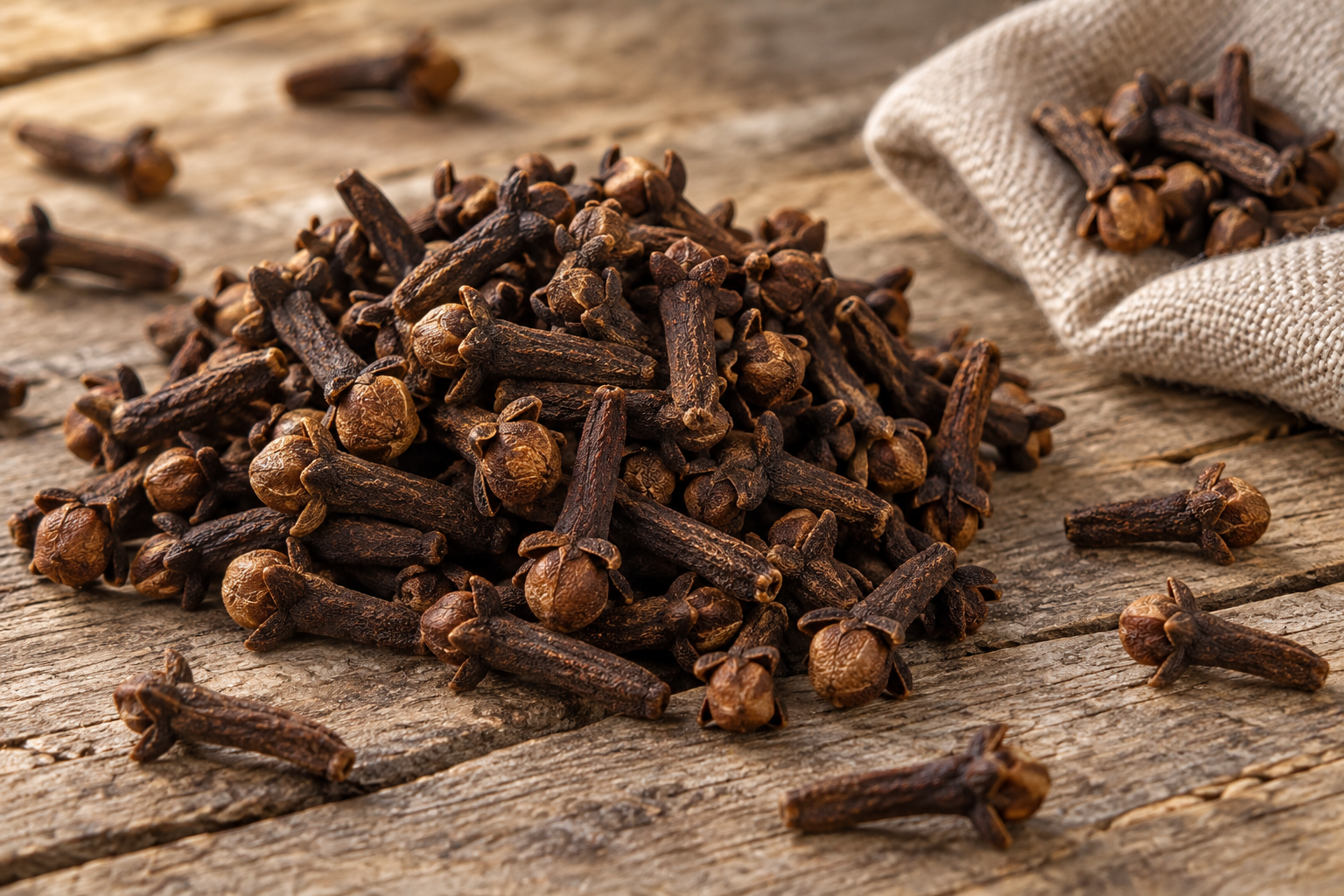
The small dark "cloves" you know from the kitchen are actually the dried, unopened buds of the clove tree. This evergreen tree originates from the Moluccas, an archipelago in eastern Indonesia, long known as the Spice Islands for its wealth. The buds are harvested when they start to turn pink and are sun-dried until they turn brown and harden. With their shape resembling a small nail with a round head and elongated stem, they get their name from the Latin clavus, which is the root of the word in many European languages.
How Clove Oil is Extracted
The essential oil is extracted from cloves through steam distillation. The finest and most valuable for perfumery is the oil from the buds, but oil is also distilled from the leaves and stems, which tends to be sharper, drier, and less rounded. In all these forms, eugenol plays the main role – an aromatic compound that makes up the majority of the oil and gives it its distinctive character. Perfumers also work with isolated eugenol and related molecules that can be derived from it.
How it Smells and Where to Find it in Perfumes
The scent of clove is warm, spicy, and slightly sweet, with a piquant, almost hot edge and a subtly woody finish. Many people associate it with Christmas pastries, mulled wine, or an orange studded with cloves. In perfumes, it appears mainly in the middle and base notes, where it adds depth, warmth, and a distinctive spicy signature to the composition. You typically find it in these contexts:
- in oriental compositions, where it blends well with vanilla, resins, and balsams,
- in spicy fragrances alongside cinnamon, nutmeg, or pepper,
- in woody notes, to which it adds warmth and earthy juiciness,
- in floral compositions, where it enhances the sensuality of rose or carnation.
Clove holds a special place in the so-called carnation accord. The carnation flower is rarely processed for perfumery, and its characteristic spicy floral scent is thus artificially composed by perfumers – with eugenol being a key component. Clove thus stands in the background of many fragrances that initially seem purely floral. Because it is very potent, it is usually used sparingly: in small amounts, it warms the composition, but in excess, it can easily overpower it.
The Spice That Was Fought Over
Clove is one of the oldest traded spices in the world. Written records from China mention courtiers using it to freshen their breath before speaking to the emperor, and it reached the Mediterranean via caravan and sea routes. Its real value, however, grew with the rise of European naval powers. The Portuguese were replaced by the Dutch in the 17th century, whose East India Company established a strict monopoly over clove cultivation. They concentrated cultivation on a few selected islands, destroyed trees growing elsewhere, and harshly punished the export of seedlings.
The monopoly was broken by the Frenchman Pierre Poivre, governor of Mauritius, then a French colony. In the 18th century, he managed to smuggle clove and nutmeg seedlings from the Moluccas and establish their cultivation outside Dutch control. From there, clove spread to other tropical areas, especially the East African coast and the islands of the Indian Ocean, and from a once-rare spice, it gradually became a commonly available raw material – both in the kitchen and in perfumery.
Violet
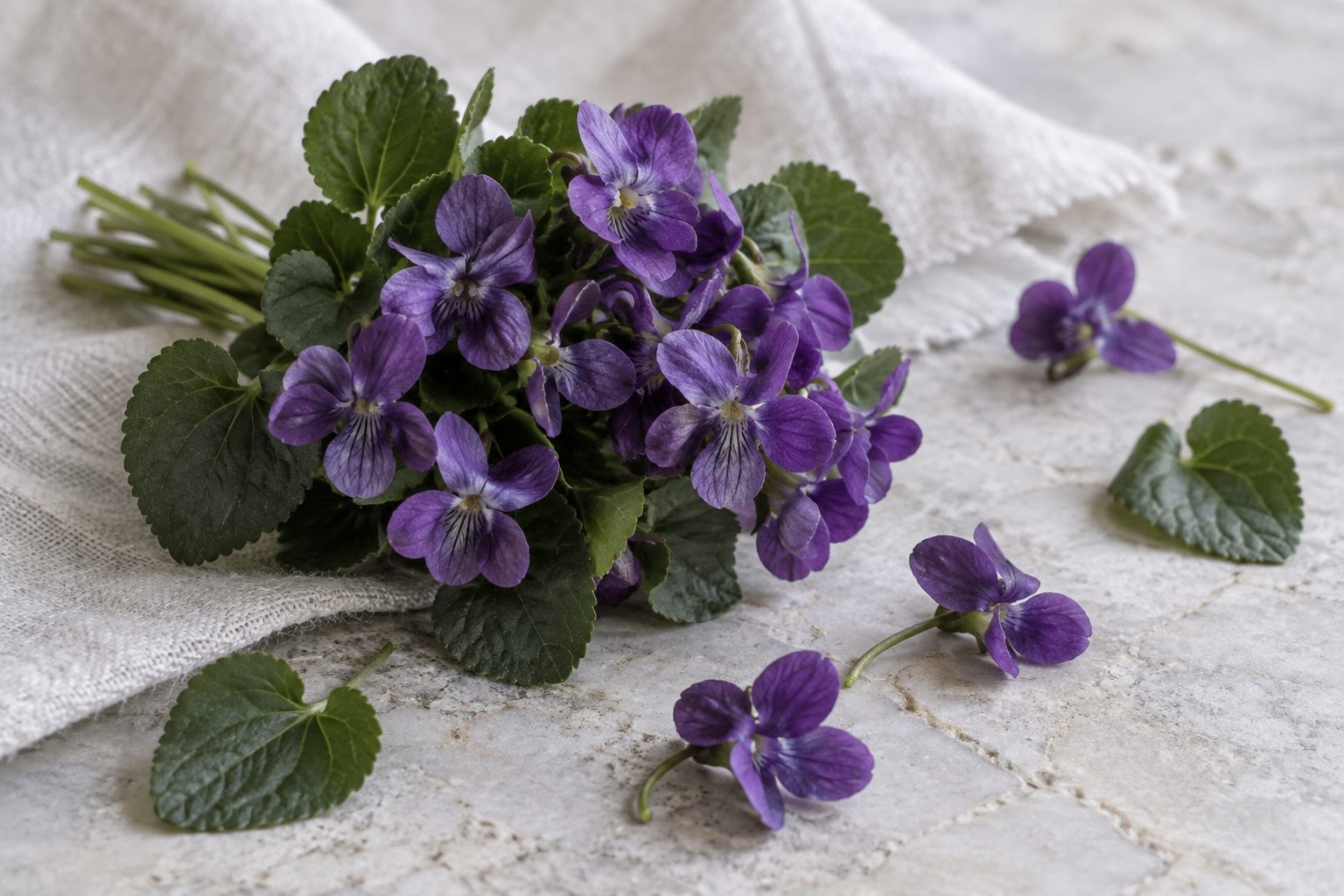
The fragrant violet (Viola odorata) is a small plant that blooms in spring with deep purple flowers, barely a centimeter in size. It has long been cultivated for perfumery in France—around Toulouse, which has chosen it as its symbol, and in the hills above Grasse—as well as in Parma, Italy, where it has become a local specialty. The cultivation tradition in these areas is closely linked to the 19th century when the demand for violet fragrance peaked.
The fragrance component is extracted from the flowers at a great cost. A vast amount of hand-picked flowers is needed for a small amount of extract, and the yield is so low that the floral absolute is used only rarely in contemporary perfumery. Perfumers therefore turn to two more accessible options. The first is violet leaf absolute, a dark green, thick substance obtained through solvent extraction. The second are ionones—synthetic molecules described by German chemists Ferdinand Tiemann and Paul Krüger at the end of the 19th century. Ionones faithfully replicate the scent of the violet flower, transforming it from an expensive curiosity into a commonly available raw material. They are among the first synthetic fragrance compounds that significantly influenced the shape of modern perfumery.
Violet, however, does not have just one face. The flower, whether natural or composed of ionones, smells powdery and sweet, with a subtle hint that may remind one of raspberries. The leaf, on the other hand, brings a green, fresh, almost cucumber-like note with a moist, earthy undertone of freshly picked greenery. In compositions, violet usually appears in the middle notes, the heart of the fragrance. You will find it mainly in floral and powdery perfumes, where it softens and rounds out other flowers. Additionally, violet leaf is used in green and aromatic compositions, adding a cooling freshness.
An interesting aspect of ionones is their unusual effect on the sense of smell. After a while, the nose stops registering them, only to detect them again after a short pause—making the violet scent seem to disappear and then return. This phenomenon is often cited as one of the reasons why violet seems so elusive and delicate.
Violet also has a rich history. It was the favorite flower of Empress Josephine, and according to historical accounts, Napoleon sent it to her on every wedding anniversary. When he left for exile on Elba in 1814, he reportedly promised to return when the violets bloomed. His supporters then chose the violet as a secret recognition symbol—wearing it on their clothes or in their lapels and referring to Napoleon himself as "Corporal Violet." In the spring of 1815, he indeed returned, and the violet remained firmly associated with the Bonapartists. Throughout the 19th century, it also experienced great popularity in perfumery, with violet fragrances being among the typical scents of the Victorian era.
Amber
When amber appears in the description of a composition, it doesn't refer to the fossilized resin of ancient conifers that you know from jewelry. That, in itself, has almost no scent. In perfumery, amber is a fantasy accord – a fragrant impression that nature doesn't offer in a ready-made form and which perfumers create from several ingredients. Its name is borrowed from the golden color and warm, honey-like character that people associate with fossil resin.
What the accord consists of
The classic amber accord is built on three pillars, which perfumers mix in different proportions depending on the desired outcome:
- Labdanum – resin from the cistus plant, which we introduced in part 4. It adds depth to the accord, with leathery and slightly animalic undertones and a darker, almost smoky hue.
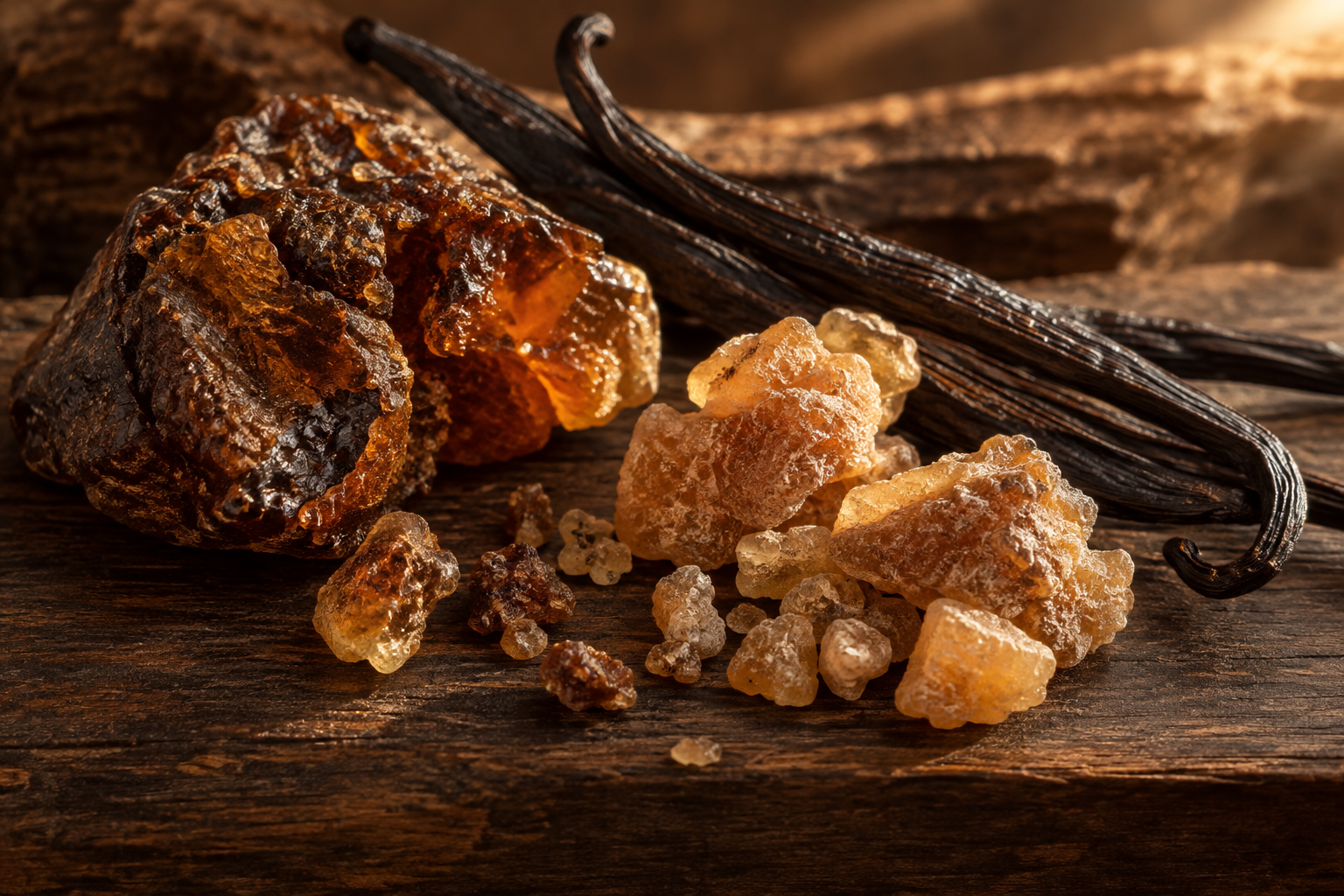
- Benzoin – a balsamic resin with a vanilla-like, slightly powdery sweetness. It softens and rounds out the accord.
- Vanilla – brings a creamy sweetness and warmth, making the amber feel sensual and inviting.
To these foundations, additional balsams and resins, spicy notes, or synthetic substances are often added to strengthen the accord and extend its longevity. Each perfumery workshop has its own amber – one may be dry and resinous, another honey-sweet, and yet another almost smoky.
Amber is not ambergris
In both Czech and other languages, the two terms are easily confused, yet they refer to entirely different things. Ambergris is an animal-derived substance that forms in the digestive tract of sperm whales and, after years at sea, acquires a gentle, salty, slightly earthy scent. Today, it is replaced in perfumery by synthetic molecules. Amber, on the other hand, is a purely plant-based accord composed of resins and vanilla. So, if you come across a perfume labeled as amber, it usually means the warm, resinous character of amber, not the scent of real ambergris.
How it smells
Amber smells warm, resinous, and sweet. It is often compared to honey, caramel, heated wood, or sun-warmed skin. It develops slowly on the skin and lasts for hours, making it one of the base notes. It forms the backbone of the oriental fragrance family, which perfumers and critics increasingly refer to as amber. It blends excellently with spices, rose, incense, patchouli, and woody notes, adding fullness and warmth.
A bit of history
The roots of the amber accord date back to the turn of the 19th and 20th centuries. At that time, perfumers, thanks to the development of chemistry, had access to the first synthetic substances, such as vanillin, and could combine natural resins with new molecules on a larger scale. The first major oriental compositions were created, built on a warm amber base and influenced by the era's fascination with the Orient. Their legacy is still evident in perfumery today – amber remains one of the most frequently used accords and, for many people, a synonym for warmth and sensuality.
Benzoin
Benzoin is a balsamic resin secreted by tropical trees of the styrax genus. In perfumery, there are two main sources of significance: Siam benzoin from Southeast Asia, primarily Laos and Thailand, and Sumatra benzoin from the Indonesian island of Sumatra. Both materials share a sweet and warm character, but they differ in details – the Siam type tends to be softer and more distinctly vanilla-like, while the Sumatran type appears drier, more resinous, with a slight cinnamon undertone.
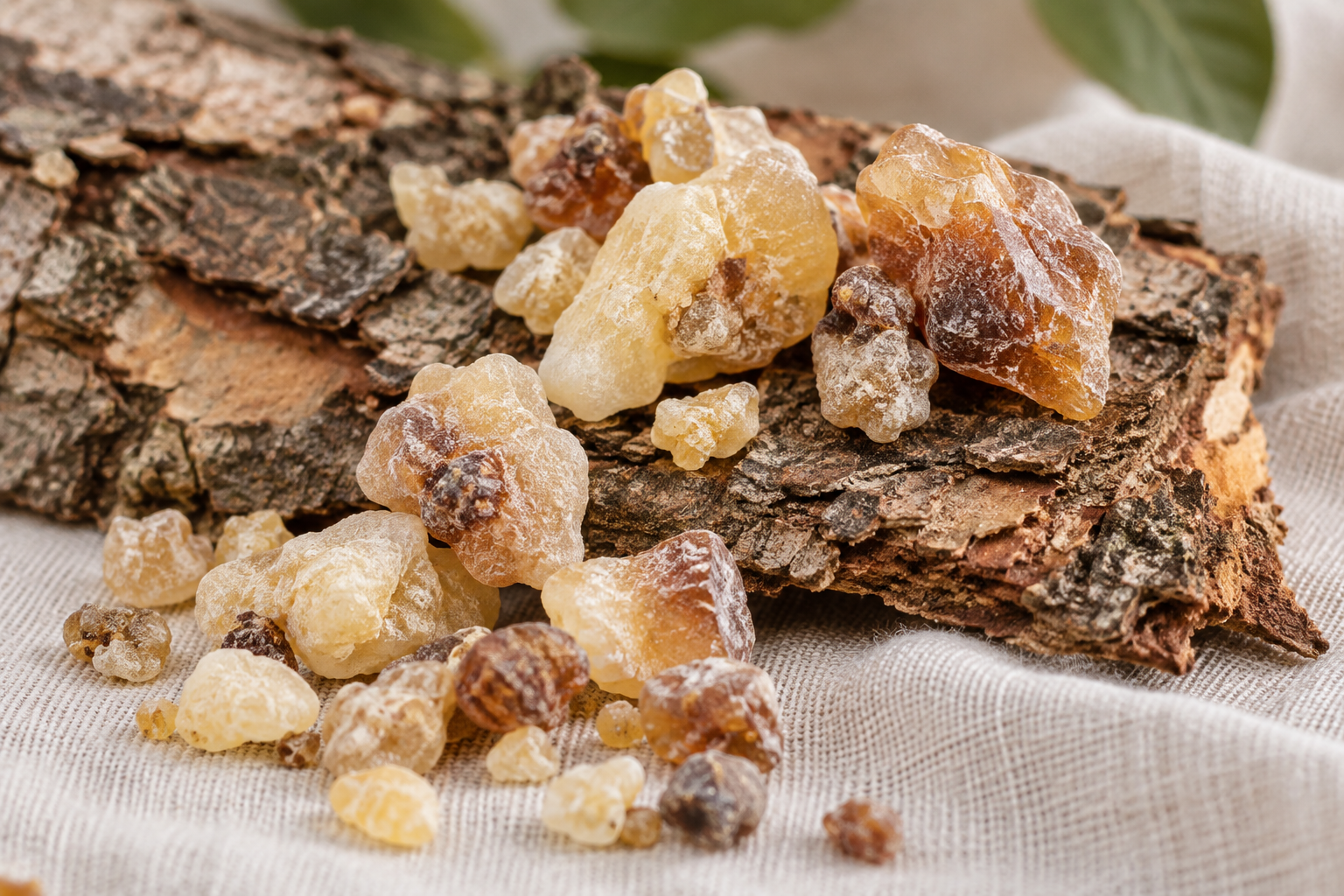
The collection of resin is still largely done by hand. Collectors cut the bark of mature trees, and sap slowly begins to flow from the wounds. In the air, it gradually hardens into whitish to yellowish tears, which darken over time to amber-brown shades. The harvested pieces are sorted by size and purity, with the lightest and purest tears being the most valued. For perfumery purposes, a resinoid is prepared from them through solvent extraction – a thick, sticky substance that perfumers further dilute to make it easy to work with in compositions.
The scent of benzoin is sweet, vanilla-like, and balsamic, with a slightly powdery and resinous hint. The vanilla impression is partly due to its natural vanillin content, especially in the Siam type. In compositions, benzoin belongs to the base notes, where it evaporates very slowly. Thanks to this, it acts as a fixative: it slows down the evaporation of lighter, more volatile components and helps the fragrance hold together for long hours. Therefore, it is often found in oriental and gourmand perfumes, where it enhances notes of vanilla, tonka, resins, or spices. Its warm softness can also round off floral compositions, reducing their sharpness.
When looking for benzoin in a perfume, it usually doesn't reveal itself immediately upon application. Its moment comes in the dry-down phase, when the top notes have evaporated, leaving a soft, warm, and slightly sweet veil on the skin. This enveloping impression makes it a material that many associate with the cooler months and a cozy atmosphere.
Benzoin has a long history. For centuries, it has been part of incense blends, and its warm, sweet smoke accompanied religious ceremonies in Buddhist temples in Southeast Asia and churches in Europe. It reached the Mediterranean via trade routes through Arab merchants, who knew it as "Java incense." From the Arabic term lubān jāwī, the European name benzoin gradually developed. The resin long remained a precious import, valued in Europe similarly to other fragrant balms from the Orient.
Category
Recommended articles
Riiffs Freeze in Flames: Ice and Flames Illuminate Warsaw "Give a girl the right shoes and she can conquer the world!" Marilyn Monroe