
 Riiffs Freeze in Flames: Ice and Flames Illuminate Warsaw
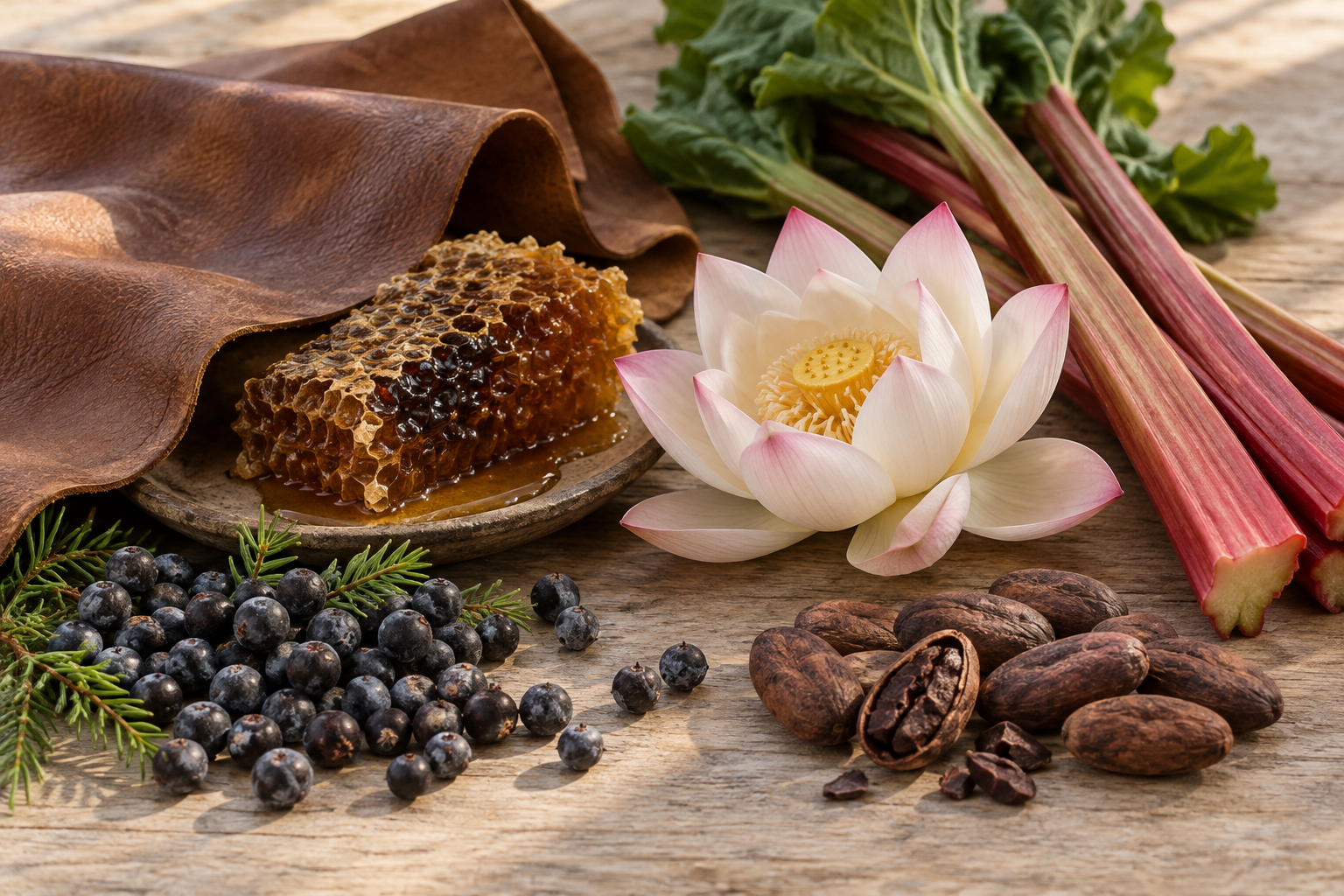
What lies behind the notes in a perfume description? In the 8th part of our encyclopedia, we introduce leather, honey, lotus, rhubarb, juniper, and cocoa – ingredients, their origins, and their scents.
Leather
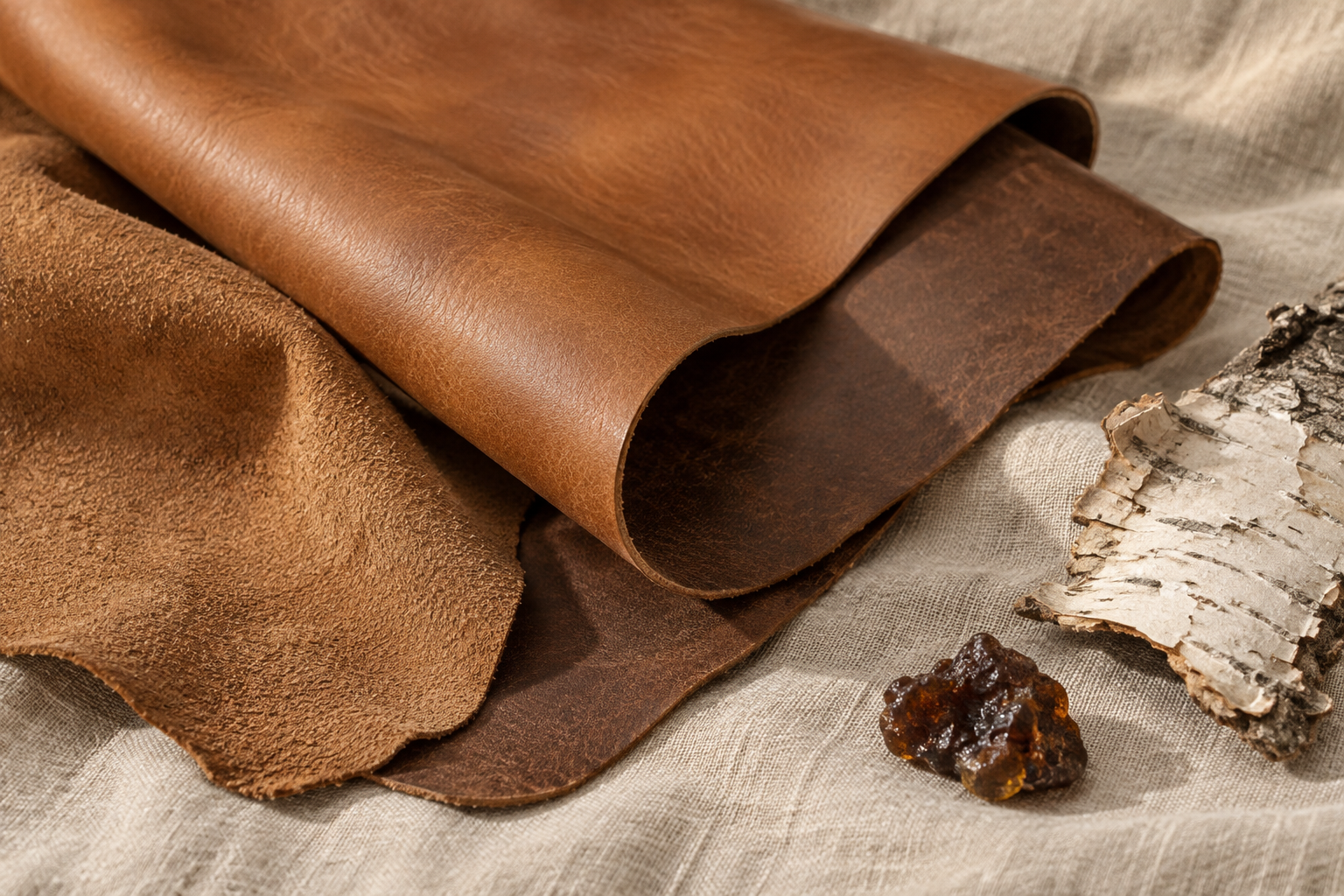
The leather note is one of the most intriguing paradoxes in perfumery. Although it appears in fragrance descriptions as naturally as jasmine or vanilla, it is not derived from leather itself—animal leather does not actually smell the way we imagine it in a perfume. What you perceive as the scent of a new handbag, gloves, or leather seat is a carefully crafted accord, a combination of several ingredients that together evoke the impression of tanned leather.
Glovemakers of Grasse and Russian Leather
The roots of the leather accord trace back to 17th-century Grasse in southern France. The town was then renowned for tanning and glove-making, but the tanning process carried a strong, unpleasant odor. Glovemakers began to scent the finished leather with floral essences, balms, and resins. Scented gloves became a fashionable accessory in court society, and the craft of glovemaking gradually merged with perfumery—this tradition is what established Grasse's reputation as a perfume center.
The second significant lineage is the so-called Russian leather. In Russia, leather was tanned using birch tar, which gave it a distinctive smoky, slightly tarry scent and also protected it from moisture and insects. Leather processed in this way was a valued commodity in Europe, and its characteristic aroma inspired entire generations of leather fragrances.
What the Accord Consists Of
The modern leather accord combines natural ingredients with synthetic molecules. Each component contributes a different nuance:
- Birch Tar – Obtained by dry distillation of birch bark, it gives the accord a smoky, tarry, even burnt character reminiscent of Russian leather.
- Labdanum – A resin from the cistus, a Mediterranean shrub, it carries a warm, amber, and slightly animalic tone that adds fullness to the leather.
- Styrax – A balsamic resin with a sweet, slightly smoky, and balsamic undertone that rounds out the accord.
- Synthetic Molecules – For example, compounds from the quinoline group bring an earthy, bitter-tarry effect, while other molecules create a soft, velvety suede impression.
Depending on the ratio of these components, the leather note can vary greatly. A predominance of birch tar and quinolines leads to a rough, smoky leather with a strong character, while softer molecules combined with floral notes result in suede leather—soft, powdery, and subtle, like the inside of a fine glove.
Place in Composition
In perfume, leather is primarily used as a base note. It develops gradually, emerging after application, and lingers on the skin and clothing for hours. It forms the backbone of a distinct family of leather fragrances and is an important part of many chypre compositions, where it blends with moss, patchouli, and woody notes. It adds depth, elegance, and longevity to the composition—and it is precisely this that makes even fresh or floral scents appear more mature and confident in the dry-down.
Honey
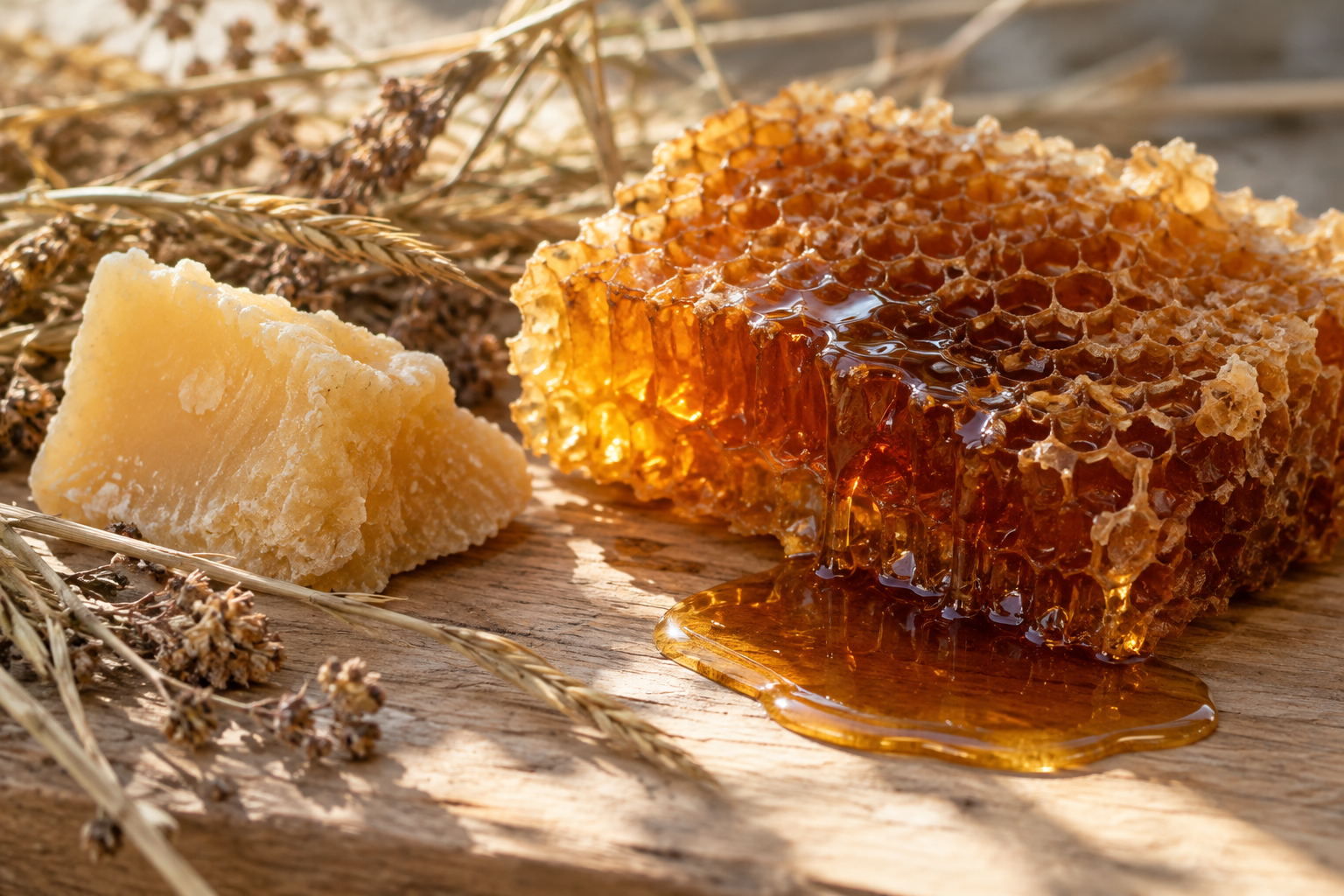
Honey is one of the oldest sweet substances known to mankind. It has served as food, a preservative, and a sacrificial offering, and its fragrance has long been associated with abundance and warmth. The honey note has therefore been present in perfumery for a long time, especially in oriental compositions, where it enhances their sensuality and depth.
However, the fragrance material is not extracted from honey itself. Honey is mainly composed of sugars and water, and its delicate aromatic components do not survive standard processing methods. Perfumers therefore work with beeswax absolute. Wax from honeycombs is processed through solvent extraction: first, a waxy substance called concrete is formed, and from it, through further alcohol purification, the absolute is obtained. This is thick, dark, and smells of honey, wax, and dried hay.
Natural absolute is expensive, and its scent varies between batches. Therefore, the honey accord in modern perfumery is complemented by synthetic substances with sweet, waxy, and slightly floral scents, such as phenylacetic acid esters, which faithfully mimic the honey impression. Perfumers combine it with other ingredients to make the accord feel full and natural.
How does honey smell in a perfume? It is sweet and warm, with a waxy undertone and a subtle animalic hint that adds sensuality. This animalic aspect requires caution: in excessive doses, the honey note can feel heavy, even sharply animalic, and thus it is used sparingly.
In compositions, honey is utilized in both the middle and base notes. Its role can be varied:
- Softening florals – in combination with rose or tuberose, it smooths out the sharper edges of the floral heart and adds a velvety, nectar-like fullness.
- Warm base – in oriental perfumes, it blends with resins, spices, and woods, extending their warm finish.
- Gourmet accent – in gourmand compositions, it adds sweetness that feels less sugary and more natural than purely dessert-like notes.
Whether you notice the honey note in a floral or oriental perfume, it is often one of the elements that gives the fragrance a warm and enveloping atmosphere. On the skin, it gradually transforms: initially, it may feel nectar-like and fresh, later transitioning into a deeper, waxy, and slightly animalic tone.
Lotus
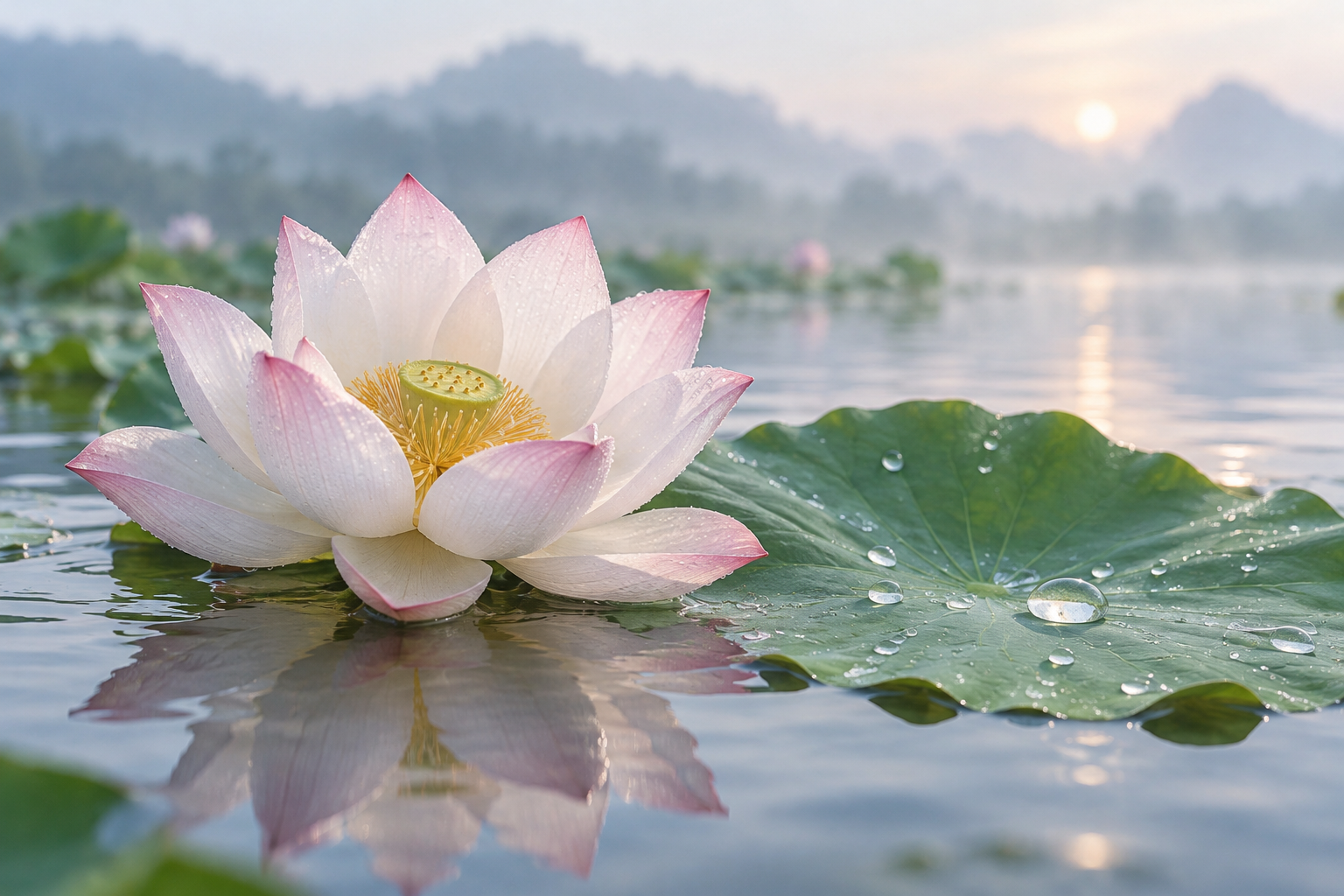
The sacred lotus (Nelumbo nucifera) is an aquatic plant with an extraordinarily rich symbolism. In India and Southeast Asia, it has accompanied religion, art, and daily life for millennia – in Hinduism, it is associated with the goddess Lakshmi and the creator Brahma, and in Buddhism with awakening and liberation of the mind. Its flower rises from the mud at the bottom of ponds and opens above the surface, pure and unblemished. This very image has made it a symbol of purity, spiritual growth, and tranquility, appearing on temple reliefs, in paintings, and in poetry.
A botanical curiosity worth mentioning: lotus leaves repel water and dirt so effectively that droplets simply roll off, taking dust with them. The lotus is often confused with the blue "lotus" of ancient Egypt, which is actually a water lily – a different plant with its own history and scent.
How Lotus is Obtained
Lotus flowers are used to produce a small amount of absolute, extracted using a solvent. This results in a thick, intense material that captures the delicate scent of the flower much more faithfully than traditional distillation. However, the yield is low and the raw material is rare, so it is used sparingly and in tiny doses in perfumery.
Most of the lotus notes you encounter in fragrances are therefore a fantasy accord. Perfumers create it from fresh, aquatic, and ozonic molecules, green components, and delicate floral substances to evoke the image of a flower on the water's surface. Such an accord does not have to replicate the actual flower – it is more about interpreting its atmosphere: the coolness of the water, the light, and the silence.
What Lotus Smells Like
Lotus has a gentle and subtle fragrance. It is characterized by a watery, transparent nature complemented by a light powderiness. Beneath the surface, you can discern:
- watery and fresh tones – evoking the cool surface and humid air,
- green shades – reminiscent of stems and young leaves,
- almost fruity nuances – sweet, juicy, and very subtle,
- powdery finish – soft, clean, and soothing.
The Role of Lotus in Fragrances
Lotus appears mainly in the heart (middle) of aquatic and fresh floral fragrances. It adds transparency, airiness, and a sense of calm to the composition without overpowering other ingredients. It blends well with citrus, green tones, other white flowers, and light musk in the base. Whether you find it as a main note or just a gentle accompaniment in a fragrance description, it usually signals a composition meant to feel clean, light, and harmonious.
Rhubarb
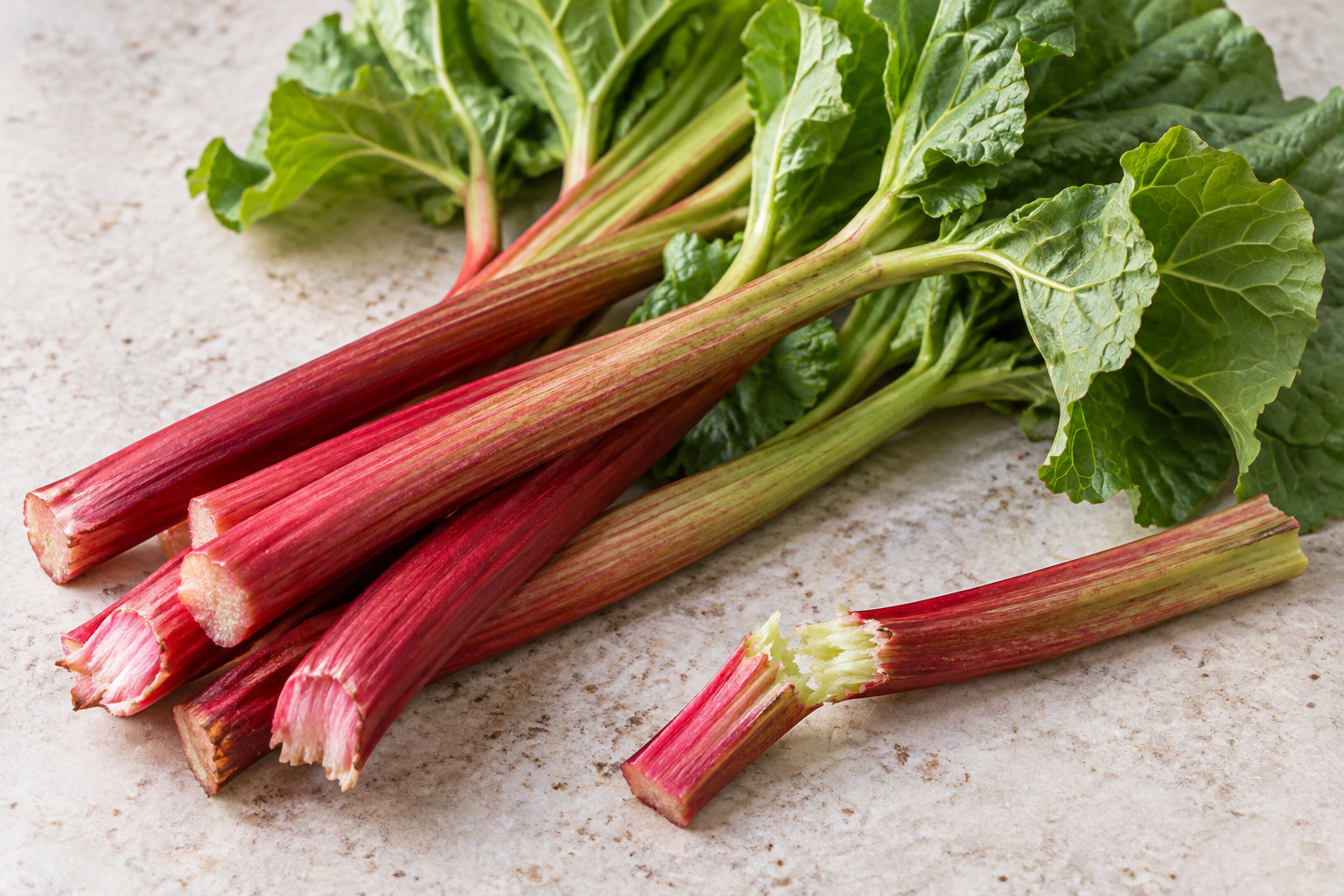
Rhubarb is a perennial plant from the knotweed family, native to Asia – specifically the mountainous regions of present-day China, Tibet, and Siberia. For centuries, it was valued mainly for its root, which held a significant place in traditional medicine and was so rare that it was traded over long distances and imported into Europe as a luxury item. The edible stalks, which you might know from pies and compotes, only became popular as a vegetable in European gardens in the 18th and 19th centuries, initially primarily in England.
Essential oil is not extracted from rhubarb stalks – they are mostly water, and their scent cannot be captured through distillation or extraction to match the impression of a freshly cut stalk. Therefore, the rhubarb note in perfumery is created as an accord. Perfumers compose it from modern synthetic molecules that chemists have developed specifically for this tart and green impression. They then build around it with green notes, such as leafy greens, and citrus to brighten the accord and add juiciness.
The scent of rhubarb is tart, juicy, and distinctly green. It resembles the moment you break a fresh stalk and experience a sharp, almost crisp freshness. Beneath it lies a subtly sparkling hint that many associate with rose, and a note of unripe fruit. Rhubarb thus stands at the intersection of a vegetable garden and a flower bed. Its character can be summarized by several features:
- Tartness – a fresh, slightly astringent note that awakens the composition.
- Juiciness – the impression of a moist, freshly cut stalk.
- Green character – a vegetal, slightly bitter line reminiscent of leaves.
- Rosy hint – a delicate floral sparkle, making rhubarb easily blend with floral ingredients.
In the structure of a perfume, rhubarb is primarily used in the top notes. You will notice it immediately upon application, where it brightens the composition and gives it an energetic, slightly sharp start. It most often appears in fresh and floral fragrances, where it balances the sweeter and fuller ingredients of the heart. It blends particularly naturally with rose – both ingredients share similar sparkling, slightly tart nuances, so rhubarb adds a green freshness to the flower, while rose lends it softness and depth. It is also well complemented by citrus, green notes, and light musk, which extends its freshness.
If you come across rhubarb in a perfume description, you can expect a fresher, brighter start rather than sweetness – it is an ingredient that brings airiness and a sense of a freshly harvested garden to the fragrance.
Juniper
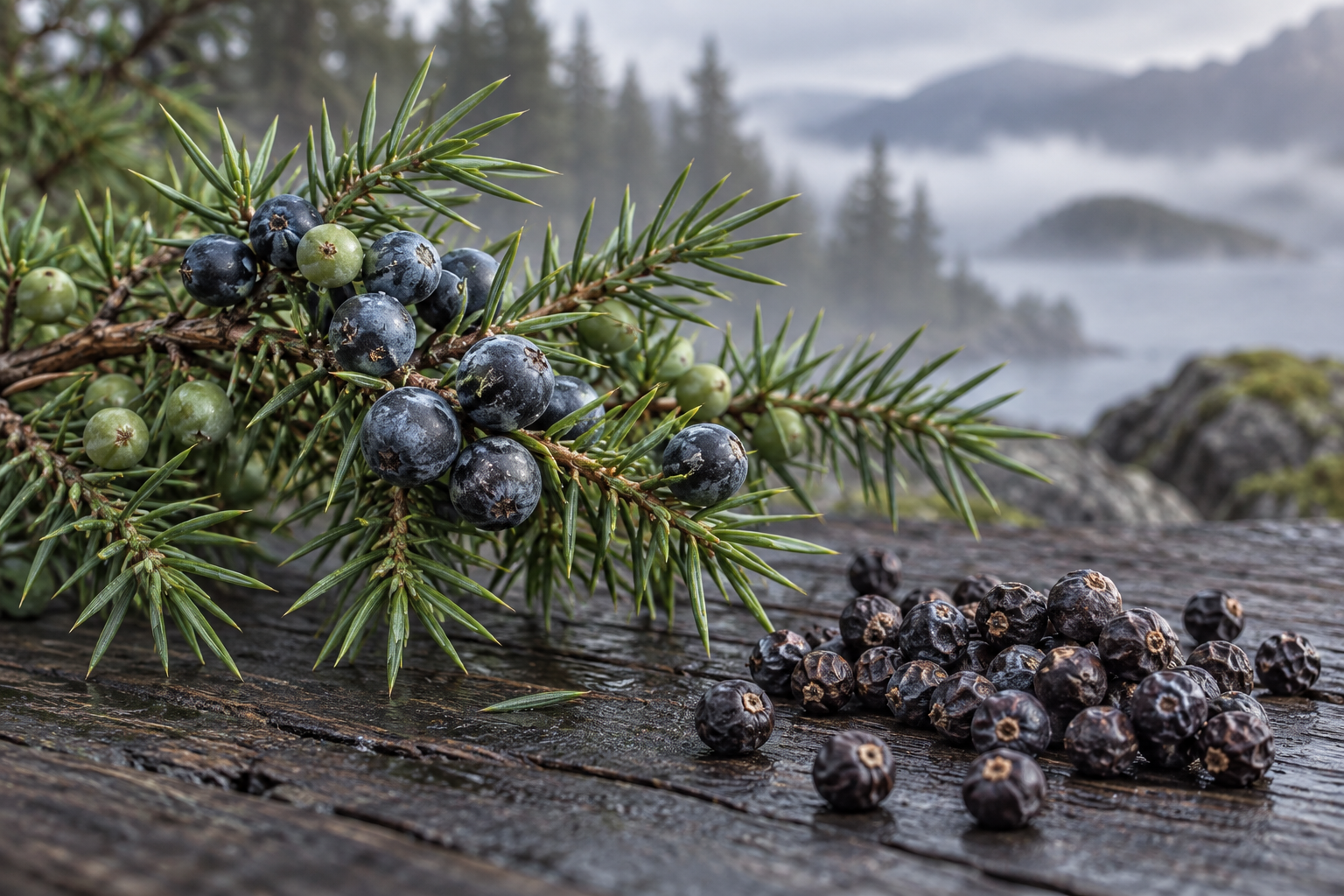
The common juniper is a low-growing coniferous shrub, occasionally a small tree, found throughout the temperate regions of the northern hemisphere – from the heaths of Scandinavia to the mountain pastures of Central Europe, and extending to North America and Asia. Its blue-black frosted "berries" are actually fleshy cones that take two to three years to mature. Therefore, it's common to find both green and ripe fruits on the same shrub.
Incense, Folk Medicine, and Gin
Juniper is one of the oldest aromatic plants used by humans for incense. Dried twigs and berries were burned in homes and barns to scent the space and, according to tradition, to purify it. In folk medicine, decoctions and tinctures were made from the berries, though today we speak of their effects more as part of history than as verified recommendations. However, juniper's most famous legacy is in the kitchen and distillation: it adds character to game, sauerkraut, and especially gin, whose name derives from the Dutch word for juniper.
How the Oil is Obtained
Essential oil is produced by steam distillation, most commonly from crushed ripe berries. Less commonly, needles and wood are distilled, yielding a drier, more resinous oil. The main components of berry oil are terpenes, particularly alpha-pinene, myrcene, and sabinene, which give it its fresh, pine-like character.
A special chapter is dedicated to the related red juniper from the Mediterranean region. Its wood is dry distilled to produce a dark cade oil with a distinctly smoky, tar-like scent. Perfumers use it in small doses where a sense of fire, smoke, or tanned leather is desired.
Fragrance and Use in Perfumery
The scent of juniper berries is resinous, pine-like, and freshly spicy, with a slightly peppery tone and a characteristic gin-like hint. Unlike citrus, it does not smell sweet but rather dry and clean, like a walk through the forest after a morning rain.
- Top Notes: Juniper enlivens the beginning of a composition, adding airiness and a cool, sparkling effect.
- Aromatic and Fougère Fragrances: Naturally pairs with lavender, rosemary, sage, and bergamot.
- Woody Fragrances: Connects a fresh opening with cedar, vetiver, or incense in the base.
Therefore, it is most commonly found in men's perfumes, where it enhances a clean, outdoor character. However, it is increasingly appearing in unisex compositions that play with the theme of the forest, mountain air, or the popular cocktail.
Cocoa
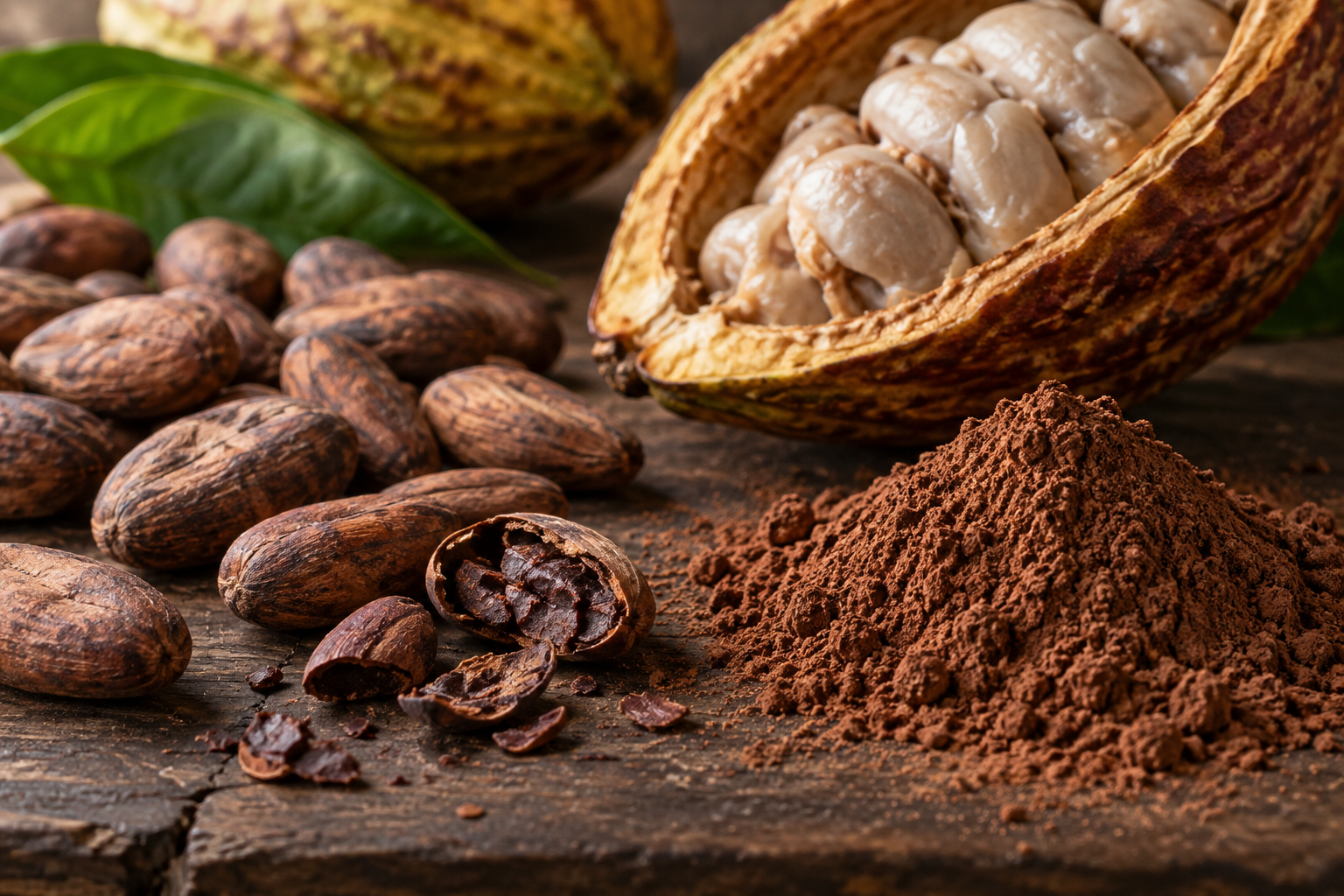
The cacao tree (Theobroma cacao) originates from the humid tropical regions of Central and South America. Its Latin genus name translates to "food of the gods," reflecting the reverence it received from pre-Columbian cultures. The Mayans and later the Aztecs considered cacao beans a sacred commodity – they prepared a bitter drink from them, which accompanied religious ceremonies and festive occasions, and the beans also served as currency. Cocoa reached Europe in the 16th century thanks to Spanish explorers and gradually transformed from an exotic curiosity into a common part of European cuisine.
In perfumery, cacao beans are used, which after harvesting undergo fermentation, drying, and roasting. Only roasting develops the characteristic aroma not found in fresh beans. From roasted beans, absolute is obtained through solvent extraction, or carbon dioxide extract. The latter method operates at low temperatures, and the carbon dioxide evaporates completely from the finished extract, capturing the scent of freshly roasted beans, including their subtle bitter notes.
The scent of cocoa differs significantly from the idea of a sweet chocolate bar. These characteristics are most commonly used to describe it:
- bitter – reminiscent of pure cocoa powder or dark beans, not dessert,
- roasted – carries a warm, slightly toasted tone, vaguely reminiscent of coffee or roasted nuts,
- slightly powdery – a dry, powdery impression left by finely ground cocoa powder,
- drier and less sweet than milk chocolate – sweetness is usually introduced into the composition by other ingredients.
In perfumes, cocoa is primarily used in the base notes, where it adds depth and a velvety darkness to the composition. It typically appears in gourmand fragrances, which play with edible associations, and in oriental compositions, where it enhances their warm and sensual character. It is most often paired with patchouli, whose earthy tone has a cocoa-like hint, with vanilla, which softens its bitterness and adds creamy sweetness, and with woody notes, which keep the fragrance dry and elegant. Thanks to this, cocoa can make a composition feel both cozy and warm, or mysterious and evening-like – depending on the accompanying ingredients.
Category
Recommended articles
Riiffs Freeze in Flames: Ice and Flames Illuminate Warsaw "Give a girl the right shoes and she can conquer the world!" Marilyn Monroe
