


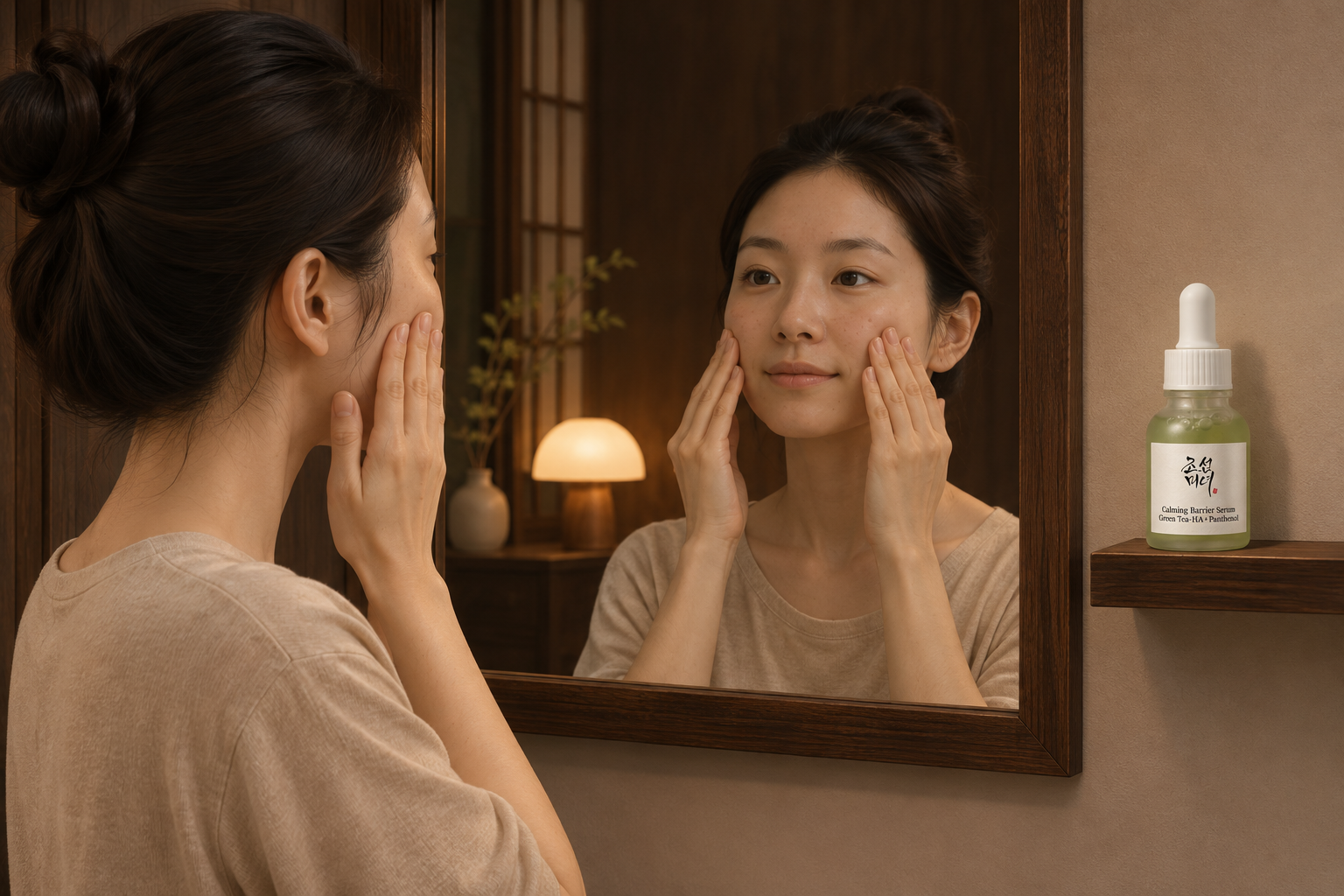
A home facial massage doesn't require any tools, just your fingers, a few minutes, and the right serum. We'll show you the preparation, basic strokes, and a selection of six serums for your evening routine.
Why Treat Yourself to a Facial Massage at Home
Whether you're leaving your computer in the evening with a tense forehead or just looking for a way to slow down and enjoy your skincare routine more, a facial massage is a simple ritual you can do at home without any special preparation. A few minutes of gentle finger movements can turn the ordinary application of serum into a moment dedicated just to you.
Facial massage is gaining popularity in home care for two main reasons. The first is relaxation – slow, regular strokes help you unwind at the end of the day, relax your furrowed brow and jaw, and switch from work mode to evening mode. The second is the care itself: when you don't rush to rub in the skincare product but instead slowly spread and gently work it in, it distributes evenly across the skin, and most of it doesn't just stay on your palms.
The good news is that you don't need any special tools for this. All you need are your fingers, clean hands, and a few minutes of your time. Your fingertips can easily gauge how much pressure your skin can handle and adapt to the contours of your face around the nose, eyes, and chin. You can incorporate a massage anytime you feel like taking a moment to pause.
What to expect from a massage? Above all, a pleasant feeling. After a few minutes, the skin usually feels more relaxed and refreshed, and it is softer to the touch because it is evenly covered with serum. However, a massage is not a medical procedure – it does not replace dermatologist care, is not meant to solve skin problems, and you cannot expect guaranteed results from it. Consider it a part of your evening routine that benefits both your skin and your mind.
In this guide, you'll find everything you need to get started:
- how to prepare your skin and hands for the massage,
- which basic strokes even complete beginners can master and how much pressure to apply,
- which serum to choose based on your skin type,
- how to incorporate the massage into your evening routine to make it a regular habit.
You don't need to learn complex techniques or have experience from a beauty salon. More important than perfect execution is consistency and gentleness – both of which can be learned in just the first few evenings.
Preparation Before Massage – Clean Skin, Hands, Serum
A facial massage begins before your fingers even touch your face. A few minutes of preparation can determine whether the movement will be smooth and pleasant or if you'll end up pulling your skin and spreading the day's residue. You don't need anything extra – just clean skin, clean hands, and a serum you already use in your skincare routine.
First Remove Makeup, Then Cleanse
Throughout the day, makeup, protective creams, sebum, and environmental dust settle on your skin. If you massage directly over this layer, you'd just spread it all over your face. So start with makeup removal – micellar water, cleansing oil, or cleansing cream will do the job, depending on what suits your skin. If you wear heavier makeup or waterproof mascara, give your eyes and lips a little extra attention.
After removing makeup, the second step is a gentle cleansing gel or foam to finish cleansing the skin. Rinse with lukewarm water and pat dry with a towel, pressing it lightly against your skin rather than rubbing. Your skin can remain slightly damp – it makes it easier to spread the serum.
Hands and Nails
Your fingers are the only tool during a massage, so wash them thoroughly with soap and warm water before you start. Warm hands are also more pleasant on the skin than cold ones. Check your nails too: a sharp edge or broken piece can catch on your skin and scratch it. If you have long nails, work with the pads of your fingers and keep the nails away from your skin. It's better to remove rings for the duration.
Why Massage Over a Layer of Serum
On dry skin without any product, fingers can drag, the skin stretches, and instead of relaxation, you might end up with redness. A layer of serum serves several purposes:
- glide – fingers smoothly slide over the skin, and the movement is even,
- gentleness – the skin isn't pulled or stretched sideways,
- care – the product you would apply anyway is evenly distributed over the entire face during the massage.
Thus, the massage doesn't add an extra step to your evening routine; it just extends the time you'd already spend applying serum to your skin.
How Much Serum to Apply and How to Warm It
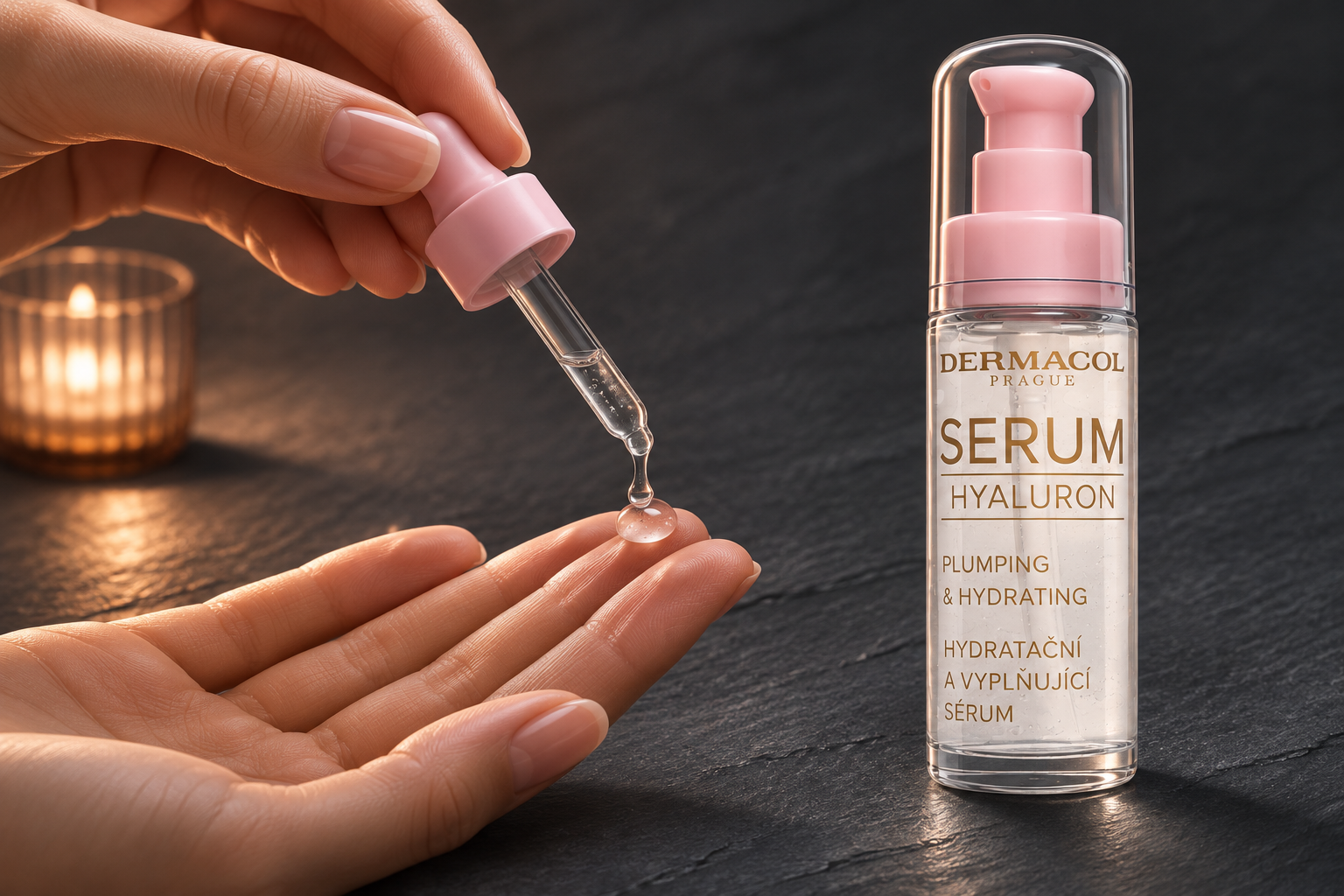
Usually, two to four drops are enough for the entire face, a bit more for thinner textures. Drop them into your palm or onto your fingertips and briefly rub them between your fingers – this warms the serum to skin temperature, making it easier to spread. Then, distribute it with light touches on your forehead, cheeks, nose, and chin, ensuring even coverage. If during the massage you feel your fingers starting to drag, add another drop. Conversely, if the serum remains sticky on your skin, you've applied more than necessary, and next time you can use less.
When to Skip the Massage
A massage should be pleasant, not irritating. Skip it if your skin is red, stinging, or burning, if you have active rashes or inflamed pimples, freshly sunburned skin, abrasions, or cuts. Avoid it shortly after cosmetic treatments, such as chemical peels, and after facial hair removal. In such cases, apply care by gently pressing your fingers without rubbing. If you have long-term skin issues, consult a dermatologist first.
Finger Strokes Step by Step – How Hard to Press, Where to Move
Facial massage doesn't require any tools – all you need are your fingertips, a layer of serum, and a few calm minutes. The entire process relies on three simple strokes that are repeated in different parts of the face, and one rule of direction: move from the center of the face to the sides and from bottom to top. This way, you don't pull the skin down, and each stroke naturally follows the next.
- Smoothing – a smooth stroke with the entire surface of your fingertips, which warms the skin and evenly distributes the serum. Suitable for the beginning and end of each part of the face.
- Circular Motions – small circles with two or three fingers, as if gently kneading the skin in place. Press just enough for the skin to move slightly under your fingers without leaving a red mark.
- Tapping – light and quick tapping with your fingertips, similar to raindrops falling. It has a refreshing effect and is especially suitable for more delicate areas.
For pressure strength, a simple guideline applies: the massage should be pleasant, never painful. Work most lightly on the neck and around the eyes, and apply a bit more pressure on the cheeks and forehead.
Procedure from Neck to Temples
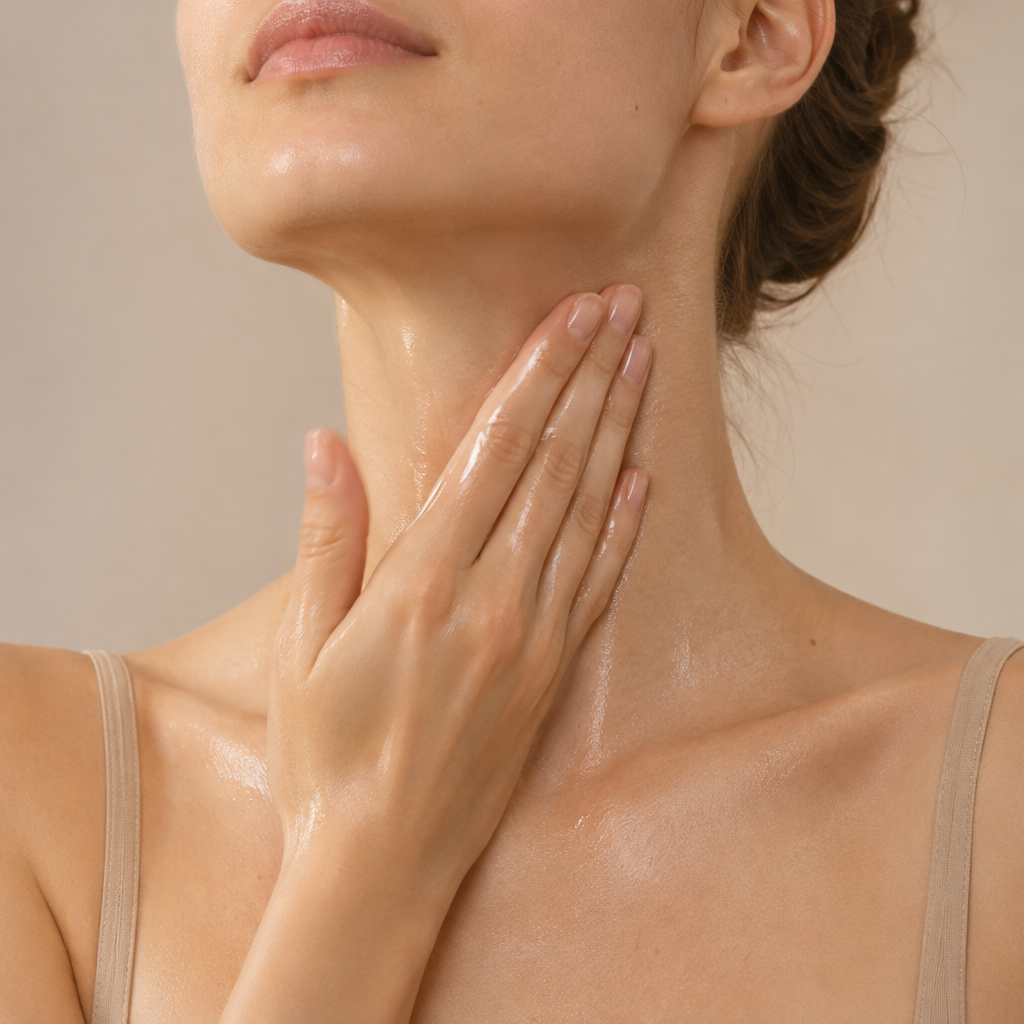
- Neck (about 1 minute). Start above the collarbones and alternately smooth the neck upwards to the chin with your palms. The movement is slow, and the pressure is minimal, lightly gliding over the front of the neck.
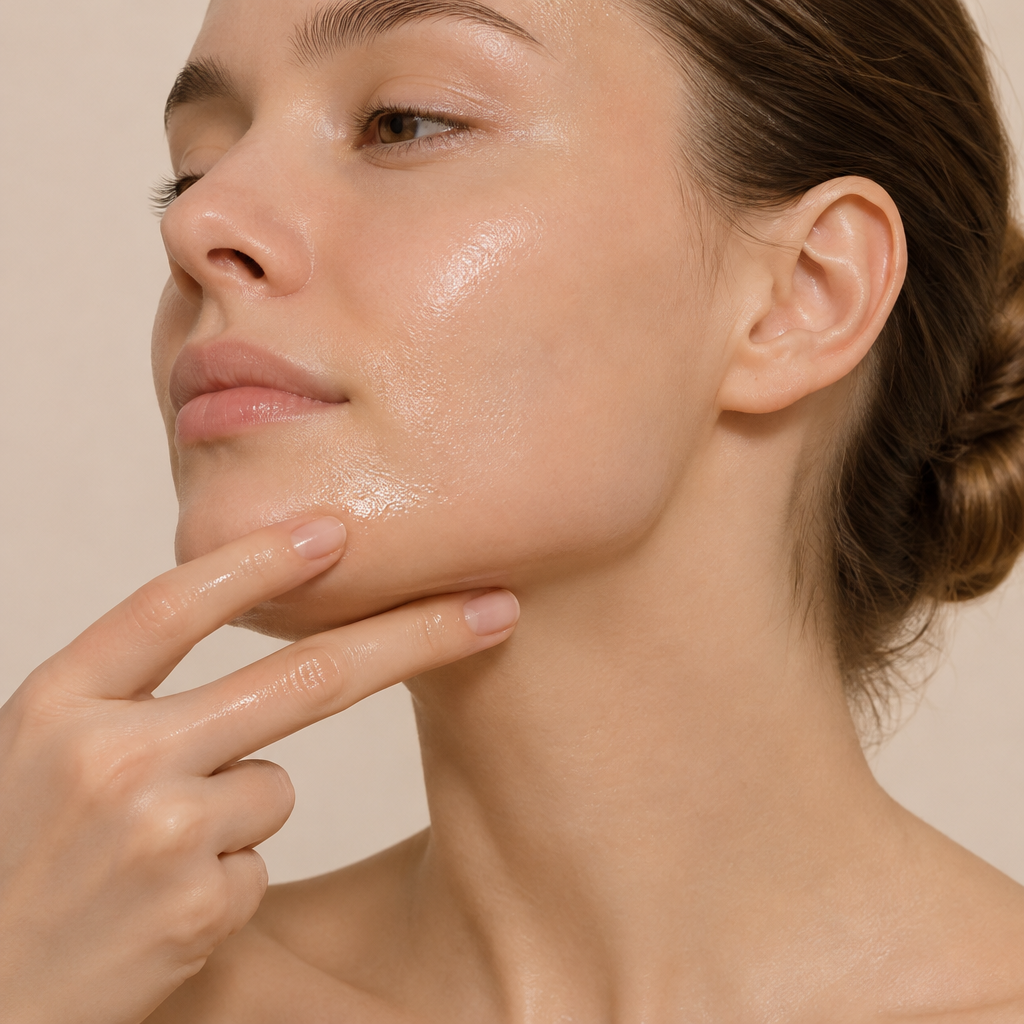
- Chin and Jawline (about 1 minute). Place your index finger above the chin and middle finger below it, so the jaw is between them. Slide your fingers along the jawline from the chin to the earlobes. Repeat the stroke five to eight times and finish with a few small circles at the jaw angle.
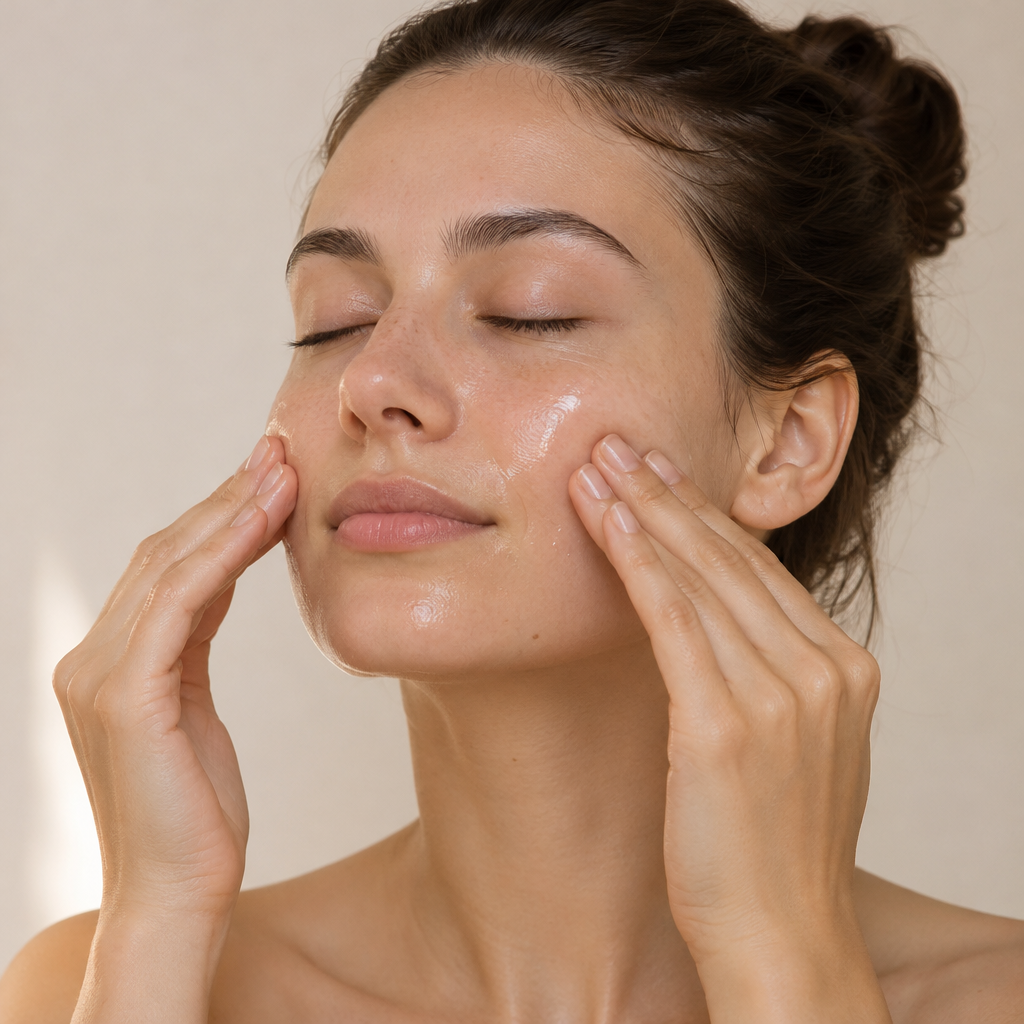
- Cheeks (1–2 minutes). From the corners of the mouth, lead circular motions diagonally upwards to the ears, then from the sides of the nose along the cheekbones to the temples. Here you can slightly increase the pressure, as the skin on the cheeks is more resilient.
- Nose (about half a minute). Use the pads of your middle fingers to make small circles around the sides of the nose, where the serum absorbs less easily, and then continue with a smoothing stroke to the sides across the cheeks. Lightly glide over the bridge of the nose from the tip to the base a few times.
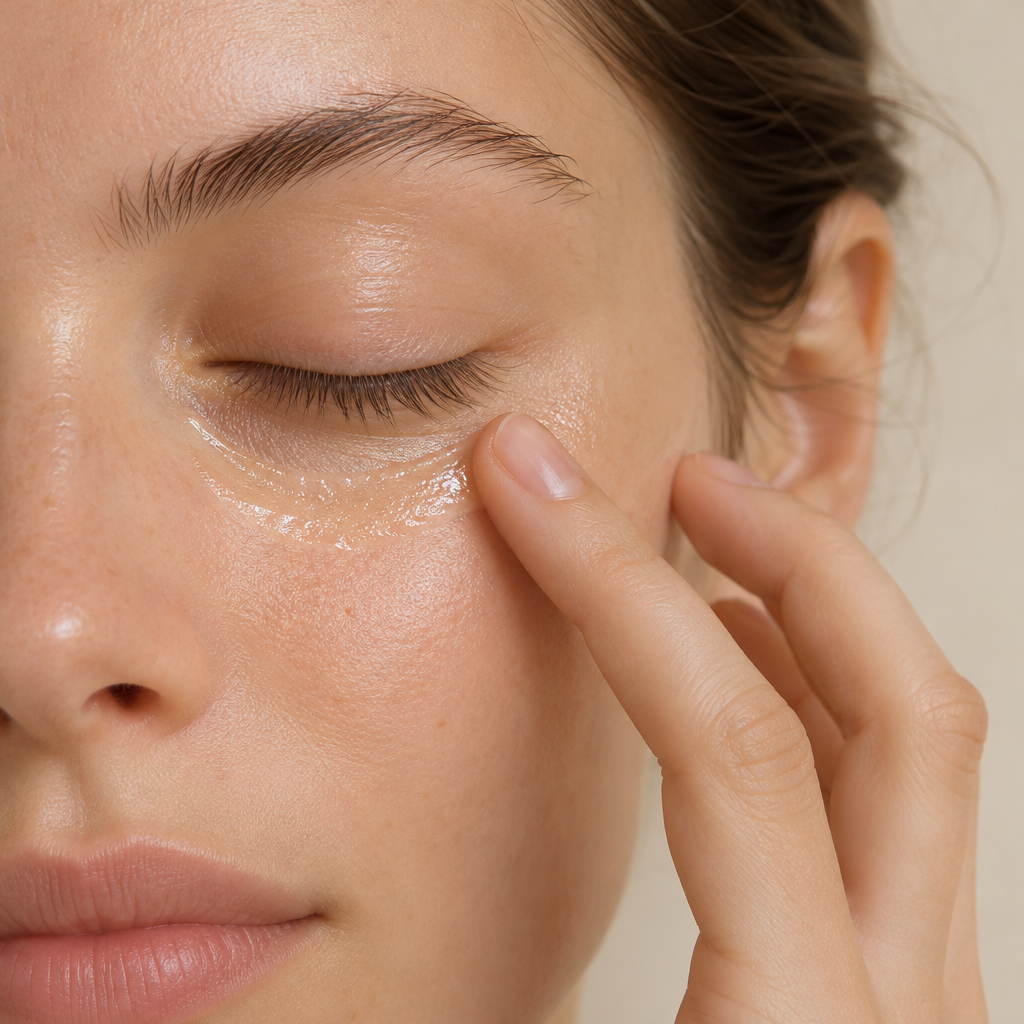
- Eye Area (about 1 minute). The skin around the eyes is thinner and more sensitive than the rest of the face, so work exclusively with the ring finger – this finger naturally applies the least pressure. Gently tap under the eye from the inner corner towards the temple, and smooth over the bone under the eyebrow from the bridge of the nose outwards. The skin under the finger should not stretch or wrinkle; if you feel it does, the pressure is too strong and needs to be reduced.
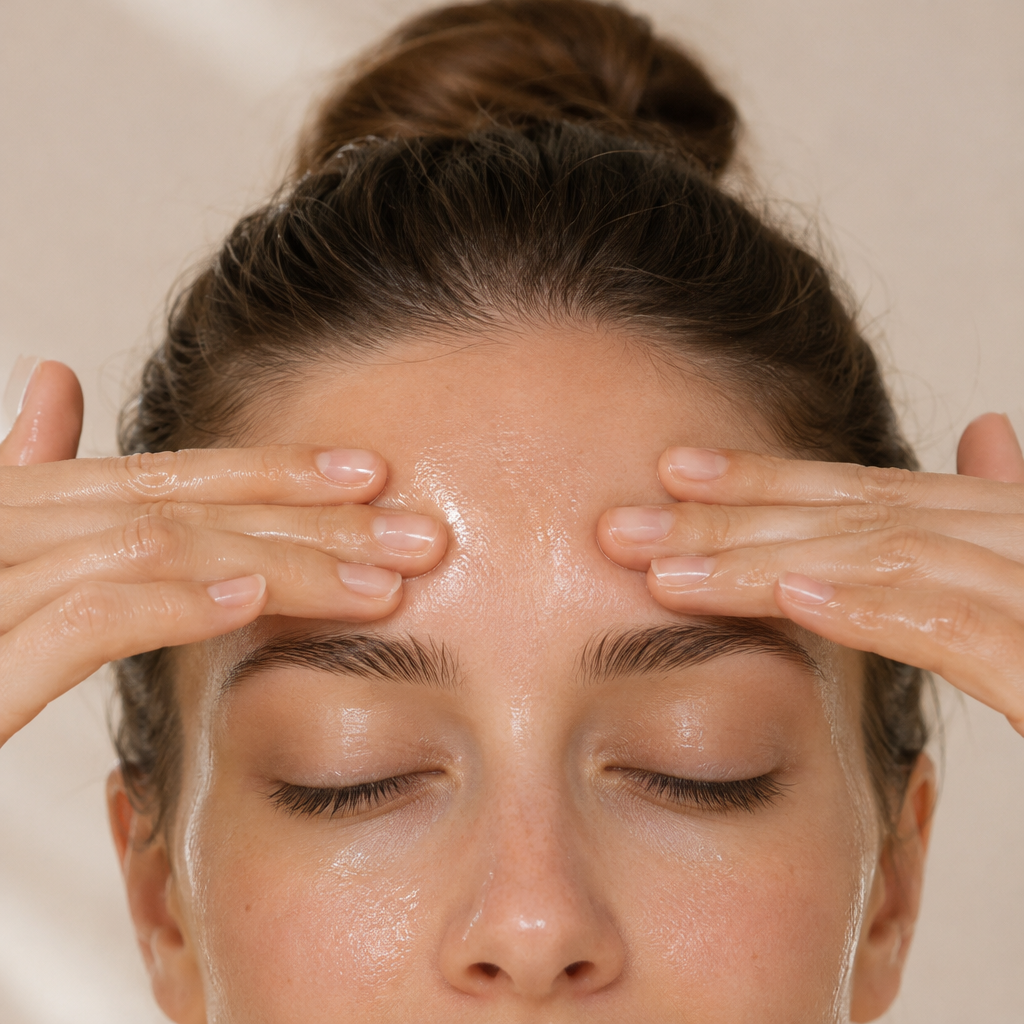
- Forehead (1–2 minutes). Place the fingers of both hands in the middle of the forehead above the bridge of the nose and smooth towards the temples. Then lead strokes from the eyebrows up to the hairline, alternating left and right hands. Finish with short tapping across the entire forehead.
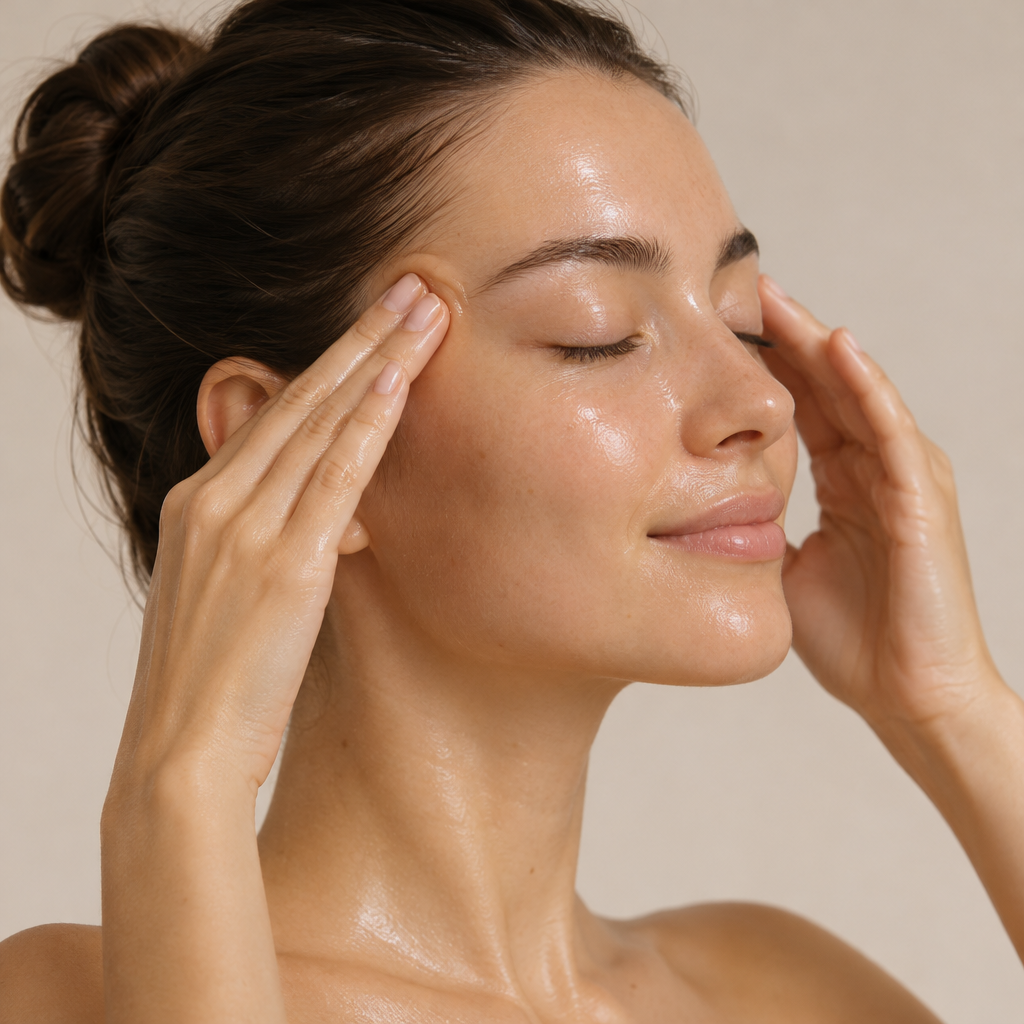
- Temples (about half a minute). End the massage on the temples with a few slow circles with very light pressure. Then let your palms rest freely on your cheeks for a moment and take a deep breath.
If you follow the steps in this order, the entire massage will take about five to ten minutes. A shorter version with one or two repetitions of each stroke is suitable for everyday evenings, while a longer version with more repetitions can be enjoyed when you have extra time. If your fingers stop gliding smoothly over the skin during the massage, add a drop of serum – pulling the skin dry would unnecessarily burden the massage.
Which Serum to Choose – Selection Based on Skin Type
Serum plays a dual role during a massage: it allows fingers to glide smoothly while providing the skin with the care it needs. Therefore, the choice is not only about how pleasantly it spreads but mainly about your skin type and what you expect from regular care. Whether you're looking for more hydration, calm for sensitive skin, or care for mature skin, it's worth clarifying first what the serum is supposed to achieve.
Dry or Normal Skin – Hydration First
For skin that feels tight after washing or appears dull, hydrating serums with hyaluronic acid are suitable. This helps bind water in the surface layers of the skin, making it feel more supple and smooth. They have another advantage for massage – they are usually light, gel-like, or milky, spread well, and do not leave a greasy film. If your skin is very dry, choose a serum with a richer composition, perhaps with ceramides or glycerin, and apply a more nourishing cream after the massage.
Sensitive Skin – Simplest Composition Possible
Sensitive skin appreciates serums with soothing ingredients like panthenol, allantoin, or thermal water. Look for fragrance-free products with a short ingredient list – the fewer substances, the less chance of irritation. Test new serum on a small area first, such as near the jawline, before using it for a full massage.
Mature Skin – Smoothing or Firming Serums
Mature skin benefits from serums labeled as smoothing or firming. They often combine hydrating ingredients with peptides, antioxidants, or plant extracts. Massage with them is a pleasant ritual, during which the product spreads evenly over the face and neck. Expect gradual effects – the skin may appear firmer and more rested, but results vary from person to person and are not a substitute for cosmetic treatments.
Combination or Oily Skin – Light Textures
If you have combination or oily skin, opt for light gel serums that absorb quickly and do not weigh the skin down. Even oily skin needs hydration, just in a different form than dry skin.
Strong Serums Preferably Separately
Serums with retinol or exfoliating acids (such as glycolic, lactic, or salicylic acid) are intended for targeted care and are not suitable for massage. Prolonged rubbing can cause uneven application and increase the risk of irritation, redness, or peeling. Therefore, apply them separately:
- in a thin layer, with light tapping and without massaging,
- ideally on evenings when you skip a massage with a gentle hydrating serum,
- with sun protection the following morning.
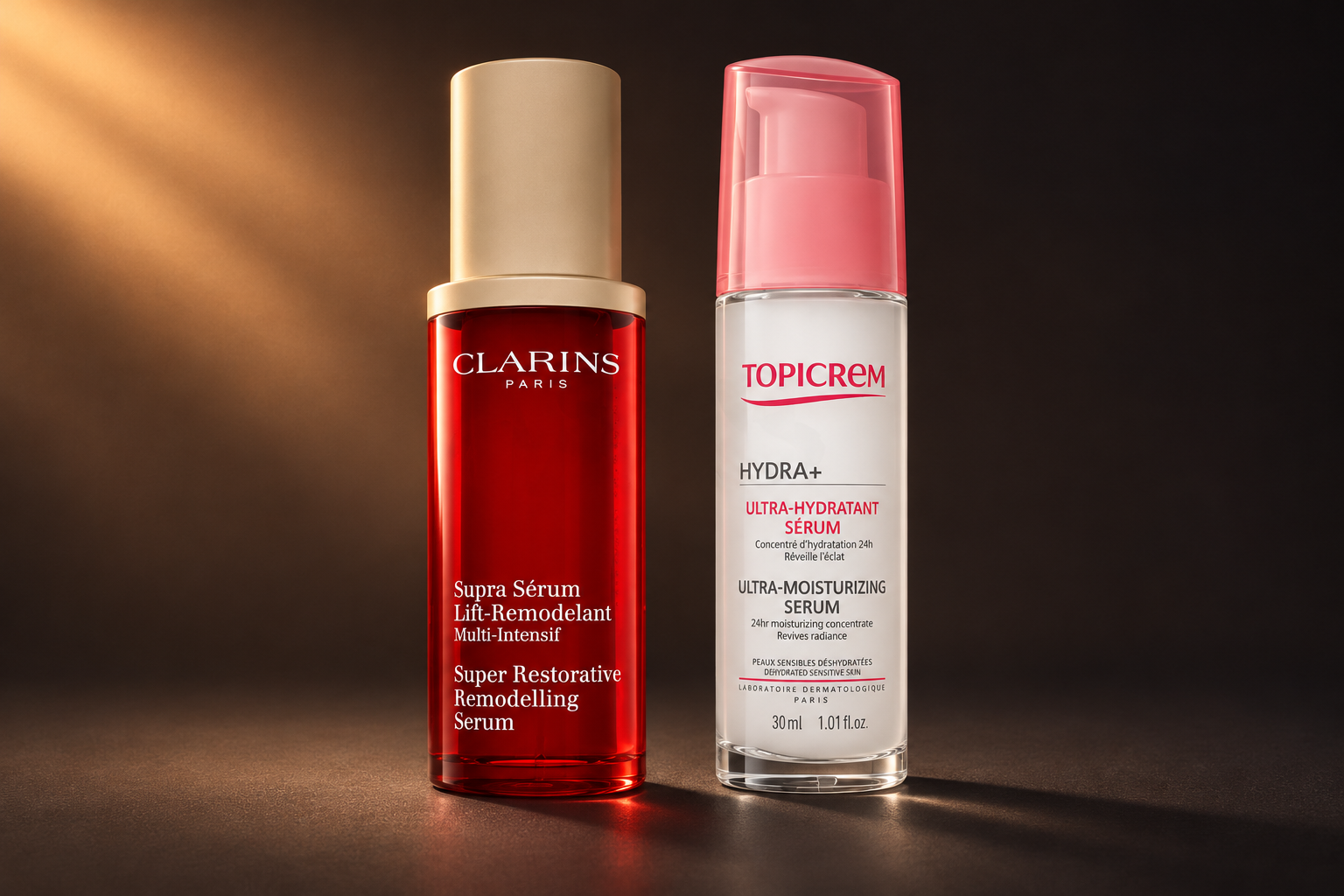
You can find suitable serums at various price levels, from more affordable to luxury – the key factor is the composition that suits your skin. Below, we have selected six serums from our range for different skin types and needs.

Evening Massage Routine – When, How Often, and How to Finish
Evening is a natural time for a facial massage. Your makeup is off, the day is behind you, and finding a few minutes just for yourself fits more easily into your schedule than in the morning rush. A massage doesn’t have to be an additional ritual – simply incorporate it into the care routine you already follow.
The order is simple: first, remove makeup, then cleanse, and only on clean skin apply the serum. When you apply it, that's the perfect time for a massage. The serum creates a thin layer on the skin, allowing your fingers to glide smoothly, and you spread it evenly with your strokes. After finishing the massage, let the serum absorb for a moment and then seal your skin with a night cream. Simply press it gently with your palms or spread it with a few light strokes; a second long round of massage isn't necessary. If you use a stronger serum with retinol or acids in the evening, it's better to massage over a gentle moisturizing product and apply the potent serum separately, without extensive rubbing.
And how often should you repeat the massage? It doesn’t have to be every evening to be enjoyable. Start with two to three evenings a week, when you can spare five minutes for it. If you find it pleasant, you can include it more often – a short massage that you actually do is more beneficial than a long one you never get around to. It helps to link it to something you do regularly, like an evening shower or the last moment before bed. If you skip one evening, it’s no big deal. The goal is for the massage to become a moment you look forward to, not another item on your to-do list.
What to Avoid During a Massage
- Too much pressure. A facial massage is not a back massage. The skin on your face is thin and especially sensitive around the eyes, so a light touch with your fingertips is more than enough. If your skin burns or remains noticeably red after a massage, ease up on the pressure.
- Pulling the skin downward. Guide your strokes from the center of the face outward and from bottom to top. Downward movements stretch the skin unnecessarily, so it's best to avoid them.
- Massaging on dry skin without serum. Without a layer of product, your fingers don’t glide over the skin but pull it. If you feel the movement dragging, add a drop of serum instead of pressing harder.
- Rushing. Quick and jerky movements turn the massage into another task. Slow strokes and calm breathing are much more pleasant for an evening moment.
The Entire Process in Brief
- Remove makeup and gently but thoroughly cleanse the skin.
- Clean hands and a few drops of serum warmed between your fingers.
- Five to ten minutes of gentle strokes from neck to forehead, from the center of the face outward, and from bottom to top.
- A short moment for the serum to absorb.
- Night cream as the final layer.
You can choose the serum to start with from those introduced in this article according to your skin type. And if you want to refine other steps, such as makeup removal, cleansing, or night cream, you can find them in Brasty's skincare and body care range. Ultimately, the main role is not played by the products, but by the few calm minutes you allow yourself in the evening.
Category
Recommended articles

"Give a girl the right shoes and she can conquer the world!" Marilyn Monroe
