



Do you run or go to the gym several times a week and worry that frequent washing might damage your hair? We'll advise you on how to choose a gentle shampoo, when rinsing with water is enough, and how to care for your scalp and hair lengths after a workout.
Why Your Hair Suffers More After a Workout Than You Expect
You know the feeling: your hair looks perfect in the morning, but an hour after your workout, it looks completely different. The roots become heavy, the volume disappears, the hairstyle falls flat, and your scalp subtly signals that it needs a refresh. Most people blame sweat. However, sweat itself isn't dirty—it's mostly water with minerals. The problem isn't the sweat itself, but the environment it leaves on your scalp.
During exercise, blood vessels expand, skin temperature rises, and sebaceous glands work noticeably faster. Fresh sebum and dead skin cells, which would otherwise be washed away gradually and unnoticed, are added to the moisture from sweat. Once the sweat dries, a thin film of salt and sebum remains at the roots. This coats the hair close to the scalp, adding weight and preventing it from lifting. That's why your hairstyle looks limp sooner than you'd expect after washing.
The other half of the story is friction. Caps, headbands, over-the-head headphones, or tightly pulled hair ties mechanically affect the hair, and wet or sweaty strands are more sensitive to friction than dry ones. This can easily lead to split ends and breakage where the hair tie holds the tightest.
Every sport places slightly different demands on your hair. Active readers most often recognize themselves in these three situations:
- Running outdoors – sweat is joined by dust, pollen, and in summer, the sun. Hair dries naturally during the run, and salt stays on it longer, making the roots heavy even if they don't feel greasy to the touch.
- Indoor gym training – warm air and higher humidity keep hair wet throughout, hair is usually tied up, and people often touch it between sets. Sweat spreads along the entire length, and the scalp barely has time to dry.
- Swimming in chlorinated water – pool water is a different challenge for hair than sweat. Hair is soaked for a long time, the swim cap pulls it close to the head, and once dry, it often feels rougher and harder to comb, especially for longer or colored hair.
And here's the concern we encounter most often among sporty readers: that washing hair after every workout will irreversibly dry it out. The fear is understandable. However, it is based on experience with a specific shampoo and washing method, not the frequency itself. If you use a strong degreasing shampoo, hot water, and then blow-dry your hair on the highest setting, the result will be dry hair even if washed only twice a week.
It can be turned around as well. A gentle cleansing base designed for frequent washing, lukewarm water, shampoo worked into the scalp instead of scrubbing the lengths, and conditioner applied from mid-length downwards means washing that hair can handle much better than occasional but aggressive washing. The key is the choice of product and washing technique, not the number on the calendar.
Good news for anyone who trains regularly: post-workout washing doesn't need to be limited, and you don't have to suffer from limp roots. Just know what to wash your hair with and how to be gentle with it.
How Often to Wash Your Hair When You Exercise Regularly
There's no universal rule that applies to everyone – and it's good to acknowledge that upfront. The frequency of washing depends on two variables: your hair and scalp type, and how intensely and often you train. Some people manage with washing twice a week even with regular running, while others need to wash their hair every time they take off their headband. Both approaches can be correct.
The type of hair matters more than the sport itself. The simple logic is: the faster your roots get oily and the less porous your lengths are, the more frequent washing your hair can tolerate without issues.
- Fine hair with oily roots – oil travels quickly along smooth hair, making the hairstyle look limp by the second day. With daily training, washing every day is often the most convenient option.
- Thick or wavy hair – oil reaches the lengths more slowly and the ends tend to be drier. Two to three washes a week are usually sufficient even if you exercise more frequently.
- Curly hair – needs moisture, and frequent washing dries it out the most of all types. It's better to stick to a lower frequency but with thorough care for the lengths.
- Colored hair – each wash removes some pigment, so a daily routine shortens the color's lifespan. It's helpful to wash less frequently and use products designed for colored hair.
- Scalp prone to dandruff or itching – here, regular washing is more of a relief than a burden, as it removes sweat and styling residues from the scalp.
If you train daily or twice a day, washing after each session is a completely legitimate choice. The condition, however, is that you adjust the product accordingly – not that you save on water and time. The scalp doesn't mind water; it minds aggressive cleansing bases used seven times a week. Daily washing with a gentle shampoo is generally more tolerable than three washes a week with a strong degreasing product. Swimming is a special case: it's advisable to remove chlorinated or salty water from your hair after each pool session, as it dries directly on the hair surface.
The opposite extreme has its pitfalls. When dried sweat stays on the scalp for long hours – from a morning workout until evening – it mixes with oil, styling residues, and surrounding dust. This creates a film that irritates the scalp, can cause itching and an unpleasant odor, and for those prone to dandruff, the problem often returns in such an environment. Additionally, hair at the roots quickly loses volume and holds shape poorly, so the "saved" wash results in a worse hairstyle appearance. Delaying washing for a whole day just because you've read somewhere about hair damage doesn't pay off in this case.
Frequency and gentleness are interconnected. The more often you wash your hair, the gentler the formulation of the cleansing product should be – and conversely, those who wash once every few days can handle a stronger cleansing power. So before you start counting how many times a week you stand under the shower after training, it's worth looking at what you're actually washing your hair with. That's where it is decided whether frequent washing is a burden for your hair or just a regular routine.
A Gentle Shampoo as the Foundation of Frequent Washing
When you shower after every workout, the shampoo bears the brunt. It determines whether your scalp remains calm or starts to feel tight, itchy, and paradoxically, greasier. The good news is that you can identify a suitable product by a few specific indicators without needing to be a cosmetic chemist.
The first indicator is the cleansing base. Shampoos differ in how aggressive the surfactants they use to dissolve grease and dirt are. Formulations described as gentle, mild, or suitable for daily washing work with milder combinations that wash away sweat and styling residues but don't leave the lengths dry and squeaky. In contrast, deep-cleansing and detoxifying shampoos have their place but are more for an occasional reset after a season in the pool or significant styling, not as a product you reach for after every run.
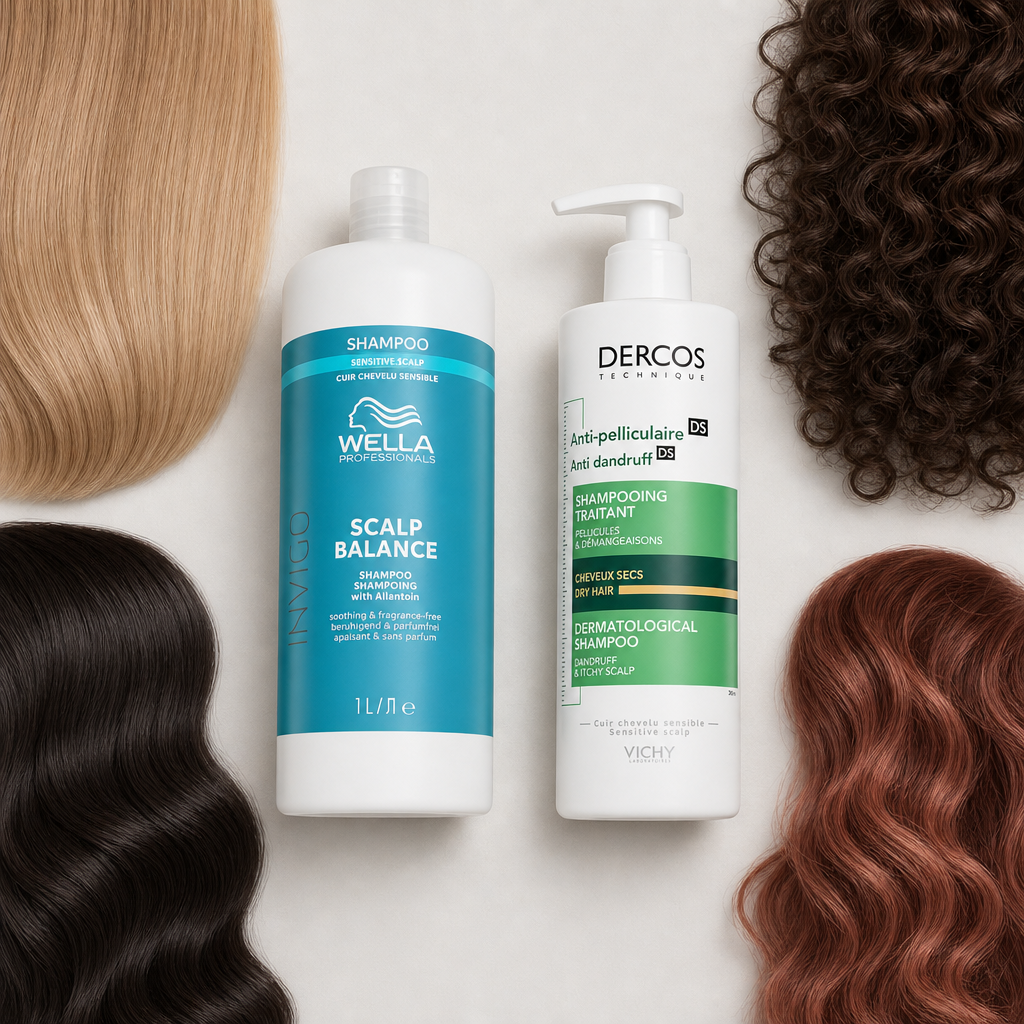
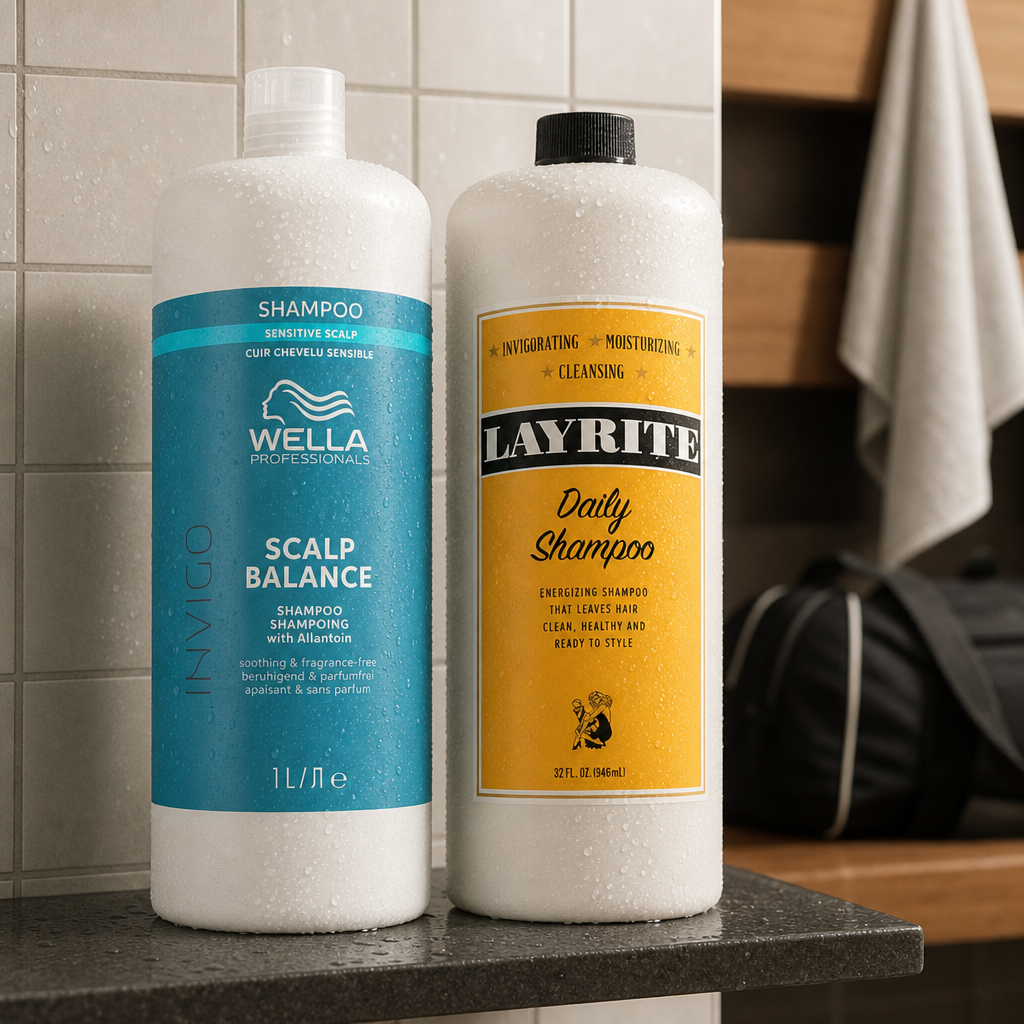
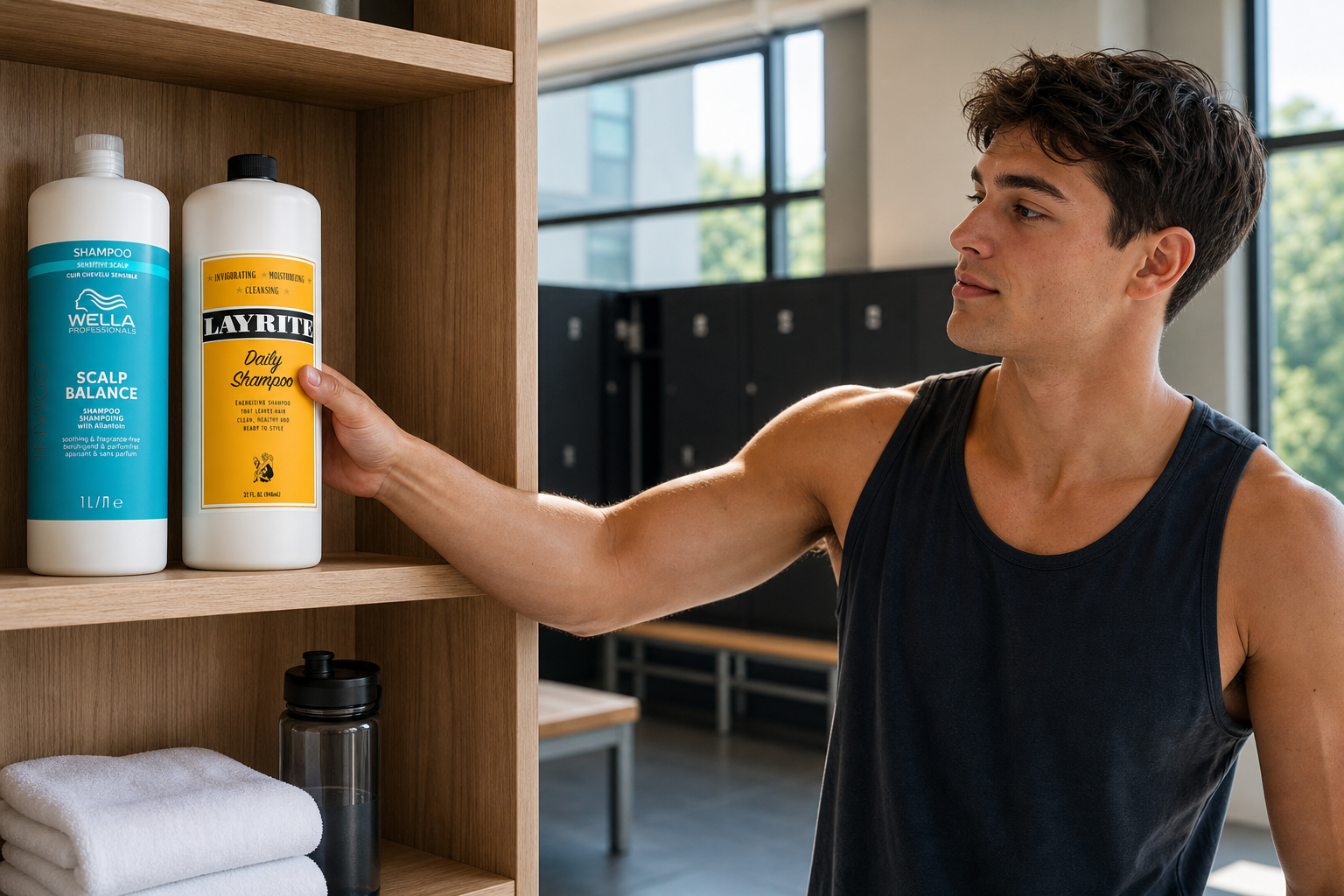
The second indicator is the target audience on the label. If the packaging mentions sensitive scalp, it usually means a formulation with a more moderate fragrance and a calmer composition, which is beneficial with frequent washing. Hydrating and balancing lines are ideal for athletes: hydrating ones care for lengths that lose moisture through washing and drying, while balancing ones target scalp equilibrium. Professional lines usually name this difference directly in the line's name, making it easy to navigate without counter advice – as seen, for example, in the Wella Professionals lines.
A special chapter is the combination familiar to many active people: oily roots and dry ends. Sweat and grease cling to the scalp, while the lengths suffer from drying and friction against a headband or collar. Here, it doesn't make sense to choose a shampoo based on the ends, as it wouldn't clean the roots, nor based on the roots, as a strongly degreasing base would dry out the ends even more. The solution is a shampoo specifically designed for this mixed type, or a gentle shampoo applied directly to the scalp – the lengths can make do with what rinses over them.
If you have fine or thin hair that quickly goes limp after a workout, look for volumizing lines. They work differently than often expected: they don't promise miracles, but thanks to their lighter structure and less burdensome care ingredients, they allow the hair to stand more freely and prevent the hairstyle from collapsing on the way home from the gym. For active people, this is practical because they wash their hair more often, and every unnecessary burden accumulates quickly.
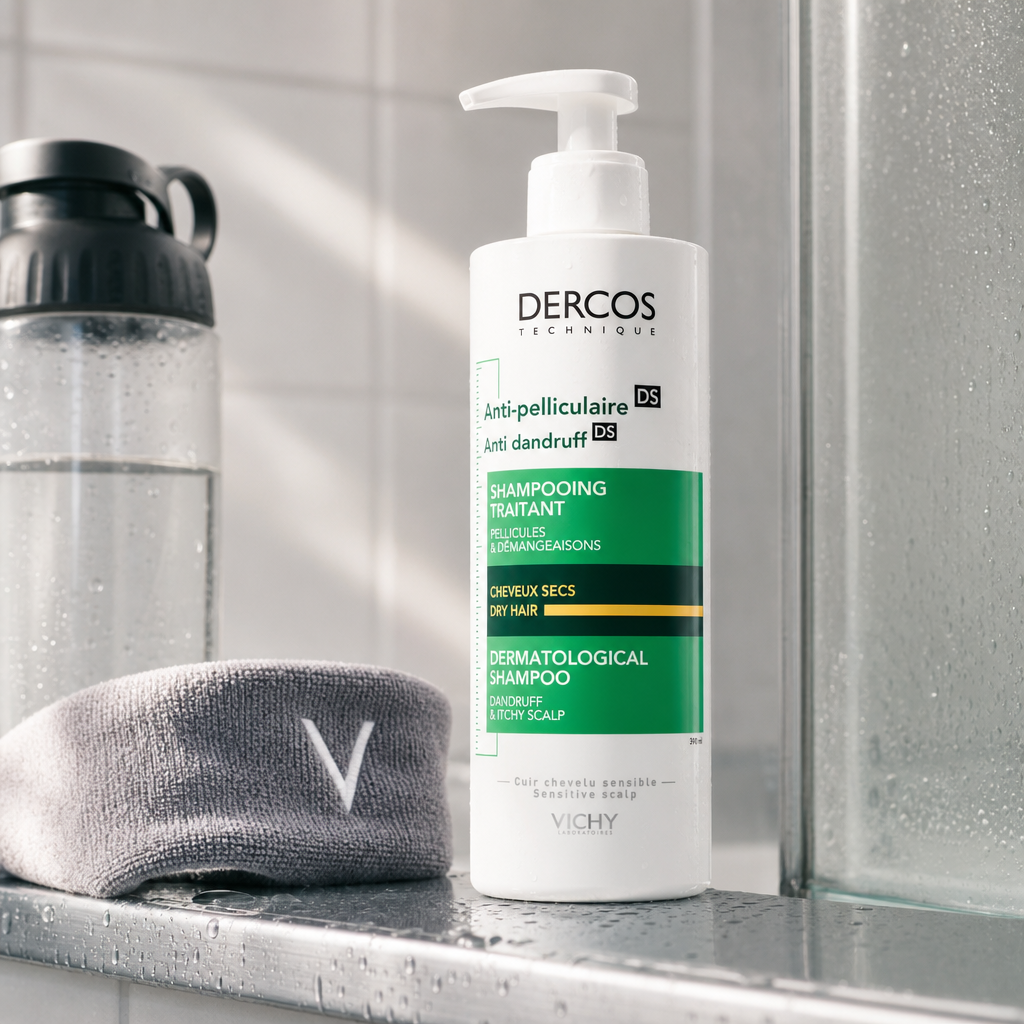
If your scalp becomes itchy or flaky after a workout, consider an anti-dandruff shampoo. Dried sweat, hats, and the humid environment of changing rooms can trigger reactions in sensitive scalps. Dermatologically oriented anti-dandruff lines, like those offered by Vichy Dercos, can be used alternately with a regular gentle shampoo, so you don't have to completely overhaul your routine. If problems persist or worsen, it's advisable to consult a doctor – cosmetics address comfort, not diagnosis.
And one more practical note. Those who wash several times a week will use up shampoo much faster than someone who washes their hair twice a week. With such consumption, larger bottles – typically liter formats from professional lines – make sense not only economically but also practically: you won't need to restock frequently, and you can be sure you're reaching for the same trusted formulation after each workout.
When Rinsing with Water or Using Dry Shampoo is Enough
Between "leaving your hair alone" and "washing it with shampoo," there are several intermediate steps. It's not just about whether you've worked out, but how much sweat has gotten into your hair and what type of hair you have. A half-hour morning yoga session is different from an hour-long run in the summer heat. If your hair doesn't look limp, your scalp isn't itchy, and your hair doesn't smell of sweat, you can often opt for a gentler alternative.
The simplest intermediate step is a thorough rinse with lukewarm water. Water will wash away much of the salt from sweat and dust that has settled on your hair. To make it effective, focus mainly on your scalp: let the water flow over it for at least a minute while massaging it with your fingertips in circular motions. Avoid using your nails, as they can irritate the skin. Then gently squeeze your hair with a towel and let it air dry.
Rinsing with water makes sense especially in these situations:
- A short or less intense workout where you didn't sweat much,
- Dry, colored, or curly hair that doesn't respond well to frequent lathering,
- A day when you washed your hair in the morning and are going to exercise in the afternoon,
- Cooler periods when your scalp sweats less than in summer.
Washing with Conditioner Only
The second gentle option relies on conditioner. Instead of shampoo, apply a generous amount of conditioner to damp hair, spread it over your scalp, massage for a minute, and then rinse thoroughly. Conditioner doesn't contain cleansing agents in the same concentration as shampoo, so it loosens and washes away dirt without stripping your hair of all its natural oils. This is especially suitable for wavy and curly hair, which dries out and frizzes quickly.
However, there are two conditions. For hair that gets greasy quickly, oil will start to build up after a few days, making hair limp. Even for dry hair, it's worth including a regular wash with a mild shampoo about once a week to remove styling residue and leave-in treatments from the scalp.
Dry Shampoo as a Bridge Between Workouts
Dry shampoo doesn't wash your hair – its starch or mineral component merely absorbs excess oil and visually restores volume to the roots. It works well as a stopgap between workouts, but not as a replacement for washing. To ensure it does its job and doesn't leave a grayish film, follow these guidelines:
- Apply it to dry hair, not to a head damp with sweat – it clumps on moisture.
- Hold the spray about twenty centimeters from your head and apply it strand by strand, not with one long press in one spot.
- Let it sit for a minute or two before massaging it into the roots with your fingertips.
- Finally, brush your hair thoroughly. This step is often skipped, leaving residue on the scalp.
- Don't use it for several days in a row. If you want to use it on the third day, it's time to wash your hair.
What Can Harm Your Hair After a Workout
How you handle your hair in the following half-hour also matters. Wet hair is more mechanically vulnerable than dry hair, so it's worth avoiding these habits:
- Drying with a hot hairdryer on the highest setting close to your head – you'll dry your hair quickly, but pay the price with frizz,
- A tightly pulled ponytail or hairband on wet hair, where hair can easily break,
- Rubbing hair with a terry towel instead of gently squeezing it,
- A hat or hood placed on a wet head on the way back from the gym.
The difference between rinsing, using conditioner, and dry shampoo is mainly about how much sweat and oil needs to be removed – and you'll know your own hair better than any universal rule.
Post-Workout Routine Step by Step
All the previous advice makes the most sense when it becomes a routine that you don't even have to think about. After a workout, you're usually tired and want to get the shower over with quickly – that's why it's worth having the steps ingrained so that your complete care takes just a few minutes longer than a regular rinse. You can manage the following process even in the gym locker room or at the swimming pool.
- Start with lukewarm water. While a hot shower may pleasantly relax your muscles after a strenuous session, it's not good for your scalp – it dissolves the sebum film faster than is healthy. Let your hair run under lukewarm water for about half a minute before reaching for the shampoo. A thorough rinse alone will wash away a large portion of salt and dust, so you'll need less shampoo.
- Apply shampoo to the scalp, not the ends. Spread the amount between your palms, distribute it to three or four spots on the crown and nape, and massage it in circular motions with your fingertips. Leave your nails out of it. The ends will clean themselves with the foam that runs down during rinsing, so you don't need to scrub them extra.
- Apply conditioner or mask only to the lengths. Start about halfway down and continue to the ends – where the hair is oldest and most stressed. Do not apply care to the scalp; for athletes who wash their hair frequently, it can easily build up a feeling of heaviness. Leave it on for as long as you can manage, and rinse with cooler water.
- Wring out your hair, don't rub it. Press a towel against it, or use an old cotton t-shirt. Classic shaking and rubbing with a terry towel will unnecessarily frizz and break wet hair.
- Comb from the bottom up. Start at the ends, work your way up in short sections towards the roots, and never pull the brush through a knot with force. Wet hair is most vulnerable, so patience pays off the most here.
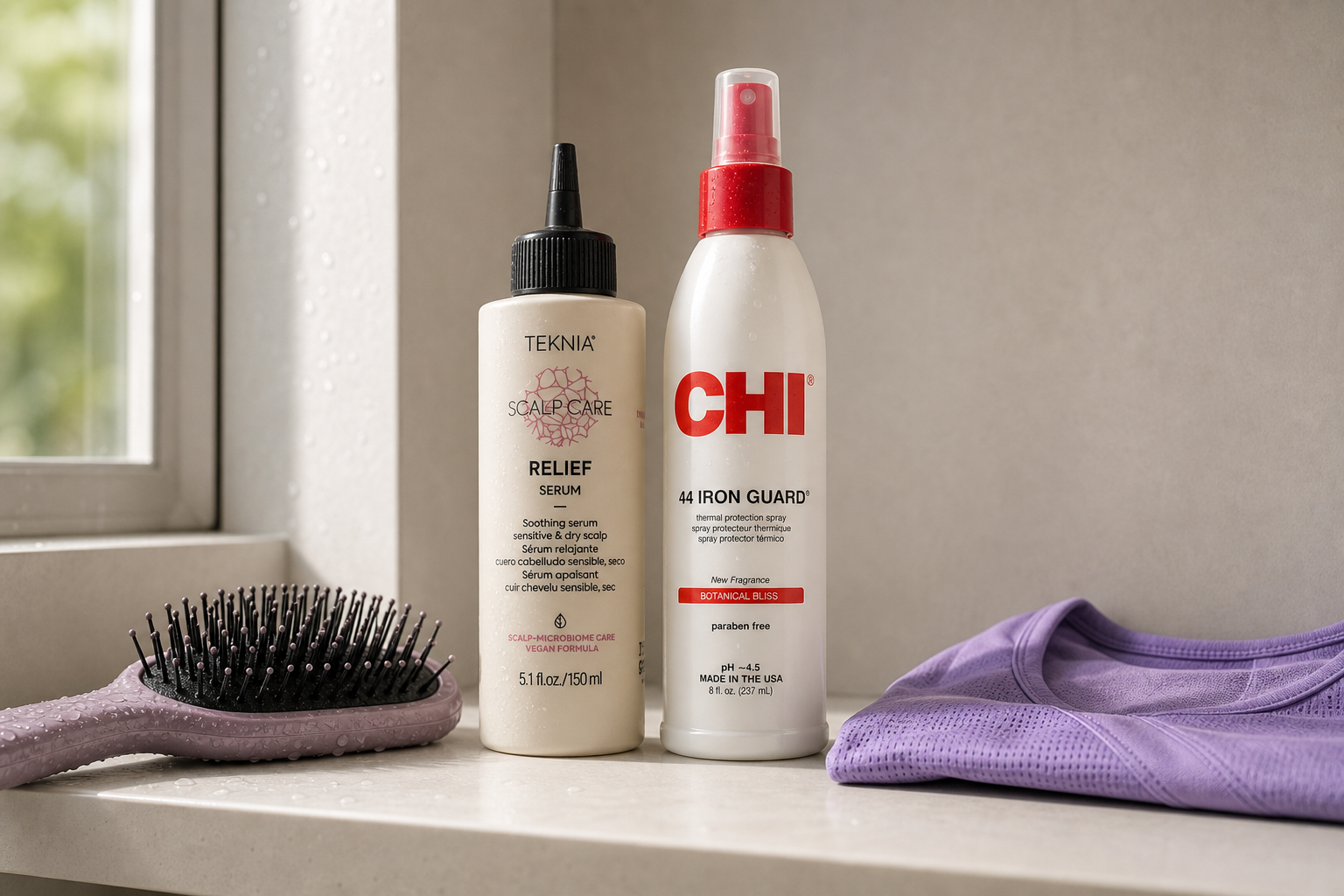
If you wash your hair almost daily, consider one more step: scalp serum. It's applied to damp or dry hair after washing, directly onto the partings, and stays in place – it doesn't rinse out. Serums designed for the scalp are usually lightweight, absorb quickly, and help keep the scalp balanced between washes. For people with a demanding training regime, it often makes more sense than another mask.
The second practical addition to the routine is leave-in care. A spray or light cream applied to damp lengths makes detangling easier, speeds up drying a bit, and keeps hair more manageable the next day. For someone who showers after every workout, it means noticeably less time with the hairdryer and less heat exposure for the hair.
Two Accessories Active People Will Appreciate Most
- Detangling brush for wet hair. It has softer and more flexible bristles than a regular brush, so it untangles knots rather than tearing them. It's a small thing that does more for the health of your ends with daily post-workout washing than many treatments.
- Heat protection spray. If you partially dry your hair with a hairdryer, it creates a layer on the hair's surface that mitigates the impact of hot air. It's applied to damp hair before drying and is a basic necessity for frequent washing, just like shampoo.
The post-workout routine doesn't have to be complicated – lukewarm water, shampoo on the scalp, care on the lengths, gentle detangling, and optionally serum, leave-in care, and heat protection depending on how often you shower. The rest is a matter of products that suit you. In our hair care range, you can put together a shampoo, follow-up care, and accessories tailored to your training week, whether you run twice a week or spend mornings in the pool.
Category
Recommended articles

"Give a girl the right shoes and she can conquer the world!" Marilyn Monroe