



Considering a change in hair length? We bring you an overview of what's most in-demand in salons this year—from pixie cuts to bobs and long waves—and explain the care and maintenance each length requires.
Why Hair Length Matters More Than the Cut This Year
Deciding on hair length is rarely a calm process. It often happens when you're standing in front of the mirror, holding your phone with a saved photo, wondering if what you see on the screen will work for you. You describe the shape, color, and bangs to your hairdresser, but the question that will concern you even three months later is different: how much time will the new length take every morning, and what will you need to buy for it.
This is where the current season differs from previous ones. While hair used to be discussed mainly in terms of shape (layering, bangs, bob), today, the focus is increasingly on what a particular length will do to your regular workweek. A cut is a one-time decision at the hairdresser's chair. Length is a decision you live with every morning.
The connection is quite simple. Longer hair means more material: more water to dry, more surface area to apply care to, and more places where damage will eventually appear. Short lengths save time with the hairdryer but shift the work elsewhere—to regular trimming and styling, without which the shape quickly loses its outline. Neither option is maintenance-free; each just takes a different toll.
The practical impact is noticeable on your bathroom shelf. With length, not only does shampoo consumption change, but also the types of products you need. For longer hair, masks, leave-in treatments for the ends, heat protection before straightening or curling, and possibly oil or serum for smoothing are considered. For very short cuts, the focus shifts to shaping pastes, gels, and sprays, because the shape is held by styling, not the weight of the hair. It's a different shopping list, even though it's still hair cosmetics.
To make the comparison meaningful, we'll ask the same questions for each length:
- How much time does morning styling take – from washing to drying to final shaping.
- How often is a visit to the hairdresser necessary – how quickly does the length lose shape and start to look unkempt.
- What care does the length require – how many steps are in the actual routine and which types of products are usually essential.
- How does the length behave with coloring and heat styling – where does damage appear first and what can be prevented.
- Who does it generally suit – considering density, texture, and natural wave, not just face shape as the sole criterion.
We'll go through four length categories that are most often mentioned this year: pixie and short cuts, bob, shoulder-length, and long waves. For each, we'll discuss what it entails in practice and won't hide its weaknesses. No length works for everyone, and no product guarantees that the cut from the saved photo will suit you as well as it does the model.
Consider the following lines as a basis for a conversation with your hairdresser, not as a final verdict. If you clarify in advance how many minutes you're willing to spend in the morning and how often it's worth going for a touch-up, the resulting choice of length will be much calmer than last-minute decisions right in the salon.
What Shapes Hair Length Trends for 2026
In recent seasons, hair length has stopped being dictated by a single silhouette. The demand is shifting towards a more natural texture and less maintenance – opting for a cut that holds its shape naturally instead of daily straightening. The trend for 2026 is not about a specific number of centimeters, but rather a mindset: the length is determined by what your hair can handle and how much time you realistically dedicate to it on a weekday.
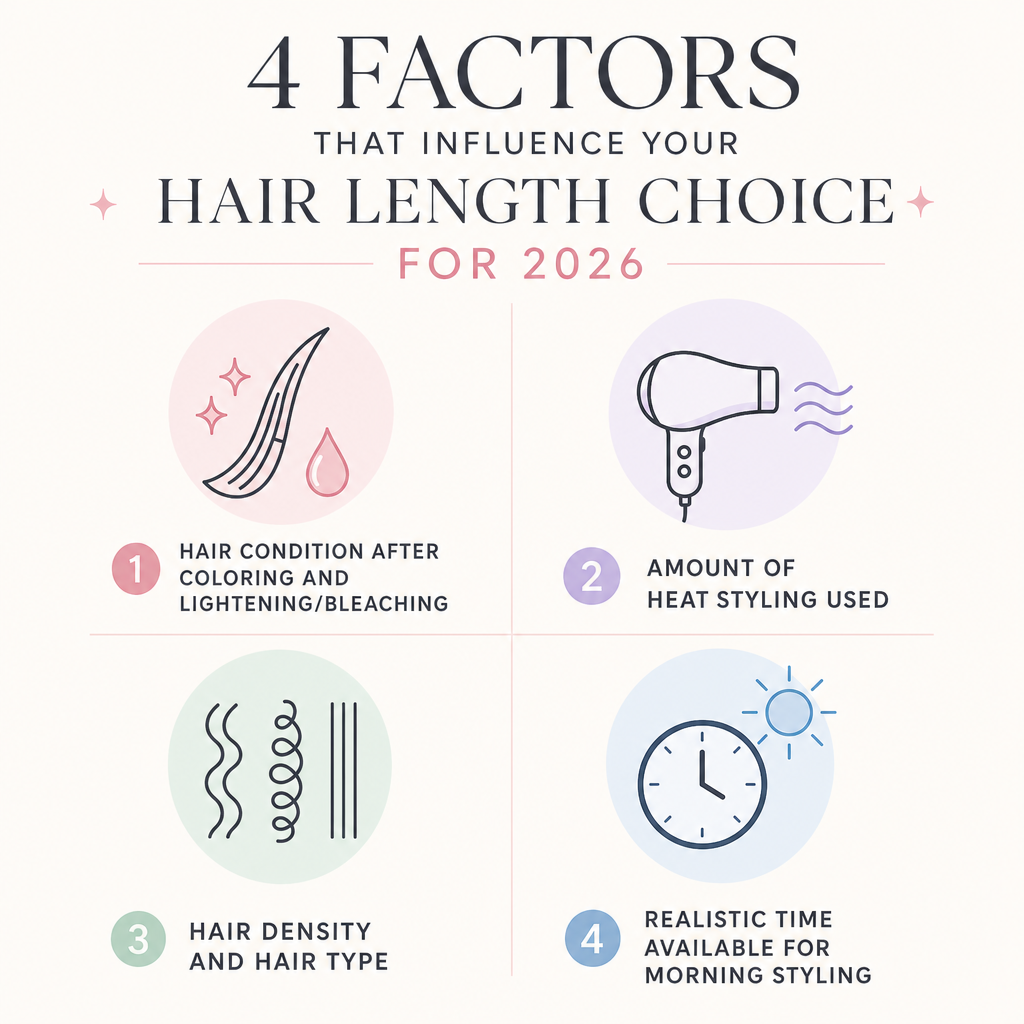
This shift is driven by several factors that are more interconnected than they might seem at first glance. Before you start thinking about a specific cut, go through them one by one. It will save you the disappointment of a length that looked great in a photo but doesn't work in your bathroom.
- Condition of hair after coloring and lightening. Chemically treated hair has a compromised outer layer, retains moisture less effectively, and is more prone to breakage in the lengths. The more frequently you color or lighten, the shorter the length that can be maintained without visibly split ends – or the more elaborate care you need to incorporate, typically a mask and leave-in treatment.
- Amount of heat styling. Blow dryers, curling irons, and straighteners gradually dry out the hair. If you style daily, consider heat protection as a foundation, not an accessory. Without it, the difference between roots and ends in longer hair deepens more quickly because the ends have been exposed to heat for several years.
- Density and type of hair. Fine hair appears thinner in longer styles because the weight pulls down the volume at the roots. Thick or curly hair, on the other hand, gains volume in shorter lengths and often needs thinning to prevent the shape from expanding sideways. Neither is a flaw; it's just information to consider when choosing a length.
- Real time for styling. Ten minutes in the morning and half an hour are two different lengths. A cut that requires blow-drying with a brush strand by strand will go unstyled during a busy week, while a simpler shape will hold up even after just a quick blow-dry.
Adding to this is the condition of the scalp, which is rarely discussed in relation to length. If you need to wash your hair every other day, each wash also means more drying and additional mechanical stress for the lengths. On long hair, this shows up sooner than on short hair because the ends have gone through the most cycles of washing, combing, and heat.
In this context, runway trends are useful as a guide, not a prescription. A cut on the runway is created with the help of a stylist, professional lighting, and often extensions. For you, it's the hair structure, face shape, and willingness to make regular salon visits that matter. When a trend clashes with your hair structure, the structure usually wins – and a text claiming otherwise won't help you.
A simple decision-making framework, which we will apply to each length further in the article, can be summarized in four questions:
- How often are you willing to go for a cut? Shorter styles lose their shape more quickly and require more frequent visits.
- How many minutes do you realistically have for styling in the morning – not in an ideal week, but on Wednesday when you oversleep?
- What is the current condition of your lengths and ends, considering coloring and heat styling?
- How many steps of care do you want in your bathroom? Is shampoo and conditioner enough, or are you also considering a mask, serum, and oil for the ends?
The answers don't form a verdict, just boundaries. Within them, you can choose freely without feeling like you're making a mistake. That's why today's trends are described more as a range from very short cuts to long waves rather than a single length that should suit everyone.
Pixie and Short Cuts: Maximum Impact, Frequent Visits
Short lengths have a unique feature that longer styles can't offer: the change is immediately noticeable to others, and you see it yourself the first morning in the mirror. At the same time, it's a length that doesn't forgive a postponed salon appointment. Whether you're considering a classic pixie or a more relaxed short variant, decide based on two things – how many minutes a day you want to spend styling and how reliably you can get to the hairdresser.
Short Lengths Aren't One-Size-Fits-All
- Classic Pixie – shorter sides and back, with noticeably longer sections on the crown. The shape holds on its own, so it looks neat even without styling, and the longer fringe allows you to visually elongate the face.
- Crop – an even shorter version with a sharply defined line at the forehead and a pronounced transition to the sides. It's appreciated by those who want a graphic, clean shape and don't mind that every grown-out centimeter is visible.
- Messy Short Cuts – layered structure, irregular ends, no meticulous symmetry. It appears softer than a crop and can handle a few days without intervention, as the looseness is part of the design.
On fine hair, short length usually helps. You remove the weight that pulled the roots to the head, and the hairstyle suddenly maintains volume on its own. That's why people whose longer hair falls flat by the afternoon often opt for a pixie. With thick and strong hair, the situation is different: without layering, the short shape easily spreads to the sides, creating volume where you don't want it. The solution is usually thinning the inner sections, not further shortening. Wavy and curly textures also suit short cuts, but they need a cut that takes into account how the strands curl when dry.
Maintenance Driven by Centimeters
A short shape thrives on precise lines, which quickly fall apart. Expect a trim roughly every four to six weeks, sooner for crops and very short sections at the neck, as the outline loses its sharpness first. If you can't reliably maintain this interval, you'll ultimately be happier with a longer version that hides the regrowth.
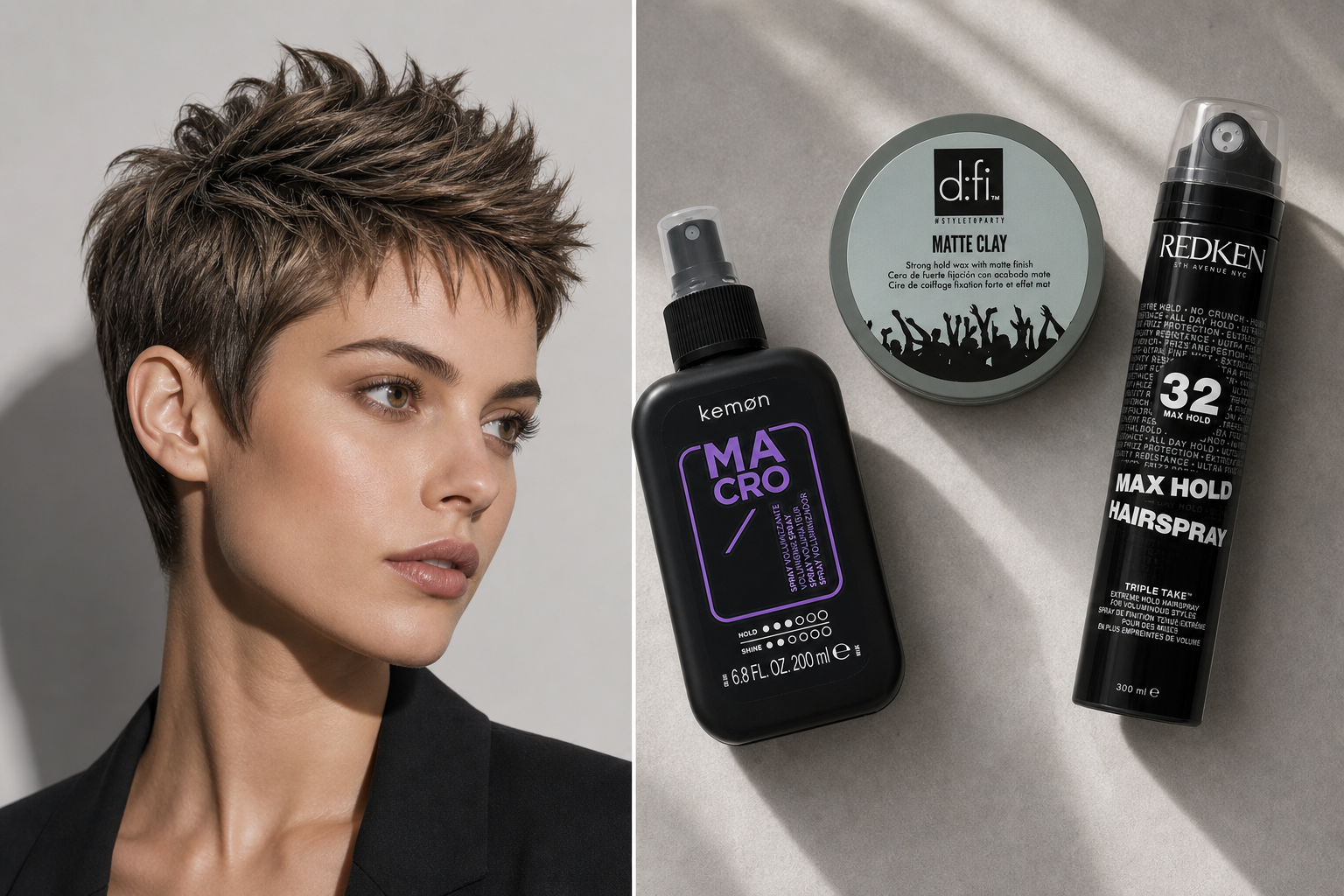
Daily styling for short hair is shorter, but not nonexistent. It usually revolves around three steps:
- Volume at the Roots on damp hair – mousse, volumizing spray, or foam applied directly to the roots and blow-dried with fingers against the growth direction.
- Shaping Dry – matte paste, clay, or gel depending on whether you want a soft or firm and shinier result. Take a pea-sized amount, rub it between your palms, and work from the ends to the crown.
- Fixation – a light hairspray or texturizing spray that holds the shape without clumping strands into one piece.
Shorter hair is also usually washed more frequently. Oil travels the short strand in a day or two, and styling residues accumulate faster than with longer versions. Therefore, choose a shampoo that can withstand frequent use, and occasionally complement it with a cleansing shampoo to remove paste and hairspray buildup.
Care Shifts from Lengths to Scalp
The shorter the cut, the more visible the scalp – and the sooner you notice dry flakes, oiliness at the crown, or irritation after coloring. The focus of care shifts: instead of rich masks for the ends, shampoos for sensitive scalps, scalp serums, or pre-wash peels come into play. Don't skip the mask or conditioner entirely, just apply them specifically to the upper sections and ends, not the roots, to avoid weighing the hair down unnecessarily.
Short hair is thus a lower investment in morning time and a higher one in regularity. If this balance suits you, you'll be rewarded with a shape that holds even without lengthy blow-drying.
Bob and Medium Length: A Balance Between Style and Maintenance
Between short cuts and long hair lies a range that many people return to in the salon chair. The length from chin to shoulders offers both – a visible shape that gives direction to the hair, and enough material to tie it up or flip it to the side. However, this compromise doesn't come for free. The more defined the cut, the more regularly it needs to be refreshed, and the longer the ends, the sooner they show signs of heat, color, and everyday mechanical stress.
Within this range, there are three quite distinct cuts:
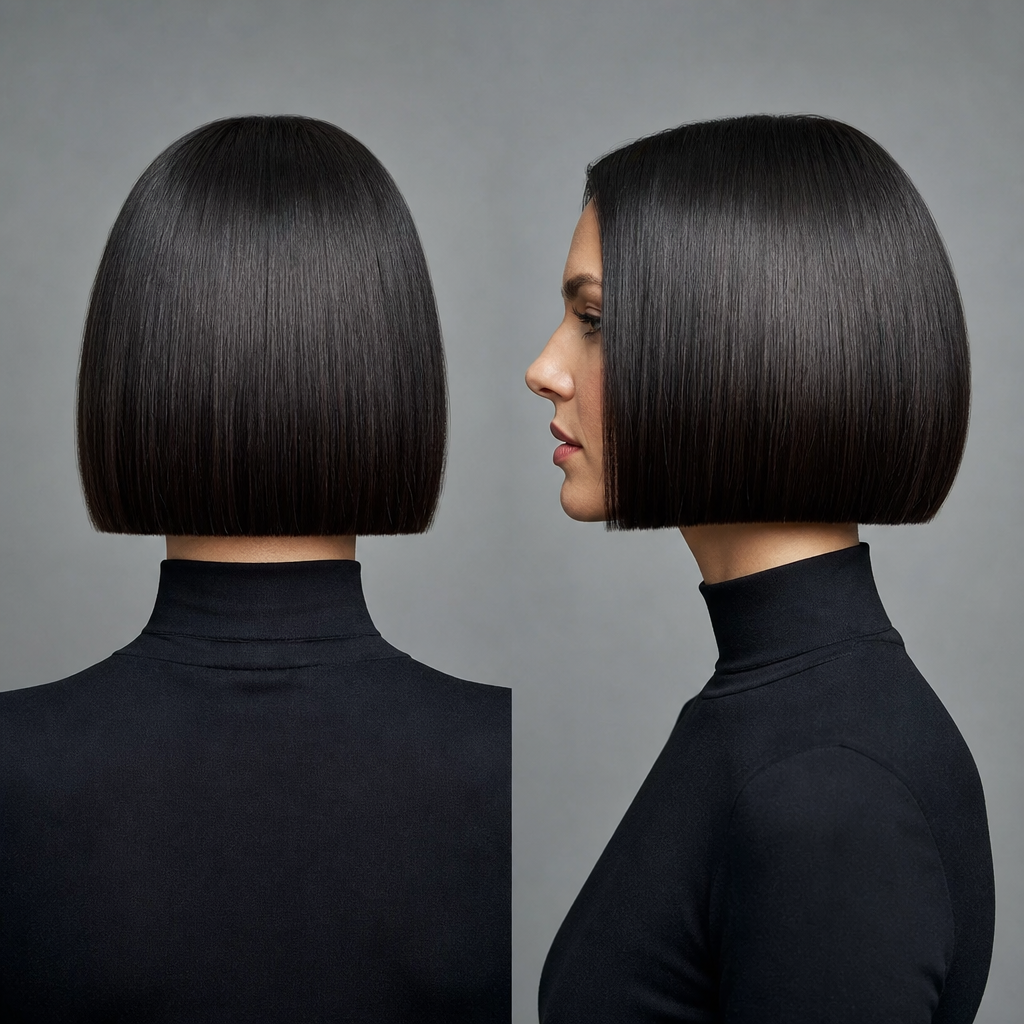
- Classic bob at chin or jaw length, usually with a blunt cut bottom line. The shape holds naturally because it's supported by a dense, unbroken line of ends.
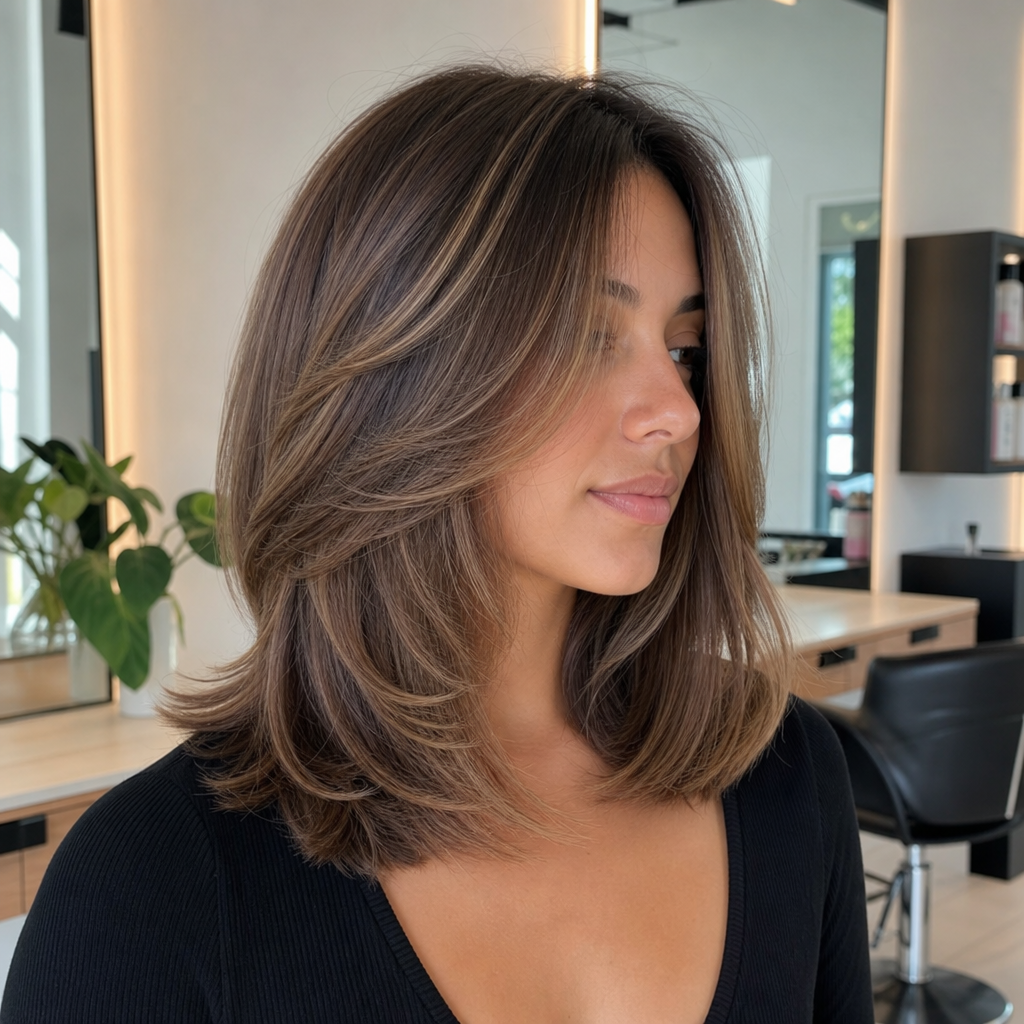
- Long bob to the shoulders, commonly known as a lob. It's more versatile, but right where the ends touch the shoulders, the line is most likely to break, and the hair starts to flip outwards.
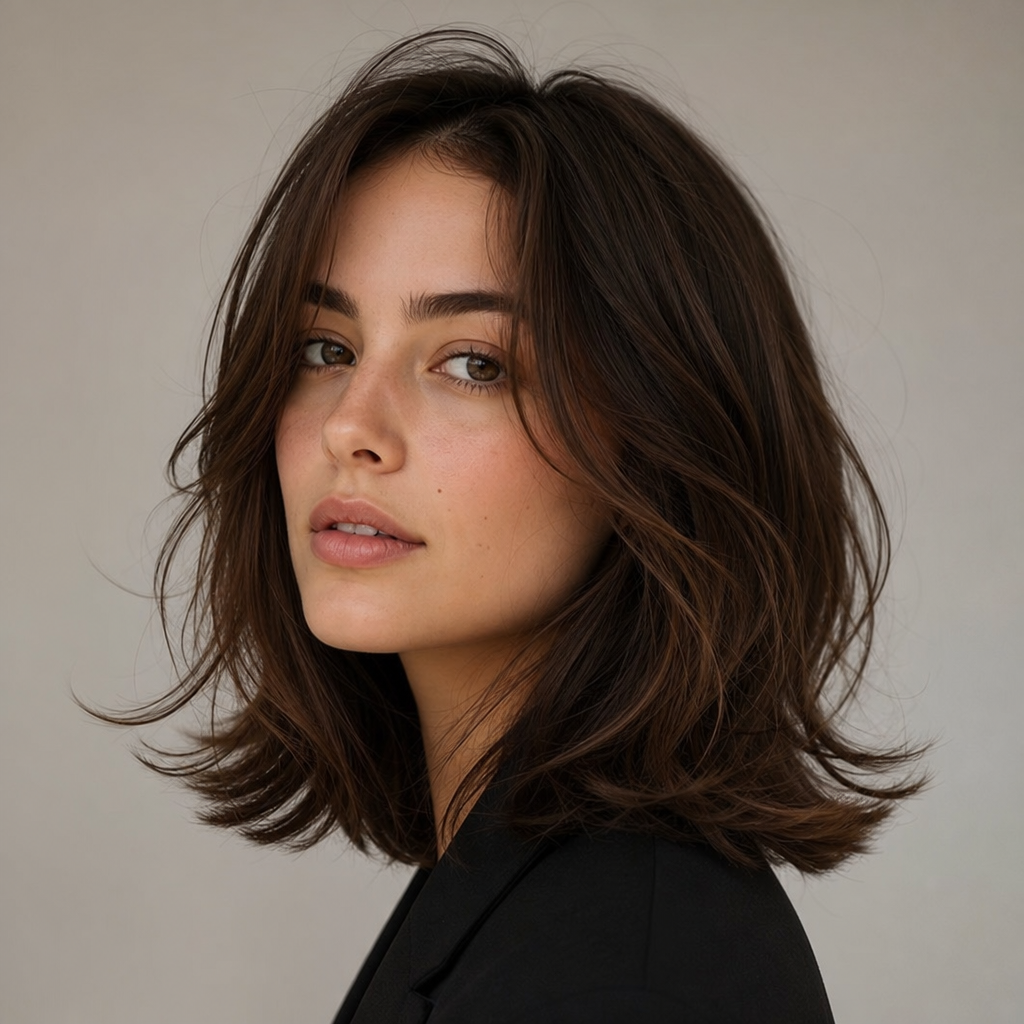
- Medium length with layers just below the shoulders, where layers lighten the volume and add movement to the hair. Here, the shape is held by layering rather than a line – which means more work in styling.
How Much Shape the Cut Holds on Its Own
The difference between these variations is most noticeable in the morning in front of the mirror. A blunt bob usually just needs to be blow-dried with a round brush inward, and the shape appears on its own; if the hair falls to the sides, simply flipping it to the opposite side while drying helps. With a lob, the ends often need to be intentionally curled, either with a brush during blow-drying or with a larger diameter curling iron. Layered medium length is the most demanding for styling because the individual layers behave differently: the lower sections dry smoothly, while the top layers need volume from the roots. Expect to spend significantly more time with a hairdryer on a layered cut than on a blunt line.
What Maintenance Really Requires
This length is convenient but not maintenance-free. The upkeep can be summarized in a few points:
- Trimming the ends about every two to three months. A bob with a blunt line needs a shorter interval because even a few split ends can visibly blur the line. With layered medium length, you can afford closer to three months.
- Moisturizing mask once a week. The ends in this range are about a year and a half to two years old and need hydration sooner than the length at the roots.
- Lighter leave-in care for smoothing. For shoulder-length hair, it's better to opt for a milk or spray rather than a rich oil – a heavier texture weighs down the shape and the bob loses volume.
- Heat protection every time you use a straightener or curling iron. Apply it to damp hair before blow-drying and let it dry thoroughly.
When You Also Color the Length
Coloring is often the main source of damage for medium length, as it accumulates on the ends: before the hair grows to shoulder length, the same ends have gone through several cycles of lightening or toning. You'll notice this when the ends are harder to comb and feel coarser than the rest of the length when drying. It helps to limit full coloring in favor of techniques that work only with selected strands, and between salon visits, maintain the color with a toning shampoo or color mask instead of repeated dyeing. Shampoos and masks designed for colored hair also help slow down the fading of the shade, naturally extending the interval between treatments.
Long Waves: Essential Care for Length
Long hair requires the least attention from the hairdressing calendar. Trimming the ends every three to four months is usually enough to maintain the shape and prevent the ends from splitting. However, the daily routine is quite the opposite: while short cuts rely on precise lines, long hair depends on the condition of the hair itself. The ends that reach your shoulder blades are several years old and have undergone hundreds of washes, blow-drying, sun exposure, and coloring. That's why it's not worth skimping on care for long waves – it does most of the work that a cut would do for shorter lengths.
Common Challenges for Long Hair
- Split ends. The most visible issue and the only one that can't be reversed – a split end can only be cut off. Leave-in treatments and oils can slow further splitting, but they won't rejoin the ends.
- Loss of volume at the roots. The weight of the length pulls hair down, making even thick hair appear flat after a few days. Lighter care at the roots and richer care on the lengths help, as well as volumizing shampoo or spray targeted at the roots.
- Accumulated heat damage. Straighteners and curling irons affect the same ends for months or years. Without heat protection, damage accumulates and shows as breakage in the last third of the length.
A Routine That Works for Length
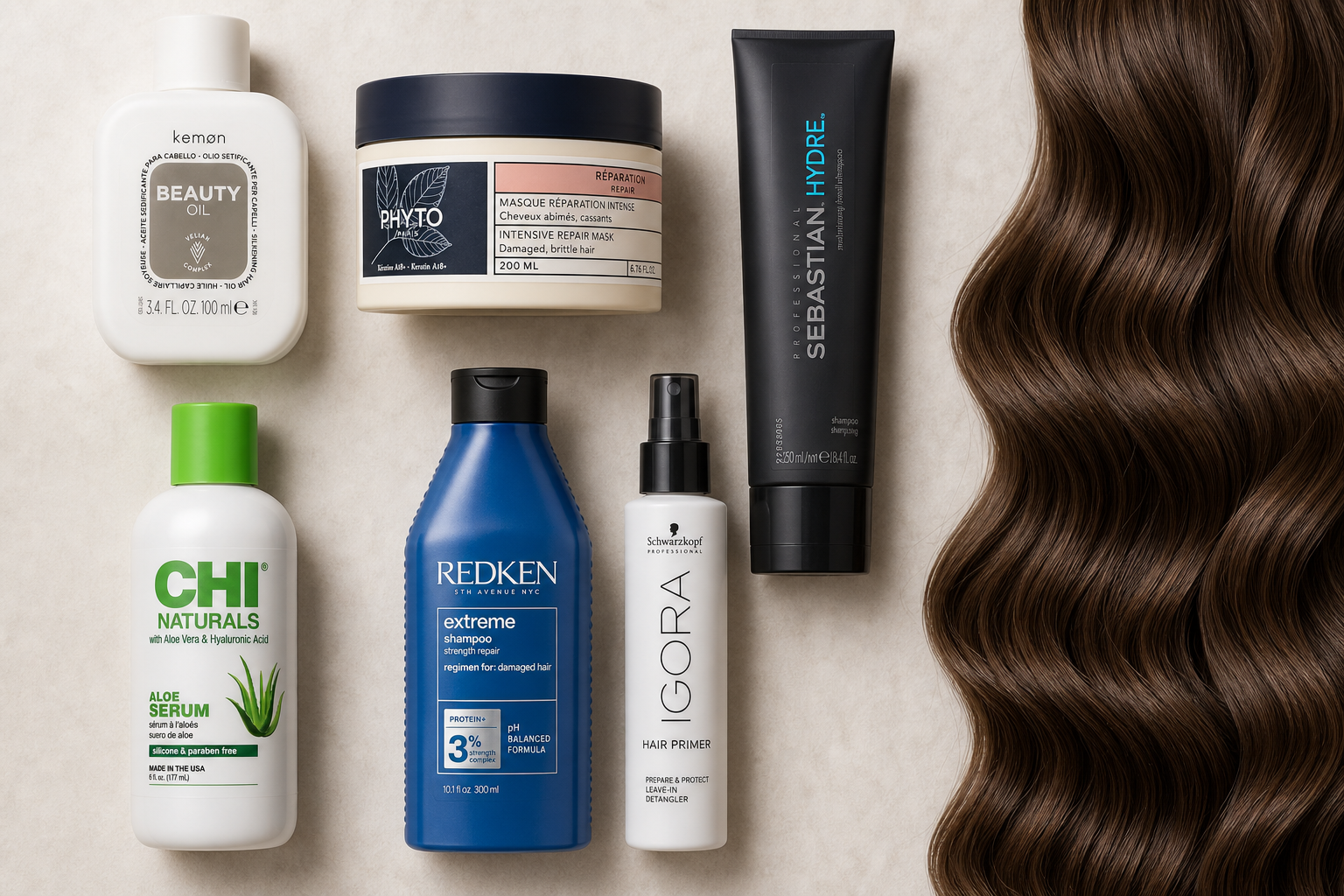
The basics are simpler than they seem and consist of three steps. A mask once a week is a reasonable minimum for long hair – apply it roughly from ear level down, never on the roots, and leave it on for the full time recommended by the manufacturer. Hair oil should be applied to damp ends after washing and in small amounts to dry hair during the day; it's easy to overdo it, so start with one to two drops. Leave-in care in the form of a spray or milk makes detangling easier and keeps strands together, which is especially noticeable with waves and natural texture.
Several habits are also worthwhile: detangle from the ends upwards, don't tie wet hair with a band, dry with a hairdryer from a greater distance, and always use heat protection before straightening or curling. Waves often hold better when you dry your hair only to dampness and let the final phase air dry.
Which Length Suits You Best
When you compare all three options, fashion doesn't ultimately decide, but how much time and care you're willing to dedicate to your hair:
- Short cuts – the quickest morning routine and the most noticeable change in appearance, in exchange for frequent salon visits.
- Medium length – a compromise for most people: enough hair for tying and styling, yet manageable maintenance.
- Long waves – the most hairstyle options and the least pressure on salon appointments, but daily care and heat protection become a necessity, not a bonus.
Your hair type also plays a role in the decision. Fine hair handles length worse – it loses volume quickly and appears thin, so medium length with light layering often suits it better. Thick and wavy hair, on the other hand, is more tamed by length because its own weight smooths it out. And if you regularly color your hair, remember that longer hair means more care for color protection.
Whether you stick with long waves or eventually opt for a shorter style, the result depends on the care between salon visits. In our hair care range, you'll find shampoos, masks, oils, and leave-in treatments from professional brands like Wella Professionals, L'Oréal Professionnel, or Milk_Shake – choose based on what your hair needs most: hydration, volume, color protection, or repair of damaged lengths. If you're unsure, start with a mask and leave-in care; they make the biggest difference for long hair.

Category
Recommended articles

"Give a girl the right shoes and she can conquer the world!" Marilyn Monroe
