

An oil that adds shine to some hair can weigh down others. We'll show you how to choose an elixir, dry oil, or more intensive treatment based on your hair type and when to incorporate it into your routine.
Why One Oil Doesn't Suit All Hair Types
You've heard it before: a friend raves about an oil that keeps her thick waves smooth and shiny all day. You try it, and after a few hours, your fine hair is limp at the roots, lacking volume, and looks greasier than you'd like. The issue isn't with the product or you. The same drop behaves completely differently on various hair types, so it's worth choosing an oil or elixir based on your actual hair type, not someone else's experience.
Three main characteristics, which combine with each other, are crucial when choosing:
- Thickness of a single hair. Fine hair has a smaller diameter, so even a small amount of oil can easily coat and weigh it down. Thick hair can handle more product without losing movement.
- Density. This refers to how many hairs you have on your head. With thinner hair, the oil spreads over a smaller area, and every extra drop is immediately noticeable. A thick mane, on the other hand, requires more to ensure the care reaches the lower layers.
- Level of dryness in the lengths. Ends that are colored, lightened, or frequently exposed to sun and wind tend to be porous and absorb oil quickly. Smooth, unstressed lengths absorb less, leaving the excess on the surface.
Only by combining these three characteristics can you create a reasonable picture for selection. Fine but dry hair needs something different than dense hair with a firm structure, even though both groups might say they have "dry ends." How often you wash your hair and whether you wear it loose or tied up also plays a role – these factors affect how much care the lengths actually need throughout the day.
The good news is that you can choose from a truly wide range. At one end are light elixirs, like the popular Orofluido Elixir, which absorbs quickly and gives hair shine without feeling greasy. At the other end are concentrated products, such as K18 Molecular Repair Hair Oil, which requires only a few drops and is mainly intended for stressed, lightened, or chemically treated lengths. In between, you'll find a whole range of oils and serums from brands like Wella Professionals, Londa Professional, CHI, or Goldwell.
In the following sections of the article, we'll guide you on how to navigate this selection: what distinguishes different formats, what to choose for fine hair, and what for thick dry hair, and when to apply oil during care. But before you reach for a specific bottle, try to honestly answer three questions – how thick is your hair, how much of it do you have, and how dry are your lengths. The answer will save you from disappointment and unnecessarily weighed-down hair.
Elixir, Dry Oil, or Treatment: What's the Difference?
On hair care product labels, terms like elixir, serum, oil, and treatment often overlap, and manufacturers don't always use them consistently. Therefore, it's more useful to observe how the product behaves in your hand and on your hair – how thick it is, how quickly it absorbs, and what feeling it leaves behind. Based on this, the range can be roughly divided into three groups.
Light Elixirs, Serums, Dry Oils
These have a liquid, often almost watery light texture, absorb quickly, and don't leave a greasy film on the hair. They make hair appear smooth and shiny, yet remain airy and movable. They are particularly suitable for finer hair, for everyday smoothing, or for those who prefer not to feel the product in the lengths.
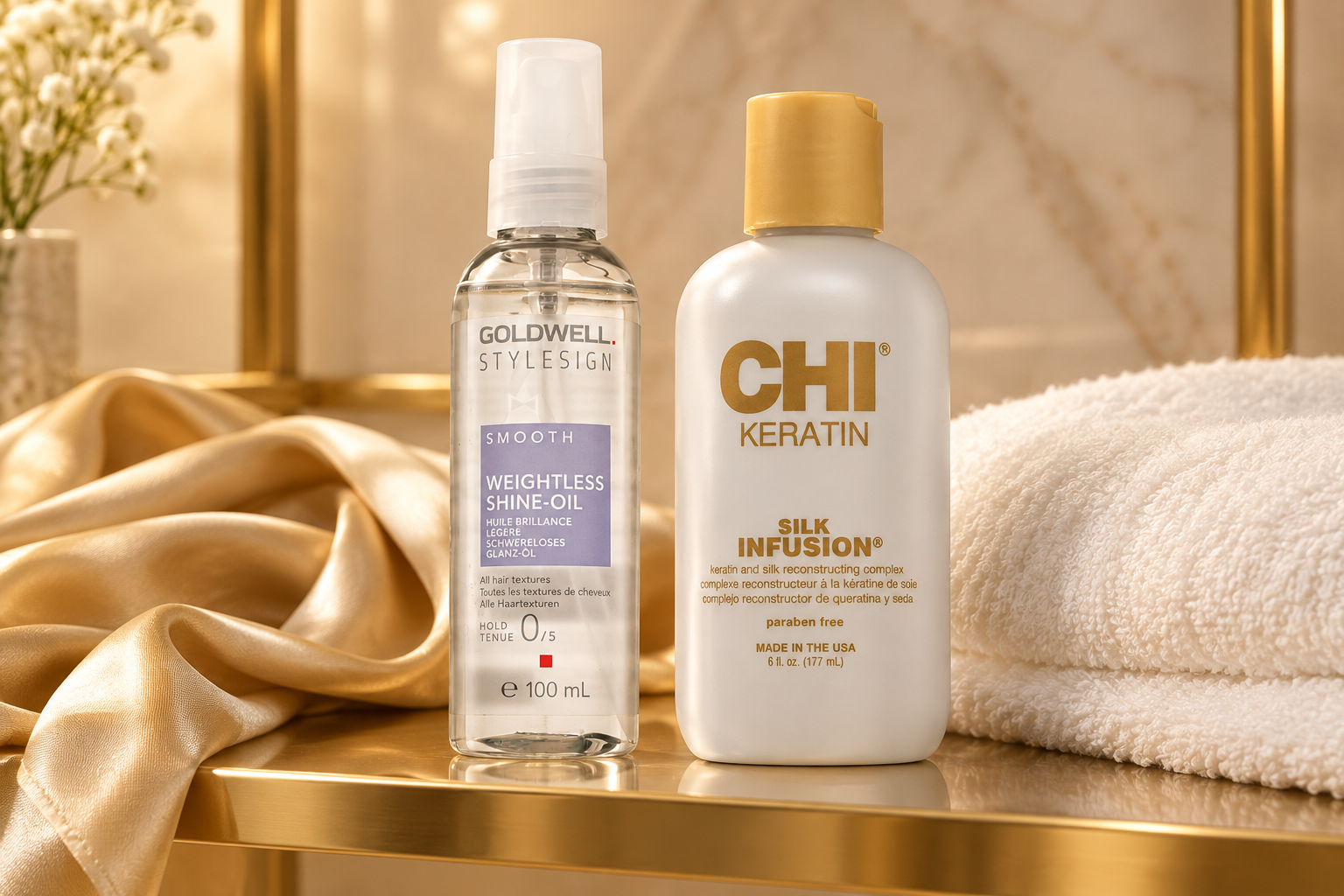
- CHI Keratin Silk Infusion – a liquid serum rather than a classic oil, which smooths the hair and gives it a gentle shine without feeling heavy.
- Goldwell StyleSign Smooth Weightless Shine-Oil – as the name suggests, it's a light oil with an emphasis on shine and taming flyaways.
Universal Middle: Balanced Oil Elixirs
This group stands between the two extremes. The texture is oily, but thanks to a lighter composition, it spreads and absorbs well with a reasonable dose. It's more noticeable on the hair than dry oils – the lengths are softer, hold shape better, and the ends look more polished. It's suitable for normal to slightly dry hair and is often a good first choice if you're just trying oil and don't know where your hair fits.
- Orofluido Elixir – an oil elixir with a distinctive, warm fragrance that gives hair shine and softness and is easy to dose drop by drop.
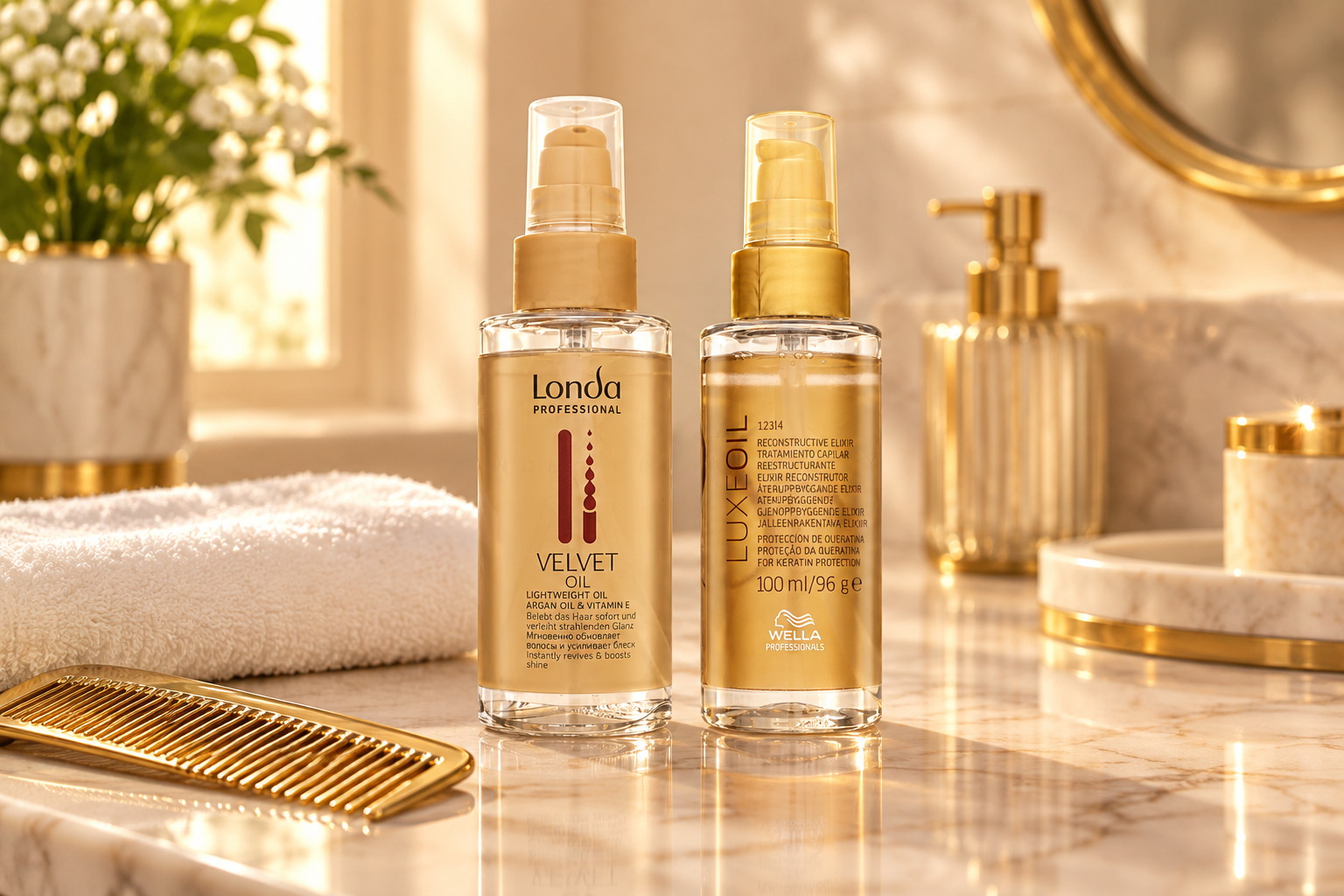
- Wella Professionals SP Luxe Oil Reconstructive Elixir – an elixir from the professional SP Luxe Oil range, designed for hair that needs more care and shine but can't handle heavy oil.
Richer Nourishing Oils or Treatments
These feel denser to the touch, take longer to spread, and their presence is noticeable on the hair. Hair becomes significantly soft and manageable after use, but an excessive dose will weigh it down faster than lighter variants. They are usually chosen by those with thick, coarse, dry, or repeatedly colored and lightened hair, for whom a light elixir is not enough.
- Londa Professional Velvet Oil – a nourishing oil that visibly softens dry and coarse lengths and gives them a velvety feel, as its name suggests.
- K18 Molecular Repair Hair Oil – the manufacturer includes it in their molecular care range, especially for stressed and chemically treated hair. It mainly shows on the hair through softness and shine; how pronounced the overall effect will be depends on the condition of your hair and how regularly you use it.
The grouping is indicative – the same product can feel heavy on fine hair and almost unnoticeable on thick hair. The best indicator is a small amount tested on the lengths: if the hair remains light and just smooths out, you have the right strength; if it becomes limp, it's worth opting for a lighter category.
Fine Hair: Lightweight Elixirs That Won't Weigh You Down
Fine hair has its own characteristics: each strand is thin, easily flattened, and often quickly becomes greasy at the roots. However, it still appreciates care – the ends tend to be dry, frizzy, and lose their shine. Whether your hair is naturally fine or just thin and straight, the goal is to add softness and shine to the lengths without losing the volume you work hard to create every morning.
Products with a light, quickly absorbing texture that don't leave a greasy film are suitable for fine hair. A good example is Goldwell StyleSign Smooth Weightless Shine-Oil – as the name suggests, it's designed to smooth and add shine without weighing down, so even thin hair that usually becomes limp with oil can handle it. Another option is CHI Keratin Silk Infusion, a liquid leave-in treatment with a silky light texture that can be applied to both damp and dry lengths. Both products can be dispensed drop by drop, which is crucial for fine hair.
If you already have a favorite Orofluido Elixir at home, you don't have to give it up. It's a more versatile and richer elixir with a strong fragrance, which works well on fine hair in minimal doses – apply it only to the very ends, ideally to towel-dried hair, where it spreads better and doesn't feel as heavy.
For fine hair, less is more. Use these guidelines for dosing:
- Short hair and shoulder-length hair: one drop or one small pump.
- Longer hair: two drops, at most three for very long hair.
- Method: first spread the product between your palms to create a thin layer, then run it through your hair.
Why only apply to lengths and ends? The roots have enough natural oils, and with fine hair, added oil is noticeable the quickest – hair at the crown becomes limp and looks unwashed sooner. Start roughly at chin level and work down to the ends, which are the oldest part of the hair and need care the most. A brush or comb with wide teeth will help distribute the product evenly.
You can tell there's too much product on your hair by a few signs:
- hair feels sticky or clumps into strands,
- shine looks greasy rather than natural,
- the hairstyle loses volume and shape within a few hours,
- you need to wash your hair sooner than usual.
In such cases, reduce the amount by about half the next time you use it, or apply the product only to the very ends.
Fine hair that is colored or lightened tends to be drier and more porous at the ends, so a light product is absorbed more quickly. Even so, it's worth not switching immediately to heavy oils – instead, add an extra drop only to the driest ends and treat the rest of the lengths with the usual amount. For blonde shades, keep in mind that oil or elixir won't neutralize yellow tones; that's what purple shampoo is for, such as Fanola No Yellow Shampoo, which you can easily combine with a light elixir in your routine.

Thick Dry Lengths: When Richer Nourishment is Needed
Thick, coarse, or chemically treated hair has one advantage – it can handle richer care without becoming limp. Where fine hair might look greasy after just a few drops of oil, thick dry lengths often start to look smooth and shiny. If your hair frizzes quickly after washing, the ends feel rough to the touch, and the comb snags in the lengths, it's worth opting for richer nourishment.
Daily Nourishment for Dry Lengths
For regular care, two products are suitable to smooth thick hair without weighing it down so much that it loses movement:
- Londa Professional Velvet Oil – a richer oil, especially appreciated by coarse and dry hair. It tames unruly lengths and gives them a velvety feel. It falls into the mid-price range, making it suitable for daily use without significant expense.
- Wella Professionals SP Luxe Oil Reconstructive Elixir – an elixir with a lighter texture, suitable for thick but not extremely coarse hair. It's ideal when you want to nourish the lengths while maintaining their lightness. It also remains in the mid-price range.
For thick hair, the dosage is different than for fine hair – depending on the length and volume, use two to four drops. First, rub the oil in your palms and then distribute it through the lengths, focusing on the ends. If the hair still feels dry after drying, add another drop. It's better to dose gradually than to overdo it initially.
When Hair is Damaged
Hair that has undergone repeated bleaching, coloring, or perming needs more than just regular smoothing. Products labeled as molecular care by their manufacturers are designed for them:
- K18 Molecular Repair Hair Oil – a concentrated oil in a small package, where only a tiny amount is needed. It's intended for chemically treated and stressed hair, providing softness and shine while reducing frizz. It's among luxury products, but due to the low dosage, it lasts longer than it might seem.
- Wella Professionals SP Liquid Hair Molecular Hair Refiller – a serum with a lighter texture, designed for porous and stressed lengths. Unlike oil, it doesn't weigh the hair down, making it suitable even when damaged hair is also rather fine. It's priced slightly higher than regular oils.
For both, it's important to note that they aren't miracle cures – no product can rejoin split ends, and significantly damaged lengths are best trimmed. Regular care, however, can make hair feel softer and easier to comb, reducing breakage during brushing.
Oil or Oil with a Mask?
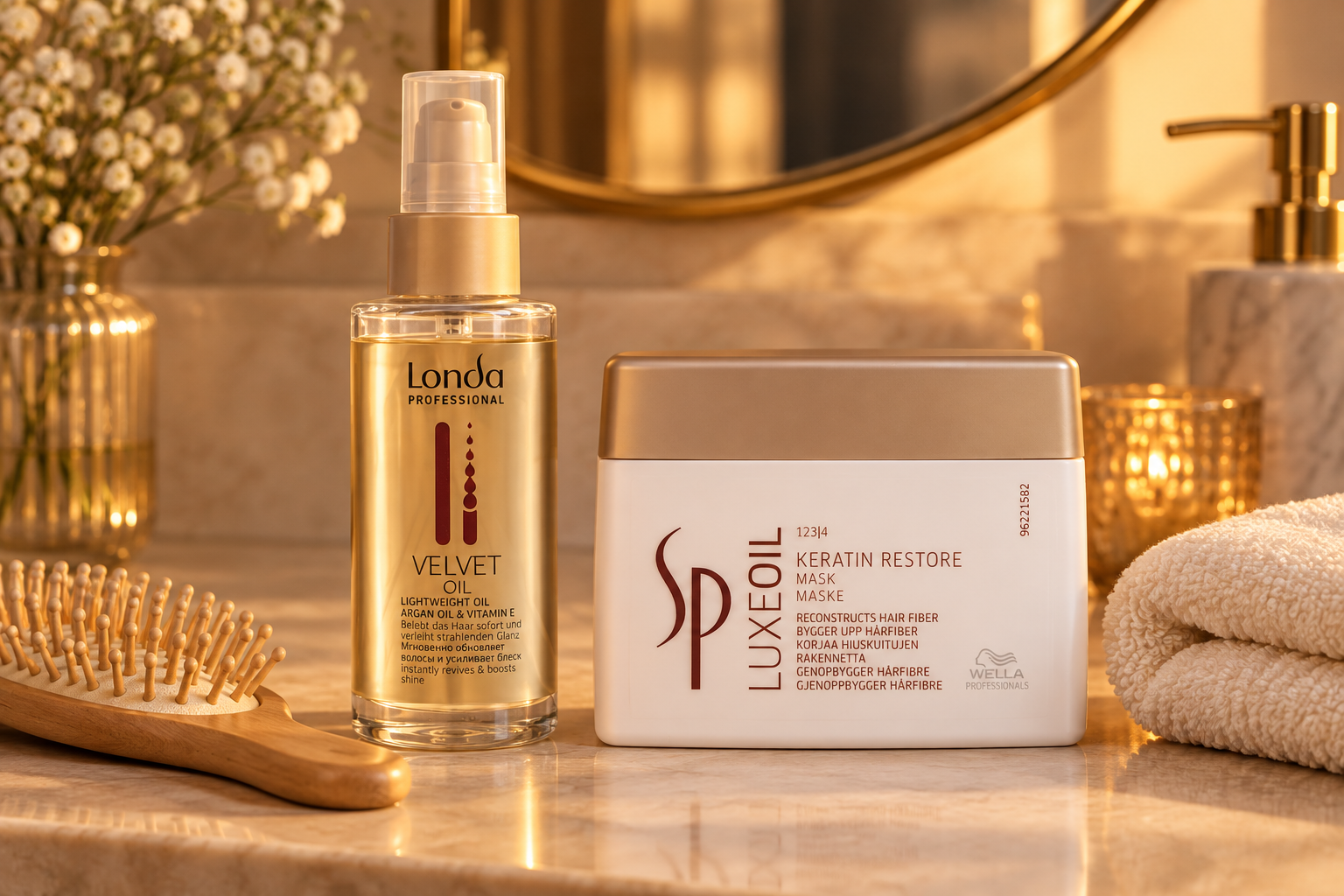
Oil mainly works on the hair's surface – smoothing it, adding shine, and helping keep lengths flexible between washes. A mask, on the other hand, is intensive care applied after shampooing and left to work for a while. For thick dry hair, both are often worthwhile: a mask once or twice a week, oil as needed daily. The Wella Professionals SP Luxe Oil Keratin Restore Mask naturally complements the SP Luxe Oil elixir, but you can combine it with any of the oils mentioned above.
Oil alone is usually sufficient if the hair is thick but healthy – just naturally drier and unruly. Add a mask when oil is no longer enough: lengths remain rough despite regular application, are difficult to comb after washing, or lose elasticity. For chemically treated hair, the combination of a mask and oil is a sensible starting point, and you can incorporate a molecular product depending on how the hair responds.
When to Apply Oil in Your Routine: A Guide by Hair Type
The same oil can behave differently depending on when you use it. On dry hair before washing, it acts as a nourishing treatment, on damp lengths, it eases detangling, and on dry ends during the day, it smooths flyaways. It's worth considering not only which oil to choose but also at what stage of your routine to incorporate it.
Pre-Wash Treatment
Apply oil to dry lengths and ends, leave it on for about twenty to thirty minutes, and then wash your hair with shampoo as usual. The shampoo will remove the excess, so no greasy residue is left on the hair after washing. This stage is particularly suitable for thick, dry, and coarse hair that can handle a richer texture – here, a denser oil makes sense. Fine hair can also try this treatment, ideally with a smaller amount of product and only on the ends.
On Damp Hair After Washing
This is the most versatile use. After washing, gently squeeze your hair with a towel, rub a few drops in your palms, and work it into the lengths, avoiding the roots. The oil helps with detangling, and once dry, the hair feels softer and smoother. This stage is appreciated by practically all hair types, differing only in the amount and texture: fine hair needs a light elixir and a very small amount, while normal and thick hair can handle a medium-rich to rich texture.
Final Touch for Dry Ends During the Day
A drop of oil rubbed in the palms and lightly run over the ends can calm flyaways during the day and add shine to the lengths. For this stage, choose the lightest textures that absorb quickly and don't weigh the hair down – otherwise, the hairstyle might lose volume. It's suitable for all hair types, but dry ends and frizz-prone hair will appreciate it the most.
Summary by Hair Type
- Fine Hair: mainly on damp hair after washing and on ends during the day, always in minimal doses. Light textures like CHI Keratin Silk Infusion or Goldwell StyleSign Smooth Weightless Shine-Oil are suitable.
- Normal Hair: all three stages as needed, most often on damp lengths. A universal choice is Orofluido Elixir, and for a lighter feel, opt for CHI Keratin Silk Infusion.
- Thick Dry Lengths: pre-wash treatment and a richer dose on damp hair. Suitable options are Londa Professional Velvet Oil or Wella Professionals SP Luxe Oil Reconstructive Elixir.
- Damaged Hair: regularly on damp hair after washing and in small amounts on ends during the day. Consider K18 Molecular Repair Hair Oil or Wella Professionals SP Luxe Oil Reconstructive Elixir, which add softness and shine to the lengths.
If you're unsure, start with a smaller amount and gradually increase the dose – excess oil is harder to remove from hair than a missing drop. Observe how your hair reacts and adjust your routine according to your needs and the season.


Category
Recommended articles

"Give a girl the right shoes and she can conquer the world!" Marilyn Monroe
