
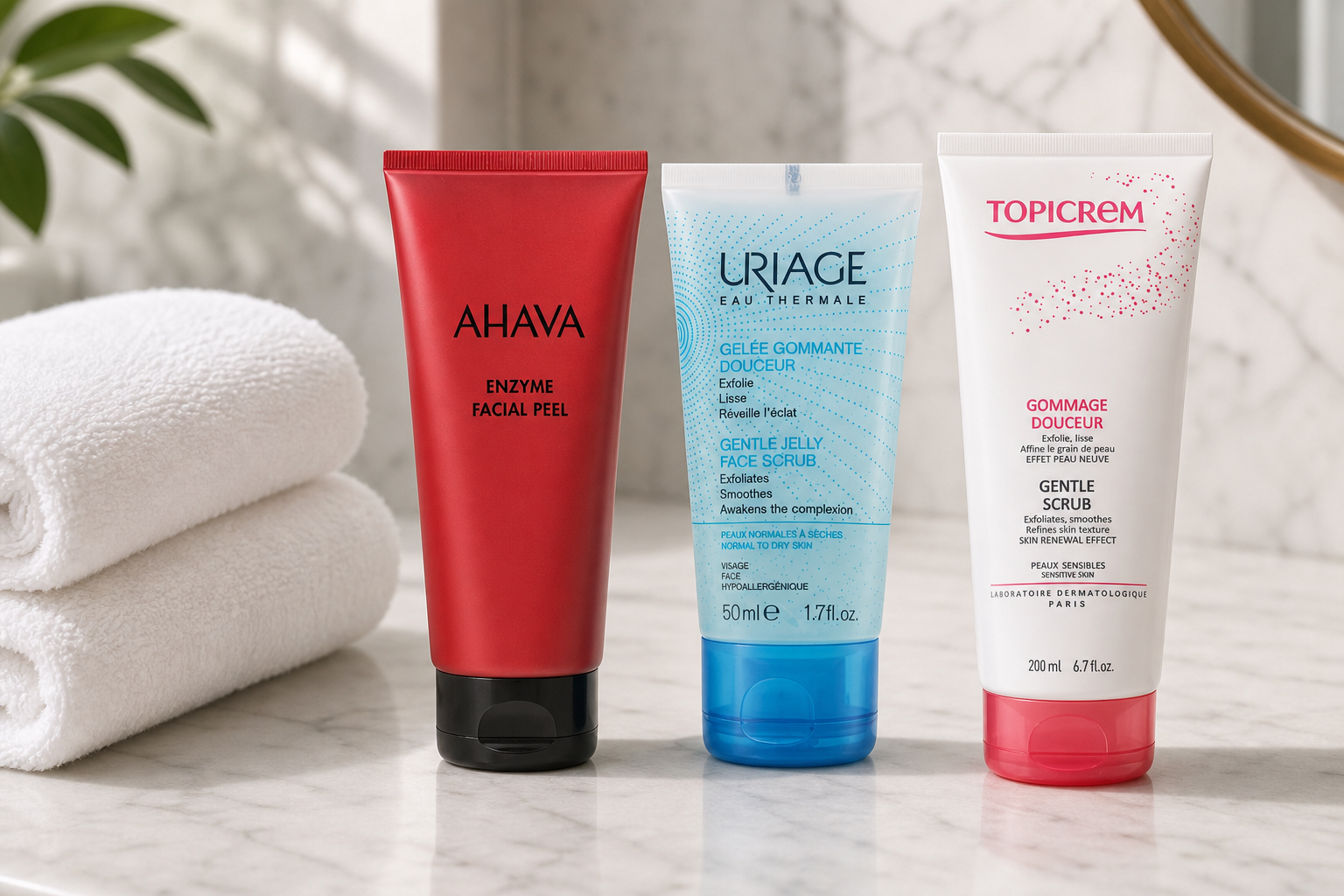

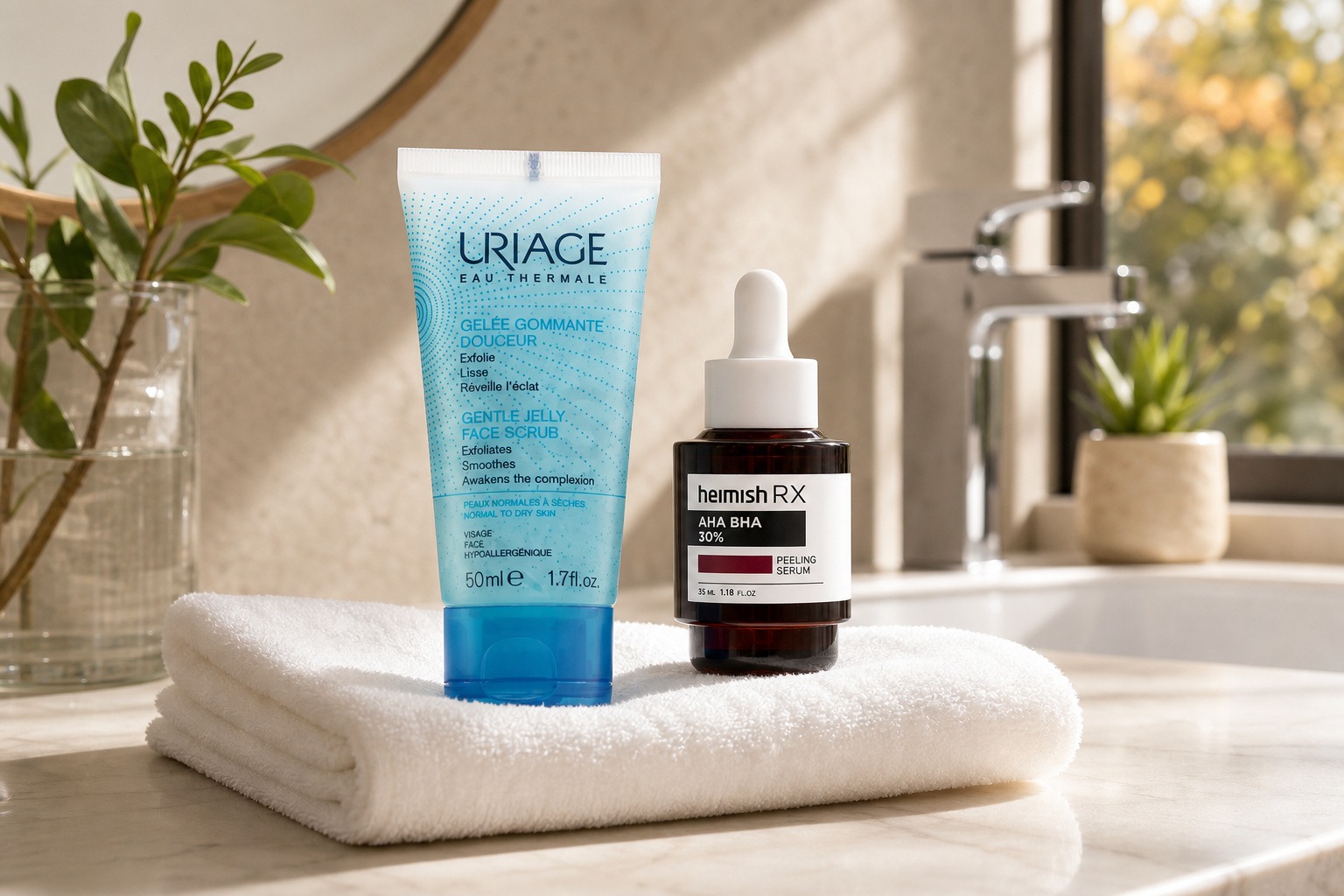
After summer, your skin calls for exfoliation, but enzymes, acids, and scrubs don't suit everyone equally. We'll advise you on which type of scrub to choose based on your skin type and how often to use it.
Why Your Skin Craves Exfoliation After Summer
You might notice the end of summer on your skin before you see it on the calendar. After weeks of sun exposure, swimming, and air-conditioned environments, your skin often feels rougher to the touch, with an uneven tone, and makeup doesn't adhere as well as it does in spring. Instead of blending seamlessly, it highlights dry patches around the nose and chin. It seems like your skin needs more hydration, but often the cream just sits on a layer that doesn't need to be there anymore.
The reason is quite straightforward. Surface skin cells naturally renew and shed, but the summer combination of factors slows this process down. Heat stimulates oil production, repeated layers of sunscreen leave a film in the pores that regular evening cleansing might not fully remove, and salty or chlorinated water along with drying air further roughens the surface. The result is skin that appears tired, even though you care for it as you did in June.
This is why exfoliation returns to skincare routines at the start of autumn. Many people consciously limit it in summer because freshly exfoliated skin is more sensitive to direct sunlight. September offers a pleasant compromise: the sun's intensity decreases, vacations are over, and your skin has time to adjust before the heating season brings another dose of dry air.
What can you realistically expect from exfoliation? With a sensible frequency and a suitable format, you can anticipate several visible changes:
- Smoother Surface – Skin feels softer to the touch, and makeup applies more evenly.
- Better Absorption of Skincare – Serums and creams reach the skin instead of sitting on a layer of dead cells.
- More Even Tone – Dull, uneven-looking areas gradually soften, and the skin appears fresher.
- Clearer Pores – Residues of oil and products accumulate more slowly, which is especially appreciated by combination skin around the nose.
What exfoliation won't do: it won't smooth out deep wrinkles, won't eliminate pigment spots overnight, and won't replace hydration or sun protection. It's one step among many, not a miraculous reset.
It's also important to clarify a common misconception right from the start. Exfoliation is not the same as scrubbing. Many readers might think of a coarse scrub with sharp particles that you rub over your face until it turns red. However, redness is not a sign of effectiveness but of irritation – compromised skin then becomes more sensitive, tolerates regular care less well, and paradoxically may appear even drier. Modern exfoliation works much more gently: it loosens the bonds between dead cells instead of scraping them off the skin. That's why today, alongside traditional scrubs, you'll find enzymatic powders, tonics, serums, or gentle gel textures that behave completely differently on the skin than a gritty scrub.
And this brings us to the purpose of the entire article. The goal is not to exfoliate more frequently or intensely, but to find the format that suits your skin. Sensitive skin needs something different than oily skin, and mature skin reacts differently than combination skin. In the following sections, we'll explore how different types of exfoliation vary and how to choose the right one for you – whether you've been battling with your skin for years or are adding it to your routine for the first time.
Enzymes, Acids, and Scrubs – How They Differ
The word “peeling” on a label doesn’t reveal how the product works. It encompasses three distinct mechanisms, and these determine whether your skin will feel smooth or tight after treatment. Let's go through them one by one, without any chemical jargon that you'd need to look up.
Enzymatic Peels: Exfoliation Without Friction
Enzymatic exfoliation relies on plant enzymes, most commonly from papaya, pineapple, or pumpkin. These help break the protein bonds that keep dead cells attached to the skin's surface, allowing them to release on their own. You don’t need to rub particles over your skin or apply pressure – the product does the work, and you simply rinse it off.
Of the three mechanisms, enzymatic is usually the gentlest because it doesn’t involve friction or significant acidification. The trade-off is a slower result: your skin feels fresh and smooth rather than visibly brightened.
You'll mainly find it in two forms. The first is enzymatic powders, which you activate with a drop of water in your palm and lather into a creamy consistency. The second is enzymatic masks and gels, which are applied for a few minutes and are perfect for combining treatment with a moment of relaxation.
Acid Peels: Chemical Bond Loosening
Acids work chemically, not mechanically: they reduce the cohesion between cells in the outermost skin layer, causing them to naturally detach. Labels divide them into three families, and it's worth knowing them.
- Alpha Hydroxy Acids (AHA) – includes glycolic and lactic acid. They are water-soluble, work on the surface, and are often associated with brightening and smoothing the skin's texture.
- Beta Hydroxy Acids (BHA) – represented by salicylic acid. It dissolves in oil, allowing it to penetrate pores and address the sebum that clogs them.
- Polyhydroxy Acids (PHA) – such as gluconolactone and lactobionic acid. They have larger molecules, penetrate more slowly, and are recommended where other acids cause irritation.
This mechanism offers the most formats. The mildest are toners with low concentration, which function as a regular step after cleansing. Stronger options are serums and concentrates, where concentration increases and frequency decreases. A convenient middle ground is pre-soaked cotton pads, which handle dosing for you. We'll discuss which family suits whom in other parts of the article.
Mechanical Scrubs: Surface Work
Scrubs physically remove dead cells with particles that you spread over the skin. The difference isn’t in the force you apply but in the shape and size of the particles. Rounded jojoba beads, fine sugar, or ground rice glide over the surface, while sharp crushed seeds can leave microscopic scratches in the skin.
Newer formats aim for less friction. Jelly scrubs suspend particles in a gel base, which cushions them and prevents scrubbing. Peeling mists combine fine particles with an acid component, so part of the work is done by chemistry and part by mechanics. Classic creamy scrubs haven’t disappeared and still make sense for the body and rougher skin.
Takeaway
None of these three mechanisms is inherently better than the others – they differ in speed, intensity, and suitability. Enzymes work slowly and without friction, acids offer the finest gradation by concentration, and scrubs provide an immediate tactile result. Next time you turn over a label and find papain, salicylic acid, or jojoba beads, you'll know which family the product belongs to.
Sensitive, Dry, and Atopic Skin: When Enzymes Are Enough
Sensitive and dry skin are among the most commonly addressed skin types – and they are also the ones most easily harmed by exfoliation. They react quickly and visibly, so after the first overly ambitious peel, they may respond with redness, tightness, or burning. The good news is that this type of skin usually doesn't need anything too strong to achieve a smoother surface.
Why Start with Enzymes for This Skin Type
Enzymatic peeling works on the surface: it loosens the bonds between dead cells so they can release on their own, without requiring rubbing or a significantly acidic environment. For skin with a weakened barrier, this is a crucial difference – it doesn't get another shock on top of what it's already dealing with.
The second viable option is a gentle jelly scrub, where the gel texture breaks down on the skin and the mechanical component remains mostly symbolic. The third option is acids with larger molecules in lower concentrations – they penetrate more slowly and evenly, making them more tolerable. For atopic skin, there's an additional rule: during an acute phase, when the skin itches, cracks, or weeps, skip exfoliation entirely and address the condition with a dermatologist.
Signs You've Gone Too Far
Over-exfoliated skin doesn't announce itself dramatically. It typically manifests in small ways that can easily be blamed on the weather or fatigue:
- a feeling of tightness that doesn't disappear even after applying cream,
- burning or stinging after using a serum you've used for years without issue,
- redness after a warm shower that takes longer to fade than before,
- an unnatural shine without actual hydration,
- fine peeling around the nose and on the cheeks,
- makeup suddenly adheres poorly, even though you haven't changed your base.
If you recognize two or more of these signs, stop exfoliating completely for two to three weeks. The skin can recover on its own, it just needs some peace.
Frequency and What to Do Right After
A sensible starting point for sensitive and dry skin is one exfoliation per week, or even once every two weeks. More frequent exfoliation doesn't mean a smoother surface – it just means faster depletion of the barrier. Therefore, first test a new product on a small area, like along the jawline.
The step after rinsing is just as important as the peeling itself. Reach for a soothing serum and a cream that replenishes lipids in the skin – dermocosmetic lines for sensitive and atopic skin with ceramides, panthenol, or niacinamide, such as those from brands like Bioderma, Uriage, or La Roche-Posay, work well. Evening application has the advantage of giving the skin the whole night to recover without makeup and sun exposure.
What to Avoid for Sensitive Skin
- coarse particles like crushed seeds and shells – they scratch the surface before smoothing anything,
- high concentrations of acids and DIY versions of salon treatments,
- combining two exfoliants in one day, such as an acid toner and a peeling mask,
- exfoliation included in the same evening routine as retinol,
- cleansing brushes and rough washcloths as "accessories" to peeling,
- hot water and long showers immediately after exfoliation.
In summary: for sensitive, dry, and atopic skin, it's not about finding a stronger product, but about exfoliating so gently and infrequently that the skin hardly notices anything happened.


Oily, Combination, and Mature Skin: The Role of Acids
While gentler skin types prefer exfoliation to be as mild as possible, oily, combination, and mature skin can usually handle more—and often benefit more from it. Acids are not just a fancy addition to your routine; they are tools for specific tasks: clogged pores and blackheads, uneven texture, or skin that looks dull and tired after summer. Understanding the differences between various acids is straightforward and worthwhile, as it helps you know what to look for on the label.
Oily and Combination Skin: Salicylic Acid Penetrates Pores
Salicylic acid is a beta-hydroxy acid and is distinguished from other exfoliants by one property: it is oil-soluble. This means it doesn't just work on the surface but penetrates the oil inside the pore. This is precisely the situation where an enzymatic peel or gentle jelly scrub falls short—they loosen dead cells on the surface but don't reach the contents of a clogged pore.
If your T-zone is shiny, blackheads keep reappearing on your nose and chin, or small imperfections show up, salicylic acid makes sense as a regular part of your evening routine. With combination skin, it's not necessary to treat the entire face the same way: you can apply the acid specifically to the T-zone and leave regular hydration for the drier cheeks. On the other hand, scrubbing oily skin all over won't calm it; it will irritate it, causing even more oil production.
Mature Skin: Lactic and Glycolic Acid Work on Texture
For mature skin, the logic is different. Alpha-hydroxy acids, mainly lactic and glycolic, are water-soluble and work primarily in the upper layers of the skin, where they loosen the bonds between dead cells. The result is a smoother surface that reflects light more evenly—and that's where the brightening effect comes from. Makeup then adheres better and doesn't highlight dry flakes.
Lactic acid has a larger molecule, penetrates more slowly, and is generally more tolerable, making it a good starting point if you're new to acids. Glycolic acid has the smallest molecule, works faster, and its effect on texture is noticeable sooner, but it's more demanding on skin tolerance. Mature skin is often drier, so higher concentrations may not be the best choice—it's sensible to complement the acid with a more nourishing cream or hydrating serum to prevent the skin from feeling tight.
Light Daily Formats vs. Concentrated Treatments
Acids are now sold in two quite different forms, and they only seem similar:
- Exfoliating toners and soaked pads have a low concentration and are intended as a regular step after cleansing. Depending on tolerance, they can be used every other day or every evening.
- Concentrated serums, peeling masks, and treatments contain acid in a stronger concentration and are meant to be used once or twice a week, giving the skin a few days to rest afterward.
The key is not to combine both formats on the same evening. An acid toner plus a concentrated serum is not a faster route to smooth skin but a surefire recipe for burning and redness.
When to Cut Back: Retinol and Post-Summer Skin
Both retinol and acids speed up skin renewal, and their effects add up if used on the same evening. If you have both in your bathroom, alternate them on different evenings instead of layering them, and follow an acid treatment with a simpler, hydrating routine. Approach skin shortly after sun exposure with similar caution: tanned skin may look healthy, but it's often drier and more vulnerable than it seems. Start with a lower frequency and only increase when your skin reacts calmly—and remember, sun protection is even more crucial after exfoliation.
How to Incorporate Exfoliation into Your Autumn Routine
Theories about enzymes, acids, and scrubs come to life at the sink. For exfoliation to truly benefit you, it needs a firm place in your routine, a sensible rhythm, and a safeguard in the form of sun protection.
Step Order
Exfoliation should always be done on clean skin; otherwise, it works through makeup and sunscreen residue. Include it in your evening care: your skin has the whole night to calm down. The process looks like this:
- Remove makeup with micellar water or cleansing oil.
- Cleansing gel, foam, or wash according to skin type.
- Exfoliation itself. Enzyme powder and jelly scrub activate on damp skin, while toners and acid pads are applied to dry skin.
- Moisturizing serum – after exfoliation, the skin is more receptive to water.
- Cream or balm to seal the care and support the skin barrier.
- In the morning, regular hydration and a protective cream with SPF.
Do not combine exfoliation with retinol or another acid on the same evening. Distribute active ingredients over different days, and include evenings where you only cleanse and nourish your skin.
Frequency by Skin Type
- Sensitive, dry, and atopic skin: about once a week, enzymatically or with polyhydroxy acids, always followed by nourishing care the same evening.
- Normal skin: once or twice a week, alternating between a gentle scrub and an acid toner.
- Combination skin: twice a week, ideally targeting the T-zone while leaving the cheeks alone.
- Oily and problematic skin: two to three times a week, most often with salicylic acid; light daily toners can tolerate higher frequency, concentrated serums cannot.
- Mature skin: twice a week with lactic or glycolic acid, with increased attention to hydration.
Sun Protection Applies Even in October
Acids increase the skin's sensitivity to sunlight, and the autumn sky doesn't change that – ultraviolet rays penetrate even through clouds. If you've decided to exfoliate, consider a morning cream with SPF as a regular part of your routine, not just a seasonal addition.
Can You Recognize Over-Exfoliated Skin?
Excessive exfoliation doesn't announce itself dramatically, it sneaks in. Be alert when you notice:
- burning or stinging after applying a cream that used to suit you,
- tight, glassy shiny skin that feels dry,
- redness around the nose and on the cheeks, small flakes,
- sudden sensitivity to fragrances, water, or cold.
You can back off easily. Stop using exfoliating products and retinol for two to three weeks and simplify your care to gentle cleansing, hydration, a nourishing cream with ceramides or panthenol, and morning SPF. Once the discomfort disappears, reintroduce exfoliation one step at a time: start with one enzymatic treatment per week.
If You Have X, Look for Y
- Sensitive or atopic skin – enzymatic peel, or cleansing emulsion with polyhydroxy acids.
- Dry, flaky skin – jelly scrub with fine particles or creamy enzymatic mask.
- Oily skin with clogged pores – toner or facial water with salicylic acid.
- Combination skin before makeup – exfoliating pads for quick surface smoothing.
- Mature skin and uneven tone – serum with lactic or glycolic acid in low concentration.
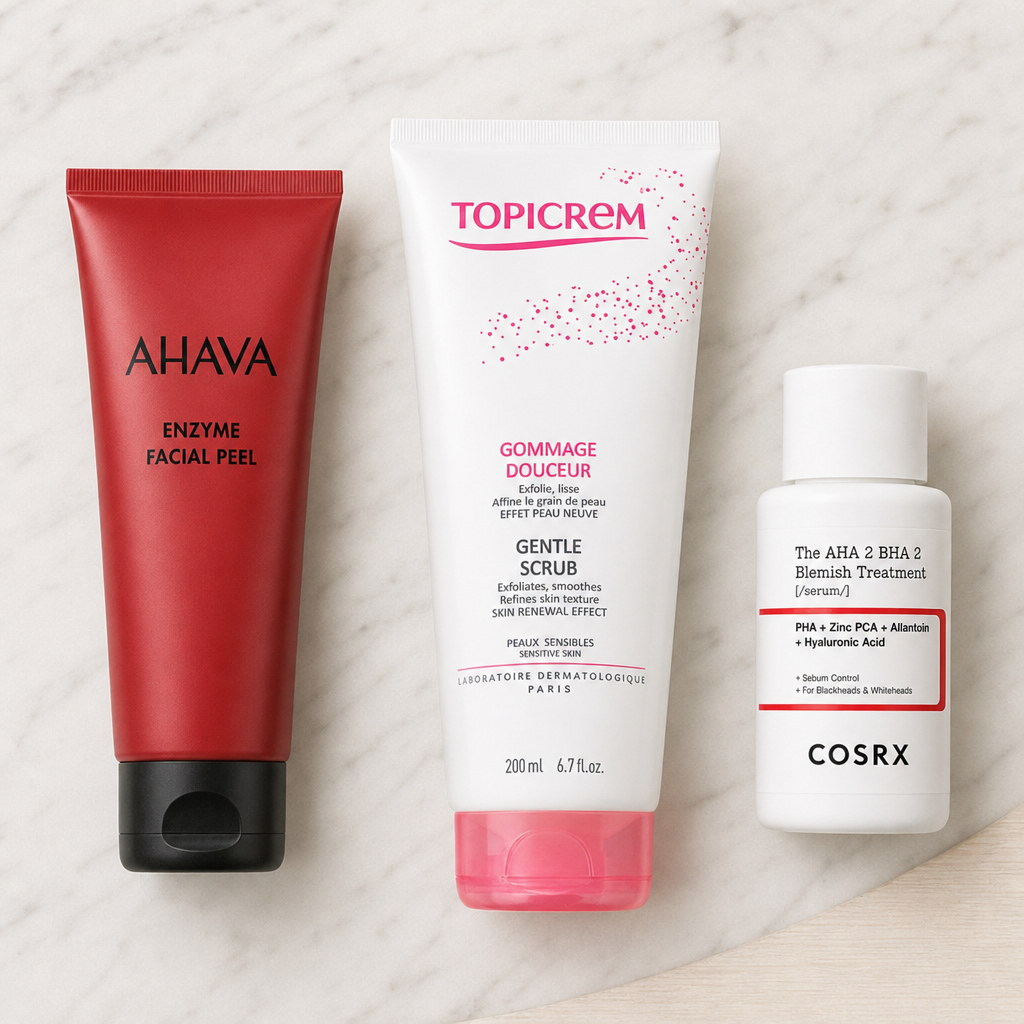
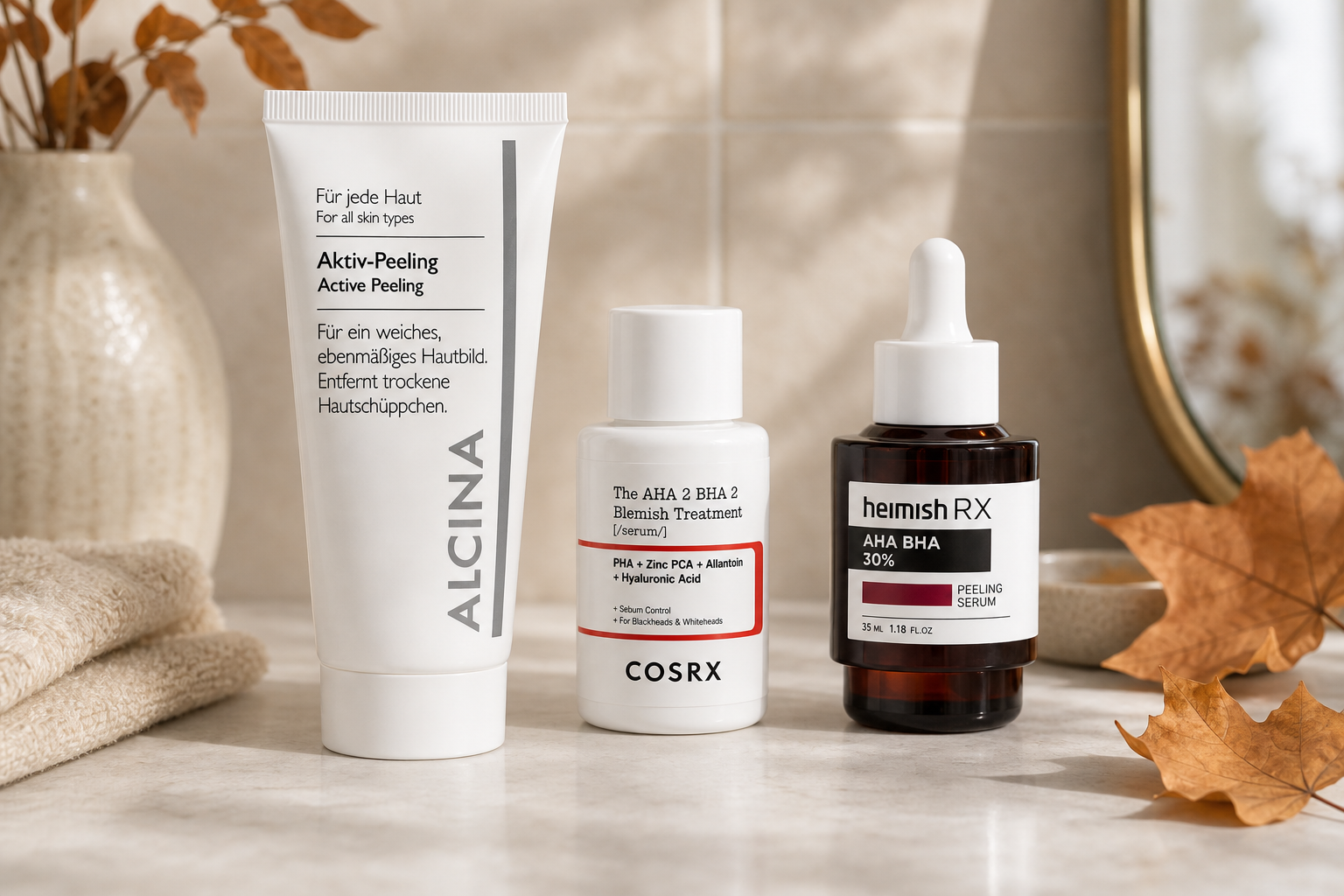
All these formats can be found in the skincare category. For more sensitive types, gentle cleansing and soothing lines from the brand Uriage are recommended, for oily and problematic skin, toners with salicylic acid from the brand COSRX, and for mature skin, acid serums from the brand Alcina. If you're unsure, always start with the gentlest format and add more based on how your skin reacts.
Category
Recommended articles

"Give a girl the right shoes and she can conquer the world!" Marilyn Monroe