

After summer, your skin lightens and your current foundation may appear orange or mask-like. We'll show you how to identify your undertone, test shades in November light, and when it's enough to mix two shades.
Why Your Makeup No Longer Matches After Summer
In August, you applied your makeup and it blended seamlessly with your skin. Now it's November, you reach for the same bottle, and the result in the mirror looks different – your face appears orange, grayish, or as if there's a layer that doesn't belong to you. It's not that the product has gone bad or that you're applying it incorrectly. Your skin has changed.
During the summer, your skin gradually darkens under the influence of the sun, even if you protect it carefully and avoid intentional tanning. Many of you also choose a slightly darker makeup shade in summer to match your face with your tanned décolletage, arms, and legs. However, in autumn, the tan slowly fades, and your skin returns to its natural tone. This return doesn't happen overnight, so you often don't notice it. The makeup you've been using all summer gradually becomes less suitable, until the difference is noticeable at first glance.
The difference is further highlighted by the lighting. In summer, you spend most of the day in natural daylight, which renders colors quite accurately. But in November, you wake up in the dark, apply makeup under a bathroom bulb, and spend much of the day in an office under fluorescent lights. Warm artificial light can optically "hide" darker and yellower shades, so everything looks fine at home. Cooler office lighting, on the other hand, emphasizes the difference between makeup and skin – and that's when you look in the mirror at work or at a photo from a meeting and realize something's off.
These signs indicate that your current shade no longer matches your skin:
- Visible line on the jawline. A boundary forms between the face and neck that can't be blended away, no matter how carefully you work in the makeup.
- Orange or yellowish tint. The face appears tanner than the neck and hands, most noticeable at the hairline and around the nose.
- Grayish, tired look. The makeup sits on the skin like a matte veil, and the face loses its natural freshness, even if you've had a good night's sleep.
- Mask effect. In flash photos or when viewed from the side, the face looks like a separate area that doesn't connect with the rest of the body.
- Extra color matching. If you find yourself darkening your neck with bronzer to match your face, it's a clear sign that it should be the other way around.
If you recognize yourself in any of these points, you don't need to change your entire routine immediately. Just realize that your skin is now slightly lighter than in summer, and adjust your choice accordingly – whether it's a new shade or an adjustment to the one you already have at home. A good starting point is to determine your skin's undertone, as this remains essentially the same throughout the year, unlike the depth of shade.
Skin Undertone: Warm, Cool, or Neutral
When you're searching for a new makeup shade after summer, it's helpful to distinguish between two skin characteristics. The first is brightness – how light or dark your skin currently is. This changes throughout the year and usually shifts slightly lower after the summer season. The second characteristic is the undertone, a subtle hue that shines through from beneath the skin's surface. The undertone remains essentially the same throughout the year, so it's worth knowing before you start comparing specific shades.
There are three basic undertones:
- Warm – skin has a yellow, golden, or peachy hue.
- Cool – skin predominantly has a pink, reddish, or slightly bluish hue.
- Neutral – warm and cool elements are roughly balanced, with no dominant hue.
Sometimes, an olive undertone is mentioned, which appears slightly greenish and tends to be between warm and neutral.
Three Simple At-Home Tests
You don't need any special tools to determine your undertone. All you need is natural daylight, a cleansed face, and a few items you have at home. The most reliable method is to combine multiple tests at once.
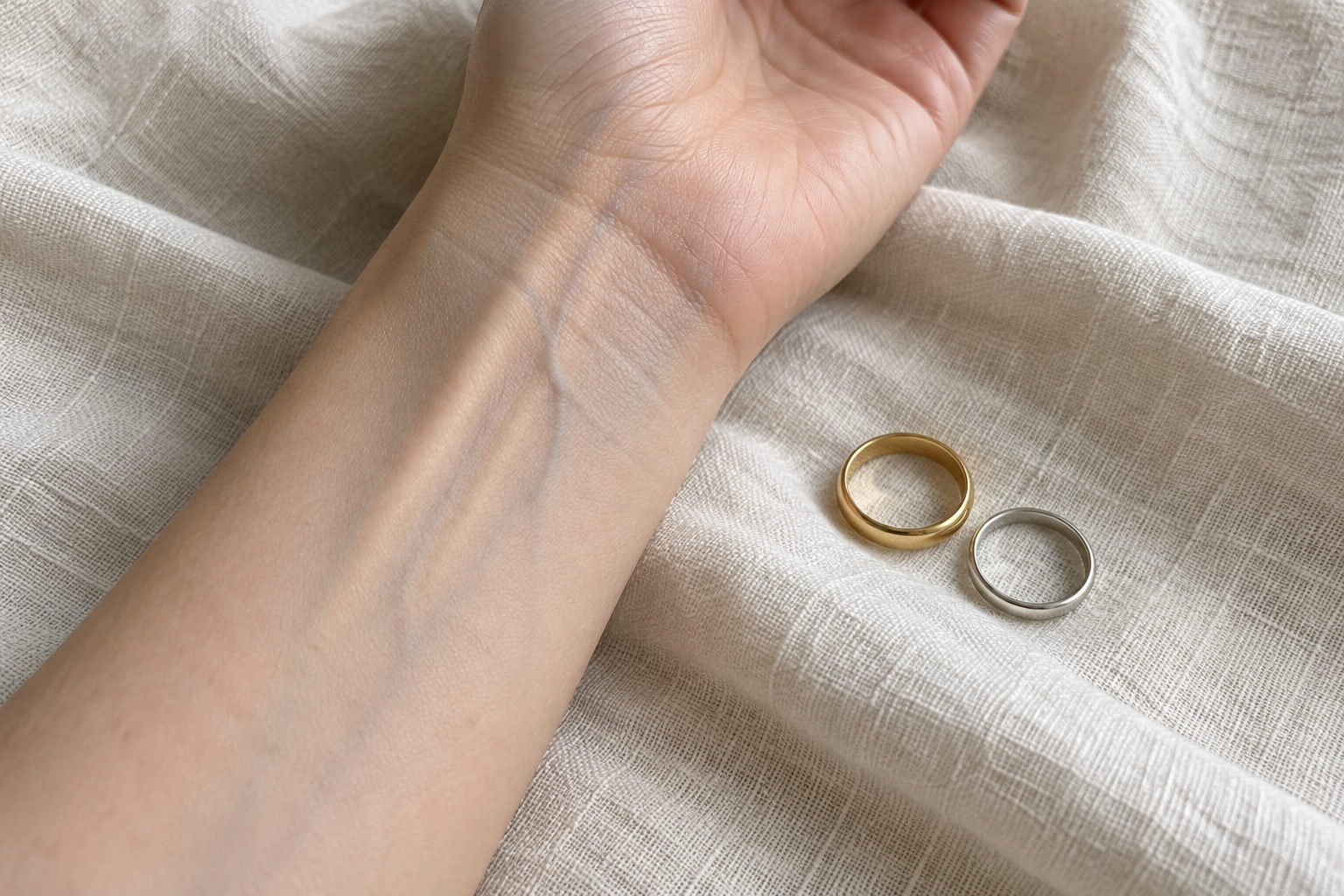
- Veins on the Wrist. Look at the inside of your wrist. If the veins appear more greenish, it indicates a warm undertone. Blue to purple veins suggest a cool undertone. If you can't tell if they're blue or green, you likely have a neutral undertone.
- Gold and Silver Jewelry. Hold a gold and then a silver piece of jewelry next to your face or hand. Skin that looks fresher with gold usually has a warm undertone. If silver suits you better, it's likely a cool undertone. A neutral undertone typically looks good with both.
- White and Cream Fabric. Hold a pure white fabric, like a towel or shirt, under your chin, then a cream fabric. If your skin looks tired or yellowish next to white and cream brightens it, you have a warm undertone. If pure white looks better, your undertone is likely cool.
No test is infallible, but if two or three agree, you have a fairly clear answer.
How to Read Letter Designations for Undertones
Many makeup manufacturers add a letter to the shade number to indicate the undertone. The most common designations are:
- W (warm) – warm undertone,
- C (cool) – cool undertone,
- N (neutral) – neutral undertone.
Some manufacturers use additional letters, such as R or P for a pink hue, Y or G for a yellow or golden hue, and O for olive. The number before the letter usually indicates brightness. However, the system isn't standardized, and each brand sets it up differently, so it's worth checking the explanations for the specific range.
Knowing your undertone makes choosing easier. If your summer makeup matched your undertone but is now too dark, look for a lighter shade with the same letter. However, if it felt unnatural before – making your skin appear too pink or too yellow – it's a good idea to try a different undertone.
Testing Shade in November Daylight
Whether you've noticed your makeup looks darker after summer or you're simply searching for a shade for the winter months, the test itself is crucial. Two factors influence it the most – where you apply the makeup and the light in which you evaluate the result. The back of your hand or wrist doesn't have the same color and texture as your face, and the lighting in a store or bathroom is often either yellowish or too cold. A shade that looks perfect there might not suit your face outdoors.
Three stripes along the jawline. The most reliable place for testing is the jawline, where the face transitions into the neck. The makeup should blend with both areas to avoid a visible line at the edge of the face.
- Start with clean, lightly moisturized skin free of any previous makeup residue.
- Select two to three shades that seem closest to you – ideally one slightly lighter and one slightly darker than the one you've been using.
- Apply each shade as a thin vertical stripe from the face across the jaw to the neck and gently blend only at the edges.
- Leave the stripes next to each other with small gaps so you can easily compare them.
The right shade is the one that almost "disappears" on your skin. A stripe that stands out as a light or dark spot, or appears orange or gray, doesn't belong to your skin.
Why by the window and around noon. Daylight shows colors more accurately than most artificial sources. However, in November, the day is short, and both morning and afternoon light can be weak and bluish, so the best time for testing is around noon. Stand facing a window, preferably without direct sunlight, and look into a handheld mirror. An overcast sky is not a problem – diffused light is more pleasant for assessing shade than harsh sunlight, which can wash out colors.
Give the makeup a few minutes. Many makeups slightly change color after application. As the formula dries and mixes with the skin's natural oils, the shade may darken a bit or shift to a warmer tone. This is more common with long-lasting and mattifying formulas. Therefore, examine the stripes immediately after application and then again about ten to fifteen minutes later. Make your decision based on the second look.
Check under artificial light. You wear makeup in the office under fluorescent lights or at home in the evening under a warm lamp. Once you've chosen a shade based on daylight, check the stripes again where you spend most of your day. Fluorescent lights can slightly gray the skin, while warm bulbs can make it look yellow. If the chosen shade works well in both situations, you can be fairly confident in your choice. If two stripes look even by the window but one blends better under artificial light, opt for the one that works where you spend most of your time.
A photograph can also be a helpful tool. Take a picture of the stripes with your phone by the window without flash and without filters – the image will help you compare shades if you spread the test over several days.
Mixing Two Shades Instead of a New Foundation
Your summer foundation, which now seems too dark, doesn't have to end up in the drawer. If you have a lighter shade at home – perhaps the one that suited you in spring – you can mix the two to create a transitional color that matches your current skin tone. It's a practical solution for the autumn weeks when your skin gradually lightens and no shade from the tube fits perfectly.
When Mixing Makes Sense. This method works best when both foundations have the same or very similar undertone and differ mainly in lightness. Similar texture and coverage also help – two liquid foundations blend more easily than a liquid with a cream or powder.
What Ratio to Start With:
- At the beginning of autumn, when your skin is still slightly tanned, a one-to-one ratio often suffices.
- If the summer shade is noticeably darker, start with about two parts of the lighter foundation to one part of the summer shade.
- If the difference is significant, try a three-to-one ratio in favor of the lighter shade.
Consider these ratios as a starting point, not a rule – each foundation line has different pigment saturation.
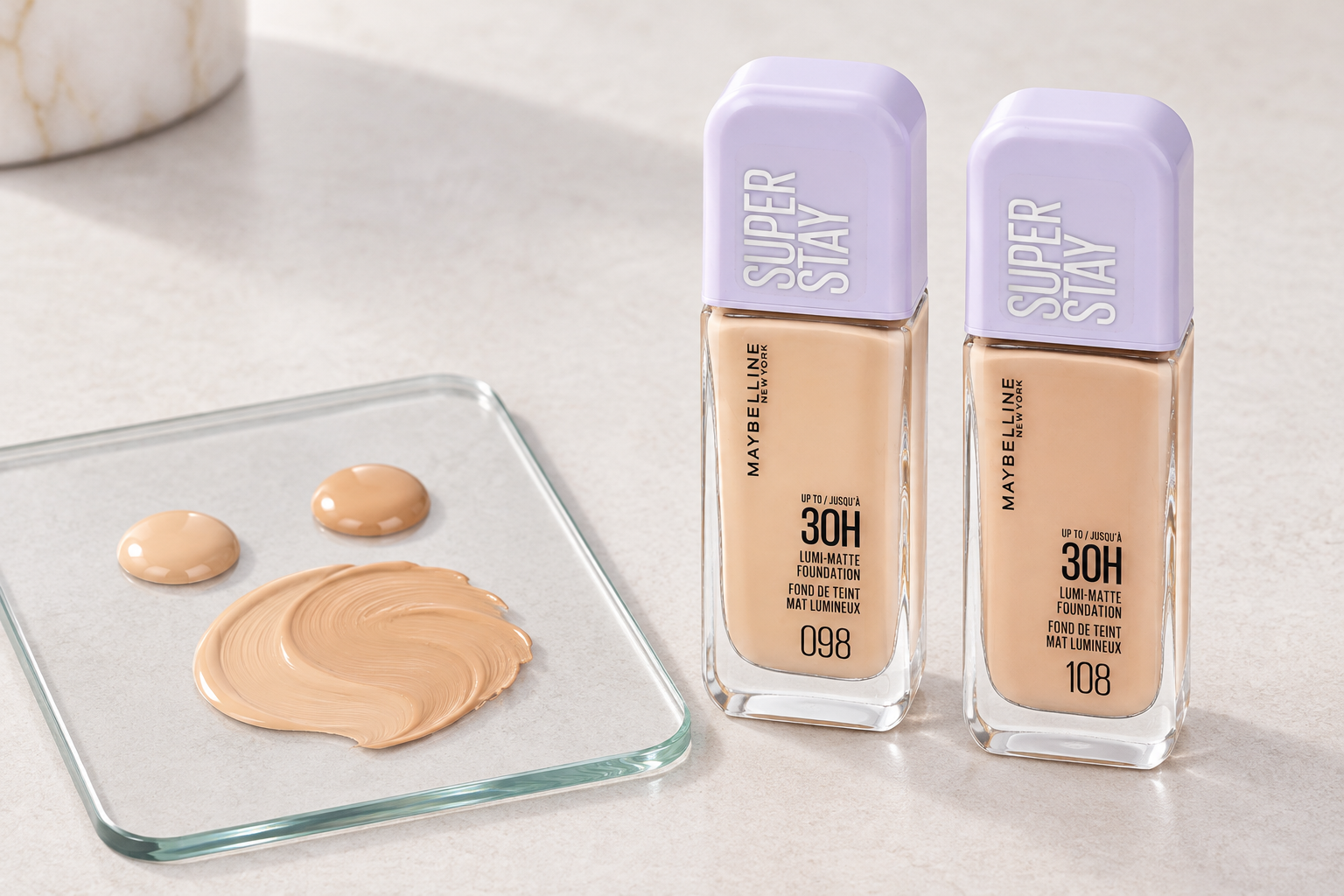
How to Mix on the Back of Your Hand or a Palette. Apply the measured amount of both foundations to the back of your hand or a clean palette, such as one pump or drop of each. Mix them with a spatula, finger, or brush until all streaks disappear. The back of your hand is convenient, and the warmth of your skin helps cream textures blend, while a palette is more hygienic and makes it easier to see if the mixture is uniform. Test the result on your jawline and let it dry for a moment, as some foundations slightly darken after application.
Adjust the Ratio as Your Skin Lightens. In November and December, your skin usually continues to lighten, so the mixture that suits you today may be a bit too dark in a few weeks. It helps to remember the ratio – for example, "two pumps of light, one of summer" – and occasionally add a bit more of the lighter shade. It's best to mix only a single-use amount. A mixed supply in a separate container is no longer protected by the original packaging and is harder to keep hygienic.
When Mixing Isn't Worth It:
- Different Undertone. Mixing a warm, yellow-toned shade with a cool, pink-toned one won't create a neutral tone but often results in a dull, slightly gray color.
- Different Base. A water-based foundation may not blend well with an oil or silicone-based one – the mixture may curdle, roll, or dry unevenly.
- Very Different Coverage and Finish. A matte, high-coverage foundation and a light, illuminating fluid can produce an unpredictable result that's hard to replicate.
- Older or Changed Product. If the summer foundation has changed its scent, color, or consistency, it's better not to mix it at all.
When to Consider a New Shade – Our Recommendations
Mixing two shades is a clever solution for the transitional period when your tan gradually fades. However, if you find yourself adding more of the lighter shade than the original to your summer makeup, or if you have to adjust the result every morning, it's a sign that your skin tone has changed. In such cases, it makes more sense to get a makeup that matches your current skin tone and save the summer shade for the next season or a seaside holiday.
With a Change in Skin Tone Comes a Change in Your Routine
New makeup is often the first thought, but lighter skin affects other products you use on your face as well:
- Concealer – under-eye concealer is usually chosen a shade lighter than the makeup. When your makeup lightens, a summer concealer can appear dark and create grayish shadows instead of brightening.
- Powder – a translucent powder adapts to almost any skin tone, but a colored powder needs to match the new makeup, or your face may darken throughout the day.
- Bronzer – you don't have to give it up, just use it more sparingly. Apply a smaller amount and blend it gently on areas where the sun would naturally hit. For lighter skin, a shade without a strong orange undertone is advisable.
How to Choose the Right Shade
- First, determine your undertone – warm, cool, or neutral. This doesn't change with the season, so if a warm shade suited you in the summer, you'll likely be looking for a lighter version with the same undertone.
- Select two to three shades that seem suitable and apply them side by side along your jawline.
- Assess the result by a window in natural daylight, ideally after a few minutes when the makeup has "settled" on your skin.
- Choose the shade that blends seamlessly with the skin on your face and neck. Then adjust your concealer and powder accordingly.
What You Can Try from Our Range
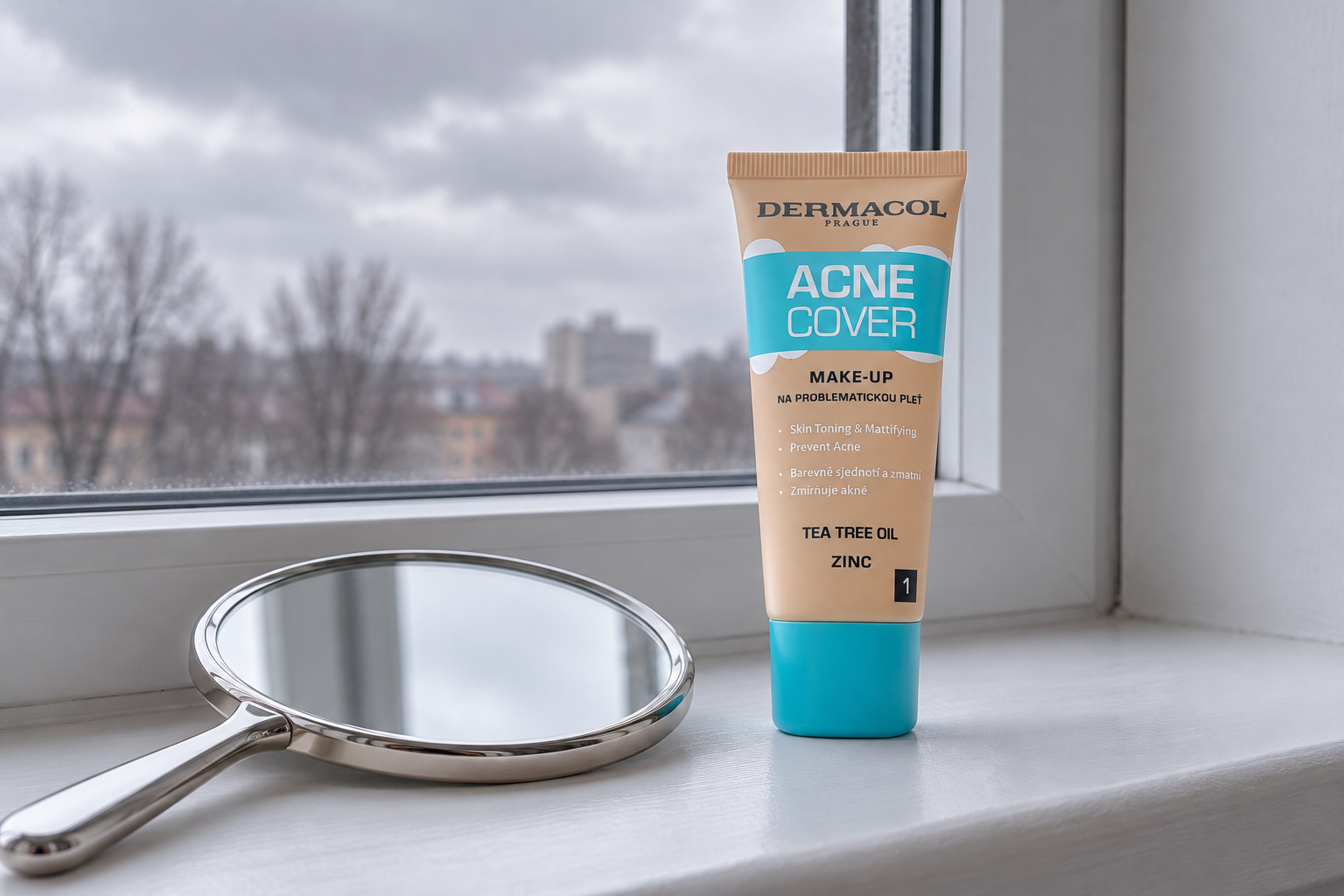
In our decorative cosmetics range, you'll find foundations in a wide variety of shades, making it easy to find a lighter option. If you prefer lighter, naturally looking coverage, consider Artdeco Perfect Teint Foundation or Max Factor Lasting Performance, designed for all-day wear. For those needing to cover more pronounced imperfections, the Dermacol Make-Up Cover is a great choice.
A lighter concealer complements new makeup well, such as Maybelline Fit Me! Concealer or L'Oréal Paris True Match Radiant Serum Concealer. For setting, transparent powders like Max Factor Creme Puff Pressed Powder Translucent or Rimmel London Stay Matte Transparent simplify shade matching. And if you don't want to lose that subtle summer glow, look for a bronzer shade that appears natural on lighter skin.
Category
Recommended articles

"Give a girl the right shoes and she can conquer the world!" Marilyn Monroe
