
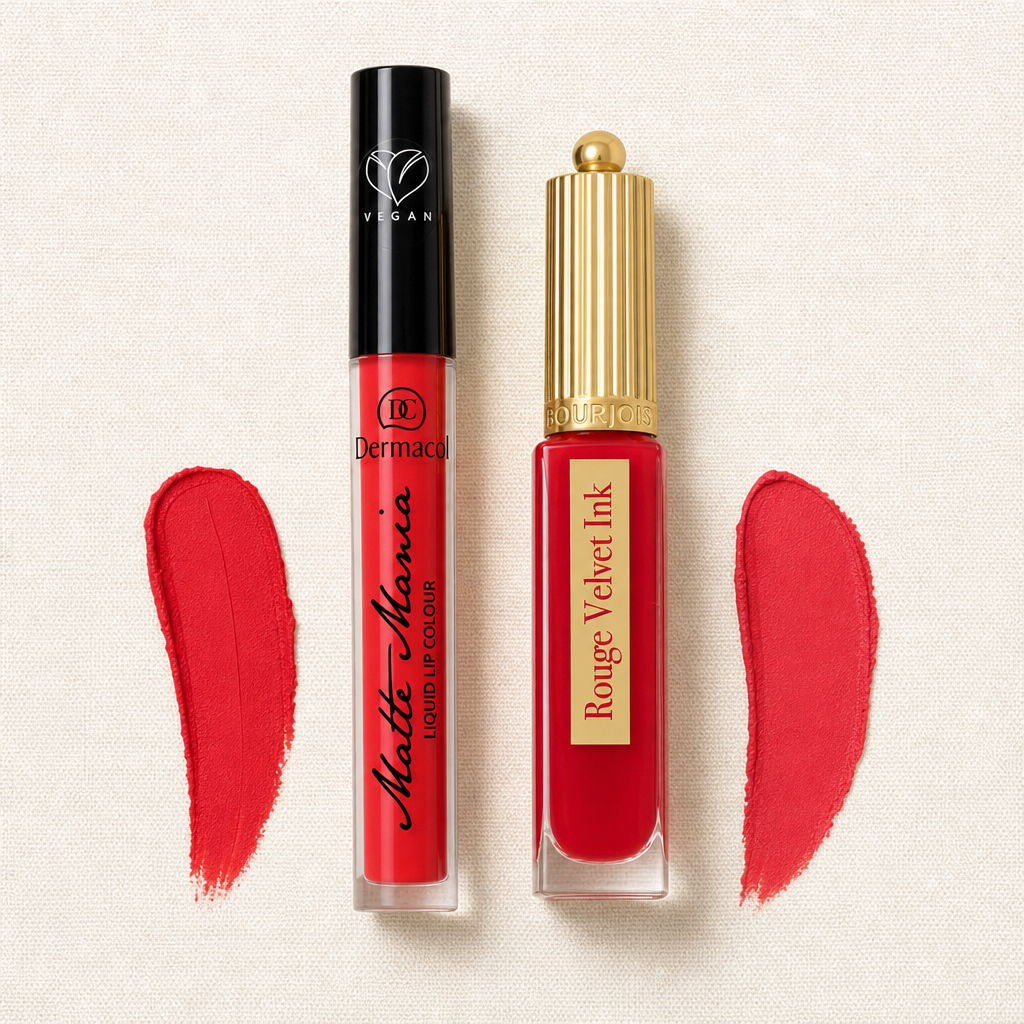
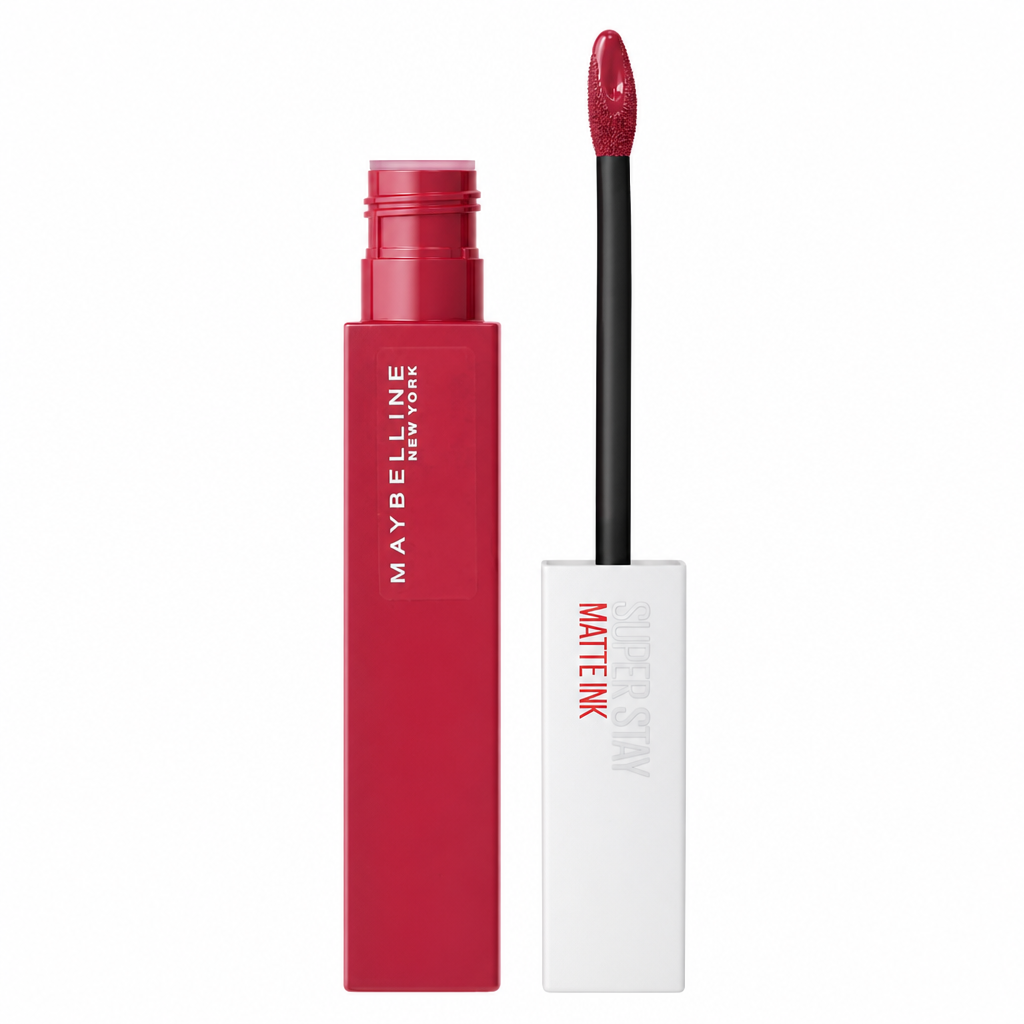

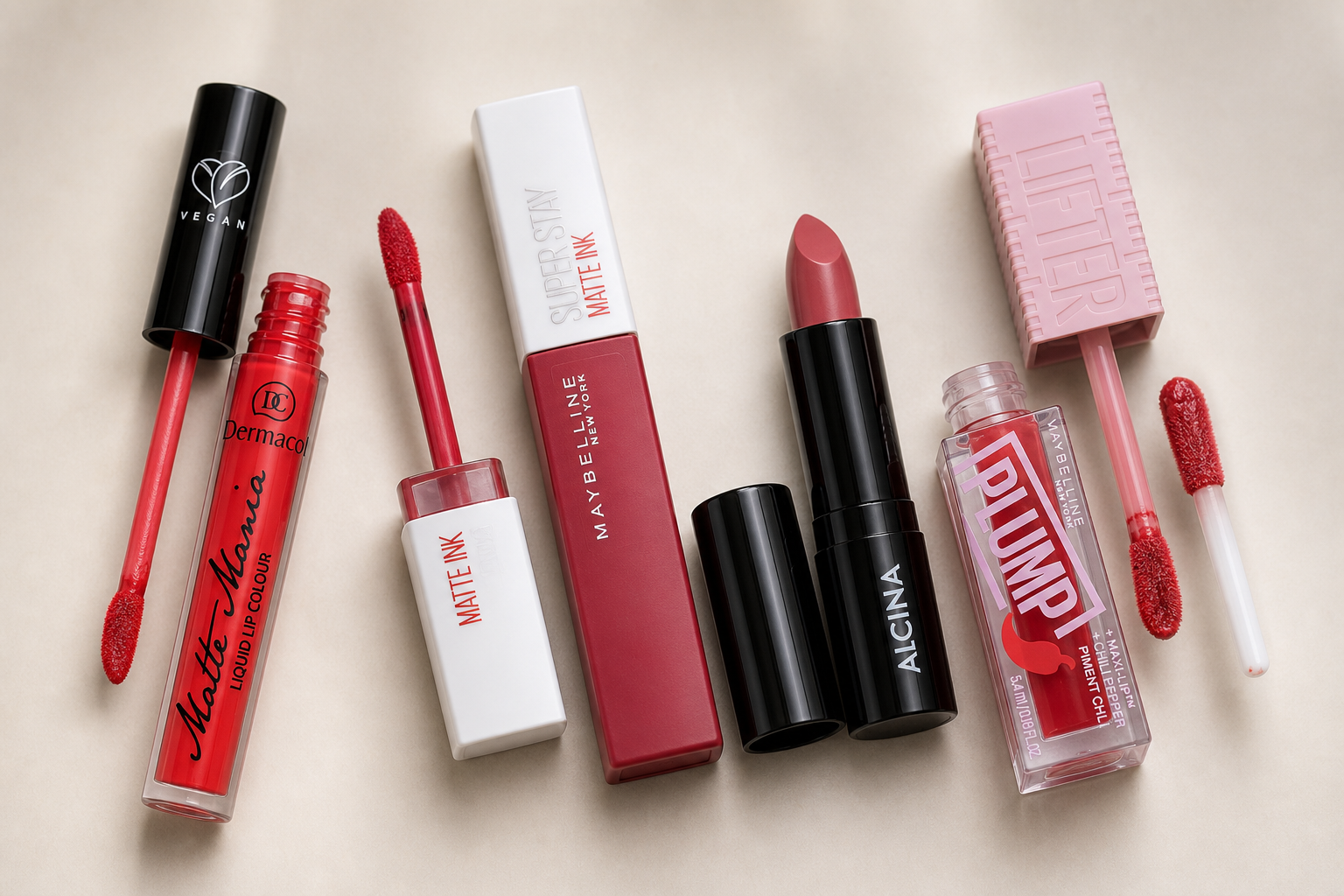
We'll explain why two lipsticks in the same shade can look completely different on your lips – the finish makes all the difference. We'll guide you on how to choose between matte, creamy, glossy, and liquid lipsticks based on longevity, comfort, and ease of application.
Why the Finish Matters More Than the Shade Itself
You choose a shade that looks perfect in the photo, but on your own lips, it appears different. The color may be richer or paler, lips may seem thinner or fuller. In most cases, it's not the wrong shade number that's to blame, but the finish – the surface the lipstick creates on your lips.
The product photo shows the color on an even surface under consistent lighting. Your lips, on the other hand, have their own undertone, fine lines, and varying levels of hydration, so the same pigment reads differently on them. The finish determines how light reflects off your lips: a matte surface tends to absorb light, making the shade appear deeper and darker, with sharper lip contours. A glossy surface, on the other hand, reflects light, making the color appear brighter and the lips look fuller. Two lipsticks with the same shade name can thus result in two different outcomes – one subtle and precise, the other vibrant and soft.
The same mechanism explains why a favorite color can look dry on one person's lips and overly glossy on another's. A finish designed for long wear clings tightly to fine lines and highlights any flaking, while a highly glossy finish glides over the surface and may bleed into small imperfections. The condition of your lips and the chosen finish form a pair that shouldn't be judged separately – which is also why the advice "this shade suits everyone" doesn't work in practice.
Three Criteria for Comparing Finishes
To ensure a fair comparison, we'll ask the same three questions for each finish:
- Longevity – how long the color stays at its original intensity, how easily it transfers onto a cup or glass, and how often you'll need to reapply the lipstick throughout the day.
- Comfort – how the lipstick feels after an hour of wear. Whether you're aware of it, whether it tightens your lips, or leaves a greasy film.
- Ease of Application – whether you can apply it with a stick on the go in the car, or if you need a mirror, precise outline, and a moment of calm before the finish sets.
None of these three criteria is more important than the others, and no finish excels in all of them simultaneously. There's always a trade-off: longer wear usually costs some comfort, while higher gloss reduces longevity. Therefore, it doesn't make sense to look for a finish that's suitable for everything. It makes sense to find one that suits the specific situation – the length of your day, the current condition of your lips, and how much attention you want to give your lips when applying makeup.
In the following sections, we'll go through four variants that appear most often in lipstick descriptions and can also be found among lip glosses: matte, creamy, glossy, and liquid. For each, we'll discuss who and when it suits, what to expect after a few hours of wear, and what lip preparation it requires. Next time you choose, you won't just decide based on a color square in a picture, but on the qualities you actually need from a lipstick.
What Does Lipstick Finish Actually Mean and How Is It Created
When the word "finish" appears in the description of a lipstick, it doesn't refer to the shade, but rather how the color looks on the lips after application and how it behaves throughout the day. The finish is the result of the formula—a specific ratio of pigments, waxes, oils, silicones, and film-forming agents. This ratio determines whether the result will be velvety matte, softly creamy, or illuminated with shine.
What's in Lipstick and What Each Ingredient Does
The composition of lipstick can be simplified into four groups that compete for dominance:
- Pigments carry the color. The higher their proportion, the more intense the result and the less the natural tone of the lips shows through.
- Waxes hold the shape of the stick and ensure the color stays where you apply it. A higher proportion of waxes usually means a firmer stick and a sharper outline.
- Oils and Butter Components give the lipstick glide and a pleasant feel on the lips. They make spreading easier, but also increase the likelihood of color transfer.
- Silicones and Film-Forming Agents create a thin layer on the surface that seals in the color. They are typical for long-lasting formulas.
None of these groups is inherently better than the others—it's about compromise. A formula that lasts all day sacrifices some comfort because it needs to create a stable film on the lips. Conversely, a formula that applies almost like a balm can easily be wiped off on the edge of a cup. So when two lipsticks in the same shade feel different on the lips, it's not a flaw or a mistake in color choice, but a different composition.
Stick or Liquid Formula
A classic stick lipstick is a solid mixture of waxes, oils, and pigments that you apply directly from the case or with a brush. The layer remains supple, can be reapplied at any time, and the color can be intensified with a second coat or toned down by pressing with a tissue.
Liquid lipstick is not just a different packaging of the same thing—it's a separate type of product. It contains a higher proportion of volatile components that evaporate after application, leaving a continuous color film on the lips. This results in a different application method: it is applied with an applicator in one thin layer, lips should not be pressed together while drying, and additional corrections to the dried layer are often visible. The reward is noticeably less color transfer and a longer-lasting effect without changes.
Four Terms You'll Encounter
Whichever finish you ultimately choose, it is always described using the same four metrics. It's worth knowing them before you start comparing specific types:
- Coverage – the extent to which the color covers the natural tone of the lips. High coverage provides full color with just one application, while low coverage acts like a translucent veil that only tints the natural tone.
- Color Transfer – how much pigment remains on the edge of a glass, on a tissue, or on a cheek when greeting. This is primarily related to the proportion of oils and whether the formula creates a film on the lips.
- Drying – the feeling of tightness and the highlighting of fine lines that occurs with formulas high in film-forming agents and low in oils. It's a subjective sensation: those with naturally drier lips perceive it more intensely.
- Reapplication During the Day – how easily you can refresh the color without removing makeup. Some finishes can simply be reapplied, while with others it looks cleaner to remove the remaining color and apply a new layer.
These four terms serve as a common language for the entire selection. Once you clarify what you expect from a lipstick—whether it's more intense coverage or comfort, minimal transfer, or the ability to reapply color at any time—you can compare individual finishes objectively and without disappointment that a favorite shade behaves differently than expected.
Matte and Liquid Lipstick: Long-lasting and Lip Demands
Matte and liquid lipsticks are often mentioned in the same breath, and for a practical reason: among finishes, they last the longest on the lips. However, the difference between them is not just in the shine. A matte finish describes the final look, whereas liquid lipstick refers primarily to the packaging and consistency – it is available in both matte and satin variants. Knowing what to expect from both makes it easier to decide if the longer lip preparation is worth it for you.
Matte Lipstick: Velvet Finish and Higher Coverage
The matte formula has a higher pigment content and a lower oil component, so it reflects almost no light after application. The result is a velvety, flat surface with high coverage – the shade looks as intense on the lips as it does in the tube.
This same property has another side. The matte layer won't cover imperfections; it tends to highlight them: small flakes, peeled spots, and fine vertical lines are more visible under it than under a creamy finish. A good result, therefore, starts with the lips, not the lipstick.
- Treat your lips with balm in advance – ideally the night before makeup and again in the morning, so it has time to absorb.
- Include a gentle lip scrub once or twice a week, but not just before applying color.
- Wipe off excess balm with a tissue before application; a slippery layer makes it harder for matte lipstick to adhere.
- Outline the edge with a lip liner in a similar shade – the matte formula is harder to correct in the corners than a glossy one.
Liquid Lipstick: Stays Put Once Dry
Liquid lipstick is applied with an applicator, so the layer tends to be thinner and more even than with a traditional stick. The crucial moment is drying: the formula needs a short moment of stillness, during which the lips should not be pressed together. Once dry, the color hardly transfers – leaving minimal traces on the rim of a cup, glass, or collar, and after a few minutes, you barely notice it on your lips.
The price for this longevity is poorer repairability. A new layer cannot be spread over the dried original without the transition being visible; instead of a continuous color, a spot or lump forms, and the edge smudges. If the lipstick gets disturbed during the day – typically in the middle of the lower lip after eating – the more reliable way is to gently remove the rest and apply a thin layer again, rather than coloring over the original.
Comfort varies with both finishes depending on the specific composition. Formulas with a high pigment content can feel tightening on the lips, especially in winter or in air-conditioned environments. Manufacturers therefore offer lighter versions described as velvet or creamy matte: they last a bit shorter, but are more comfortable to wear. If your lips are prone to drying, it makes sense to start with these and gradually try more long-lasting formulas.
More demanding preparation pays off mainly where there is no room to reapply lipstick during the day:
- Long workdays and business trips – meetings one after another, coffee and lunch in between, and no guaranteed moment at the mirror.
- Photography and filming – a matte surface does not reflect light into the lens, and the shade looks the same in all shots.
- Evening and social events – weddings, celebrations, or balls where the color needs to last through dinner and dancing.
- Situations with fabric contact with lips – scarf, mask, or helmet; dried liquid lipstick transfers to fabric only minimally.
Conversely, if you wear lipstick for just a few hours, want to refresh it repeatedly during the day, or dislike even the slightest feeling of tightness, a lighter finish will be more comfortable for you. Matte and liquid lipsticks are not a universal choice – they are tools for specific situations where longevity is more important than the feeling of a nourishing balm.

Creamy and Glossy Lipstick: Comfort, Care, and Easy Application
Not every day calls for a lipstick that stays put without budging. If you want your lips to feel comfortable all day, touch up your color on the go, and don't mind a little transfer onto your glass, two finishes come into play: creamy and glossy. Both rely on different ratios of pigments, oils, and waxes, which affect how they apply and last.
Creamy Finish: Medium Coverage and a Soft Feel
Creamy lipstick carries pigment in a soft stick with a higher proportion of oils and emollients. The result is medium coverage – the color is clearly visible but allows the natural tone of your lips to shine through. This makes it forgiving of mistakes: a stroke outside the lip line is less noticeable than with highly pigmented formulas.
The biggest practical advantage is the application. You can apply creamy lipstick straight from the tube without a mirror, easily layer it for a richer color, and just as easily touch it up over an existing layer. It leaves a soft, supple feel on the lips that you stop noticing after a few minutes.
The trade-off for comfort is shorter wear time. Creamy finishes transfer onto cups and cutlery, and you'll need to refresh the color after eating. A lip liner in a similar shade can help define the outline and slow down the color from feathering around the lips.
- Perfect when you want a naturally looking color and comfort all day long.
- Ideal for when you're in a rush or need to touch up your lipstick without a mirror.
- Expect to refresh the color once or twice during the day.
Glossy Finish: Light, Volume, and Sheer Color
Glossy lipsticks and lip glosses work more with light than pigment. A smooth, reflective surface bounces light back, making lips appear fuller and more rounded. The color is usually lighter, often semi-transparent – instead of a bold shade, you get a tint that enhances the natural tone of your lips.
With fine lines and lip outlines, consistency matters. Liquid glosses tend to seep into fine lines above the upper lip and cross the outline, so the result blurs after a while. Thicker gel textures hold better in place, and a pre-drawn outline with a lip liner helps here too. If your hair sticks to the gloss in the wind, opt for a less sticky, oilier formula.
Glossy finishes last shorter than creamy ones, but they are very easy to refresh – just one swipe with the applicator. They also work as an accessory: a layer of gloss in the center of the lips over creamy lipstick adds volume without changing the shade.
- Great for when you want to visually enhance your lips and maintain a natural look.
- Suitable for daytime makeup and as a top layer over another lipstick.
- Expect frequent touch-ups and note that gloss won't cover uneven lip color.
Oil-Based and Balm Lipsticks: Between Care and Makeup
Between traditional lipstick and gloss, two forms have gained popularity in recent seasons. Oil-based lipsticks, also known as lip oils, combine a light oil base with a subtle pigment: they create a glassy shine on the lips, are less sticky than thick glosses, and soften the lip surface. Tinted balms go even further towards care – the color is more of an accompanying effect and can be applied anytime during the day.
Both options make sense on days when you don't want full lip makeup but are bothered by bare-looking lips. Don't expect coverage or longevity comparable to stick lipstick; their purpose is comfort and subtle enhancement. They're not suitable for a bold, uniform color for an evening event.
Both creamy and glossy finishes trade some longevity for comfort and easy application. If you like to refresh your color during the day and prefer your lips to feel more supple than tight, this is the direction for you.
How to Choose the Finish Based on Lip Condition and Daily Routine
Theory is nice, but in front of the mirror, you need a plan. Choosing a finish can be done in three steps, and their order is not random: the condition of your lips limits your options the most, your daily routine narrows them further, and the intensity of the color comes last. Saturation can be adjusted with the number of layers for most formulas, while discomfort on dry lips can't be fixed with anything.
Three Questions in the Right Order
- What condition are your lips in? Run your finger over them. Smooth and supple lips can handle almost any finish. If you feel small flakes or tight skin at the corners, start with care – a few days of balm and gentle exfoliation will do more for the result than changing the shade.
- What does your typical day look like? Count the hours between your morning makeup and the time when you can calmly touch up your color. Eight hours without a chance to reach into your bag is a different situation than a morning with a coffee break.
- How intense do you want the color? Only now should you address coverage and shade. If comfort came out as a priority from the first two steps, a dark intense shade in a matte formula will remind you all day that you made a compromise.
Three Model Profiles
Dry lips and all-day meetings. A combination that requires the most preparation. You don't have to give up a matte finish, but it needs a regimen: balm in the evening, hydration in the morning, wait a bit for it to absorb, and only then apply color. Apply liquid lipstick in a thin layer and let it dry thoroughly – a thick layer on dry lips splits and highlights lines. If the matte formula still feels tight after preparation, opt for a creamy lipstick and plan for one touch-up after lunch.
Normal lips and quick morning makeup. Here, a creamy finish has the upper hand. It can be applied even without a mirror, forgives inaccuracies, and can be touched up quickly after eating. If you need the color to last longer, a simple method helps: work the first layer into the lips, remove the excess with a tissue, and add a second thin layer. This gives you durability closer to a matte finish, but without its demands.
When comfort is key. Lip glosses, oil-based, and balm lipsticks are for days when you don't want to feel anything on your lips. The color is softer and needs more frequent touch-ups, but it can be applied blindly on the bus. The same choice makes sense in freezing months or overheated offices where a matte formula can be uncomfortable.
Where to Look in the Offer
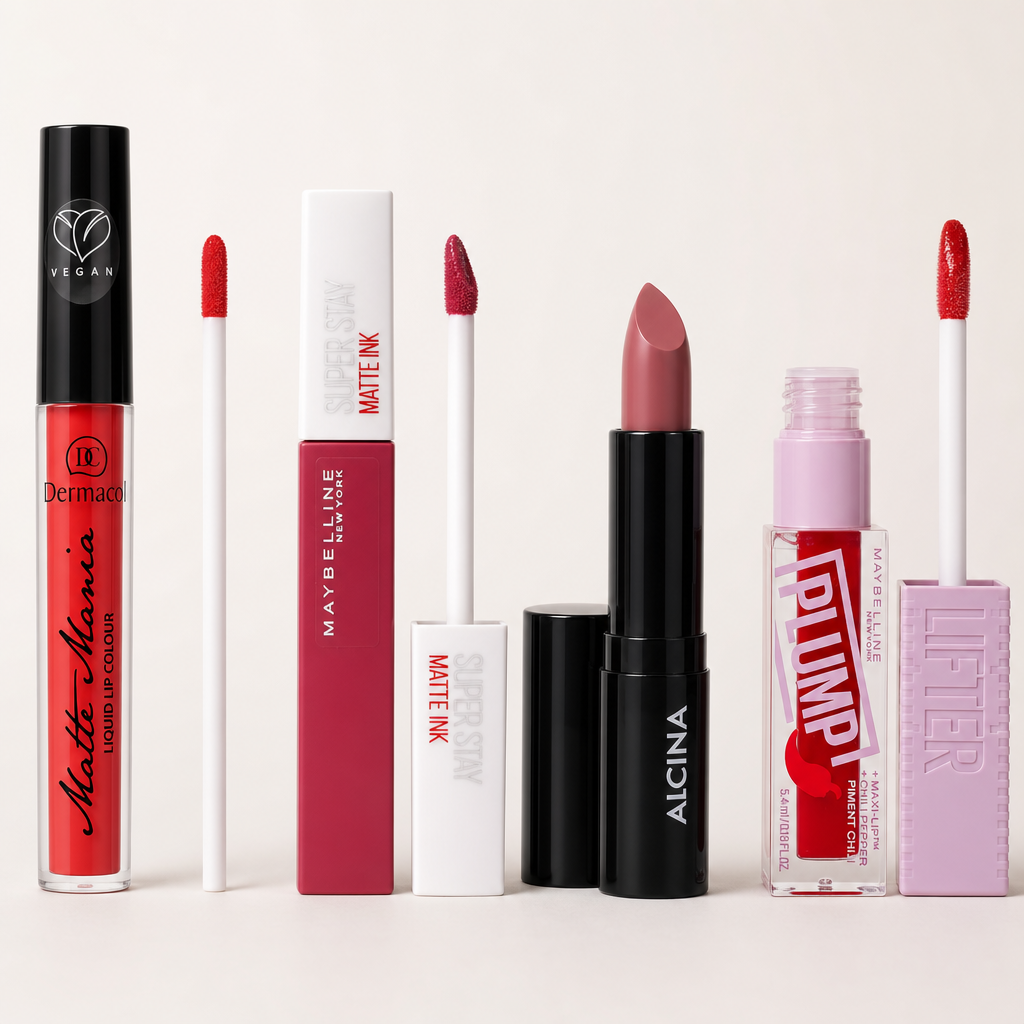
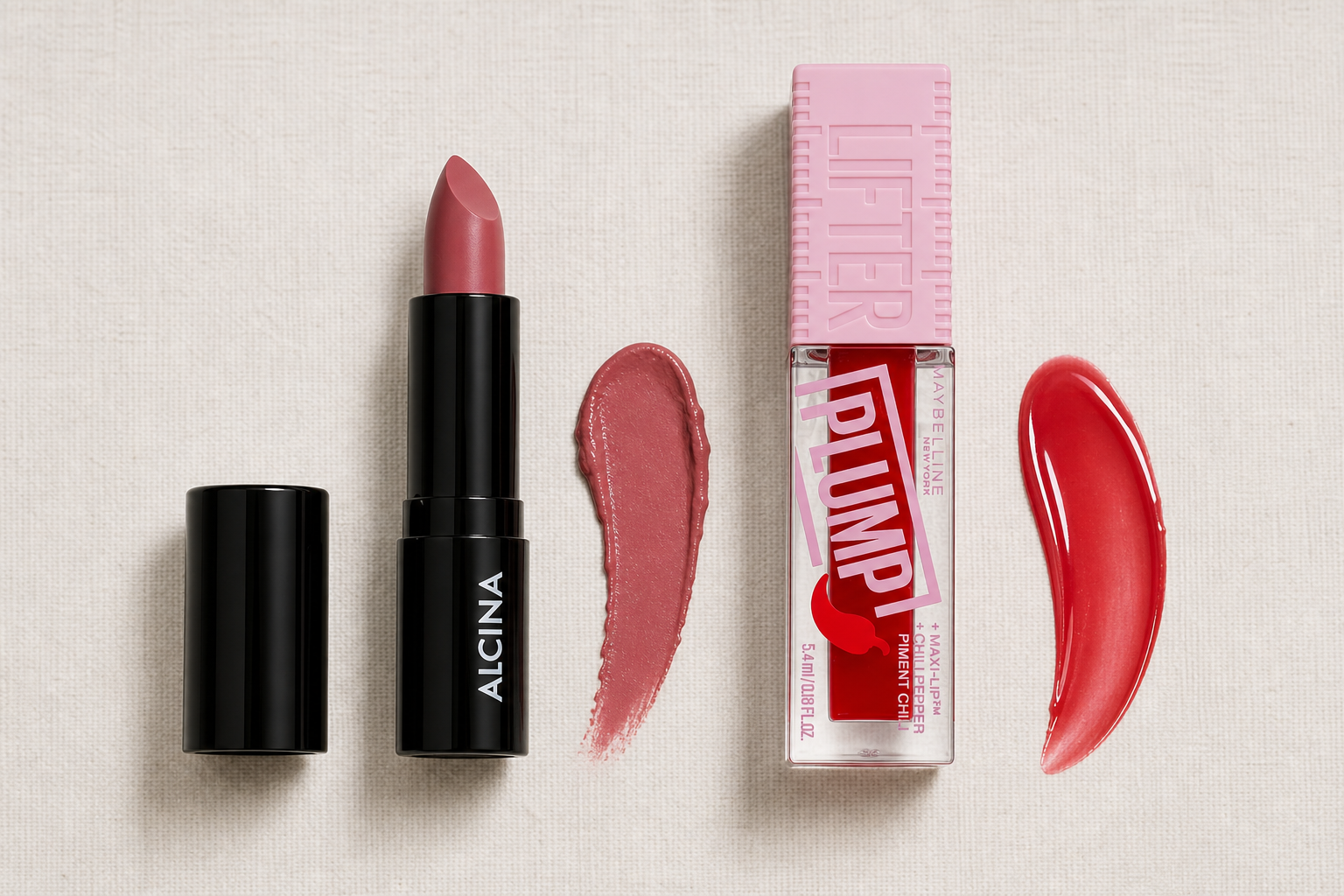
Navigation is straightforward. Classic solid and liquid formulas can be found in the lipstick category, lighter and glossy options in the lip gloss category. More affordable price ranges are covered by brands like Maybelline and Dermacol – both offer a wide selection of matte, creamy, and liquid formulas. If you're looking for nourishing compositions and softer pigmentation, check out Clarins or Lancôme.
Whatever finish you choose, it's worth complementing it with a lip liner in the shade of the lipstick or a tone darker. It helps the outline last longer and cleaner, and with matte and liquid formulas, it also limits the color from bleeding into fine lines.
And one last note: looking for one universal piece for everything is a dead end. Lips change with the season, a different finish makes sense for a workday and another for an evening event. Two to three lipsticks with different finishes will cover most situations better than a single one where you'll always be making compromises.
Category
Recommended articles

"Give a girl the right shoes and she can conquer the world!" Marilyn Monroe