
Serum, Oil, Leave-In Conditioner: What's the Difference?
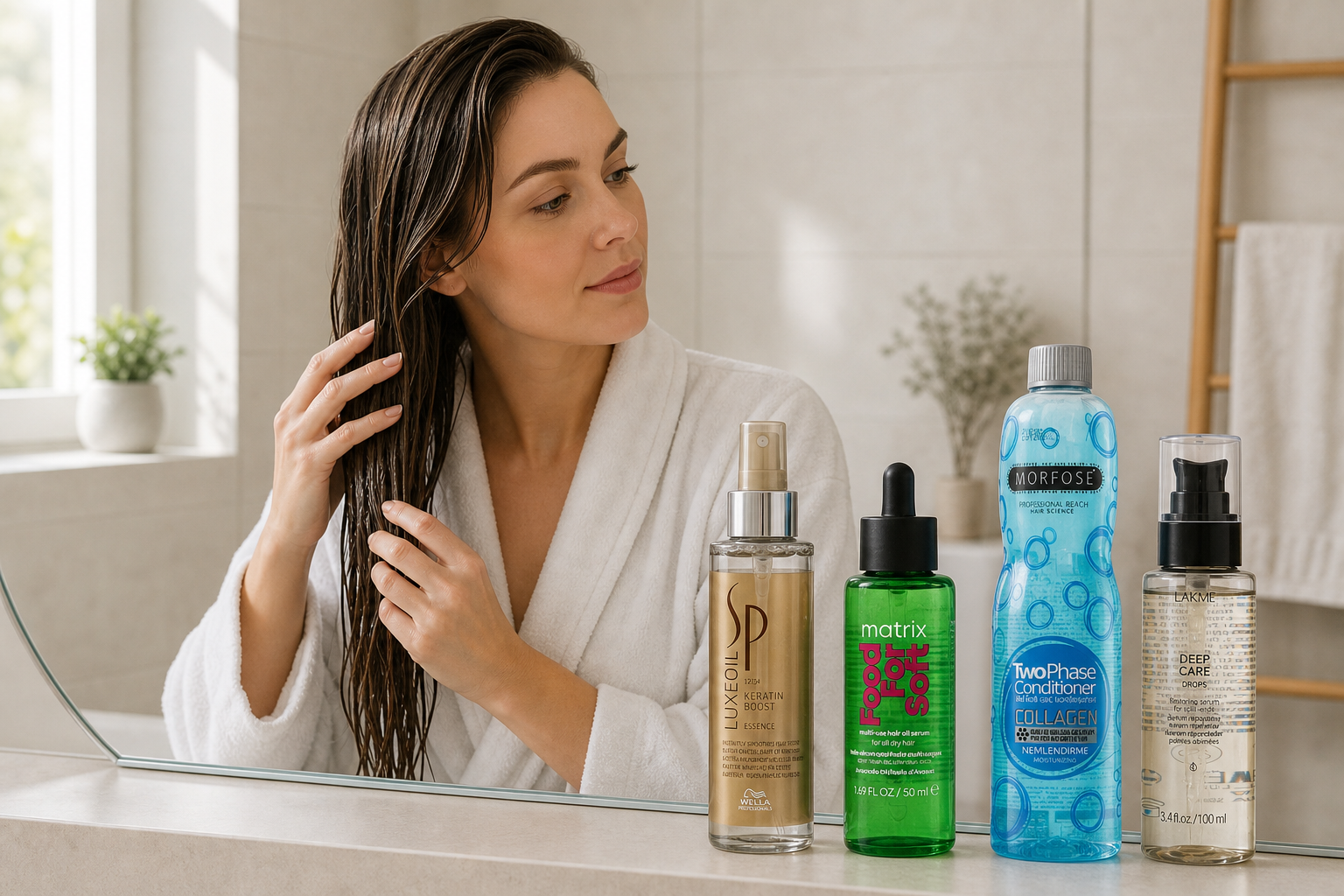
Whether you blow-dry your hair every morning or let it air dry, sooner or later you'll encounter a category that can be quite confusing – leave-in care. On one shelf, you'll find serums, oils, lotions, sprays, and creams, all promising smoothness and shine with nearly identical descriptions, making it hard to tell them apart at first glance. Yet, the choice of texture is crucial in determining whether your hair will come to life after application or fall flat.
The common denominator is simple. Leave-in care is applied to clean, damp hair after washing, or to dry hair during the day, and it doesn't get rinsed out. It stays on the hair fiber until the next wash, accompanying you throughout the day – through wind, heat from the hairdryer, and friction against clothing. That's why it's more important than with a mask or traditional conditioner to monitor how much your hair can handle.
The three most common formats differ in texture, concentration of nourishing ingredients, and the task they are meant to accomplish on your hair.
- Serum is typically the lightest of the three and the most targeted. It has a liquid or gel consistency, absorbs quickly, and usually addresses one specific issue – smoothing frizzy lengths, adding shine, repairing damaged structure, or caring for the scalp. Hair serums are also available in variants specifically designed for the scalp, not the lengths.
- Oil works differently: it seals the hair surface, adds shine, and softens the ends. It's more concentrated and richer, so it's used drop by drop. The difference between a light dry oil and a rich nourishing elixir is significant – the former is suitable even for finer hair, while the latter is better appreciated by coarser and thicker hair strands.
- Leave-In Conditioner is the most versatile of the three. It comes as a milk, cream, or spray, and its main job is detangling, hydrating, and protecting the hair during drying. It doesn't target a specific problem but keeps hair in good condition between washes.
The boundaries between these categories aren't very clear-cut. Many products today are marketed as multifunctional care, combining the properties of a leave-in conditioner with a serum, or adding thermal protection or color protection. Fortunately, this doesn't hinder orientation – the decisive factor remains the texture you feel in your hand and the place where the product belongs on your hair. Serums and oils usually find their home in the lengths and ends, while leave-in conditioners are spread more evenly.
One thing simplifies the choice more than reading labels. There's no format that suits everyone, and the difference between a serum, oil, and leave-in conditioner isn't worth debating as a competition over which is generally more effective. What matters is the hair you have in your hands – whether it's fine or thick, whether you color it, whether it's wavy, and whether summer or heating season has dried it out. The key to choosing lies not in the brand on the package, but in an honest assessment of what your hair currently needs. Everything else follows from that: texture, level of nourishment, and method of application.
Identify Your Hair Type: Fine, Thick, Wavy, Colored, Damaged
Before reaching for a specific leave-in treatment, you need to know what you're dealing with. Just a few minutes in front of the mirror with clean, air-dried hair—no blow-drying or styling—will do the trick, as it's much harder to read the clues on styled hair. The goal isn't an exact diagnosis, but rather to categorize your hair into one or two types to narrow down your texture choices.
Fine Hair Isn't the Same as a Thick Hairstyle
These are two properties that are often confused in everyday language. Fineness describes the thickness of a single hair strand. Density refers to how many hairs you have on your head. You can easily have fine hair and still have a thick hairstyle—or vice versa.
You can check fineness by taking a fallen hair and running it between your thumb and forefinger. If you can barely feel it, it's fine hair. If you feel a distinct strand, you have thick hair. You can estimate density by looking at your part: the more scalp you see through it, the thinner your hair is. The circumference of a ponytail tied with an elastic band can also be a good indicator.
Why it matters: Fine hair gets weighed down much faster than thick hair, so the texture of the product matters more than the amount. A thick hairstyle, on the other hand, requires more product to ensure the treatment reaches everywhere—even if the individual hairs are fine.
Guidelines to Refine Your Choice
Once you know your hair's fineness and density, consider these five criteria. They determine whether you'll be looking for a light mist or a richer milk:
- Scalp Oiliness. Notice when your roots start to feel heavy—is it the day after washing or only on the fourth day? A quickly oily scalp means you'll apply leave-in treatment from mid-lengths down, avoiding the roots.
- Hair Absorbency. Take a strand and wet it. Does it soak up water quickly and then dry slowly? This indicates an open structure, which eagerly absorbs nourishment but loses it just as fast. If water tends to slide off and takes a while to wet, it's a closed hair type—it can only handle lighter textures, otherwise, the product will just sit on the surface.
- Hair Shape. Straight hair dries smoothly, wavy hair forms soft waves, and curly hair coils into distinct spirals. Wavy and curly hair tend to be drier by nature—sebum travels more slowly down a coiled hair than a straight one, leaving the ends less nourished.
- Length. The ends of long hair are several years older than the roots and have undergone more washing, brushing, and heat. The longer your hair, the greater the difference between the condition of the roots and the ends—so you'll likely focus your care on the lower part.
- Chemical and Heat Exposure. Consider what your hair has been through in the past year: coloring, highlighting, bleaching, perming, regular straightening, or curling. Each of these treatments affects the outer layer of the hair, pushing you towards more nourishing formulas.
One more note on colored hair. The difference lies in whether you've darkened or lightened the shade. Lightening and highlighting stress the hair more than coloring to darker tones, so even freshly dyed hair can end up in a different category depending on the direction you took.
In conclusion, summarize your results in one sentence, for example: fine thick hair, quickly oily scalp, lightened ends. Most people will find themselves in two categories that somewhat contradict each other—fineness calls for the lightest texture, damage for nourishment. That's perfectly fine; such combinations are easy to work with. What matters is what bothers you more, and you can adjust the rest by where and how much product you apply.
Fine and Thick Hair: Light Mist vs. Richer Milk
Among all the factors that influence leave-in care, the product's texture has the most immediate impact. Fine and thick hair sit on opposite ends of the same spectrum: one collapses under unnecessary weight within half an hour, while the other barely notices a light mist. The difference isn't in the quality of the product, but in how much material the hair can handle without losing movement.
Fine Hair: The Lighter the Texture, the Better
Fine hair has a smaller diameter and a smaller surface area for the care to spread. When you apply a heavy cream, the excess has nowhere to go – it stays on the surface, the strands stick together, and the hairstyle loses volume before you even leave the house. Opt for the lightest formats that leave-in care offers: water-based detangling sprays, two-phase spray conditioners, and mists or light milks that disperse on damp hair without leaving a noticeable film.
Application is as crucial as texture. Spray onto towel-dried hair, not wet and dripping – excess water dilutes the product and pulls it to the roots. Hold the bottle at a sufficient distance, aim at the lengths and ends, and skip the top layer at the crown altogether. Volume is born right where you don't need the care.
You'll know you've chosen a product that's too heavy by several signs:
- hair appears greasy at the roots by the second day, even though you only applied care to the lengths,
- the volume you blow-dried falls within the first hour,
- individual strands clump into thin strings,
- the hair surface looks more oily than silky,
- the comb glides through the hair effortlessly, but they feel coated to the touch.
Thick and Strong Hair: More Material for Smoothing
Thicker hair has a stronger cuticle and a significantly larger overall surface area that needs coverage. Sebum from the scalp reaches the ends more slowly, so the lower part of the lengths tends to be drier and more prone to frizz. A light mist simply gets lost in such a mane. Here, a creamier leave-in conditioner, a denser milk, or an oil serum makes sense – they contain more smoothing ingredients that can coat the entire volume of hair and keep it together until evening.
The method differs from fine hair. First, spread the dose in your palms to warm it up and distribute it better, then work it through the hair strand by strand from about mid-length down. A wide-tooth comb helps – without it, most of the product stays in the top layer, leaving the lower hair empty-handed. For really thick hair, it's more reliable to apply a smaller dose twice than one large one at once; excess isn't combed out of a thick mane as easily as from fine hair.
If you're unsure where you belong, always start with a lighter texture and only add more. An underestimated dose can be topped up in seconds, while overloaded care will only be resolved by the next wash. And keep in mind that the fineness of individual hair and overall thickness can work against each other: someone with a lot of fine hair needs a light consistency, but in a larger quantity than expected.
Wavy, Colored, and Damaged Hair: When More Nourishment is Needed
For some hair types, leave-in care is not just about making combing easier. Wavy, colored, and damaged hair all share a common need – moisture, protection, or surface cohesion. A leave-in product does more work than a shower conditioner, which only stays on the hair for a few minutes. Let's look at three situations where opting for a more nourishing variant makes sense.
Wavy and Curly Hair: Creamy Texture Holds Definition
The wave forms as the hair dries. As water evaporates, the strand contracts into its natural spiral, and the result depends on what's on it at that moment. A light mist often disappears on wavy hair – it doesn't have enough substance to smooth the hair's surface and hold individual hairs together. On the other hand, creamy leave-in conditioners and defining creams create a flexible film that binds strands and visibly reduces frizz.
That's why it's worth applying care to wet, not just damp hair. Water helps distribute the cream evenly along the length, and the product locks it in. Then gently squeeze the strands in your palm towards the roots, let them dry naturally or with a diffuser, and don't comb them after drying – a comb will break the definition you've just created.
Colored Hair: Maintain the Shade and Reduce Heat
Coloring changes the hair's structure. It becomes more porous, retains moisture poorly, and the pigment gradually washes out with each wash. Leave-in care for colored hair usually targets two things at once: smoothing the cuticle scales to keep the shade vibrant longer and protecting the hair from heat and sun.
- Apply it after every wash to the lengths and ends, where the hair is oldest and the color fades first.
- Before using a hairdryer, straightener, or curling iron, choose a product with heat protection explicitly stated on the packaging – a regular leave-in conditioner doesn't automatically include this.
- In summer and in the mountains, you'll appreciate variants with UV filters; sunlight can fade the shade similarly to frequent washing.
- For cool and highlighted shades, it makes sense to complement it with toning care during washing.
Damaged Hair: Serums and Oil Elixirs for the Ends
You can identify damaged hair by touch and sight: it's rough to the touch, difficult to comb, breaks along the lengths, and the ends split. This is where serums and oil elixirs excel – they are more concentrated than milks and sprays and target precisely where the hair is thinnest and oldest, at the last few centimeters of length.
However, be honest with yourself: no product will permanently mend a split end. A serum or oil won't repair it, but they can visually smooth it, reduce its roughness, and slow further splitting until it's trimmed. That's why oil care is applied only to the lengths and ends, avoiding the scalp, which it would unnecessarily weigh down.
When Leave-In Care Isn't Enough
A leave-in product is daily maintenance, not intensive treatment. If hair breaks during combing, stretches unpleasantly like rubber when wet, or loses color within a few weeks, a serum alone won't reverse the situation. In such cases, incorporate a mask or hair treatment into your routine – they work with longer application times and penetrate deeper than a product that just sits on the hair. Leave-in care then serves as daily protection between treatments.
And one more boundary: itching, scalp irritation, or sudden hair loss won't be solved by length care. Here, it's worth consulting a hairdresser or possibly a doctor.
How Much Product is Enough: Dosage Based on Length and Thickness
The most common issue with leave-in treatments isn't usually the wrong product choice, but rather an overly generous amount. Once dry, hair can feel weighed down, get greasy at the roots more quickly, and you might think the product doesn't suit you – when in fact, you just need to use half as much. The amount depends on two things: hair length and thickness. Short, thick hair will use a different amount than long, fine hair, so it's worth not relying on the packaging recommendations but finding your own dosage.
Suggested Dosages by Length
Consider the following numbers as a starting point, not a strict rule. Keep fine hair at the lower end of the range, while thick and strong hair can handle the upper limit.
- Short hair to the chin: one pump of lotion or cream, two to three sprays, one drop of oil rubbed between the palms.
- Medium-length hair to the shoulders: one to two pumps, four to five sprays, two drops of oil.
- Long hair below the shoulders: two to three pumps, six to eight sprays, three to four drops of oil.
- Long, thick mane: three to four pumps, eight to ten sprays, four to five drops of oil – always divided into several smaller doses, not all at once.
You'll know you've overdone it within two hours of styling: hair sticks together, loses movement, and leaves a film to the touch.
Steps for Application
- After washing, squeeze your hair with a towel. They should be damp, not dripping – product will simply run off soaked hair.
- Divide them into two to four sections and comb the top layers upwards.
- Rub the measured dose between your palms to warm and dilute it. Only then should you apply it to your hair.
- Apply from the lengths to the ends, roughly from chin level down. Avoid the roots and scalp – leave-in treatments don't belong there.
- Run the remainder on your palms over the ends, which tend to be the driest.
- Comb through with a wide-tooth comb or detangling brush. This step distributes the product evenly along the length and saves you from needing an extra dose.
How to Layer Care with Styling
The simple rule is: from the lightest texture to the thickest. A leave-in spray or lotion goes on damp hair first, heat protection follows before blow-drying or straightening, and styling products come last. Let your hair rest between layers to prevent products from mixing on the surface.
Also, don't combine more than necessary. Two to three products per wash are usually more than enough. If your leave-in treatment already includes heat protection, an additional spray often just adds weight without enhancing the effect. And save the oil for the very end – on dry ends as a final touch, not under the straightener.
Where to Find Specific Products
In the hair care range, this topic is covered by three categories. Leave-in treatments include sprays, lotions, and conditioners that don't rinse out; hair serums are more concentrated and target specific issues; hair oils work on ends and shine.
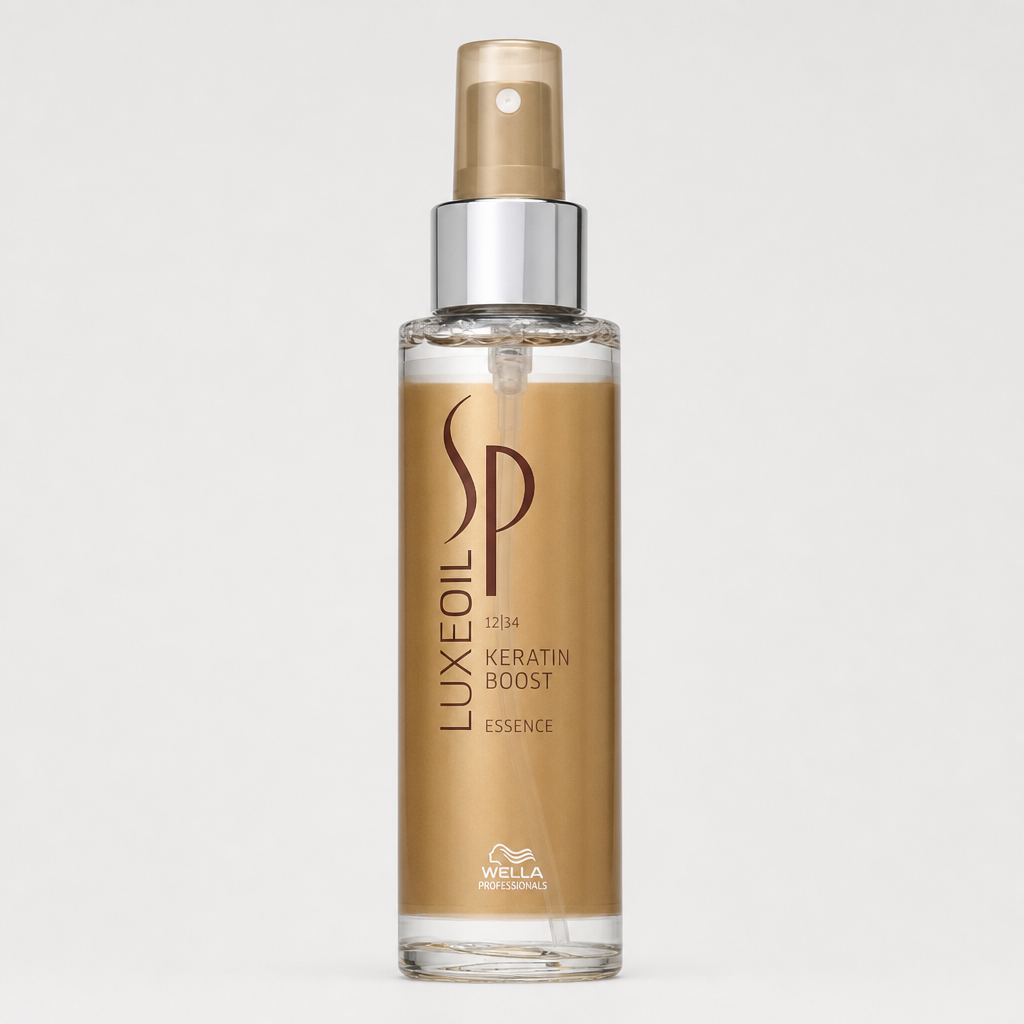
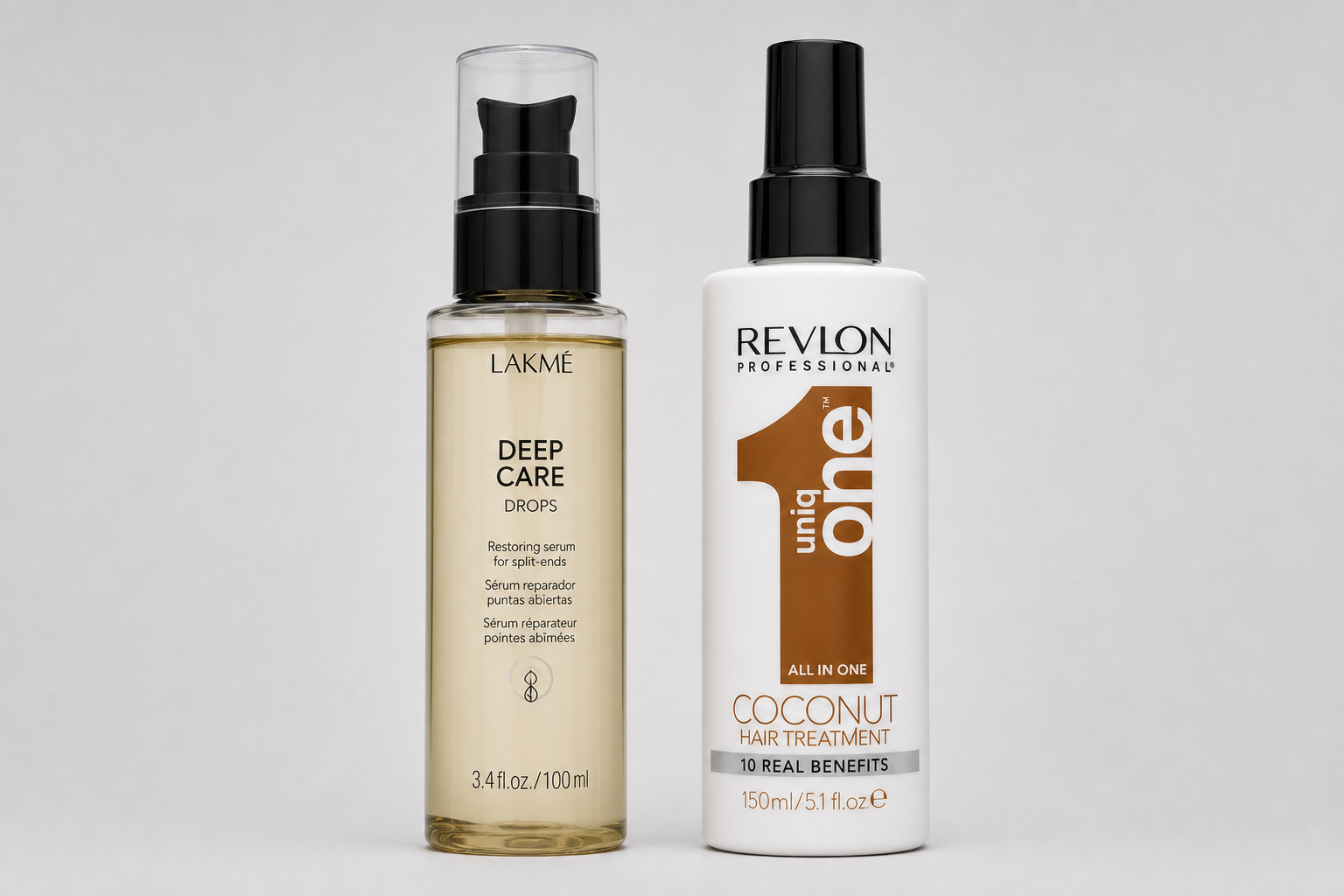
Among the brands we carry in this area, Wella Professionals is worth checking out for oil elixirs and serums, L'Oréal Professionnel offers a wide range of professional care, Lakmé has leave-in conditioners for easy detangling, and Revlon Professional provides multi-purpose products that address several issues at once. Choose based on the texture your hair can handle and start with a smaller package – this way, you can adjust the dosage before opting for a larger size.
Category
Recommended articles
"Give a girl the right shoes and she can conquer the world!" Marilyn Monroe