
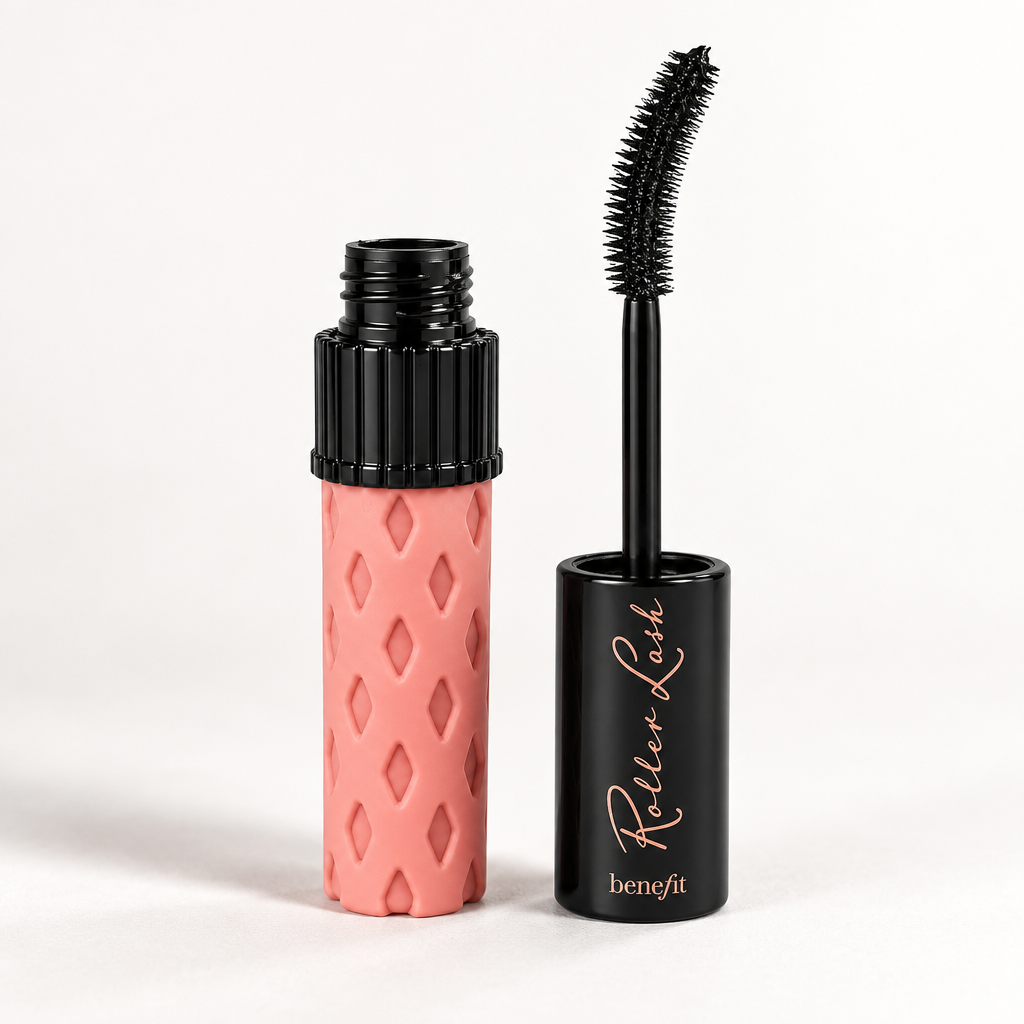
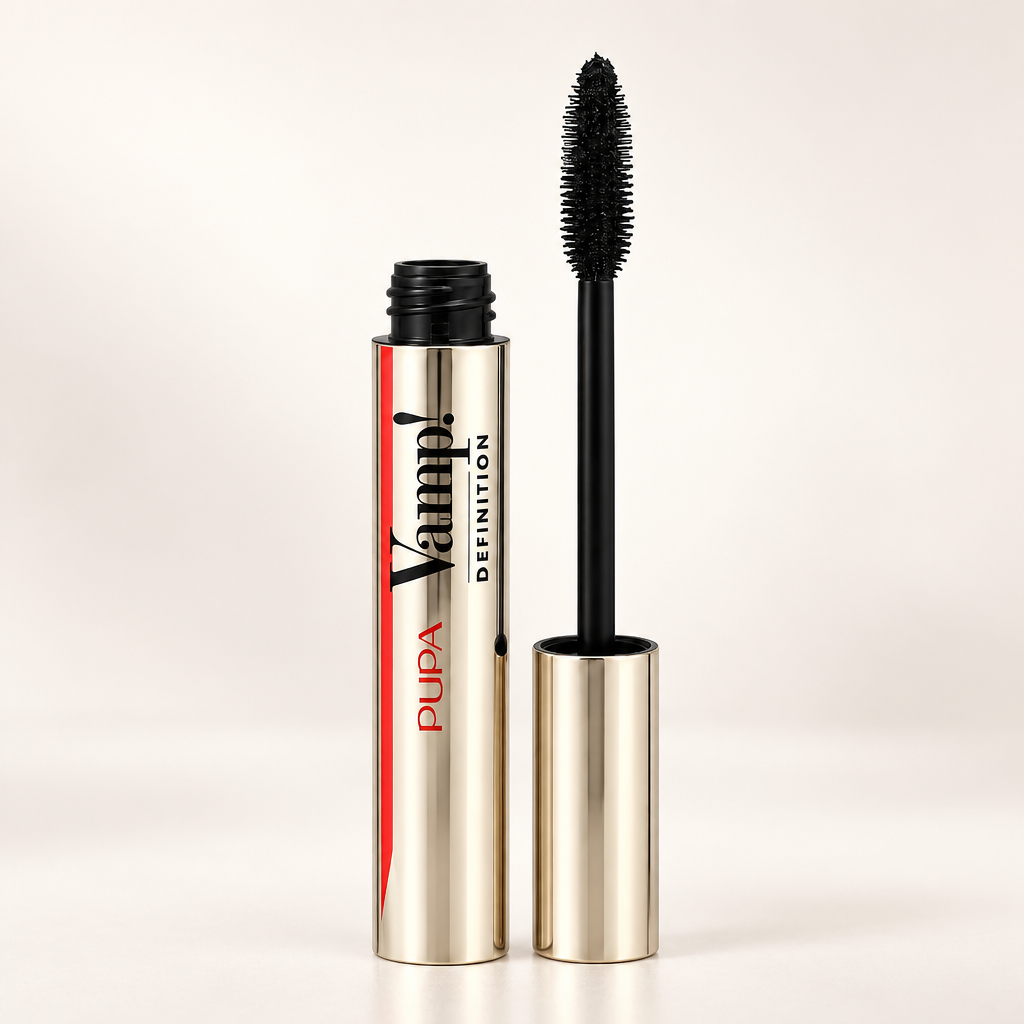

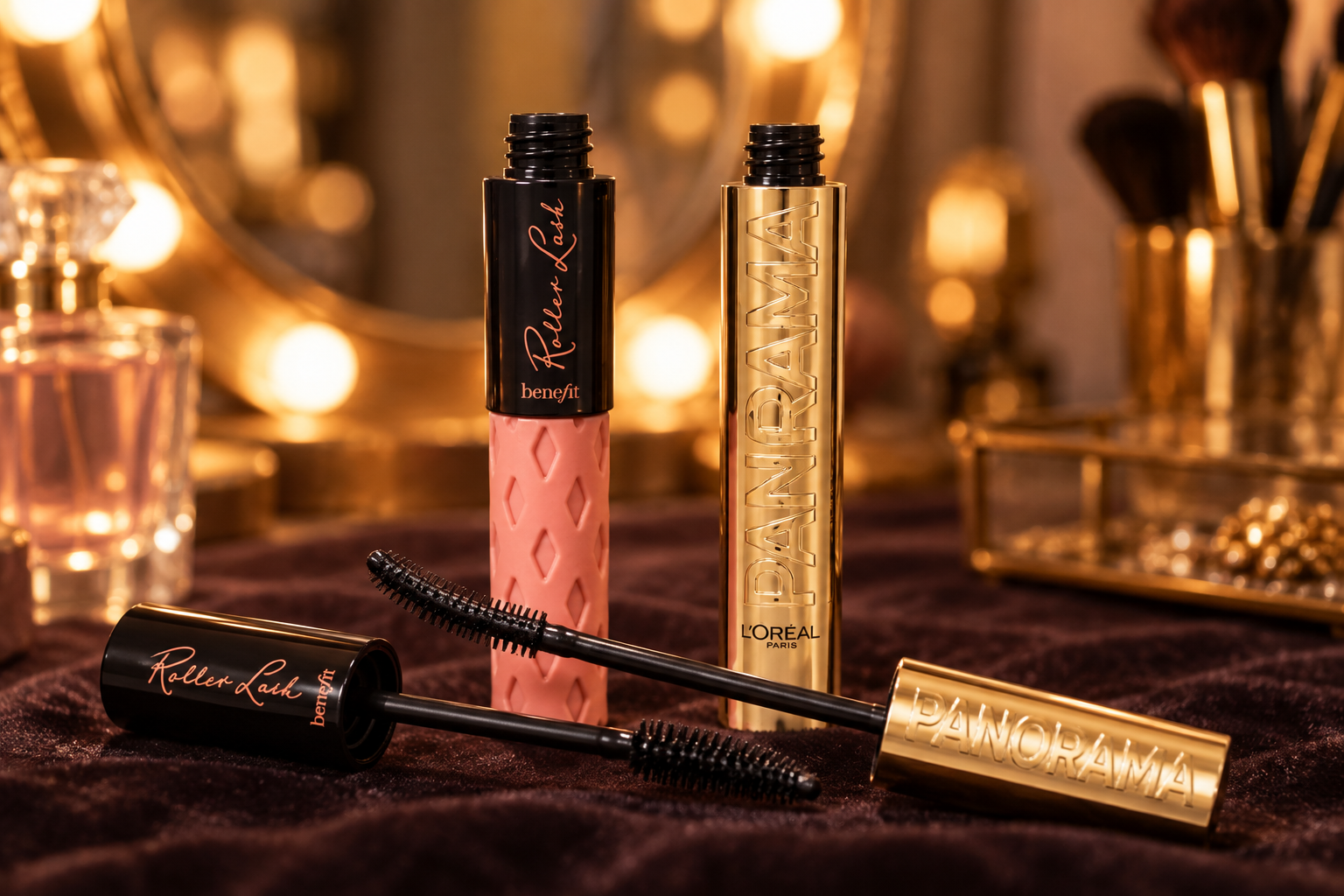
The mascara brush determines the result more than the slogan on the packaging. We'll guide you on how to choose a mascara for volume, length, curl, or definition based on the material and shape of the brush and your lash type.
Why Mascaras Differ More Than They Seem at First Glance
Whether you're facing the mascara aisle for the first time or looking to replace the one you have at home, the selection can be overwhelming. Dozens of tubes promise volume, length, curl, or a "false lash effect," and once you unscrew the cap, you'll find that the brushes vary in shape, density, and material. One might resemble a dense hairbrush, another a thin spiral with tiny bristles, and yet another might be shaped like a curved spoon or a small ball.
The good news is that you can make sense of it all. The way your lashes will look after application is primarily determined by the combination of the brush and your own lashes—their length, density, and whether they grow straight or are naturally curled. The same mascara can create full, dramatic lashes for one user and clump them into a few tufts for another. So, take the slogan on the packaging as more of a guideline than a guarantee of results.
Before we dive into the details, it's worth clarifying what the different effects on the packaging mean. Manufacturers often combine them, but each targets a slightly different outcome:
- Volume – lashes appear thicker and fuller. The brush applies more product to each lash, making them look thicker and the lash line at the roots appear denser.
- Lengthening – the goal is for lashes to look longer. The mascara coats even the finest tips, which are almost invisible without color, and visually extends them.
- Curling – lashes lift from the roots upwards, making the eye appear more open. This effect is especially appreciated by those whose lashes grow straight or slightly downward.
- Definition – each lash is separated from the others, giving a clean overall look without clumps or lumps. It's suitable for a natural daytime look or as a base for additional layers.
Most mascaras combine two effects, such as volume with curling or length with definition. However, achieving all four at once is rare for a single brush, as they partially counteract each other: a lot of product for volume can easily clump lashes together, while thorough separation usually reduces fullness. That's why it's important to know which effect is your priority.
The entire article is structured as a three-step process to help you choose more effectively. First, we'll look at the brush—its material and shape, as these determine how the mascara is applied to the lashes. Then we'll show you how to identify your lash type and which effect will benefit it the most. Finally, we'll discuss the formula, the substance in the tube, which can either enhance or weaken the brush's effect. This way, during your next selection, you won't just rely on the packaging but on what truly suits your lashes.
Silicone or Fiber Brush: What the Material Does
When you pull the brush out of the tube, the first thing you notice is its shape. However, the material it's made from is just as important for the result. You'll encounter two main materials – flexible silicone and classic fibers. Each works with lashes a bit differently, so it's worth knowing what to expect from each.
Silicone Brush has teeth molded from a single piece of material. They are usually shorter, arranged in regular rows with visible gaps between them. The brush works similarly to a comb – it glides through the lashes, separates them, and coats each one with a thin, even layer. Additionally, silicone holds less product on its surface, so lashes are less likely to clump together, resulting in a clean and natural look. The short teeth easily reach the roots, even for small lashes in the corners of the eye or on the lower lash line.
Fiber Brush is made by twisting fine fibers into a spiral around a wire core. The bristles are denser, uneven in length, and less regular. More mascara is caught between the fibers, which the brush then transfers to the lashes with each stroke. The result is a thicker layer that visually thickens the lashes and adds fullness. That's why fiber brushes often appear in mascaras aimed at dramatic volume. The trade-off for this effect is a greater tendency to clump – if you pick up too much product, the lashes can merge into a few thicker clumps.
Main differences at a glance:
- Amount of product: silicone applies a thinner layer, fibers pick up more mascara in one stroke.
- Lash separation: silicone combs and separates lashes, fibers tend to thicken them.
- End result: silicone leads to natural definition, fibers to dramatic volume.
- Application control: silicone is easier to work with precisely, with fibers it's worth wiping off excess on the tube's neck.
Who finds which material more comfortable. If you're just starting with lash makeup, a silicone brush will likely forgive more mistakes. It applies less mascara, so it's harder to overload or clump the lashes. It's also appreciated by those who want precise definition, where each lash is visible separately, and by those with shorter lashes, which dense fibers find harder to reach. A fiber brush, on the other hand, suits those who want to visually thicken their lashes or are looking for more dramatic evening makeup. If your lashes clump with it, wiping off excess product on the tube's neck and combing through the lashes with a clean brush between layers can help.
How to identify the material in a photo. When shopping online, you can't hold the brush in your hand, but you can usually recognize it in a detailed product photo by a few signs:
- A silicone brush has a smooth, slightly shiny surface reminiscent of rubber. The individual teeth are clearly separated with visible gaps between them.
- A fiber brush looks fluffy and dense, similar to a small bottle brush. The bristles merge into one surface and the whole brush often forms a visible spiral.
- The product description also helps – a silicone brush is often mentioned directly in the name or description of the mascara.
Neither material is universally better – it depends on the effect you're looking for and how comfortably you can work with the brush. The material mainly determines the amount of product applied and the degree of lash separation, while the shape of the brush decides where and how the mascara is applied.
Brush Shapes: From Curved to Tapered to Ball-Shaped
While the material of the brush primarily determines how much mascara is transferred to the lashes and how gently they are combed, the shape decides where the mascara goes and in which direction it leads the lashes. Based on the shape, you can reliably guess whether the mascara is aimed more at volume, length, curl, or definition. And because even the same brush works differently depending on how you handle it, each shape also comes with a tip on application technique.
Curved Brush is bent into a slight arc that follows the line of the eyelid. With one stroke, it captures lashes from the inner to the outer corner and lifts them upwards – hence it's primarily associated with curling. Place it so that the curve follows the shape of the eye, press it to the roots, hold it for a moment, and slowly pull upwards to the tips. A short hold at the roots helps fix the lashes in a curled position.
Tapered Brush narrows towards the tip. The wider part applies mascara to the longer lashes in the middle of the eye, while the tapered tip reaches even the tiny lashes in the inner and outer corners that a regular brush might miss. The result is an open look with well-separated lashes. First, go through the entire row with the wider part, then turn the brush vertically and finish the corners with short individual strokes using the tip.
Ball-Shaped Brush has a small round head with bristles in all directions at the end of the wand. It's designed for precise work: it gets close to the roots to accentuate the eye line and, thanks to its small surface area, it stains the surrounding skin less. It also works very well on the lower lashes. Hold it perpendicular to the lashes and work with small circular motions from the roots to the tips, even on individual clusters.
Straight Brush is a universal classic with a cylindrical shape and bristles of equal length throughout. It applies mascara evenly and, depending on the density of the bristles, supports either volume or length. The best technique with it is the zig-zag: place the brush at the roots, gently wiggle it side to side, and gradually pull to the tips.
Hourglass-Shaped Brush is narrower in the middle and wider at the ends. The narrower center embraces the lashes during the stroke and densely coats them, while the wider ends reach into the corners. Typically, this leads to full volume. It's best to apply mascara with such a brush in layers: let the first layer dry briefly and add the second before the mascara completely dries – otherwise, the lashes might stick together.
Fan-Shaped Brush is usually flattened, and its bristles spread out to the sides like a fan. It spreads, separates, and visually lengthens the lashes. First, place it flat and pull upwards, then slightly turn it to the side in the outer corner so that the outermost lashes point towards the temple.
For quick orientation, you can associate the shapes with effects as follows:
- Volume: hourglass and dense straight brush.
- Length: straight brush with sparser bristles and fan-shaped brush.
- Curl: curved brush.
- Definition: tapered and ball-shaped brush.
No matter which shape you choose, it's worth gently wiping the brush against the neck of the tube after pulling it out to remove any excess mascara, and starting each stroke as close to the roots as possible. The shape of the brush is just one piece of the puzzle – the final result is also influenced by your lash type and the mascara formula.
Short, Sparse, Straight, or Long Lashes: What Effect to Look For
The brush and bristle material only make sense once you know what you want from your mascara. And that largely depends on the lashes nature has given you. It's worth taking a close look in the mirror before you start applying makeup and asking yourself three questions: how long are your lashes, how many do you have, and in which direction do they grow.
How to Identify Your Lash Type
- Short lashes barely extend beyond the eyelid line and are almost invisible from the side view.
- Sparse lashes have noticeable gaps between them, making the eye line appear interrupted even after applying makeup.
- Straight lashes tend to grow forward or slightly downward, visually covering the eyelid. Typically, any curl tends to fall out within a few hours.
- Long lashes have length but easily clump together and overlap at the roots.
Few people fit neatly into one category—lashes can be short and straight at the same time. Start with the type that bothers you the most and complement with other effects.
Short Lashes: Look for Lengthening
Short lashes benefit most from mascara that visually lengthens them. A thin silicone or cone-shaped brush that reaches the roots and captures even the tiny lashes in the inner and outer corners is ideal. It applies the product in thin layers and pulls the lashes towards the tips, rather than weighing them down.
Sparse Lashes: Look for Volume
If your lashes are few or fine, you mainly need volume. A denser fiber brush that picks up more product and coats each lash with a thicker layer creates this effect. The lashes then appear fuller, and the eye line more continuous. Start at the roots and gently move the brush side to side to settle the product in the gaps. Keep in mind, however, that mascara only thickens sparse lashes optically—it doesn't increase their number.
Straight Lashes: Look for Curl
Straight lashes need a shape that lasts. A curved brush follows the arc of the eyelid, lifting and curling the lashes upwards during application. If the lashes still don't hold their shape, curl them beforehand with an eyelash curler and apply mascara immediately after to set the bend. Be cautious with too thick layers: a heavy application will pull straight lashes back down.
Long Lashes: Look for Definition
Those with long lashes don't need further lengthening. Definition and separation are more helpful—ensuring each lash is visible individually without clumping. A silicone brush with short, densely packed bristles, or a ball brush for detailing individual lashes in the corners, is suitable. Less is more here: one to two thin layers are usually sufficient, whereas a volumizing mascara with a dense brush could easily weigh down long lashes.
Combining Types and Order of Steps
When you want to combine two effects, the order matters. Generally, you address shape and length first, with volume coming last. Product applied at the start would weigh down the lashes, and the curl or length wouldn't hold.
- Short and straight lashes: start with a curler, then use a thin cone-shaped or curved brush to both lengthen and lift the lashes.
- Short and sparse lashes: apply the first layer with a lengthening mascara using a thin brush, then a volumizing one with a denser fiber brush only at the roots.
- Straight and sparse lashes: start with curling, then add volume—only as much product as the lashes can support without drooping.
- Long but sparse lashes: light volume at the roots and comb the tips with a clean lash brush to keep them separated.
Let the mascara dry briefly between layers, but not completely. Applying another layer on a dry one results in uneven application and clumping.
Formula as the Final Step in Selection: A Comprehensive Overview
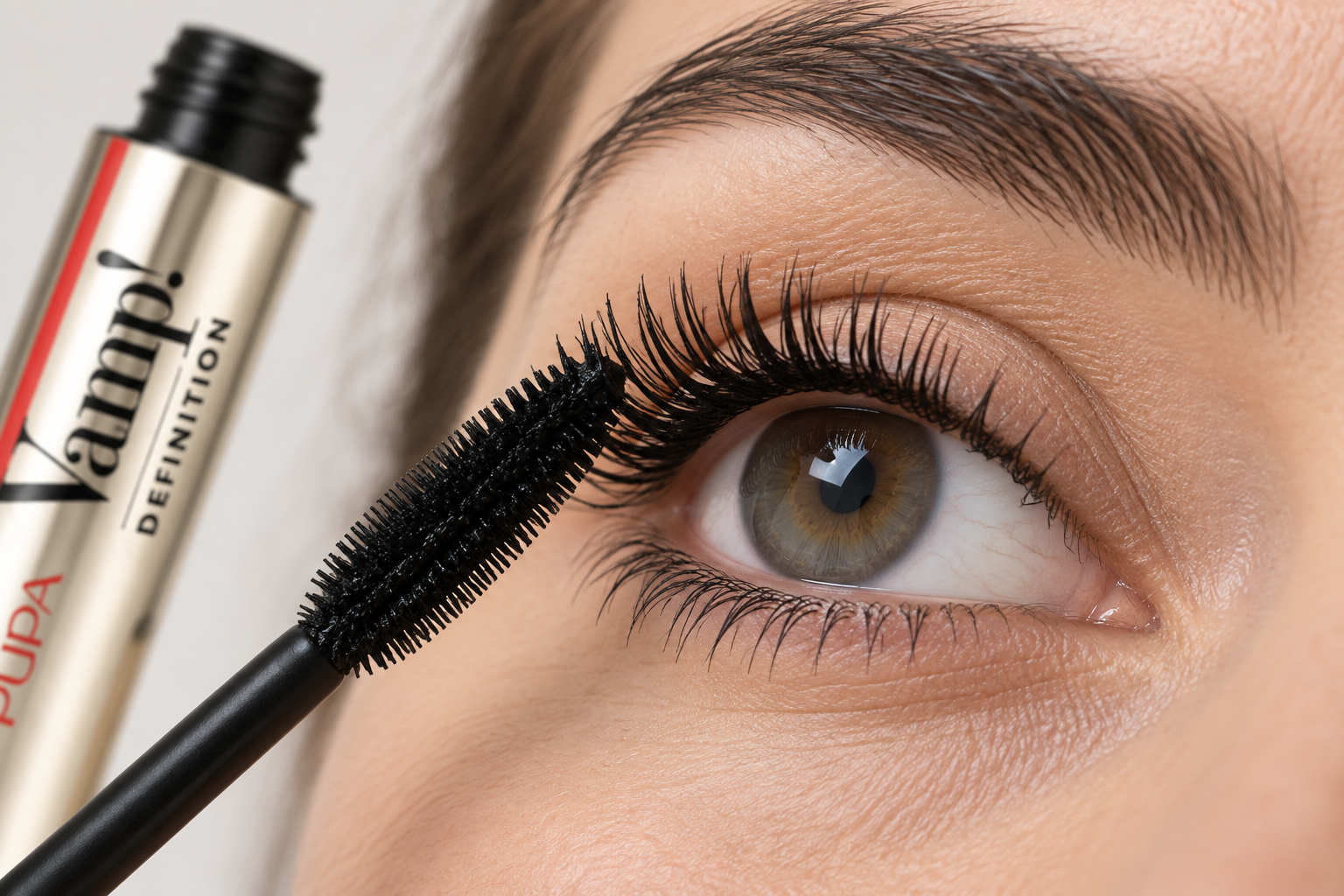
The brush determines how the mascara is applied to the lashes, while the formula decides what stays on them and for how long. Consider it as an additional factor: once you know the effect you're looking for and the brush that suits it, a well-chosen formula will enhance the result – and an unsuitable one can subtly weaken it.
- Classic Formula – a creamy texture that, depending on the composition, adds volume or length. It can be removed with a regular makeup remover and is suitable for everyday makeup.
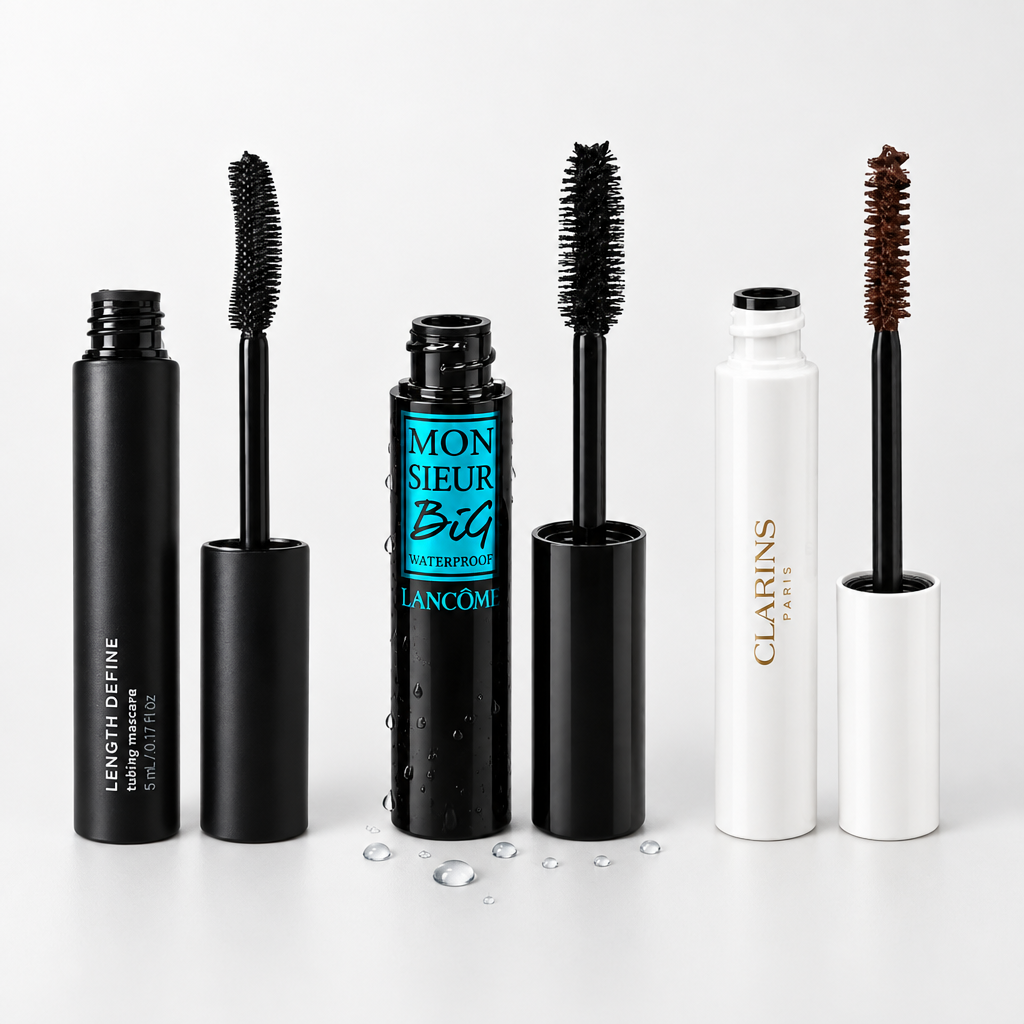
- Tubing Formula – coats each lash with a thin flexible "tube." The result looks natural, visually lengthens the lashes, and holds the curl well because it doesn't weigh them down. When removing, the tubes usually come off with warm water and slide off the lashes.
- Waterproof Formula – resists moisture, tears, and sweat, and holds the curl longer. It requires a two-phase remover for removal, so many women choose it more for sports, summer, or festive occasions rather than daily use.
- Formula with Nourishing and Serum Ingredients – manufacturers add ingredients to soften the lashes during wear and protect them from drying out. It doesn't replace a standalone lash serum, but it's a pleasant choice for fine and more sensitive lashes.
When the Formula Helps the Brush, When It Hurts
The formula and brush should work together. A typical example: you can curl straight lashes with curlers and a curved brush, but if you apply a heavy volumizing formula in several layers, its weight will pull them back down in a few hours. For straight and stubborn lashes, a lighter, waterproof, or tubing formula that maintains the curl is suitable. Conversely, for short and sparse lashes where you want volume, a richer formula and dense fiber brush complement each other. For long lashes, a dense texture can easily cause clumping – here, a thinner layer and a silicone brush that combs the lashes are worthwhile.
Comprehensive Overview: Lash Type, Effect, Brush, Formula
- Short Lashes – effect: lengthening; brush: thin silicone, tapered, or ball-shaped; formula: tubing or light lengthening.
- Sparse Lashes – effect: volume; brush: dense fiber, possibly hourglass-shaped; formula: classic volumizing.
- Straight Lashes – effect: curling; brush: curved; formula: light, waterproof, or tubing.
- Long Lashes – effect: definition; brush: silicone with short bristles, straight or fan-shaped; formula: classic in a thin layer.
- Fine and More Sensitive Lashes – effect: natural definition; brush: silicone; formula: with nourishing or serum ingredients.
Mascara Selection from Brasty by Effect
- Volume: Pupa Vamp! Volume, L'Oréal Paris Mega Volume Collagen, or L'Oréal Paris Panorama, which visually widens the lashes to the sides.
- Length: Maybelline Lash Sensational Sky High, or the tubing Maybelline Lash Sensational Sky Tubes.
- Curling: Sisley So Curl, specifically designed to lift and curl lashes.
- Fan Definition: Maybelline Lash Sensational Full Fan Effect.
- Customizable Effect: Bourjois Twist Up, where you can adjust the brush by twisting it to achieve either length or volume.
- Durability: Lancôme Hypnose Waterproof for days when you need a waterproof formula with volume.
You can view the selected mascaras in the product overview below.
Category
Recommended articles

"Give a girl the right shoes and she can conquer the world!" Marilyn Monroe