

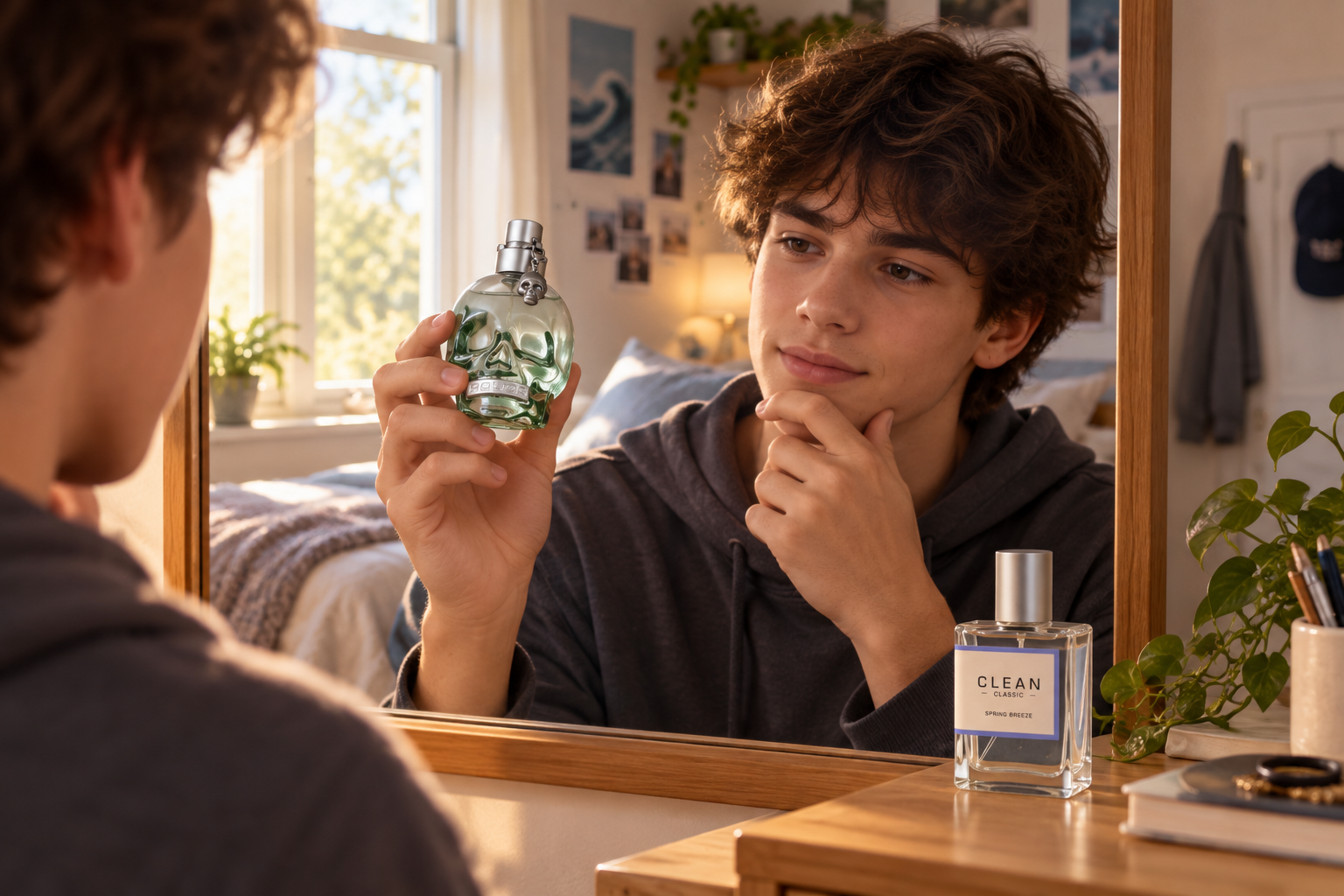
A decision-making guide for readers who are facing their first purchase and don't know what to look for. We'll guide them through four criteria – fragrance family, concentration, school intensity, and packaging size – to help them choose a perfume they'll truly enjoy.
The First Perfume: Why Choosing It Is Different from the Tenth
Whether you're selecting a perfume as a gift for your child or advising someone who wants to buy it for themselves for the first time, you're in a different situation than an adult customer with five bottles on their shelf. They already know what works on their skin, what starts to tire them after an hour of wear, and what they prefer to avoid. A teenager doesn't have this experience yet—and they can't gain it until they start wearing their first perfume regularly.
So, what do they base their decision on? Most often, two things: the bottle and their classmates. A package that looks mature and a scent worn by someone in their class are understandable guides—but they aren't enough for a first orientation. The design of the bottle says nothing about its contents, and a fragrance that suits one person may smell entirely different on another's skin. It's not about suppressing these impulses, but rather complementing them with a few practical criteria.
The first perfume has a different role than the fifth or tenth. You're not choosing an addition to a collection or a scent for one specific evening—you're looking for a perfume that a teenager can wear every day, at school, on the bus, and at practice. This implies three things. It should be wearable, meaning it can be worn just as well on a Monday morning as on a Friday afternoon. It should be considerate—in a classroom with twenty other people, a dominant fragrance is a complication even if it's beautiful on its own. And it should last long enough for its wearer to form a connection with it; a perfume that runs out in three weeks won't have the chance to say anything about its owner.
The entire selection is therefore based on four criteria, which we will discuss in detail:
- Fragrance Family – citrus, floral, woody, gourmand, or aromatic. It narrows down the selection quickly because it immediately removes entire groups of perfumes that don't suit the person.
- Concentration – eau de toilette, eau de parfum, or pure perfume. This determines how strong and how long the scent works on the skin.
- Intensity in a School Environment – how much fragrance is still considerate towards people in the same row and how to learn the right dosage.
- Size of the Bottle – for a first perfume, a smaller bottle is often a more sensible start than a large one, which the wearer may not yet have a connection with.
And one more note that applies across all four points: a perfume cannot be chosen based on description. The top notes you smell upon the first spray transform within half an hour, and only the base notes indicate what the wearer will live with all day. If possible, let the teenager choose with you, apply the fragrance on the skin, and give it time—even a few dozen minutes of waiting can save you from a bottle that ends up untouched in a drawer. Specific tips only make sense once these four criteria are clear.
Fragrance Family: The First Decision That Narrows Down Your Choices the Most
Perfumeries categorize compositions into fragrance families – groups that share a similar character of ingredients and overall impression. For an initial selection, this is the strongest filter you have at your disposal: once you know that a teenager prefers fresh citrus scents and is put off by a sweet, dense base, the selection narrows from thousands of bottles to a few dozen candidates. Everything else then becomes significantly easier to decide, as you are no longer looking for a perfume, but a specific type of perfume.
For starters, these families are usually the most understandable:
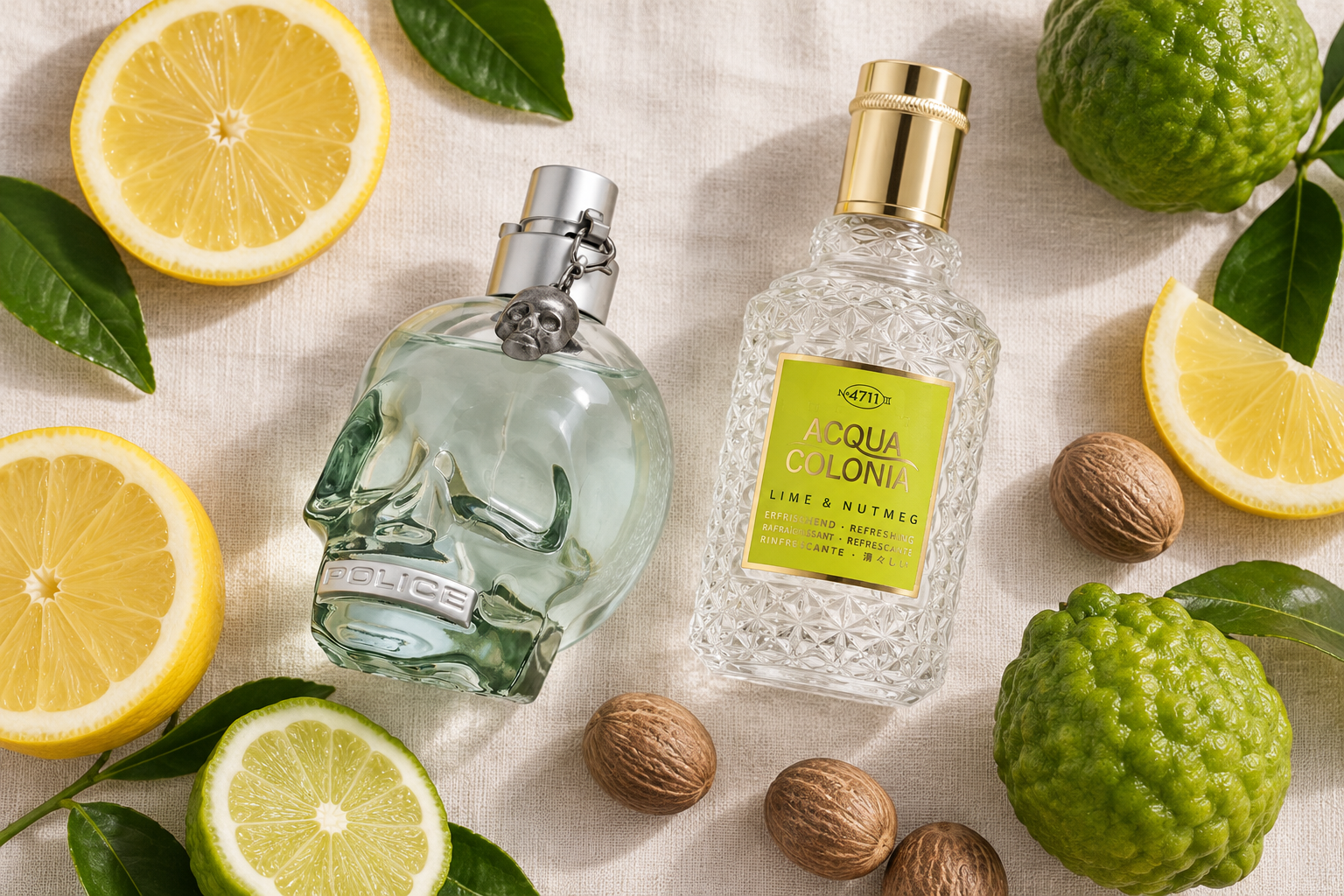
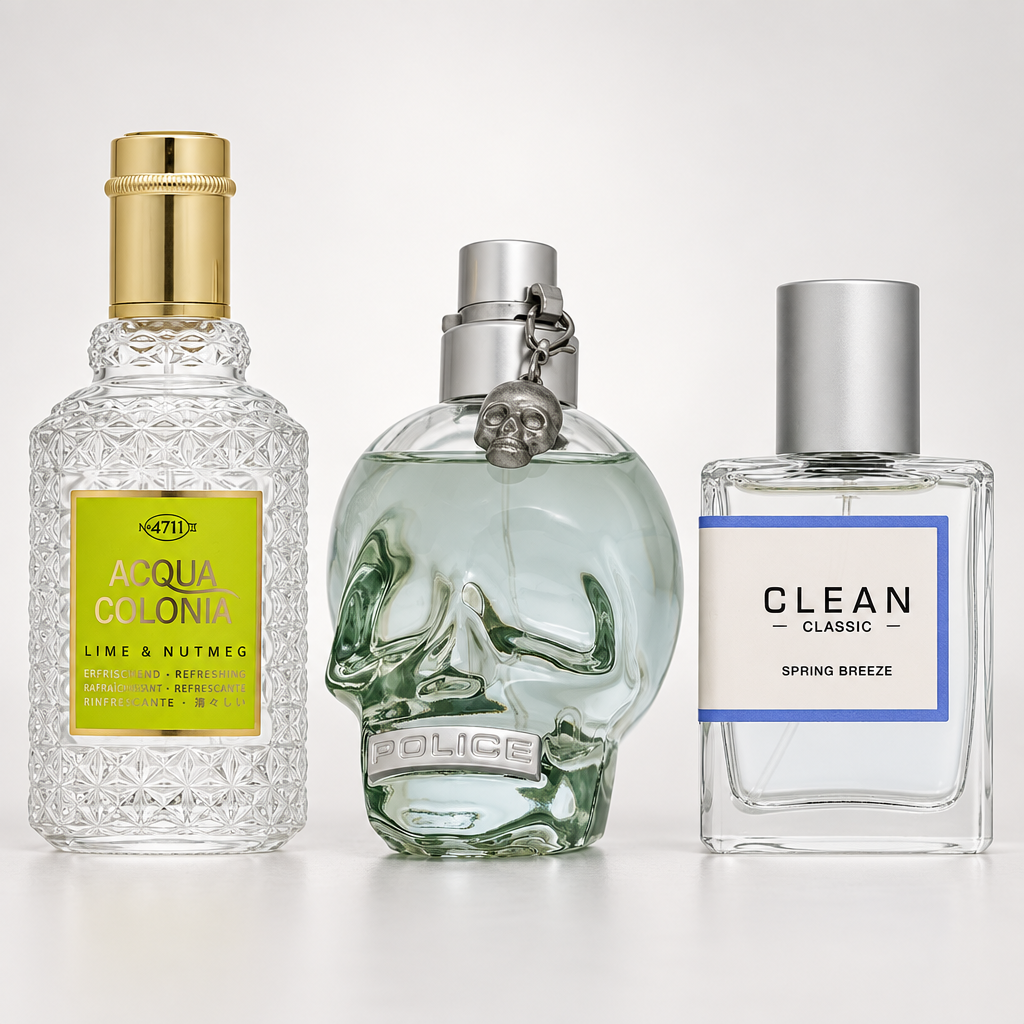
- Citrus – mandarin, orange, lemon, bergamot. A clear and fresh scent that is perceived by others more as "well-groomed" rather than as a perfume. It suits most beginners and rarely seems too mature. However, citrus notes fade from the skin faster than heavier ingredients, so the longevity is usually shorter.
- Aromatic – lavender, rosemary, mint, green herbs. A scent reminiscent of shower gels and shaving products, often making it the most acceptable first step. It feels clean and calm; however, if the composition is very classic (like a fougère type), it might come across as older.
- Floral – in a light form, orange blossom, peony, freesia, white flowers with musk. Rich rose, tuberose, or flowers underpinned by amber, on the other hand, appear significantly more mature and can be disappointing for a first perfume, even if they catch your attention in a tester.
- Gourmand – vanilla, tonka bean, caramel, cocoa. Popular among teenagers because it is pleasant and immediately understandable. Keep in mind that sweet notes intensify in warmth and last long on the skin – they are therefore more pronounced than they might seem after one spray in the store.
- Lighter Woody – cedar or sandalwood combined with citrus or white musk. A modern and universal direction that works year-round and doesn't pigeonhole the wearer. Smoky wood, oud, and leather bases are better left for later bottles; they seem unnecessarily serious for a first perfume.
You can estimate preferences even without a trip to the perfumery – from things the teenager already likes. A favorite fresh shower gel usually points to the citrus or aromatic family. Vanilla pastries, hot chocolate, and sweet sodas indicate a gourmand preference. A freshly cut orange or grapefruit is a textbook citrus trace. And if you hear that freshly laundered clothes smell the best, look for clean musk, light white flowers, or soft wood. Three to four such observations are enough to enter the selection with a clear hypothesis.
It's practical to know that some notes are widely represented across price levels – vanilla, tonka bean, mandarin, orange blossom, and lavender are among them. This means that when a fragrance family works out, you have plenty to choose from and can compare several compositions with the same base, rather than betting on just one bottle.
Finally, one thing that simplifies the selection even more: unisex perfumes are often more practical at this age than strict divisions into women's and men's. Taste changes faster at fifteen than at thirty-five, and unisex compositions – typically citrus, aromatic, or lightly woody – can accommodate both interpretations. Consider the categories For Women, For Men, and Unisex as navigation aids, not rules. If the scent fits and the teenager feels good in it, it's the right choice regardless of the section it originated from.
Eau de Toilette, Eau de Parfum, Pure Perfume – What Concentration Means
If you notice that a fragrance is available in two or three versions, it's not a mistake or a marketing trick. The difference lies in the concentration – that is, the proportion of the fragrance composition in the bottle compared to the alcohol base. Concentration determines how long the scent lasts on the skin, how strongly it projects, and the price range of the same name. Understanding this detail with your first perfume is worthwhile, as it affects more than just the choice of fragrance family.
You'll encounter four names in the offerings. We present them in full, as they are often abbreviated on packaging, which may not mean much to the uninitiated reader.
- Cologne – the lightest of the quartet. It's usually noticeable on the skin for only a few hours and acts more like a fresh refreshment after a shower than an all-day fragrance. It's among the most affordable, but with your first perfume, there's a risk it may fade before the end of the morning.
- Eau de Toilette – a classic middle ground and the most common choice in both men's and women's lines. It opens strongly, calms down after the first hour, and remains detectable on the skin for most of the day. Any inaccuracy in application is easily corrected, as the scent isn't strong enough to dominate an entire room.
- Eau de Parfum – denser and more long-lasting. The base notes hold distinctly longer, and the fragrance expands more into the space. It works well for a first perfume in two cases: when it's a lighter citrus or floral composition, or when you use it as an evening scent for special occasions.
- Pure Perfume – the most concentrated variant. The scent is rich, lasts the longest, and often remains on textiles. That's why it's usually not the best starting point – the scent left on a sweater or scarf can linger into the next day.
The price is straightforwardly related: the higher the concentration, the more expensive the same-sized bottle tends to be. However, a higher price level doesn't mean a better perfume – you're paying for more fragrance material in the content, not for a differently conceived composition. Eau de Toilette and Eau de Parfum from the same brand are not just "weaker" and "stronger" versions of the same thing; Eau de Parfum often emphasizes sweeter and woodier tones, while Eau de Toilette remains fresher. It's worth comparing both versions, not just choosing the more concentrated one.
For a first perfume, we recommend starting with Eau de Toilette or a lighter Eau de Parfum. Such a choice forgives dosing inaccuracies, which almost everyone experiences at first, and doesn't leave a trace that can only be removed by washing. At the same time, a young wearer can best verify whether the chosen type of fragrance suits them – and if it doesn't, it's not a disappointment with the most expensive option.
Concentration is not a mark of quality, but a style of wearing. Stronger isn't automatically better, just differently applied: pure perfume is for evenings and cooler months, Eau de Toilette for everyday use. When comparing two versions of the same name in the offerings, don't ask which one is better, but how long and in what situation you want to be noticed.
Intensity for School: How Much Fragrance is Considerate?
At home in the bathroom, a perfume behaves quite differently than in a classroom after the third lesson. School is a confined space with minimal ventilation, where twenty people move around in a small area, not to mention the locker room, crowded gym, and the bus or tram ride home. This is the criterion most often forgotten during the first purchase: it's not about how long the fragrance lasts, but how it behaves in a group. This determines whether the perfume will be worn every day or end up in a drawer after two weeks.
Application: Two Sprays are a Start, Not the Limit
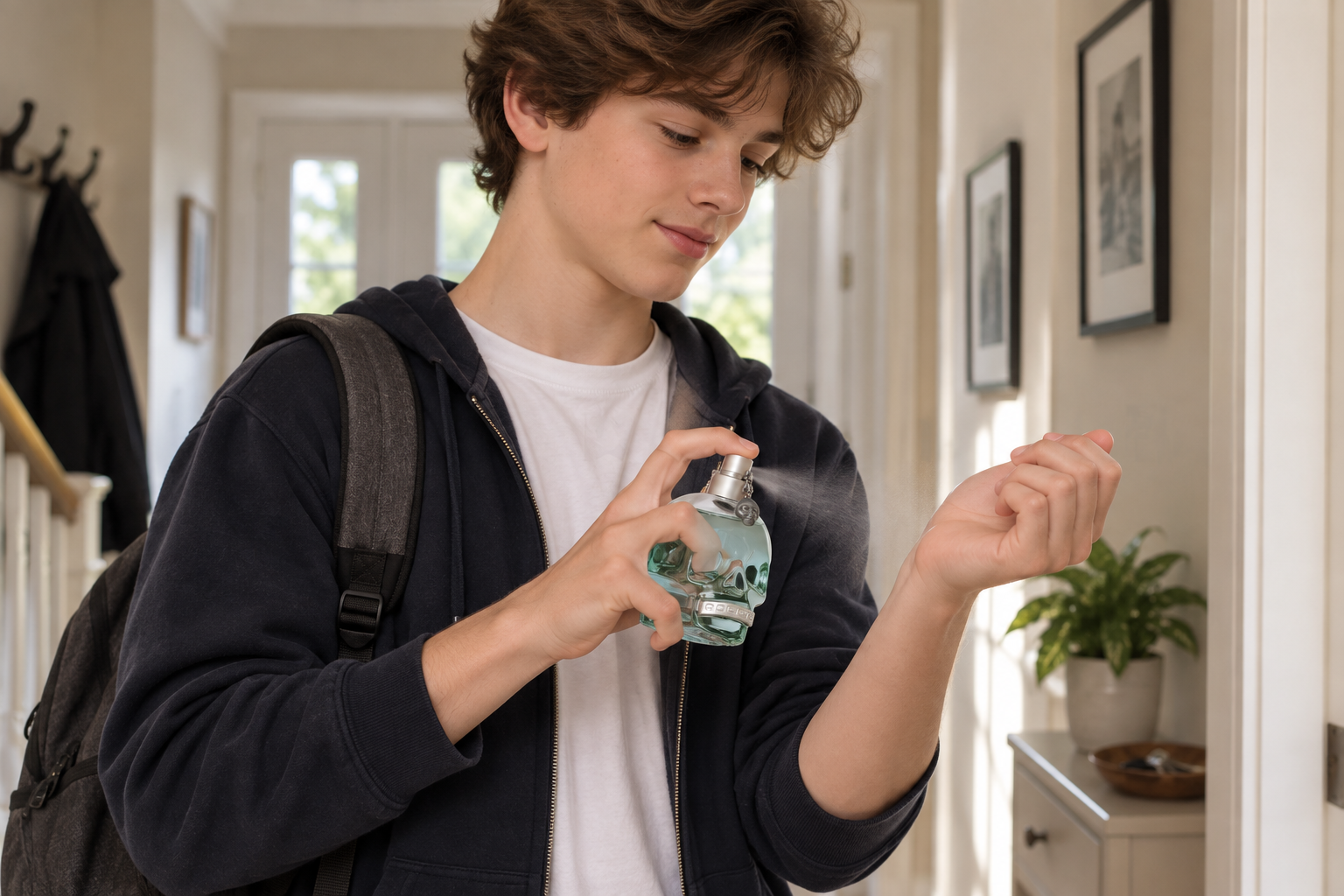
For a first perfume, we recommend starting with two sprays and adding more only if the scent really doesn't last until the afternoon. One spray on the chest under a t-shirt or shirt and one on the wrist is a reasonable base for a school day. Fabrics hold the fragrance longer and release it more slowly than warm skin, resulting in a milder and more stable effect.
Be cautious with warm spots. The neck, area behind the ears, and the bends of the elbows are warmer, causing the fragrance to develop faster and appear stronger than expected. This is an advantage for evening occasions, but not so much in a classroom setting.
Perfume should also not be rubbed into the skin. Rubbing accelerates the breakdown of top notes, causing the composition to open unevenly, leaving mainly a warm, sweeter base from a carefully crafted scent. Let the drops dry on their own and don't touch them until the fragrance settles.
The last thing that's easily overlooked: layering. Shower gel, body lotion, deodorant, and perfume from the same fragrance family stack on top of each other. Each product alone seems innocent, but together they create a trail that's hard to ignore in a classroom.
What Lasts All School Day and What Doesn't
For everyday wear among people, compositions that are more airy than dense are suitable. Simply put:
- For School: Citrus and aromatic fragrances with bergamot, mandarin, lavender, or orange blossom, light floral compositions, and fresh variants with cedar. They stay closer to the body and naturally fade after a few hours.
- More for Evening or Winter: Distinctly sweet gourmand fragrances with vanilla and caramel, oriental compositions with amber and spices, and heavy woody bases with sandalwood, patchouli, or tonka bean. They are designed to last long and be noticeable from a distance, which can be problematic in a closed classroom.
This doesn't mean a teenager can't buy a sweet or woody fragrance. It's about when they wear it. If the first perfume is also the only bottle in the room, it makes sense to choose a lighter variant and keep the stronger one as a second option, once it's clear which scents actually suit them.
A Simple Test Before Leaving Home
Your nose gets used to your own scent within minutes and stops noticing it. This is the main reason why the wearer thinks the perfume has faded, while others still smell it. This process helps:
- Apply the perfume and leave the room for two to three minutes.
- Return and assess the first impression upon entry. If the scent is noticeable in the room even two meters from the application spot, there were more sprays than needed.
- Ask someone at home if they can detect the scent from a normal conversation distance, about a step and a half away. This is a healthy measure for school.
- If you want to be sure, get feedback after the first half of the day. A fragrance that classmates comment on in the morning locker room is usually one spray stronger than necessary.
Consideration here is not a limitation, but a practical skill. Those who learn it with their first perfume will find that a well-measured fragrance appears more sophisticated than one that enters the classroom before its wearer does.
Package Size: Why a Smaller Bottle Might Be a Smarter Start
The last criterion is the least romantic yet the most practical. Your first perfume isn't a three-year investment, but a trial – only through daily wear will you discover if the scent suits your personality, schedule, and how it's perceived by others. A large bottle makes this trial more expensive and unnecessarily binding: if the fragrance stops being worn after a month, you'll be left with an almost full bottle that no one will finish. And since tastes change quickly between the ages of fifteen and eighteen, the likelihood of this scenario is higher than for an adult who already knows their olfactory preferences.
Therefore, a smaller volume is a sensible starting choice for a first perfume. A 30ml bottle lasts for several months of daily use with reasonable application, so it's not "single-use," and yet it can be set aside and replaced without guilt once the fragrance has been fully explored. It also frees up the budget: for the price of one large bottle, a teenager can try two smaller ones and then decide which one deserves the full size.
There are various formats to test your first choice, each playing a different role:
- Sample Spray – a few milliliters transferred into a small bottle. Ideal for a few days of wear to see how the fragrance reacts on your skin and how long it lasts. It's not a full-sized package, but it works well as a "test before the test."
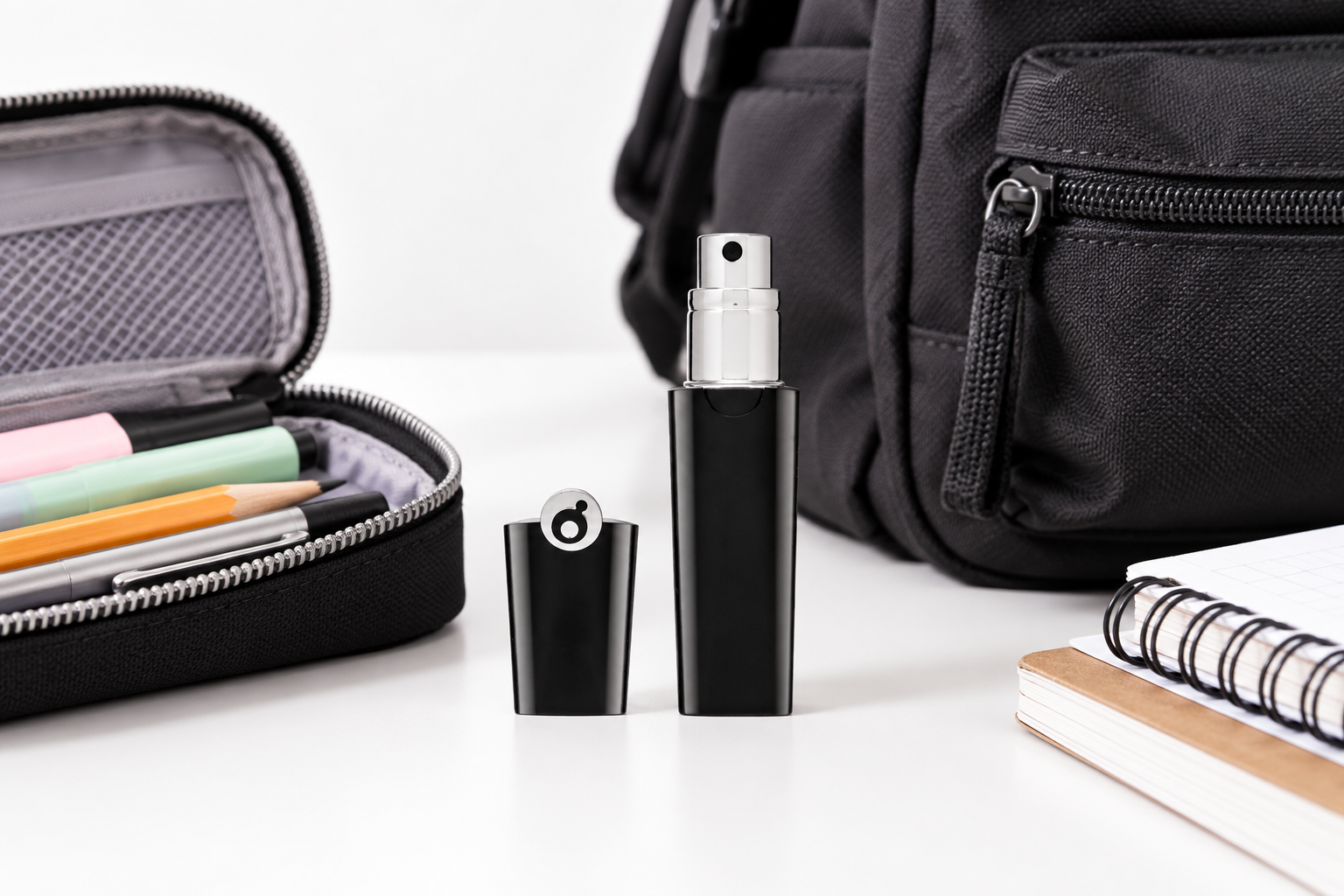
- Travel Size with Atomizer – a small volume in a durable container with a spray, suitable for carrying in a pocket or the front pocket of a school bag. It's handy when a teenager wants to refresh their scent in the afternoon after gym class without carrying a large glass bottle.
- Full Size – makes sense when the decision is made: the fragrance has been worn for several weeks, it's well-received by others, and no one is overwhelmed by it. In this case, a larger bottle is indeed more economical, as the price-to-quantity ratio is usually better for larger volumes.
Whether a perfume will actually be used up also depends on details that are easily overlooked in product descriptions. A quality spray disperses the fragrance into a fine mist – this allows for better control over application than bottles that squirt the scent in a continuous stream, which can easily lead to over-application. The shape is also important: square and robust bottles survive a school bag better than tall, slender flacons with decorative caps, which can quickly get scratched or have their caps loosened in a compartment with textbooks.
The last practical note is storage. Perfume doesn't like light, heat, or temperature fluctuations, so a windowsill above a radiator or a shelf in a parked car isn't ideal – the composition loses freshness faster there, especially with citrus and light floral scents. A cooler, dark, and dry place in the room is a better choice, and with a smaller bottle that gets used up within a season, this problem solves itself.
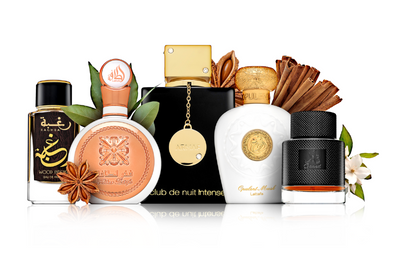
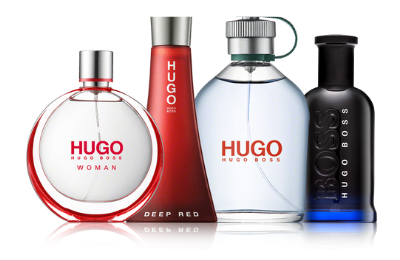
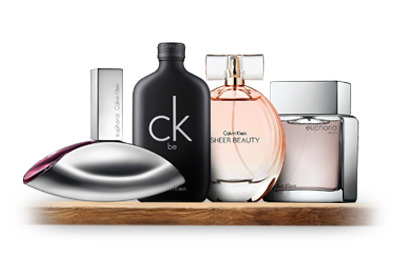
When browsing our selection, start with the Unisex category – this is where you'll find the most lightweight and universally wearable perfumes, suitable for a first choice. A suitable start can be found in both price ranges: among more affordable brands like Lattafa, Zimaya, Riiffs, or French Avenue, which offer distinctive scents without a big investment, and among classic perfume houses like Hugo Boss, Calvin Klein, or Dolce & Gabbana, whose fresh eau de toilettes have been tried and tested as first perfumes for years. In both cases, it's worth filtering by volume and starting with the smallest available.
Category
Recommended articles

"Give a girl the right shoes and she can conquer the world!" Marilyn Monroe