




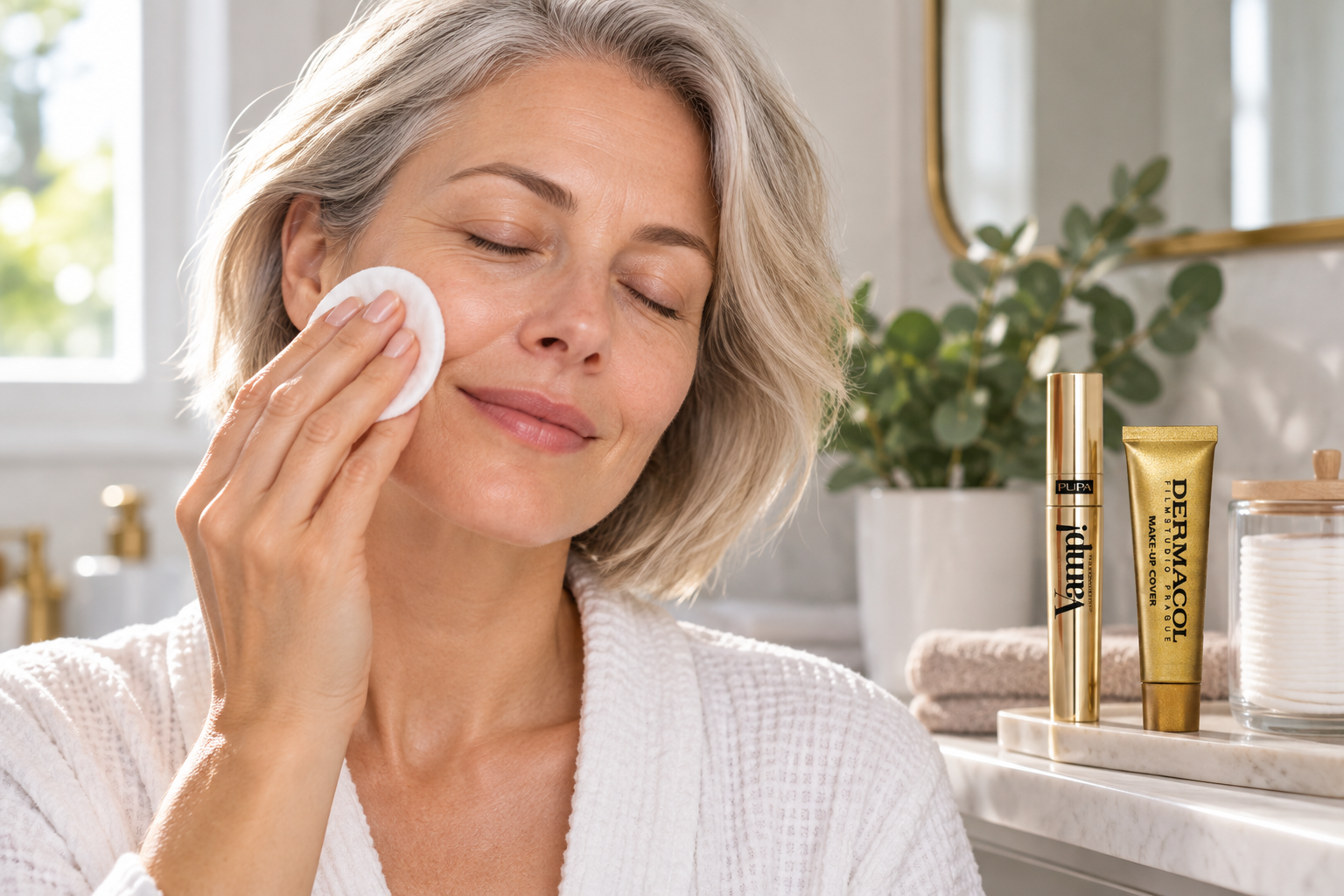
Does your skin feel tight, shiny, or show inflamed pores after removing makeup? Most of these issues aren't caused by the makeup itself, but by how you remove it. We'll advise you on how to cleanse oily, dry, and sensitive skin so it stays calm.
Why Your Skin Feels Tight or Shiny After Cleansing
You've probably experienced this: you rinse your face, dry it with a towel, and soon after, your skin starts to feel uncomfortably tight. Or the opposite happens – in the evening, you feel like your skin is finally clean, but within a couple of hours, your forehead and nose are shiny again. And then there's the redness and inflamed pores that appear exactly where your makeup was during the day. All three situations have one thing in common: it's usually not the makeup itself, but the way you remove it.
Tight skin is often mistaken as a sign of perfect cleanliness. In reality, it's more of a signal that more was removed from the skin's surface than necessary. The skin has a thin film of water and lipids that helps retain moisture. When disrupted by hot water, strong cleansing agents, or excessive scrubbing, the skin reacts defensively – and you feel it as tightness, pulling at the corners, or a brief burning sensation after applying cream.
Shine that returns sooner than expected has a similar cause. Overzealous cleansing leaves the skin unbalanced, prompting the sebaceous glands to compensate for the missing lipids. The other possibility is the opposite: the cleanser remains on the face. Imperfectly rinsed oil or remnants of waterproof mascara create a film that behaves like grease under light, even though it has nothing to do with your natural oils.
Inflamed pores and redness are often due to mechanical factors. Pressure on the cleansing pad, prolonged circular motions in one spot, a rough terry towel – all these irritate the skin more than the pigments in makeup. Additionally, if cleansing is rushed, some impurities are merely spread across the face instead of being removed.
It's worth paying attention to four factors that influence the outcome more than the brand of product itself:
- The texture of the cleanser – how well it dissolves makeup and how much it degreases in the process.
- The temperature of the water – hot water accelerates moisture loss from the skin.
- Pressure and pace – cleansing is about dissolving, not polishing.
- The number of steps – one step is sometimes not enough, three are often unnecessary.
And this is where you'll find the main reason why a one-size-fits-all guide doesn't work. Oily skin needs cleansing that reliably dissolves makeup and excess oil without triggering a defensive reaction. Dry skin appreciates a texture that leaves with the makeup and leaves a protective layer on the skin. Sensitive skin reacts more to the pace and amount of friction than to the strength of the product – tolerance can vary from day to day. Three different needs, three different approaches: in the following chapters, we'll go through them step by step, including how to recognize if your current routine isn't working for you.
Micellar Water, Oil Texture, Two-Phase Makeup Remover
You don't choose a makeup remover based on its scent or the shape of the bottle, but on what it needs to dissolve. Light daily makeup, full coverage set with spray, and waterproof mascara are three different challenges, each suited to a different texture. It's worth knowing why one product removes makeup in one go while another just smears it around your face.
Micellar Water: Quick Choice for Daily Makeup
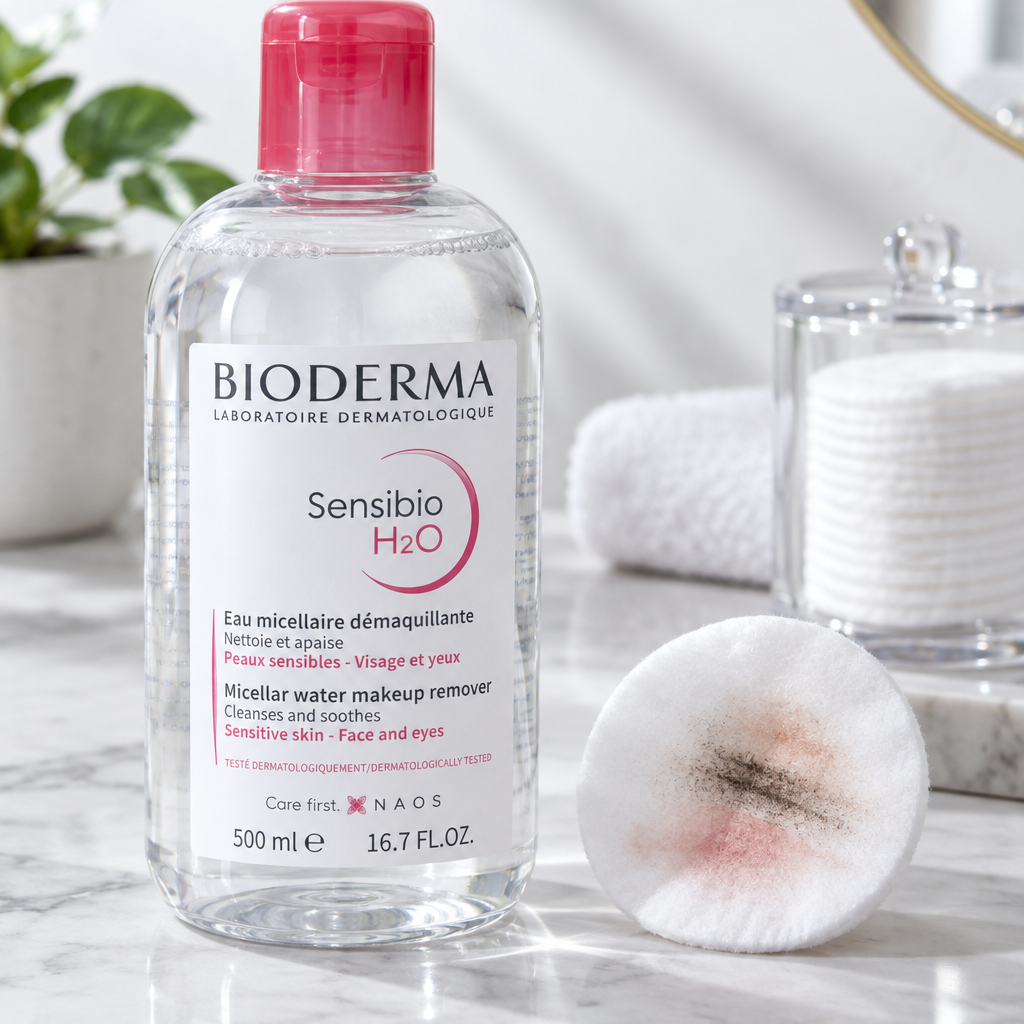
Micellar water looks like ordinary clear liquid, but it contains dispersed micelles – tiny clusters of surfactants. Their outer side loves water, while the inside loves oil, so they bind to sebum, sweat, and pigment and can be wiped away. That's why it handles light makeup, BB cream, powder, blush, regular mascara, or eyeliner.
Its limits are where makeup relies on oils, waxes, and silicones. Long-lasting coverage makeup, contouring products, and especially setting spray are designed to resist water – and micellar water is water. If you find yourself scrubbing your face with a cotton pad, the problem is usually not your technique, but the chosen texture. Instead, hold the pad on your skin for a moment and let the product work.
Oil Texture: When Makeup Lasts All Day
Cleansing oils and balms work on a simple principle – like dissolves like. Oil binds to the oily component of makeup, loosens it, and carries it away. It can handle makeup that needs to last from morning to night, contouring, cream blushes, and a layer of setting spray on top.
The key is the process, which beginners often struggle with:
- Apply the product to dry skin and dry hands – water would dilute the oil beforehand.
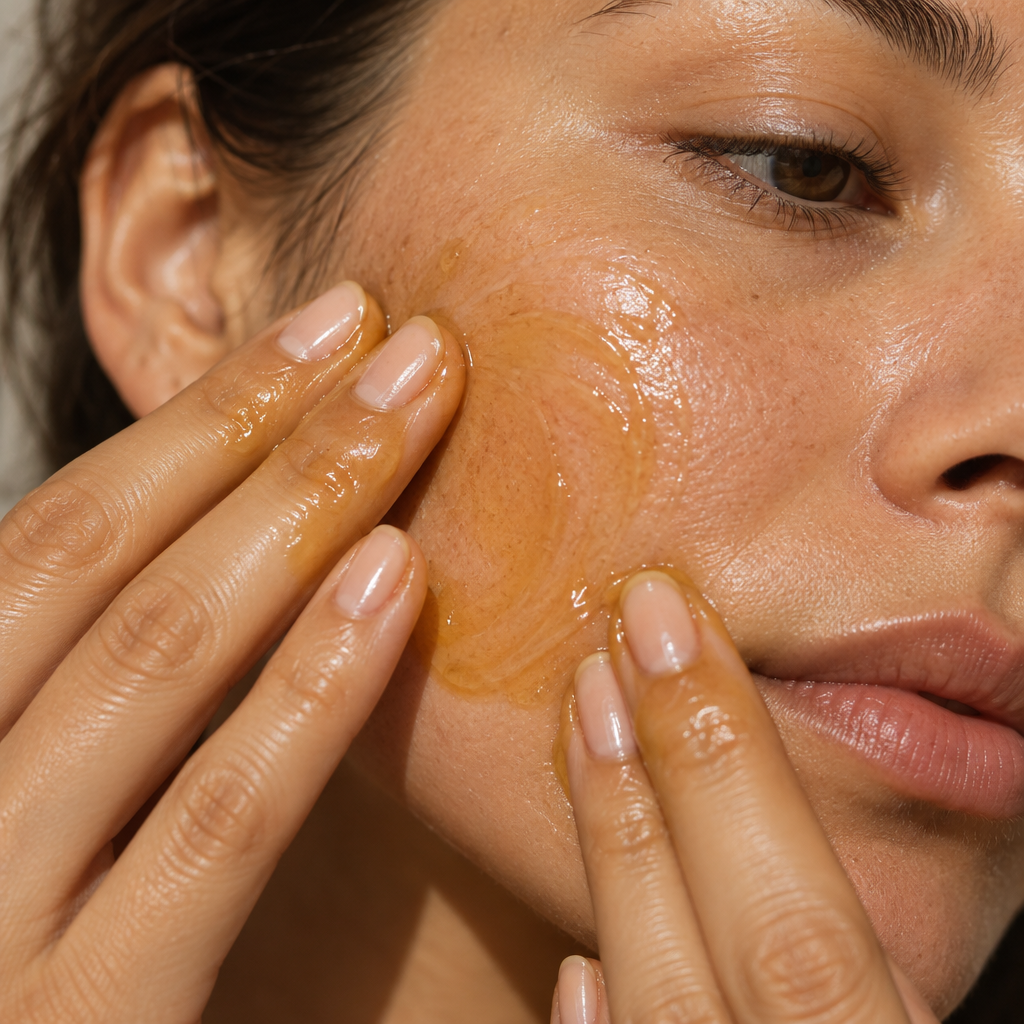
- Massage it in circular motions all over your face, for about a minute.
- Only then add a little lukewarm water. The emulsifying oil or balm will turn into a white milky emulsion.
- Rinse off and finish cleansing with a gentle cleansing gel or foam.
The last step is often why oil doesn't "sit well" with someone. If left on the skin, it leaves a greasy film and a feeling of residue. Oil is not the final wash, but the first phase – the dissolver.
Two-Phase Makeup Remover: Solution for Waterproof Mascaras
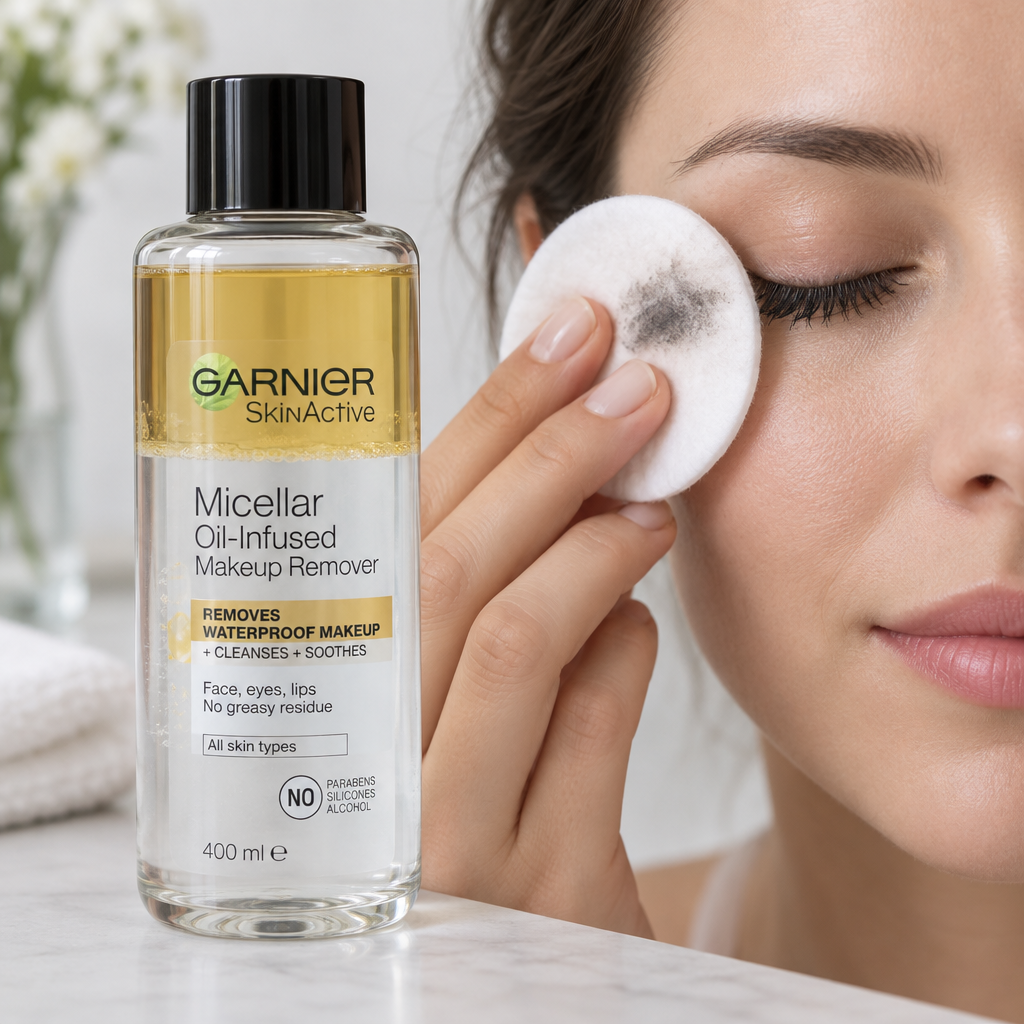
You can recognize a two-phase makeup remover by the two layers in the bottle that don't mix on their own. The bottom aqueous part washes away what is water-soluble, while the top oily part breaks down the waxy film of waterproof mascara and waterproof eyeliner. Shake the bottle briefly before use.
It's most suitable for the eye area because it dissolves effectively without requiring rubbing. Place a dampened cotton pad on the closed eye, wait fifteen to twenty seconds, and then gently wipe it downwards, in the direction of lash growth. Waterproof mascara, on the other hand, usually ends up as smudged pigment under the lower lid when using only micellar water.
How to Choose Between Them
You don't need to have all three at home. Usually, it's enough to choose a texture based on how intensely you wear makeup:
- Light daily makeup – micellar water or cleansing milk.
- Full coverage, contouring, setting spray – oil texture or balm, always with additional cleansing.
- Waterproof mascara and eyeliner – two-phase remover for the eye area, the rest of the face as needed.
In practice, the most common combination is a duo: two-phase product for the eyes and micellar water or oil for the rest of the face. Which texture suits you best doesn't just depend on makeup – it also depends on how your skin reacts to surfactants and oils.
Oily Skin: Cleansing Without Shine and Clogged Pores
Oily and combination skin has a slightly different starting point in the evening compared to other types. Throughout the day, not only makeup, sunscreen, and street impurities accumulate, but also the skin's own oils, which combine with cosmetics into a layer that regular water can't wash away. That's why the biggest concern for this skin type is clogged pores in the T-zone and shine that returns before you even get to bed. The goal of evening cleansing isn't to dry out the skin. It's to achieve clean skin that doesn't feel tight, allowing you to apply your night care routine comfortably.
The most common mistake with oily skin is reaching for the strongest product. A solid soap or harsh degreasing gel might leave a squeaky clean feeling, but that sensation is misleading. Skin stripped of all its natural film often retaliates by producing oil faster – and by the end of the day, you're looking at an even shinier reflection in the mirror. It's wiser to take a gentler approach and focus more on consistency than on the strength of the product.
In practice, this means dividing cleansing into two calm steps. First, use a lighter texture to dissolve and remove makeup, mascara, and sunscreen. Then gently wash your face – with a foam or gel for oily skin, using lukewarm, not hot, water. The second step is crucial for oily skin: it removes any leftover cleanser and dissolved oils that would otherwise remain on the skin overnight. It also doesn't require any scrubbing, so you don't have to worry about irritation.
Small details that are easy to overlook also contribute significantly to the result:
- Clean tools. Brushes and sponges carry remnants of products and oils from previous days. If you don't wash them regularly, you're spreading their contents back onto your skin in the morning – and evening cleansing can't make up for it.
- Fresh cotton pad. Once a cleansing pad is dirty, it stops cleaning and starts spreading makeup. With oily skin, it's better to reach for another one rather than using one pad for the whole face.
- Entire surface, not just the center of the face. Makeup clings to areas you might not see: along the hairline, on the temples, under the jawline, and on the neck. These are often spots where clogged pores appear.
- Gentle pressure. Place the pad, let it sit for a few seconds, and then pull. Scrubbing off makeup means irritated skin, not cleaner skin.
Long-lasting coverage makeup is a category of its own. They're designed to last all day and resist friction and moisture – and that's why a single swipe with micellar water won't remove them completely. You'll notice: the pad looks almost clean, but after washing, the skin still feels matte and unpleasantly clogged. Equally resilient are setting sprays, waterproof mascaras, and long-lasting lipsticks. For this category, it's worth allowing more time for cleansing, giving the product time, and never skipping the final wash.
Once you get used to this routine, it will take a minute or two longer in the evening than before. In return, your skin won't feel tight or shiny before you leave the house in the morning – and the care you apply will reach where it needs to.
Dry and Sensitive Skin: Gentle Care Over Scrubbing
Dry and sensitive skin are not the same, but when it comes to cleansing, they share one common factor: mechanical friction is their worst enemy. Dry skin has a weakened lipid barrier, so it loses moisture quickly after washing and often feels tight. Sensitive skin can be combination skin, but it reacts to stimuli – fragrances, high alcohol content in products, rough pads, or hot water. For both, it's not about how much product you use, but how you touch your skin.
Dry Skin: Texture Matters More Than Steps
Micellar water is convenient and quick, but there are significant differences between products. Some contain higher alcohol content or strong fragrances, and dry skin can detect these within minutes: they leave a tight feeling, and makeup is harder to remove, so you end up pressing the pad harder than you'd like. Oil and balm textures work differently – they dissolve makeup with oils, not friction, leaving some of the oily components on the surface.
The practical approach looks something like this: apply oil or balm to dry skin with dry hands, massage in circular motions for about half a minute, and only then add water. The product emulsifies into a milky consistency and washes away even the buildup around the nostrils. Subsequent washing can then be short and gentle – its purpose is to remove oil residue, not to cleanse the skin from scratch.
- Cleanse with lukewarm water, not hot; hot water dissolves even the oils you want to leave on the skin.
- Pat dry with a towel, don't rub. The difference is noticeable, especially on the cheeks and around the mouth.
- Apply moisturizing care to slightly damp skin, not after twenty minutes.
Sensitive Skin: Let the Cleanser Do the Work for You
For sensitive skin, the eye area is crucial because the skin is thinnest here and reacts first. The most common mistake is impatience: the pad is applied and immediately moved back and forth. Instead, simply place a dampened pad on the closed eye, let it sit for fifteen to twenty seconds, and then swipe outward in one motion. A two-phase cleanser or oil texture will dissolve even waterproof mascara, so you don't have to keep going back. If a dark shadow remains under the lower lid, use a cotton swab instead of rubbing the entire area again.
The same principle helps with the rest of the face: apply, wait a moment, then remove. It's also wise to limit the number of products in one routine. The fewer ingredients your skin encounters in the evening, the easier it is to identify what doesn't suit it. Therefore, try a new product on its own for a few days.
How to Tell If the Method Isn't Right
A brief feeling of freshness after cleansing is fine. The following signals suggest that the chosen method is too harsh for your skin:
- Tightness that doesn't subside even several minutes after rinsing and only eases after applying cream.
- Redness or warmth in areas you've touched the most – typically around the nose and on the eyelids.
- Stinging in the eyes or blurred vision after cleansing the eye area.
- Flakes and rough patches that appear after several days of the same routine, not the first evening.
- The feeling that you have to press harder than before for anything to come off.
If any of these persist, try changing your technique first, then the product: less pressure, lukewarm water, longer exposure time, and softer pads. Often, that's enough. If problems persist or worsen after several weeks, it's advisable to consult a dermatologist.
How to Tell If Your Skin Isn't Fully Clean After Makeup Removal
Makeup removal is one of those skincare steps where we often convince ourselves we've done enough. You put down the cotton pad, your skin looks matte, and you feel like it's done. However, the true state often reveals itself later – in the morning on your pillow or when you run your fingers over your face after washing. The following signals will help you recognize that makeup is still lingering on your skin without having to apply more pressure.
Signals Worth Noticing
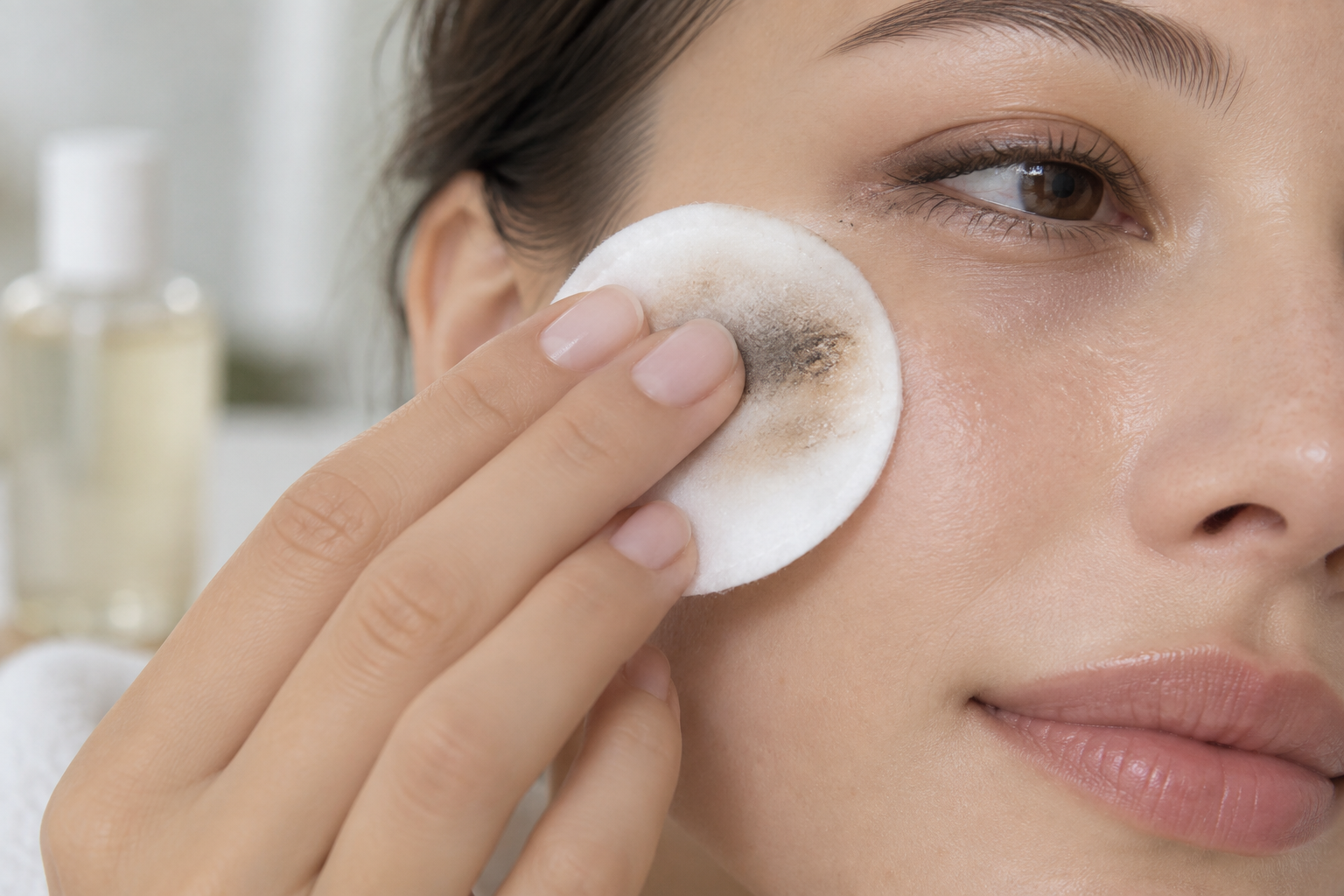
- Residue on the second cotton pad. If you use a clean cotton pad after the first makeup removal and it shows a beige, brown, or grayish mark, the layer of makeup has spread over your skin rather than being removed.
- Feeling of a thin film. The skin isn't tight or shiny, just feels coated. Fingers don't glide smoothly over it, and the cream applied afterward absorbs more slowly than usual.
- Small bumps around the nose. The sides of the nose, lines around the mouth, hairline, and the jawline to neck transition are often missed during makeup removal. If bumps appear here repeatedly and not elsewhere, it's usually leftover foundation, not your skin type.
- Smudged mascara upon waking. Dark shadows under the lower lashes in the morning mean that only the surface layer of mascara was removed, and the rest transferred to your skin and bedding overnight.
- Redness after makeup removal. Irritated eye areas or flushed cheeks aren't proof of thoroughness. They usually indicate that the makeup remover didn't dissolve the makeup, and you compensated by rubbing.
Quick Check That Takes Half a Minute
After makeup removal, let your skin rest for a moment, then take a new, damp cotton pad. Swipe it over three often-forgotten areas: the sides of the nose, the line just below the lower lashes, and the transition between the jaw and neck. If the pad remains clean, the makeup removal was sufficient, and another round would only unnecessarily burden the skin. If color appears, don't repeat the same motion with more force – instead, return to the first step and let the makeup remover work a bit longer before wiping.
The purpose of this check isn't to scrub your skin until it squeaks. The feeling of thoroughly washed skin is usually a warning sign: it means you've removed not only makeup but also the protective layer that your skin needs to rebuild overnight. The goal is to calm the skin – smooth, supple, without color residues, and without tension.
What You Apply Determines How You'll Remove Makeup
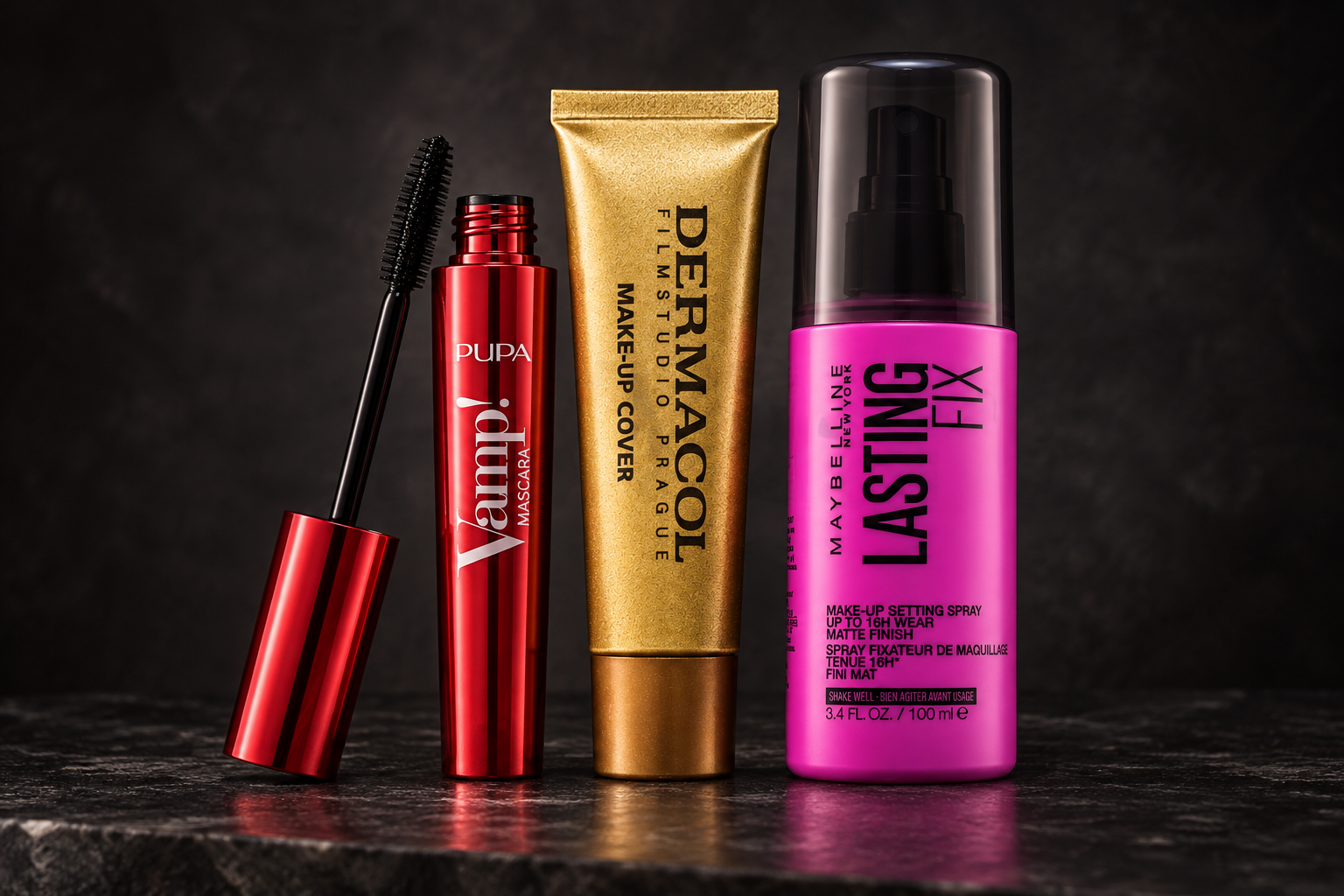
The difficulty of makeup removal depends on what you're wearing. Waterproof mascaras are designed to withstand moisture and tears – for types like those from brands such as Maybelline, L'Oréal Paris, or Lancôme, expect longer makeup remover application and movement from roots to tips, not circular rubbing on the eyelid. Similarly, long-lasting foundations like those from Dermacol or Max Factor require more time than a light BB cream, which often comes off in the first step. A routine set for the bare minimum may not suffice on days when you opt for a full coverage layer and waterproof mascara.
Clean Tools for Calm Skin
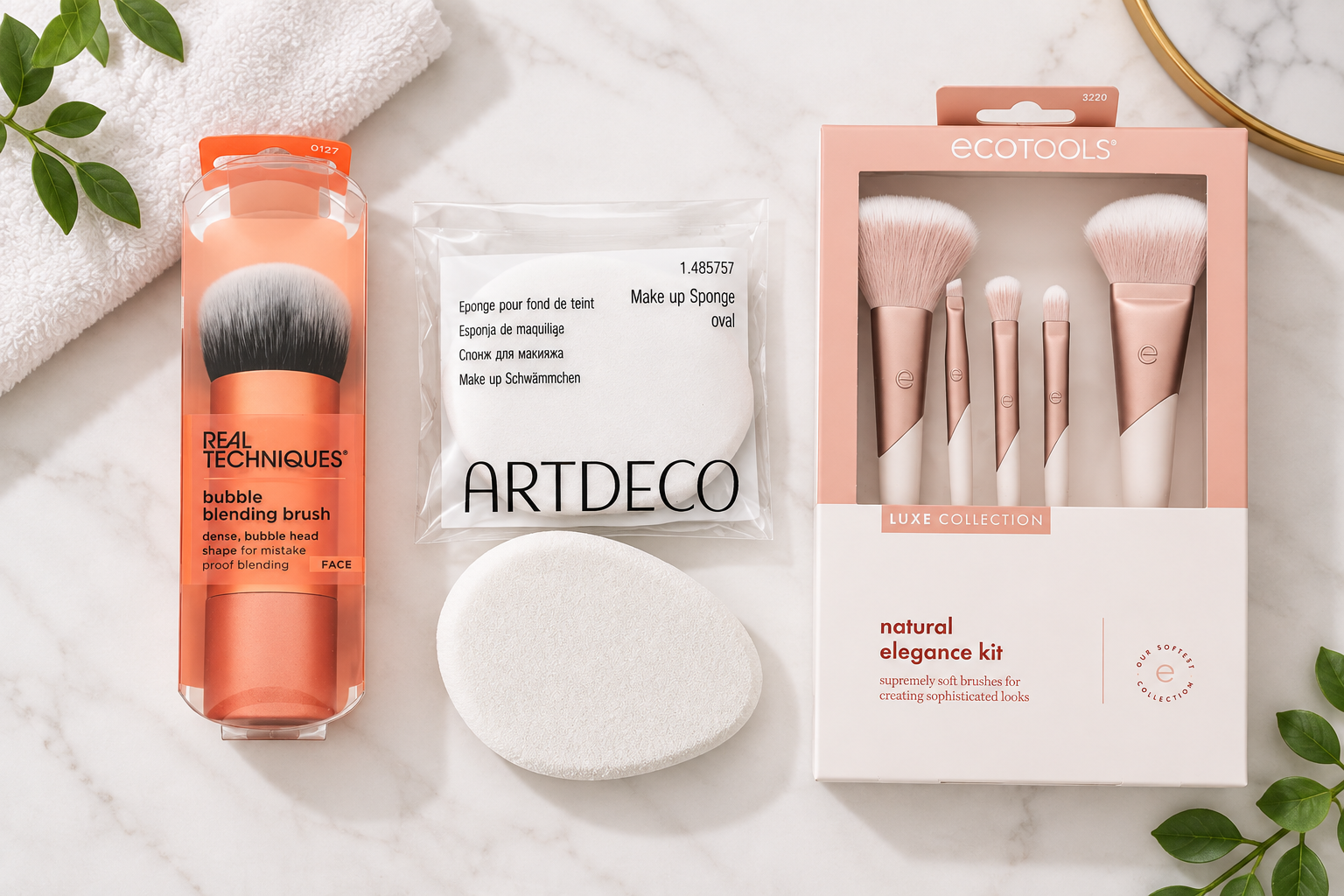
The last place where makeup residues linger the longest isn't your face, but your brushes and sponges. A tool full of old product layers returns exactly what you've removed to freshly cleansed skin and applies makeup less effectively. Therefore, regularly wash makeup brushes and sponges from Brasty's range with lukewarm water and a gentle cleanser, dry them flat, and never store them damp in a closed makeup bag.
In summary: you recognize clean skin after makeup removal not by how much effort you put in, but by what you leave behind – an empty cotton pad, calm skin without tension, and no residue around the eyes in the morning.

Category
Recommended articles

"Give a girl the right shoes and she can conquer the world!" Marilyn Monroe