
 Riiffs Freeze in Flames: Ice and Flames Illuminate Warsaw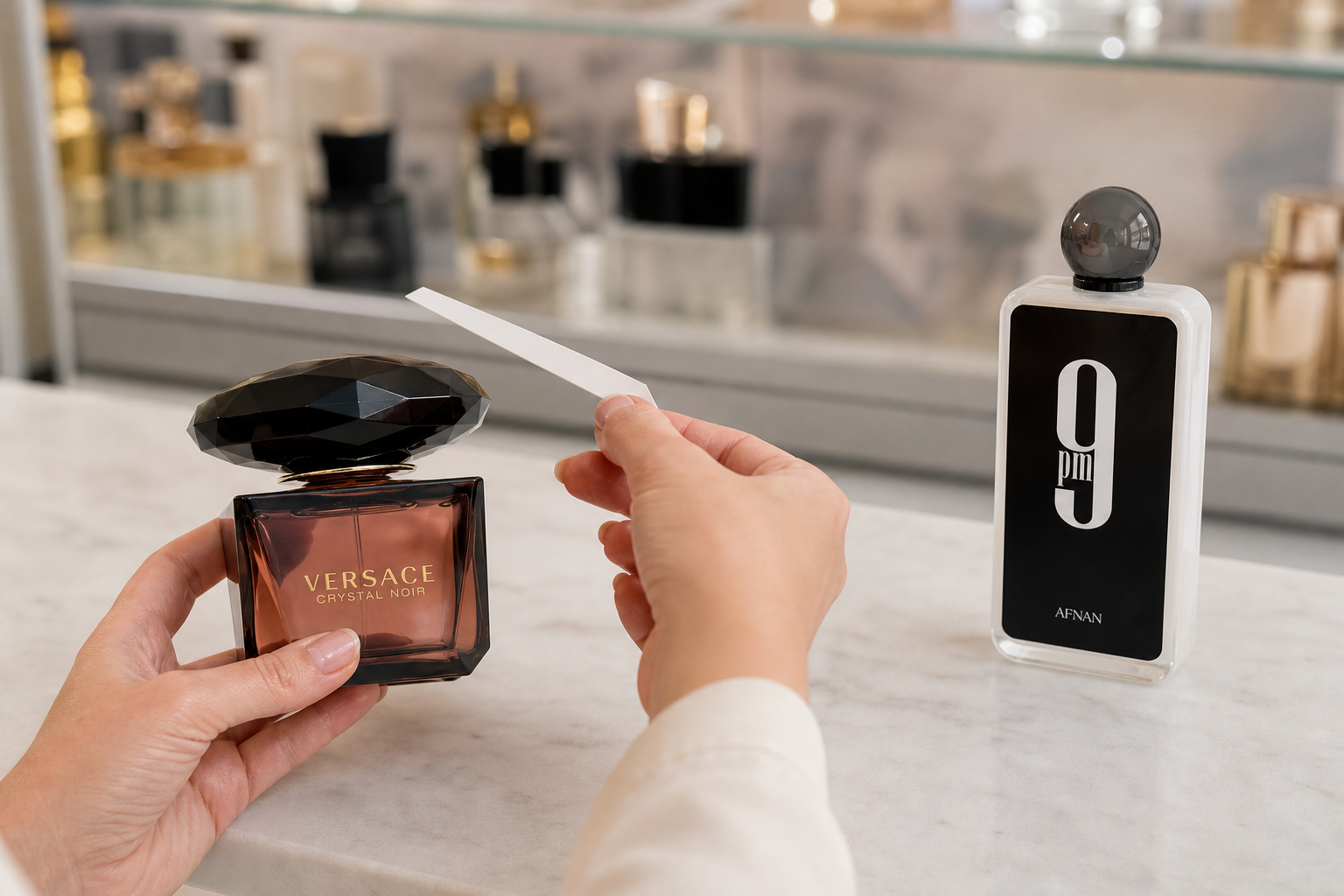
A perfume that enchants you at the store shelf might disappoint at home. We'll guide you on how to test a fragrance on a strip and on your skin, how to try it at home, and why the same composition smells different on each person.
Why the First Whiff Can Be Deceptive and What Happens After Application
You know the drill. You press the spray, bring your wrist to your nose, and within seconds, you've decided: this perfume is for me, or definitely not. But at this moment, you have no chance of truly understanding what you're dealing with. What the first whiff brings you is largely the carrier in which the fragrance ingredients are dissolved, plus the most volatile layer of the composition. The true character of the perfume is only just preparing to take the stage.
Alcohol evaporates first, and its scent feels sharp and cool. This lasts briefly, from a few seconds to two minutes, and only then do you start to perceive the actual fragrance. If you make a judgment too soon, you're essentially evaluating the packaging, not the content. Similarly, a fragrance applied to the skin behaves differently immediately after spraying and again after an hour – and the difference between these two states is often greater than one might expect.
How the Composition Gradually Unfolds
Most perfumes are layered, with each level emerging gradually, depending on how quickly the ingredients evaporate. Traditionally, they are described in three levels:
- Top Notes – what you smell in the first few minutes. These are usually light and fresh ingredients like citrus, aromatic herbs, or sparkling spices. They are noticeable but disappear the quickest, usually within fifteen minutes.
- Middle Notes or Heart – the core of the composition, which develops from about the tenth to the fifteenth minute. This includes floral, fruity, or spicy elements that give the perfume its character and hold it for several more hours.
- Base Notes – the heaviest and most enduring layer. Woody ingredients, musk, amber, vanilla, or tonka bean come in slowly and create the trail that remains on your scarf or sweater by evening.
The transition between layers is not abrupt. The composition intertwines, and what sounds like fruity lightness in the tenth minute can be a warm woody scent by the sixtieth minute. In fresh citrus compositions, the entire development happens relatively quickly. In oriental, gourmand, or distinctly woody perfumes, the final form may not reveal itself until several hours later, as heavy ingredients need time and the warmth of the skin to unfold.
When to Evaluate a Fragrance
Instead of making a quick judgment, divide your evaluation into three moments. Simply return to your wrist three times and ask yourself the same question each time: do I like what I smell now?
- After five to ten minutes. The alcohol is gone, and the top notes are fading. Here you'll discover if the fragrance even catches your interest, but keep your conclusions to yourself for now.
- After half an hour to an hour. The key check. The heart of the composition is fully developed, and you hear the perfume as your surroundings will during a typical day.
- After several hours, ideally at the end of the day. The base remains, along with the answer to whether you want to spend time with this fragrance long-term. This is where many quick enthusiasms fade, and perfumes that initially left you indifferent come into their own.
A hasty verdict made at the shelf is the most common cause of a purchase one later regrets. In the store, you're only evaluating the first minute of a multi-hour story, often in haste and with your mind on other things. A perfume that seemed bland at first might have a beautiful heart. And the one that immediately captivated you with a sweet opening might tire you after an hour. Give the composition time to open up – it's the only way to truly know what you're buying.
Testing in Store: Strip, Skin, and How Many Scents at Once
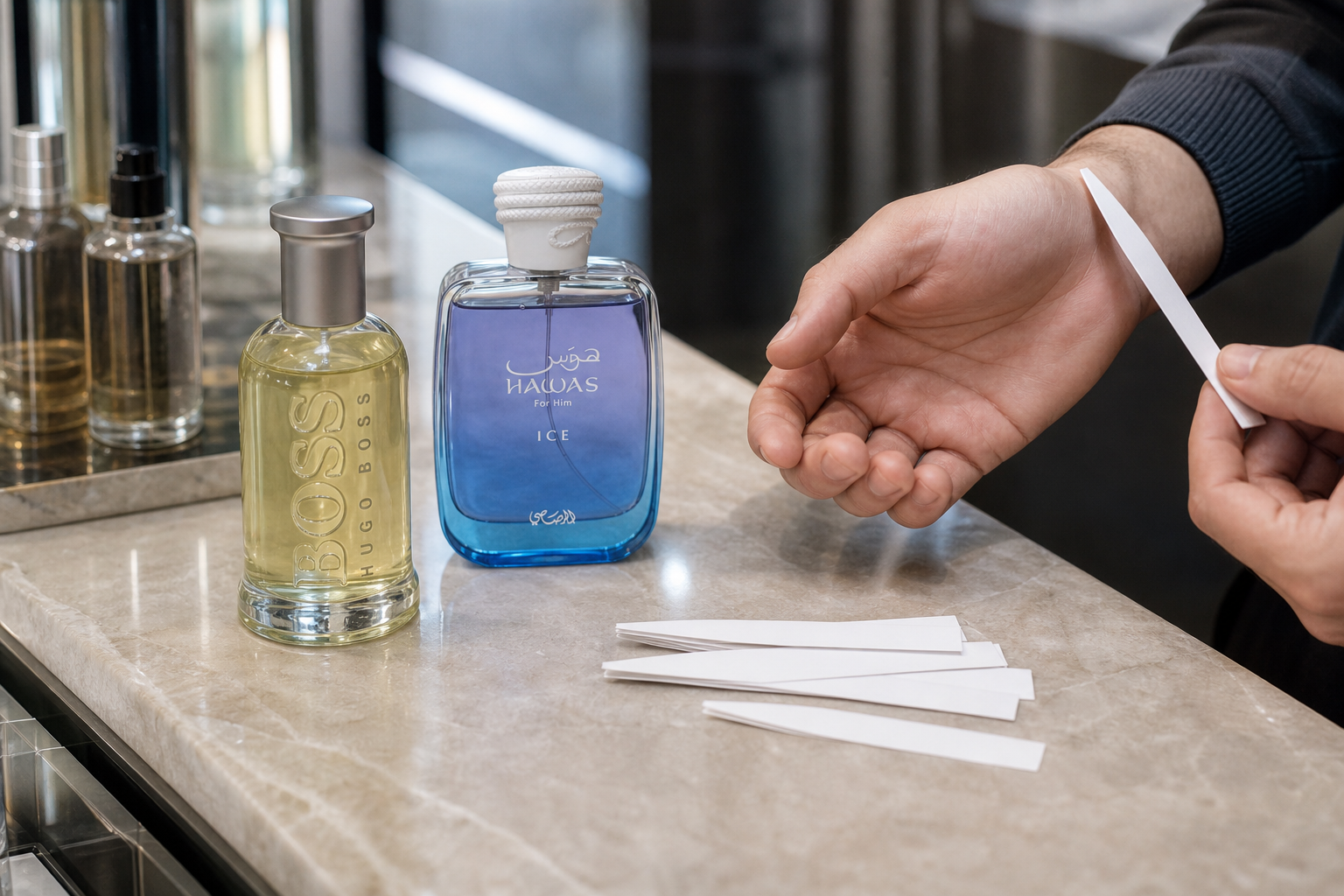
In a brick-and-mortar perfumery, you have two tools at your disposal that are often confused, though each answers a different question. A paper test strip shows you how the perfume stands on its own. Your own skin reveals how it will resonate with you. A reliable result comes from a combination of both – the strip serves for quick pre-selection, the skin for the final decision.
The strip is essentially a laboratory sample. The scent evaporates from it without heat, moisture, or oils, so you perceive the composition in its pure form and usually longer than from your hand. It's practical when you want to browse more shelves in one visit and narrow down your choice from ten bottles to two or three. However, it has a clear limit: paper doesn't have the temperature or chemistry of your skin, so you'll never know the true longevity or how the perfume will transform over hours. Immediately after applying, label the strip with the name – after the fifth scent, you really won't remember the order.
Then apply only what passed the strip test to your skin. Ideal are warm, well-circulated areas where the scent develops naturally: the inner side of the wrist, the crook of the elbow, or the back of the hand. After spraying, let the perfume dry freely and do not rub your wrists together. Rubbing heats and mechanically disrupts the layer, causing the top notes to evaporate faster than they should, shifting the overall impression. Similarly, you gain nothing by spreading it with your fingers.
Limit yourself to two or three scents on the skin per visit. Place them so they don't overlap – one on the left wrist, another on the right, possibly a third on the forearm. Two perfumes applied side by side on the same spot will blend, and you'll end up evaluating a mix that doesn't exist in the bottle. Leave the remaining candidates on the strips.
The reason for this limitation is physiological. Olfactory receptors quickly adapt to a constant stimulus, so much so that after the fourth or fifth sample, you'll stop distinguishing details and everything will start blending into one sweet, heavy mass. This state is called olfactory fatigue, and you won't recognize it by something bothering you – you'll recognize it by everything suddenly seeming the same. Once this point is reached, further testing is pointless and will only lead to a decision you'll regret the next day.
And now to the bowls of coffee beans that stand on almost every counter. They function more as a ritual than a reset. Coffee itself is a very intense aromatic substance with strong roasted and bitter notes – instead of nullifying the perception, it adds another strong stimulus to an already overloaded nose. More reliable methods are less exciting but effective:
- step outside for a few minutes into fresh air, ideally away from the perfumery and food,
- smell your own unscented skin, like the crook of your elbow or the sleeve of your clothing – it acts as a neutral reference point that the nose knows,
- drink some water and take a few minutes' break between each scent,
- before visiting the perfumery, don't use a strong perfume or scented body cream yourself.
Leave the store with labeled strips in your pocket and with one, at most two scents on your skin. Save the verdict for later – a brick-and-mortar perfumery is great for pointing you in the right direction, but it's generally quite an unsuitable environment for a final decision. Lighting, heat, crowds, and dozens of dispersed perfumes in the air make every evaluation a rough estimate.
Home Test: Samples, Decants, and All-Day Wear
The store gives you a first impression, but the real decision is made at home. Only there do you have peace, your own environment, and most importantly, time – you're not competing with twenty other scents from nearby shelves. A home test also allows you to do something you can't at a testing counter: observe a single composition hour by hour from morning to evening.
To do this, you need a small amount of perfume that will last you several days. There are two options – an official sample and a decant.
Official Sample is a miniature filled directly by the manufacturer. It usually has a volume of about one to two milliliters, which is enough for roughly two to four applications. Its advantage is certainty: the content matches what's in the large bottle, and the packaging shows the full name and concentration, whether it's Eau de Toilette, Eau de Parfum, or Parfum.
Decant is created by transferring part of the content from the original bottle into a smaller vial. It tends to be larger – usually five to ten milliliters – so it lasts you a whole week of wear, and you'll see how the composition behaves on different days. On the other hand, it depends on the care of the person who transferred it, and the sprayer used may disperse the scent differently than the original. When getting a decant, make sure the brand, exact name, and concentration are clearly stated.
The test itself is simple: one scent, one day. Apply the perfume in the morning on clean skin after a shower, ideally without scented body lotion that could interfere with the result. Two to three sprays on the wrist, neck, or chest are enough. Then just go about your usual day and periodically notice what happens.
- The first fifteen minutes – the opening of the composition, which you've already experienced in the store.
- After one to two hours – the top notes have faded, and the heart of the fragrance has emerged. This is the character you'll wear for the longest part of the day.
- After four to six hours – the base remains. Ask yourself if this is something you want to spend the afternoon with – woody, musky, or vanilla bases last the longest.
- Evening – what can you still smell on your clothes, scarf, or wrist? The difference between "lasts all day" and "disappeared after lunch" can only be discerned this way.
Just as important as when is where you wear the perfume. Heat, cold, humidity, and movement significantly change how the composition opens and how far it projects. Therefore, try one scent in several environments:
- In the office or at school, where you sit close to others and where a more subtle trace is appropriate.
- In a heated room, because heat develops the scent faster and more intensely – what is pleasant at home can be overwhelming in an overheated restaurant.
- Outside in the cold, where the projection is subdued, and lighter citrus or aromatic compositions may seem almost imperceptible.
- During movement and sports, when your skin warms up and the scent intensifies even hours after application.
- In the evening at a visit or theater, when you usually want the scent to feel a bit more festive.
The final piece of the puzzle is notes. After testing three or four perfumes, impressions start to blend, and memory for scents is notoriously unreliable. Just a few lines in your phone for each test: date, number of sprays, where you applied the perfume, how long you could smell it, how long others could smell it, and what the weather was like. A note on reactions is also useful – whether someone noticed the scent on their own or if it went unnoticed throughout the day.
After a week or two, you have comparable records from several days instead of a vague impression. And you often discover something surprising: a perfume that thrilled you at the counter fades after a few hours, while the one you almost skipped suits you all day.
Why the Same Perfume Smells Different on Everyone
You probably know the feeling: a colleague comes to work wearing a fragrance you instantly want to buy, but on your skin, it turns into something completely different after an hour. It's not a flaw in the perfume. A perfume composition is a blend of ingredients that evaporate gradually and at different rates, and the environment you apply it to visibly alters this process. That environment is your skin, with its temperature, moisture, and natural scent – and it's different for everyone.
Skin Oiliness and Hydration
The surface on which you apply the perfume has the strongest impact on the result. Oily and well-hydrated skin gives the fragrance something to cling to: it evaporates more slowly, the development of the composition is longer and smoother, and the base notes have time to fully unfold. On dry skin, the entire arc shortens. Top notes fade quickly, the heart just flickers, and you often feel like the perfume "doesn't last," even though it just went through its cycle faster.
If you're one of those whose perfumes fade quickly, try applying them to an area pre-treated with unscented body lotion – this creates a layer on which the fragrance can hold a bit longer.
Natural pH, Body Temperature, and Personal Scent
Skin has its natural pH, which varies slightly from person to person. Along with it, the way individual ingredients manifest shifts – some notes come to the forefront, others recede into the background. Body temperature works similarly: heat accelerates evaporation, so on warmer skin, the scent intensifies, appearing sweeter and richer, while on cooler skin, it opens more slowly and stays closer to the body.
Your own body scent also plays a role, as it always mixes with the perfume. It changes depending on what you eat, how much exercise you've had, or how rested you are. Strongly spiced foods, intense sports, and even regular fatigue influence the overall impression without altering the composition itself. The season also plays a role: in summer, scents develop faster and seem louder, while in winter, they need more time and often tolerate a more pronounced base.
Some Scents Vary More Than Others
The extent to which a perfume changes on different people also depends on its composition. It's not about quality, but about what the scent is made of.
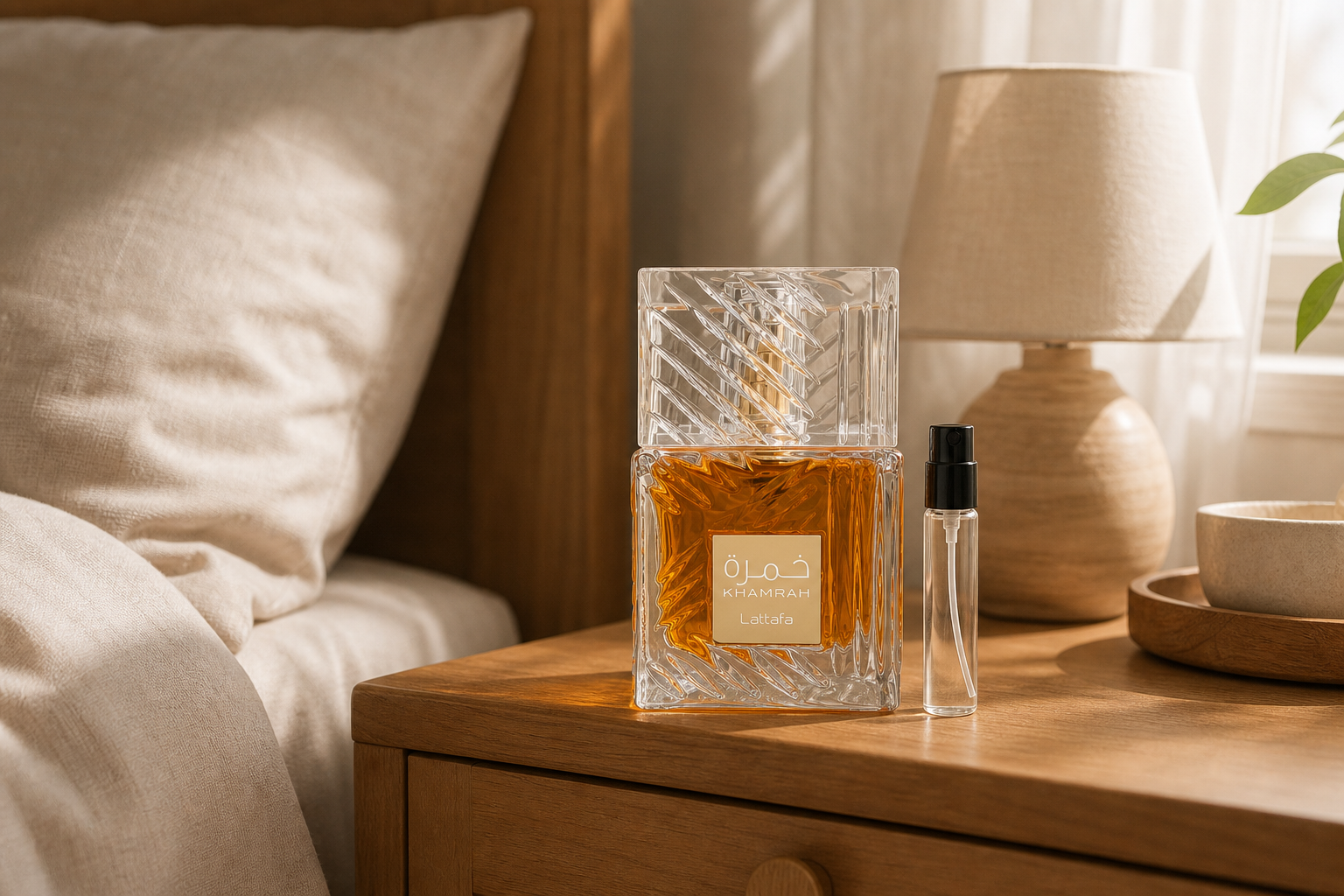
- Sweet gourmand compositions with vanilla, tonka bean, amber, or musk react most sensitively to the skin. An illustrative example is Lattafa Khamrah – on warmer and oilier skin, it develops into a rich, dessert-like scent, while on dry and cooler skin, it appears drier and spicier, so two people can describe almost different fragrances.
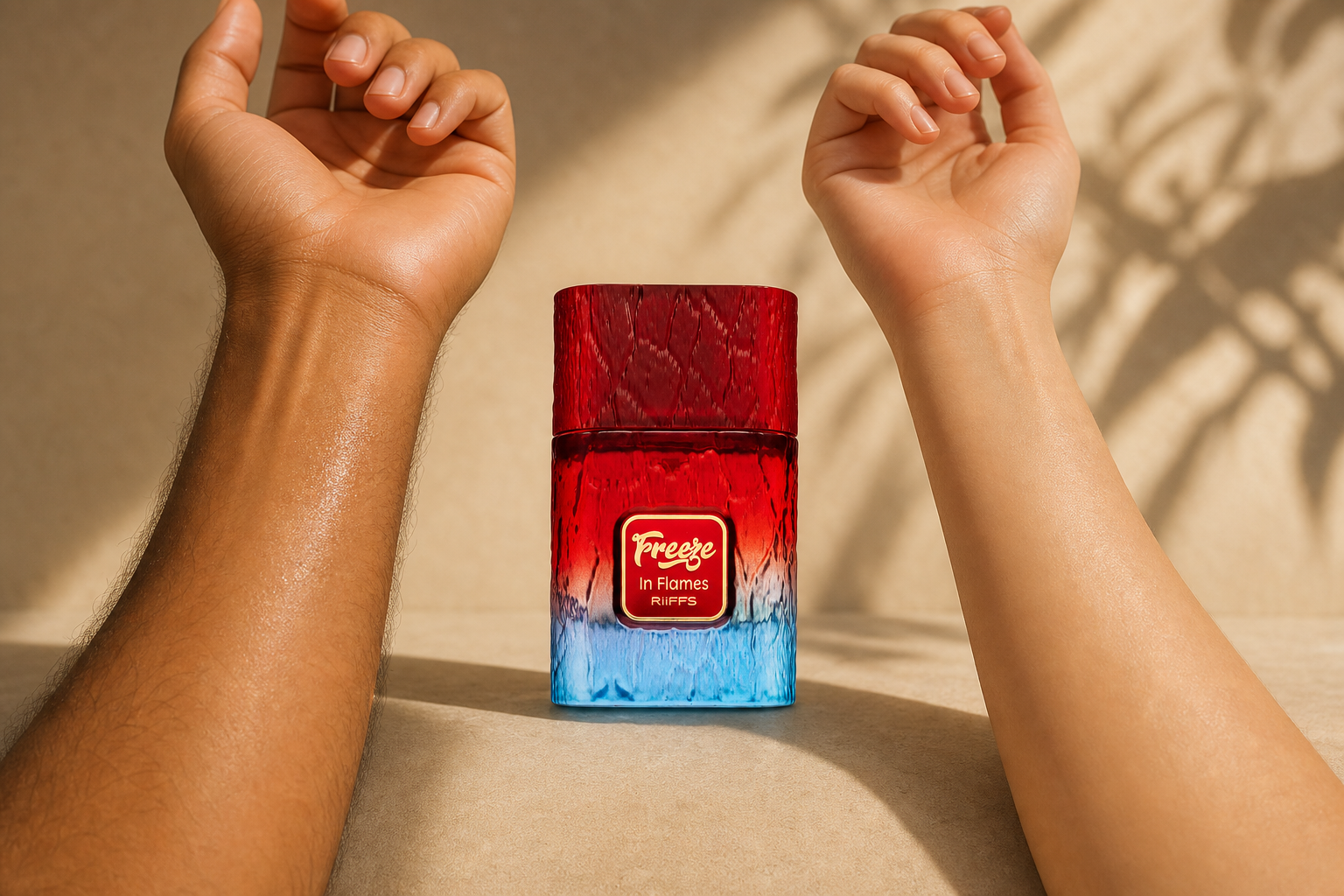
- Fresh, citrus, and cool spicy compositions generally vary less. Riiffs Freeze in Flames is just such a case: its icy fresh line remains recognizable across different skin types, although the longevity and intensity naturally differ.
The two mentioned fragrances serve only as illustrations of the influence of composition structure, not as a selection tip.
Why Others' Experiences Are Just a Guide
From all this comes a practical conclusion. When someone tells you that a particular perfume lasts all day and smells sweetly of vanilla, they are describing exactly one thing: how the composition behaves on their skin, in their usual routine, and in a specific season. The same goes for reviews and rankings. They tell you which fragrance family it belongs to and the direction it develops, but nothing about how it will interact with your skin.
Therefore, take recommendations from friends and online reviews as a pre-selection that narrows down your options. But leave the final decision to your own test, because only that will show you which fragrance you'll truly wear every day.
Checklist Before Buying and Common Mistakes
When you break down the process into a few steps, buying a perfume turns from a gamble into a decision you'll stand by even six months later. You can go through the following checklist right at the store or at home in the evening before confirming your order.
Checklist
- Apply on skin. A paper strip is for rough selection, but the decision should be made on the wrist or forearm.
- Give the fragrance time. Before forming an opinion, let the composition transition from top notes through the heart to the base notes.
- Test in context. Evaluate a fragrance meant for the office in the office, and a summer scent ideally in warm weather. The same composition behaves differently in cold and hot conditions.
- Compare only comparable items. Don't measure a perfume against an eau de toilette of the same name – the difference in intensity doesn't indicate which one you prefer.
- Decide after wearing it all day. Ideally after two or three days of repeated wear, to see if you still enjoy it after several hours.
- Consider the volume. For a scent you're just getting to know, a smaller bottle makes more sense than the largest available size.
Concentration: Why Two Bottles with the Same Name Behave Differently
A single perfume often comes in several concentrations, each playing a slightly different role. Eau de Cologne has the lowest concentration of fragrance composition, feels light and fresh, and lasts the shortest on the skin. Eau de Toilette is in the middle: it's usually more pronounced at the start and its development is more noticeable. Eau de Parfum has the highest concentration of the three, lasts the longest on the skin, and its base notes unfold more slowly.
Practically, this means two things. First, if you find that an eau de toilette fades by evening, the issue might not be with the fragrance itself but with the chosen form. Second, two versions of the same name aren't just "weaker and stronger" variants – manufacturers often compose them with slightly different ingredients, so an eau de parfum might be sweeter, darker, or woodier than an eau de toilette. That's why it's worth testing the specific concentration you want to buy.
Common Mistakes
- Buying based on the first sniff. In the first seconds, you're mostly evaluating the alcohol evaporation and the most volatile top notes, which are the part of the composition you'll smell for the shortest time.
- Rubbing wrists together. Rubbing doesn't enhance the fragrance; it disrupts its natural development and diminishes the subtle transitions between notes.
- Five samples at once. After a few fragrances, your sense of smell stops distinguishing details, and everything starts to blend into one sweet mass. Three scents per visit is a reasonable limit.
- Deciding based on a paper strip. A strip shows the composition in a lab-like form but doesn't tell you how the fragrance behaves on your skin or how long it lasts.
- Blind purchase based on someone else's recommendation. Reviews and tips from others are a good filter to narrow down choices, not a substitute for your own test. What smells warm and soft on someone else might come across sharper on you.
- Buying in a rush before a trip or as a last-minute gift. Time pressure reliably eliminates all the previous points and leads to a bottle that then sits untouched in the bathroom.
Once you know which fragrance families suit you, what concentration you're looking for, and in what situations you want to wear the perfume, the selection stops being a matter of chance. With this idea, you can browse Brasty's perfume range purposefully – from well-known brands to a dedicated niche perfumery section where you'll find less common compositions. And if you're still unsure, the most sensible first step remains a sample or smaller bottle: they give you enough time to get to know the fragrance before committing to a full-size purchase.
Category
Recommended articles
Riiffs Freeze in Flames: Ice and Flames Illuminate Warsaw "Give a girl the right shoes and she can conquer the world!" Marilyn Monroe