


For beginners purchasing serum for the first time and unsure about application. We'll explain dosage, scalp massage, routine order, and why density is assessed over months, not weeks.
Hair Serum: What It Is and How It Differs from Oil
Whether you're drawn to serum because of thinning hair or ends that refuse to settle after washing, the beginning is often the same. On the hair care shelf, serum, oil, and leave-in conditioner stand side by side, promising similar benefits at first glance. However, the difference between them is not just on the label: they vary in concentration, consistency, and the area of the head where they belong.
Hair serum is a concentrate of active ingredients in a light base that absorbs quickly. It is applied in small amounts – usually a few drops from a pipette or a few sprays – and remains in the hair or on the scalp. It is not rinsed out, does not act for ten minutes like a mask, and does not aim to coat the entire length of the hair. Its purpose is targeted: to deliver specific components exactly where you want them without weighing down the rest of the hairstyle.
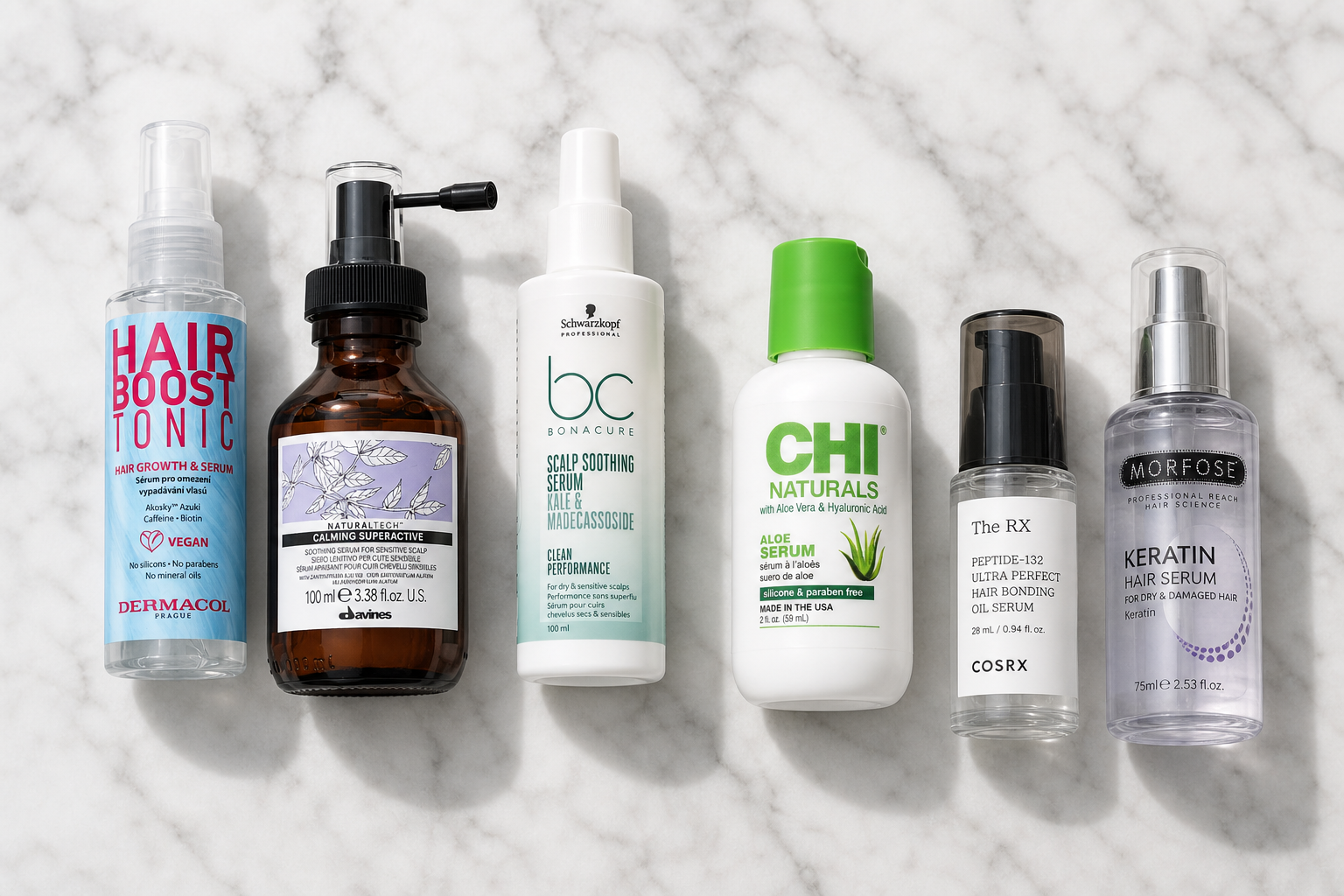
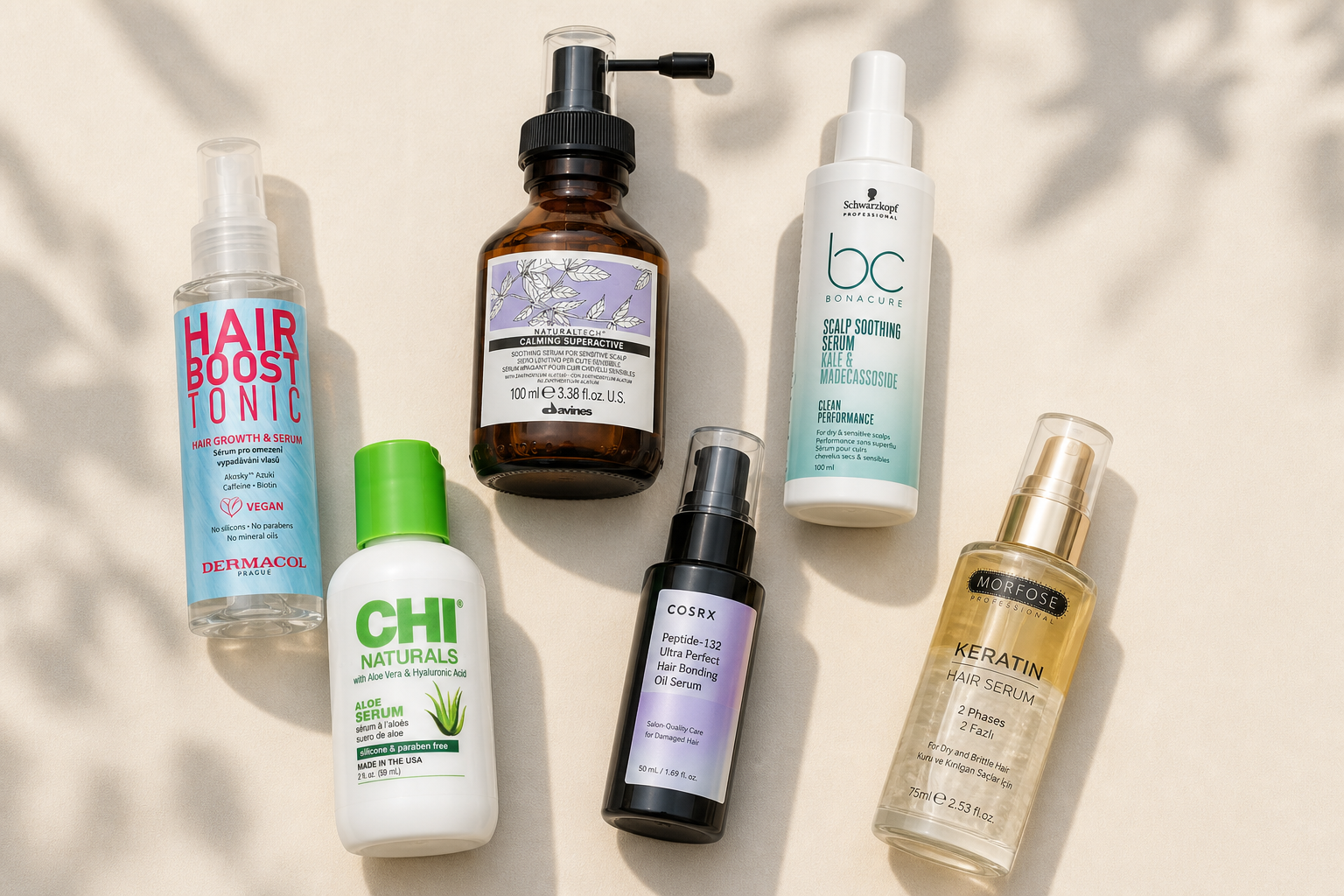
You can often recognize it by its packaging. Serums are filled into small bottles with a pipette, applicator tip, or spray because they are used drop by drop, not by handfuls. One hundred milliliters of serum will last you significantly longer than the same volume of conditioner – and that's also why it's worth being sparing with serum at the start.
Scalp Serum and Length Serum Are Not the Same
This distinction saves beginners the most disappointment. The word "serum" on the label doesn't indicate where the product is applied, and two bottles side by side can have completely different purposes.
- Scalp serum has a thin, almost watery texture to absorb between the hair and not remain visibly on the parting. It works with the roots and scalp comfort – addressing issues like hair density, irritation, or oiliness. It is applied to the partings directly on the scalp, typically on freshly washed hair.
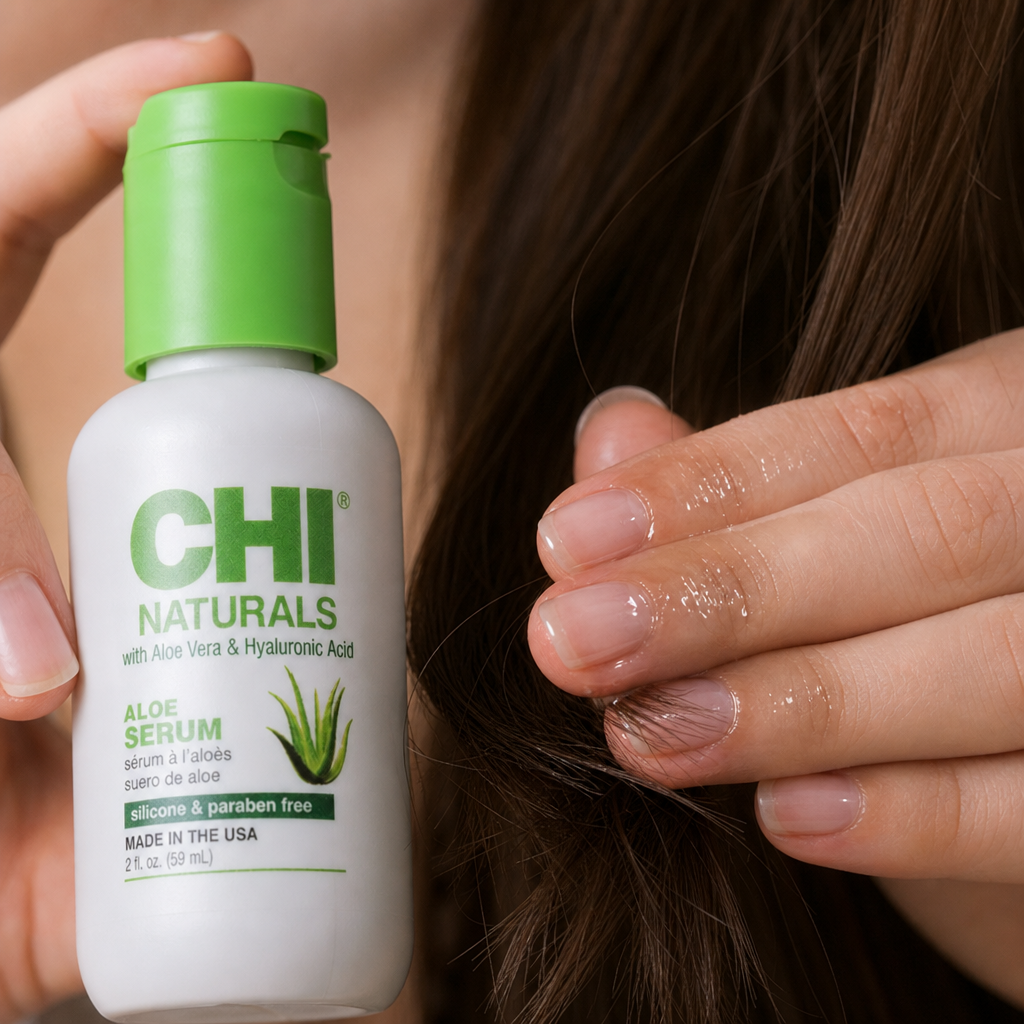
- Length and end serum is slightly oily or silicone-based. It smooths the hair surface, reduces frizz, and adds shine. It is applied roughly from mid-lengths downwards and is intentionally kept away from the roots to avoid unnecessary weight.
Therefore, swapping them doesn't make sense. End serum applied to the scalp will likely make it greasy, while scalp serum applied to dry ends won't smooth anything. If you're unsure, the guide is the consistency and text on the label – scalp, root, or "for the scalp" versus ends, smoothing, or "for ends."
Serum, Oil, or Leave-In Conditioner?
All three products are left in the hair, but each serves a different purpose:
- Hair oil provides nourishment and surface protection. It forms a thicker film, suitable for dry and coarse hair, and can also be used as a pre-wash treatment. It is richer but can also weigh down fine hair more easily.
- Leave-in conditioner is a comprehensive daily care. It makes detangling easier, provides basic hydration along the entire length, and is applied in larger amounts than serum.
- Serum is a targeted concentrate. It doesn't rely on the volume of product applied but on the composition – and on reaching a specific spot.
This also implies what to expect from serum and what not to. Serum won't replace a mask or hair treatment: deep regeneration of damaged hair requires more time and substance than a few drops can provide. Similarly, it won't replace shampoo if you're addressing a specific scalp condition. Serum is an enhancement that makes sense over a functioning basic care – not a shortcut.
Once you distinguish these three categories, choosing a serum ceases to be a puzzle, leaving only the practical part: how much to use, where exactly to apply it, and where to fit it into your hair care routine.
How Much Serum to Use – Dosage Based on Hair Length and Thickness
The most common mistake beginners make isn't choosing the wrong serum, but using the wrong amount. Serum is a concentrate, so the amount you're used to with conditioner or leave-in milk is unnecessarily large here. The good news is that the correct amount can be estimated quite reliably – based on hair length, thickness, and whether your product comes in a dropper bottle or a spray.
The basic rule is: start with a smaller amount than you might expect, and add more if needed. You can always add more serum, but once your hair is weighed down, the only solution is to wash it again. When trying a new product for the first time, feel free to use half the amount recommended on the packaging, and adjust it only after a few uses.
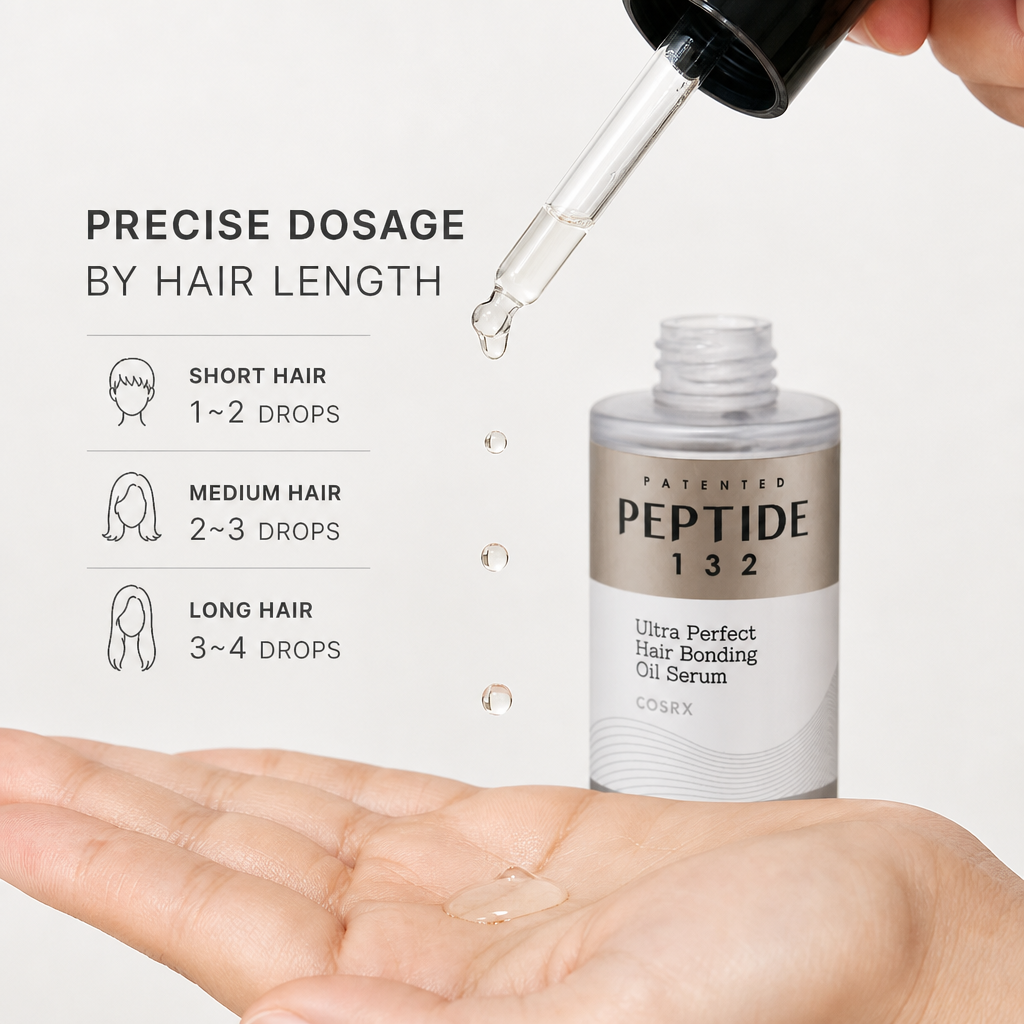
The approximate dosage of serum for lengths and ends looks roughly like this:
- Short hair to the chin: one to two drops, or one spray. Rub the serum between your palms and apply mainly to the ends.
- Medium-length hair to the shoulders: two to three drops or two sprays. Start from the ends and gradually reduce the amount towards the roots.
- Long hair below the shoulder blades: three to four drops, or even five for really thick lengths. It's worth dividing the hair into two sections and treating each separately to distribute the serum evenly.
Hair thickness affects the dosage similarly to length, but in the opposite direction than you might think. Thick hair needs a bit more product because it is distributed among more hair. Conversely, fine hair, even if long, gets weighed down very quickly – for these, stay at the lower end of the recommended range and consider reapplying the next day.
The difference between a dropper and a spray is greater than it seems at first glance. A dropper dispenses concentrated amounts in one spot, so it's best to rub the serum between your palms first and then apply it to the hair. A spray, on the other hand, disperses a fine mist over a larger area, so the serum spreads more evenly, but it's easy to apply more than you intended – hold the bottle about twenty centimeters from your hair and count the sprays. For serums intended for the scalp, dosage is applied along the partings and the number of drops is specified by the manufacturer directly on the packaging; these products are not rubbed into the palms.
It's also important to consider what type of hair you're applying the serum to. On damp, towel-dried hair, it spreads significantly better and you can use a smaller amount; the water helps it travel through the entire length. On dry hair, serum is used more for touch-ups – for tangled ends during the day or to smooth down fine flyaways. Here, even stricter moderation applies: for dry hair, usually half of what you'd use on damp hair is sufficient.
If your hair looks greasy or clumpy after using serum, it doesn't automatically mean the product doesn't suit you. It's most often about the amount, the place of application, or both. Try this order: reduce the amount by half, move the application lower – ideally from the mid-lengths down – and lightly skim the remaining serum from your palms over the top layer of hair. It also helps to apply the serum to damp hair and let it dry, rather than adding it to an already finished style. If even after several attempts with a smaller amount the result isn't satisfactory, the product may simply be too rich for your hair, and it makes sense to opt for a lighter texture.
Step-by-Step Scalp Massage
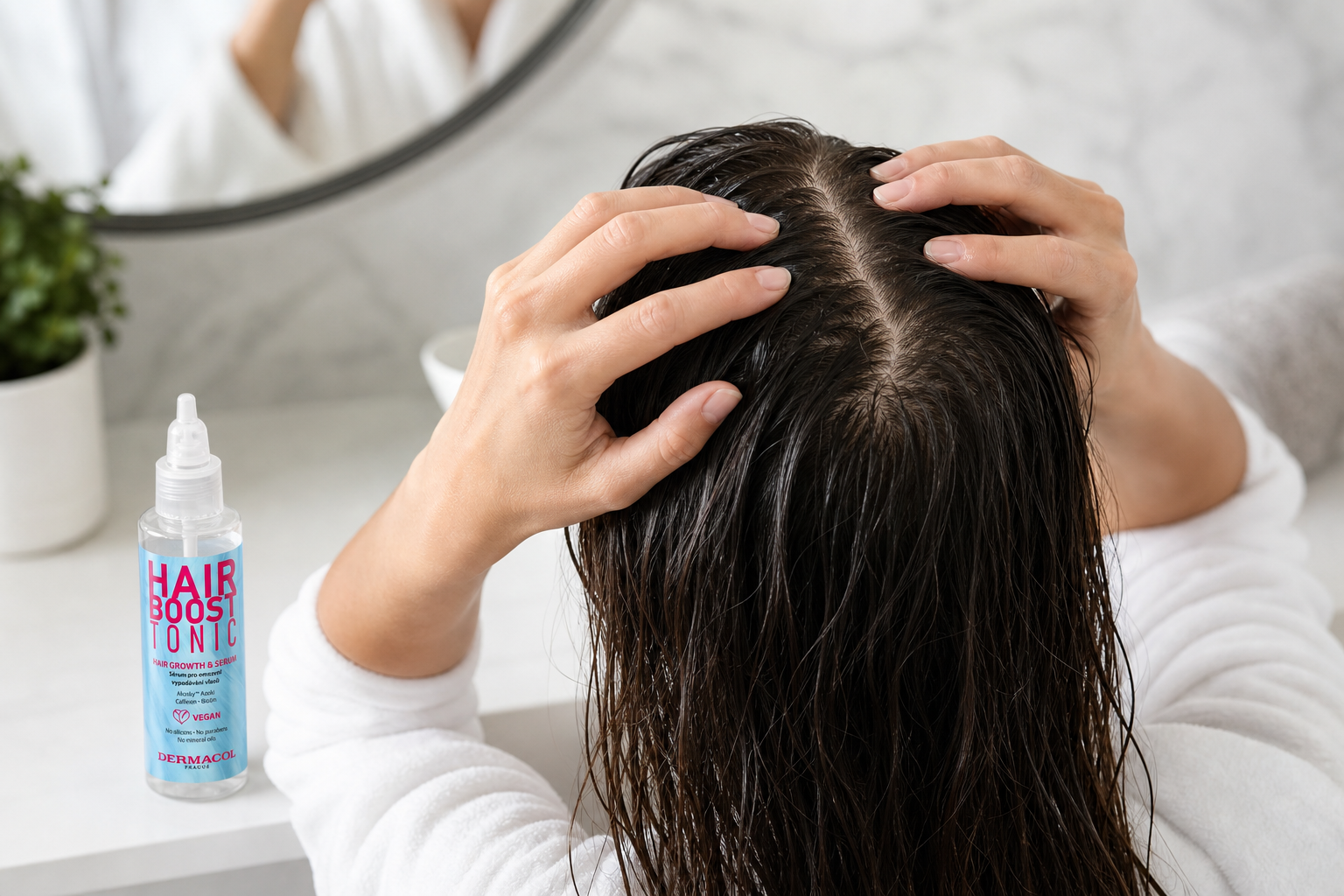
Scalp serum works differently than treatments for hair lengths. Active ingredients need direct contact with the scalp and a moment to absorb – that's why a brief massage is part of the application. It's a step beginners often skip, yet it's crucial for the effectiveness of the entire process.
The good news is, it's not a salon ritual. You can complete the whole process in front of a mirror in two minutes, and after a few uses, it will become second nature.
Always work on freshly washed and towel-dried hair. Unwashed scalps have oil and styling residue that block the active ingredients.
- Divide your hair into sections. Use a wide-toothed comb to create a parting in the middle of your head so the scalp is visible. Without a parting, the serum ends up on your hair instead of where it's needed.
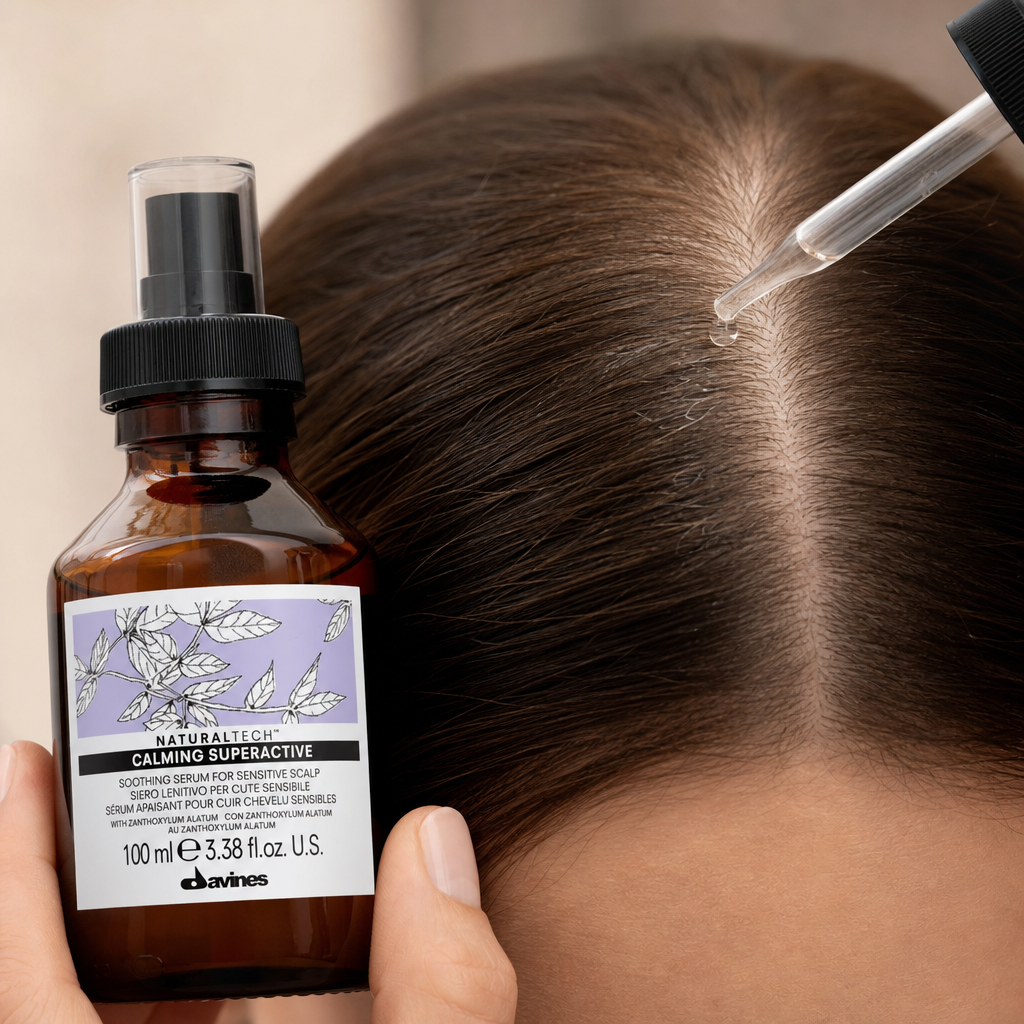
- Apply the serum along the parting. Use a dropper or applicator to distribute a few drops along the exposed line. Hold the spray a few centimeters from your head and press once or twice.
- Move the parting and repeat. Create a new line about two centimeters from the previous one and work from the crown to the temples and down to the nape. Usually, five to seven partings are enough to cover the entire area.
- Massage with your fingertips. Place the spread fingers of both hands on your head and gently move the scalp in small circular motions. Avoid using nails – they can easily scratch and irritate the scalp.
- Cover the entire head. From the forehead over the crown to the nape, ensuring you reach areas often missed during washing. One to two minutes is plenty; it's not about duration but ensuring the serum spreads evenly and the scalp is stimulated.
After the massage, let your hair rest for a while. Most scalp serums are leave-in, so they don't rinse out – they stay in your hair until the next wash. The dose is small, so it won't weigh your hair down or make it limp, provided you haven't overdone it. Before blow-drying or styling, give the serum a few minutes to absorb; it spreads more easily on damp skin than on dry. If the manufacturer specifies a duration and subsequent rinse on the packaging, follow their instructions – rinse-off scalp treatments do exist, but they're less common.
Common Beginner Mistakes
- Application on unwashed hair. An oily scalp covered with hairspray or dry shampoo residue forms a barrier. The serum spreads less effectively and part of the dose is wasted.
- Scrubbing instead of massaging. Strong pressure and fast rubbing can irritate the scalp, and you'll end up having to painstakingly detangle your hair. The massage should move the scalp, not slide over it.
- Serum on lengths and ends. A product meant for the scalp has no business on the ends. Ends require a different formula and, importantly, a different amount.
- Neglecting the back of the head. Most people treat the crown and parting because they can see them. The nape and around the ears are just as stressed, but you might not notice them in the mirror.
- Immediate blow-drying with hot air. A few extra minutes won't hurt, and the serum has time to absorb. Only then should you apply heat protection and styling.
If your scalp burns or itches during the massage and the sensation doesn't subside, rinse the serum off and try again after a few days with a smaller dose. A sensitive scalp can tolerate regular care, it just needs a gentler approach and a product suited for it.
Where Serum Fits in Your Hair Care Routine
Serum is a concentrate that stays on your hair or scalp, so it's crucial to know when to apply it in your routine. A simple rule can help: start with products that rinse out, then those that stay in the hair, and finally, those that protect and shape your hair. Whether you're dealing with your scalp or dry ends, this order remains the same.
Steps After Washing
- Shampoo – cleanses both hair and scalp. Without this step, the serum would apply active ingredients on a layer of sebum and styling residue, preventing them from reaching where they need to go.
- Conditioner or Mask – rinse-out care designed for lengths and ends. Typically, you use a mask once a week and conditioner after every wash. Do not combine them in one wash, as it can unnecessarily weigh down your hair.
- Serum – applied to towel-dried hair, meaning damp, not wet. From wet hair, part of the dose will run off with the water, wasting your product.
- Heat Protection – if you blow-dry your hair or use a straightener or curling iron, apply it after the serum and before styling.
- Styling – mousse, gel, hairspray, or paste complete the routine. Their job is to hold the shape, not to care, which is why they go at the very end.
If you also use hair oil, apply it after the serum. Oil creates a continuous film on the hair surface, making it harder for other products to penetrate, so serum applied over oil is at a disadvantage.
Different Rhythm for Scalp and Lengths
Scalp serum is closely tied to washing. It's applied to clean skin because only then can it reach the roots without a barrier of sebum and styling residues. Its rhythm is determined by how often you wash your hair – for some products, it's every wash, for others every other day or twice a week. Always follow the specific product instructions, not your own estimate; more doses per day won't speed up results.
Serum for lengths and ends, on the other hand, is not as strictly tied to washing. Use it when your hair truly needs it: practically always after washing, and between washes depending on how the ends behave. If they're dry and split the next day, a small dose on dry hair is appropriate. If your hair remains smooth and manageable, feel free to skip it that day.
What Works Together and What Clashes
There are many leave-in products today, and it's easy to end up using them against each other. A few pairs are worth remembering.
- Serum and Leave-In Conditioner – you can combine them, but reduce the dose of both by about half. They work with similar softening agents, and a full double dose will weigh your hair down.
- Two Serums at Once – serum for the scalp and serum for lengths don't interfere with each other, as each targets a different area. Two serums with the same purpose on one head, however, don't make sense.
- Scalp Serum and Dry Shampoo – dry shampoo is for unwashed hair between washes, while scalp serum is for freshly washed hair. Applying one over the other is contradictory: dry shampoo is meant to absorb oil, while serum works through it.
- Serum and Volumizing Products at the Roots – fine hair often can't handle such a layer. Either choose one or apply serum when volume isn't a concern.
When building your routine for the first time, introduce products gradually, not all at once. If you add serum, a new mask, and a leave-in spray in one week, you won't know which step benefited your hair and which weighed it down. One change, and only after a few washes another – that's the pace that will give you a clear answer.
Why Density is Measured in Months, Not Weeks
The most common disappointment with serums doesn't come from the formula, but from the calendar. After two weeks, you look in the mirror, see no difference, and feel like you've bought expensive water. Yet, at that moment, there couldn't be anything to see: hair grows about a centimeter a month, and the growth cycle follows its own pace, which cosmetics can't skip. In fourteen days, about half a centimeter grows at the roots – a length that any hairstyle can easily conceal.
Moreover, the scalp doesn't work as a single unit. Each follicle is in a different phase – some hairs are currently growing, others are resting, and some are about to fall out. When a serum supports the environment in which hair grows, it first shows on hairs that are just entering the growth phase, and it takes several months for them to grow to a visible length. For serums targeting lengths and ends, feedback is quicker – softness, shine, and easier combing can be noticed within days – but that's a different type of result than density.
How to Objectively Verify the Result
Memory is an unreliable witness when it comes to your own hair. You see it every day and can't capture change in small steps. That's why it's worth replacing impressions with photographs and sticking to a few rules:
- Same lighting. Ideally daylight, from a window, not a spotlight above the mirror – that can make a parting look wider than it actually is.
- Same hairstyle and same parting. Hair should be clean, dried the same way, and without styling that adds or reduces volume.
- Same shots. The top of the head, close-up of the parting, and hairline at the forehead, each time from the same angle.
- At least twelve weeks apart. A shorter interval will show more of a difference in air humidity than in the hair.
The first photo belongs at the beginning, not when you start getting impatient – without a baseline image, you have nothing to compare to. Also, note the date you started using the serum; irregular application is often a more common reason for no change than the product itself.
Cosmetics Are Not a Treatment
Hair serum is a cosmetic product. It cares for the scalp and hair fiber and can improve their condition, but it doesn't replace medical care and doesn't guarantee results. When it makes sense to stop experimenting and see a dermatologist: in cases of sudden or rapid hair loss, round patches, persistent itching, soreness, or redness of the scalp, and dandruff that doesn't improve. The same applies during pregnancy, breastfeeding, and when taking medication.
How to Choose a Serum in Our Hair Care Range
When you set your patience for months, the next step is to choose a product you won't regret spending that time on. In our hair care range, you can navigate based on where the serum is applied:
- On the scalp. Lines focused on its balance and condition – for example, Wella Professionals with its scalp care series, which is among our best-selling hair serums.
- For thinning hair. L'Oréal Professionnel offers serums targeted at hair losing density; expect a treatment lasting several months.
- For sensitive scalp. For itching or dandruff, opt for dermatologically oriented care, such as the Dercos range from Vichy.
- For lengths and ends. Damaged and colored lengths will appreciate serums and elixirs from regenerative lines, while fine hair will prefer lightweight formulations that don't weigh it down.
And one more tip: don't switch serums every three weeks. Each change resets the comparison and takes you back to the start of the twelve-week countdown.
Category
Recommended articles

"Give a girl the right shoes and she can conquer the world!" Marilyn Monroe