

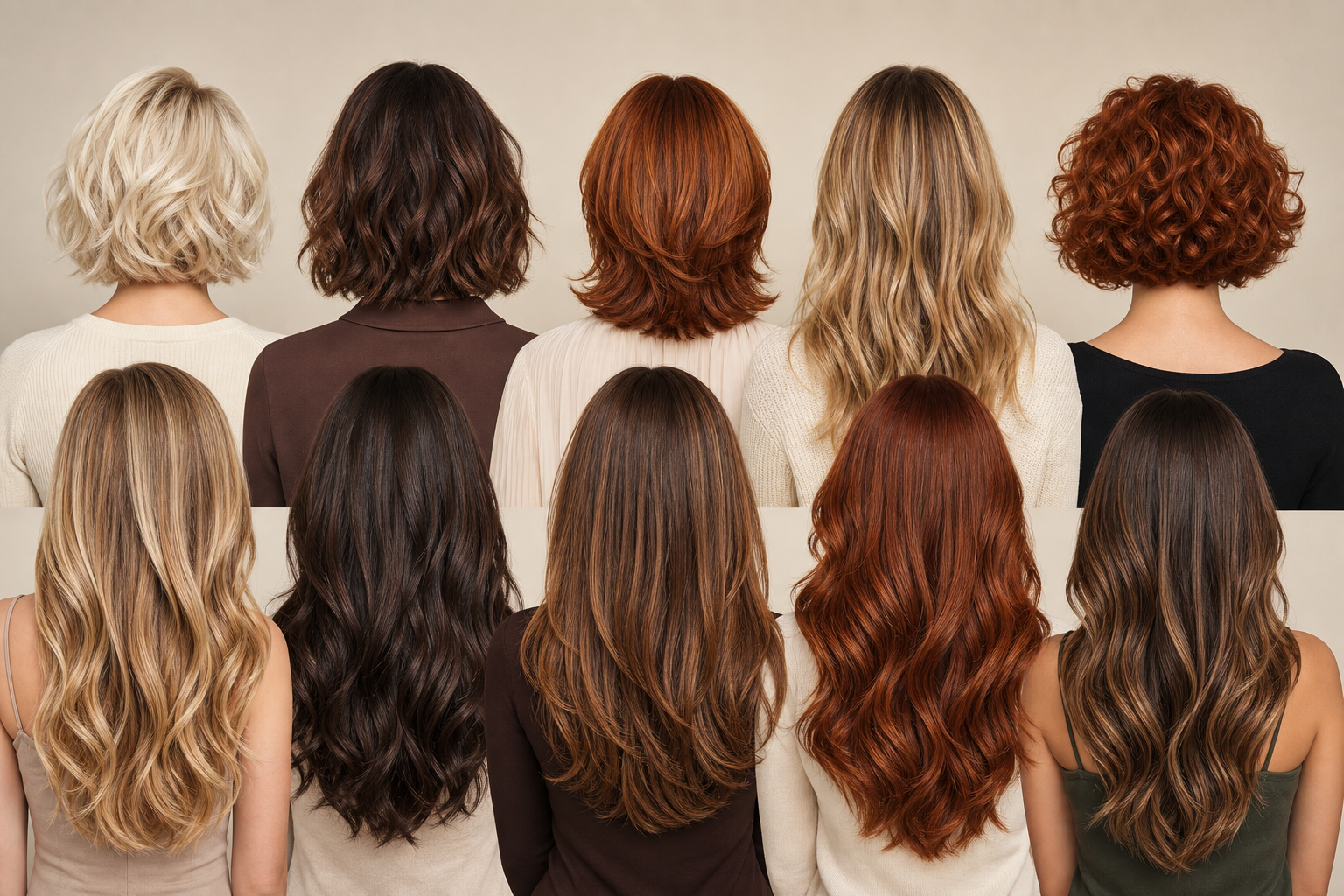
Cut and color are just the beginning – how your hairstyle lasts all day depends on styling. We'll advise you on which hairsprays, shaping pastes, and leave-in sprays suit short, medium, and long hair, maintaining their shape without weighing down the color.
Trends for 2026: Styling that Holds Shape and Color
The hairstyle trends of 2026 embrace natural movement: visible texture for shorter cuts, soft volume for medium lengths, and smooth, glossy ends for long hair. Whether you visit the hairdresser every month or just a couple of times a year, the final look isn't determined solely by the cut and color. It's mainly about what you do with your hair each morning.
A cut gives hair shape, color gives it tone – but both last only as long as you support them with daily styling. Without hold, texture falls apart by evening; without protection, smoothness is lost with the first blow-dry; and without the right care, colored tones lose their freshness faster than you'd expect. That's why we see styling as a skill you can learn: step by step, according to hair length and the color you're currently wearing.
Length is the first variable. Short hair needs a product that can separate individual strands and keep them in the chosen direction – usually a thicker consistency that you spread in your palms. Longer hair, on the other hand, punishes any heavy texture: it flattens volume, clumps ends, and makes the hairstyle look limp. Here, you work with light layers, applied in sections, allowing the hair to move.
The second variable is color. Dyed blond and brown shades handle styling differently than natural hair – post-coloring hair tends to be more porous, easily absorbing product residue and losing tone faster. Blonds are prone to unwanted yellow tones, while browns often lose depth and shine. That's why we give special attention to colored lengths and recommend products that won't weigh down the tone.
The entire article is based on three groups of products. Once you understand them, you can create your own routine for any length or shade:
- Hairsprays – the final step that sets the finished shape. They mainly differ in hold strength and how noticeable they are in the hair once dry. Lighter options can be brushed out, while strong hold is suitable for hairstyles that need to last all day.
- Shaping Pastes, Creams, and Clays – work with texture before the hairstyle is finished. Matte clays and pastes give short hair volume and strand separation, while creams are softer and suitable for when you just want to suggest a shape.
- Leave-in Care and Styling Sprays – the foundation applied to damp hair first. They ease detangling, calm frizz, prepare hair for heat from the blow-dryer, and for longer lengths, determine whether the ends will look smooth.
If you take away one thing from the introduction, let it be the order. Styling is built from the bottom up: first preparation on damp hair, then shaping, and finally setting. If you skip a step, you'll usually notice before the day is over – and no hairspray will fix it after the fact.
Short Hair: Texture, Pastes, and Strong Hold
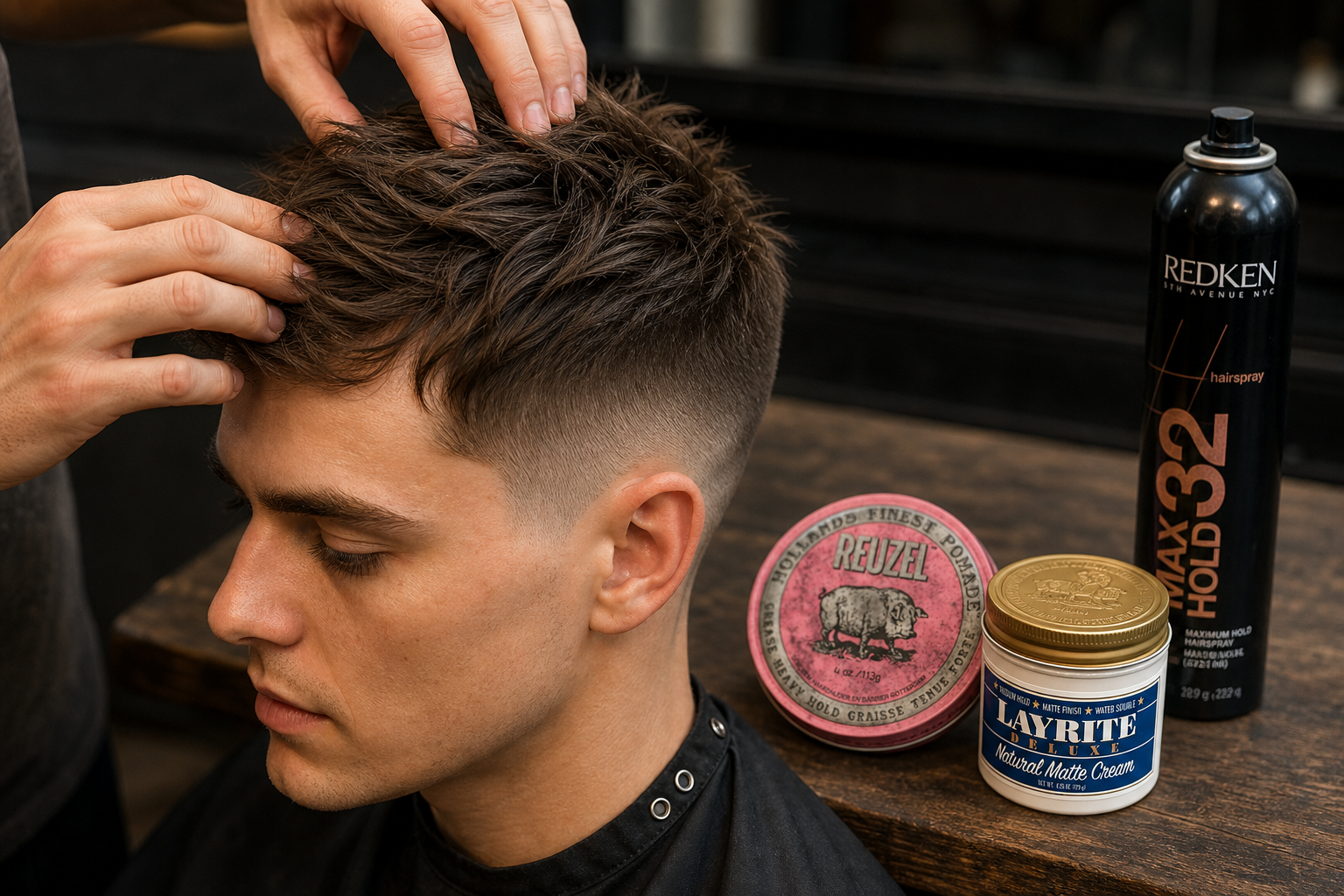
With short cuts, most of the work happens within two minutes after drying. There's no length to hold the shape with its own weight, so the styling product takes over as the framework – it gives the hair texture, separates individual strands, and keeps them in the chosen direction for hours. Whether you wear a short crop, an undercut with a longer fringe, or a soft pixie, the order is always the same: texture first, then hold.
The three most common formats in the category of shaping pastes, creams, and clays differ in two things – how strongly they pull on the hair and what the final surface looks like.
- Matte Paste – thicker consistency with a strong pull. It holds strands exactly where you place them and doesn't leave a shine on the hair. It's perfect for short and thicker hair that you want to tousle into an irregular texture.
- Clay – contains a mineral component that makes it appear drier and visually thickens the hair. It's suitable for finer hair that lacks support at the roots and offers a matte, naturally-looking finish.
- Styling Cream – the lightest of the three formats. It doesn't harden, just aligns the direction and gives the hair a pliable movement. Choose it when you want to smooth a short cut rather than break it into spikes.
For dry hair, work with a small amount – for pastes and clays, about the size of a pea is enough. Rub the product between your palms until it warms up and becomes transparent, and only then apply it to the hair. Start from the nape and crown, leaving the front section for last; if you start at the front, you'll use most of the product on the fringe, leaving the rest of the head shapeless.
For damp hair, gel stylers and light creams are more suitable. Towel-dry the hair so it doesn't drip, distribute the product throughout the length, and finish the shape with a hairdryer and a small round brush or just your fingers. The hold created during drying usually lasts longer because the hair dries directly in the shape you've directed it.
Among professional pastes, a clear choice is Reuzel Extreme Hold Matte Pomade – strong pull, completely matte finish, and the ability to hold even upright strands. Depot No. 312 Charcoal Paste takes a different approach: thanks to active charcoal, it appears drier and is more pleasant on finer hair, where a full paste might feel heavy. If you prefer styling on damp hair, opt for the texturizing gel styler Wella Professionals EIMI Texture Pearl Styler – it spreads well, defines individual strands, and keeps the hair flexible.
Secure the hairstyle at the end only if you really need to keep it – for a full workday, a photo shoot, or in the wind. A strong hairspray like Schwarzkopf Professional Silhouette Super Hold Hairspray should be applied from a distance of about 25–30 cm in short bursts; one continuous layer up close will glue the hair and you'll lose the texture you've just created. For very short cuts, often it's enough to fix just the crown and the line above the forehead, the rest will hold its shape on its own.
Medium Lengths: Volume from Roots to Ends
Shoulder-length hair has a unique nature. It's long enough to be weighed down by its own weight, but not yet long enough to hold its shape on its own. In the morning, the volume looks convincing, but by noon, the roots give in and the lengths blend into one plane. The solution isn't in a stronger hairspray at the end, but in layering – each step from washing to final fixing does its part, and only together do they last all day.
The foundation is decided on damp hair. Leave-in care like Milk_Shake Incredible Milk serves as a base for styling: it eases detangling, softens the surface of the lengths, and keeps the ends pliable without unnecessarily weighing them down. Apply it roughly from ear level down and skip the roots – that's where you need the opposite, lightness and space.
Root volume is created on wet hair and is only fixed by blow-drying. Spray Schwarzkopf Professional Osis+ Volume Up specifically into the lifted strands at the scalp, not along the entire length. Then dry your hair upside down, or transfer it to the opposite side while drying than you usually wear it – the root remembers the direction in which you dry it.
Mousse is a step often skipped with medium lengths, yet it holds the shape between the root and ends. Opt for a light foamy texture like Alter Ego CureEgo Hydraday Whipped Cream: spread it in your palms and run it through damp lengths, only then start blow-drying. Medium lengths are pulled down by too generous a dose faster than long hair, so start with a smaller amount and add more if needed.
Straight and wavy hair diverge at this point:
- Straight hair needs mechanical volume. Dry it with a round brush strand by strand, lift each strand vertically from the head at the end and let it cool for a moment before releasing it.
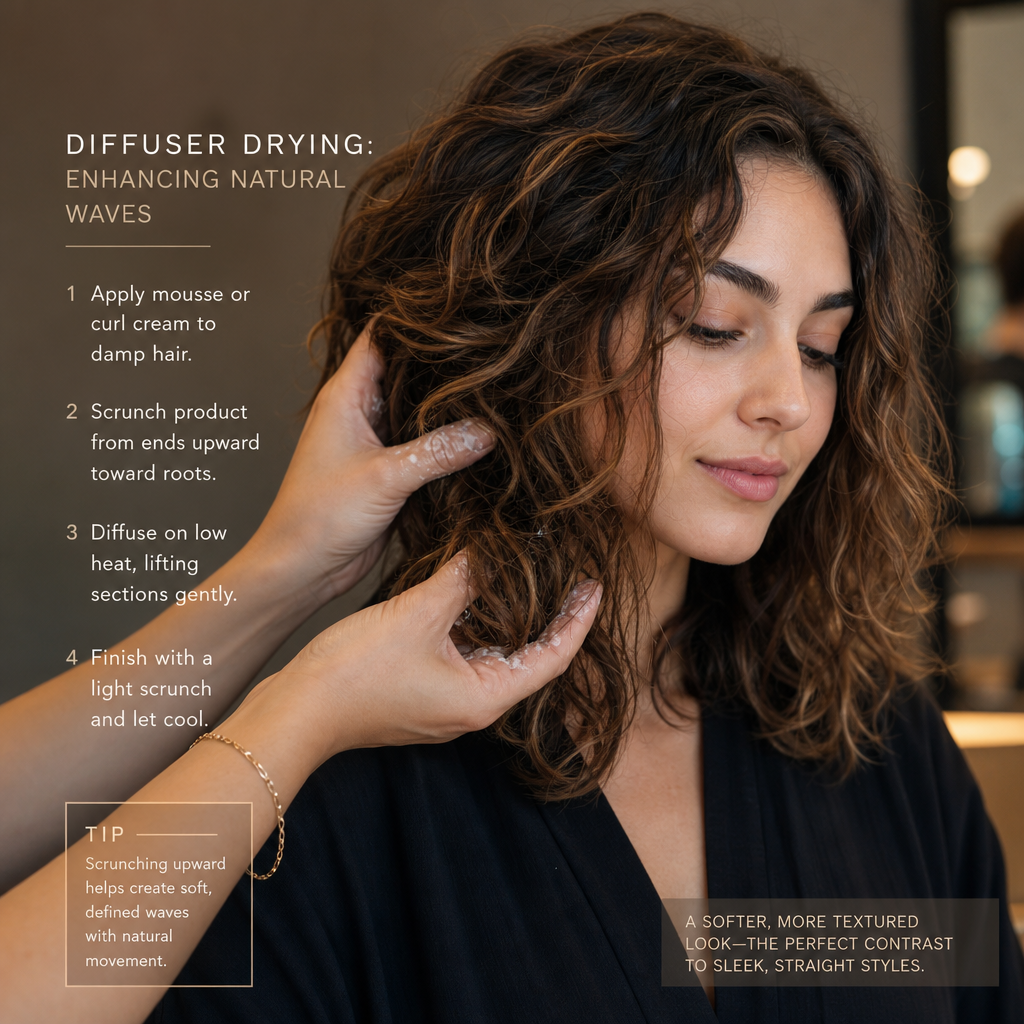
- Wavy hair, on the other hand, needs calm. Scrunch the mousse into the waves from bottom to top, dry with a diffuser at a lower temperature, and touch the hair as little as possible during drying – unnecessary combing breaks the wave shape and the volume turns into frizz.
The final step is fixing, and here medium lengths decide between hold and natural movement. A flexible hold hairspray, like Sebastian Professional Re-Shaper Strong Hold Hairspray, maintains the shape but doesn't bind the hair into a solid shell or stick it together. Apply it from a distance of about 25 to 30 centimeters, in short bursts, and more on the root area and top layer rather than evenly over the whole head. If the volume relaxes during the day, just lift the hair at the roots with your fingers and add a short burst – restyling the whole hairstyle isn't necessary.
When you line up the steps, the whole process takes just a few minutes: leave-in care for the lengths, volumizing spray for the roots, mousse for damp hair, targeted drying, and finally hairspray. You can skip some things, but it's the combination of root volume with drying in the opposite direction that keeps the hairstyle up the longest for medium lengths.
Long Hair: Smoothness, Shine, and Length Protection
For long hair, the focus shifts from shape to surface. While shorter hair is judged mainly by how well the style holds, for shoulder-length hair and longer, the eye notices smoothness, shine in the light, and the condition of the ends. These ends are the oldest part of the hair – they've been through dozens of washes, blow-drying, and coloring, so any lack of care shows up here first.
That's why styling for long hair doesn't start with the final product, but with preparation. The order of the layers often has a greater impact on the result than the choice of hold. A proven sequence looks like this:
- Leave-in care on damp hair – makes detangling easier and smooths the surface of the lengths.
- Heat protection before blow-drying, straightening, or curling – applied before you turn on the heat.
- Smoothing styling spray – depending on the product type, applied to damp hair and finished with drying.
- Final oil or serum on dry hair – only on the lower part of the lengths and in small amounts.
Leave-in conditioners are a basic layer for long hair, not an extra. They are applied to towel-dried hair roughly from the middle of the lengths down, and their main task is to make detangling easier, a moment when long hair often suffers. Lakmé Lak-2 Instant Hair Conditioner fits well into this role – a leave-in treatment that you spray over the lengths and leave in without rinsing. If you have fine hair, use a smaller amount and avoid the root area to maintain volume.
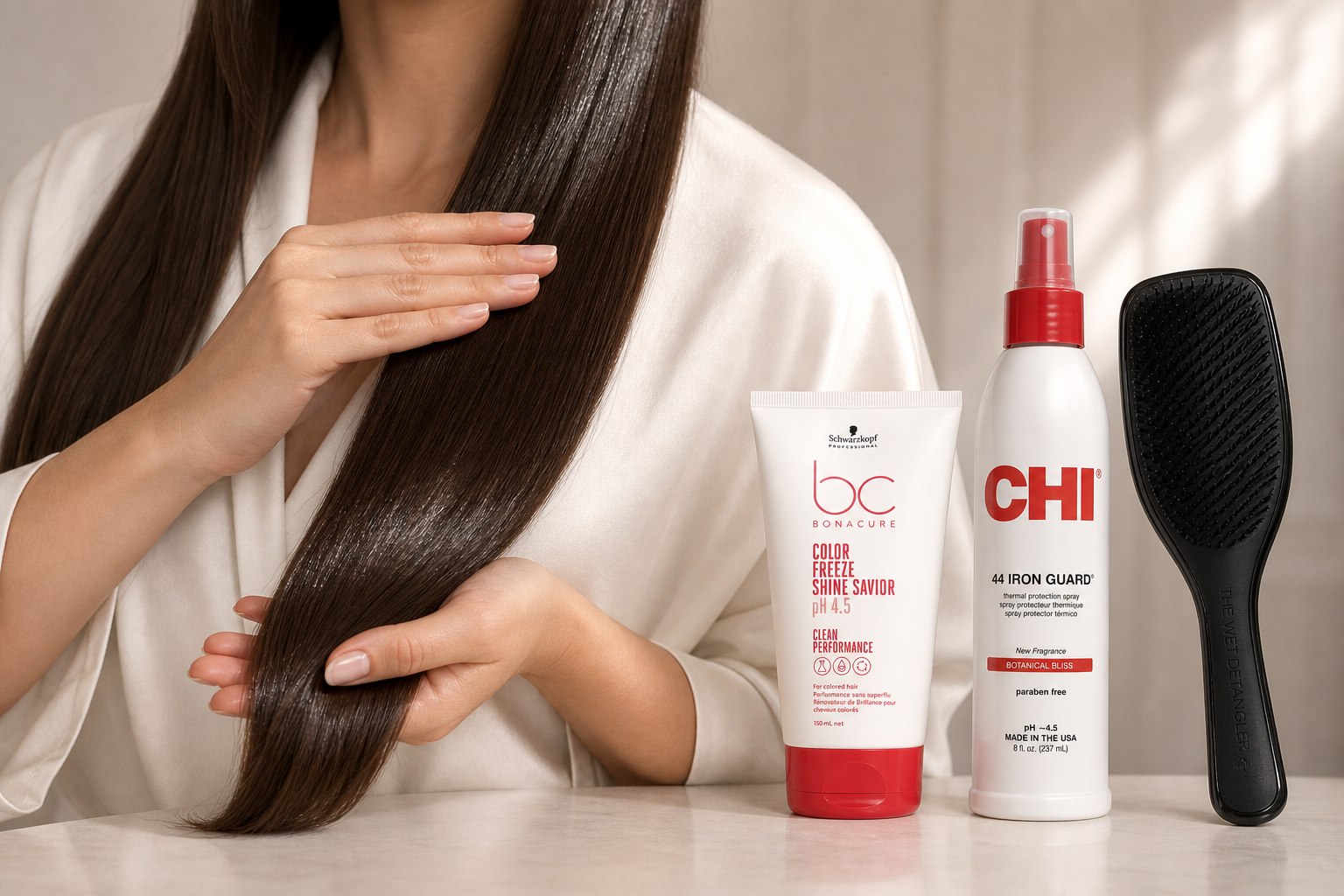
Heat protection is a step most often skipped in the morning routine, and with long hair, it shows the fastest. Hot air and straightener plates repeatedly affect the lengths day after day. Products designed specifically for this step include CHI 44 Iron Guard, a spray for use before straightening or curling. Apply it evenly over the entire length, not just one spot, and let the hair dry a bit before using a hot tool.
A smooth surface for long hair largely depends on how the hair behaves in humid air. Color Wow Dream Coat Supernatural Spray is among the styling sprays applied to damp hair and activated by heat during drying – it creates a uniform layer on the hair surface, helping the lengths stay smooth throughout the day. It's especially appreciated by those whose hair frizzes in humid weather or who find their straightened hair loses its sleekness within hours.
Finish the shine at the very end, on dry hair. Light oils are more suitable than thick creams because they don't weigh down the lengths visually. Moroccanoil Treatment Light is a lighter version of the classic oil treatment, targeting finer and lighter hair where the line between shine and limpness is thin. Use a pea-sized amount, rub it between your palms, and apply to the bottom third of the lengths. Oil applied too high will weigh the hair down before it can add shine.
And one last note, without which all styling can easily be undone: detangling. Long hair most often breaks when pulling through knots – whether wet after washing or dry before styling. Tangle Teezer brushes, such as the Wet Detangler model, are designed for detangling wet hair. Work with them in short sections from the bottom up, not in one stroke from the roots. By removing knots first and then exposing the hair to heat, you save a significant amount of work that would otherwise have to be compensated by the final product.


Blonde and Brown Shades: Styling That Doesn't Weigh Down the Color
The shade is created in the salon chair, but it's maintained at home. What you wash your hair with and what you apply before blow-drying determines whether your blonde stays cool or turns yellow, and whether your brown remains rich or fades to a rusty hue. Styling and color care don't have to be two separate routines – they can be combined to complement each other.
Blonde Without Yellow Tones
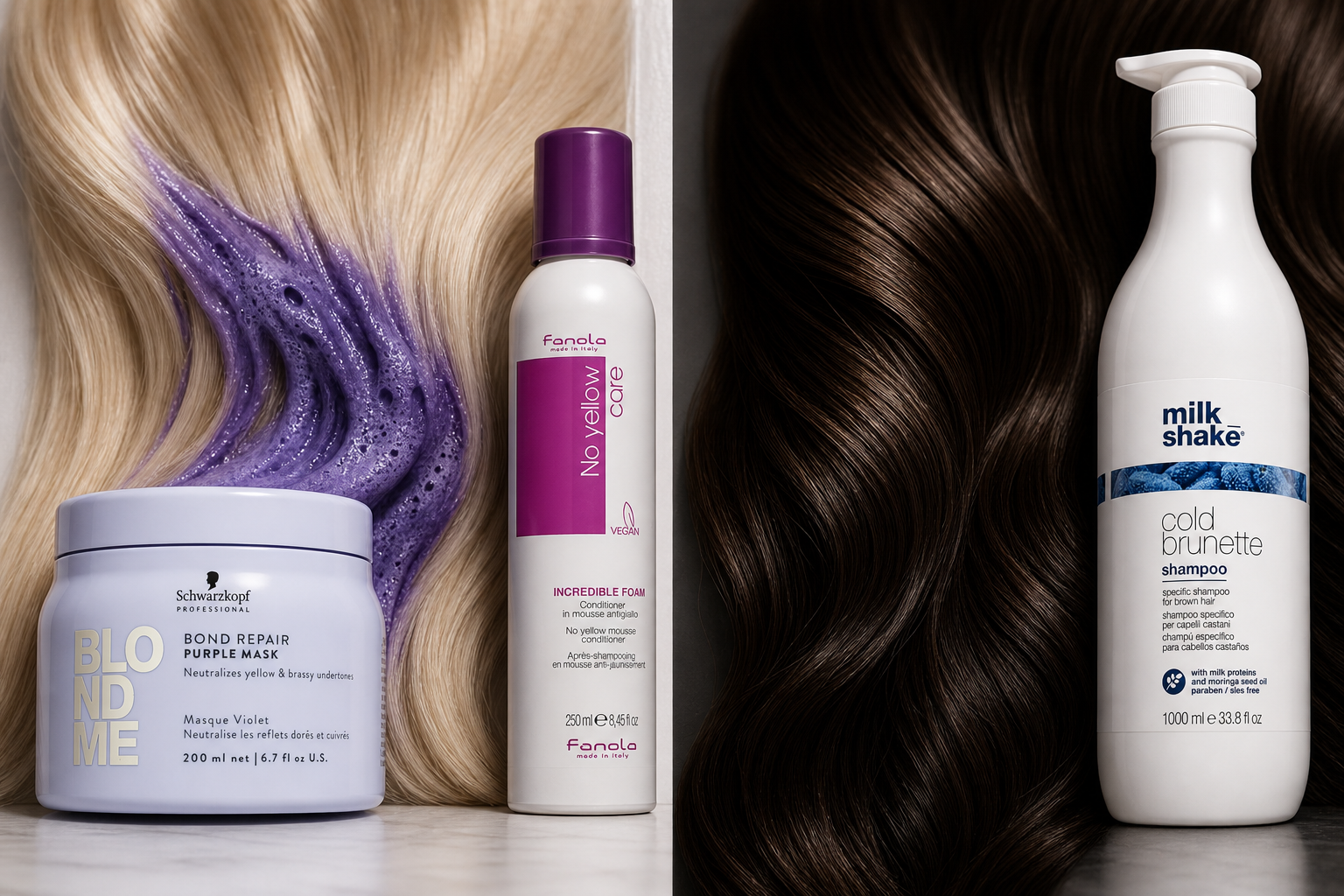
Light hair has little natural pigment in the lengths, so warm undertones show up faster than in darker shades. The key is a toning treatment with purple or pearl pigment, which visually neutralizes warm tones and restores a cooler look to the hairstyle.
- Wella Professionals Color Fresh Mask Pearl Blonde – a toning mask with pearl pigment. It also works as a treatment, so you can use it instead of a regular mask, usually once a week.
- Kemon Actyva Colore Brillante Anti-Yellow Shampoo – an anti-yellow shampoo that's ideal for alternating regularly with a standard shampoo for colored hair.
- Fanola No Yellow – a highly pigmented range, especially useful for very light and highlighted hair. Be sure to monitor the application time according to the instructions.
The rule is simple: the lighter the blonde, the shorter the time to leave the pigment on, and the more carefully you should monitor even application. Divide the product into strands, comb it through with your fingers from lengths to ends, and only then add to the roots.
Brown Shades Between Salon Visits
With brown color, it's not about a yellow undertone but about pigment washing out. The cool component usually disappears first, leaving a warm red, and the shade starts to look brassy. Gentle washing with products designed for colored hair and toning treatments can refresh the color without resorting to a new dye.
- Lakmé Teknia Color Refresh – a toning shampoo and mask in the same shade. The combination provides a more noticeable effect than the shampoo alone and is suitable roughly halfway between coloring sessions.
- Kemon Yo Cond Color System Toning Cond Frosted Chestnut – a toning conditioner in a chestnut shade that evens out faded lengths and restores depth.
- Wella Professionals SP Color Save Shampoo – an everyday essential for colored hair if you want to maintain rather than refresh the pigment.
For darker shades, gloves and a quick sink rinse are useful, as the pigment can leave marks. And if you're undecided between two shades, start with the lighter one – you can always darken it later.
How to Arrange It According to Length
- Short Hair – leave the toning treatment on for a shorter time, as the pigment absorbs quickly on a small area. After drying, a small amount of product from the styling pastes, creams, and clays category, spread in your palms, and a light finish with hairspray is enough.
- Medium Lengths – use toning instead of a mask to avoid weighing hair down with two rich products in succession. Base your styling on one additional fixation step, not layering three products.
- Long Hair – apply toning pigment mainly to the lengths and ends, where the color is most washed out. For finishing, opt for a leave-in treatment that smooths the hair and makes detangling easier.
Whether you're maintaining a cool blonde or a rich brown, the principle remains the same: care addresses color, styling addresses shape, and both steps should remain light. Specific products for final fixation and length protection can be found in the categories of hairsprays, styling pastes, creams and clays, and leave-in treatments.

Category
Recommended articles

"Give a girl the right shoes and she can conquer the world!" Marilyn Monroe