
Ajmal – The Dubai Perfume House Worth Discovering
In recent years, Arabian perfumes have found their way to customers in the UK. Whether you've only glanced at them or already have your first bottle at home and wish to continue exploring, the name Ajmal will eventually catch your attention. This Dubai perfume house has long been a favorite in our catalog among representatives of Arabian perfumery and is one of the brands that make it easiest to enter the genre.
Arabian perfumery is based on a different tradition than European perfumery, and it's good to know what to expect. While European compositions often emphasize lightness, citrusy openings, and a transparent trail, Arabian fragrances delve deeper. They work with richer bases, resins, and ingredients that you rarely find in standard drugstore offerings.
In practice, this difference is evident on several levels:
- Use of Oud. Agarwood, known as oud, is as characteristic a material for Arabian perfumery as bergamot is for the classic French school. It tends to be smoky, leathery, and slightly balsamic, anchoring the entire composition clearly.
- Amber, Rose, and Spices. Alongside oud, you often find amber sweetness, rich rose, and spices like saffron or cardamom. The result feels warmer and more sensual rather than fresh.
- Richer Base Notes. Vanilla, musk, sandalwood, and tonka bean hold the fragrance together, giving it a volume that develops gradually.
- More Pronounced Trail. Arabian compositions are typically louder and generally last longer on the skin than light summer eau de toilettes. It's advisable to start with fewer sprays.
- Higher Concentration. Most Arabian novelties come as Eau de Parfum or even Parfum, in concentrations that make a big impact even with a single layer.
This is why Arabian fragrances evoke such strong reactions. Some people fall in love at first scent, while others need a few wears to get used to their intensity. Ajmal, in this regard, is quite approachable: its compositions are easy to understand, not unnecessarily heavy, and many can be worn outside of evening occasions. If you're just discovering Arabian perfumery, it's a sensible place to start.
In the following sections, we'll introduce the brand from two perspectives. First, we'll explore the story of Ajmal, where it comes from, and how it evolved from a family business into a perfume house based in Dubai. Then we'll dive into an overview of the nine best-selling Ajmal perfumes from our catalog, where we'll always discuss how the fragrance smells, who it suits, and what occasion it's suitable for.
From Oud Trading to a Dubai Perfume House
Before Ajmal became a name found on bottles across the Middle East, it was a wood trading business. In 1951, Haji Ajmal Ali began trading agarwood in Assam, India—a raw material known in perfumery as oud. Assam is one of the regions where agarwood naturally grows, and selecting, maturing, and processing it was a craft passed down through personal experience, not manuals. An oud trader had to understand what they held in their hand: a piece of wood looks like a piece of wood, but the difference lies in what is released from it after distillation.
This is where the journey from a trading company to a manufacturer begins. Those who buy and sell the raw material must know how to assess it; those who can assess it will sooner or later start thinking about what can be created from it. In the 1970s, the company moved to the Middle East and settled in Dubai, United Arab Emirates. It was a logical step: in this part of the world, oud, along with amber and rose, has deep cultural roots, and perfume is not a festive accessory but a regular part of the day.
Dubai became the home base and the place where trading transformed into manufacturing. Ajmal gradually built its own development and production of fragrances, so compositions are not created as orders at an external perfumery lab but in-house. This includes their own agarwood plantations in India—a return to the raw material where the whole story began, just from the opposite side: from the position of a grower instead of a buyer. The company is still led by the founder's family, now in the third generation.
On the business side, this has grown into a network of hundreds of branded stores in the Middle East and exports to dozens of countries. However, for you as a reader, what matters more is what this history means for the fragrances themselves. Ajmal's signature can be read from four raw materials that recur in its collections time and again:
- Oud as a foundation, not an ornament. Agarwood is often the main component in Ajmal's compositions, serving as the base rather than a decorative addition for its exotic name.
- Amber and resinous depth. Sweetly balsamic amber adds richness and a longer resonance to the fragrances, which is typical of the Arabic school.
- Rose in an Arabic interpretation. Here, the rose tends to be darker, more jam-like, and spicier than in European floral compositions, often paired with oud.
- Spicy and woody notes. Saffron, cardamom, pepper, or sandalwood form the transition between the opening of the fragrance and its woody base.
So when you choose a bottle from the Amber Wood, Aurum, or Qasida lines from the catalog, you're not just buying a specific fragrance. You're buying the style of a house that originated with agarwood and never completely strayed from it—and that can present this raw material in a way that's understandable even to a nose accustomed to European perfumery. This is precisely why Ajmal is a good entry point into Arabic perfumery: it offers authentic material, but not in a form that requires prior experience.
Best-selling Ajmal Perfumes – Ranks 9 to 6
We begin our ranking with a quartet that serves as a safe introduction to Arabian perfumery. The compositions in ranks 9 to 6 are straightforward, easy to wear, and don't require any extra boldness from you – yet you can still recognize the signature of the Dubai house: a warm base, sweet wood, and a gently lingering trail. All four are Eau de Parfum with a volume of 100 ml and are classified as unisex, so you can easily share them as a couple.
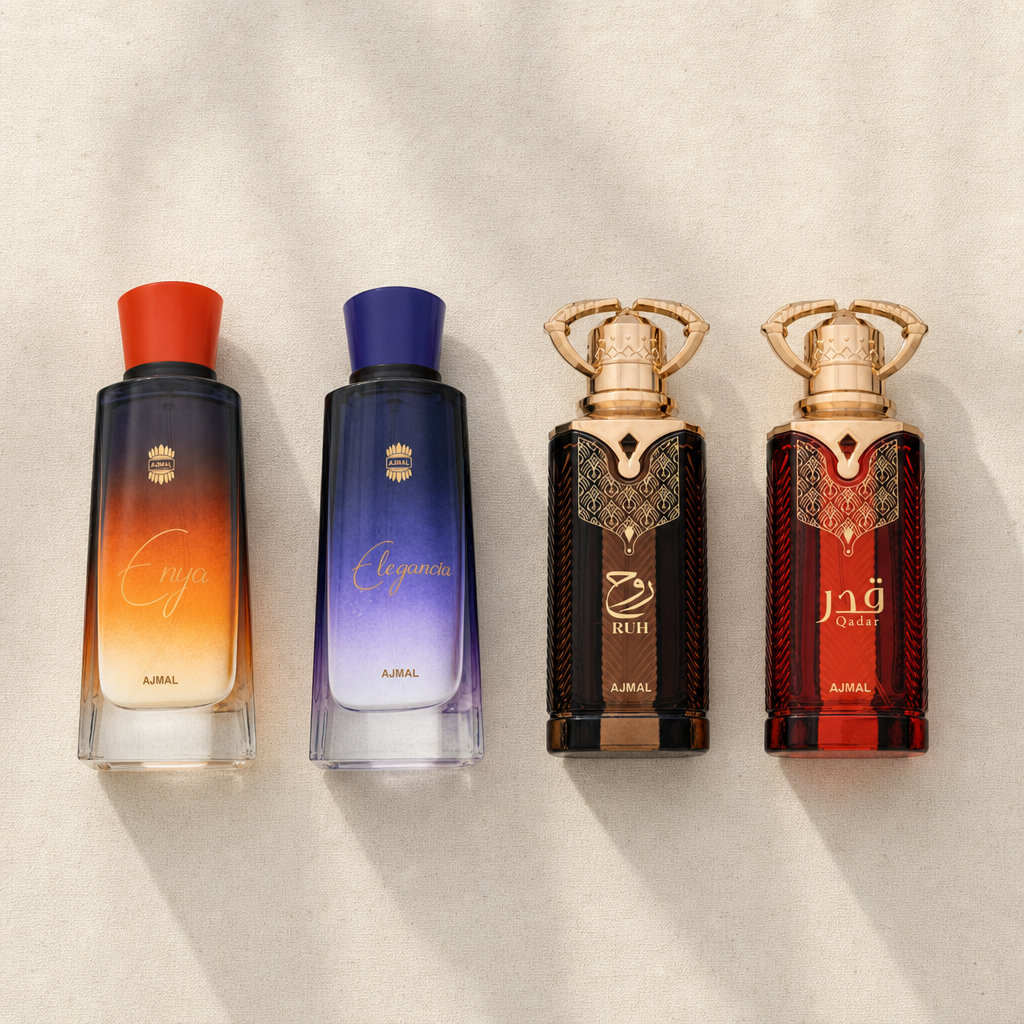
9th Place – Ajmal Enya
Enya is the most autumnal choice of this quartet – measured by the ratio of warm to fresh notes in the composition. The opening features citrus and fruit, intertwined with a touch of coffee; this adds depth to the start and prevents it from being just sweet.
- Top Notes: citrus, fruit, and a touch of coffee
- Heart: tuberose, jasmine, and rose
- Base: powdery notes, Tonka bean, vanilla, and cinnamon
Eau de Parfum, 100 ml, unisex. It shines best in cooler months and during evening gatherings. It's perfect for you if you enjoy sweeter, spicy scents and want to explore Arabian perfumery without starting with a bold oud.
8th Place – Ajmal Elegancia
Elegancia is the gentlest of the quartet – it relies on a floral heart rather than a spicy or woody base. It opens with fresh passion fruit, followed by a floral part and a soft, powdery sweet finish.
- Top Notes: passion fruit
- Heart: orchid and peony
- Base: musk and vanilla
Eau de Parfum, 100 ml, unisex. Suitable for festive evenings, dates, and social events where you don't want to stand out too much. It's a good choice for anyone who usually wears floral perfumes and wants to gradually approach the Arabian school of scents.
7th Place – Ajmal Ruh
With Ruh, sweetness appears right from the start: the composition opens with Tonka bean and amber, making the fragrance feel soft and balsamic from the first breath. The heart then shifts it to a more earthy position, and the base returns to a warm sweetness.
- Top Notes: Tonka bean and amber
- Heart: labdanum and patchouli
- Base: musk, Siam benzoin, and vanilla
Eau de Parfum, 100 ml, unisex. More suitable for evening and cooler weather – it may feel heavy on a hot day. It will be appreciated by those who enjoy balsamic and resinous notes and don't mind a more pronounced trail.
6th Place – Ajmal Qadar
Qadar is the richest in layers from this group: in the pyramid, you'll find fruit, flowers, and a sweet-leathery finish. The opening is fresh and fruity, with a pistachio note giving it an unexpectedly creamy touch. The heart is classically floral, and the base transitions into a caramel sweetness supported by wood and leather.
- Top Notes: bergamot, mandarin, pear, blackcurrant leaves, and pistachio
- Heart: jasmine, lily of the valley, iris, and rose
- Base: caramel, cashmere wood, leather, and musk
Eau de Parfum, 100 ml, unisex. Best suited for evening events and moments when you want your fragrance to be noticed. Of the quartet, it's the most distinctive composition, so we recommend trying it once you know you enjoy the sweeter oriental style.
These four perfumes allow you to test Arabian perfumery without much risk – they are distinctive enough for you to determine if this style suits you, yet moderate enough for everyday wear. The higher we move up the ranking, the richer and more unique compositions await you.
Best-Selling Ajmal Perfumes – Ranks 5 to 1
The top half of the ranking belongs to fragrances that have remained popular with customers for the longest time: two flagship woody-amber compositions, an incense profile, a floral-tobacco oriental, and a sweeter choice for women. For each, we'll explore the fragrance layers, volume, occasion, and longevity.
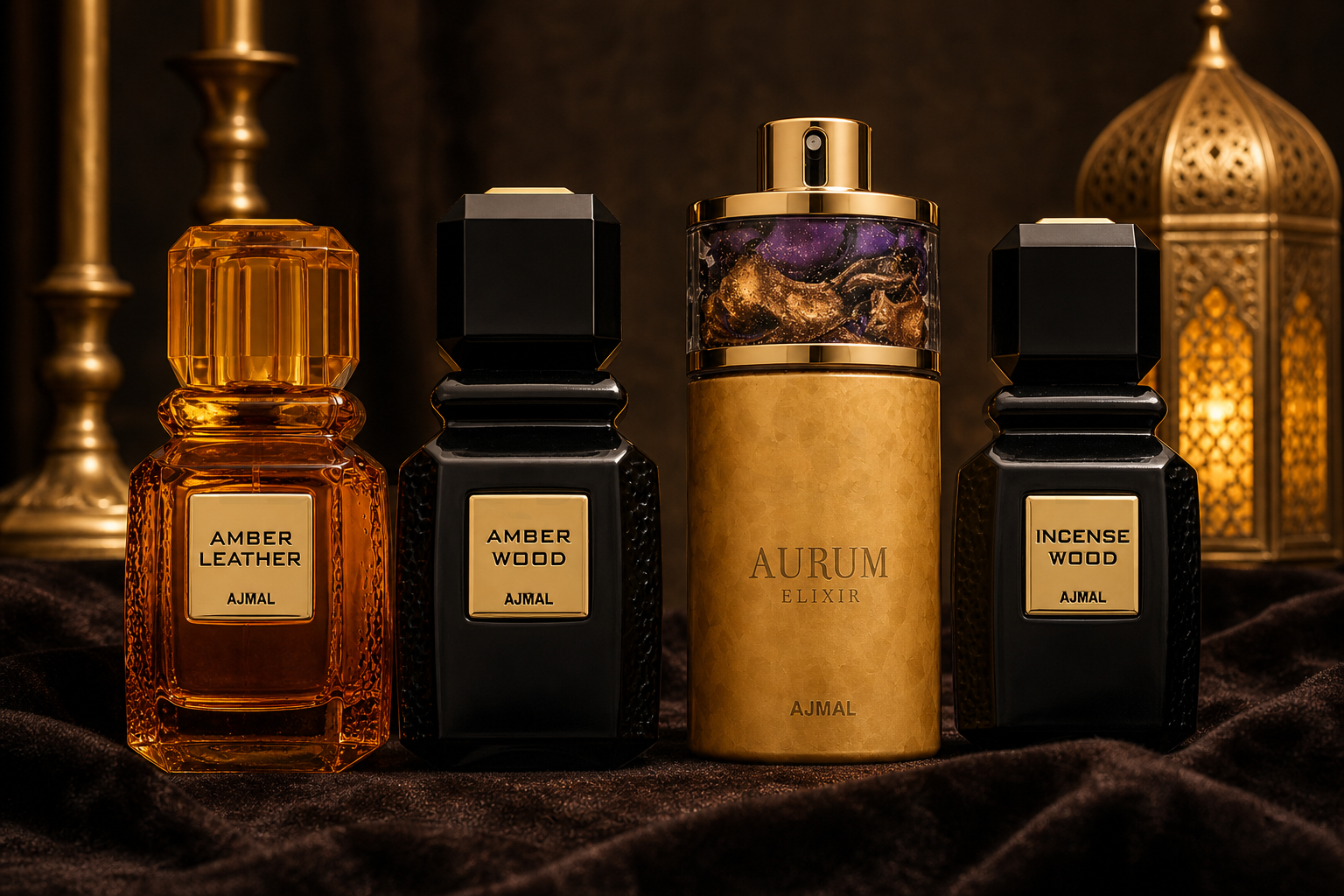
5th Place – Ajmal Incense Wood
A woody composition built on incense.
- Top Notes: pink pepper, bergamot, and saffron.
- Heart: cashmere wood, incense, and olibanum.
- Base: musk, patchouli, and vanilla.
An eau de parfum in a unisex version, 100 ml volume. It shines best at evening and more formal events. The resinous incense with a base of musk and patchouli are ingredients that typically last long on the skin, and the trail is more dense than airy – so you can use fewer sprays.
4th Place – Ajmal Qasida Dahabia
An oriental composition where the floral heart meets tobacco.
- Top Notes: bergamot, nutmeg, and pink pepper.
- Heart: jasmine and rose complemented by a tobacco note.
- Base: amber, vanilla, and musk.
An eau de parfum in a unisex version, 60 ml volume – the smallest bottle of the five, suitable if you want to get to know an oriental fragrance. The sweet amber-vanilla base lasts longer than the fresh opening, so the scent evolves throughout the evening. It's more suited for social events and cooler months.
3rd Place – Ajmal Aurum Elixir
The only women's item in the top five and also the sweetest fragrance of the lineup.
- Top Notes: blackcurrant, bergamot, and strawberry.
- Heart: jasmine, caramel, and cashmere.
- Base: patchouli and vanilla.
An eau de parfum for women, 75 ml volume. The fruity opening and caramel heart push it into a gourmand framework, making it accessible even to those who find incense profiles too serious. Patchouli with vanilla keeps the scent on the skin for a longer time, the trail remains sweet but not overpowering. Ideal for evening and celebrations.
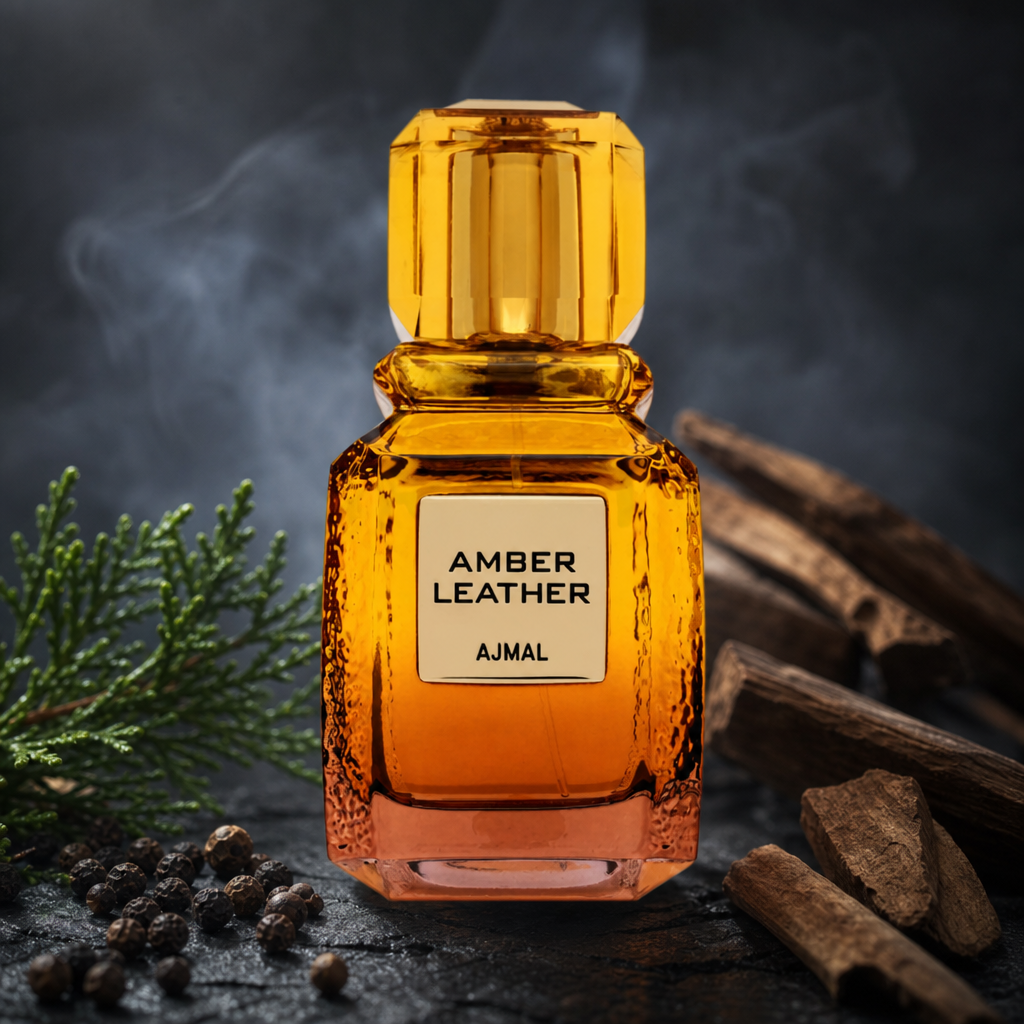
2nd Place – Ajmal Amber Leather
The first of the two flagship woody-amber compositions – dry and smoky.
- Top Notes: pepper, cypress, and nutmeg.
- Heart: sandalwood and incense.
- Base: patchouli, cedarwood, amber, and sandalwood.
An eau de parfum in a unisex version, 100 ml volume. The peppery and coniferous opening transitions directly into the incense part, with minimal fresh phase. The woody base with sandalwood and cedar belongs to more lasting materials, and the intensity is noticeable even with a small dosage – two sprays are more than enough. A choice for the evening and for a recognizable personal signature.
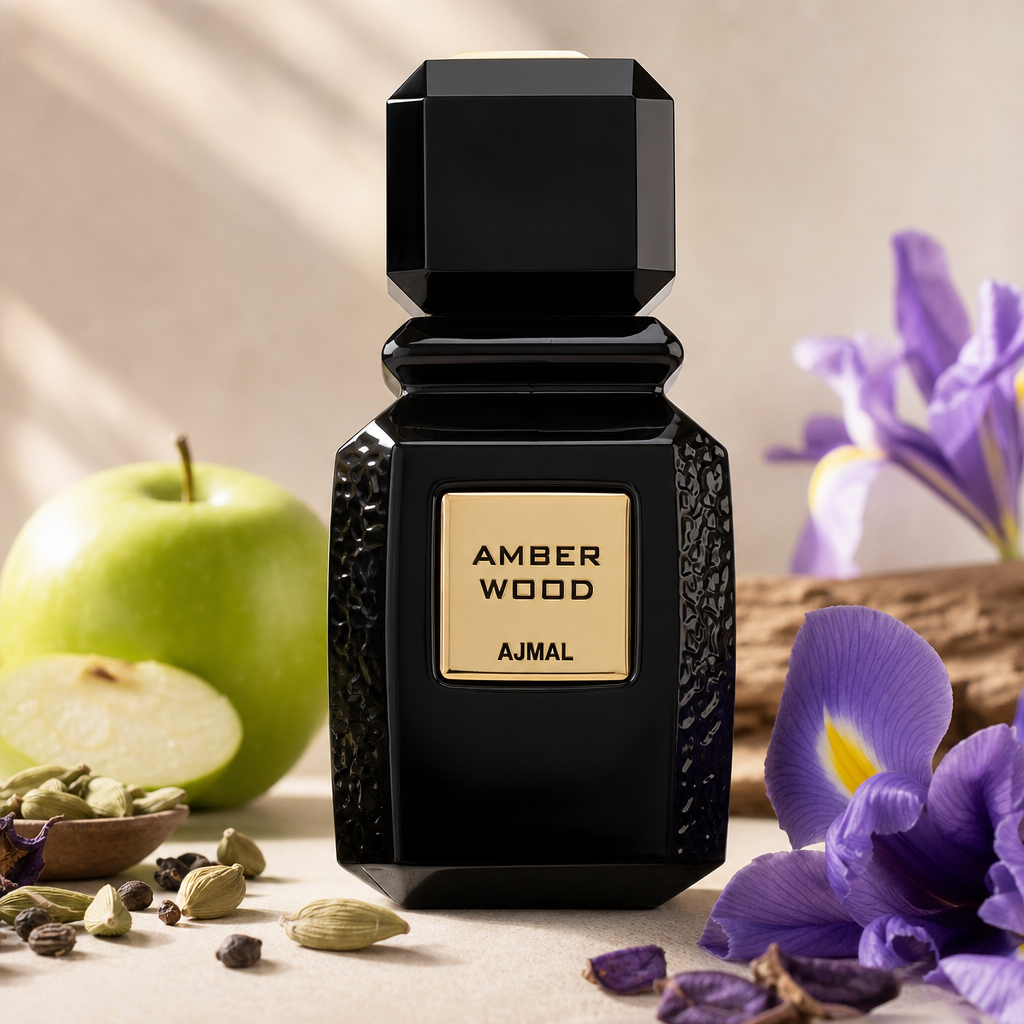
1st Place – Ajmal Amber Wood
The brand's best-selling perfume and also the most wearable scent of the entire five.
- Top Notes: lavender, white pepper, apple, and cardamom.
- Heart: iris and cedar.
- Base: patchouli, amber, and woody tones.
An eau de parfum in a unisex version, 100 ml volume. The opening is gently fruity-spicy thanks to apple and cardamom, the heart with iris and cedar feels smooth, and only the base settles the scent into a woody amber position. This gradual arc is likely what earns it the first place – the perfume is suitable for both evening and daytime wear and doesn't bother in the office with just one spray. It also works well as a gift.
Amber Wood or Amber Leather?
Both fragrances share an amber-woody base with patchouli, but they differ in the path they take to reach it. Amber Wood opens with lavender, apple, and cardamom and gradually sinks into wood through powdery iris – it feels softer and is more versatile. Amber Leather starts with pepper and cypress and heads straight to incense with sandalwood, making it drier, smokier, and more distinctive. For a first perfume in the collection or as a gift, go for Amber Wood; choose Amber Leather when you want a fragrance that's immediately noticeable.
How to Choose Your First Ajmal and Where to Go Next
The nine perfumes in the ranking may seem like a diverse mix, but they can actually be categorized by a few simple situations. Whether you're looking for a scent for work, something more striking for the evening, or a gift, the choice narrows down to one question: when and where do you want to wear the perfume most often?
For Every Day and First Introduction to the Brand
If you're just discovering Arabic perfumery, start with compositions that aren't too intense and can withstand daylight. Ajmal Enya features a citrus and fruity opening with a touch of coffee and a floral heart of tuberose and rose – it's sweet but remains clear. Ajmal Elegancia takes an even gentler approach: passion fruit, orchid, and peony over musk and vanilla create a floral accompaniment for the office and casual afternoons. Ajmal Qadar combines a fruity opening with pear and mandarin with a caramel and leather base, making it modern and easy to wear.
For Evening and Cooler Months
As it gets cooler, richer woody and oriental compositions stand out. Ajmal Ruh works with tonka beans, amber, labdanum, and patchouli; it's warm and suits an autumn evening better than a summer noon. Ajmal Incense Wood is based on saffron, incense, and cashmere wood and is one of the most distinctive scents in the entire ranking. Ajmal Amber Leather adds pepper, nutmeg, and a leathery impression over sandalwood, making it more suitable for formal evenings. None of these three perfumes are inaccessible for beginners, just be aware that they are quite noticeable in a room.
As a Gift
When it comes to gifts, the appearance of the bottle and the volume received also play a role. Ajmal Aurum Elixir in a 75 ml volume is designed for women and leans towards a fruity-gourmand profile: blackcurrant and strawberry in the opening, jasmine and caramel in the heart, patchouli and vanilla in the base. Ajmal Qasida Dahabia in 60 ml is the most intimate packaging of the entire nine and also a festive composition with jasmine, rose, and tobacco over amber. When you're not entirely sure of the recipient's taste, it's usually safer to opt for a unisex fragrance rather than a distinctly feminine or masculine one.
How Much to Spray and What Volume to Start With
Arabic compositions tend to be richer and more enduring than light summer scents, and the dosage reflects this. One to two sprays on pulse points – wrists, neck, behind the ears – are usually enough for the whole day; three or more sprays of a dense woody-amber fragrance can be unpleasant for those around you in a closed office or car. Apply perfume to clean, dry skin and do not rub it in, as friction unnecessarily breaks down the top notes.
If you're unsure whether a higher concentration will suit you, start with a smaller volume. A 60 or 75 ml bottle is a lower investment, lasts surprisingly long with intense fragrances, and if you find the composition doesn't suit you, you won't be left with a half-full bottle at home. It's worth moving to a larger bottle only after testing it on your own skin.
If you're still undecided, the safest start is Ajmal Amber Wood. It's no coincidence that it holds the top spot: lavender, white pepper, and cardamom keep the opening fresh, iris and cedar add structure, and patchouli with amber and woody tones anchor the composition for long hours. It's unisex, works both day and night, and suits both the office and social events.
When you're ready to explore further, browse the entire Ajmal range in our catalog – you'll also find scents that didn't make it into the top nine, including smaller volumes and perfumed oils. And if you want to compare Ajmal with other Middle Eastern perfume houses, head to the Arabic perfumes category.
Category
Recommended articles
"Give a girl the right shoes and she can conquer the world!" Marilyn Monroe