



Morning fog, afternoon downpour, and evening wind. We'll show you how to layer primer, foundation, powder, and waterproof eyeliners so your makeup lasts all day.
Why Makeup Doesn't Last in Humidity, Fog, or Wind
Whether you're heading out into thick fog, under an umbrella, or facing a cold wind at the bus stop, you probably know the feeling: your makeup looks perfect in the mirror at home, but after a few hours outside, your skin is unevenly shiny, eyeliner has smudged under your eyes, and foundation around your nose has disappeared. It's not necessarily a flaw in your technique or "bad" cosmetics. Autumn and winter weather simply place different demands on makeup than a dry summer day.
What really affects makeup outdoors? Usually, several factors come together at once:
- Humidity in the air. In fog and drizzle, a fine film of water settles on the skin, disrupting the surface of makeup and powder. The skin then appears shiny, and color can easily smudge.
- Raindrops. A falling raindrop leaves a lighter mark on makeup, and when you instinctively wipe it away with your hand or glove, you also remove part of the makeup.
- Wind. Cold wind dries out the skin, causing makeup to settle in dry patches and highlight flakes. It also irritates the eyes.
- Tearing eyes. In cold wind, eyes naturally tear up. Tears dissolve regular eyeliners and mascaras, running into the inner corner and under the lower lashes.
- Alternating cold and warmth. When you go from freezing temperatures into a heated office or tram, your skin warms up, becomes oilier, and moisture from the warm air can condense on your cold face. This cycle repeats several times throughout the day.
It's fair to say right from the start: no product can withstand everything. Even waterproof mascara has its limits when you repeatedly rub your eyes, and even well-set makeup will change after an hour in the rain without an umbrella. The terms "long-lasting" or "waterproof" describe how a product handles water and time under normal conditions, not a guarantee for every situation. The good news is that durability doesn't rely on one miracle product, but on how each layer complements the others. When each step does its job, makeup lasts significantly longer, and usually, only minor touch-ups are needed in the evening.
In this article, we'll guide you through four steps that logically follow each other:
- a primer that creates a stable base,
- long-lasting foundation set with mattifying powder,
- waterproof eyeliners to prevent smudging,
- the order of steps from morning to evening, including what to keep handy in your purse.
You don't need to change your entire makeup bag for this—often, just adding one or two steps that are missing from your morning routine is enough.
Primer – The Foundation of Long-Lasting Makeup
When it's drizzling outside or a cold wind is blowing, the longevity of your makeup is determined in the first minute – even before you reach for your foundation. Skin that is not adequately prepared reacts to moisture and cold more quickly: it either starts to shine or becomes tight, causing the makeup to settle into fine lines. A primer balances these fluctuations and provides a firmer base for additional layers.
Preparing the Skin: Hydration That Absorbs Quickly
After your morning cleansing, apply a light moisturizer or gel and give it a few minutes to absorb. If you layer primer and foundation over a still damp, greasy layer of cream, the mixture will blend, and your makeup will start to slide during the day – most often around the nose and chin. Opt for a lighter texture and a smaller amount. Save the rich cream for the evening when your skin can regenerate in peace.
The Purpose of Primer
Primer creates a thin intermediary layer between skincare and color cosmetics. It smooths the skin's surface, helps makeup adhere better, and reduces how quickly color fades or seeps into pores. It doesn't mean your makeup will withstand anything, but the difference between morning and late afternoon is noticeably smaller.
Choose based on your skin type:
- Mattifying Primer is suitable for oily and combination skin. It helps control shine, which appears sooner in humid air, and keeps makeup in place where the skin produces more oil.
- Hydrating Primer is ideal for skin that dries out from cold, wind, and overheated interiors. It softens flakes and prevents makeup from highlighting dry areas.
- Illuminating Primer is appreciated by skin that looks tired and dull during the winter months. It gives a subtle glow from within, allowing you to use less makeup.
Less is More: Thin Layer and T-Zone
A pea-sized amount is usually enough for the entire face. Spread the primer with your fingers from the center of the face outward and gently press it into the skin, rather than rubbing it back and forth. A thick layer won't add to longevity – it will more likely create a slippery film that makes it harder for makeup to adhere.
If you have combination skin, it's not necessary to apply one primer everywhere. You can use a mattifying variant only on the forehead, nose, and chin, the T-zone, and leave the cheeks hydrated, or treat them with a hydrating primer. This combination helps keep the T-zone from shining while ensuring the cheeks don't appear dry.
Let the Primer Set
After application, wait about one to two minutes before moving on to foundation. During this time, the primer settles and creates an even base. You'll know it's ready when the skin no longer feels sticky or slippery to the touch. If you apply foundation too soon, the two layers may blend, resulting in a less durable finish. Meanwhile, you can, for example, groom your eyebrows or prepare your brush.
Long-lasting makeup set with mattifying powder
When it's humid and windy outside, regular makeup tends to blend with the skin's oils by midday, highlighting pores and gradually disappearing from the nose or chin. Long-lasting makeup is designed differently. It has a more resilient formulation that forms a flexible film on the skin once it dries, usually offering medium to high coverage and mixing with skin oils much slower. This way, the color and texture last longer, even when rain hits your face.
Whether your skin is oily or rather dry, it's worth choosing the texture based on your skin type, not just the shade:
- Oily and combination skin – a liquid makeup with a matte finish is ideal, preferably a line specifically designed for this skin type, such as Revlon Colorstay for combination and oily skin. The matte finish helps control shine in the T-zone for longer.
- Normal skin – a lighter long-lasting fluid, like Max Factor Lasting Performance, works well and can be layered from sheer to medium coverage.
- Dry skin – choose creamier textures with a natural finish. A strongly mattifying makeup could accentuate flakes on dry areas.
- Skin with more pronounced imperfections – highly covering makeups can help, but they need to be applied sparingly to avoid a heavy look.
In humid weather, a simple rule applies: less product in one layer means better durability. A thick layer dries poorly, shifts easily, and breaks into fine lines when in contact with moisture. Therefore, apply a small amount first and spread it with a sponge or brush from the center of the face outward. Let it dry for a moment before adding another thin layer only where more coverage is needed. Layered this way, makeup blends better with the skin and wears off less during the day.
Concealer should only be applied to areas that truly need it – under-eye circles, redness around the nose, or individual imperfections. Apply it after makeup in small dots and gently blend the edges with your finger or a sponge. Covering a large area with concealer adds another layer that will slide off sooner in humidity. A lighter liquid concealer, like Maybelline Fit Me!, is suitable for under the eyes, while a thicker, more covering texture is better for small blemishes.
Setting with mattifying powder is a step that helps makeup withstand rain and wind better. The powder absorbs excess oil and reinforces the layers beneath it. To avoid a mask-like appearance, use a large fluffy brush to pick up a small amount, tap off the excess, and gently press the powder into the skin with tapping motions. Focus mainly on the T-zone, around the nose, and chin, lightly sweeping over the cheeks. A transparent or very light powder won't change the makeup's shade.
Loose and pressed powders mainly differ in when to use each:
- Loose powder is suitable for morning setting. It is finely milled, evenly covers the entire surface, and sets makeup in a thin, barely visible layer.
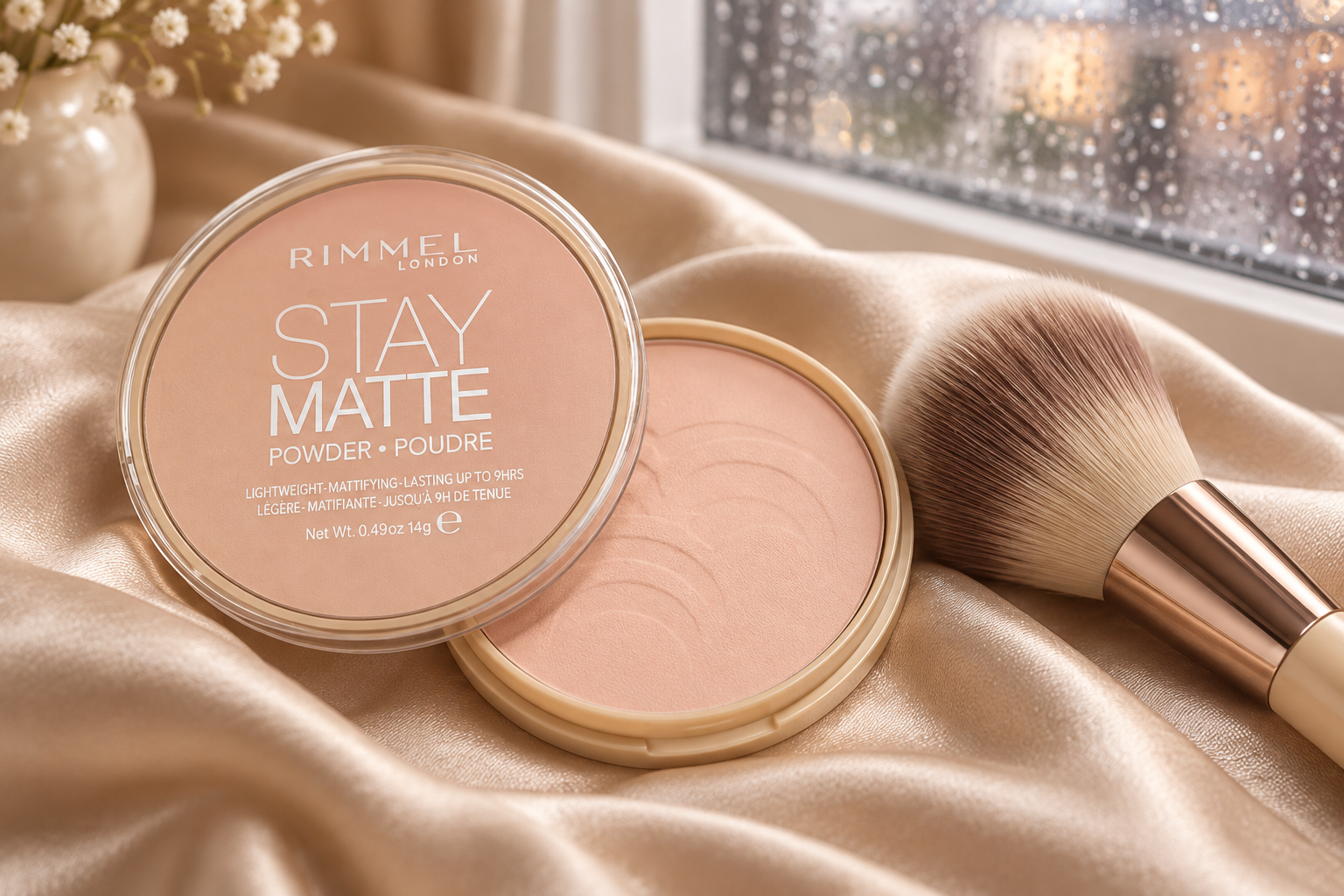
- Pressed powder is practical for touch-ups during the day. The compact case is easy to carry with you, and it quickly mattifies shiny areas. An example is Rimmel London Stay Matte in a transparent shade.

Waterproof Eyeliners: Lines That Won't Smudge
In adverse weather, the eyes are the most sensitive part of your makeup. Cold wind can make them tear up, raindrops can run down from your eyebrows, and every blink can imprint a fresh line onto your upper lid. That's why it's worth choosing products that are prepared for moisture from the start—and applying them in a way that gives them a chance to last.
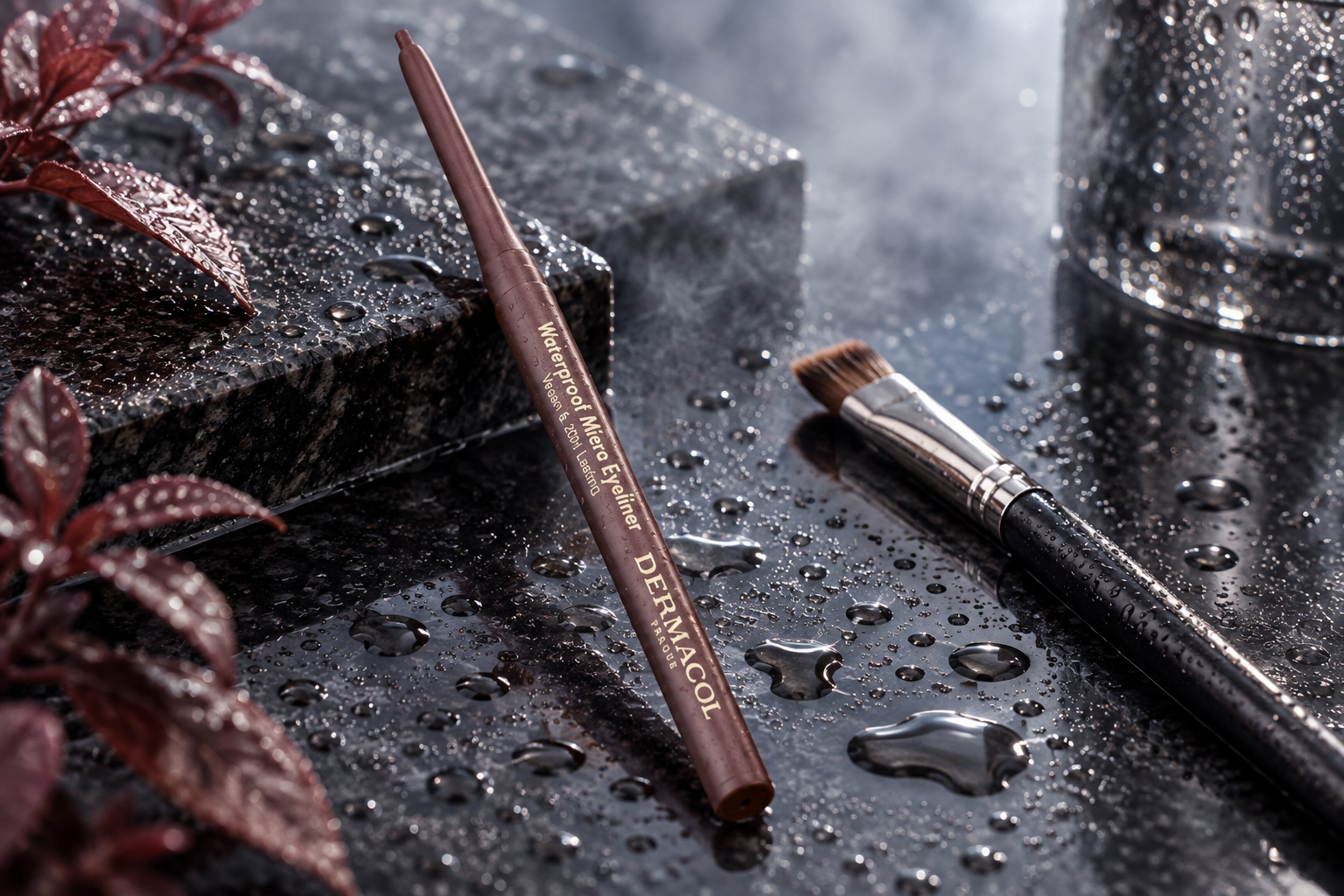
What makes a waterproof pencil different from a regular one. A classic kohl pencil is usually soft and creamy, making it easy to blend. This is an advantage when creating a smoky effect, but a disadvantage when a drop or tear hits it. Waterproof pencils set quickly into a thin, flexible film that doesn't dissolve in water and is less likely to imprint on the lid. Look for the "waterproof" label on the packaging. Be careful not to confuse it—"long-lasting" doesn't necessarily mean the pencil will withstand rain.
How to apply the line as close to the lashes as possible
- Start with a clean lid free of cream residues—a greasy surface makes the line hold less well.
- Briefly warm the pencil tip on the back of your hand so it glides and doesn't pull the delicate skin.
- Draw short strokes close to the lash roots, not one long line. Fill in small gaps between lashes with gentle tapping of the tip.
- Work quickly—waterproof products set fast and are harder to work with once dry.
- Before the line dries, look down into a mirror with slightly open eyes to prevent it from imprinting on the upper lid.
Sealing with shadow. A simple step that significantly prolongs wear: apply a powder eyeshadow in a similar shade over the finished line with a thin angled brush—black or charcoal for a black line, brown for a brown one. The dry layer of shadow secures the line and mattifies it, so it shines less and smudges more slowly. It also gently softens it, so it doesn't look too harsh.
Mascara as a logical continuation. Even a carefully sealed line won't help if dark drops from your lashes run under your eyes. For rain and wind, choose a waterproof mascara and apply it in thin layers to avoid clumping the lashes. If you don't want to use it on all your lashes, at least apply it to the lower ones, which come into contact with tears most often.
When to skip the inner rim of the lid. Lining the inner rim of the lid visually enhances the eye, but in discomfort, it lasts the shortest time because it's directly in the tears—even with a waterproof pencil. If your eyes tear up in the wind, you wear contact lenses, or have sensitive eyes, it's better to skip it and lead the line only on the outer side at the lash roots.
Evening makeup removal: thorough but gentle. Waterproof makeup won't wash off with water alone, so set aside a few extra minutes for removal. Use a two-phase makeup remover or cleansing oil designed for waterproof products. Place a dampened cotton pad on the closed eye, let it sit for a moment, and then gently wipe it downwards. Don't rub the skin around the eyes, as it is thin and sensitive. Remove any residue at the lash roots with a cotton swab.
Step-by-Step Routine from Morning to Evening
When you arrange the steps in order, you create a short morning routine that you can manage even on a weekday. It's not the number of products that matters, but their order and the patience between layers. Each layer needs a moment to settle – only then will the next one hold reliably.
Morning Routine Step by Step
- Skincare. A light moisturizing cream provides a comfortable base for makeup, but a layer that's too rich could unnecessarily dissolve the makeup. Let it absorb for about five to ten minutes – in the meantime, you can focus on your hair or breakfast.
- Primer. A thin layer evens out the skin's surface and gives the makeup something to "cling to." Wait a minute or two until it is no longer sticky to the touch.
- Long-lasting foundation. Apply it gradually in thin layers and allow two to three minutes for it to set before the next step.
- Concealer. It belongs on top of the foundation, only where it's really needed – under the eyes, around the nose, or on minor redness. Under the foundation, you would mostly wipe it off while blending. It needs just a minute.
- Mattifying powder. Gently press it into the skin, especially where shine appears first. The powder sets the entire face, so the following eye makeup won't disturb it.
- Eyes. Waterproof eyeliner, shadow, and mascara come last. If a bit of shadow or mascara falls under your eyes during application, you can easily sweep it away from powdered skin with a brush.
Overall, allow fifteen to twenty minutes. Most of this time is spent waiting for products to dry – and these short breaks are crucial for ensuring your makeup withstands wind and drizzle.
Essentials for Your Handbag
- Pressed powder with a mirror and puff, ideally the same one you use in the morning,
- Mattifying papers that absorb excess oil without adding another layer to the skin,
- Waterproof eyeliner for quick touch-ups,
- A few cotton swabs to wipe away smudged mascara.
Re-powder, Don't Add More
If your skin starts to shine during the day or you're caught in the rain, first dry it and then re-powder. Gently blot excess moisture or oil with a paper or tissue – press, don't rub. Then apply a thin layer of powder only where needed. Another layer of foundation over damp skin would mix with the morning layer and settle into pores and fine lines. It's better to wipe away a smudged line with a swab and redraw it than to cover it with more shadow.
If you want to try the routine, our range of decorative cosmetics offers products for every step – from primers like Dermacol Satin Make-up Base, through long-lasting foundations like Max Factor Lasting Performance, to pressed powders like Rimmel London Stay Matte and waterproof mascaras. Choose according to your skin type and how long your day will be.


Category
Recommended articles

"Give a girl the right shoes and she can conquer the world!" Marilyn Monroe
