
 Riiffs Freeze in Flames: Ice and Flames Illuminate Warsaw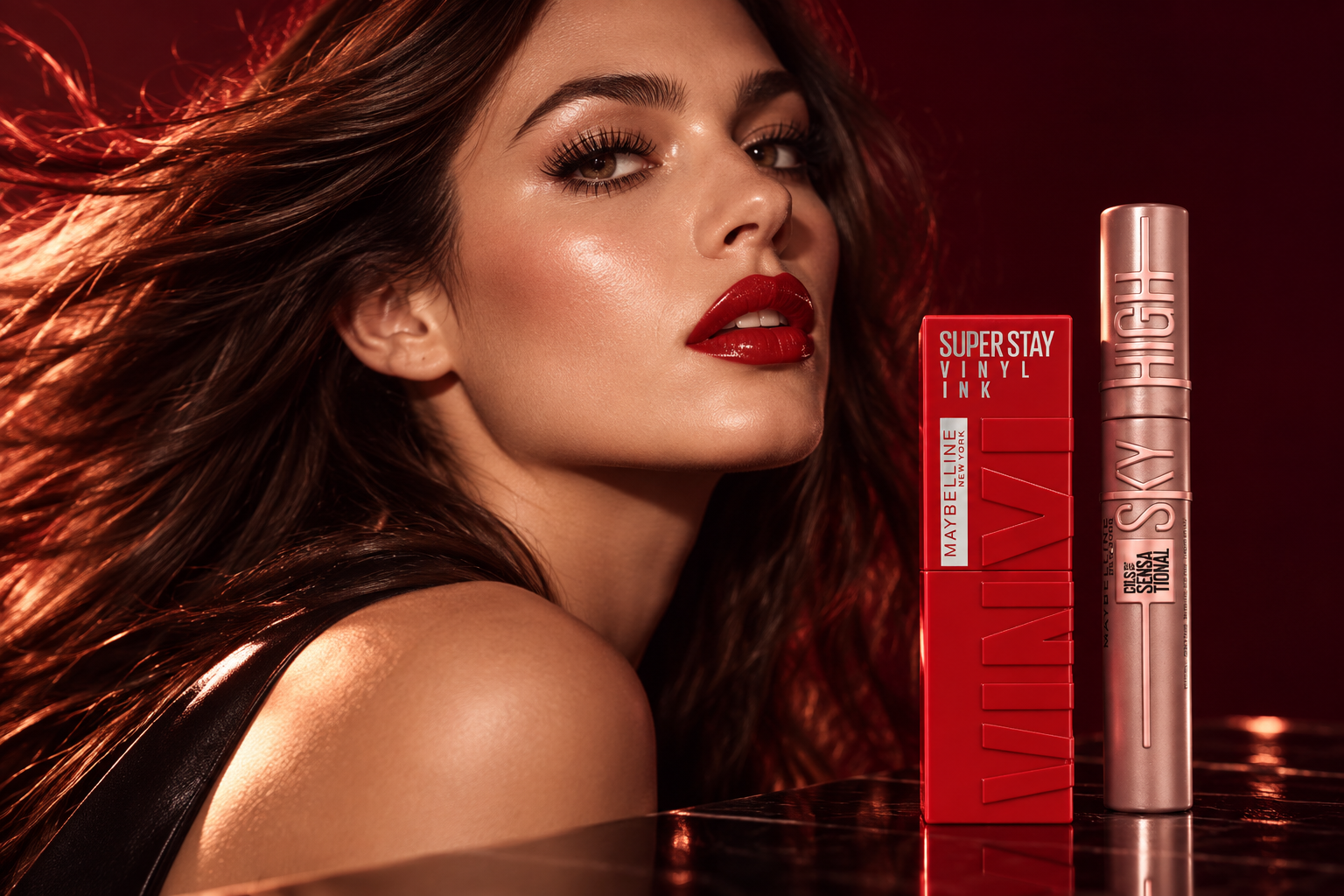
Autumn and winter 2026 take makeup from perfect matte to satin, with laminated brows and lips in vinyl and velvet. We'll advise you on which two to three products to swap to keep your makeup looking current, even on a regular workday.
Autumn and Winter 2026: Changing Textures, Not the Entire Makeup Bag
Whether you associate autumn makeup with deep lipstick shades or prefer a subtle everyday look, seasonal novelties often seem more dramatic than they are. Autumn and winter 2026 don't bring a new makeup technique. The main change is in textures—how the skin, lips, and lashes interact with light.
It starts with the base. The perfectly matte skin that set the tone for the past few seasons is giving way to a satin finish—a soft, non-greasy glow reminiscent of well-hydrated skin. Matte products aren't disappearing; they're just becoming complementary: use a mattifying primer or setting powder specifically on the T-zone, not the entire face.
The same logic applies to lips. Two seemingly opposing textures coexist—vinyl gloss with high light reflection and velvety matte lipsticks with a soft, powdery feel. The difference isn't just aesthetic. In winter, how the texture behaves under a scarf, in an overheated office, and in dry air also matters.
Eyebrows are returning to a more defined shape, but without drawn lines. The current style of laminated brows is more natural than last season's—it's more about grooming the hairs in the direction of growth and filling in gaps so the shape lasts all day. And lashes? Volumizing mascaras are evolving each season to include nourishing ingredients, making the final step of makeup not just decorative.
If you want to simplify your seasonal update, the change realistically involves four product categories:
- Primers and Foundations – determine whether the finish is matte or satin.
- Eyebrow Products – gels, pencils, and powders that maintain shape even after a day in a hat.
- Lipsticks and Glosses – instead of one universal texture, it's worth having two distinct ones this year.
- Mascaras – the final step that can elevate the overall makeup look.
This is also good news for your makeup bag. A complete overhaul of cosmetics doesn't make sense, nor do seasonal trends require it: most of us only need to swap out two to three products that make the most difference. Concealer, blush, eyeshadow, or brushes can stay the same as long as they work well.
For each of these directions, we'll further clarify who they make sense for and how to manage them even on a typical workday morning when you have ten minutes for makeup. We'll rely on specific products from Brasty's range—from more affordable brands like Maybelline, Max Factor, or Dermacol, to L'Oréal Paris, Clarins, or Lancôme.
Seasonal Base: Satin Over Perfect Matte
Autumn and winter skin behaves differently than in summer. The combination of frost and wind outside, and heated, dry air inside, draws moisture from the skin faster than you might notice. A perfectly matte finish that keeps oil at bay in summer can often look dull in the colder months, highlighting fine lines, dry patches around the nose, and dry areas on the cheeks. A satin finish is a sensible compromise. The skin isn’t shiny, nor is it flat – it retains a soft glow that brightens the face even in the dim November light.
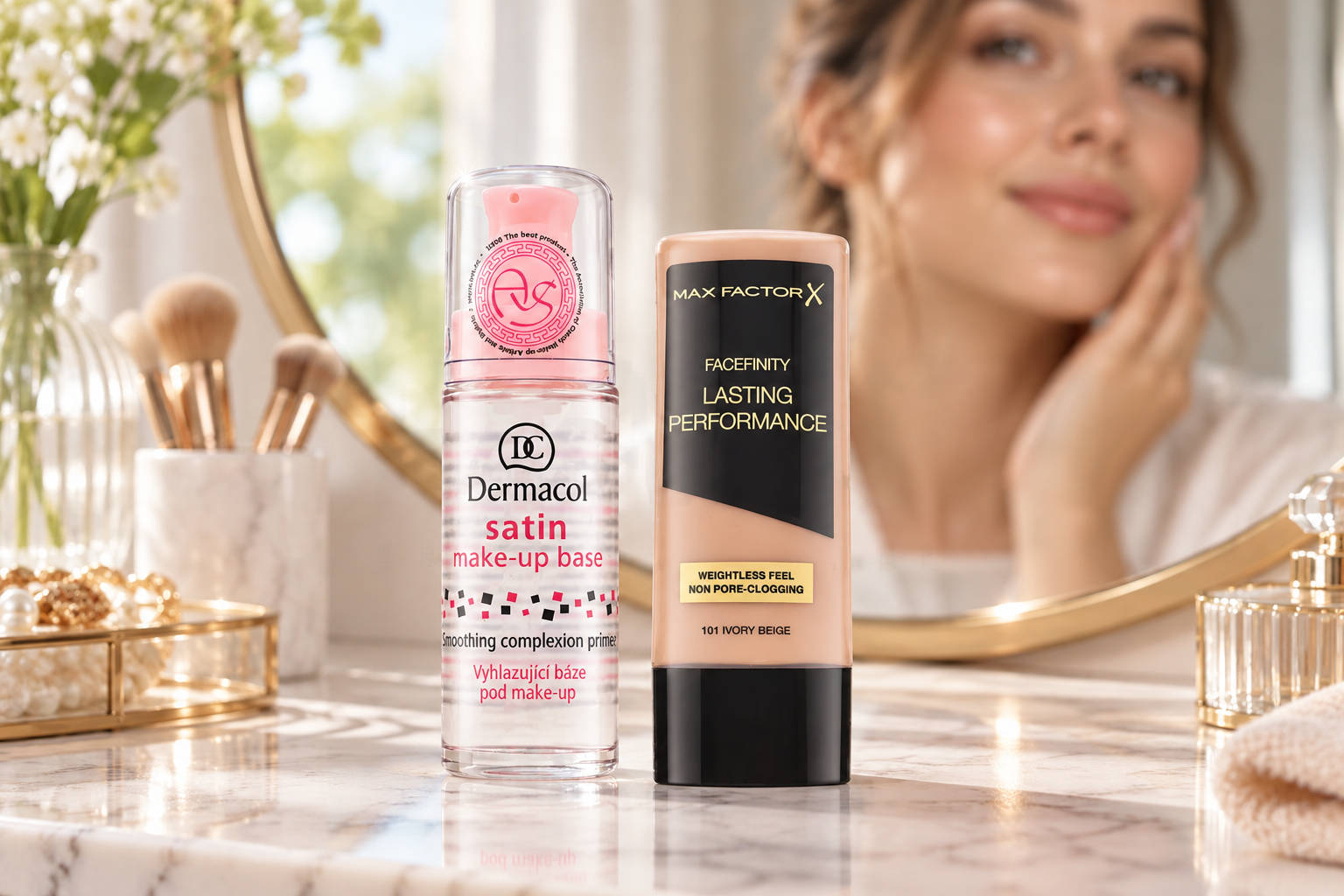
The difference doesn’t start with makeup, but a step earlier. A primer smooths the skin’s surface and gives makeup something to adhere to. Dermacol Satin Make-up Base is one of those smoothing primers: it softens transitions around pores and minor imperfections, allowing makeup to sit more evenly and requiring less to be applied. In a season where layers of clothing change several times a day and makeup is tested by scarves and hoods, a thinner layer is more practical than a thick one.
Choose your makeup based more on what you expect from it during the day rather than the coverage information on the packaging:
- Max Factor Lasting Performance Long Lasting Make-Up – the choice for long days without the chance for touch-ups. Medium coverage and long-lasting wear suit normal to combination skin and situations where you leave the house in the morning and return only in the evening.
- L'Oréal Paris Infaillible 32H Fresh Wear – a fresh and lighter option. Coverage can be built up in layers, so a thin layer is enough for a regular day, and you can add more for the evening. It’s a good choice if full coverage feels heavy in winter.
- Clarins Skin Illusion Full Coverage Foundation – for those who want higher coverage without losing a radiant finish. It’s worth it for uneven skin tones and occasions where photos are taken.
Full coverage across the entire face isn’t the only way. The classic Dermacol Make-Up Cover can also be used locally – a thin layer on redness around the nose or on individual imperfections, while the rest of the face remains in a lighter layer. The result looks more natural than full coverage, and the satin glow stays where you want it: on the cheekbones and the bridge of the nose.
Setting makeup in winter is a matter of balance. Full-face powdering will reliably erase the satin effect, so powder selectively. Max Factor Facefinity Pro Blur Longwear Setting Powder in a transparent shade is suitable for the T-zone and areas where makeup tends to crumble or gather in creases, such as around the nose, on the chin, and possibly under the eyes. Leave the rest of the face alone. When you need to set makeup rather than mattify it, reach for a setting spray like Maybelline Lasting Fix: a few spritzes from a distance will smooth transitions between powder and makeup and restore a unified surface appearance.
So how to arrange it according to skin type? Dry skin can get by with a smoothing primer, lighter makeup, and powder only on the chin. Combination skin will appreciate a combination of primer, long-wear makeup, and transparent powder on the T-zone. Oilier skin can stick to long-lasting formulas and bring back the satin impression with a highlighter on the cheekbones – a matte base isn’t a problem if you add light strategically. And if you want to change just one thing compared to summer, let it be the base: it determines how everything you apply on top will look.
Laminated Eyebrows and Their Everyday Subtle Version
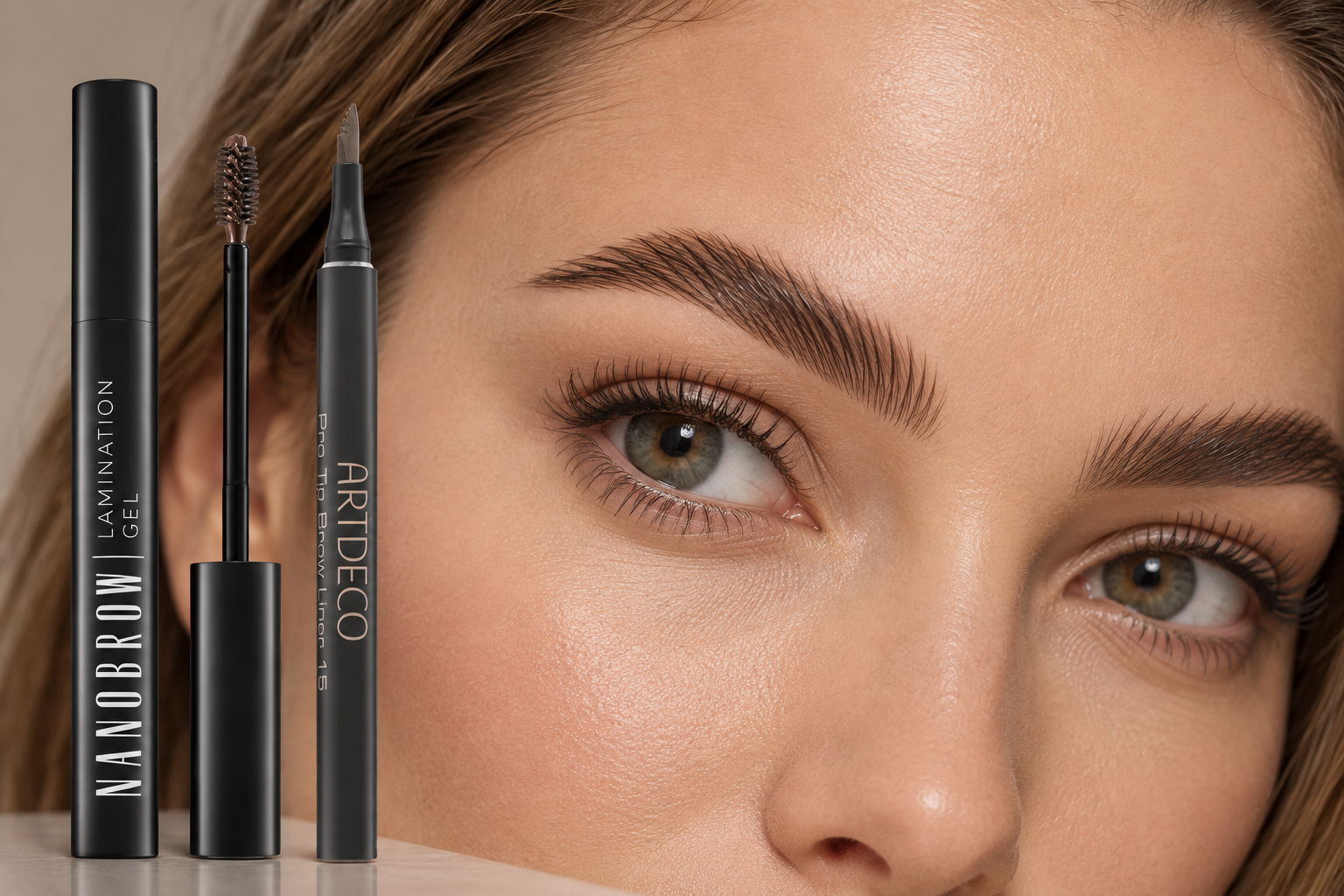
Lamination doesn't thicken or lengthen eyebrow hairs – it simply changes their direction. Hairs that naturally grow sideways or downward are brushed upwards and fixed in place. This makes the eyebrows appear fuller because they cover a larger area and also visually open up the eye. This brushed-up, intentionally slightly untidy look is the defining trend for the 2026 season – replacing the thin drawn line and sharply defined brows with a sharp lower edge that we were used to in previous years.
Salon lamination uses chemical fixation and its results last for several weeks. At home, the process is different but aims for the same visual effect: you create the shape in seconds in the morning and wash it off in the evening. This has its advantage – you're not committed to anything and can change how bold you want your eyebrows to be from day to day.
The basis of the home version is a fixing gel. L'Oréal Paris Brow Lamination Gel is a new product designed for this purpose: the brush picks up the hairs at the roots and brushes them upwards, with the gel keeping them upright for the rest of the day. Start from the inner corner towards the temple, gradually bending the hairs in the outer third in the direction of growth to prevent the end of the eyebrow from breaking at an unnatural angle. Allow the gel to dry for a few seconds before proceeding with the rest of your makeup.
If your eyebrows have sparse areas, the gel alone won't cover them – it will straighten the hairs but may highlight the gaps between them. You can fill them in three different subtle ways:
- Benefit Gimme Brow+ Volumizing Pencil – a thin pencil that mimics individual hairs with short strokes. It's useful when you need to fill a specific gap or extend the end of the eyebrow.
- Artdeco Pro Tip Brow Liner – a precise line for a clearly defined shape. Use it when you want to really define your eyebrows, typically for evening makeup or photography.
- Dermacol Powder Eyebrow Shadow – a powder shadow applied with an angled brush that blends more softly with the hairs than a pencil. It looks most natural when it's denser on the outer half and the inner corner is just suggested.
Choose a shade that's about half a tone lighter than your hairs. A darker product will indeed highlight the eyebrows, but with the laminated shape, which already adds volume, it can easily turn into a harsh look.
Sparse eyebrows can also be addressed long-term, without daily filling. Nanobrow Eyebrow Serum is among the serums applied in the evening on a clean eyebrow line and is intended for regular use over weeks to months; it's about care, not an immediate change, and the result is individual for everyone. The second, more patient approach is tinting. RefectoCil Eyelash And Eyebrow Tint darkens even fine light hairs that are otherwise barely visible in daylight, so the eyebrows hold their shape on their own. Before first use, perform a sensitivity test and follow the instructions exactly – it's a professional dye, not a decorative product.
The decision remains when to go for the full laminated shape and when less is enough. Bold, brushed-up, and filled-in eyebrows make sense where the rest of the makeup is also noticeable – with vinyl lips, for evening occasions, or when the face is otherwise almost bare and the eyebrows carry the entire expression. For the office and everyday wear, you can stick to the first step: brush the hairs up with a clear or tinted gel and leave them be. You have the season's shape, just in a more subdued tone – which tends to look more natural in daylight than a carefully drawn line.
Vinyl and Velvet Lips: When to Choose Which Texture
Lips are the part of makeup where seasonal changes are noticed first. This year, two textures stand side by side that seem like opposites: high-gloss vinyl that reflects light like glass and velvet matte, which mutes the color to a powdery, almost matte finish. Neither is more modern than the other; they just suit different situations. The main difference between them is how they behave throughout the day and how much attention you need to give them.
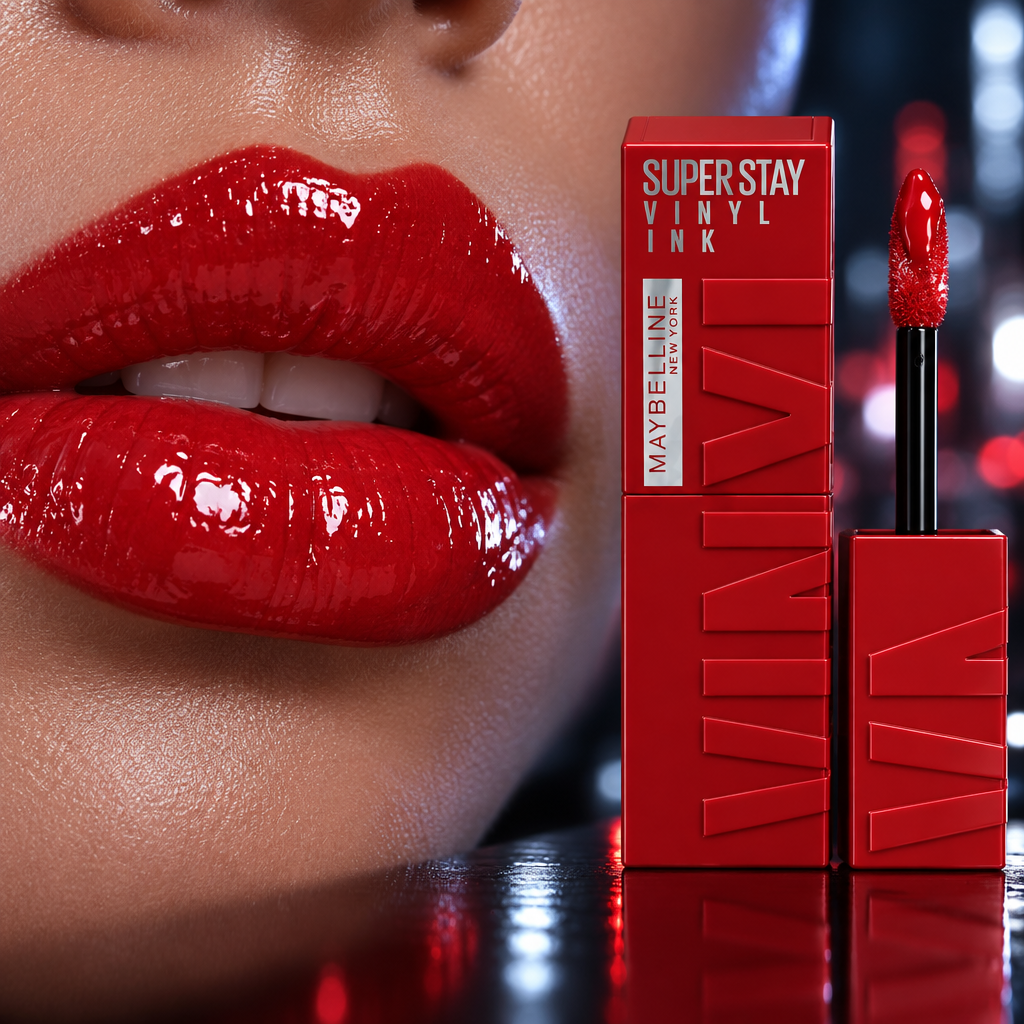
Vinyl lipsticks apply like a liquid and, once dry, leave a flexible film with a striking shine. Maybelline Superstay Vinyl Ink Lipstick in shade 110 Awestruck is a typical example: the flat applicator applies color in one layer, the pigment lasts long, and the shine gradually diminishes throughout the day, so you occasionally refresh it. That's why vinyl makes sense mainly for evenings, photoshoots, and short winter days when most meetings happen under artificial light – the glossy surface visually enlarges and brightens the lips.
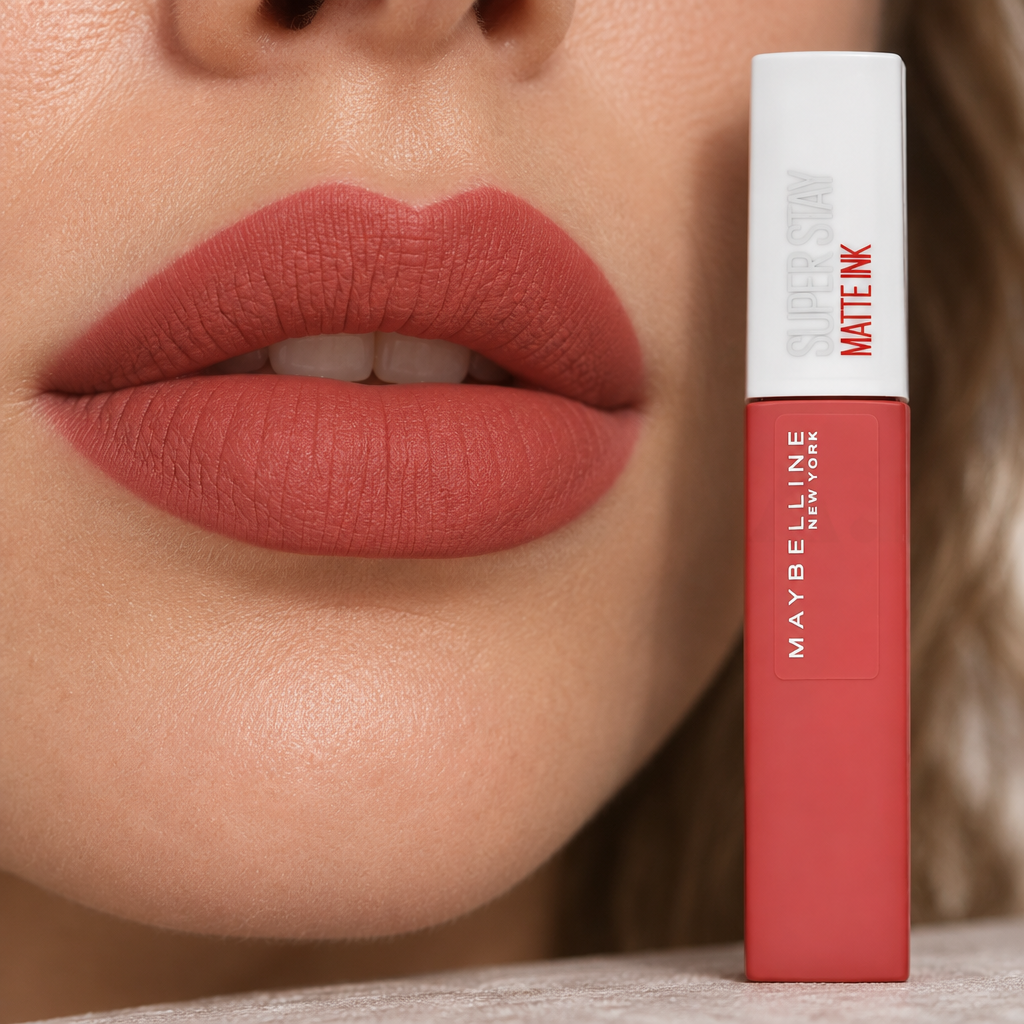
Velvet matte is the opposite choice. The liquid Maybelline SuperStay Matte Ink dries to a permanent surface that doesn't transfer to the edge of a cup or collar and holds color even after eating. The trade-off is that it's harder to experiment with: once dry, it's difficult to retouch, and on dry lips, it highlights every cracked flake. Velvet texture is therefore suited for days when you need makeup that you won't be checking in the mirror all day.
Between these two poles lies the creamy variant. Lancôme L'Absolu Rouge Cream feels softer than classic matte, remains pliable on the lips, and applies color richly but without tightening. It's a sensible choice if you don't like the long-lasting nature of liquid lipsticks and want a lipstick that can be reapplied at any time. It belongs to a higher price range than liquid matte variants, which is reflected in its wearing comfort.
When You Want Color, But Not All-Night Wear
The trend also has a caring aspect, which is often more practical for winter than full wear. If you want to lightly tint your lips while giving them a more pleasant surface, there are three different paths:
- Dermacol Diamond Lip Oil – an oil texture with a light tint, suitable for makeup-free days or as a final layer over lipstick.
- Clarins Lip Perfector – a creamy gloss with a subtle tint that wears well even without a lip liner.
- Maybelline Superstay Teddy Tint – a light tint with a velvety feel that applies color thinly and makes lips look more natural than made-up.
These three products don't behave like long-lasting lipsticks and aren't meant to. You'll refresh the color several times a day, but you can apply them without a mirror and without preparation.
How Textures Survive Scarves and Dry Air
Winter conditions affect the outcome more than the shade. Under a scarf or neck warmer, glossy vinyl transfers to the fabric until it completely dries, so give it an extra minute before dressing. Velvet matte hardly transfers at all once dry, but in the dry air from heating and air conditioning, every imperfection shows up faster.
Preparation is therefore worth a few minutes. Occasionally exfoliate your lips with a gentle scrub or soft brush to remove dead skin cells, then apply balm and let it absorb for a while – liquid lipstick adheres less well on an oily base. During the day, keep an oil or lip gloss handy to refresh the surface, and in the evening, remove makeup with a two-phase remover, as long-lasting pigments aren't washed away by regular water.
Volumizing Mascaras with Collagen as the Final Touch of the Season
Mascara is often the last thing you pick up in the morning—and it's also what most determines whether the result looks fresh or tired. Autumn and winter don't help much: in overheated rooms, the air dries out, it's windy outside, and scarves and hats constantly rub against your eyes. Switching to mascaras that combine volume with nourishing ingredients makes sense practically, not just aesthetically.
The label "with collagen" on the packaging means that collagen is part of the formula designed to visually thicken and coat the lashes. It's a cosmetic effect that lasts until you remove your makeup—it's not a treatment and doesn't promise permanently longer lashes. If you're looking for long-term lash quality improvement, you should also consider a serum, which we discuss below.
Four Mascaras and Four Different Results
All four are part of the seasonal selection, but each addresses something different. Choose based on what your lashes lack—density, length, a striking outline, or durability.
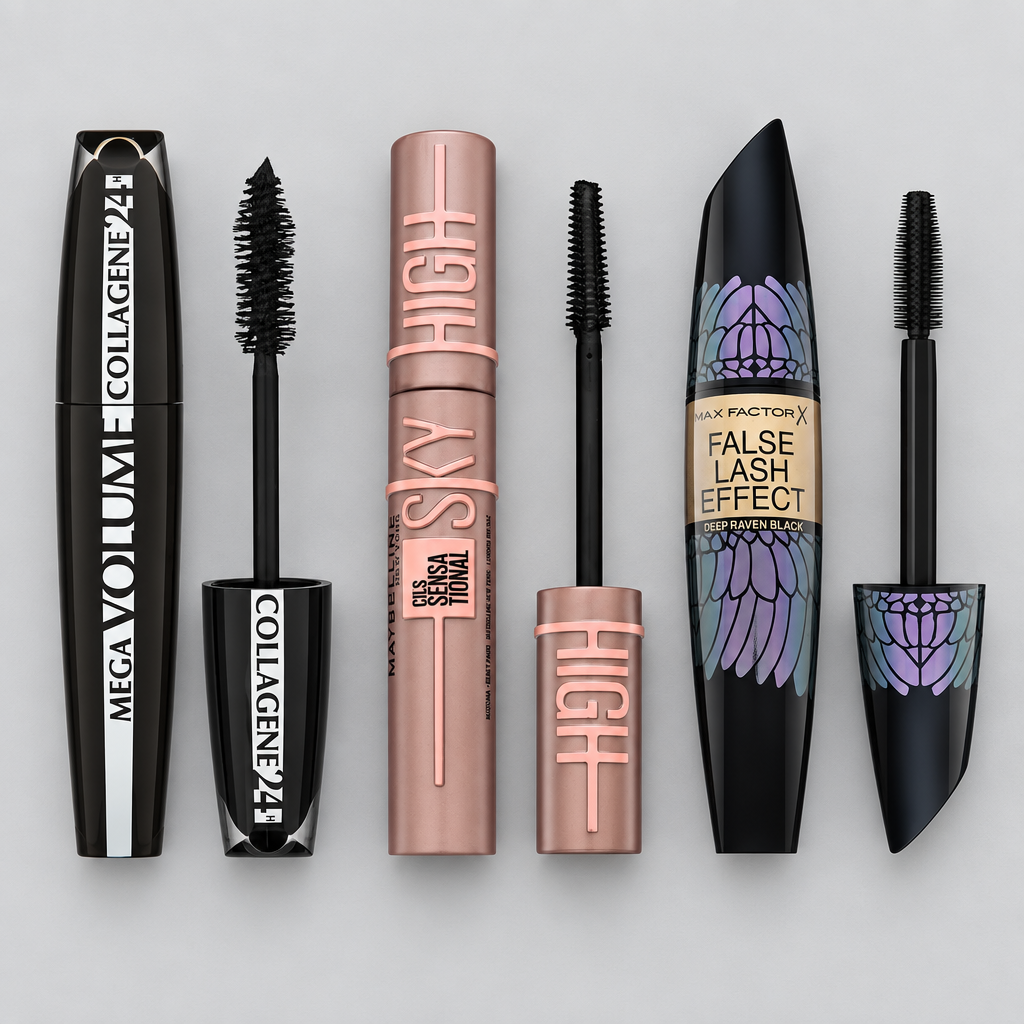
- L'Oréal Paris Mega Volume Collagen 24HR Mascara – from this quartet, it focuses most on density and a deep black impression from the first application. It works well on days when the rest of your makeup is kept in muted satin tones and the eyes are meant to be the main focus.
- Maybelline Lash Sensational Sky High Mascara – this one is more about lengthening and separation than density. It's appreciated by those with finer lashes who want an open look without the feeling of heavy lids. It also works well with glasses, as it doesn't clump the lashes together.
- Max Factor False Lash Effect Mascara – aims for the effect of false lashes without the glue. It's suitable for evenings, holidays, and photos when you want a distinct eye outline even from a distance.
- Lancôme Hypnose Custom-Wear Volume Mascara in a waterproof version – a choice for long winter days outdoors, when frost, wind, and transitions from cold to warm rooms alternate. Keep in mind that you'll need a two-phase makeup remover for removal.
Layering two mascaras only makes sense in exceptional cases. On a regular day, it's simpler to rely on one and ensure the brush is fresh—dried mascara clumps regardless of how good the formula is.
Serum as a Long-Term Supplement, Not a Replacement
Nanolash Eyelash Serum is for those who want to work with their lashes over a longer period. It's applied in the evening on a clean lash line, after makeup removal and before night care, and is evaluated over weeks, not just one morning. However, the serum doesn't replace mascara—these two steps complement each other, not compete.
And one more detail that can easily get lost in the list of mascaras: brushes. The satin base on which the whole season stands needs blending, otherwise, instead of a gentle shine, you'll see a map. Sets like Real Techniques Everyday Essentials cover the basics—foundation, powder, blush—and the difference is especially noticeable around the nose and under the eyes.
Three Seasonal Trends in One Regular Morning
Put together, the three main seasonal changes take barely more time than your usual routine:
- Unify the complexion to a satin finish, not a flat matte, and fix only where the makeup really shifts.
- Brush the eyebrows upwards and optionally add shape—in a more casual version, brushing and fixing alone are enough.
- Treat the lips according to the texture you feel like wearing that day, and finally apply the mascara chosen based on the weather and your schedule.
If you take away one thing from this entire article, let it be this: a new season doesn't mean a new makeup bag. Just swap out two to three products and leave the rest as is. You can explore specific shades and options in the decorative cosmetics category on Brasty, where you'll also find brush details for each mascara.
Category
Recommended articles
Riiffs Freeze in Flames: Ice and Flames Illuminate Warsaw "Give a girl the right shoes and she can conquer the world!" Marilyn Monroe