
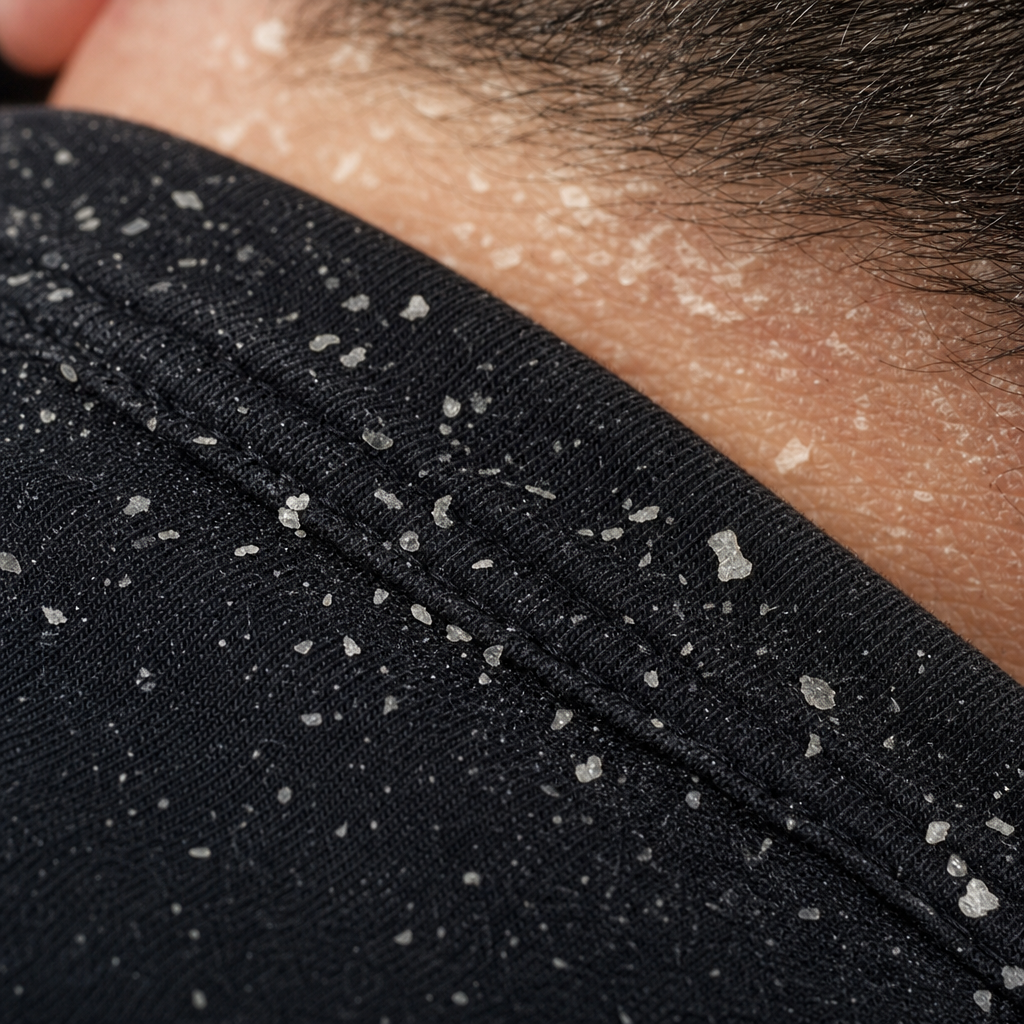


Dandruff often returns for men even after weeks with a new shampoo – it's not about hygiene, but about the long-term condition of the scalp. We'll show you how to create a routine with dermatological shampoos and when to alternate them with regular care.
Why Dandruff Keeps Coming Back for Men
You probably know the scenario: you grab an anti-dandruff shampoo at the store, use it for three weeks, and the white flakes on your jacket shoulders disappear. Then, life gets busy, you switch back to your regular shampoo, and a few weeks later, the dandruff is back just as bad as before. It's not a coincidence or bad luck, and it certainly doesn't mean the product didn't work.
The first thing to acknowledge: recurring dandruff is not a matter of poor hygiene. Among men, it's a common misconception—when flakes reappear, many of you opt for more frequent washing and scrubbing, thinking it's a logical response. However, your scalp responds more with irritation than calmness. Dandruff is not a sign that you haven't washed enough; it's flaking skin cells from the scalp, whose renewal has accelerated for some reason.
The second aspect is the time factor. The scalp has its long-term settings—sebum production, sensitivity, reaction to weather and styling—and a single bottle of shampoo won't change that. A dermatological shampoo can calm the condition, but it works only while you're using it. Once you stop, your scalp gradually returns to its original state, and so do the flakes. That's why dandruff management is more about maintenance than a one-time solution.
Once you accept this, it makes sense to look at the three main areas that most affect men's scalp condition:
- Washing Method – how often you wash your hair, the temperature of the water, how you apply the shampoo, and how long you leave it on your scalp.
- Scalp Oiliness – how much sebum your scalp produces and what happens to it between washes, especially if you leave styling paste or wax in your hair overnight.
- Heating Season – dry heated air in the office and at home, wearing a hat all day, and constant shifts between warmth and frost.
We'll delve into each of these areas in more detail because they influence each other. A man with a short haircut who washes his hair daily with hot water and wears a hat in winter faces a different situation than someone whose sebum stays at the roots and has noticeably yellowish flakes. The same shampoo may not work the same for two different people.
The takeaway from this article is simple: scalp care makes sense as a routine, not as a one-time treatment before a wedding or interview. It's not about washing your hair more, but washing it differently and complementing it with a product that suits your situation. In the following sections, we'll explore what causes dandruff, what can be improved even before choosing a specific product, and how to navigate the hair care product range.
What Causes Dandruff: Oiliness, Yeast, Dry Air
Dandruff might seem like a simple issue – flakes on your shoulders, something not washed out properly. In reality, it's a combination of three ongoing processes on the scalp that occasionally fall out of balance: the production of sebum, the presence of Malassezia yeast, and the rate at which skin cells renew.
Sebum, Yeast, Accelerated Cell Renewal
The scalp is one of the areas with the highest density of sebaceous glands on the body. Sebum itself is not the enemy – it forms a protective layer that prevents dryness. Problems arise when more sebum is produced than the skin needs, and when it stays at the roots under layers of hair and styling products for too long.
Malassezia yeast also plays a role in sebum production. These yeasts are a normal part of the scalp's microflora for almost everyone and are not a sign of disease or uncleanliness. Their quantity changes depending on how much sebum is available, and each person's skin sensitivity to their activity varies. This explains why two men with the same haircut and shampoo can have completely different results.
The third piece of the puzzle is the speed of skin renewal. Dead cells constantly leave the surface, but under normal circumstances, they do so individually and are invisible to the naked eye. On irritated skin, the process speeds up, and cells are released in clumps – which you then see as white or yellowish flakes.
Oily or Dry Dandruff? Identify by the Flakes
Distinguishing between the two types is useful right from the start, as it determines the subsequent care. A look at the flakes themselves and where they sit can help:
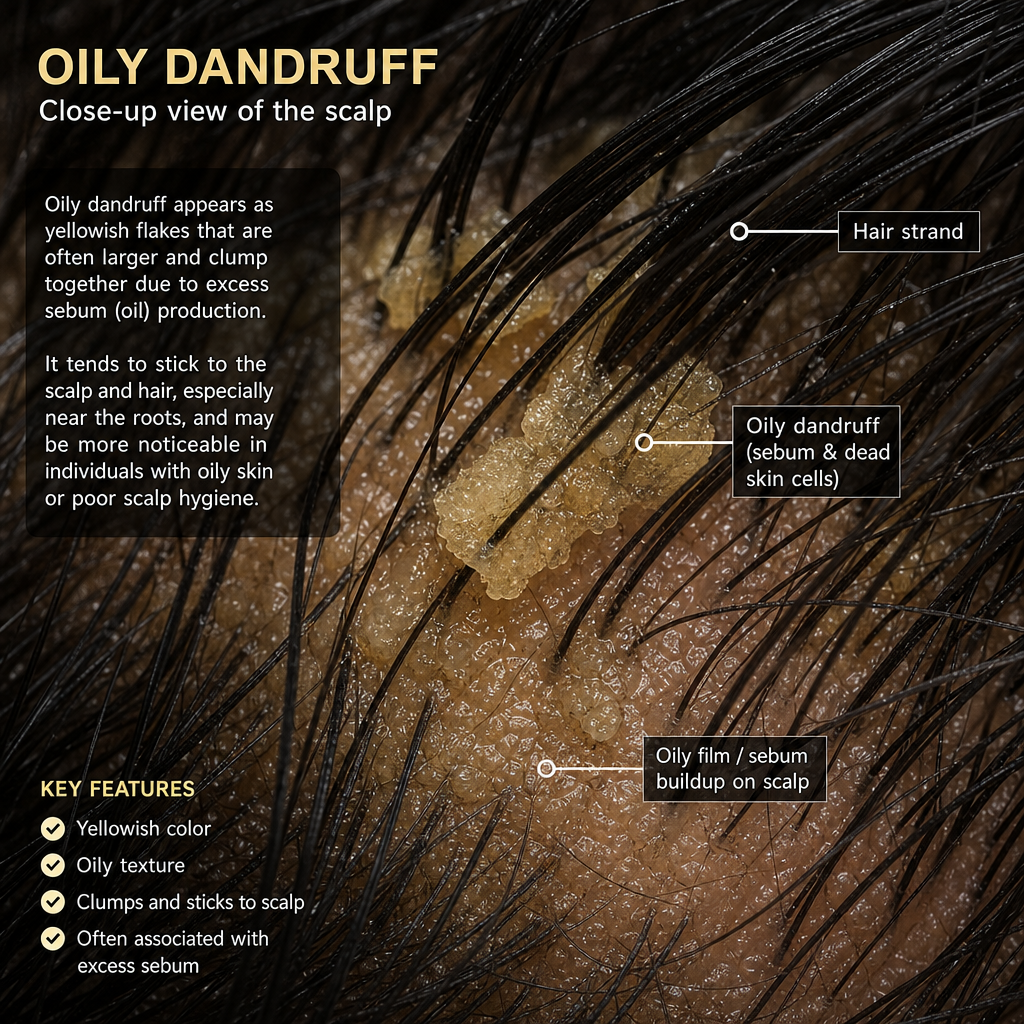
- Oily dandruff is larger, yellowish, and tends to clump together. It stays at the roots, leaving a greasy residue on the comb. Hair feels heavy just a day after washing.
- Dry dandruff is small, white, and light. It falls off on its own, just by running your hand through your hair or taking off a hat. The skin tends to be tight, taut, and itchy even in areas without flakes.
Both types can alternate over time, so it makes sense to reassess your condition occasionally instead of categorizing it once and for all.
Why the Heating Season Favors Dandruff
The heating season combines several unfavorable factors. Heated indoor air has lower humidity, so it draws moisture from the skin faster than it can replenish it. This is compounded by the alternation of heat and frost in a single day – from a warm office to the cold, from the cold to a heated car. Hats also play a role: they trap heat and moisture from sweat, preventing the skin from ventilating, and sebum stays in place for hours. When you take off the hat, flakes are released all at once, making the condition appear more dramatic than it actually is.
What a Typical Male Routine Adds
Several factors are directly related to how men care for their hair. They don't cause dandruff by themselves but can exacerbate the situation:
- Shorter haircuts leave the scalp exposed to cold and sun, and every flake is much more visible, making even a mild condition seem pronounced.
- Frequent washing with regular shampoo removes sebum faster than the skin can replenish it at a reasonable rate, prompting increased production.
- Styling left overnight – paste, wax, or gel clings to the skin and, along with sebum, forms a layer that prevents it from breathing freely.
The good news is that none of these factors are irreversible. Most can be influenced by how you wash your hair and what you leave on your scalp.
Hair Washing Basics: Frequency, Water Temperature, Technique
Before choosing a specific product, it's worth looking at the washing process itself. This determines how much oil and dead skin flakes remain on the scalp until the next day and how irritated the skin is before any effective shampoo even reaches it. Small changes in your routine cost nothing and are often noticeable sooner than changing brands.
The frequency of washing with dandruff is more about the level of oiliness than a strict rule. If your scalp looks shiny by evening and your hair feels heavy at the roots, there's no reason to delay washing – regular washing with a gentle shampoo will remove oil and loosened flakes before they can build up at the roots. For drier skin that feels tight and itchy after washing, washing every other day is usually sufficient. The idea that frequent washing worsens dandruff comes from the days of harsher formulas; today's shampoos are much gentler on the scalp.
Water temperature plays a bigger role than usually expected. A hot shower is pleasant in winter, but it removes more oil from the scalp than is healthy, causing a feeling of tightness, itching, and faster flaking. Lukewarm water – the kind you barely notice on the back of your hand – rinses out shampoo just as effectively and keeps the skin calm. The same rule applies to blow-drying: hot air close to the scalp does the same as hot water.
The technique of application is something most men rush through in seconds. First, rub the shampoo in your palms and then spread it with your fingertips over the entire scalp – from the forehead to the crown, behind the ears, and at the nape, where flakes often cling. Nails have no place here: scratching may relieve itching temporarily, but it irritates the skin and prolongs the condition. Circular motions with your fingertips, for a full minute if possible, do more than vigorous scrubbing.
With a dermatological shampoo, the step that often fails is the duration of application. The product needs to stay on the scalp for a while for its active ingredients to take effect; the specific time is on the packaging and it's worth following it, rather than rinsing the shampoo off after ten seconds. Double washing is also effective: the first wash removes styling products and oil, the second can act on a clean scalp.
Rinsing deserves the same attention as application. Residues of shampoo and conditioner left at the roots irritate the skin and exacerbate itching, making it seem like the product isn't working. Rinse longer than seems necessary, and apply conditioner more to the lengths than to the scalp.
The last piece of the puzzle lies outside the bathroom and is easily overlooked in daily life. It's worth checking the items that frequently touch your head:
- Towels – wash them often and don't share them; a damp towel used for a week is not beneficial for the scalp.
- Hats and hoods – you wear them daily during the heating season and they can be washed according to the label just like the rest of your wardrobe. Avoid putting a hat on wet hair.
- Combs and brushes – occasionally remove hair from them and rinse them in lukewarm water with shampoo to avoid transferring flakes back to clean hair.
- Pillowcases – change them as part of your regular laundry cycle, especially if you use styling products and sleep with them on.
None of these steps will solve dandruff on their own or replace a well-chosen shampoo. Together, however, they create conditions where you can truly see what a specific product can do – and what can be attributed to a routine that you have full control over.
Dermatological Anti-Dandruff Shampoos: How to Choose
The shelf of anti-dandruff shampoos may look similar at first glance – the packaging promises similar results, and you can't tell the difference between the lines just by the label. However, it's the active ingredient and type of product that determine whether you'll see results in a few weeks or just another failed attempt. It's not complicated to navigate. You just need to know what each group of products typically addresses and who it's intended for.
Common Active Ingredients You'll Encounter
Dermatological anti-dandruff shampoos rely on several proven ingredients. Each works a bit differently, and in practice, they also differ in how well the scalp tolerates them.
- Zinc Pyrithione – a very common ingredient found in both drugstores and pharmacies. It's often the basis of products designed for regular, long-term use.
- Selenium Disulfide – a traditional ingredient in products targeting more pronounced flaking. They are usually used in shorter cycles as per the instructions on the packaging, not permanently.
- Ketoconazole – found in shampoos classified as medicinal products and sold in pharmacies. They have their own usage guidelines, which a pharmacist or doctor can advise you on.
- Salicylic Acid – often part of products that work by softening and making it easier to remove adhered flakes. It frequently appears in combination with another active ingredient.
The composition can be found on the packaging, usually right below the line name. If one ingredient doesn't bring any change after several weeks of regular use, it's often wiser to try a product with a different active ingredient rather than another shampoo from the same group.
Different Lines Target Different Situations
Within one dermatological brand, you usually won't find just a single anti-dandruff shampoo, but several variants. It's not just marketing – the gentleness of the cleansing base, the accompanying care for lengths, and the intensity of the product itself change:
- Dry Hair – variants with a richer, less drying base for situations where flakes fall from a tight scalp.
- Sensitive Scalp – simpler formulations with limited fragrance, suitable when tightness or redness occurs after washing.
- More Pronounced Flaking – more intensive products intended for shorter treatments rather than year-round use.
- Oily Scalp – bases that better degrease the roots and prevent hair from becoming limp by the next day.
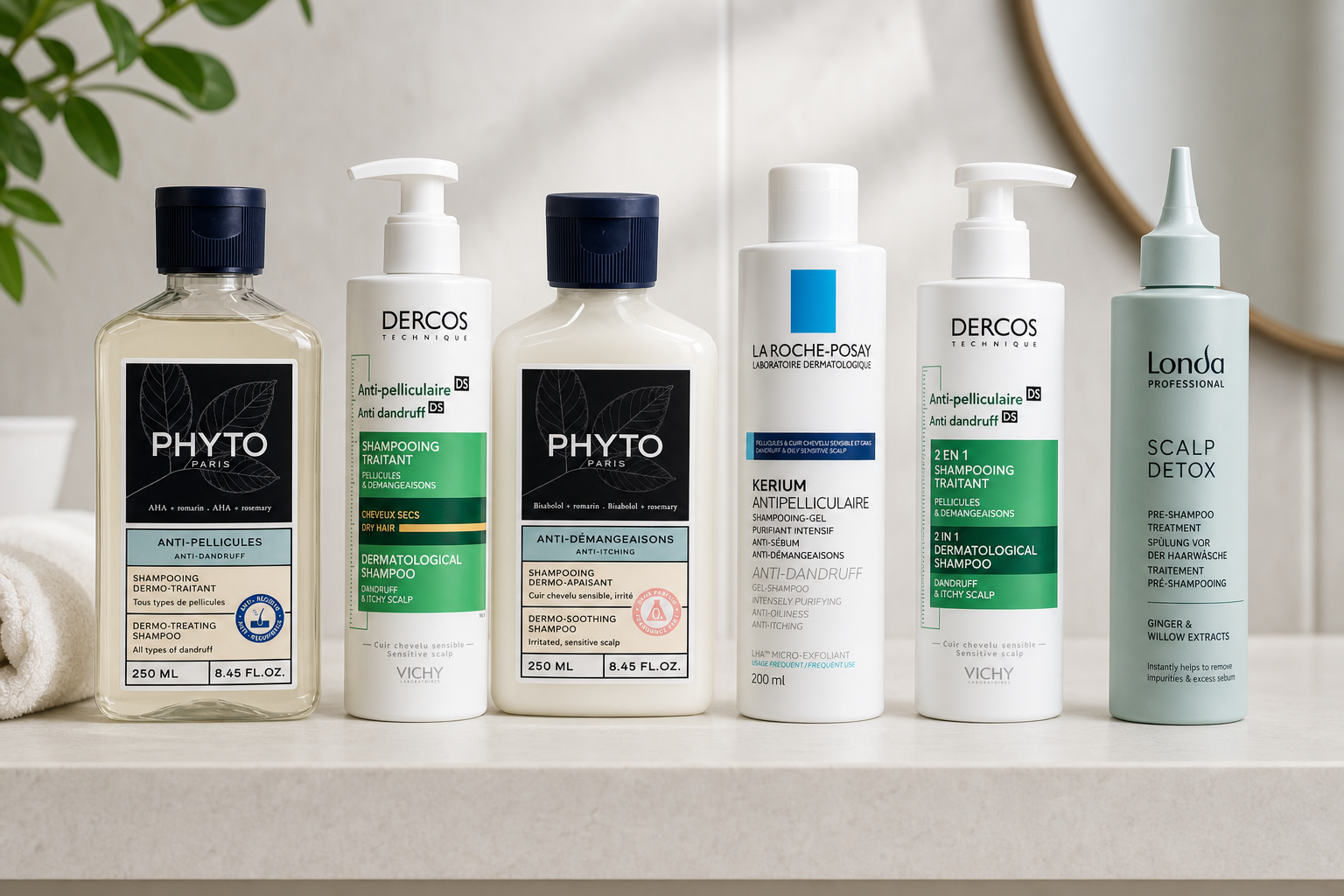
This is well illustrated by the Vichy Dercos line, which has separate variants for dry hair, sensitive scalp, and more severe flaking. The difference between them is not just cosmetic, and it's worth choosing based on what you're actually dealing with on your scalp. Similarly structured lines can also be found with other dermatological hair care brands – making the selection broader than it might first appear.
How Dermatological Shampoo Differs from Regular Drugstore Options
A regular shampoo that claims to have an anti-dandruff ingredient mainly serves a cleansing and cosmetic function. The active ingredient content is usually lower, the formula is designed for daily use, and it heavily relies on washing comfort – lathering, fragrance, and the feel on the hair. It can keep mild and occasional flakes at bay, but for conditions that return every autumn, it usually isn't enough.
Dermatological lines have a narrower focus. They target the scalp, not the lengths, work with a higher concentration of active ingredients, and are designed to be left on for a while before rinsing. Their purpose isn't everyday comfort but managing a specific condition.
The practical conclusion is simple: don't expect a regular shampoo to make a difference with more severe dandruff, and don't expect a dermatological one to offer the comfort of classic drugstore options. Each serves a different purpose.


How to Create a Routine to Keep Dandruff Under Control
Whether you're just starting with your first dermatological shampoo or have several at home and are unsure how to combine them, the key is consistency. Each step only makes sense when it becomes a routine you can stick to even on a weekday morning. The good news is, it doesn't have to be complicated – just two shampoos and a clear rule of when to use each one.
Alternating Two Shampoos as the Weekly Foundation
A proven framework looks simple: a dermatological shampoo two to three times a week and a gentle regular shampoo in between. The active ingredients against dandruff work on flaking and scalp balance, but daily use can unnecessarily dry out the scalp – and a dry, tight scalp flakes again, just for the opposite reason. A gentle shampoo between applications avoids this trap.
- Dermatological Shampoo – two to three times a week, with application time as per the instructions on the package and thorough rinsing.
- Gentle Regular Shampoo – on the days in between, if you wash your hair more frequently.
- Conditioner or Leave-in Treatment – more for the lengths than the roots, so as not to burden the scalp.
Adjust the exact frequency according to your needs. If your hair gets oily quickly and you wash it daily, the ratio will shift towards more frequent gentle washing. If three washes a week suffice, the dermatological shampoo can easily be two of them. Allow a few weeks for the first results.
The most common mistake occurs when the condition improves. The flakes disappear, the shampoo goes into the cupboard, and a month later, the situation is back to square one. The tendency of the scalp to flake doesn't disappear with washing, it's just kept under control. That's why it makes sense to switch to a maintenance routine – about once a week or once every two weeks – instead of stopping completely. Especially during the heating season, it's wise to cautiously increase the frequency.
When to Consult a Dermatologist
Cosmetic care can handle regular flaking, but it doesn't replace professional examination. It's wise to see a doctor especially when any of these signs appear:
- severe itching that disrupts your sleep or wakes you up,
- significant redness, burning, or soreness of the scalp,
- patches outside the hair area – in the eyebrows, around the nose wings, behind the ears, or on the chest,
- oozing spots or scratches from itching,
- hair loss in defined patches,
- no improvement after several weeks of diligently following the routine.
It's not a reason to panic, but rather a point where choosing the right shampoo alone isn't enough. A dermatologist can distinguish regular dandruff from other scalp conditions and recommend further steps. Meanwhile, your home routine usually continues as a supplement.
How to Expand Your Routine Based on Your Situation
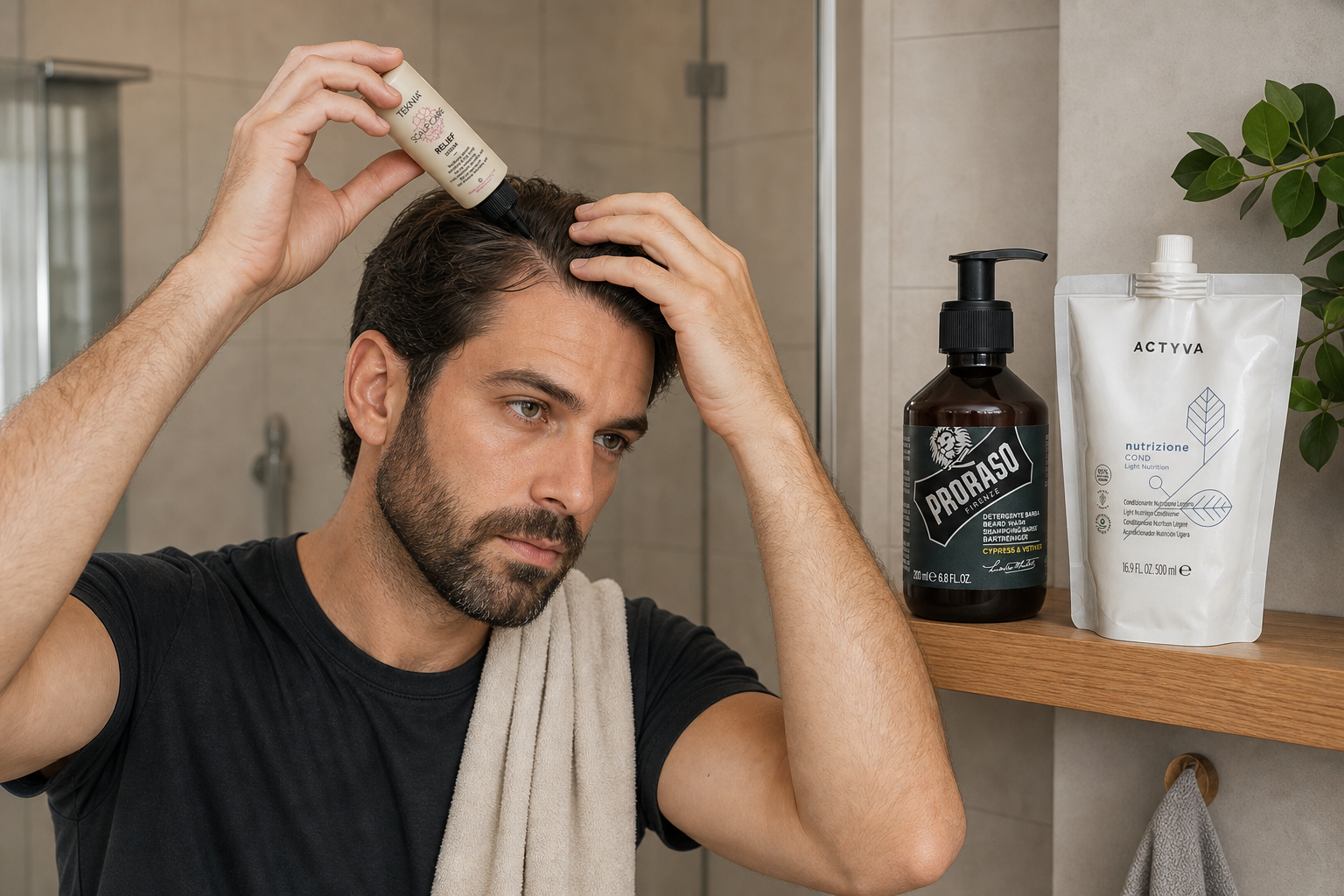
Sometimes flakes don't just stay in the hair. If you have a beard, address it separately – a beard shampoo is gentler on the skin underneath than shower gel. If you're mainly troubled by oiliness at the roots, a scalp serum applied after washing that doesn't weigh down the lengths might make sense.
In our range of hair care products, you'll find support for each of these steps. If you're looking for your first dermatological shampoo, the starting point is often the Vichy Dercos line with separate variants for dry hair and sensitive scalp. As a complement to your existing care, a scalp serum like Wella Professionals SP Balance Scalp Energy Serum, or a beard shampoo from the beard care category, where staples include Just For Men Control GX Beard Shampoo, is suitable. Build the combination gradually: start with one shampoo, give it a few weeks, and only then consider what's missing from your routine.
Category
Recommended articles

"Give a girl the right shoes and she can conquer the world!" Marilyn Monroe