

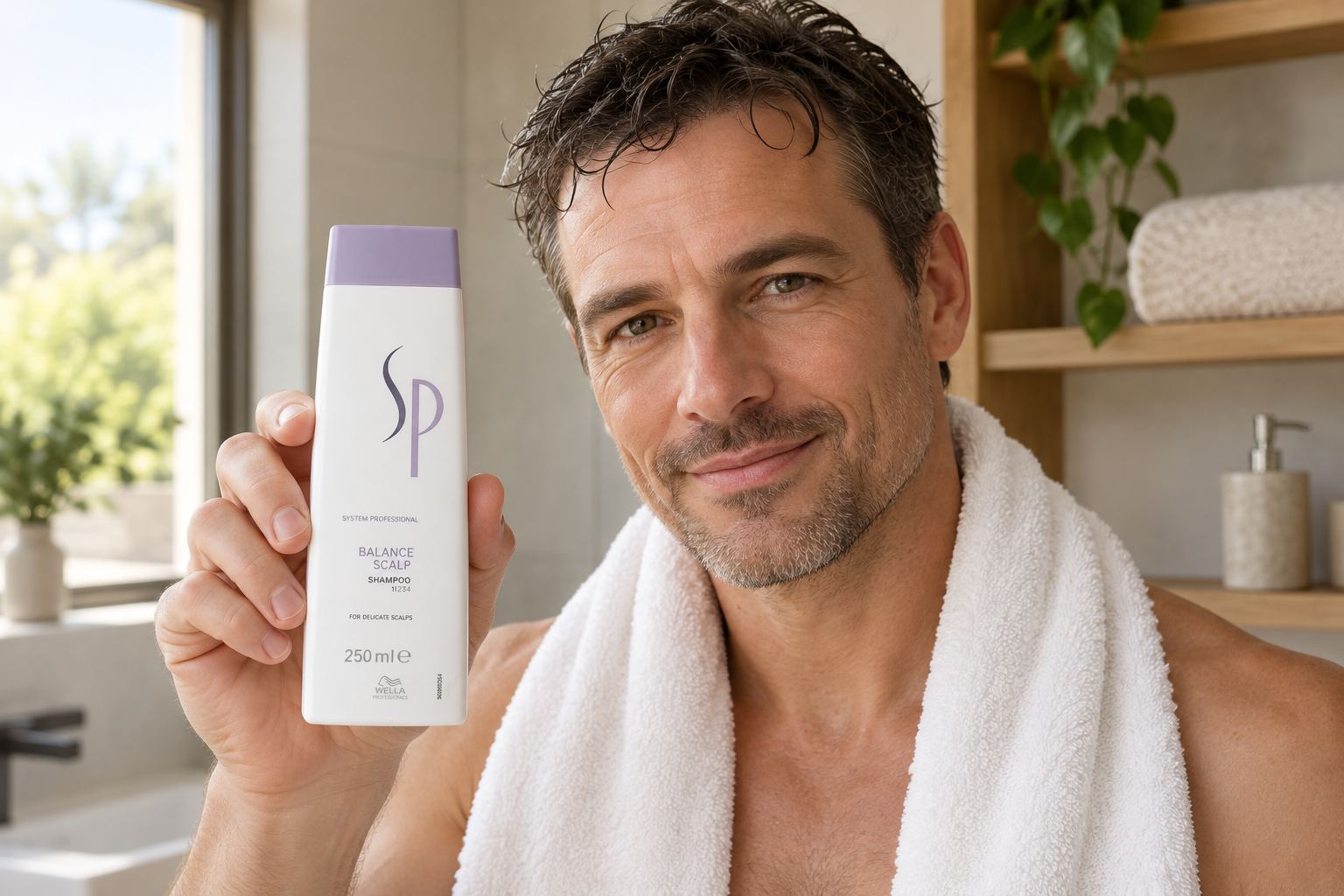
After forty, men's hair tends to be finer and drier, so the care routine that worked in your twenties might no longer be sufficient. We'll explain how hair changes with age and how to adjust your shampoo, conditioner, and styling products to keep hair looking neat and fuller—without coloring and without promises of miraculous results.
Why Previous Hair Care After Forty Is No Longer Enough
In the morning, your hair looks fine, but by lunchtime, it falls flat and loses its shape. The shampoo that worked for you for years suddenly leaves your scalp feeling dry or, conversely, weighs your hair down unnecessarily. And the styling product that used to last all day now makes your hairstyle sticky rather than adding volume. If this sounds familiar, you're not alone—many men around forty and beyond notice similar changes.
Whether you have a short cut that you regularly maintain or longer hair slicked back, the same applies: it's not a failure of care or that you've been doing something wrong. Hair and scalp change gradually with age, and so do their needs. A routine set in your twenties or thirties simply doesn't account for these changes. The good news is that you usually don't have to start from scratch—just adapt it in a few steps.
In this article, we'll focus on three areas you can control and adjust without major changes to your habits:
- washing – how often, with what, and how to keep your scalp in good condition and your hair voluminous,
- care – when it makes sense to use conditioner, leave-in treatments, or masks, even if you have short hair,
- styling – how to achieve a fuller and more natural look with less product.
It's equally important to mention what you won't find in the article. We won't cover coloring or hiding gray hair, and we won't promise miraculous results—hair cosmetics can help your hair look more groomed and fuller, but they can't turn back time. We're aiming for realistic adjustments that you can try over a few weeks and see if they suit you.
Some topics that often interest men over forty will only be touched on briefly here. Dandruff, more significant hair loss, gray hair, or beard care deserve their own space, and you'll find separate articles about them in our magazine. If you're dealing with more significant scalp issues or hair loss, it's advisable to discuss them with a dermatologist—adjusting your cosmetic routine doesn't replace professional consultation.
In the following sections, we'll advise you on how to set each step of your routine to match how your hair behaves today, not fifteen years ago.
Finer Hair, Drier Lengths, More Sensitive Scalp
Whether you sport a short cut or hair a few centimeters longer, many men in their forties notice something similar: their hair behaves differently than before, even though their care routine seemingly hasn't changed. It's not a sudden shift, but rather a gradual development that becomes apparent when the tried-and-true routine stops working. Let's take a look at what typically happens to hair and scalp as the years go by – and how you can recognize it.
Hair strands tend to be thinner. Individual hairs may gradually lose diameter with age. Each one becomes slightly finer, making the overall appearance less dense and harder to lift from the roots. Thinner hair is also more pliable – it bends more easily under its own weight and under the layer of product that once reliably gave it shape.
Less sebum, drier lengths. Sebaceous glands in the scalp usually produce less sebum as we age. This sebum forms a natural protective film that smooths the hair and gives it shine. When there's less of it, the lengths – and especially the ends in longer styles – can appear drier, duller, and rougher to the touch. Meanwhile, the scalp at the roots may remain normal or even continue to get oily quickly, so the roots and lengths suddenly have different needs.
Hair grows more slowly. The growth rate usually slows down slightly with age. In practice, this means that a haircut maintains its shape a bit longer, but also that the lengths, which have been through a lot – sun, wind, or frequent washing – stay with you longer.
The scalp may become more sensitive. Many men find that their scalp is less tolerant of what it used to handle without issues: daily washing with a strong degreasing shampoo, harsh summer sun on a shorter cut, or styling products applied daily without thorough washing. It may react with a feeling of tightness or unpleasant itching. It's not a diagnosis, but rather a signal that the scalp would appreciate gentler treatment. If the issues are significant or long-lasting, it's advisable to consult a dermatologist.
Changes usually don't announce themselves all at once. You're more likely to notice small things that gradually add up:
- Your hairstyle doesn't hold its shape well – you style it in the morning, and after a few hours, it's flat again, especially at the crown.
- Your hair tangles more easily and resists combing, even if it's not long.
- The lengths lose their shine and look tired or "straw-like" even after washing.
- Your hair appears thinner than you're used to, especially under direct light or in photos – there may not be fewer hairs, but each one is thinner.
- Your scalp reacts differently to washing, sun, or styling than it used to.
A thinner appearance doesn't necessarily mean hair loss. It's often a combination of finer strands, less volume, and drier lengths that reflect less light. That's why it's worth responding to these changes with care that doesn't weigh down the hair or irritate the scalp – without miraculous promises, but with sensible adjustments that usually manifest in the everyday behavior of your hair.
Gentler Washing: Choosing the Right Shampoo and When to Add Serum
Washing is the most frequent step in any hair care routine, and it's often the first to show signs when hair and scalp start reacting more sensitively. Many men stick to the same shampoo for years, one that once reliably "degreased" – but after forty, the same wash can leave the scalp feeling tight and hair lengths appearing drier and harder to manage. Usually, all it takes is adjusting the product choice and a few habits.
Shampoos designed for oily hair or deep cleansing have their place – perhaps after sports, with more intense styling, or occasionally as a "reset." For regular washing, it's worth opting for gentler lines, which professional brands label as hydrating, balancing, or designed for sensitive scalps.
- Clarifying Shampoo – suitable when the scalp gets oily quickly or you need to wash out a lot of styling products. With daily use, it can unnecessarily dry out the scalp and hair lengths.
- Hydrating Shampoo – cleanses more gently and is ideal if hair appears dull, dry, or is harder to style after washing.
- Balancing Shampoo – perfect when hair gets oily at the roots, but the scalp is also tight or sensitive. It mainly focuses on the scalp.
A good guideline is how the scalp feels a few hours after washing. If it feels calm and the hair isn't limp or oily the next day, you've chosen well. Itching or a feeling of tightness, on the other hand, suggests a gentler option might be needed.
There is no universal rule for washing frequency. If you exercise daily or use styling products, you might wash every day – in that case, it's sensible to choose the gentlest shampoo possible and stick to one lathering. If hair doesn't get oily quickly, washing every other day or two to three times a week usually suffices.
- Thoroughly wet your hair with lukewarm water – too hot water can further dry out the scalp.
- Lather a small amount of shampoo in your palms and apply directly to the scalp.
- Gently massage the scalp with your fingertips for about a minute, not with your nails.
- Don't wash the lengths separately – the foam will run through them during rinsing, which is enough.
- Rinse thoroughly to ensure no product residue remains on the scalp.
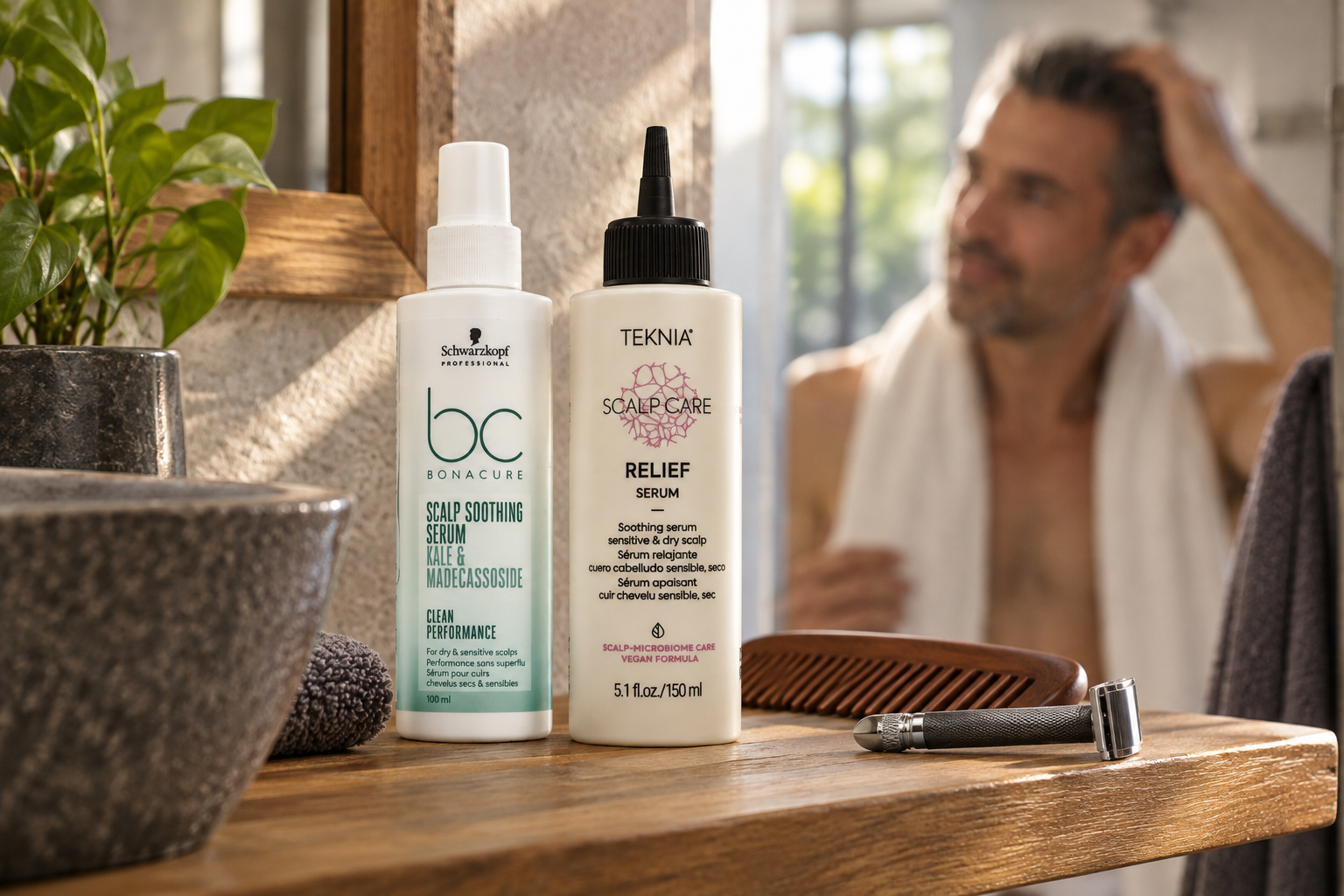
If the scalp remains dry or sensitive even with gentle washing, you can incorporate a scalp serum into your routine. It's applied after washing on damp or towel-dried scalp, ideally along the partings, and gently massaged in. Most serums are leave-in and have a light texture, so they don't weigh down hair, even with short styles.
What can you realistically expect from a serum? It can help the scalp feel more comfortable, less tight, and hair at the roots look neater. However, don't expect it to stop hair loss or thicken hair – cosmetics can't promise that. Consider it a supplement to a well-chosen shampoo and give it several weeks of regular use.
Dandruff is a separate issue. Special anti-dandruff shampoos are used differently than regular care and are covered in detail in a separate article. If you don't have dandruff, you don't need to include them in your regular routine.
Conditioner, Leave-in Care, Mask – Light but Regular
In many men's bathrooms, conditioner is a product that is reached for only occasionally. However, finer and drier hair, which tends to appear more often after forty, can benefit more from regular care than one might think: it becomes easier to comb, feels smoother to the touch, and appears shinier in the light. The key is choosing a light texture and using it sparingly.
Light conditioner just on the lengths. For fine hair, look for conditioners labeled as light or volumizing – they usually have a thinner, gel-like consistency and do not leave a greasy film on the hair after rinsing. For a short cut, a pea-sized amount is usually sufficient, while hair longer than a few centimeters may need about a hazelnut-sized amount. Massage the conditioner into the lengths and ends, where the hair is oldest and driest, and avoid the scalp. Applying the product directly to the roots unnecessarily weighs the hair down, causing the hairstyle to lose volume before it even dries. Leave it on for one to two minutes and rinse thoroughly with lukewarm water.
Leave-in care as a simple step. If conditioner in the shower seems time-consuming or you have such a short cut that you don't really have any lengths, try leave-in care. It is applied to damp hair after washing and is not rinsed out, so the whole routine takes just a few seconds. You can choose from three common forms:
- Spray – the lightest option, which spreads evenly even on short hair and is suitable for fine hair that quickly loses volume.
- Foam – an airy texture that softens the hair without flattening it; just a small amount spread in the palms is enough.
- Cream – a more nourishing choice for drier, coarser, or curly hair; use only a tiny amount and spread it mainly into the lengths.
For short cuts, usually two to three sprays of spray or a smaller amount of foam spread with fingers over the entire head is sufficient.
Mask and a drop of oil for longer cuts. If you wear your hair longer or it is visibly dry and coarse at the ends, it is worth replacing the conditioner with a mask about once a week. It has a thicker, nourishing texture and is usually left on for a bit longer – follow the time indicated on the packaging. Apply the mask only to the lengths and rinse it thoroughly. After washing, a drop of oil rubbed in the palms and gently pressed into the ends can help. For fine hair, really just a drop, otherwise, it will look greasy.
Light or nourishing textures? When choosing, it is worth considering how your hair behaves during the day:
- Mostly fine hair, which quickly becomes limp and flat: light conditioner, leave-in spray or foam, mask only occasionally, and oil preferably not at all.
- Mostly dry hair, which feels rough, unmanageable, or splits at the ends: creamier conditioner, leave-in cream, mask once a week, and a drop of oil on the ends.
Both are often present at the same time – fine hair at the roots and drier lengths. In this case, lighter products for everyday use and more nourishing care just on the ends or once a week are effective. More important than the amount is regularity: a small dose of care after each wash is usually more beneficial for the appearance of the hair than an occasional intensive treatment.
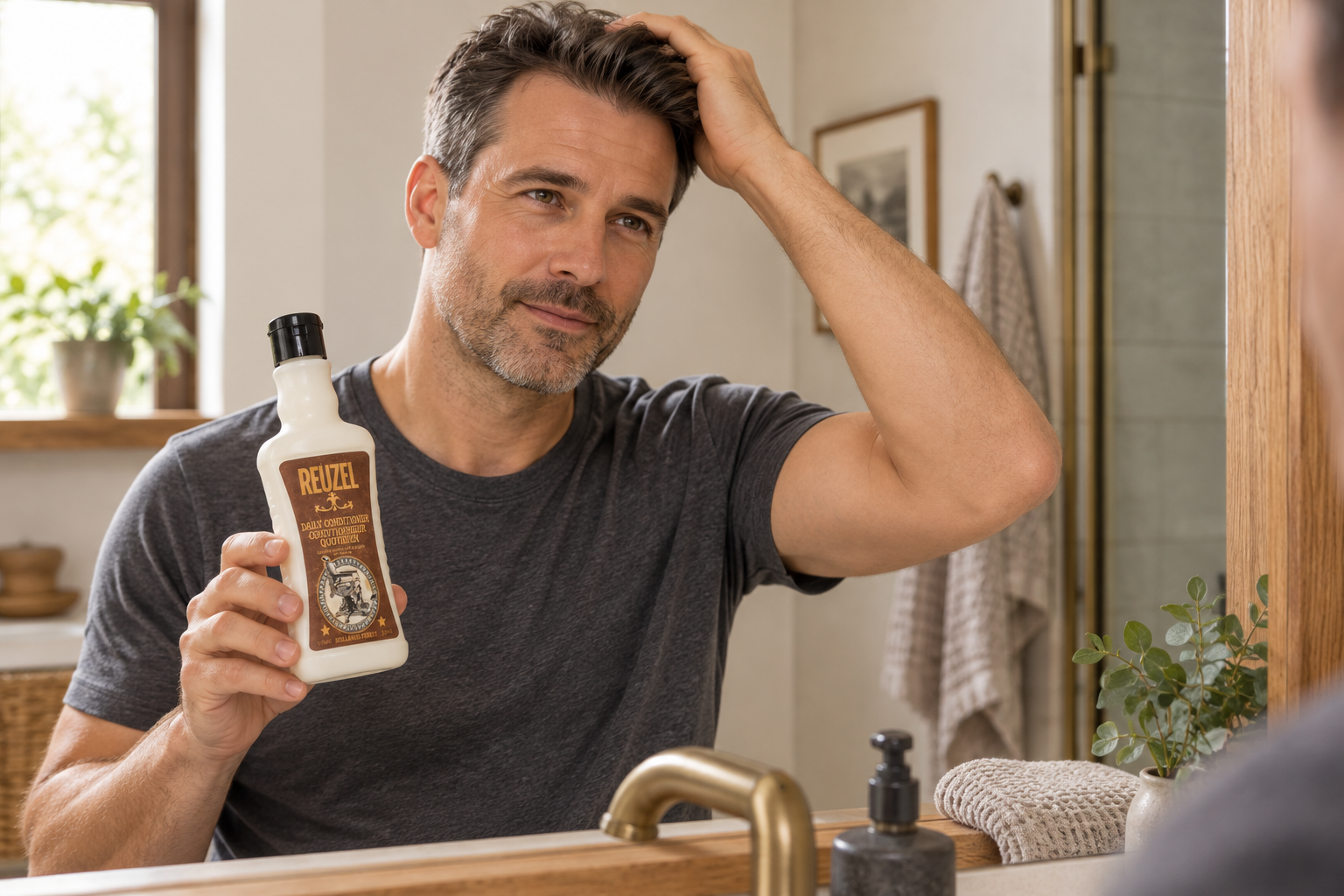
Lighter Styling for a Fuller Look – Our Recommendations
As hair becomes finer with age, it becomes more apparent during styling. A product that once reliably held your style all day may now weigh down finer strands, clump them together, and reveal more of the scalp than you'd like. After forty, a simple rule often works: less product, lighter texture, and a more matte finish.
Heavy gels and pomades with high shine reflect light, making gaps between strands more visible. Matte products tend to diffuse light, giving hair a fuller and more natural appearance. For a fuller look, these types are particularly effective:
- Matte Pastes – offer flexible hold and texture that can be reshaped with your fingers throughout the day; suitable for short to medium-length cuts.
- Hair Clays – provide a firmer, dry, and matte grip that adds volume at the roots; ideal for casual, slightly tousled hairstyles.
- Texturizing Sprays – the lightest option that separates hair and adds volume without weighing it down; perfect for when there's less hair at the crown.
- Light Hold Hairspray – to finish and secure the shape without making the style stiff.
We discuss the different types of styling products and their differences in detail in a separate article, so here we'll focus mainly on how to use them.
Amount and Application. For fine hair, usually a pea-sized amount is enough. First, rub the product between your palms until it's almost invisible, then work it into your hair – from roots to ends. Pastes and sprays are best applied to towel-dried hair: they are still slightly damp, allowing the product to spread evenly without clumping. Firmer clays usually spread better in hair that is almost dry. Spray texturizing spray from a sufficient distance mainly at the roots and lightly tousle the hair. Shape with your fingers for a more relaxed result, or use a wide-tooth comb if you prefer a more polished style. If you need more hold, it's better to gradually add small amounts rather than using a large dose right from the start.
The Whole Routine in a Nutshell. Care and styling after forty don't have to take more time than before, just a few thoughtful steps:
- A gentle shampoo chosen according to the condition of the scalp.
- A light conditioner only on the lengths.
- Scalp serum and leave-in treatment as needed.
- Light styling in small amounts, applied to towel-dried hair.
If you're looking for where to start, Brasty's catalog offers styling products from professional brands. Matte pastes and clays are available from brands like American Crew and Reuzel, while lighter styling sprays and light hold hairsprays can also be found from brands like Wella Professionals and Schwarzkopf Professional. Below, we've selected a few tips that are suitable for finer hair after forty.

Category
Recommended articles

"Give a girl the right shoes and she can conquer the world!" Marilyn Monroe
