
Why the Change of Season Affects Your Perfume Choice
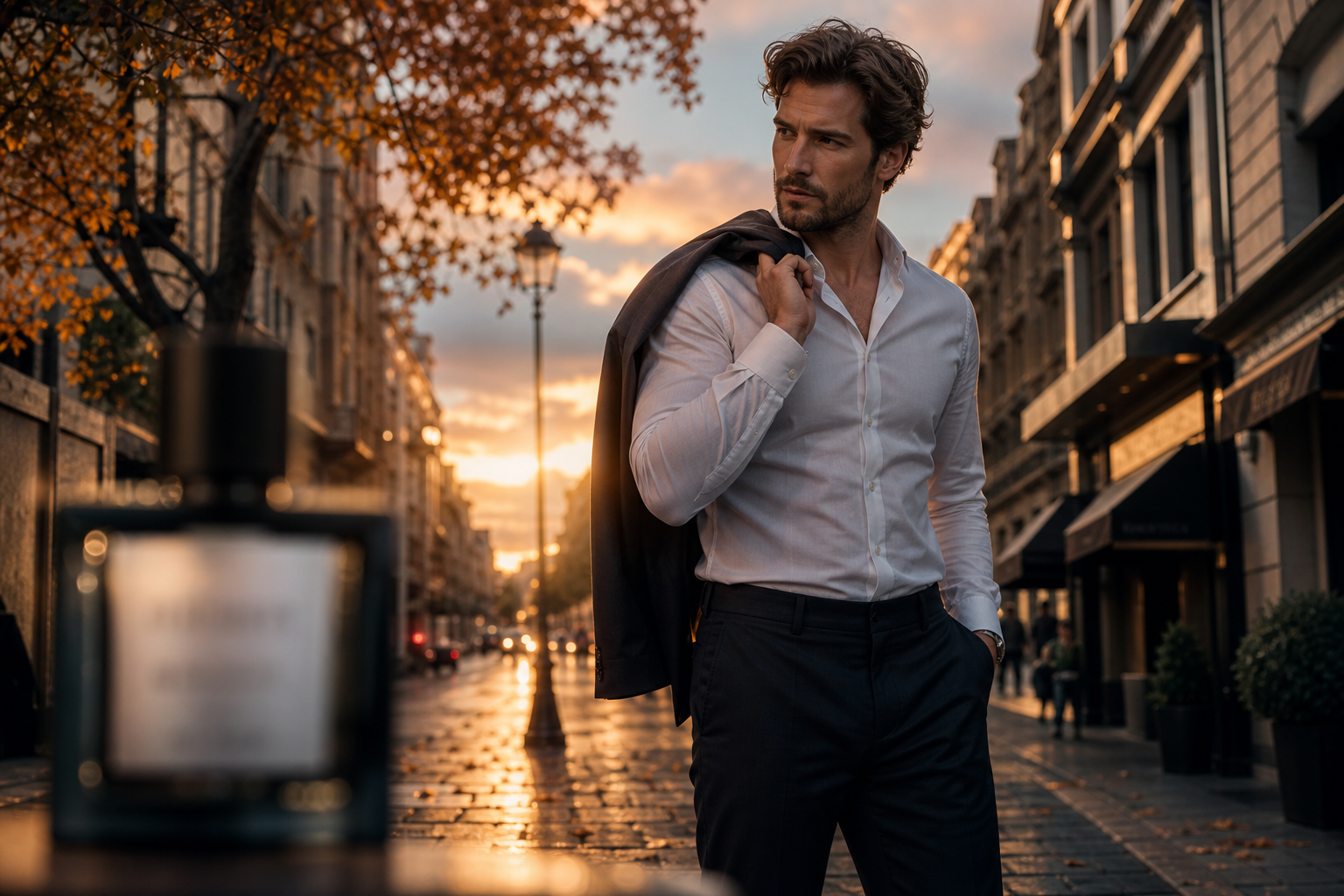
You probably know the feeling: you leave the house in a sweatshirt in the morning, carry it over your arm by noon, and reach for it again in the evening. The transition from summer to autumn is a short period when two different weather conditions fit into one day. And the perfume that served you reliably all summer suddenly feels either a bit empty or unnecessarily heavy, depending on what time you apply it.
It's not just an impression or habit. Fragrance molecules release more readily from the skin the warmer it is: higher temperatures accelerate evaporation, making the composition smell more intense but also depleting it faster. In the cold, it's the opposite. The scent releases more slowly, stays closer to the body, and its lightest notes might not even get a chance to shine. The same bottle behaves differently in August than in October, without you changing anything about your routine.
This is most noticeable at the two extremes. Pure summer freshness based on citrus, aquatic, and green notes is pleasantly refreshing in the heat, but on a chilly morning, it leaves just a faint trace that gets lost under a jacket. Conversely, full winter sweetness with vanilla, amber, and rich resins can warm you on an autumn evening, but in the afternoon sun, it easily turns into an overly sweet cloud that you wear more than it wears you.
The practical solution isn't to swap one bottle for another and wait for the weather to stabilize. During transitional weeks, it's worth having more options on hand and choosing the one that matches the specific part of the day. This article is not a sales ranking. We've divided it according to the situations in which you actually wear perfume:
- Daytime wear when the sun is still warm – fresh classics that last in the heat and don't collapse after an hour.
- Cooler mornings and transitional days – compositions somewhere between citrus and wood that work both in the morning and afternoon.
- Autumn evenings – warmer, spicy, and woody scents that stand out in the cold and stay close to the body.
In each of these three situations, we'll give you three specific tips, totaling nine perfumes across price levels – from affordable Arabian compositions to established premium brands. For each, we'll mention what you can smell in it and when it makes the most sense, so you can choose according to your day, not someone else's rating. You'll find them all in the men's perfume category on Brasty. Before you decide on one, try it directly on your skin – it smells different on a test strip than on you.
Refreshing Classics for Days When the Sun Still Warms
The transition from August to September has a pleasant characteristic: afternoon temperatures still climb, but the air isn't as scorching as in July. This is the ideal window for citrus and aromatic compositions. In the peak of summer, light top notes evaporate from heated skin within the first hour, leaving only a hint of the perfume. Once the maximum temperature stays around twenty-five degrees and mornings are cooler, the same composition opens more slowly and its heart lasts significantly longer. Refreshing classics can now truly show what they're made of.
Azzaro Chrome Eau de Toilette
Chrome is a part of the aquatic and citrus compositions that have maintained a steady place since the late nineties. It opens with lemon, rosemary, and bergamot, followed by a gentle floral heart, and a base of musk with woody tones. On the skin, it feels clean, almost soapy – it's the type of perfume that doesn't bother anyone in an open office, yet it's noticeable. It's perfect for a workday when you have an afternoon meeting and don't want the fragrance to speak before you do. In warmth, it develops quickly, so you usually only need two to three sprays.
Versace Pour Homme Eau de Toilette
Versace Pour Homme is a Mediterranean aromatic composition: lemon, neroli, and bergamot at the start, hyacinth and sage in the middle, cedar and musk at the base. Compared to Chrome, it feels a bit more festive and less watery – closer to a classic cologne structure, but with longer longevity. It works well for a city trip, lunch on a terrace, or an evening gathering when the temperature starts to drop. Just when it cools down, the woody base beautifully emerges, which you might barely notice in the midday heat.
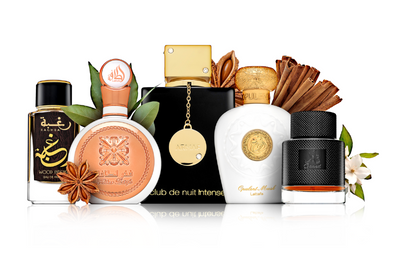
Armaf Club de Nuit Intense Man Eau de Toilette
The third choice is the most distinctive of the trio. Club de Nuit Intense Man starts with lemon, apple, and blackcurrant, but quickly dives into an amber-woody base with pineapple, birch tar, and musk. It is fresh mainly in the first few minutes; for the rest of the day, it leaves a warm, sweetly smoky trail. That's why we still categorize it among summer tips during the transitional period – in the heat, it's too heavy for daily wear, but in milder weather, it holds its shape all day. It's suitable for long days that start in the office and end with dinner in the city.
When choosing among this trio based on the length of your day, a quick comparison of intensity and longevity can help:
- Azzaro Chrome – the lightest trail of the trio, stays close to the skin; for a long day, plan to refresh it in the afternoon.
- Versace Pour Homme – balanced progression and medium intensity; suitable when you don't want to reapply or disturb those around you during the day.
- Armaf Club de Nuit Intense Man – the strongest projection of the trio; fewer sprays are needed, and the trail lasts the longest.
Generally, during this period, you can afford an extra spray compared to summer – the heated air no longer amplifies the scent so relentlessly. If you're unsure, try one spray on the neck and one on the wrist. In warmth, the composition releases from the skin faster, so spreading it over two spots extends the overall impression without overwhelming those around you.
Transitional Fragrances for Cooler Mornings
There comes a time when you put on a sweatshirt in the morning and carry it in your hand by the afternoon. The perfume you choose for such a day must handle both: it should develop quickly in the cold and not become overwhelming in the midday sun. This is where what is known in perfumery as a transitional composition comes in handy.
The principle is simple. The top notes remain fresh (citrus, fruit, or aromatic herbs), while beneath them lies a warmer base: spices, wood, musk, or amber. In warm air, evaporation speeds up, the fresh start fades quickly, and the denser part of the composition comes to the forefront. In the cool morning, it's the opposite – the fragrance unfolds more slowly, and the base acts as an anchor, ensuring the perfume doesn't disappear after an hour. The same perfume thus tells two different stories throughout the day.
This also relates to the choice of concentration. Eau de Toilette has a lower concentration of perfume composition: it feels fresher and more immediate but loses strength more quickly in the cold. Eau de Parfum opens more slowly, stays closer to the skin, and lasts significantly longer in lower temperatures. So, if you're torn between two versions of the same perfume, it's wiser to choose the stronger one for cooler mornings.
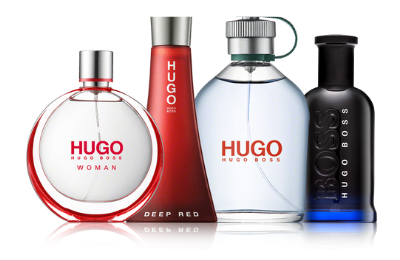
Hugo Boss Boss Bottled Tonic is an Eau de Toilette and a fresher take on the classic Boss Bottled. It opens with citrus and green notes but doesn't stop there – beneath the freshness lies the familiar spicy-woody character of the line, just lightened. It's a choice for mornings when you still need a light jacket, but sunshine is expected in the afternoon: for work, meetings, or a regular day when you don't want your perfume to enter the room before you do.
Rasasi Hawas London is an Eau de Parfum and one of the warmer variants within the Hawas line. The fresh, slightly fruity start quickly gives way to a spicy and musky core, which holds very well in the cold air. It's suitable for mornings when there's moisture and fog – the fragrance doesn't break apart in such situations, it just pulls closer to the body and reopens in the afternoon once it warms up. If purely citrus perfumes start to feel too thin by the end of summer, this is a logical next step.
Lattafa Fakhar Platin is an Eau de Parfum that addresses the transitional period differently: it relies on the contrast between a cool, fresh opening and a warm, musky-woody finish. In the first few minutes, it feels almost wintry, but after half an hour on the skin, it softens and remains in a warmer register for the rest of the day. For a cool morning, it's practical – you get the freshness you want at that moment without needing to reapply in the afternoon. It's also among the more affordable options, making it great for experimenting.
A few small things apply to all three, which matter more on a cooler morning than in summer:
- Apply the perfume to warm skin right after a shower – fragrance develops significantly slower on cool skin.
- Stick to areas that retain heat: neck, area behind the ears, inner wrist.
- Keep in mind that what seems like a light application in the morning can become much stronger in the afternoon heat – one spray less is usually a better choice than one more.
Transitional compositions cover the whole day without compromise: they offer the freshness you still expect at the end of summer in the morning, and the warmth that starts to make sense in the afternoon.
Warmer Scents for Autumn Evenings
As the evenings grow shorter and the air cools, the way a perfume interacts with your skin changes. On warm summer skin, the top notes unfold quickly and fade just as fast; in cooler air, evaporation slows down, bringing the base of the composition to the forefront. This is why tobacco, amber, and spicy bases are more pronounced in autumn than in the August heat—they don't feel heavy, but have time to develop and linger throughout the evening.
The three perfumes below share this exact quality. They're not heavy winter perfumes, but rather the warmer end of the same seasonal wardrobe—they complement fresher and transitional choices, filling in where daylight ends and the program moves indoors.
Dolce & Gabbana The One for Men Eau de Parfum is a spicy-tobacco classic that naturally fits autumn with its structure: a warm, slightly sweet base with a woody undertone that settles on the skin and doesn't change every half hour. It's perfect for a dinner at a restaurant or a business meeting that extends into the evening—noticeable but not overpowering to those at the table. Two sprays on the neck are more than enough; a third would make it noticeable to guests two tables away.
Lattafa Asad Elixir Eau de Parfum takes a sweeter, amber route. It's denser and warmer than summer citrus choices, and its gourmand touch stands out in cooler air instead of feeling overly sweet as it might in the heat. It's suitable for a casual evening—meeting friends, a long dinner at home, a concert in a small club. Given its intensity, we recommend starting with one to two sprays, preferably on clothing rather than bare skin; richer compositions release more slowly and evenly from fabric.
Azzaro The Most Wanted Eau de Parfum sits between the previous two. A spicy, cardamom start transitions into a warm base with a woody and slightly smoky impression that holds the evening together without dominating the entire room. It's a sensible choice for programs where you're sitting close to others for an extended period—theater, cinema, coffee after a show. Here, the simple rule applies: a perfume should be a discovery for someone standing a step away, not for the entire row.
With warmer compositions, a few habits are worthwhile across all three choices:
- Apply to clean and moisturized skin. On dry skin, warm bases fade noticeably faster.
- Choose areas where the skin is warm—neck, behind the ears, inner wrist.
- Do not rub the perfume after applying. Rubbing disrupts the gradual unfolding of notes on which warm bases rely.
- In enclosed spaces, reduce one spray compared to what you would use outdoors.
- Test at the time you will actually wear the perfume. Afternoon and evening coolness changes the scent more than you might expect.
The transition between seasons is the perfect time to incorporate these three perfumes. They don't replace the fresher choices you've been using since summer; they simply add a layer for the hours when it cools down and the day slows—one wardrobe with several dimensions, not three separate worlds.
Choose Based on Your Day, Not the Rankings
The nine perfumes we've reviewed don't share a common theme like "this year's trend." What they have in common is that each makes sense at different times of the day and in different temperatures. The transition from summer to autumn is a rewarding time in this regard: mornings resemble November, afternoons August, and evenings are somewhere in between. This overview, therefore, doesn't rank perfumes by sales but by the situation in which you're likely to reach for the bottle.
Quick Overview by Occasion
- Fresh day with the sun still shining – Azzaro Chrome, Versace Pour Homme, and Armaf Club de Nuit Intense Man. Citrus and aromatic top notes that remain light even in the midday sun; suitable for the office or a long walk around the city.
- Cooler mornings and transitional weather – Hugo Boss Boss Bottled Tonic, Rasasi Hawas Tropical, and Lattafa Fakhar Platin. A fresh start with a denser base that lasts even when the day cools down.
- Warm autumn evening – Dolce & Gabbana The One for Men, Lattafa Asad Elixir, and Azzaro The Most Wanted. Spicy, woody, and sweeter tones that feel natural in cooler air and linger without needing to be reapplied.
The main decision-making criterion is simpler than it seems: look at your typical week, not the sales rankings. Rankings tell you what others are buying, but not whether you spend your day in an overheated office, in a car, or outside between meetings. A perfume praised for its intensity might be unpleasant in a small meeting room, while it could feel balanced on a windy autumn walk. Ask yourself first where and for how long you'll wear the perfume, and only then consider its name.
The second question is temperature. In warmth, a fragrance unfolds more quickly and appears louder, while in the cold, it becomes subdued and shorter-lived. This is why the same bottle can feel heavy in August and just right in October. If you're used to one perfume all year round and it's suddenly not fitting, the issue might not be the composition but the changing conditions around you.
Minimal Seasonal Selection in Three Bottles
For the transitional period, three perfumes will suffice if chosen not to overlap. A proven combination looks like this:
- Fresh scent for warm days and regular work use.
- Universal transitional perfume for days when it's chilly in the morning and pleasant in the afternoon – this will likely be the most used.
- Warmer evening composition for times when you go out and want your fragrance to be noticed.
If you want to start with just one bottle, begin with the middle type. Transitional scents have the broadest appeal: they work in warm afternoons and cooler evenings and aren't out of place at work or dinner. Fresh classics and heavier evening compositions make sense as the second and third steps, as each covers a significantly narrower part of the year.
And one last practical tip: before deciding, apply the perfume to your skin and let it settle for at least a few hours. The top notes change the most in the first few minutes and only give you a fraction of how the composition will ultimately smell. All nine tips from this article can be found together in the men's perfume category on Brasty, where you can compare them side by side by volume and concentration.
Category
Recommended articles
"Give a girl the right shoes and she can conquer the world!" Marilyn Monroe