
Why Advice on Hyaluronic Acid Can Be Conflicting
Open a short video app, search for hyaluronic acid, and within a minute, you'll encounter two pieces of advice that directly contradict each other. One video claims it's the foundation of hydration and essential for modern skincare. Another, just as confidently, warns that the serum actually dries out the skin and should be avoided. Both sides speak convincingly, both cite personal experience, and both offer conclusions that fit into fifteen seconds. It's understandable that this creates confusion.
The good news is that the contradiction is often smaller than it seems. Conflicting statements usually don't arise from different observations, but from the same one: sometimes, after applying the serum, the skin feels tighter or drier than expected. One voice concludes that the ingredient itself is harmful. Another concludes that the method of use was different. The description of the situation is almost identical – the interpretation is where they diverge.
The main reason for different conclusions is what doesn't fit into a short video. The viewer usually doesn't learn:
- what environment the skin is in and how humid or dry the air around is,
- what followed the serum, if anything at all,
- what skin type the person has and what they usually use on it,
- in what form and concentration the ingredient was included in the product.
Once these variables disappear, you're left with a bare statement that sounds universal – even though it actually describes one specific situation of one specific person.
It also plays a role that the label hyaluronic acid on the front of the packaging is just one item in the entire composition. Alongside it are other substances that also determine how the product ultimately behaves on the skin. Two serums with the same ingredient on the label can therefore have different outcomes – and it also depends on where you place them in your morning or evening routine and what follows them.
That's why we've taken the most common claims about hyaluronic acid one by one. For each, we'll discuss what it originated from, what holds true, and where an individual observation became a rule that doesn't apply universally. It's not about determining who is right on the internet. It's about enabling you to assess for yourself next time whether the advice applies to your skin – based on the product's composition and the way you use it.
What Hyaluronic Acid Really Does in the Skin
Before diving into the various claims surrounding hyaluronic acid, it's worth clarifying what this substance actually is. It's not a discovery of recent seasons or a novelty introduced by social media videos – it's a substance naturally found in the human body. You'll find it in connective tissues, joint fluid, and even in the skin itself, where it contributes to its supple and elastic appearance. Cosmetics utilize it because a similar principle works externally, not because the skin was unfamiliar with it before.
Its key property is simple: hyaluronic acid binds water and helps retain it in the skin for a while. In technical terms, such components are called humectants. The molecule attracts water, holds it in the surface layers, and simultaneously slows down its evaporation. The skin then feels more pleasant to the touch, looks more rested, and fine lines from dryness are less noticeable. However, this is not a change in the skin's structure – it's its condition at a given time, maintained by regular use.
This is why hyaluronic acid is classified among moisturizing ingredients, not among active substances with a targeted and gradually built effect, like retinoids, fruit acids, or vitamin C. These work with processes in the skin, and their results are assessed over weeks. Hydration works differently: it acts as long as the product is on the skin and as long as it has a source of water. If you skip it in your routine, the skin returns to its original state. Neither approach is better or worse; they just address different needs – and part of the confusion around hyaluronic acid arises from expecting a moisturizing ingredient to perform like an active substance.
This also relates to a small detail that can be confusing when reading labels. The front of the packaging often states "hyaluronic acid," but in the ingredient list, you'll most commonly find it under the name sodium hyaluronate. This is the sodium salt of the acid, a form that is more stable in aqueous formulations and easier to process. Variants like hydrolyzed hyaluronic acid or sodium acetylated hyaluronate may also appear. None of these terms mean it's a cheaper substitute – they are technological forms of the same substance.
The last term that often appears in descriptions is the size of the molecule. Manufacturers mention it because it changes where the component acts on the skin:
- High-molecular-weight hyaluronic acid tends to stay on the surface, creating a thin film that binds water and reduces its evaporation.
- Low-molecular-weight and hydrolyzed forms are described as those that penetrate the upper layers of the skin's stratum corneum and hydrate a bit deeper.
- Combining multiple sizes in one formulation aims to connect these two modes; hence, descriptions often mention "multi-level" hydration.
Distinguishing sizes makes sense, but it doesn't create a hierarchy with one correct variant at the top.
In practice, this means you'll encounter it across various forms in skincare, not just in one type of product. Most commonly, it's found in light gel serums and moisturizing boosters, as well as in moisturizing creams for day and night care, facial waters and tonics, eye area products, sheet and gel masks, and even body care products. They differ in consistency, accompanying ingredients, and where they fit in the routine – but the core principle, binding water and retaining it in the skin, remains the same in all cases.
Myth One: In Dry Air, Serum Allegedly Dries Out the Skin
As soon as the heating season starts, a claim resurfaces that can reliably confuse: hyaluronic serum supposedly dries out the skin in dry air instead of hydrating it. It sounds logical enough to accept without verification – and the serum ends up in the drawer just when it could be most useful. Let's take a look at what holds true in this statement and what doesn't.
There is a grain of truth in it. Hyaluronic acid is a humectant, a substance that binds water and holds it where the skin needs it. It draws water from two sources: the surrounding environment and the deeper layers of the skin. When the air around you is dry, there's nothing to draw from the environment, and the bound moisture gradually evaporates from the surface. If no additional layer of care is guarding over the serum, the skin may feel tighter over time than before application.
The mistake lies in the conclusion, not in the ingredient itself. Serum is not an air humidifier nor the final step in a routine – it's a concentrate that anticipates something else will follow. The context of use is crucial: what skin you apply the serum to and how you seal it afterward.
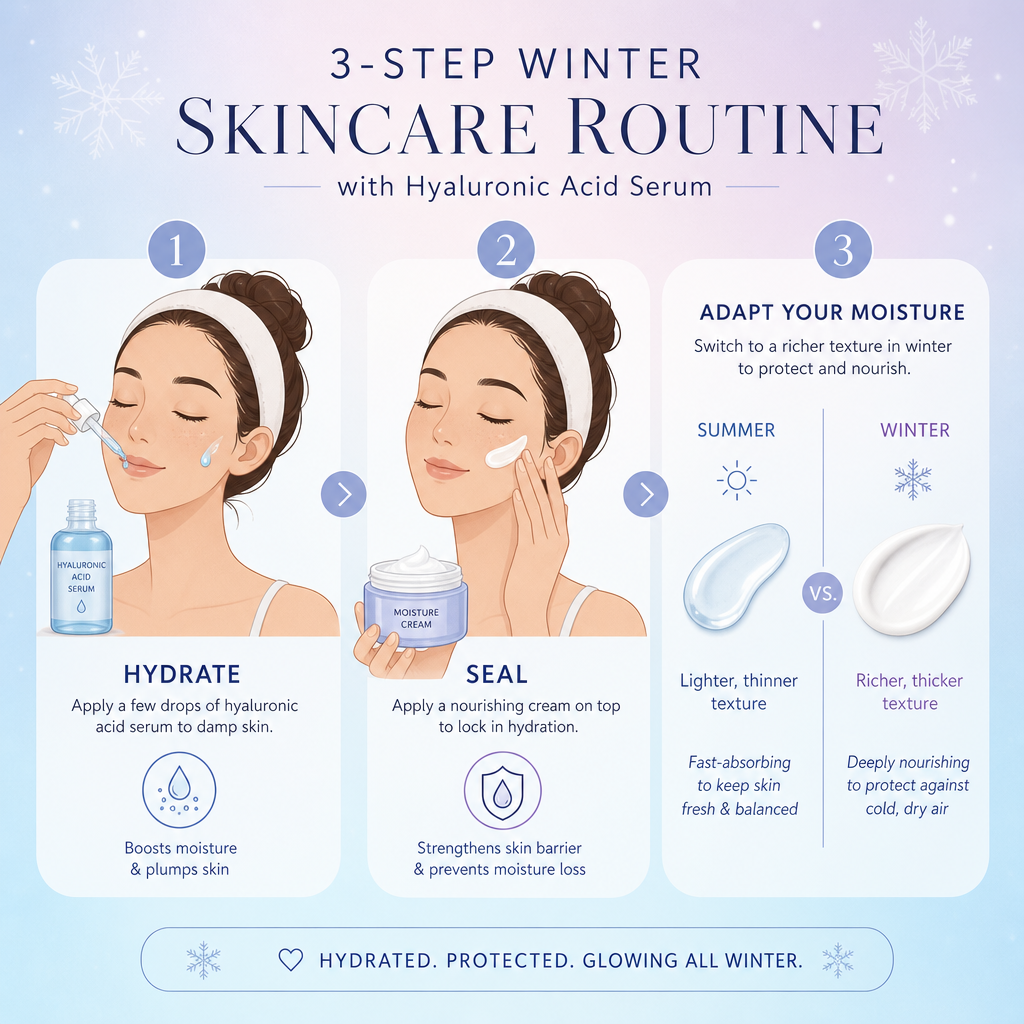
In practice, there are three steps worth following throughout the winter:
- Apply on damp skin. After cleansing or using a toner, don't wait for your face to dry completely. This way, the serum has something to cling to and doesn't start its work on a dry surface.
- Seal in the hydration with a cream. A cream or balm containing lipids creates a layer on the surface that slows down evaporation. Without it, the serum really has nothing to hold onto in a heated room.
- Adapt the texture to the season. What sufficed as a light gel in summer may require a richer cream in winter, or a denser balm for the most stressed areas.
It's worth mentioning that many manufacturers consider this combination directly in the construction of their entire product line: a hydrating serum concentrate is accompanied by a cream from the same line, so both layers complement each other in texture and composition. You'll find this with dermocosmetic brands, such as Vichy or Bioderma. It's not a requirement, as a serum from one brand can work just as well with a cream from another, but it saves you the trouble of figuring out what to combine with what.
And one more thing that often gets lost in discussions under videos: dry air in a room is not a problem that cosmetics should solve. If your home is significantly overheated in winter, regular ventilation or a humidifier can help. Skincare doesn't have to carry the entire burden alone. Serum in such an environment is not your enemy; it just needs a partner in the form of a cream to keep its work in place.
Myth Two: Serum vs. Dermatologist Procedure
Few cosmetic ingredients appear in discussions in such contrasting roles simultaneously. On one hand, there's talk about a serum you apply to your skin in the morning, and on the other, about a procedure performed by a doctor in a clinic. Because both share the same ingredient name, these situations often get conflated, leading to the expectation that a bottle from your bathroom shelf can achieve the same results as a professional procedure. It cannot—and it's not supposed to.
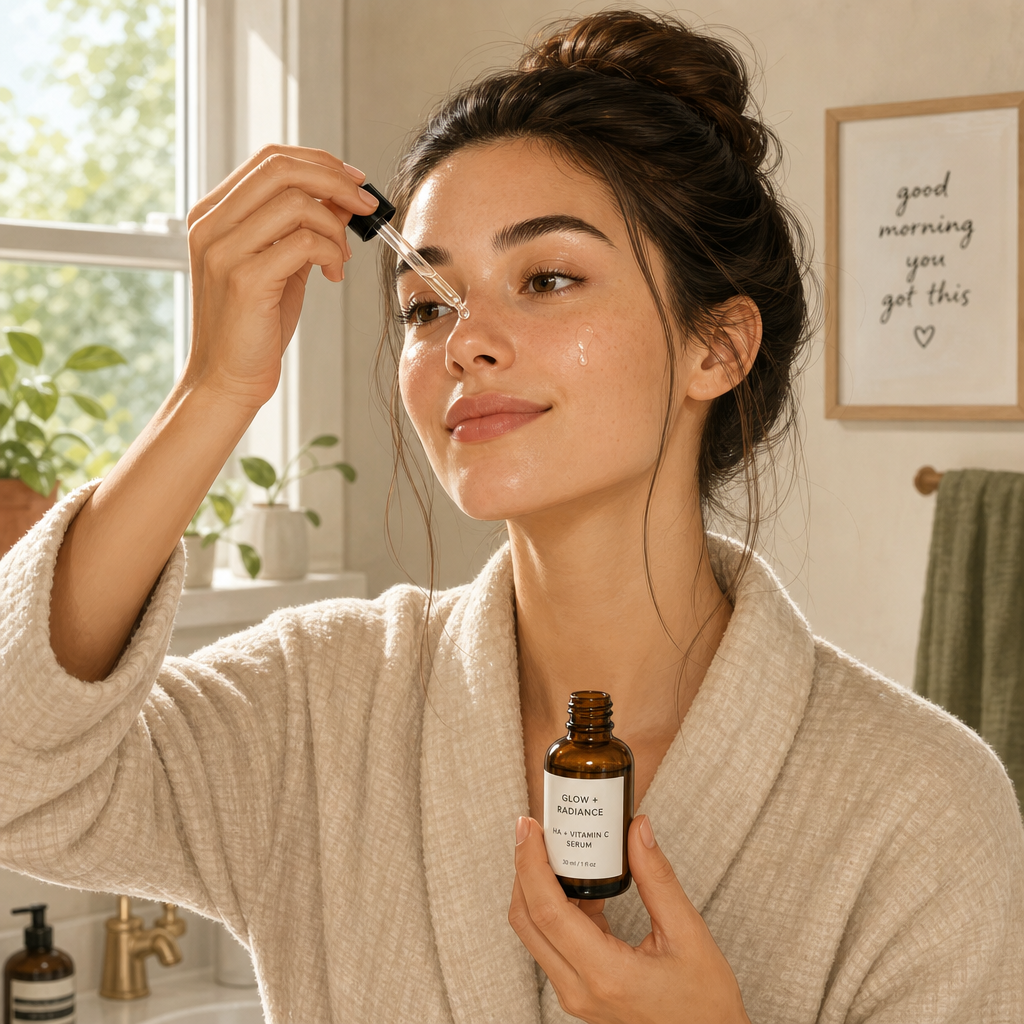
Cosmetics work on the skin's surface. Serums, creams, and toners remain in the upper layers, where hyaluronic acid binds water. This makes the skin appear more supple, fine lines less noticeable, and prevents the skin from feeling tight all day. This effect is hydrating and temporary: it lasts as long as you continue the routine and gradually fades if you stop. This is not a product flaw but the principle on which surface hydration is based.
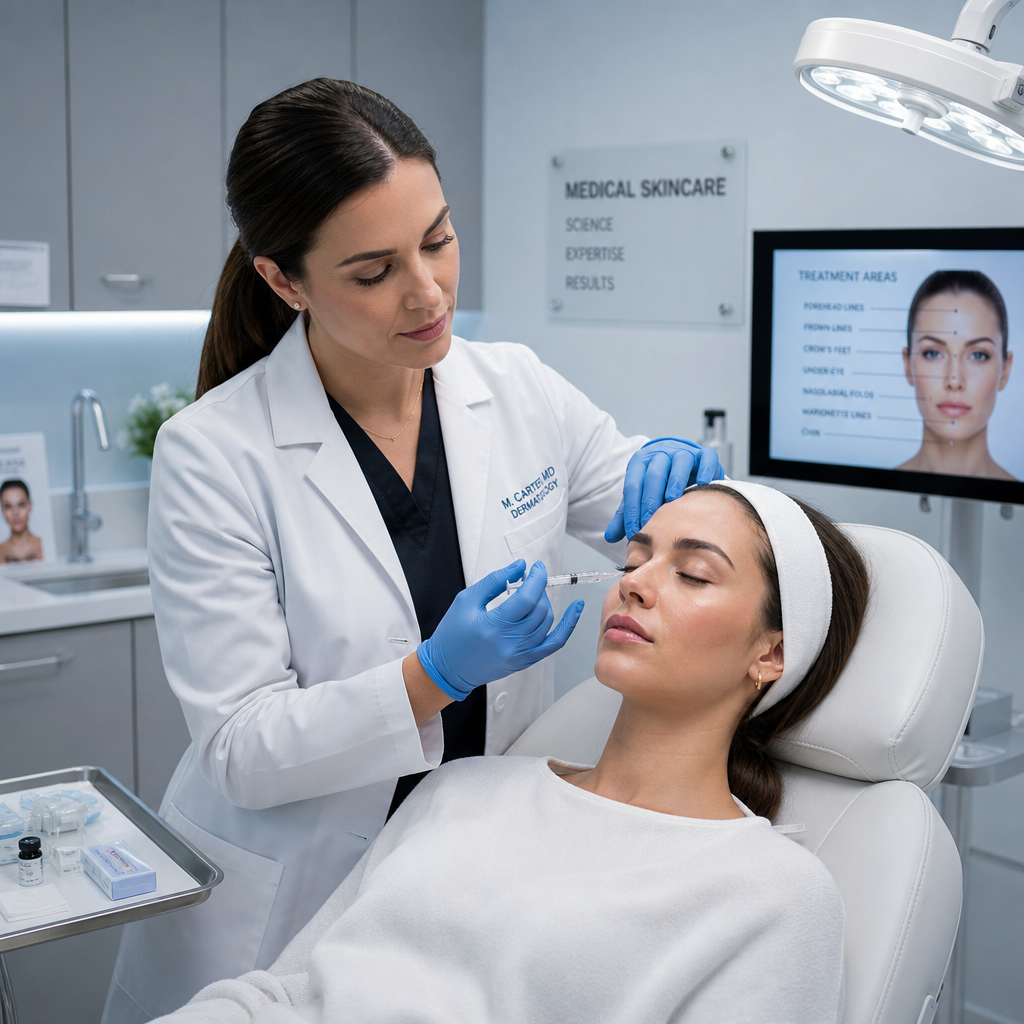
A doctor's procedure is a medical intervention. It is performed by a specialist, with the acid reaching beneath the skin's surface, aiming not at hydrating the upper layers but at working with facial volume and contour. It involves consultation, health assessment, and information about the process and potential risks. These are areas that a magazine article or social media video cannot cover—suitability, scope, and timing are individually assessed by a doctor.
The difference, therefore, is not in the quality or price of the product but in where the ingredient goes and what it does there. Cosmetics are, by definition, intended for the skin's surface. A serum cannot replace a procedure, and a procedure does not replace daily care; they are two different things with different goals.
This difference provides a simple guideline for reading labels and advertising texts. Be cautious whenever a product promises:
- “needle-free filler effect” or “results like a procedure,”
- permanent wrinkle smoothing or complete removal,
- a guaranteed result by a specific date, such as “ten years younger in seven days,”
- comparisons to aesthetic medicine used as proof of effectiveness.
Such formulations are not descriptions of what's in the bottle but marketing—and usually mean you won't learn much about the actual content. A factual description talks about hydration, skin comfort, and appearance, not about replacing a medical procedure.
So, what should you expect from home care? Primarily consistency. A hyaluronic acid hydrating serum is part of a routine whose benefits are assessed over weeks of regular use, not after a single application. The skin tends to feel more pleasant to the touch, makeup applies more easily, and there's less frequent tightness after washing. This is a realistic and quite practical result in everyday use—it just can't be mistaken for the outcome of an aesthetic procedure.
Both can coexist. If you're considering a procedure or have already undergone one, consult with the doctor who treated you about subsequent care. And evaluate the serum based on what it can realistically do, not what the advertisement claims it can replace.
Myth Three: The Higher the Percentage, the Better the Result
The number on the packaging has one big advantage: it can be compared instantly. Two percent looks better than one, and five percent better than two. That's why concentration so easily became the main criterion by which serums are judged – and yet it's a measure that says little about the result.
Hyaluronic acid acts as a humectant: it binds water and retains it in the upper layers of the skin. The capacity it can utilize there is not unlimited. Beyond a certain concentration, the added amount mainly affects the consistency – the gel becomes thicker, stickier, and takes longer to dry on the skin. This can be pleasant under a richer cream, but on its own, it doesn't mean more intense hydration.
What the number on the packaging doesn't reveal:
- Molecule size. Manufacturers commonly combine several fractions of hyaluronic acid – larger molecules stay on the surface and create a supple film, while smaller ones penetrate the upper layers of the skin. Two serums with the same percentage can therefore behave completely differently.
- Accompanying ingredients. Hydration is supported by substances like panthenol, niacinamide, glycerin, or ceramides. These don't appear on the label as an impressive number, yet they often determine how the skin looks after application and how long the feeling of comfort lasts.
- Form of the product. Watery serum, thicker cream, facial mist, or gel mask each work with water differently. The same concentration in a light serum and a rich balm gives a different feel and different longevity.
- What comes on top. A humectant needs a layer to hold the water. Without a cream or oil on top, the effect fades much faster, regardless of the percentage.
The percentages themselves aren't a trick – they've just become a sales topic. Some brands state the concentration directly in the name, as with L'Oréal Paris Revitalift Filler 1.5% Hyaluronic Acid Serum. Others don't mention it on the packaging at all and focus more on skin type or overall care focus – like Vichy Minéral 89 Hyaluron Booster or Bioderma Hydrabio Serum. The absence of a number doesn't mean the formula is weaker; it often just means the brand emphasizes the entire composition rather than a single value.
Higher concentrations may not be advantageous for sensitive skin. The longer the list of ingredients, the harder it is to find the culprit if the skin reacts with burning or redness. A short formula without fragrance and with one clear main ingredient is easier to manage in such a situation: you know what you've added and can identify what works for you. This is similarly true when calming the skin after more irritating care – a simpler hydrating serum is often a more grateful choice than a product trying to address several issues at once.
A practical guideline is: compare percentages only within one product line, where they have the same meaning. Between brands, it's a figure without a common measure, as each calculates it from a differently mixed formula. And if your current serum suits you, there's no point in seeking a higher number just because it exists.
How to Choose Based on Ingredients, Not Videos
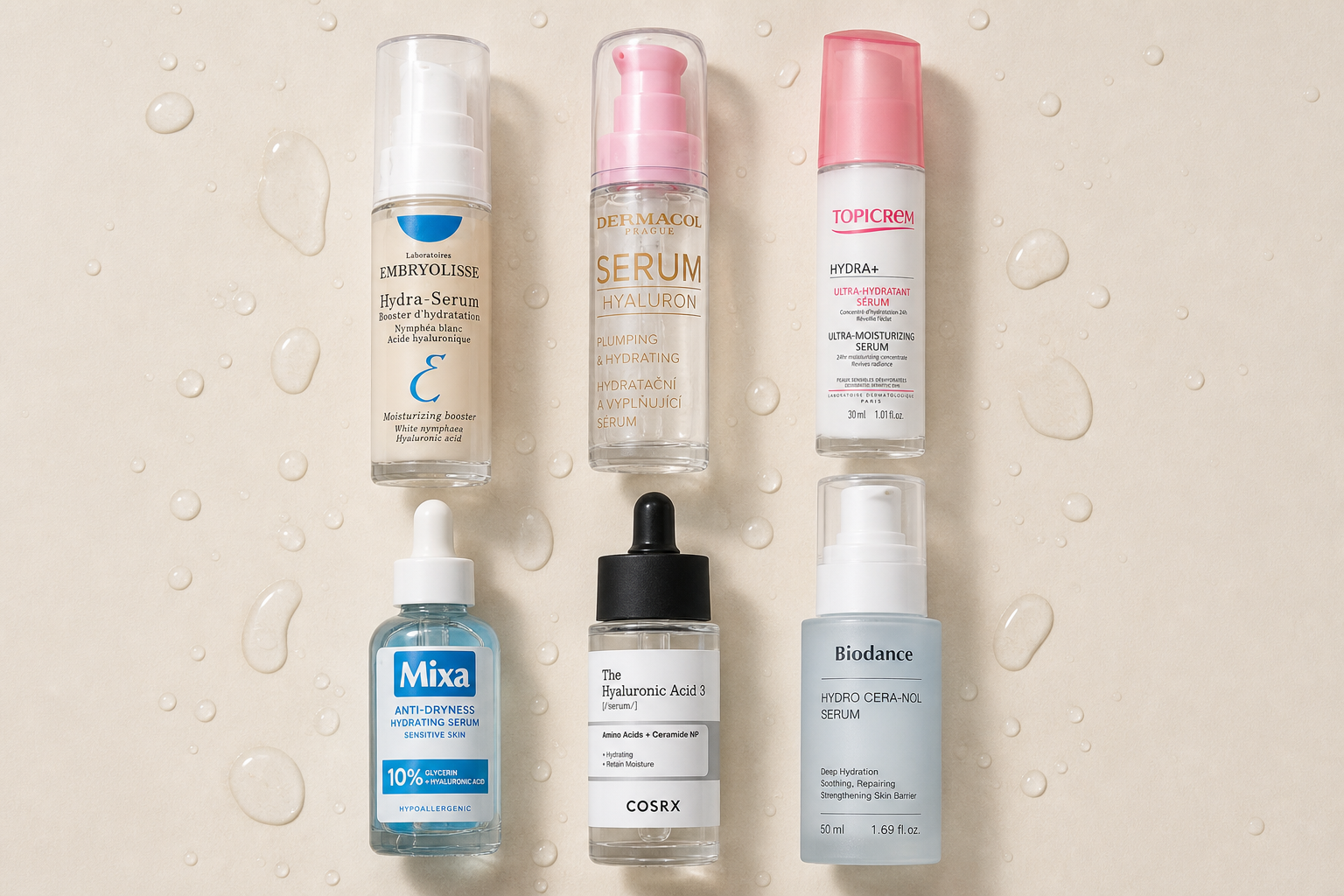
A short video might show a beautifully lit bottle with a dropper, but it won't tell you what's inside or if it's suitable for your skin. Summarizing the previous chapters, here's a simple method you can use directly from the product listing: read the list of ingredients, compare it with how your skin usually behaves, and consider what you'll layer over the serum in the next step.
What to Look for in Ingredients
Ingredients are listed on the packaging in international INCI nomenclature and are arranged in descending order of concentration. Hyaluronic acid is most commonly found under the names sodium hyaluronate, hyaluronic acid, or hydrolyzed hyaluronic acid. More useful than searching for a single item is to see what other ingredients accompany it – these accompanying ingredients determine how the product behaves on the skin.
- Other Water-Binding Agents – glycerin, panthenol, or betaine work similarly to hyaluronan and are often found in serums with it.
- Emollient and Occlusive Ingredients – squalane, ceramides, plant oils, or butter help retain moisture in the skin longer. Without them, the serum usually needs a cream on top.
- Soothing Ingredients – niacinamide, panthenol, or centella extract are choices for skin that easily reddens.
- Short List for Sensitive Skin – the less fragrance, essential oils, and alcohol at the top of the list, the lower the risk of irritation.
A Sensible Order of Steps
Serum alone doesn't make a routine. Most disappointments stem from using it alone or in the wrong order.
- Cleansing – gel, foam, or micellar water depending on skin type.
- Toner or tonic, if included in your routine. Skin remains slightly damp after, which is ideal for the next step.
- Hyaluronic acid serum applied to damp skin, not completely dry.
- Cream to cover the serum and retain moisture in the skin.
- In the morning, add sun protection with SPF as the final skincare step.
Guidance Based on What Your Skin Needs
Consider the following division as a guide, not a prescription – skin changes with the season, age, and the environment you spend your day in.
- Dry and Dehydrated Skin – hydrating serum complemented by a richer cream with ceramides or squalane. Brands like Bioderma, CeraVe, or Vichy are proven in this combination.
- Sensitive and Reactive Skin – gentler options with shorter ingredient lists and no fragrance, typically from dermocosmetic lines like La Roche-Posay or Bioderma.
- Combination and Oily Skin – lighter gel textures that don't leave a film, complemented by a non-greasy cream.
- Mature Skin – creams with renewing formulations used year-round, complemented by thorough sun protection.
If after reading the article you want to calmly review specific products and compare them side by side, you'll find the mentioned brands together in the skincare category. Follow the same principle we started with: first the ingredients and your skin's needs, then anything you've seen on screen.
Category
Recommended articles
"Give a girl the right shoes and she can conquer the world!" Marilyn Monroe