

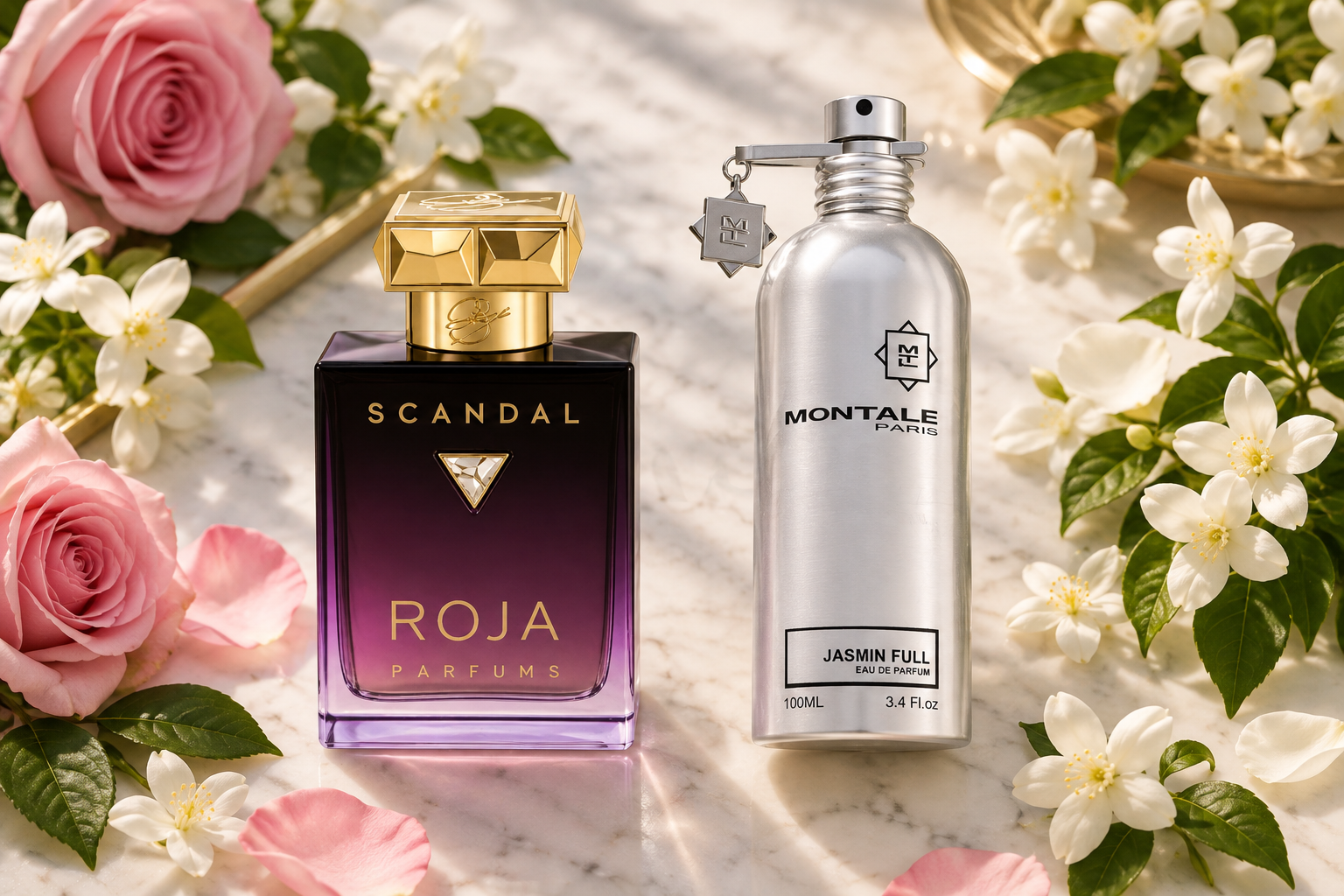
Do you encounter popular women's perfumes everywhere you go? Niche perfumery offers three distinct directions – floral, gourmand, and tea – and we'll show you how they differ and which occasion each is suited for.
Three Olfactory Directions for Women Who Want to Stand Out from the Mainstream
You probably know the feeling: the perfume you've been wearing for years smells pleasant, offends no one, and reliably works. But in just one morning, you catch a whiff of it on a colleague in the elevator, on a waitress in a café, and on a woman in line at the post office. The best-selling women's compositions are popular for a reason – they are understandable, easy to wear, and suit a myriad of situations. That's precisely why so many people wear them at once, and the scent gradually stops being your personal signature.
Niche perfumery takes a different path. It works with smaller batches, bolder ingredients, and compositions that don't aim to please everyone. The result is a fragrance that your surroundings won't categorize in three seconds, and at the same time, a perfume that says something about you. If you're tempted by such a change but don't know where to start, narrowing down your choice to three olfactory directions, which are the most prominent in women's niche offerings, can help.
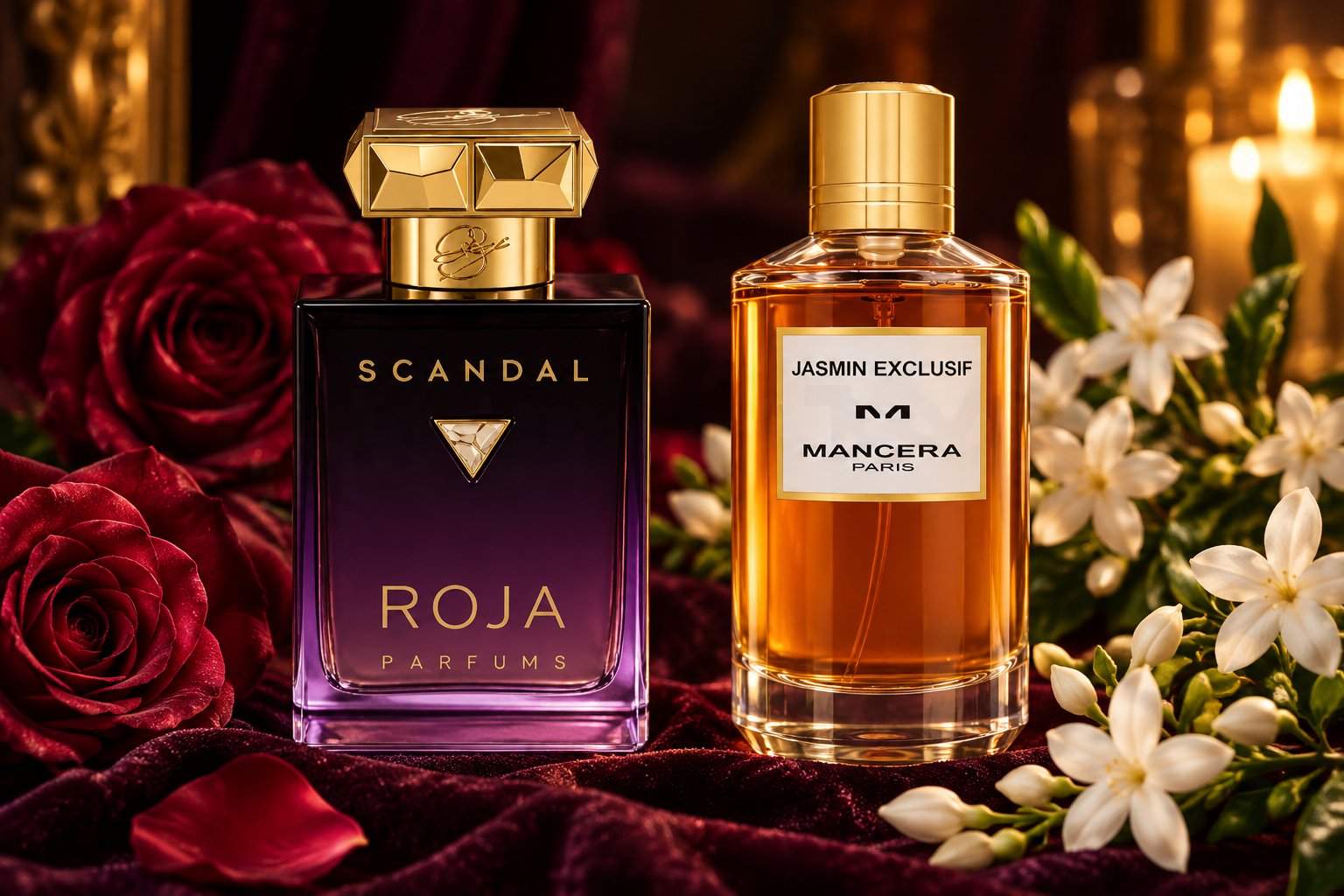
- Floral Direction – it's not about a blooming meadow, but a solo flower with character. Jasmine, orange blossom, or rose are given space to resonate in their full range, from transparent freshness to rich, almost honey-like intensity.
- Gourmand Direction – warm, sweet, and cozy compositions based on vanilla, tonka bean, or amber. Of all three directions, this is usually the most pronounced and hardest to overlook.
- Tea Direction – clean, airy scents with a slightly bitter, astringent note, like that of freshly brewed green tea. They feel sophisticated and subtle, without being dull.
The difference between them is not just in how they smell, but mainly in how they behave. Gourmand compositions tend to have the strongest trail – they develop quickly on warm skin and can be smelled from several steps away, so less is more when applying these fragrances. Floral perfumes sit in the middle: richer evening versions with a woody base last long and are noticeable, while transparent white flowers stay closer to the skin. Tea notes are the quietest, best suited for heat and enclosed spaces, and you typically reach for them when you don't want your fragrance to enter the room before you do.
Your own skin plays a bigger role than you might expect. Dry skin "drinks" the scent and shortens its longevity, while warmer and oilier skin enhances sweet and resinous tones. The same perfume can therefore smell like two different fragrances on two women – and that's precisely why niche compositions are worth evaluating after several hours of wear, not based on the first sniff from a test strip.
In the following sections of the article, we'll delve into each of the three directions individually: we'll look at the ingredients that define them, who and when they suit, and how to recognize a well-constructed composition. For each direction, we also include a selection of specific perfumes from our niche offerings to get you started.
Floral Compositions: From Fresh White Blossoms to Rich Roses
The floral family in niche perfumery has a different character than what you might be used to from regular drugstore shelves. Instead of a broad sweet bouquet where individual flowers blend into one smooth scent, here one flower usually takes the spotlight, and the perfumer builds the composition around it to highlight its true character, including less appealing facets. Jasmine can then seem almost honey-like and intoxicating, rose can be sharply metallic, and orange blossom purely soapy. This fidelity to the raw material makes the floral direction the most accessible gateway into the niche world.
Transparent white flowers are the lighter half. Jasmine in them is often airy, more like a veil than a dense perfume, complemented by orange blossom with its clean, sweetly green aspect. In the top notes, bergamot or mandarin often join them, providing a citrusy start that lightens the fragrance for the first few minutes and prevents it from immediately feeling festive. Such a composition is easy to wear even on a hot day at the office: it's noticeable within arm's reach but doesn't precede you into a room before you enter.
Ingredients you will most often encounter in this direction:
- Jasmine – depending on processing, either airy and clean or dense and almost animalistic; it plays a major role in how prominently the composition comes across on the skin.
- Orange Blossom – gently bittersweet, soapy clean, typical for daytime and spring wear.
- Rose – the most variable ingredient in this direction: from fresh, dewy tones to dark, jam-like richness.
- Bergamot and Mandarin – top notes that brighten the composition and keep it fresh for about the first half-hour.
Rich rose is the other pole of the same direction. Just add a woody base like cedar, sandalwood, or patchouli under the flower, and the fragrance becomes heavier, extends, and gains a velvety depth, which is why rose compositions are worn more towards the evening. They develop more slowly on the skin, smelling different after an hour than in the first minute, and the trail lasts significantly longer. For a formal dinner, theater, or a cool autumn day, it's a natural choice; in a crowded meeting room, however, it might easily seem out of place.
So who does the floral direction suit best? If you like your fragrance to be recognizable but don't need the whole room to notice it, stick with transparent white flowers – they work every day, with work attire and summer dresses. If, on the other hand, you're looking for a perfume for a specific occasion and enjoy watching how the scent evolves throughout the evening, go for a rich rose with a woody base. And if you're choosing for the first time, try both styles side by side on your own skin; you'll notice the difference within the first twenty minutes.

Gourmand Fragrances: Vanilla, Tonka Bean, and Velvety Sweetness
The gourmand direction is the most prominent among the olfactory families we explore here—measured by intensity, sillage, and the speed with which the scent captures attention around you. While other compositions rely on transparency and lightness, a gourmand fragrance is built on a warm, dense base that lingers on the skin for hours and rarely goes unnoticed. If you're looking for a perfume that people will associate directly with you, start with this direction.
The name of the family hints at its inspiration: the confectioner's workshop. Here, sweetness is not just an embellishment but the main structure. A well-crafted gourmand composition resembles a dessert with a strong spicy line rather than a sugary glaze—sweet notes are held together by a woody or resinous base, with spicy accents giving them shape.
The ingredients most commonly used in gourmand perfumes:
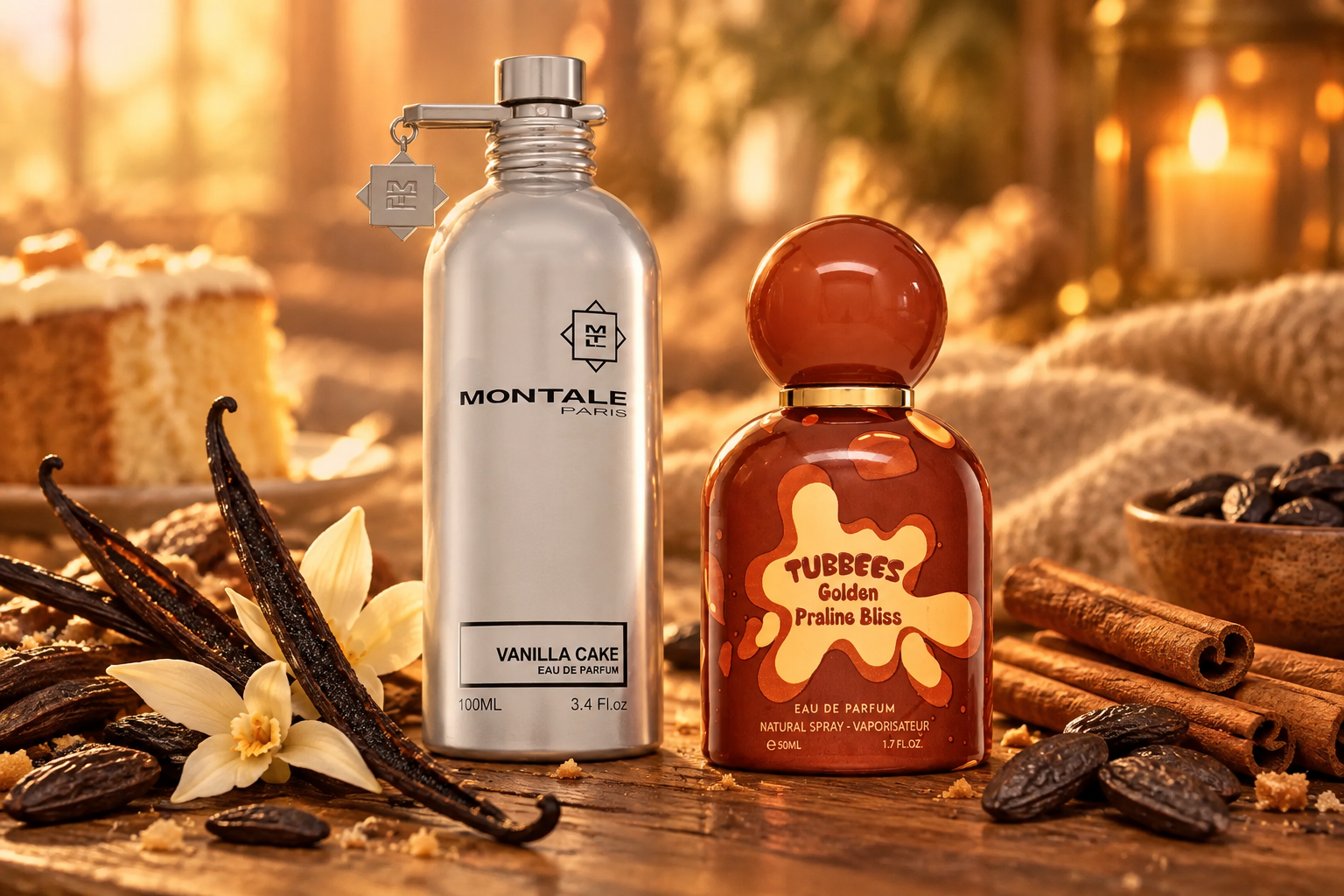
- Vanilla – the fundamental building block of the entire family. In niche interpretations, it tends to be darker and smokier than in mainstream production; it evokes the vanilla pod itself and its resinous aspect rather than a candy.
- Tonka Bean – an almond-like sweet ingredient with hints of hay, tobacco, and a bitter core. It is the tonka that gives gourmand fragrances that velvety, slightly powdery impression, which is why readers often return to this direction.
- Amber – a warm, slightly salty, and balsamic note. It extends the composition and connects the sweet heart with the base notes, ensuring there is no break between them.
- Musk – the soft foundation of the entire structure. It softens transitions between notes and ensures the fragrance feels like a second skin, not an additional layer.
- Cardamom and other spicy accents – cardamom, cinnamon, nutmeg, or pink pepper act as a counterbalance to sweetness. Without them, the composition would feel flat; with them, it gains depth and a clear outline.
A practical note that is easily forgotten with gourmand fragrances: they develop according to skin temperature. On warm skin, in a heated room, or on a summer day, they open faster and intensify more than you might expect from a test strip experience. Less is often more here—one to two sprays on the wrists and collarbone area are usually sufficient. It's better to start with a smaller dose and reapply during the day than to apply the fragrance fully in the morning.
The choice of concentration is closely related to dosing. Eau de Parfum is a reliable choice for all-day wear in gourmand compositions: it has a sufficiently dense base to last, yet it doesn't expand so widely that it becomes bothersome in an office or public transport. More concentrated versions, such as perfume extract labeled as pure perfume, contain a higher proportion of fragrance components, last longer, and have a more focused presence—they make sense for evenings, cooler months, and moments when you want the fragrance to accompany you from afternoon to night. Eau de Toilette appears less frequently in the gourmand direction; if you opt for it, expect a shorter sillage and the need to reapply.
Before deciding, test the perfume directly on your skin and give it at least a few hours. Gourmand compositions change over time more than fresh scents: what smells like a sweet drink in the first half-hour can settle into a warm woody trail after a few hours. This final phase will determine whether you fall in love with the perfume, so it's worth taking your time.

Tea Notes: Transparent Scents for Every Day
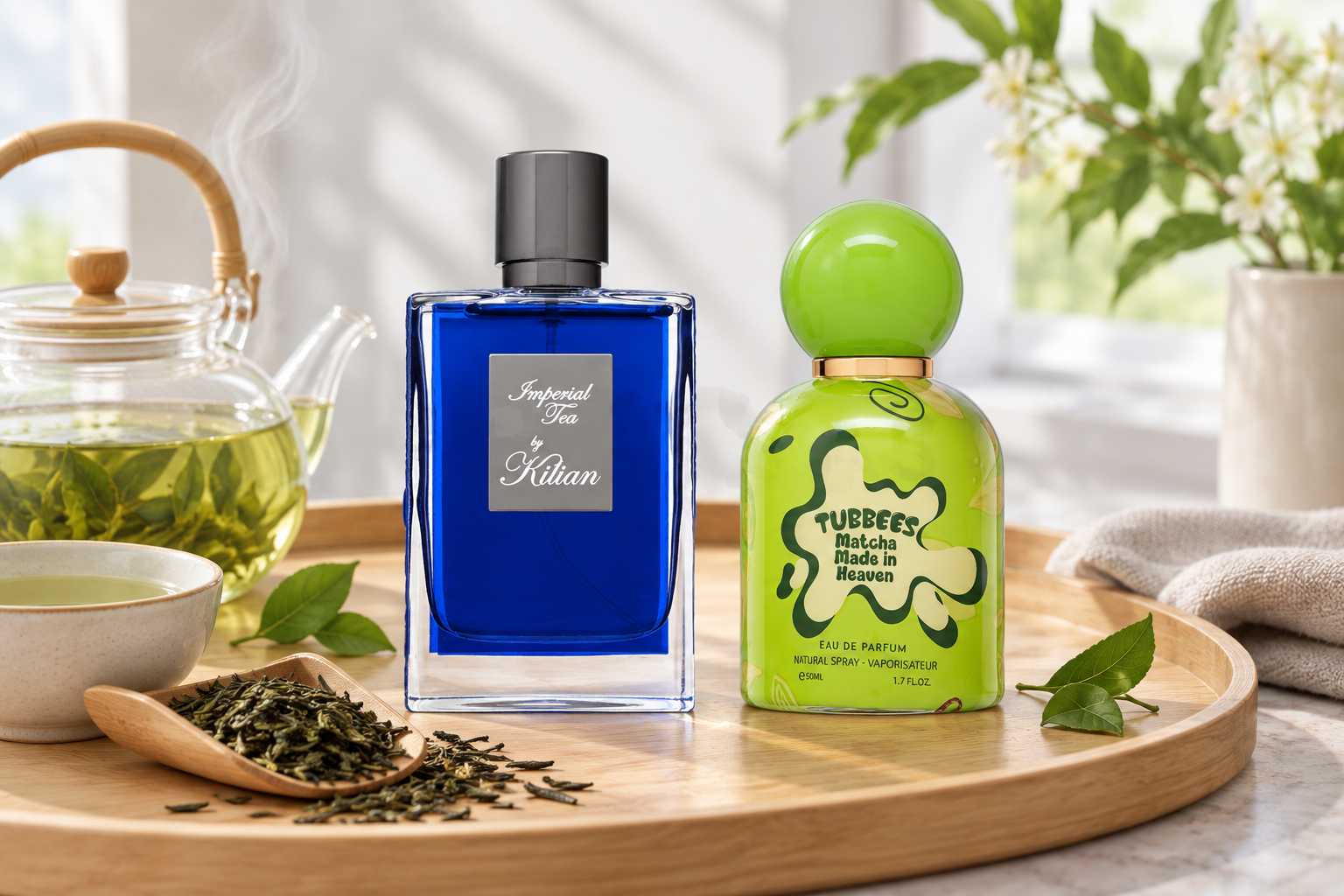
If sweet compositions seem too heavy and rich florals too festive, the tea direction is exactly the space in between. Tea in perfumery doesn't smell like a beverage from a cup – it's more of an olfactory idea of a dry leaf: slightly bitter, a bit smoky, and overall airy. It's this bitterness that keeps the scent in a transparent position and prevents it from tipping into sweetness.
Green tea is usually the fresher variant. It carries a grassy, almost watery impression that feels on the skin like a freshly ironed shirt – clean, cool, and without any heaviness. Such compositions develop quickly, stay close to the body, and their trail is more of a hint than a statement. Black tea, on the other hand, is darker and rounder. It brings notes of dried fruit, honey, and tobacco leaf, turning a transparent scent into something autumnal that can hold its own in the evening.
The construction of tea perfumes is usually quite straightforward, which is a big advantage for beginners in niche perfumery. In the top notes, you'll most often find citrus – bergamot, mandarin, or lemon, which open the fragrance with a sharp, juicy punch. The heart belongs to the tea itself, sometimes complemented by a gentle white flower, jasmine, or orange blossom, which softens the bitterness without overpowering it. The base is then made up of musk and cedar: musk adds a clean, slightly powdery skin impression, while cedar provides a dry woody structure, ensuring the scent doesn't disappear within the first hour.
This direction makes sense wherever a strong fragrance would be intrusive:
- In the office and shared spaces, where you sit close to colleagues. Transparent compositions don't spread through the room and don't disturb anyone.
- In the summer months and at higher temperatures. Heat amplifies every scent, so a light structure is suddenly just as pronounced as it should be.
- When traveling, exercising, or during a long day without the chance to freshen up – tea notes remain neat even after several hours.
- As an everyday scent that you wear without thinking and that doesn't compete with your special occasion perfume.
Interestingly, tea compositions get along well with both remaining directions. They act as a buffer: if you apply a tea scent first as a base and then just a small amount of a sweet or floral composition over it, the result will be clearer and less sweet than the sweet scent alone. Proceed cautiously – start with one extra spray and give the blend at least ten minutes before evaluating it. Layering only makes sense when you know both scents individually.
Don't expect dramatic longevity from tea perfumes. After a few hours, they usually retreat close to the skin, which is not a flaw but a characteristic of the genre – that's why it's worth applying them to well-moisturized skin, which holds the scent longer. And if one application during the day isn't enough, a portable bottle in your handbag solves the problem more elegantly than trying to layer ten sprays at once in the morning.
Choosing by Occasion: When to Opt for Each Scent Direction
The three olfactory directions may seem straightforward on paper, but the real decision happens in specific situations – in the morning at the mirror, glancing at your diary. It's helpful to associate each occasion with a mood rather than a rule: how long you want the scent to last, how close people will be to you during the day, and how much space the fragrance should occupy.
Here's a guideline you can easily adapt to your preferences:
- Morning at work. In open spaces, you'll appreciate compositions that stay close to the skin. Transparent tea notes, light white flowers, and a citrusy start create a polished impression without immediately being identified as perfume. Apply sparingly, even if you're tempted to use more.
- Afternoon meeting. Opt for compositions with a recognizable character but without an explosive trail – a richer floral with a subtle woody base or a tea scent underpinned by musk. The fragrance should enhance your impression, not speak for you.
- Evening social event. This is the time for gourmand scents: vanilla, tonka bean, amber, and a hint of cardamom come alive in the warmth of the room. A dark rose with a woody base works just as well if you prefer florals.
Whichever direction you lean towards, always test on your skin, not on a paper strip. A strip only reveals the top notes, the least lasting part of the composition. Niche perfumes, in particular, evolve more significantly over time than mainstream products – the citrus or herbal opening fades relatively quickly, and only then do the heart and base notes, which you'll spend most of the day with, emerge. Give the fragrance at least half an hour, ideally wear it throughout the morning, before making a decision.
Eau de Toilette, Eau de Parfum, or Pure Perfume
The label on the bottle isn't just a marketing embellishment but an indication of the concentration of the perfume composition – and this determines both intensity and longevity.
- Eau de Toilette – the lightest of the trio. It opens quickly, fades sooner, and is better suited for warm days. It's perfect for the office and summer, especially with tea and citrus compositions.
- Eau de Parfum – a common compromise between intensity and wearability. It lasts for a significant part of the day and is often the most balanced choice for floral and gourmand scents.
- Pure Perfume – the highest concentration, thicker consistency, and the longest-lasting trail. Apply sparingly, one or two sprays on the wrist or neck are usually sufficient.
The price range of niche perfumery is broad. It includes affordable discoveries from smaller brands, allowing you to explore new directions without much deliberation, as well as truly luxurious compositions with rare ingredients and corresponding prices. A higher price doesn't necessarily mean a fragrance that will suit you – it's about the harmony with your skin and how and when you wear the perfume.
If any of the three directions caught your interest, browse our selection of niche perfumes for women and the unisex section. Unisex compositions are worth exploring even if you're specifically looking for a women's fragrance – many tea and woody compositions have a surprisingly soft effect on delicate skin.
Category
Recommended articles

"Give a girl the right shoes and she can conquer the world!" Marilyn Monroe