

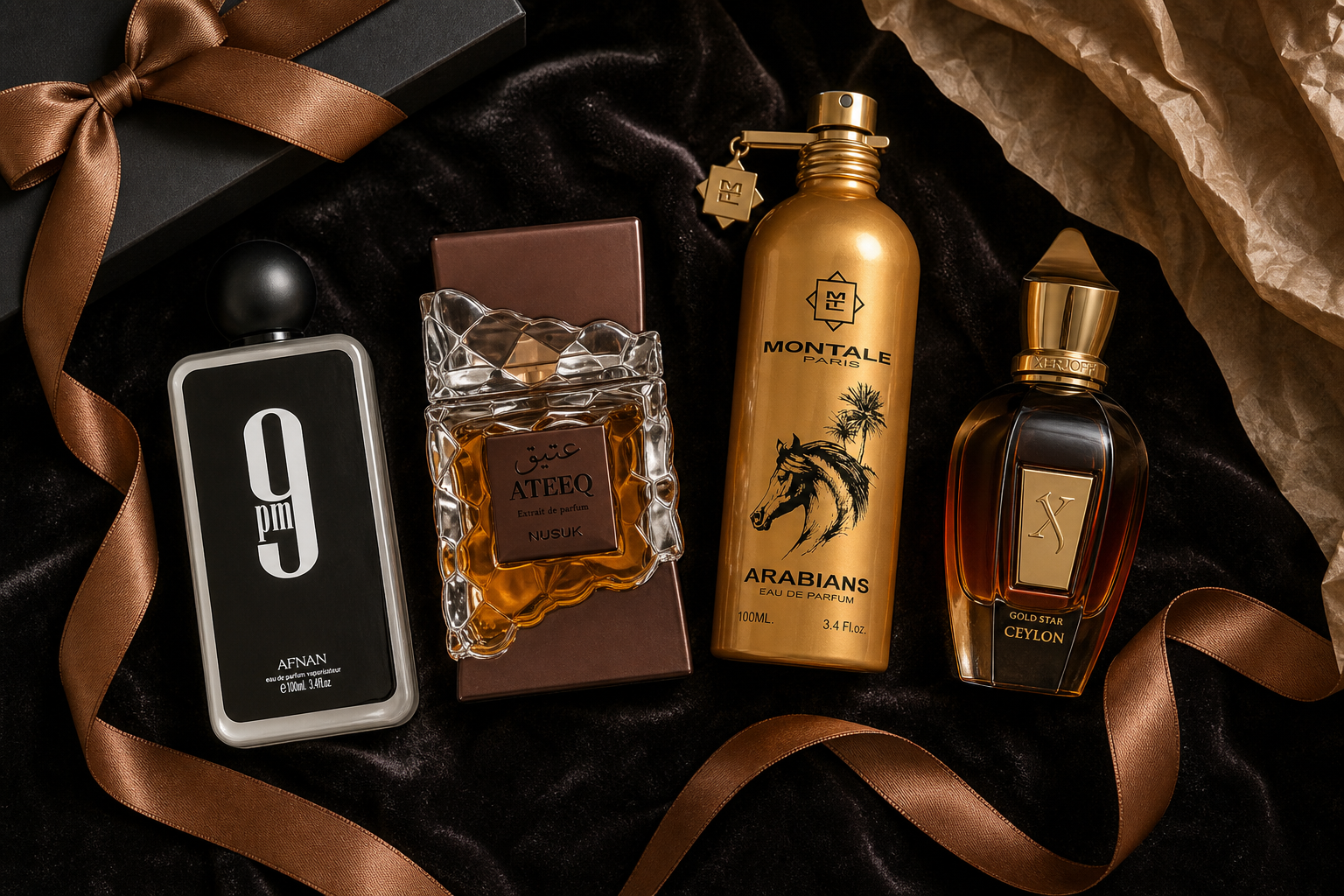
Want to gift a niche perfume but unsure of the recipient's fragrance preferences? We'll guide you through safe olfactory choices, the difference between more affordable and luxury brands, and how to choose the right size.
Niche Perfume as a Gift Without Knowing the Recipient's Taste
Almost everyone who has ever chosen a fragrant gift knows the situation. You decide to give a perfume because it's a personal yet practical gift – and at that moment, you realize you have no idea what the recipient wears. You didn't remember the name from the bottle on the shelf, you don't know if they prefer sweet or fresh compositions, and a direct question would turn the surprise into a mere order. With niche perfumery, there's an additional layer of uncertainty: brands in this segment aren't as well-known as the big perfume houses from advertisements, so you can't rely on the name on the packaging.
The good news is that it's not a dead end. You can choose a niche perfume even without knowing the recipient's favorite scent. Simply stop guessing their taste and replace it with three practical decision-making axes that will break down the entire selection into smaller, manageable steps.
But first, let's discuss why a niche perfume behaves differently from a perfume from a regular perfumery. A mainstream scent is created with the widest possible audience in mind: it should be pleasant to a large group of people and is often supported by an extensive advertising campaign. Niche brands take the opposite approach. They work with fewer lines, a more distinctive artistic signature, and aren't afraid of ingredients that would hit a wall in the mass segment – leather tones, strong amber, oud, or smoky wood. A large portion of niche compositions is also unisex, so when choosing a gift, you don't have to worry about whether the scent is more masculine or feminine. This alone narrows the margin for error.
It's precisely because of this difference that we categorize niche perfumes as a separate category, not just as a filter within perfumes. The difference isn't cosmetic. When the niche segment is set apart, you get a selection where you can search by fragrance family, brand, and package size, instead of wading through thousands of items in the main assortment. For gift decision-making, it's a significant time saver – and also a safeguard that a regular eau de toilette from a promotional offer won't slip in among the niche bottles.
So, what's left is to figure out how to choose a specific piece from the niche category. The rest of the article is based on three axes:
- Olfactory Choice – that is, which scent to choose when you don't know the preferences. There are notes that work across tastes and rarely offend anyone; musk, vanilla, and sandalwood have long been among them.
- Brand Prestige Level – whether you opt for a more accessible niche brand as an entry point into the segment, or an established name that the recipient is likely familiar with and will appreciate as a gesture.
- Package Size – a full bottle, smaller volume, a sample to try, or a gift set. Each option says something slightly different and suits a different situation.
These three axes can be combined in any order, and you don't have to address them all equally thoroughly. If you answer each of them with a single sentence – "I want something soft and warm," "the recipient hasn't tried niche yet," "I don't want to risk a large volume" – you'll end up with a selection of a few bottles instead of the entire category. And if you're still unsure after this narrowing down, a simple rule applies: bet on a friendly, non-confrontational composition in a smaller package. The gift then acts as an invitation to niche perfumery, not as an obligation to wear a scent for half a year that the recipient didn't choose themselves.
Safe Olfactory Choices: Musk, Vanilla, and Sandalwood
When selecting a niche perfume for someone whose taste you only vaguely know, it's not about finding the most original composition, but choosing a scent that the recipient will actually use. There's a simple guideline: the softer and more rounded the base of the fragrance, the more people will accept it. In niche perfumery, certain notes repeatedly return as universal bases – they don't disturb, don't divide opinions, and remain pleasantly on the skin.
Notes That Work Across Tastes
- Musk – the quietest of safe choices. It feels clean, slightly powdery, and enhances the impression of skin rather than dominating the fragrance. If you only know the recipient doesn't like bold perfumes, a musk base is a safe bet.
- Vanilla – warm, gently sweet, and in niche interpretations usually less sugary than in mainstream. Combined with spices or wood, it creates a composition that works in autumn and winter without feeling childish.
- Amber – a warm, slightly balsamic note that adds depth and longevity to a fragrance. It's rarely prominent on its own but reliably rounds off sharper spices and citrus.
- Tonka Bean – almond-sweet with hints of tobacco and hay. It sits right on the border between gourmand and woody families, appealing to lovers of both sweet and dry tones.
- Sandalwood – a creamy woody note without sharp edges. It's a safe choice even if the recipient generally leans towards fresh perfumes, as sandalwood doesn't feel heavy.
These notes also complement each other well. Most niche compositions combine them – vanilla with tonka, musk with sandalwood, amber with spices – and the result is balanced even for a nose new to niche perfumery.
Why Opt for a Unisex Composition
For a gift, a unisex label has a practical advantage: it doesn't presume how the recipient should feel. Strongly feminine floral lines or sharply masculine aromatic and fougère compositions assume the person already knows what suits them. Unisex fragrances don't have this assumption – they build on a woody, musky, or amber base that carries personality but doesn't dictate style. That's why a unisex composition is the least risky choice for a first gift option.
Our catalog includes several clear examples. Lattafa Khamrah is based on a combination of vanilla, tonka beans, and spices – it's sweeter, but thanks to the spicy layer, it doesn't feel overly sugary and is a good choice for someone who likes warm scents. Montale Arabians Tonka is noticeably more intense, with a strong tonka and vanilla base, making it suitable for someone who enjoys wearing perfumes and isn't afraid of being noticed. And if you suspect something fresher is needed, Mancera French Riviera offers a lighter, fruity-floral tone with a smooth finish – it works year-round and is office-friendly.
What to Avoid in a Gift
There are fragrance categories that niche perfume lovers adore, but as a blind gift, they're unnecessarily risky. Strongly smoky compositions with tar or burnt notes can smell like ash to an unaccustomed nose. Leather scents have a distinctive character and are usually appreciated over time. Extremely sweet gourmand perfumes dominated by caramel, chocolate, or cotton candy are fun but can quickly become tiresome – not ideal for a gift meant to last months. Similarly, approach very strong oud compositions with caution: they're at home in Arabic perfumery, but for someone unfamiliar, they can be too intense right from the first spray.
More Accessible Niche Brands for a First Gift Choice
Niche perfumery has the reputation of being an exclusive club, accessible only through a significant investment. In reality, it also has a more affordable tier – brands that work with distinctive, easily recognizable compositions but don't force you to reconsider your budget for a gift. For a first gift choice, when you're still guessing the recipient's taste, it's a sensible place to start: purchasing a perfume is less of a commitment, yet the selection remains intriguing.
The following brands share a richer olfactory school with an Arabic touch – lots of sweet resins, amber, wood, and spices. They mainly differ in how bold they are willing to go.
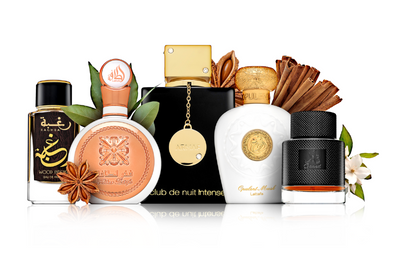
- Lattafa – an easily approachable entry into the segment. The compositions are often gourmand and soft, with vanilla, Tonka bean, and fruity sweetness; they serve as a bridge between mainstream perfumery and the niche world.
- Afnan – a somewhat more structured and formal style. The fragrances have a clear spicy line and a long woody base, making them suitable even for someone who has previously worn classic branded perfumes.
- Armaf – a brand with a knack for a fresher opening. Bergamot, aromatic herbs, and a clean woody trail make their perfumes a universal daytime choice.
- Nusuk – denser, incense-like oriental tuning. Opt for it when you know the recipient enjoys more ceremonial and festive scents.
- Zimaya – straightforward, sweet amber compositions recognizable at first sniff. This is an advantage when you're choosing a gift more by intuition.
- French Avenue – a more modern, perfumer's expression with smooth musky and woody finishes. It aligns with the current Western niche taste.
- Niche Emarati – a bold character with rich amber, oud, and leather. It works better for a recipient who is already experimenting with perfumes.
When you need a specific reference point, here are five tips that well represent the brand's style:
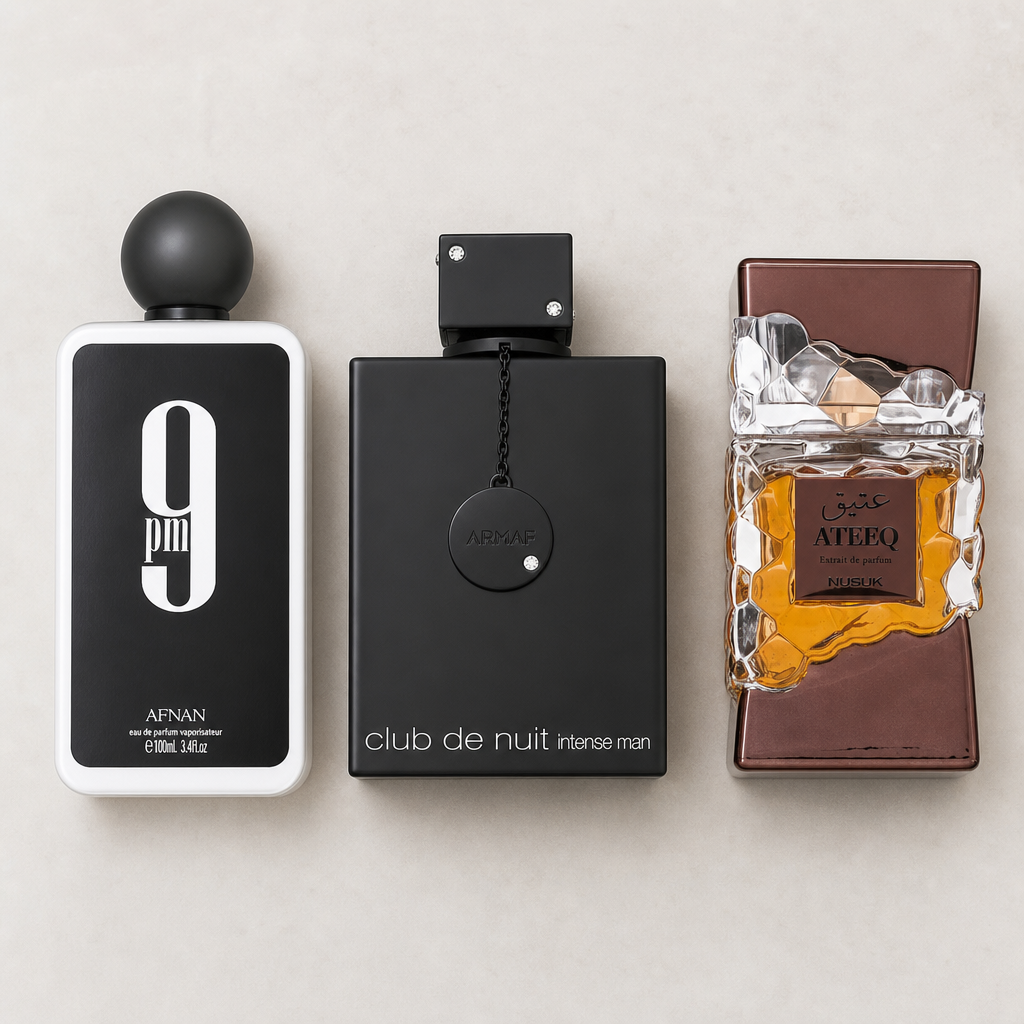
- Afnan 9 pm – a warm, spicy-sweet men's Eau de Parfum with a vanilla finish. Evening wear, but not overpowering.
- Armaf Club de Nuit Intense Man – an Eau de Toilette with a fresh citrus opening on a woody-amber base; it is well-received across age groups.
- Nusuk Ateeq – a unisex perfume with resinous, incense-woody depth for lovers of oriental tuning.
- Zimaya Sharaf Blend – a sweet amber unisex Eau de Parfum with a soft, easily wearable expression.
- Niche Emarati Khanjar – a dense woody-amber Eau de Parfum with a bold trail for someone who doesn't want to go unnoticed.
When is this level of gift sufficient? Practically always, when the relationship between you and the recipient isn't so close that you know their perfume collection – with colleagues, more distant family, or during gift exchanges in a wider group. It also serves well when you're still discovering the recipient's preferences: they receive a full-fledged perfume with its own character, and based on their reaction, you'll know whether to aim for sweeter gourmand scents next time, or conversely, for dry wood and smoke. Thus, the gift becomes a reference point for future selections, not a dead end.

Prestigious Niche Brands: Montale, Mancera, Xerjoff
Sometimes a gift shouldn't be cautious. When you know the recipient is truly a perfume collector, or it's an extraordinary occasion—like a milestone birthday, anniversary, or a major life event—it makes sense to step up a level. Prestigious niche brands differ from more accessible options not just by the name on the bottle. You'll notice the difference in the concentration of fragrance ingredients, the longevity of the scent, the meticulous composition, and even the packaging itself, which feels like a gift even before it's unwrapped.
In practice, higher concentration means a slower development of the fragrance on the skin. While a lighter Eau de Toilette unfolds quickly and fades after a few hours, a prestigious Eau de Parfum retains its heart and base notes significantly longer and evolves gradually. For the recipient, this also has a practical impact: they usually need fewer sprays, so the bottle lasts longer than its volume might suggest.
Montale: Oriental Woody Compositions
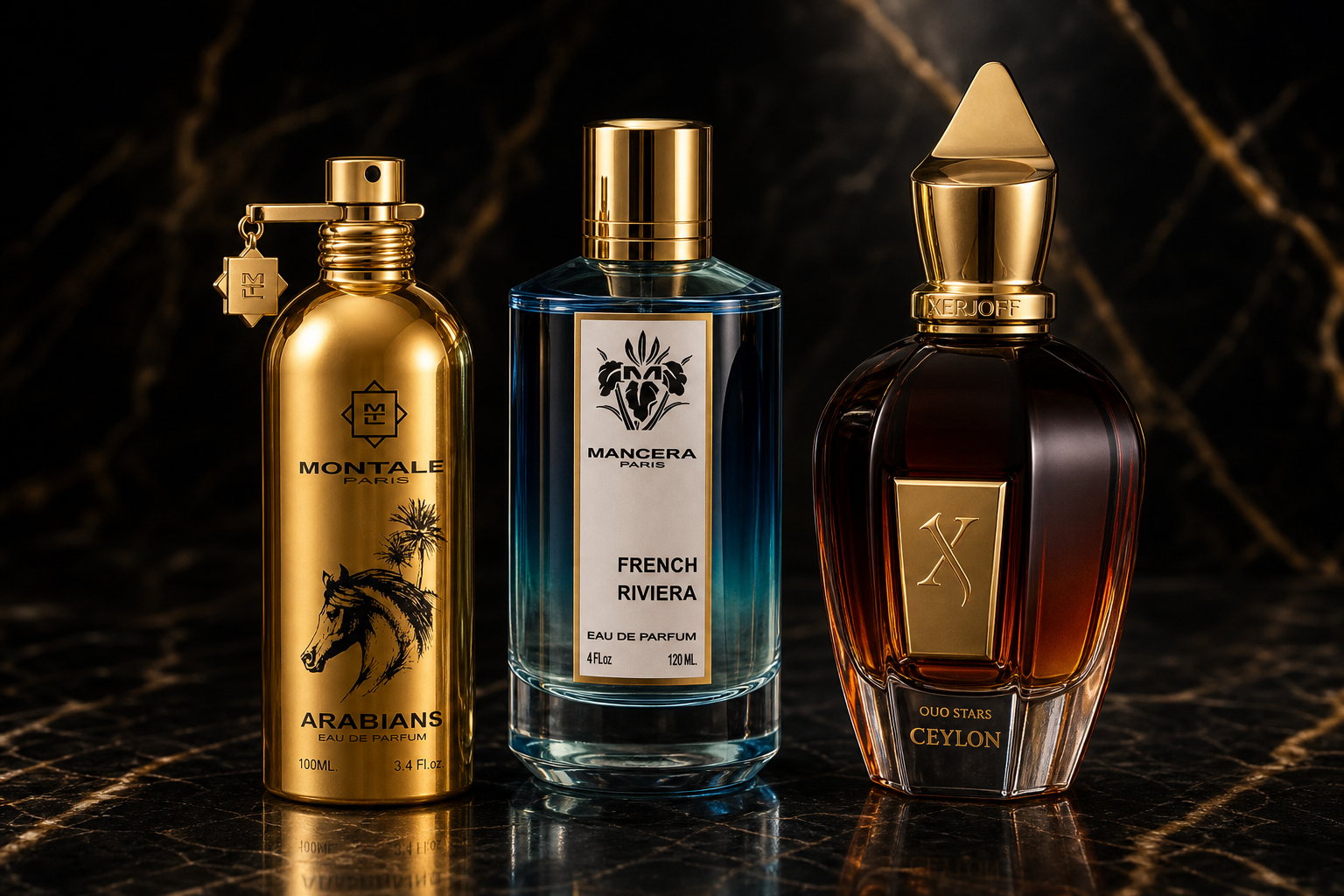
Montale is a French niche brand recognizable in our selection by its distinctive metal bottles and its bold, oriental woody signature. The compositions are often rich, featuring amber, oud, and spicy accents, making them ideal for cooler months and evening occasions. Our long-standing favorite is Montale Arabians Tonka, a unisex Eau de Parfum in a 100 ml bottle, which combines a sweeter tonka note with a woody base—suitable for both men and women.
We recommend Montale when the recipient doesn't shy away from noticeable scents and enjoys when their perfume is noticed. If you know they prefer fresher and lighter compositions, it's better to choose another brand—Montale lingers long and can be dominant in small spaces.
Mancera: Similar Signature, More Generous Bottle
Mancera stems from the same French school as Montale and offers similarly sophisticated compositions, though it tends to be more approachable and less serious. Its advantage as a gift is the volume: while the typical niche standard is 100 ml, Mancera offers 120 ml, making the bottle feel truly generous in hand. A typical example is Mancera French Riviera, a unisex Eau de Parfum in the mentioned volume, featuring a fruity fresh opening laid on a woody base.
Mancera is a good choice when you want to gift a full-fledged niche perfume but aren't sure if the recipient can handle heavy oriental compositions. It's generally easier to wear during the day and to work, forgiving minor selection errors.
Xerjoff: The Pinnacle of Niche Offerings
Xerjoff is an Italian brand that stands at the very top of the niche tier—both in terms of materials and bottle craftsmanship, as well as price range. The compositions are concentrated and exceptionally layered, appreciated mainly by those who truly analyze perfumes and can discern individual notes. The bottle with its massive cap itself serves as a display piece on a shelf, making the gift impressive even before the first spray.
However, for this reason, we don't recommend Xerjoff as a first niche gift for someone whose taste you don't know. The investment is high, and the risk of missing the mark with the scent doesn't disappear—in fact, it hurts more. It makes sense for a collector, someone who has specifically mentioned the brand, or for an occasion that truly warrants an exceptional gift.
Final tip: choose a prestigious niche brand when the recipient collects perfumes and is familiar with the segment, or when it's a significant occasion where a more accessible bottle wouldn't fit. In all other cases, it's safer to stay a level lower and opt for a well-chosen scent rather than a renowned name on the label.

Size of the Package, Sample, or Gift Set
Once you know the olfactory direction to take and the brand level you want to reach, the last decision is the format in which to present the fragrance. In niche perfumery, this is far from a formality. The same composition feels like a different gift depending on whether the recipient receives it in a small vial, full size, or as part of a set with body care products.
Smaller Package or Full Size
Volumes of 30 and 50 ml have one major advantage when the taste is unknown: they are not a commitment for years. Niche fragrances tend to be concentrated and are applied more sparingly than regular eau de toilette, so even a fifty-milliliter bottle lasts surprisingly long. If you're unsure whether the recipient will prefer a woody base or a sweeter gourmand composition, a smaller package gives them the space to truly use up the fragrance.
Full sizes of 100 and 120 ml, on the other hand, make sense when you have some guidance – the recipient has mentioned the brand, you've noticed what they wear, or you know they stick to one fragrance family long-term. A large bottle is also a more visually convincing gift, and for many niche brands, it's the only volume in which a particular fragrance is available.
Sample as an Easy Way to Test a Fragrance
A sample is a smaller volume decanted from the original packaging into a spray bottle, usually in the range of a few milliliters. For a gift without knowing the taste, it's an elegant solution for two reasons. First, it fits alongside another gift as an accessory and doesn't seem excessive. Second, it gives the recipient the chance to wear the fragrance for several weeks in everyday life, not just judge it by a scent strip in a perfumery.
A sample makes sense especially for more distinctive niche compositions, where the first impression and the impression after a week of wearing differ. If you're planning a gift in stages, you can start with a sample and add a full bottle later, once you know if the fragrance hit the mark. The availability of samples is irregular – not every fragrance is available in this format, so it's worth checking what's currently in stock.
Gift Set for a Complete Gift Look
Gift sets combine a perfume with body care – most often with shower gel, body lotion, or deodorant in the same scent. This allows the recipient to experience the fragrance in multiple layers, and it often lasts a bit longer on the skin. For you, the set also has a practical advantage: it comes in ready-made packaging, so there's no need to worry about gift wrapping.
Sets also have their limits. They are usually assembled around the brand's more well-known fragrances, so the selection is narrower than with individual bottles, and the volume of perfume in them tends to be smaller. If you care more about a specific composition than the format, a standalone bottle and your own wrapping might be a better choice.
Whether you choose a sample to try, a smaller bottle, or a complete set, browse the niche category on Brasty with the two criteria we discussed above – with the olfactory profile that has the best chance of hitting the mark, and with the brand level that matches how close the recipient is to you. Then choose the format based on how much you really know about their taste: the less you know, the smaller the package.
Category
Recommended articles

"Give a girl the right shoes and she can conquer the world!" Marilyn Monroe