

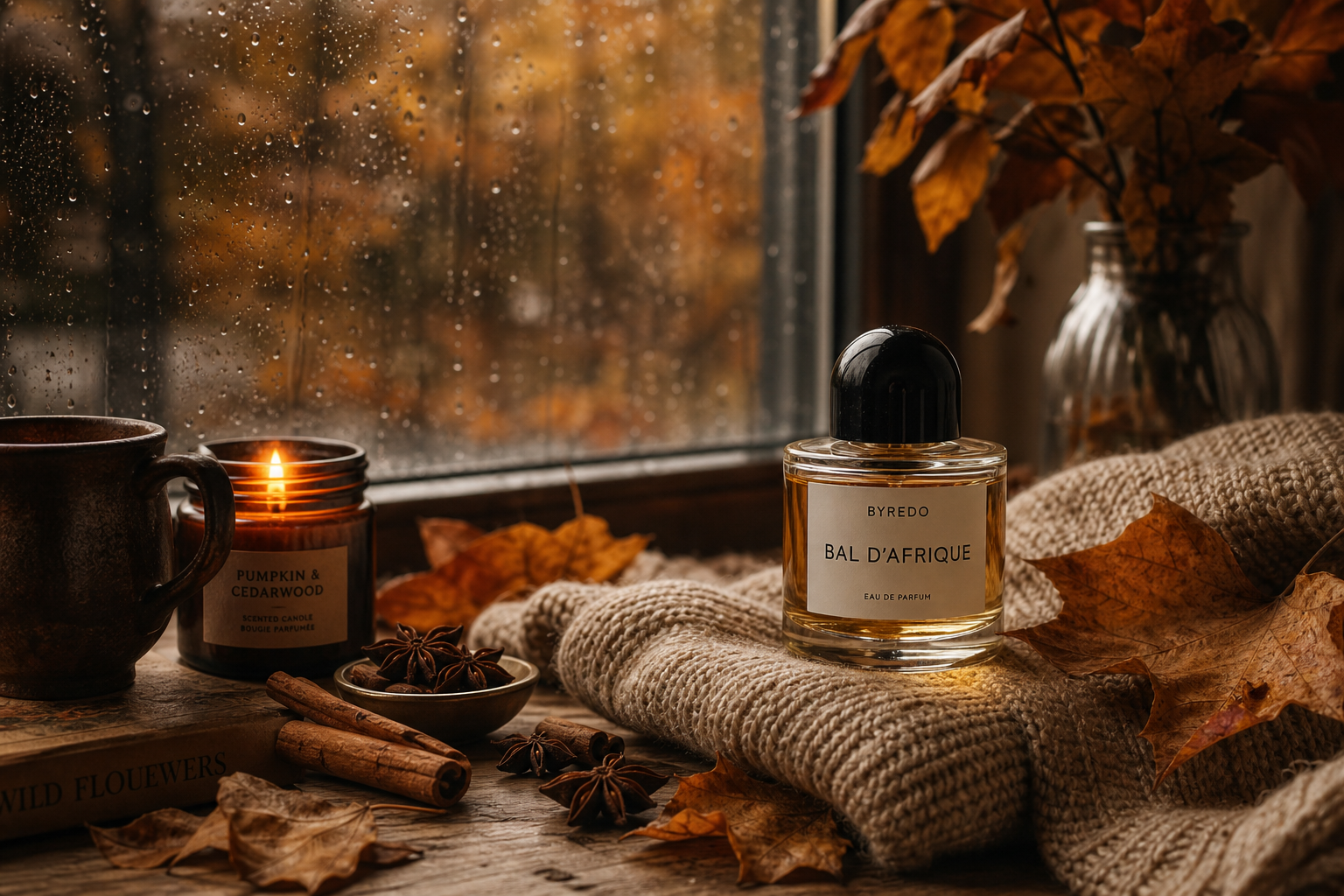
For the cooler months, swap your light summer fragrance for a richer niche composition – we've selected perfumes based on woody notes, cardamom, amber, and vanilla, whose charm truly shines in the cold.
Why Autumn Calls for Richer Scents
It usually happens within a week. You start adding an extra layer in the morning, the evening air smells of damp earth and leaves – and the perfume that served you well all summer suddenly feels almost absent on your skin. Whether you opt for a fresh citrus classic or a light floral Eau de Parfum, in the cold air, it leaves just a faint hint after a few hours. It's not a flaw in the bottle or your sense of smell. The conditions under which the fragrance develops on your skin have changed.
Perfume needs warmth. Fragrant substances are released from the skin gradually, and the rate of this evaporation is primarily controlled by temperature – both body and ambient. In summer, when your skin is warmed, the light top notes open within minutes and carry the entire composition literally around you. Once temperatures drop, the same perfume develops more slowly and much closer to the body. Citruses, aquatic accords, and transparent flowers that felt refreshing in the heat simply have nothing to cling to in the cold: they are too fleeting to make more than a first impression of the season.
Autumn fragrances work differently. Instead of lightness, they rely on richness, on ingredients that release slowly and actually benefit from lower temperatures. The more the composition's center of gravity shifts towards the base notes, the better it withstands cold air, sweaters, and coats, in which the trace of the perfume settles and from which it gradually returns throughout the day.
In practice, the autumn search can be narrowed down to three directions, around which the rest of this article revolves:
- Woody Base – cedar, sandalwood, vetiver, or patchouli provide a structure that holds its shape in the cold and doesn't dissolve into an indistinct sweetness.
- Spicy Accords – cardamom, pepper, or saffron bring a type of warmth that you perceive more as coziness than sharpness.
- Vanilla-Amber Finish – vanilla and amber smooth the edges of the composition and ensure a long, soft trail that summer fragrances usually lack.
The transition doesn't have to be abrupt and certainly doesn't mean you have to switch to heavy evening perfumes. Many autumn compositions are surprisingly suitable for the office – the main difference is that they last longer and are more noticeable because they rely on ingredients that aren't bothered by the cold.
Autumn is also a time when it's worth stepping out of the usual mainstream. Richer compositions that suit the cooler months are mainly found in niche perfumery – and on Brasty, there's a dedicated navigation category for it, not just a filter somewhere in the sidebar. This is where woody, spicy, and oriental perfumes are gathered, including unisex bottles, where you don't have to follow whether the brand intended them for women or men. In the following sections, we'll explore how niche perfume differs from regular Eau de Toilette, how the different fragrance families behave, and which specific compositions are worth trying in autumn.
What Sets Niche Perfumes Apart – Concentration, Ingredients, Price Levels
The term niche doesn't have a strict definition and isn't protected by any authority. In practice, however, it reliably describes a particular approach: a smaller perfume house, shorter production runs, and a composition that doesn't need to appeal to the broadest audience. While a mainstream release seeks a common denominator, a niche perfume can afford a distinctive character – and it anticipates that it won't suit everyone.
Fragrance Concentration: Eau de Parfum Instead of Eau de Toilette
The most tangible difference lies in the amount of fragrance concentration. Eau de Toilette typically contains around five to ten percent, Eau de Parfum approximately fifteen to twenty percent, and pure perfume is even more concentrated. These are indicative ranges, not strict standards – each house sets its own ratios.
This is why niche offerings mainly consist of Eau de Parfums and perfumes, while lighter Eau de Toilettes are encountered less frequently. A higher concentration doesn't automatically mean a louder scent in the room. It primarily affects how long the composition lasts on the skin and whether it can develop to its base notes, which are the reason you chose it.
Ingredients: Less Dilution, More Character
The second difference is in the composition of ingredients. Niche compositions are often built on a smaller number of distinctive materials that have enough space to be recognizable. Resins, balsams, woods, and amber accords have a denser and less interchangeable trail than light citrus openings, which in mass-market perfumes create the first impression and then quickly fade.
The practical consequence: the initial spray may seem unusually closed, and the full fragrance picture might only emerge after half an hour. If you're used to judging a perfume by the first few minutes, with niche perfumes, it's worth waiting.
Price Levels: Niche Doesn't Start at Four-Digit Prices
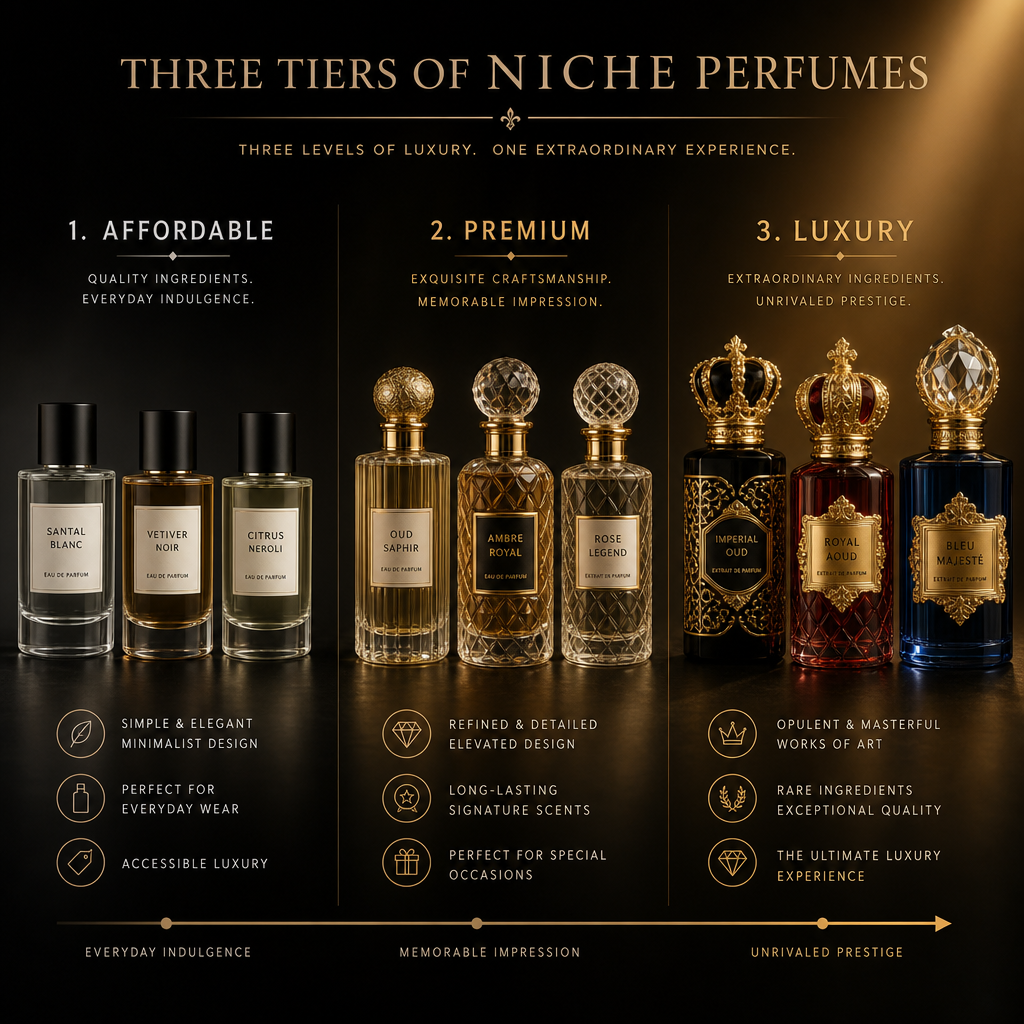
The common perception is that niche automatically means a luxury price. This is no longer true. The oriental line has significantly lowered the bottom threshold, so the catalog features three distinct tiers side by side:
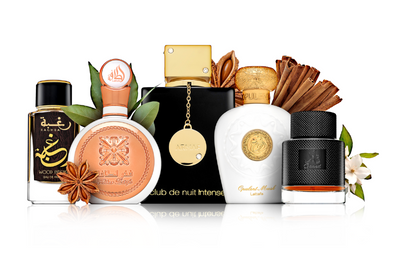
- Affordable Tier, roughly up to 600 CZK – brands like Lattafa, Riiffs, Nusuk, or French Avenue. Usually, 100ml bottles of Eau de Parfums and perfumes with a rich oriental tone and decent longevity. A reasonable entry if you want to try the style without a big investment.
- Higher Mid-Tier, approximately 1,500 to 2,500 CZK – this includes Mancera and Montale. The difference is mainly noticeable in the smoother transition between notes and a more sophisticated base; the compositions feel more cohesive and less linear.
- Luxury Tier, roughly from 3,000 CZK upwards – a typical representative is Xerjoff. You pay for more expensive ingredients, a more complex structure, and also for less commonality.
What do you actually get for a higher price? Most often, longevity and sillage: more concentrated compositions with a sophisticated base last longer on the skin and leave a more noticeable trail. However, the relationship between price and performance isn't straightforward. In the affordable oriental line, longevity is surprisingly good because sweet and amber bases last long on their own. The higher tier is more evident in the subtlety of transitions and the lower likelihood of encountering the same scent on two people on a tram.
A final practical note: niche is a separate navigation category on Brasty, not just a checkbox filter within perfumes. If you want to browse only this segment, you'll find both affordable oriental lines and luxury houses together in one category, allowing you to compare them with each other, not against thousands of mainstream items.
Woody Base: Cedar, Sandalwood, Vetiver, Patchouli
The woody family is a favorite for the cooler months for one practical reason: its ingredients evaporate slowly, so even in cold air, the composition holds its shape and remains noticeable all day. At the same time, it doesn't have to feel heavy or smoky, as many people might imagine when they think of a "woody scent." Much depends on which specific ingredient leads the entire composition – and this is where woody perfumes differ the most from each other.
Four Ingredients, Four Different Moods
Before you start choosing, it's worth understanding the building blocks. You'll mostly find them in the base notes, where they determine how the perfume will evolve after the first two hours of wear.
- Cedar is the dry backbone of the composition. It's upright, slightly pencil-like, and sharply defined, so it can support even sweeter or fruity middle notes without them spilling over. If you find gourmand perfumes too sweet, look for cedar in the base.
- Sandalwood acts in the opposite way – it's creamy, milky, and soft, like a cushion under the other ingredients. It rounds off the edges and gives the skin a warm, almost skin-like impression, which carries well in the cold.
- Vetiver brings smoky earthiness, roots, and a bit of bitterness. It's the least sweet of the mentioned ingredients and is often the reason why woody perfumes are often categorized as masculine, even though they themselves are genderless.
- Patchouli forms a dark backdrop that adds depth and a trace. In modern compositions, it's used in a purified form, so the earthy "seventies" association mostly no longer applies today.
Woody Base in Specific Examples
Theory is one thing, a specific bottle is another. Four items from the catalog can well illustrate how differently the same family can turn out – from fresh daytime reads to dark evening traces.
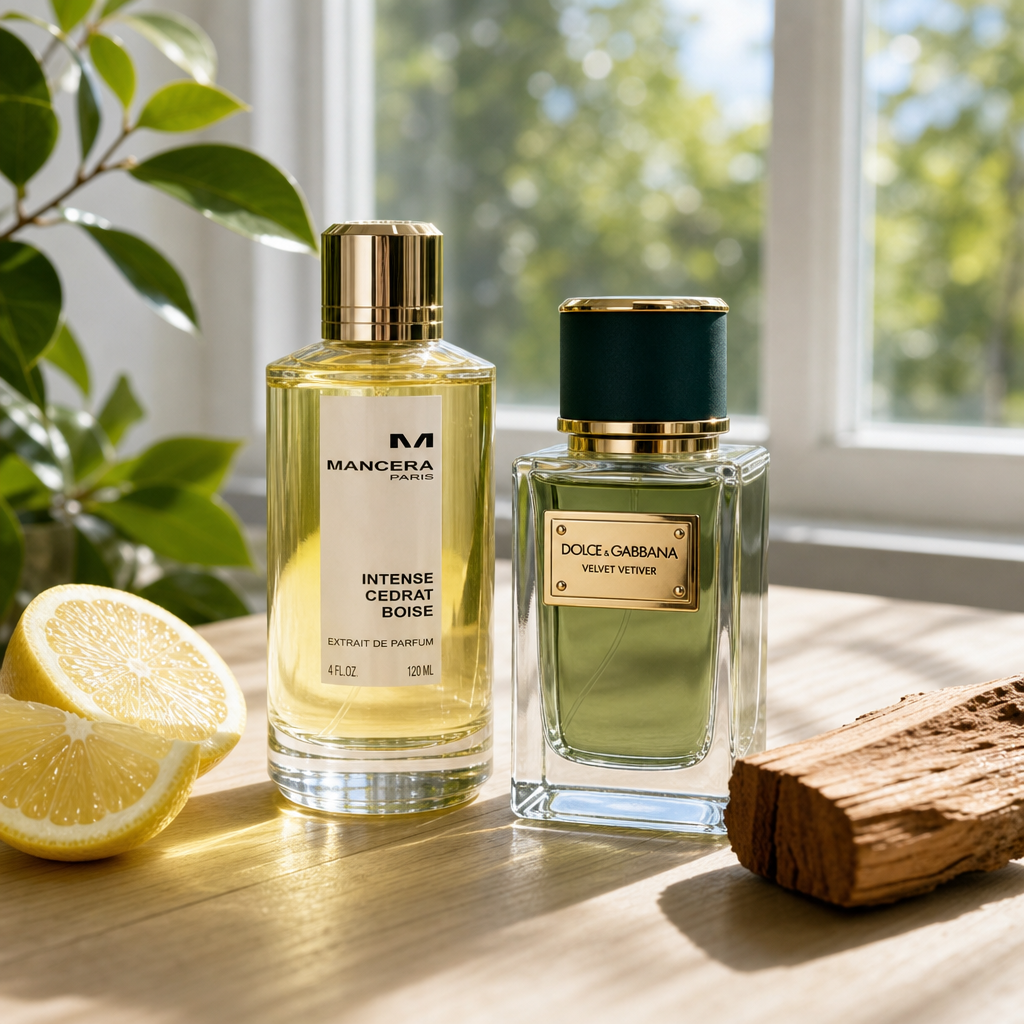
Mancera Intense Cedrat Boise builds on the combination of citrusy citron with a woody base. It's the lightest variant of the quartet: the opening is sharp and juicy, but instead of dissolving, it leans on dry wood and holds. It's suitable if you want a woody perfume that won't stand out in an open office or during a daytime meeting. The brand belongs to the luxury range, but you can also find it in a ten-milliliter spray in the catalog.
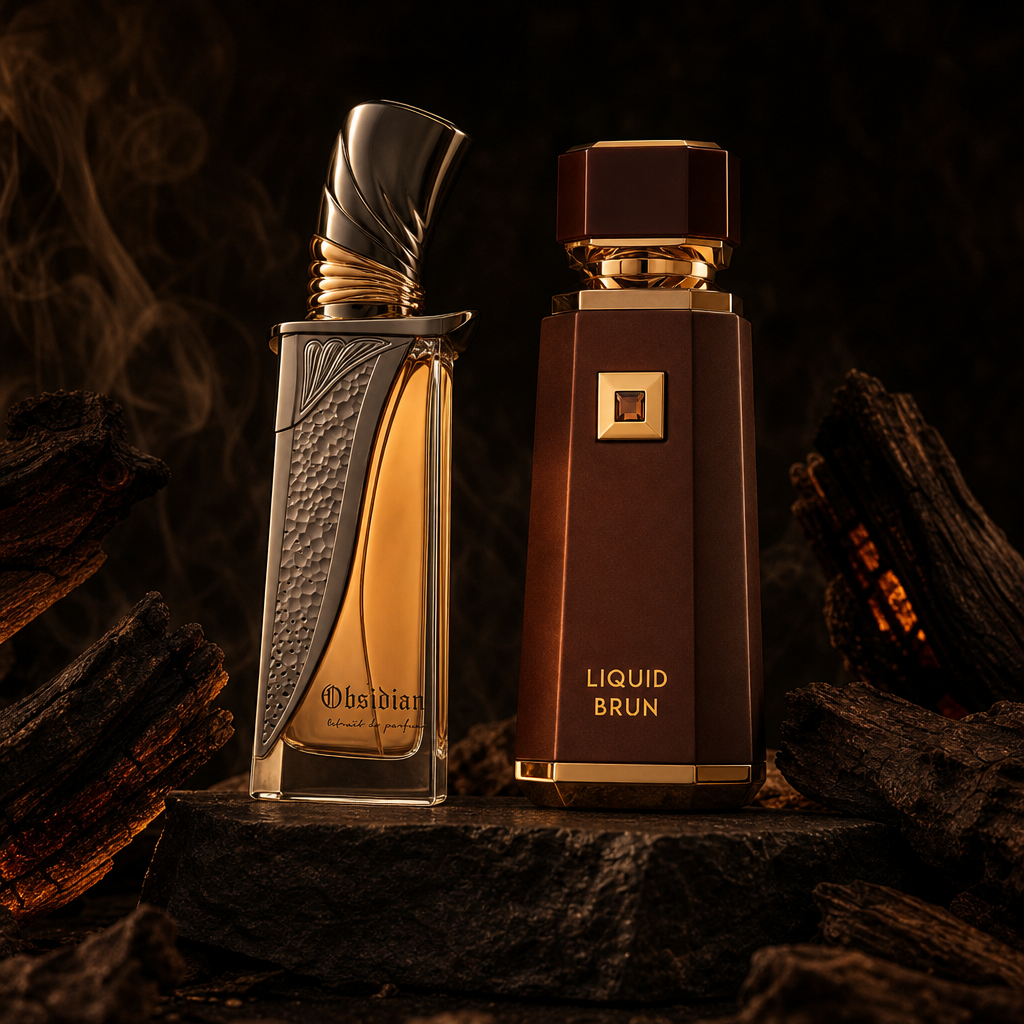
French Avenue Obsidian goes in the exact opposite direction. It's dense, dark, and plays in deeper tones from the start, making it suitable for the evening, the theater, or a seasonal social event. It's a perfume, the highest concentration of fragrance, which corresponds to its trace – two applications are usually enough. If you've been wearing lighter eau de toilettes so far, consider it a bold step, not an everyday choice.
French Avenue Liquid Brun is from the same brand but much more approachable. Warm brown tones, softer outlines, and a noticeable sweetness in the base make it a perfume water you can wear to work and for everyday use. We would recommend it to those who want an autumn mood without having to monitor the number of sprays.
Dolce & Gabbana Velvet Vetiver is the most straightforward entry into the style. Here, vetiver isn't raw or smoky, but smoothed out to work even for noses just getting used to earthy ingredients. It's a unisex eau de parfum from a brand most people know, so you're not buying a pig in a poke – and yet you get an ingredient that's rather rare in the mainstream range.
A general guideline to conclude: the drier the wood, the better the composition withstands enclosed and overheated spaces. Creamy and sweeter woody perfumes, on the other hand, appreciate the cool outdoor air, where they can fully unfold.
Cardamom, Amber, Vanilla: The Sweeter Side of Autumn
Wood provides the backbone of an autumn composition, but it's the spices and sweet notes that give it the cozy feeling that makes you return to the bottle in the colder months. The spicy and gourmand line stands on a simple principle: cardamom and Tonka bean open the fragrance with warmth, amber adds depth at the base, and vanilla rounds it all off so no ingredient stands out too much.
How Each Ingredient Works
When you understand what each note does, you can predict the character of a perfume just from the description of the fragrance pyramid.
- Cardamom is among the top and heart notes. It's spicy but not hot – it has a slightly fresh, almost minty undertone that prevents the sweet composition from becoming too heavy.
- Tonka Bean smells of almonds, dried hay, and a hint of tobacco. It follows shortly after cardamom and forms a bridge between the spices and the sweet base; without it, the transition to the drydown would feel abrupt.
- Amber is a classic base note of the oriental family. It's warm, slightly balsamic, and long-lasting – it's usually the reason you can still smell the fragrance on your scarf in the evening. It unfolds more slowly in the cold, making it more suitable for autumn than summer.
- Vanilla acts as a binder. On its own, it can seem dessert-like, but in combination with spices and amber, it softens the edges and gives the composition a creamy continuity.
Specific Perfumes That Capture This Mood
If this olfactory mood appeals to you, here are some compositions available in various intensities and price ranges.
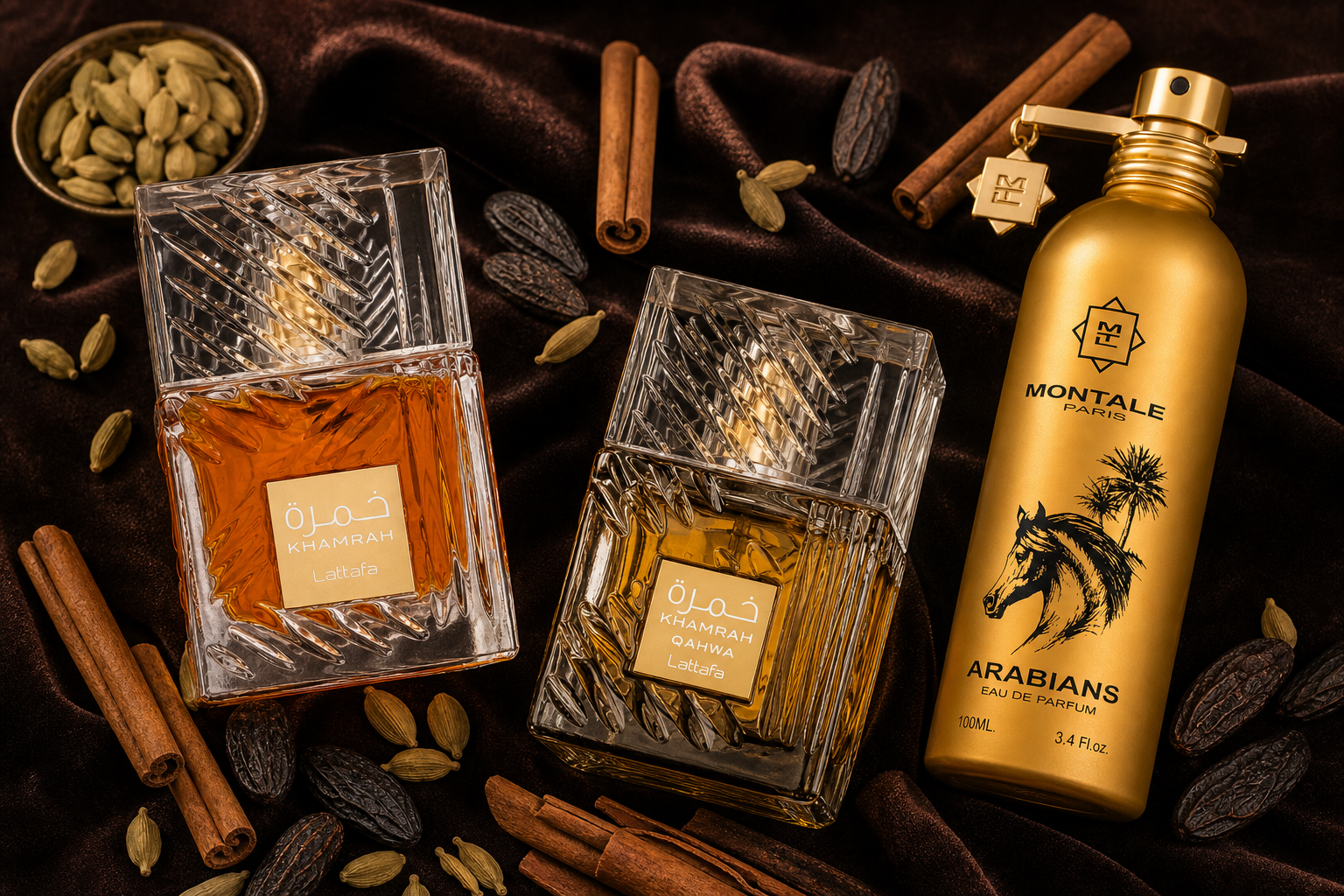
- Lattafa Khamrah – an Eau de Parfum that has made this style a phenomenon in the affordable range. Date sweetness, cinnamon, and Tonka bean create a dense, spicy-sweet trail. More suitable for evenings and cold days, one spray is enough in a heated office.
- Lattafa Khamrah Qahwa – a coffee-infused variant of the same concept. The coffee accent adds a gentle bitterness that tempers the sweetness. A good choice if you found the original Khamrah a bit too sweet.
- Montale Arabians Tonka – a more luxurious take on the same style. Tonka and vanilla have a generous trail and longevity here, making it suitable for occasions where you want to be associated with a specific scent. Here, less is more.
- Nusuk Ateeq – a perfume with an oriental spicy character and a velvety drydown. A compromise for times when you're seeking the depth of a niche composition but don't want to reach the highest price bracket.
- Xerjoff Erba Pura – a fruity-sweet mood from the luxury shelf. Juicy fruit at the opening is held together by a musky amber base, making the fragrance both festive and wearable.
- Niche Emarati Khanjar – a seasonal tip whose popularity has significantly increased in recent weeks. An interesting choice if you want a spicy line that not everyone around you has yet.
Labels for Women or Men Aren't a Big Deal Here
Most of the mentioned compositions are labeled as unisex, and it's not a marketing coincidence. Cardamom, amber, and vanilla don't inherently point in any direction; the final impression mainly depends on how strongly you apply the perfume and the occasion you choose it for. Choose according to your mood and how the fragrance smells directly on your skin – in the niche segment, this approach is more the rule than the exception.
How to Choose: Sizes, Layering, and Final Tips
Once you know what you expect from an autumn fragrance, the hardest part remains – deciding on a specific bottle. Richer perfumes are more challenging in this regard than light summer eau de toilettes: they often seem heavy and flat on a test strip, while on the skin they develop gradually and in several waves. It's worth giving them time and deciding based on how the fragrance evolves throughout the day.
Apply one or two sprays on your wrist or the crook of your elbow and don't try to judge the perfume immediately – the first fifteen minutes belong to the top notes, which will disappear in a few hours anyway. Return to it after two hours when the heart of the composition emerges, and again in the evening when the woody and amber base fully reveals itself. Don't test more than two fragrances at once; your sense of smell can tire faster than you'd expect with rich oriental compositions.
Layering: Woody Base Under Sweet Finish
Layering isn't complicated, but it's important to respect the order and amount. Use a drier woody perfume as the base layer, such as a composition with cedar, vetiver, or patchouli, and only then add a single spray of a sweeter vanilla or tonka scent. The opposite order usually results in the sweet component overpowering everything else. The best combinations share at least one note, typically amber, tonka beans, or sandalwood – these connect both layers.
Hydrated skin also helps: on dry skin, the scent trail shortens, so a body lotion without a strong fragrance is a good foundation. If you want to hint at layering, apply the woody perfume to a scarf or coat collar – textiles hold it longer and release it more slowly than skin.
With rich autumn perfumes, it's also worth considering the volume of the bottle. Higher concentrations of fragrance mean less usage, two sprays usually suffice for an entire evening, and a 100 ml bottle can last several seasons. Before opting for a full-sized bottle, consider a smaller volume, typically 30 or 50 ml, or a decant – a small poured sample that allows you to try the fragrance at your leisure. You can find it even with more expensive woody compositions, such as Mancera Intense Cedrat Boise, where ten milliliters are enough to decide if this style suits you.
Three Tips by Budget
Finally, three specific perfumes that work in the autumn context and cover different budgets:
- Lattafa Khamrah – Eau de Parfum, unisex, 100 ml. An affordable entry into the spicy gourmand line: a sweet, date-spiced composition with tonka beans that develops slowly in the cold and lasts long. A good choice if you want to try the autumn style without a large investment.
- French Avenue Obsidian – Perfume, unisex, 100 ml. A middle ground for those drawn more to a dark woody profile than pure sweetness. Suitable for the office and evening, and works well as a base layer under a vanilla finish.
- Montale Arabians Tonka – Eau de Parfum, unisex, 100 ml. A more luxurious choice with a strong presence: tonka beans, vanilla, and amber in a concentration where a single spray suffices. Priced at just under two thousand crowns, but the longevity matches the cost.
Whether you end up with an affordable spicy vanilla or a pricier woody classic, remember that niche perfumery is a separate navigation category on Brasty, not just a filter – you'll find rich compositions of this type grouped together and can compare them side by side. And if you're planning ahead for the upcoming season, check out the gift sets: combining a perfume with body care is a practical way to introduce someone to a new fragrance style.
Category
Recommended articles

"Give a girl the right shoes and she can conquer the world!" Marilyn Monroe