

For readers who find mainstream fragrances no longer suffice: six niche unisex perfumes and what to expect from them. We'll show you how niche compositions differ in concentration, longevity, and price.
When Mainstream Fragrances No Longer Suffice
You might be familiar with this scenario. You pick up a bottle in a perfume store that you recognize from an ad, try it at home – and within a week, you smell the same composition on the tram, in the office, and at a friend's house. Mainstream perfumes are intentionally designed to appeal to the widest audience possible. They use accords that are pleasant to most noses, stick to proven structures, and are produced in large batches for global distribution. There's nothing wrong with that, but it has one consequence: the more a perfume appeals to everyone, the less it says about you as an individual.
When this compromise no longer satisfies you, niche perfumery comes into play. It's not a marketing label or a promise that the fragrance will automatically be of higher quality. It's more about a different approach to how a perfume is created and how it reaches the customer.
In practice, niche brands differ from mass-produced perfumes in several ways:
- Smaller batches and a narrower portfolio. A niche house typically releases only a few new products each year and keeps them in the lineup for years. They don't expect half the city to wear the same composition.
- Bolder compositions. The perfumer doesn't have to smooth out the edges to ensure the fragrance passes with the widest group of people. That's why in the niche segment, you'll encounter more pronounced leather, smoky, resinous, or richly gourmand accords.
- A different approach to raw materials. The focus is often on more concentrated materials – musk, amber, patchouli, sandalwood, or tonka bean often form the backbone of the fragrance, not just the background.
- Less advertising, more recommendations. Niche brands spread more through community and reviews than through large campaigns, so people find them by searching, not by a billboard on the roadside.
This also relates to why you often encounter the term unisex in the niche segment. The division into women's and men's perfumes is largely a market convention, not an olfactory necessity. Niche houses work with it more freely – the character of the composition defines the fragrance, not which half of the shelf the store places it on. For you, this means a wider selection: you can consider a perfume that you might have skipped in a regular perfume store just because it was in the "opposite" section.
The good news is that a ticket to the niche world doesn't have to cost thousands. The six tips we present in this article intentionally mix two aspects: more affordable unisex discoveries, where you can experiment without a big investment, and established luxury classics that you might buy once and wear for years. For each tip, you'll get a factual comparison – how strong the concentration is, what to expect from longevity on the skin, and the price range of the perfume. No list of selling points, just a basis for deciding if a particular fragrance suits you.
But before we dive into specific names, it's worth setting the benchmarks. Without them, niche perfumes are hard to compare: the price tag alone doesn't tell you how many hours the fragrance will last, or how strong a trail you'll leave behind.
What Sets Niche Compositions Apart: Concentration, Longevity, Price
Before diving into specific tips, it's worth comparing the benchmarks. Niche perfumery differs from mainstream not just by the name on the bottle, but primarily by three closely related parameters: the concentration of the fragrance blend, its longevity on the skin, and the price per milliliter. By understanding these three aspects, you can determine whether a particular perfume is a good choice for you or just an expensive curiosity.
The label on the box isn't just a marketing embellishment; it indicates how much of the fragrance composition is dissolved in the carrier alcohol. The higher the concentration, the denser and usually more long-lasting the result. Generally speaking:
- Eau de Toilette – roughly five to fifteen percent of the fragrance blend. It feels lighter, opens quickly, and is suitable for daytime, work, or hot months.
- Eau de Parfum – approximately fifteen to twenty percent. The most common format in contemporary perfumery: strong enough to last a workday, yet wearable beyond evening occasions.
- Perfume in the highest concentration – around twenty percent and more. It opens more slowly, stays closer to the skin, and its trail is denser; often, one or two sprays are enough.
However, longevity isn't just a matter of percentage. It's equally important what the base is made of. Citrus and aromatic notes evaporate the fastest, so a fresh composition might seem to disappear after two hours, even if it's concentrated. Conversely, heavier ingredients – musk, amber, patchouli, or sandalwood – linger significantly longer on the skin, creating a trail that can be detected even after many hours. Your skin type also plays a role: perfume evaporates faster on dry skin than on oily skin, so it's worth applying it to hydrated skin.
This is where the core difference lies. Niche brands produce in smaller batches and don't have to tailor the composition to suit the broadest audience. They can afford a higher concentration of fragrance blend, a more pronounced dose of woods, resins, or leather tones, and a more generous use of ingredients that are expensive in mass production. That's why you'll encounter the perfume format more often in the niche segment than with mainstream novelties, and why the initial application can be surprisingly intense. It's not a flaw, just a different construction: a dense beginning settles into a more recognizable shape within the first hour.
The price then results from a combination of ingredients, concentration, and volume. At Brasty, unisex niche and oriental perfumes start at around five hundred crowns for a hundred-milliliter bottle – this is the range of more accessible brands that work with sweet, spicy, or fresh compositions and provide a reasonable entry into the segment. Above approximately seventeen hundred crowns begins the territory of established niche houses, where the prices of hundred-milliliter bottles typically range between two and three and a half thousand crowns. The difference isn't just for the name: it often reflects a more expensive ingredient base, higher concentration, and smaller production series.
A practical benchmark for comparison is simple: don't just look at the price of the bottle, but also the price per milliliter and the number of sprays you actually need. A dense perfume at a higher price may be more economical than an eau de toilette that you have to reapply twice during the day. With this trio – concentration, longevity, price per milliliter – you have a framework to measure each of the six tips in this article.
Three Accessible Niche Discoveries: Lattafa, Riiffs, and Nusuk
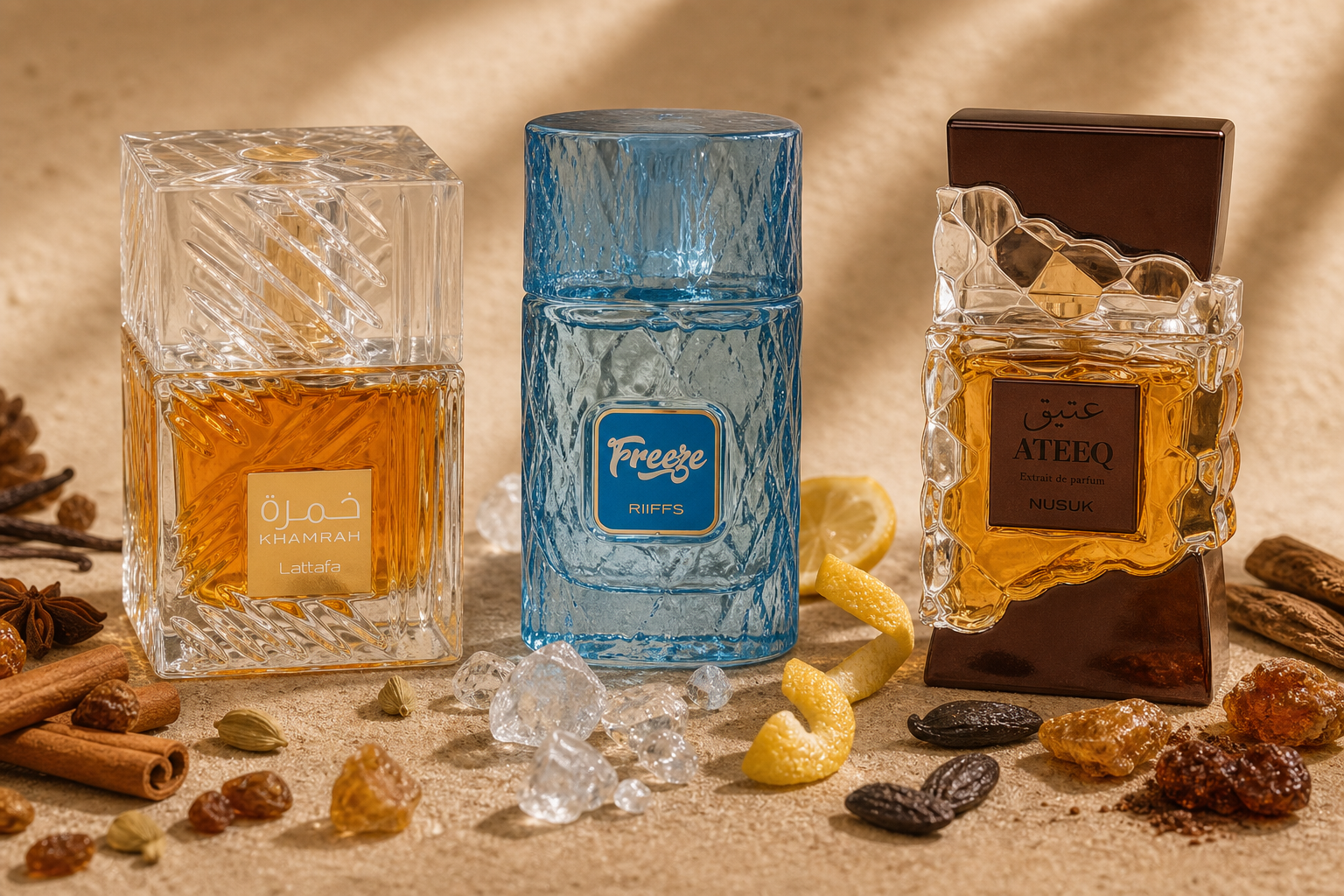
Entering the world of niche perfumes doesn't have to start with a four-figure price tag. The following trio shows that even in the range of around five hundred crowns, you can acquire a 100 ml bottle with its own character that you won't find on every other wrist. All three perfumes are classified as unisex, so the key is not whether they are for women or men, but how the composition suits your skin and the chosen occasion.
Lattafa Khamrah: A Sweet-Spicy Eau de Parfum for Cooler Days
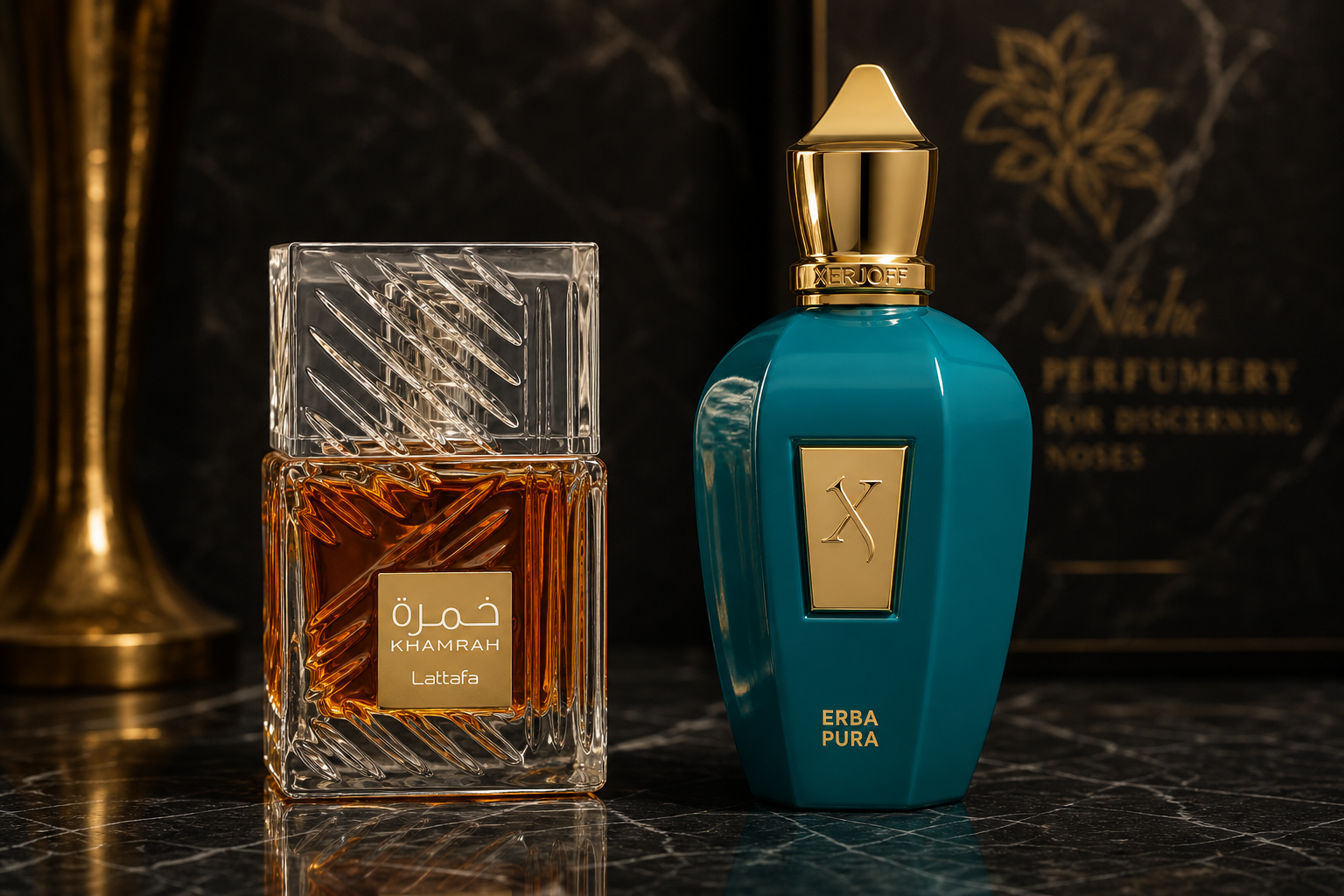
Khamrah is probably the most well-known gateway into Arabic-inspired perfumery and has long been one of the most sought-after unisex eau de parfums among Brasty customers. The composition is gourmand-oriental and makes it clear from the first spray where it's headed.
- Top Notes: Cinnamon, nutmeg, and bergamot, offering a spicy and slightly citrusy fresh start.
- Heart: Dates, praline, and tuberose complemented by a woody undertone that keeps the sweetness in check.
- Base Notes: Tonka bean, vanilla, amber, and resinous notes that create a dense and long-lasting base.
Khamrah is best appreciated from autumn to spring and in situations where it's okay for those around you to notice you – dinners, visits, a chilly day in a well-ventilated office. In summer and enclosed spaces, opt for a more moderate application, as the sweet base intensifies in the heat. The approximate price is 570 CZK for 100 ml.
Riiffs Freeze: A Fresh Perfume for Warm Days and Daily Wear
Freeze is the exact opposite of the previous suggestion and clearly shows that niche doesn't have to mean only heavy oriental scents. The Riiffs brand is among the fastest-growing names in our range, and Freeze is its best-selling piece.
- Top Notes: A cooling, fresh citrusy start with an aromatic finish that matches the name.
- Heart: A lightly spicy and aromatic core that keeps the freshness going without flattening the composition.
- Base Notes: Musk and woods that anchor the scent on the skin after the fresh phase fades.
Freeze is a perfume, the highest commonly available concentration, which helps a fresh composition last longer than you're used to with eau de toilettes. It's suitable for everyday wear, work, sports, and summer evenings, and is a safe choice where a distinctly sweet scent would be disruptive. The approximate price is 628 CZK for 100 ml.
Nusuk Ateeq: An Oriental Choice for the Evening
Nusuk is the smallest brand in this trio with dozens of items in its catalog, making it all the more appealing to those of you looking for something less widespread. Ateeq is its strongest recommendation and leads the composition down a classic oriental path.
- Top Notes: A spicy and resinous opening that distinguishes itself from fresh scents within minutes.
- Heart: A darker, balsamic core with a woody framework.
- Base Notes: Amber, musk, and woods, a warm and subtle base expected from an oriental perfume.
Ateeq is a fragrance for the evening, for cold weather, and for occasions where it's meant to be felt that you've dressed up. For daily office wear, it's quite strong, so one to two sprays are usually enough. The approximate price is 513 CZK for 100 ml.
Comparison of the Trio in Numbers
To make the comparison fair, we present all three in the same volume:
- Lattafa Khamrah – Eau de Parfum, 100 ml, approximately 570 CZK, sweet-spicy profile for cooler months.
- Riiffs Freeze – Perfume, 100 ml, approximately 628 CZK, fresh profile for year-round daily wear.
- Nusuk Ateeq – Perfume, 100 ml, approximately 513 CZK, oriental profile for the evening.
Prices are indicative as they change over time. The exact note breakdown and availability of volumes can be found in the detail of the specific product.
Three Luxurious Classics: Montale, Mancera, and Xerjoff
Once you've explored more accessible niche fragrances and discovered which notes suit you, the question of whether to step up to the next level will eventually arise. Established niche houses charge a premium for their name, and the difference isn't just in the bottle: it usually involves a higher concentration of fragrance and a more sophisticated transition between the different phases of the scent. The following three perfumes are among the most sought-after unisex compositions in the luxury range, each appealing to a different type of nose.
Montale Arabians Tonka – A Rich Vanilla-Tonka Base
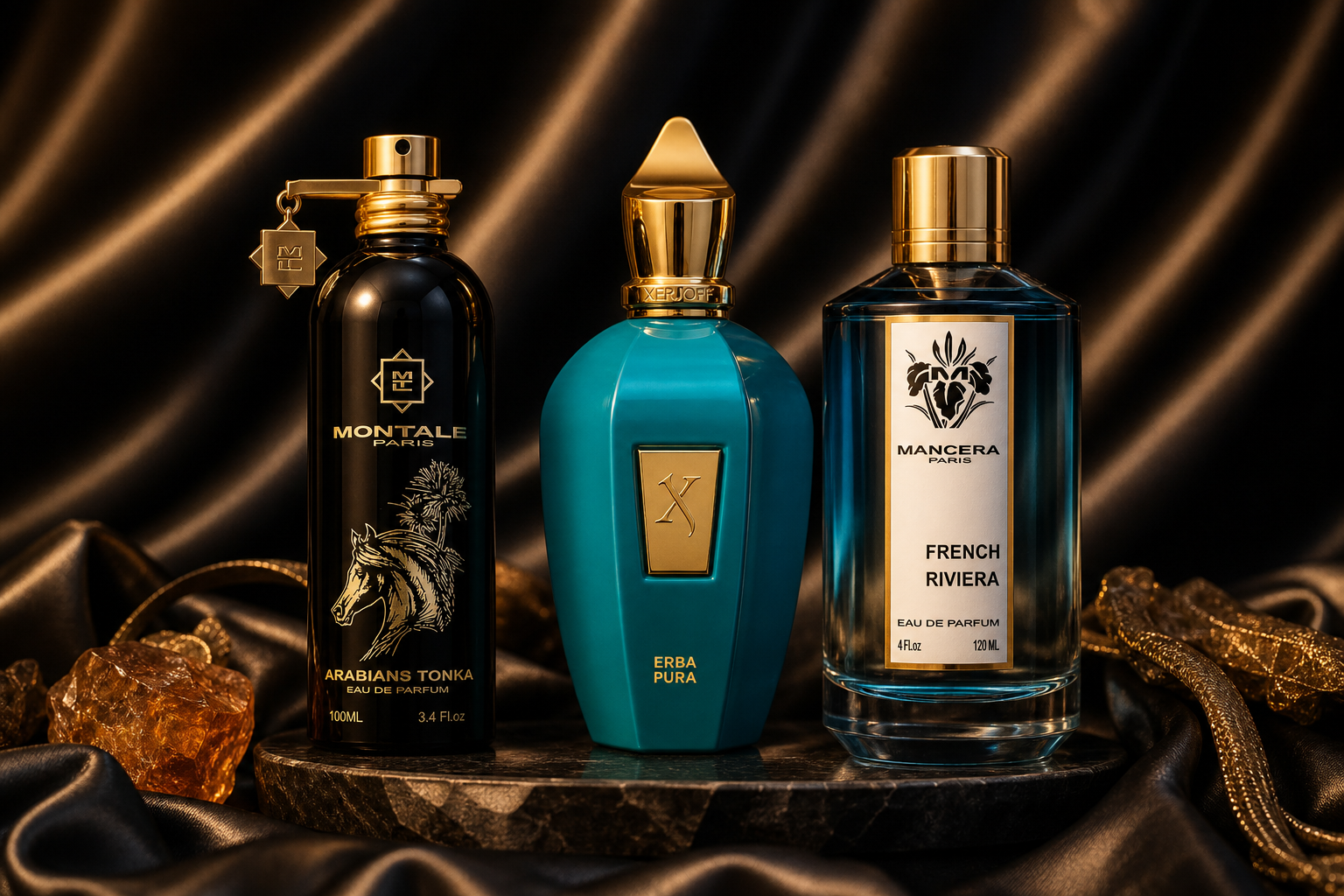
Arabians Tonka is a unisex Eau de Parfum in a 100ml bottle, priced around 1,939 CZK. Of this trio, it is the densest composition: the base is built on tonka bean and vanilla, complemented by amber sweetness and a spicy hint. The result feels warm, dense, and distinctly gourmand, making it more suitable for cooler months and evening occasions rather than a hot afternoon in the office. Expect a noticeable trail – one or two sprays are usually enough, and the scent lasts longer on clothing than on skin. It's a worthwhile investment if you love sweet oriental fragrances and don't mind a more pronounced signature.
Mancera French Riviera – Mediterranean Freshness in a Larger Volume
Mancera comes from the same perfumery school as Montale, but French Riviera heads in the exact opposite direction. It's a summer, airy Eau de Parfum: it opens with citrus and fruity notes, has a slightly floral heart, and finishes with creamy musk and soft vanilla in the base. It feels clean and polished, making it a versatile choice for work, travel, and everyday wear in warmer months. The 120ml bottle is priced around 1,746 CZK, making it more cost-effective per milliliter than most niche competitors. If gourmand sweetness feels heavy to you, this is the easiest to wear of the luxury trio.
Xerjoff Erba Pura – A Citrus-Fruity Icon of the Brand
Erba Pura is the most expensive choice of this trio – a 100ml Eau de Parfum costs around 3,277 CZK – and also the most striking showcase of what has made Xerjoff famous in niche perfumery. The composition is based on Sicilian citrus and juicy fruits, which gradually settle into a sweet, musky amber base. The contrast is intriguing: the opening feels light and almost lemonade-like, but the dry-down is deep and lingers for hours. Erba Pura works year-round and equally well during the day and evening, which is not always the case with perfumes in this price category. It's especially worth it if you're looking for one perfume for most situations.
It's also fair to say that a higher price doesn't automatically mean a better scent for your nose. The price reflects the choice of ingredients, concentration, and brand reputation, but the final impression is determined by your skin and your taste – the same vanilla base can feel velvety on one person and too sweet on another. A luxury classic is a sure bet in the sense that you know what you're buying; it's not a guarantee that it will suit you.
For a quick comparison of the trio:
- Arabians Tonka – Sweet and dense, for evening and cooler weather, with the most pronounced trail of the trio.
- French Riviera – Fresh and clean, for daytime and warm months, with the largest volume at the lowest price of the trio.
- Erba Pura – Citrus-fruity with a long-lasting dry-down, universal all year round, but also the most expensive.
If you're tempted by more than one, start with the one whose description most reminds you of fragrances you already enjoy. Transitioning to the luxury range is easier when you build on familiar notes.


How to Choose Yours and Where to Get It
The six tips from the previous paragraphs cover a wide range of moods, ensuring that even the most discerning noses will find something they like. Ultimately, the decision isn't about which composition looks more interesting on paper, but rather when and where you want to wear it. Consider these three simple guides: time of day, favorite note, and budget for the first trial.
Time of day is a quick and reliable filter. Fresh citrus and aquatic compositions warm up quickly in the heat and remain pleasantly subtle, while richer sweet and woody scents need cooler air to avoid feeling heavy.
- For daytime and office – Riiffs Freeze and Mancera French Riviera. Both maintain a fresh, clear profile that won't overwhelm the entire meeting room.
- For evenings and cooler months – Nusuk Ateeq and Montale Arabians Tonka. Oriental and vanilla-tonka bases stand out where there's room for a more pronounced trail.
- For both – Lattafa Khamrah and Xerjoff Erba Pura. The sweet-spicy and citrus-fruity lines can be worn year-round, just opt for fewer sprays in summer.
The second guide is the note your nose naturally gravitates towards. Knowing what you liked about your previous favorites will help you narrow down your choices much faster than just going by brand name.
- Citrus and fruits – Xerjoff Erba Pura, with a lighter Mediterranean vibe from Mancera French Riviera.
- Vanilla and sweet gourmand tones – Lattafa Khamrah, in a more pronounced and richer form with Montale Arabians Tonka.
- Woods and spices – Nusuk Ateeq.
- Musk and pure freshness – Riiffs Freeze.
The third guide is purely practical. Niche compositions tend to be more pronounced, so the first impression from a test strip doesn't reveal much about the outcome – what's crucial is how the perfume behaves on your skin after a few hours. Before you opt for a 100ml bottle, it's worth trying a smaller volume or a decant, which is a few milliliters transferred into a travel spray. With more expensive houses like Montale or Mancera, you can verify if the composition suits you for a fraction of the full bottle's price before investing thousands.
The prices of the six tips range from around five hundred crowns for more accessible Arabic brands to over three thousand for Xerjoff, offering plenty of choices across budgets. All the mentioned perfumes can be found at Brasty in the dedicated niche section and in the unisex perfumes category, where you can narrow down your selection using filters by brand, volume, and price range. And if you're still unsure after reading, start with the tip whose description intrigued you the most – with fragrances, the first instinct is often a surprisingly good guide.
Category
Recommended articles

"Give a girl the right shoes and she can conquer the world!" Marilyn Monroe