



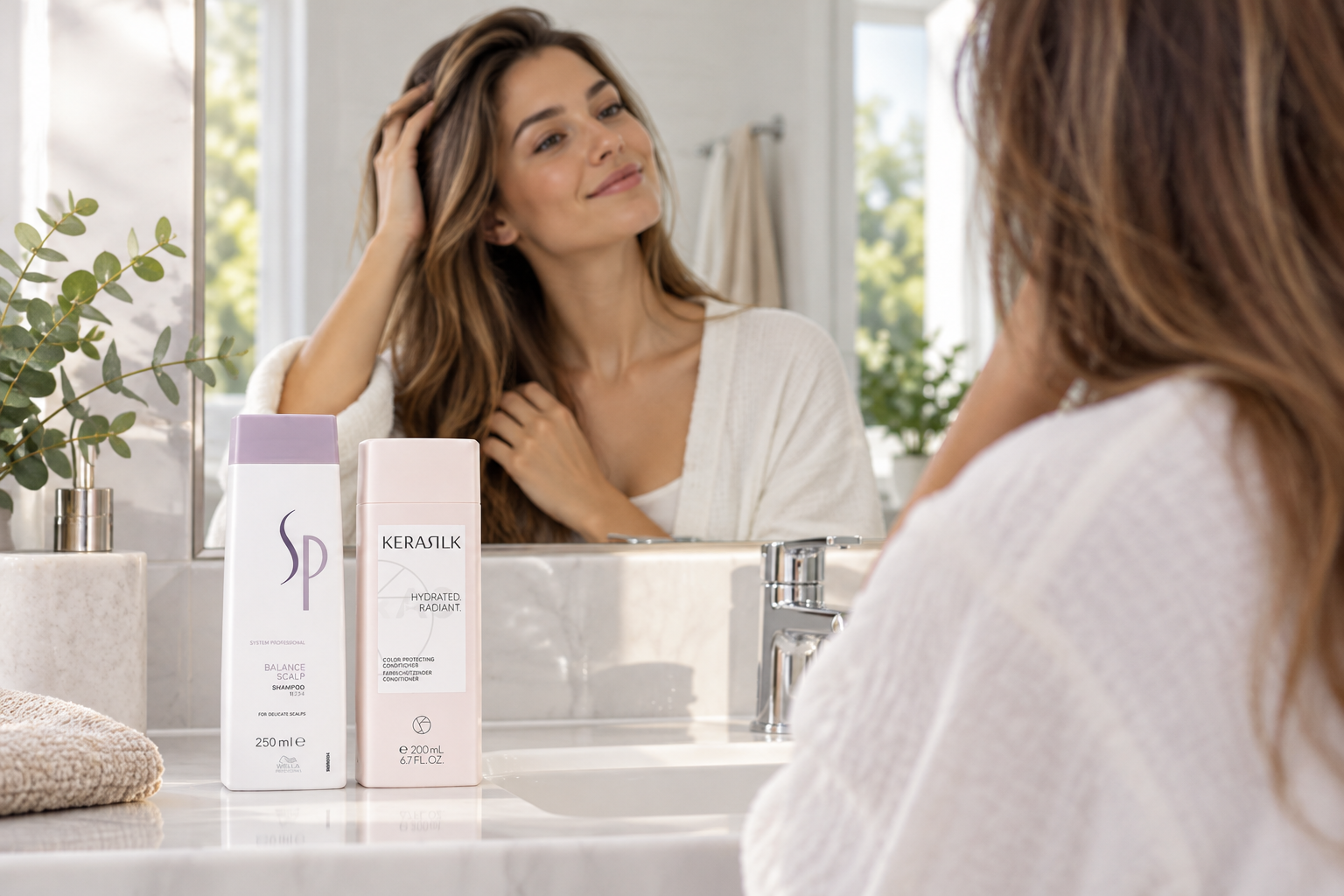
Oily roots by the second day and yet dry, brittle ends? We'll explain why these two conditions aren't mutually exclusive and show you how to divide care between the scalp and lengths – from balancing shampoo to conditioner applied only from ear level down.
Oily Roots, Dry Ends – Why They Don't Exclude Each Other
You wash your hair in the morning, it looks great all day, and then the next day you look in the mirror and see two different heads in one. At the roots, your hair is limp, clumping into strands and shiny, while the ends appear dry, dull, and split when combed. If this picture sounds familiar, you're not alone. Combination hair is a common type and one that can be quite confusing – at first glance, it seems like its two halves contradict each other.
In reality, oiliness and dryness don't exclude each other because they don't concern the same area. Oiliness is a matter of the scalp, where sebaceous glands naturally produce oil. Dryness, on the other hand, affects the hair shaft in the lengths and ends. So, these are two different areas with different needs, sharing just one head.
How to Recognize Combination Hair
- The roots need washing about every one to two days, otherwise they lose volume and start to shine.
- The lengths from around ear level down are rough to the touch, harder to comb, and lack shine.
- The ends split, break, or become frayed.
- If you skip conditioner after washing, the lengths are dry "like straw," even though the scalp feels clean.
- Conversely, if you use a rich mask on the entire hair, the roots get greasy even faster.
A simple test can help you: the day after washing, run your fingers over the scalp at the parting and then over the ends. If your fingers are slightly oily at the roots but the ends are rough and dry, you most likely have combination hair.
How They Differ from Other Hair Types
- Overall Oily Hair – Oiliness quickly spreads throughout the length, hair is heavy from roots to ends, and dry ends are usually not an issue.
- Overall Dry Hair – The scalp doesn't get oily even after several days, hair is dull and frizzy throughout the length, and it can go longer without washing.
- Combination Hair – Has both at once, but each in a different place: oily scalp and roots, dry lengths and ends.
This is why "one-size-fits-all" care doesn't work for combination hair. A product that suits the roots may not be suitable for the lengths, and vice versa – what benefits one part often weighs down or dries out the other. The main idea that will guide you through this article is simple: the scalp and hair lengths need different care. Give the scalp gentle cleansing and balance, and the lengths hydration and protection. Once you start treating these two areas separately, your hair care routine will make much more sense.
Why Roots Get Greasy While Lengths Dry Out
The scalp has sebaceous glands that continuously produce sebum – a natural protective layer for the hair. There's plenty of it at the roots, and if the scalp produces more, the hair at the head becomes limp and shiny by the second day. However, sebum spreads slowly along the hair and only over a limited distance. This isn't much of an issue for short hair, but for hair that falls below the shoulders, it practically doesn't reach the lengths and ends. The result is a situation many of you are familiar with: the roots have an excess of protection, while the ends remain without it.
The lengths are the oldest part of the hair. Hair typically grows about a centimeter a month, so the ends of hair reaching the shoulder blades can be several years old. During that time, they've accumulated traces of everything you've been through:
- Coloring and bleaching – chemical treatments disrupt the hair's surface layer, making it harder to retain moisture.
- Hot air – frequent blow-drying or heat styling without protection gradually dries out the lengths.
- Friction – scarves, coat collars, hats, and pillows constantly rub against the hair, with the ends suffering the most.
- Dry air – during the heating season, the air in homes is significantly drier, causing hair to lose moisture rather than absorb it.
In contrast, the roots are "fresh" – they have grown recently and have only been exposed to these influences for a short time. That's why the upper and lower parts of the same hair can behave as if they belong to two different hair types.
Using a too strong shampoo every day. Often, the attempt to thoroughly "wash" away the grease unknowingly worsens the situation. When you use a highly degreasing shampoo on greasy roots and wash your entire head, including the lengths, every day, the shampoo removes even the little protection the ends have. The lengths then dry out even more, break, and become harder to detangle. The scalp may react to such treatment with irritation, itching, or an unpleasant feeling of tightness. Aggressive washing only provides a temporary feeling of cleanliness but doesn't solve the underlying issue.
Therefore, combination hair isn't two opposing problems that require a single universal product. It's one hair with two different needs – and this perspective will help you care for it more gently: differently at the scalp and differently in the lengths.
Scalp Care: Balancing Shampoo, Proper Washing
For combination hair, care begins at the roots. This is where oil is produced, and when shampoo removes it thoroughly yet gently, you won't need to rescue the lengths as much as before. The key is less about the strength of the product and more about choosing wisely and washing technique.
How to Identify a Balancing Shampoo
Look for shampoos labeled as balancing, or those designed for oily scalps or specifically for scalp care. These products clean the roots without aggressive degreasing, which can leave the scalp feeling tight or irritated. Strongly degreasing shampoos for daily use and rich nourishing shampoos for dry hair, which would unnecessarily weigh down the roots, are less suitable for you.
Shampoo Belongs Only at the Roots
Rub a small amount of shampoo in your palms with a little water and massage it directly into the scalp – all over, including behind the ears and at the nape. Do not scrub the lengths separately with shampoo. The foam that runs down the hair during rinsing will clean them thoroughly without drying them out. If you use styling products, you can wash your hair twice: the first wash removes impurities, and the second allows the shampoo to lather properly.
Water Temperature and Massage
Ideally, use lukewarm, pleasantly warm water, not hot – hot water irritates the scalp and doesn't help the lengths. Massage the shampoo in with your fingertips, not nails, using circular motions from the forehead to the crown and from the nape upwards. About a minute is enough. The massage helps release oil and product residues and is a pleasant moment just for you. Finally, rinse thoroughly, as shampoo residue at the roots can weigh hair down and make it look flat.
How Often to Wash
There is no universal frequency. Many people with combination hair find washing every other day to every third day suitable. If your roots get oily faster, you can wash daily – but with a gentle balancing shampoo and only at the roots. Extending intervals at all costs doesn't pay off, as a scalp clogged with oil and impurities doesn't feel good.
Helpers Between Washes
- Dry Shampoo – spray it from a sufficient distance only on the roots, let it sit for a while, and brush it out. It's a solution for a day or two, not a substitute for washing; its residues need to be thoroughly removed during the next wash.
- Light Scalp Serum – applied directly to the scalp, it doesn't weigh down the lengths and helps keep the scalp comfortable. Choose light, fast-absorbing textures.
What to Avoid at the Roots
- oils, masks, and thick conditioners applied up to the roots,
- frequent touching of the hair and unnecessary frequent combing from the roots,
- hot water and scrubbing the scalp with nails,
- forgotten combs and brushes – oil and product residues return to the hair from them, so wash them regularly.
Hydrate the lengths: conditioner, mask, oil only from mid-length down
While the roots need to keep oil under control, the lengths and ends require the opposite – moisture, elasticity, and protection. The secret to caring for combination hair lies in applying each product where it belongs. Apply nourishing textures roughly from the ear level down, or from mid-length for shorter hair. Avoid the roots – it would weigh them down and make the hair appear greasy sooner than you'd like.
Conditioner is as essential to washing as shampoo. After rinsing out the shampoo, gently squeeze the hair to remove excess water so the product doesn't get diluted. Then, apply it to your palms, spread it along the lengths, and distribute it to the ends using your fingers or a wide-tooth comb. Leave it on as recommended on the packaging and rinse thoroughly with lukewarm water. Residues of conditioner on the scalp are often why roots become greasy faster.
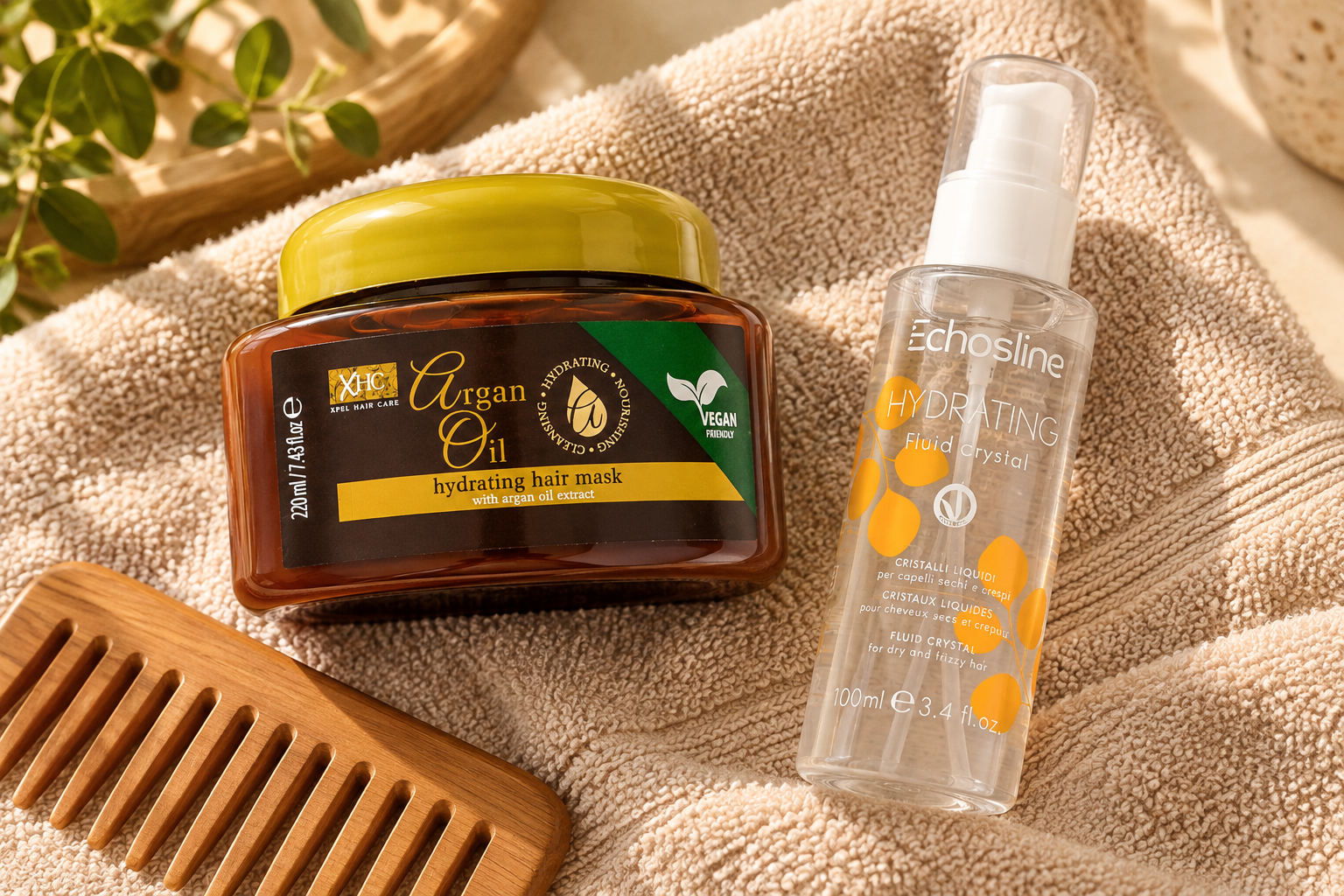
Mask is a more intensive treatment, and for combination hair, using it once a week is usually enough, or twice for particularly dry, colored, or lightened lengths. Apply it instead of conditioner, again only on the lengths and ends, and leave it for a few minutes. If your hair feels heavy or limp after using a mask, try using a smaller amount, reducing the application time, or opting for a lighter texture – more product doesn't mean better results.
Leave-in treatments are useful when the lengths need moisture between washes – in the dry air of heating season, after being in the wind, or when hair tangles easily. For combination hair, choose lighter forms:
- a spray that can be applied to both damp and dry lengths to ease detangling,
- a light foam or milk that smooths the hair without weighing it down,
- a fluid or serum for split and breaking ends.
Thick creams are better suited for strong and very dry hair – they could reduce volume on fine lengths.
Oil is a helpful ally for dry ends, but for combination hair, less is more. A drop rubbed between the palms and pressed into the lower part of the lengths is sufficient. Oil smooths the ends, adds shine, and helps reduce frizz. You can apply it to damp hair before drying or to dry hair as a final step. Avoid applying it to the roots or the top part of the head – that's where it would first show a greasy shine.
Heat protection is essential if you blow-dry or style your hair with heat. Hot air dries out the lengths and gradually damages their surface, making the ends more prone to splitting. Apply a protective spray or milk to towel-dried hair, focusing on the lengths, before starting to dry. A lower temperature and directing the airflow from top to bottom, along the hair shaft, is also gentler. Choose light liquid textures that can be evenly distributed and leave the hair airy.
If you're unsure how much product is just right, start with a smaller amount and add gradually. The lengths should feel soft and elastic after drying, not sticky or heavy – and the roots should remain fresh and voluminous.
Weekly Routine for Combination Hair – Our Recommendations
Combination hair doesn't require a complex system with ten steps. It's much more effective to use each product where it belongs and to repeat the care in a regular rhythm. The following routine suggests washing two to three times a week – if you wash more often, simply simplify each step accordingly.
Step-by-Step Routine
- Washing: Apply balancing shampoo only to the scalp and roots, gently massage, and let the foam run down the lengths during rinsing. This way, they get cleaned without unnecessary drying. The water should be lukewarm rather than hot.
- Conditioner after every wash: Apply it roughly from ear level downwards, leave it on for a while, and rinse thoroughly. Do not rub it into the roots.
- Mask once a week: Replace the conditioner with a mask during one of the washes. Allow it the time indicated on the packaging and focus it mainly on the ends, which tend to be the driest.
- After washing: You can work leave-in care into damp lengths, and if you blow-dry your hair, don't forget heat protection.
- Between washes: Refresh the roots with dry shampoo sprayed from a sufficient distance, and apply a drop of oil rubbed between your palms to the ends. Those who use scalp serum should apply it directly to the scalp as per instructions.
Common Mistakes
- Mask or conditioner up to the roots. Nourishing care on the scalp can weigh down the hair, causing the roots to get greasy even faster.
- Too hot water. A hot shower can irritate the scalp and dry out the lengths even more. Lukewarm water is gentler on both parts of the hair.
- Aggressive shampoo on the entire length. A strong degreasing shampoo applied all over the hair can strip the dry ends of remaining moisture.
- Too much oil. Only a small amount is needed for the ends – more doesn't mean better results, just a greasy look.
- Dry shampoo instead of washing. It works well between washes but cannot replace actual scalp cleansing.
What You Can Try
Whether you're creating a routine from scratch or just looking for a missing piece, Brasty offers balancing shampoos, conditioners, masks, oils, and dry shampoos from professional brands. For the scalp, consider the Wella Professionals SP Balance Scalp line with shampoo and serum, and for the lengths, the Wella Professionals SP Luxe Oil Keratin Restore mask. For the ends, you might consider K18 Molecular Repair Hair Oil or K18 Damage Shield conditioner, and when you need to refresh roots between washes, the Sebastian Professional Drynamic dry shampoo will do the trick. It's best to choose one product for the scalp and one for the lengths and try their combination for several weeks – only then will you know what truly suits your hair.
Category
Recommended articles

"Give a girl the right shoes and she can conquer the world!" Marilyn Monroe
